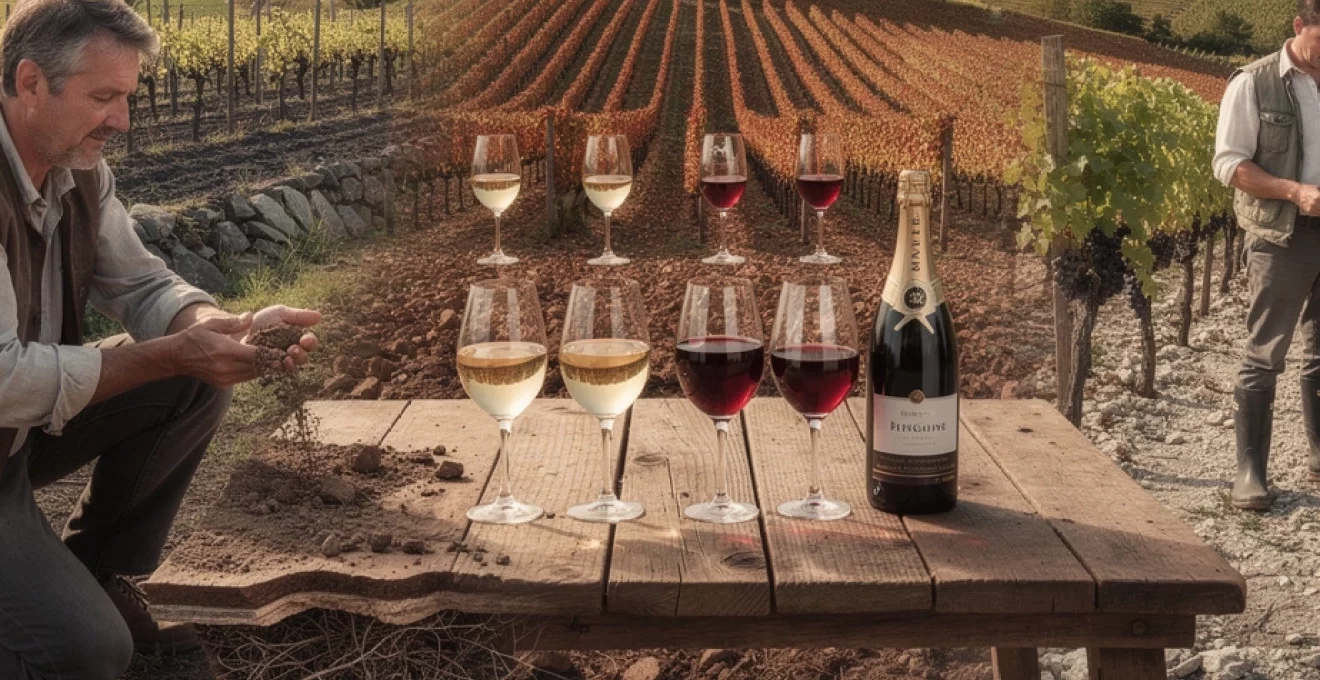
French wine represents the pinnacle of viticultural artistry, where each bottle tells a story written by the land itself. The concept of terroir—that unique combination of soil, climate, topography, and human intervention—transforms simple grape juice into liquid poetry that captures the essence of its origin. This intricate relationship between vineyard and vintage creates wines of such distinctive character that they become inseparable from their geographical birthplace, making French terroir the most revered and studied phenomenon in the wine world.
Understanding terroir requires more than acknowledging its components; it demands appreciating how these elements interact in countless subtle ways to produce wines that cannot be replicated elsewhere. From the chalk-laden soils of Champagne to the granite hillsides of Beaujolais, each French wine region offers a masterclass in how geological foundations, climatic conditions, and centuries of human expertise combine to create beverages of unparalleled complexity and authenticity.
Geological foundation and soil composition in french wine regions
The geological diversity of France provides a natural laboratory for understanding how soil composition fundamentally shapes wine character. Each wine region sits upon distinct geological formations that have evolved over millions of years, creating the mineral backbone that defines regional wine styles. The interaction between vine roots and these varied soil types produces the subtle mineral notes that distinguish one appellation from another, making geology the foundation upon which all great French wines are built.
French vignerons have long understood that successful viticulture requires matching grape varieties to appropriate geological conditions. This knowledge, passed down through generations, has created the regional specialisations that make French wine regions so distinctive. The mineral content, drainage properties, and thermal characteristics of different soil types influence everything from grape ripening patterns to the development of complex flavour compounds.
Limestone terroir of champagne and its impact on chardonnay expression
The Champagne region sits atop a geological treasure trove of Kimmeridgian limestone and chalk deposits dating back 150 million years to the Jurassic period. This porous, calcium-rich substrate provides exceptional drainage while retaining sufficient moisture during dry periods, creating ideal conditions for Chardonnay cultivation. The chalk’s high pH levels contribute to the wine’s characteristic acidity and mineral backbone, whilst its ability to reflect sunlight helps ripen grapes in this cool northern climate.
Chardonnay grown on these chalky soils develops distinctive characteristics that set Champagne apart from other sparkling wine regions. The limestone imparts a precise mineral framework that supports the wine’s structure during the lengthy méthode champenoise process. This geological foundation enables Champagne houses to achieve the perfect balance of elegance and power that defines premium cuvées, with the chalk’s influence remaining detectable even after years of sur lie ageing.
Granite soils of beaujolais and gamay grape development
The northern Beaujolais crus thrive on granite bedrock that has weathered into sandy, well-draining soils rich in feldspar and mica. This acidic soil composition, with pH levels typically ranging from 5.5 to 6.5, provides the perfect environment for Gamay grape cultivation. The granite’s excellent drainage prevents waterlogging whilst its mineral content contributes to the wine’s characteristic bright acidity and floral aromatics.
Granite soils warm quickly during the day and cool rapidly at night, creating the temperature fluctuations that help preserve Gamay’s delicate fruit character. The mineral-rich environment encourages deep root penetration, allowing vines to access trace elements that contribute to the complex terroir expression found in premium Beaujolais wines. This geological foundation enables Gamay to produce wines ranging from light and fruity to structured and age-worthy, depending on the specific granite composition and vineyard elevation.
Clay-limestone amalgamation in burgundy’s côte d’or vineyards
Burgundy’s renowned Côte d’Or presents a complex geological mosaic where Jurassic limestone layers alternate with clay deposits, creating an intricate terroir patchwork that explains the region’s climat system. The proportion of clay to limestone varies dramatically across short distances, with limestone-dominant soils typically producing more elegant
and aromatic wines, while higher clay content tends to produce fuller-bodied, more powerful expressions. In the Côte de Nuits, thin, stony limestone soils favour Pinot Noir with fine tannins, high acidity, and a pronounced mineral line. Further south in the Côte de Beaune, slightly deeper clay-limestone amalgams provide more water retention, supporting both structured Pinot Noir and richly textured Chardonnay.
This geological layering means that two vineyards separated by only a stone wall can yield wines of strikingly different character. Over centuries, Burgundian growers mapped these nuances into the famed climats, each defined by a specific combination of slope, exposure, and clay-limestone balance. When you taste a top Côte d’Or wine, you are essentially tasting a geological fingerprint: the way roots have threaded through clay pockets, around limestone fragments, extracting minerals that translate into tension, depth, and remarkable ageing potential.
Schist and slate influence on loire valley chenin blanc production
In the Loire Valley, particularly in appellations such as Savennières and parts of Anjou, Chenin Blanc vines dig into schist and slate-based soils that dramatically shape their expression. These metamorphic rocks, formed under immense heat and pressure, fracture into thin plates that provide excellent drainage while storing daytime warmth, slowly releasing it to the vines overnight. The result is a terroir that encourages slow, even ripening and preserves Chenin’s hallmark acidity.
Schist and slate terroirs often yield Chenin Blanc with intense mineral drive, smoky nuances, and a firm structural core. Compared with Chenin grown on tuffeau limestone further east, these wines can appear more linear and saline, with flavours of quince, citrus peel, and lanolin framed by a distinct stony edge. For wine lovers seeking to understand how terroir shapes French white wine, a side-by-side tasting of Chenin from schist versus limestone is one of the most revealing exercises you can undertake.
Climatic variables and microclimate systems across french appellations
While soil forms the physical foundation of terroir, climate acts as its operating system, determining how grapes ripen and which varieties thrive in a given place. France spans a remarkable range of climatic zones—from cool maritime to warm Mediterranean—and within each zone exist intricate microclimates shaped by rivers, forests, mountains, and prevailing winds. These climatic variables influence everything from harvest dates to acidity levels and aromatic profiles.
Modern climate data shows that average growing-season temperatures in many French wine regions have risen by 1–1.5°C over the past 40 years. This shift has forced growers to adapt pruning techniques, canopy management, and even grape variety choices to preserve the classic balance associated with French wine. Yet even in a changing climate, the interplay between macroclimate and localized microclimates continues to define the identity of each appellation.
Continental climate effects in alsace riesling cultivation
Alsace, nestled between the Vosges Mountains and the Rhine, is a textbook example of a continental climate in French viticulture. The Vosges create a pronounced rain shadow effect, making Alsace one of the driest wine regions in France despite its northerly latitude. Warm summers, cold winters, and a long growing season allow Riesling to ripen fully while retaining laser-like acidity and aromatic intensity.
This continental pattern, combined with diverse soils, encourages slow flavour development, giving Alsace Riesling its hallmark notes of lime, stone fruit, and crushed rock. Because rainfall is relatively low during the ripening period, disease pressure is reduced, allowing growers to practice low-intervention viticulture and, increasingly, organic or biodynamic farming. For you as a taster, that means Rieslings that are clean, precise, and deeply expressive of their specific vineyard microclimate rather than dominated by cellar techniques.
Maritime influence on bordeaux left bank cabernet sauvignon
On the Atlantic side of France, Bordeaux’s Left Bank vineyards experience a markedly maritime climate. The nearby ocean and the Gironde estuary moderate temperatures, reducing both summer heat extremes and winter frosts. Prevailing westerly winds bring humidity and regular rainfall, conditions that would be challenging for many varieties but suit thick-skinned Cabernet Sauvignon when combined with the region’s well-drained gravel soils.
This maritime influence extends the growing season, allowing Cabernet Sauvignon to achieve phenolic ripeness—fully developed tannins and flavours—without losing its firm acid spine. It also encourages the development of classic Left Bank flavour profiles: blackcurrant, cedar, graphite, and tobacco, framed by structured tannins that benefit from bottle age. However, the same humid conditions increase disease risk, meaning meticulous canopy management and timing of vineyard treatments are crucial to preserve grape health and terroir transparency.
Mediterranean warmth and châteauneuf-du-pape grenache maturation
Further south, the Rhône Valley transitions into a distinctly Mediterranean climate, epitomised by Châteauneuf-du-Pape. Here, hot, dry summers, mild winters, and abundant sunshine provide ideal conditions for late-ripening Grenache to reach full maturity. The famed galets roulés—large, rounded stones that carpet many vineyards—absorb heat during the day and radiate it at night, further enhancing ripening in this already warm environment.
The Mediterranean climate contributes to Grenache grapes with high sugar levels, soft tannins, and rich, ripe fruit profiles of strawberry, kirsch, and garrigue herbs. Low rainfall during the growing season concentrates flavours but can stress vines, making root depth and soil water-holding capacity critical components of terroir expression. When well-managed, this warmth produces powerful yet nuanced wines whose spice and dried-herb complexity unmistakably reflect their sun-drenched origin.
Altitude and thermal regulation in jura chardonnay vineyards
In the mountainous Jura region east of Burgundy, altitude and cool air drainage play a decisive role in Chardonnay cultivation. Vineyards often sit between 250 and 450 metres above sea level, where cooler temperatures and significant diurnal shifts (differences between day and night temperatures) slow the ripening process. This thermal regulation preserves acidity and delicate aromatic compounds that might be lost in warmer, low-lying sites.
Higher-altitude Jura Chardonnay typically displays taut acidity, subtle orchard fruit, and a distinctive savoury, nutty complexity, especially when aged under a veil of yeast in the region’s traditional oxidative style. Even when made in a more “Burgundian” topped-up style, the altitude-driven freshness and finely etched mineral notes set these wines apart. If you are seeking French white wines that combine brisk structure with deep flavour, Jura’s elevated terroirs offer a compelling alternative to more famous neighbours.
Topographical elements and vineyard positioning in premium french sites
Beyond soil and climate, topography—the physical shape and orientation of the land—determines how vines interact with sunlight, wind, and water. In premium French vineyard sites, subtle differences in slope, aspect, and elevation can result in markedly different wine profiles, even within a single appellation. Historically, growers learned through trial and error which parcels produced the most balanced and age-worthy wines, often favouring mid-slope positions with optimal drainage and sun exposure.
South- or southeast-facing slopes in the northern hemisphere receive more direct sunlight, promoting ripeness in cooler regions like Burgundy, Champagne, and the northern Rhône. Conversely, in hotter zones such as Provence or parts of Languedoc, slightly higher altitudes or east-facing slopes may be preferred to protect acidity and avoid overripe flavours. Topographical features like nearby rivers can also moderate extremes, reflecting light and heat while reducing frost risk, further fine-tuning the terroir signature of French wine.
Viticultural practices and human intervention in terroir expression
While terroir begins with nature, it is ultimately shaped and interpreted by human hands. Viticultural practices—how vines are planted, pruned, trained, and harvested—have a profound impact on how clearly a wine transmits its origin. In many French regions, traditional methods evolved specifically to harmonise with local conditions, whether it’s the low bush vines of Châteauneuf-du-Pape resisting the Mistral wind or the high-density plantings of Burgundy designed to encourage competition and concentration.
Modern viticulture adds another layer of decision-making: organic and biodynamic farming, reduced chemical inputs, and precise canopy management all aim to enhance terroir expression rather than mask it. For example, limiting yields through green harvesting can intensify flavour and structure, while careful leaf removal balances sun exposure and disease prevention. When done thoughtfully, these interventions act less like a loudspeaker and more like a finely tuned microphone, amplifying the nuances that the land naturally provides.
Appellation d’origine contrôlée framework and terroir protection mechanisms
France’s Appellation d’Origine Contrôlée (AOC) system exists primarily to protect terroir and the cultural heritage attached to it. Established in the 1930s and overseen by the Institut National de l’Origine et de la Qualité (INAO), the framework sets strict rules on where grapes can be grown, which varieties are permitted, and how wines may be produced if they are to carry a prestigious regional name. In this way, the AOC system serves as both a quality benchmark and a legal shield for terroir-driven French wine.
For consumers, appellation names such as Chablis, Pauillac, or Sancerre signal not just geography but an expected flavour profile grounded in terroir. For producers, adhering to AOC regulations can be both a safeguard and a constraint: it protects the value of their land and reputation, but it also limits experimentation with non-traditional varieties or techniques. The underlying goal, however, remains clear—to ensure that what you taste in the glass remains faithful to the place printed on the label.
INAO classification system for terroir authentication
The INAO functions as the guardian of French terroir, evaluating and codifying which areas, grape varieties, and production methods merit official recognition. Its classification system goes beyond simple mapping; it involves historical research, soil analysis, climatic data, and tasting panels to determine whether a proposed appellation has a consistently distinctive identity. Once granted, AOC status legally binds producers to a set of rules designed to preserve that identity over time.
Revisions are possible but rigorous, reflecting evolving knowledge about terroir while maintaining continuity with tradition. For example, boundaries may be adjusted as better geological or climatic data becomes available, or yield limits may be tightened to enhance quality. By linking terroir authentication to both sensory evaluation and scientific evidence, the INAO ensures that the term “French appellation” retains real meaning rather than becoming a mere marketing phrase.
Geographic boundaries and soil mapping in burgundy grand crus
Nowhere is the precision of French terroir mapping more apparent than in Burgundy’s Grand Cru vineyards. Over centuries, and more recently with the help of detailed geological surveys, the region has been carved into a patchwork of delimited parcels whose boundaries often follow subtle shifts in soil depth, rock type, and slope. These micro-distinctions explain why one hillside parcel may be classified as Grand Cru while another just metres away is designated Premier Cru or village-level.
Modern soil mapping in Burgundy has confirmed many of these traditional distinctions, revealing how variations in limestone purity, clay content, and topsoil thickness correlate with wine style and ageing capacity. For you as a wine drinker, these geographic boundaries provide a roadmap to exploring terroir in its most granular form. Comparing a Grand Cru like Le Chambertin with a neighbouring Premier Cru offers a vivid lesson in how minute changes underfoot can translate into profound differences in the glass.
Varietal restrictions and clone selection in champagne AOC
In Champagne, varietal restrictions and clone selection form a crucial part of how the AOC preserves its unique terroir signature. Only a small number of grape varieties—primarily Chardonnay, Pinot Noir, and Pinot Meunier—are authorised for AOC Champagne production, each chosen for its ability to thrive on the region’s cool climate and chalky soils. This focused palette allows growers and houses to fine-tune blends that express both house style and village identity without diluting the overall regional character.
Within these permitted varieties, specific clones are favoured for their balance of yield, disease resistance, and flavour profile. For example, certain Chardonnay clones excel on pure chalk, delivering high acidity and delicate citrus-mineral notes ideal for long ageing on lees. While clone selection might sound technical, it is essentially another lens through which humans interpret and transmit terroir: by choosing plant material that best translates the chalk, climate, and exposure into the nuanced flavours we associate with fine Champagne.
Sensory manifestation of terroir in french wine characteristics
Ultimately, terroir becomes meaningful only when it reaches your senses—when soil, climate, topography, and human choices are distilled into aroma, flavour, and texture in the glass. French wine’s enduring fascination lies in how transparently it can communicate these origins. A Sancerre’s flinty edge, a Châteauneuf-du-Pape’s warm garrigue perfume, a Chablis’ saline snap: each is a sensory shorthand for a specific landscape and set of conditions.
When you taste French wine with terroir in mind, you move beyond simple categories like “red” or “white” and begin to perceive layers: minerality suggesting limestone or slate, ripeness levels hinting at climate, structure pointing to grape variety and elevation. Keeping a tasting journal, noting not only flavours but also place names and soil types, can significantly deepen your understanding over time. In this way, every bottle becomes both a pleasurable drink and an educational tool—an invitation to explore how the soul of French wine is written, quite literally, in the land itself.