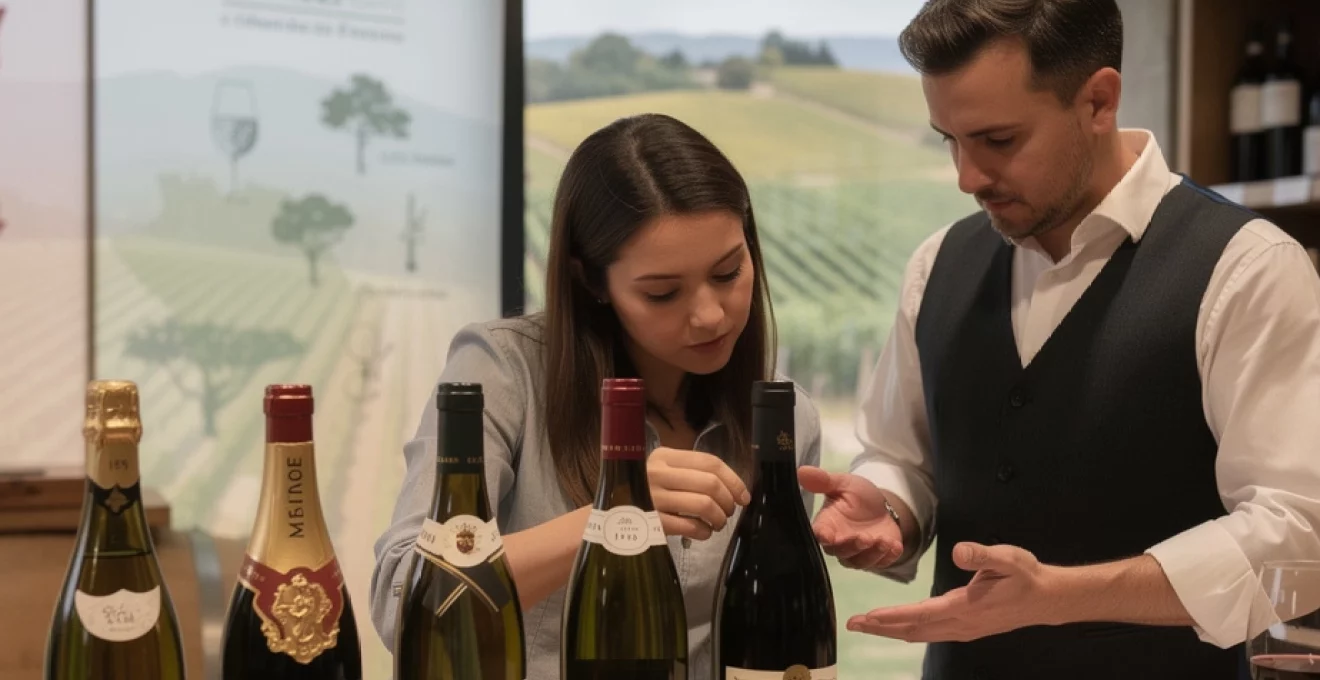
French wine labels often intimidate newcomers with their complex terminology and region-specific conventions. However, these labels contain a wealth of information that, once decoded, reveals the wine’s origin, quality level, and production methods. Understanding French wine labelling is essential for making informed purchasing decisions and appreciating the rich heritage behind each bottle.
The French wine classification system represents centuries of winemaking tradition and geographical knowledge. Unlike New World wines that prominently display grape varieties, French labels emphasise terroir – the unique combination of soil, climate, and local expertise that gives each wine its distinctive character. This approach reflects France’s belief that place of origin matters more than grape variety alone.
Mastering French wine labels opens doors to discovering exceptional wines across all price ranges. From affordable regional bottles to prestigious Grand Cru selections, the labelling system provides crucial guidance for navigating France’s diverse wine landscape. The key lies in understanding the hierarchical structure that governs French wine classification and recognising the essential elements that appear on every legitimate French wine label.
French wine classification systems and appellation hierarchy
The French wine classification system operates on a three-tier hierarchy that determines quality standards and geographical authenticity. This system, established in 1936 and refined over decades, provides consumers with reliable indicators of a wine’s provenance and production standards. Understanding this hierarchy enables you to quickly assess a wine’s quality level and expected characteristics based solely on its classification designation.
Appellation d’origine contrôlée (AOC) designation requirements
The AOC system represents the pinnacle of French wine classification, guaranteeing that wines meet strict geographical and quality standards. Wines bearing AOC status must originate from specific demarcated regions and follow prescribed winemaking practices. These regulations cover grape varieties, maximum yields, minimum alcohol content, and vineyard management techniques.
AOC designations range from broad regional appellations like “AOC Bordeaux” to highly specific micro-appellations such as “AOC Pommard” in Burgundy. The more precise the geographical designation, the stricter the production requirements become. This system ensures that wines genuinely reflect their terroir and maintain consistency with historical regional styles.
Indication géographique protégée (IGP) regional classifications
IGP wines occupy the middle tier of French wine classification, offering greater flexibility than AOC regulations while maintaining geographical authenticity. These wines must originate from specified larger regions but face fewer restrictions regarding grape varieties and winemaking techniques. IGP classifications often correspond to administrative departments or historical provinces.
Many IGP wines list grape varieties prominently on their labels, making them more accessible to consumers familiar with varietal wines. This classification allows producers to experiment with non-traditional grape varieties or innovative winemaking methods whilst maintaining a connection to their regional identity. IGP wines frequently offer excellent value for money, combining quality production with reasonable pricing.
Vin de france table wine categories
Vin de France represents the most flexible French wine classification, allowing producers to blend grapes from anywhere within France’s borders. These wines face minimal regulatory constraints beyond basic quality and safety standards. The classification enables winemakers to create consistent branded products that may combine fruit from multiple regions.
Despite their basic classification, many Vin de France wines demonstrate excellent quality and represent outstanding value. Producers often use this classification for entry-level wines or experimental blends that don’t conform to traditional appellation requirements. The labelling typically includes grape varieties and often features modern, consumer-friendly packaging.
Premier cru and grand cru classification distinctions
Premier Cru and Grand Cru designations represent the elite tier within AOC classifications, primarily used in Burgundy and Champagne. Grand Cru sites, numbering only 33 in Burgundy, represent the region’s most exceptional vineyard locations based on centuries of quality assessment. These vineyards consistently produce wines of superior concentration, complexity, and aging potential.
Premier Cru vineyards, whilst numerous, still represent exceptional terroir sites within their respective villages. Burgundy Premier Cru labels must specify both the village name and the specific vineyard site, such as “Meurs
ault Premier Cru Les Perrières.” In Champagne, Premier Cru and Grand Cru refer to entire villages whose vineyards have historically produced superior grapes. When you see these terms on a French wine label, you can reasonably expect a higher level of concentration, structure, and aging potential compared with standard village or regional wines.
Essential french wine label components and terminology
Once you understand the basic classification hierarchy, the next step is to decode the individual components that appear on almost every French wine label. These details tell you who made the wine, where it was bottled, which harvest it comes from, and how it was produced. Learning to recognise these common French wine terms allows you to assess quality quickly, even when the label does not mention grape varieties.
Think of a French wine label as the wine’s passport: each line records a different piece of identity information. While the overall design may vary from a minimalist white label to an ornate château illustration, the underlying legal requirements remain broadly consistent. By focusing on a few key phrases such as domaine, millésime, and mis en bouteille, you can extract the most important facts at a glance.
Domaine, château, and négociant producer identifications
French wine labels almost always highlight the name of the producer, but the terminology used can tell you more about how the estate operates. The word domaine typically indicates that the producer owns and farms the vineyards from which the wine is made. This is common in Burgundy, the Loire, Alsace, and many smaller regions where estate-grown fruit is the norm.
Château is most associated with Bordeaux and usually denotes an estate that both grows grapes and makes wine, often from vineyards surrounding the property. Although the term evokes grand buildings, it is a legal designation rather than a guarantee of luxury. By contrast, a négociant (often labelled as “Négociant-Éleveur” or simply a merchant name without domaine or château) buys grapes or finished wine from growers, blends them, and bottles under their own brand. Neither model is inherently better; some top-quality wines are made by négociants who have long-term relationships with expert growers.
In Champagne and certain other regions, producer codes add an additional layer of information. For example, “RM” (récoltant-manipulant) signals a grower-producer who bottles their own grapes, while “NM” (négociant-manipulant) indicates a house that buys in fruit. When you want a more artisanal, estate-focused experience, choosing wines labelled as domaine, château, or with RM codes can be a useful shortcut.
Millésime vintage dating and harvest year significance
The term millésime on a French wine label refers to the vintage, or the year the grapes were harvested. Most still wines from quality-conscious producers carry a clearly printed vintage year, such as “Millésime 2020” or simply “2020” alongside the appellation. This date matters because weather conditions change from year to year, significantly influencing grape ripeness, acidity, and flavour profile.
In cooler regions such as Bordeaux, Burgundy, and the Loire, vintage variation can be dramatic. A warm, sunny year might produce riper, fuller-bodied wines with softer tannins, while a cooler, wetter year can yield lighter, more acidic wines with greater freshness but less opulence. Checking basic vintage summaries for your favourite regions helps you decide whether to drink a bottle young or lay it down for a few more years.
Some wines, particularly Champagne and certain sparkling or entry-level blends, are labelled non-vintage (NV). These wines combine base wines from several harvests to create a consistent house style. If you are just starting to explore French wine labels, recognising whether a bottle is vintage or NV can guide your expectations: vintage wines tend to reflect the uniqueness of a single year, while non-vintage wines aim for reliability and familiarity.
Cuvée designations and blend specifications
The word cuvée appears frequently on French wine labels and can be confusing at first. Literally meaning “vat” or “tank,” in practice it refers to a particular blend or bottling chosen by the producer. You might see names such as “Cuvée Tradition,” “Cuvée Prestige,” or “Cuvée Spéciale,” each indicating a distinct selection of grapes, barrels, or vineyard parcels. However, the term itself is not strictly regulated, so it does not automatically imply superior quality.
To understand what makes one cuvée different from another, look for supporting information either on the back label or in the producer’s notes. Some wineries specify the grape varieties and percentages used in a given blend, especially for IGP and Vin de France wines where varietal labelling is more common. Others emphasise that a cuvée comes from old vines (vieilles vignes), a single vineyard, or extended oak aging.
Think of cuvées as different “editions” of a book published by the same author. The label might highlight that this particular edition includes extra chapters (longer barrel aging) or focuses on a specific storyline (a single parcel of vines). When you find a cuvée you enjoy, noting its full name and blend details helps you seek out similar wines in the future.
Mis en bouteille origins and bottling location codes
The phrase mis en bouteille (“bottled”) tells you where the final bottling took place, which can be an important quality indicator. Labels stating “Mis en bouteille au château,” “Mis en bouteille au domaine,” or “Mis en bouteille à la propriété” mean the wine was bottled at the estate where it was produced. This suggests closer control over the entire process, from vineyard to bottle, and reduces the risks associated with bulk transport.
By contrast, “Mis en bouteille par…” followed by a company’s name and town often indicates that the wine was bottled by a separate facility, such as a négociant or cooperative. In itself, this is not negative—many well-run cooperatives in regions like the Languedoc or Provence produce reliable, good-value wines. However, if you are comparing two bottles at a similar price, the one bottled at the estate often offers a stronger link to a specific producer and terroir.
On some labels, especially in Champagne and other tightly regulated regions, you may also see small bottling codes associated with producer categories. These alphanumeric codes help authorities trace the wine back to its bottler and are part of France’s broader system of wine authenticity. For most beginners, focusing on the simple distinction between estate-bottled and externally bottled wines is a practical way to use this information.
Regional terroir indicators and geographic appellations
Because French wine labels focus on place rather than grape variety, understanding regional appellations is crucial. Each major region—Burgundy, Bordeaux, Champagne, the Loire, and others—has its own system of villages, sub-regions, and special vineyard names. Once you learn the basic geography, reading a French wine label becomes much like reading a map: you can pinpoint where the wine comes from and infer its general style.
Terroir encompasses not only soil and climate but also centuries of local know-how. Two wines made from the same grape variety can taste completely different depending on their appellations. When you recognise terms such as “Côte de Nuits,” “Margaux,” or “Sancerre” on a label, you are effectively reading a short-hand description of the wine’s expected structure, aromas, and food-pairing potential.
Burgundy climat classifications and village appellations
Burgundy is perhaps the most intricate region when it comes to appellations, but once you grasp the hierarchy, Burgundy labels become highly informative. At the base level are regional wines such as “Bourgogne Rouge” or “Bourgogne Blanc,” which can come from anywhere within the broader region. Above this sit village appellations like “Gevrey-Chambertin,” “Puligny-Montrachet,” or “Chablis,” which must use grapes grown within those specific communes.
Within many villages, special vineyard sites known as climats have been identified for their distinctive character. These climats can be classified as Premier Cru or Grand Cru, and their names usually appear on the label after the village name, for example “Chablis Premier Cru Montmains” or “Chambertin Grand Cru.” When only the village name appears, the wine is typically a blend of different vineyards within that village, offering a broader expression of the local style.
For a beginner reading Burgundy wine labels, a useful analogy is to think of village names as neighbourhoods and climats as individual streets with specific reputations. You might start by learning a few well-regarded villages—such as Meursault for rich whites or Volnay for elegant reds—and gradually explore specific Premier Cru or Grand Cru sites as your confidence grows.
Bordeaux left bank and right bank distinctions
Bordeaux wine labels often feature the château name and appellation but rarely mention grape varieties, yet the region follows a fairly predictable pattern. The Gironde estuary splits Bordeaux into the Left Bank (Médoc and Graves) and the Right Bank (Libournais, including Saint-Émilion and Pomerol). This geographical divide strongly influences both the blends used and the wine styles produced.
Left Bank appellations such as Pauillac, Margaux, and Saint-Julien tend to be dominated by Cabernet Sauvignon, supported by Merlot and other grapes. These wines are often more structured and tannic in youth, built for aging and pairing with rich dishes. Right Bank appellations like Saint-Émilion and Pomerol lean towards Merlot and Cabernet Franc, generally resulting in softer textures, riper fruit profiles, and earlier drinking windows.
When you read a Bordeaux label mentioning “AOC Haut-Médoc” or “AOC Saint-Émilion Grand Cru,” you are not only identifying the location but also inferring the likely grape mix and style. If you prefer firmer, more savoury reds, Left Bank appellations may appeal; if you enjoy rounder, plummier wines, the Right Bank is often a better fit. Over time, you will recognise individual appellations in the same way you might know different coffee origins or cheese styles.
Champagne terroir designations and cru classifications
Champagne labels follow their own conventions but still adhere to the broader French focus on place. At a minimum, a Champagne label will state “Champagne” as the appellation, the producer name, and the style (such as Brut, Extra Brut, or Demi-Sec). However, more detailed bottles also reference specific villages, vineyard designations, and cru status, all of which can guide you towards particular flavour profiles.
Historically, Champagne villages were rated on a quality scale, with certain ones classified as Grand Cru (100%) and others as Premier Cru. While this system is less central than it once was, the terms still appear on many labels and suggest that a high proportion of grapes come from those top-rated villages. A Champagne labelled “Grand Cru” must be sourced entirely from Grand Cru villages like Aÿ, Avize, or Bouzy.
Some producers go further by naming single-vineyard or single-village bottlings, such as “Blanc de Blancs Avize” or “Cuvée Parcellaire Les Chétillons.” For a Champagne lover learning to read French wine labels, noticing whether a bottle is a broad regional blend or tied to a specific terroir can be as revealing as the sweetness level. Single-village or single-vineyard Champagnes often showcase more distinctive minerality and character, similar to single-origin coffee compared with a house blend.
Loire valley sub-regional appellations and micro-climates
The Loire Valley stretches over 800 kilometres, making it one of France’s most diverse wine regions. Instead of a single, overarching style, the Loire offers a mosaic of sub-regional appellations, each specialising in different grapes and wine types. On a French wine label, names like “Sancerre,” “Vouvray,” “Muscadet Sèvre-et-Maine,” or “Saumur-Champigny” all indicate specific zones with distinct micro-climates.
For example, Sancerre and Pouilly-Fumé in the eastern Loire focus on Sauvignon Blanc, producing crisp, mineral-driven whites that pair well with goat’s cheese and seafood. Vouvray, further west, is centred on Chenin Blanc and can range from bone dry to lusciously sweet, often labelled with terms such as sec, demi-sec, or moelleux. Muscadet from the Atlantic-influenced western Loire tends to be light and saline, frequently marked “Sur Lie” to indicate aging on lees for added texture.
Because these sub-regional names act as shorthand for grape variety and style, learning a handful can greatly simplify your choices. When you see “AOC Sancerre” on a label, you can safely assume a dry Sauvignon Blanc; when you spot “Chinon” or “Bourgueil,” you are likely looking at Cabernet Franc-based reds. Over time, you will notice how subtle differences in climate and soil along the river translate into distinct expressions of similar grapes.
Alcohol content standards and technical specifications
French wine labels must display the alcohol by volume (ABV) percentage, typically written as “12.5% vol.” or similar. Although this seems like a simple legal requirement, it offers helpful clues about the wine’s body, ripeness, and potential food pairings. In general, lighter, fresher wines fall between 11% and 12.5% ABV, while richer, fuller-bodied wines often exceed 13.5%.
Climate plays a significant role here: wines from warmer southern regions such as the Languedoc, Rhône, and Provence tend to reach higher alcohol levels due to riper grapes, whereas cooler regions like Loire or Alsace often produce wines with moderate ABV and higher natural acidity. When you are unsure what style to expect from an unfamiliar appellation, checking the alcohol content can act like glancing at a car’s engine size before a test drive. Higher ABV usually signals more weight and intensity, while lower ABV suggests a leaner, more refreshing profile.
In addition to alcohol, technical mentions such as “contient des sulfites” (contains sulfites) or optional notes about residual sugar levels may appear on French wine labels. Sulfite declarations are mandatory for EU wines and are especially useful if you are sensitive to these preservatives. Some producers also indicate fermentation methods, barrel aging (élevé en fûts de chêne), or time on lees (sur lie), information that can hint at creamier textures, toasty flavours, or more complex mouthfeel.
Deciphering producer information and estate details
Beyond the basic classification and appellation, French wine labels often include additional producer details that help you judge authenticity and craftsmanship. The producer’s address or village is usually listed in small print, confirming that the estate or négociant is physically located within the appellation stated. This can be reassuring when you are buying from unfamiliar brands or lesser-known regions.
Mentions such as propriétaire-récoltant (owner-grower) or vendangé à la main (hand-harvested) provide further insight into how the producer manages their vineyards. While these terms are not absolute guarantees of quality, they suggest a more hands-on, artisanal approach. In regions like Champagne, grower-producers often emphasise these details to differentiate their wines from large-volume houses.
You may also encounter references to certifications and sustainability practices. Logos for organic (agriculture biologique), biodynamic (e.g. Demeter), or HVE (High Environmental Value) indicate adherence to specific environmental standards. For consumers who prioritise eco-friendly choices, these symbols on a French wine label serve as quick visual markers, much like fair-trade badges on coffee or chocolate.
Quality indicators and authentication markers on french wine labels
Finally, French wine labels include several subtle indicators that can help you distinguish serious, quality-focused wines from purely marketing-driven offerings. Official appellation stamps, such as the AOC/AOP mention and sometimes a control number, confirm that the wine has passed regulatory checks. On some bottles, especially in Bordeaux, you might see capsule imprints or seals indicating membership in local quality organisations or classification systems.
Other phrases can hint at higher ambitions. Terms like sélection parcellaire (parcel selection), vieilles vignes (old vines), or cuvée spéciale often signal that the producer has singled out particular plots or older vineyards for this bottling. While these mentions are not always formally regulated, reputable producers use them to differentiate their top wines from entry-level cuvées. Looking for the combination of an AOC or higher-tier appellation with estate-bottling and specific vineyard references is usually a good strategy when you want to trade up in quality.
At the same time, it is wise to be cautious of labels overloaded with medals from obscure competitions or vague terms like “prestige,” “old vines” without context, or excessively flowery tasting descriptions. These can sometimes act like flashy packaging on everyday products—eye-catching but not necessarily meaningful. By focusing instead on concrete markers—classification level, appellation, producer type, bottling location, and vintage—you can make confident, informed choices every time you pick up a French bottle.