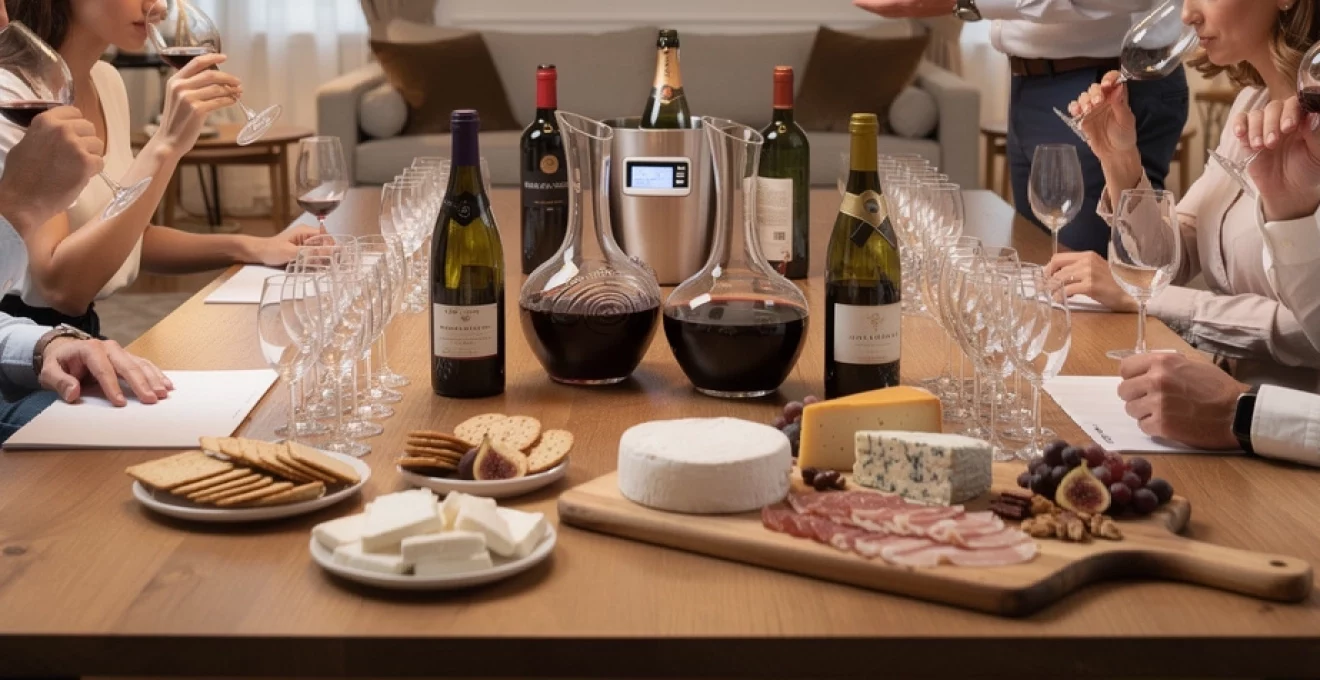
French wine represents the pinnacle of viticultural excellence, with centuries of tradition and expertise woven into every bottle. Creating an authentic French wine tasting experience at home allows you to explore the diverse terroirs, grape varieties, and winemaking techniques that have made French wines legendary worldwide. The complexity and sophistication of French wines make them ideal for educational tastings that can deepen your understanding of how geography, climate, and human craftsmanship combine to create exceptional wines.
Organizing a professional-quality French wine tasting requires careful attention to selection, preparation, and methodology. From understanding the intricate classification systems to mastering proper tasting techniques, every element contributes to an enriching experience. Whether you’re exploring the mineral-driven Chablis of Burgundy or the powerful blends of Châteauneuf-du-Pape, each region offers unique insights into French winemaking philosophy and tradition.
Essential french wine classifications and terroir selection for home tastings
Understanding French wine classifications forms the foundation of any serious tasting experience. The complexity of French wine regions and their hierarchical systems can initially seem daunting, yet this structure provides invaluable guidance for selecting wines that truly represent their terroir and winemaking traditions.
Appellation d’origine contrôlée (AOC) system and regional distinctions
The AOC system serves as France’s quality assurance framework, guaranteeing that wines originate from specific regions and adhere to strict production standards. This classification system ensures authenticity and maintains the connection between wine and place that defines French viticulture. When selecting wines for your tasting, AOC designations provide reliable indicators of quality and regional character, helping you choose bottles that accurately represent their origins.
Regional distinctions within the AOC system reflect the diverse microclimates, soil compositions, and winemaking traditions found throughout France. From the limestone-rich soils of Champagne to the granite slopes of the Northern Rhône, each region imparts distinctive characteristics to its wines. Understanding these regional differences allows you to create tastings that highlight the profound influence of terroir on wine character and style.
Bordeaux left bank cabernet sauvignon vs right bank merlot characteristics
Bordeaux presents an ideal case study for exploring how geographical differences influence wine style within a single region. The Left Bank’s gravelly soils and maritime climate favour Cabernet Sauvignon, producing wines with firm tannins, cassis fruit, and excellent aging potential. These wines typically display greater structure and longevity, making them perfect examples of Bordeaux’s most austere and intellectual style.
In contrast, the Right Bank’s clay-limestone soils and slightly warmer microclimate create ideal conditions for Merlot cultivation. Right Bank wines exhibit softer tannins, richer fruit flavours, and earlier drinking windows compared to their Left Bank counterparts. This fundamental difference provides an excellent framework for comparative tastings that demonstrate how soil composition and grape variety selection interact to create distinct wine styles.
Burgundy premier cru and grand cru pinot noir identification
Burgundy’s classification system represents the most sophisticated expression of terroir recognition in the wine world. Premier Cru vineyards occupy the middle tier of Burgundy’s hierarchy, typically located on mid-slope positions with excellent drainage and favourable sun exposure. These wines demonstrate the classic Burgundian balance of elegance, complexity, and site-specific character that makes the region so revered among wine enthusiasts.
Grand Cru vineyards represent Burgundy’s most exceptional sites, often occupying prime slopes with perfect soil composition and microclimate conditions. The wines from these vineyards command premium prices due to their rarity, complexity, and aging potential. When comparing Premier Cru and Grand Cru wines in your tasting, focus on the increased intensity, depth, and mineral complexity that characterise the highest classification levels.
Loire valley sancerre and Pouilly-Fumé sauvignon blanc profiles
The Loire Valley offers exceptional examples of how terroir influences Sauvignon Blanc expression. Sancerre wines, produced on limestone and flint
soils, tend to show vivid citrus fruit, pronounced minerality and a linear, focused palate. Classic Sancerre often combines notes of grapefruit, lemon zest and green apple with a smoky, flinty edge, making it an excellent choice for illustrating how cool-climate terroir shapes Sauvignon Blanc. When selecting bottles for a home tasting, seek out producers from different villages within Sancerre to compare nuances in texture and aromatic intensity.
Pouilly-Fumé, located just across the Loire River, also relies on Sauvignon Blanc but often delivers a slightly richer and more structured expression. Thanks to deeper soils and a marginally warmer microclimate, these wines can show riper stone fruit, hints of white flowers and a more pronounced “fumé” (smoky) character derived from flint-rich terroirs. In a comparative tasting, you can invite guests to contrast Sancerre’s razor-sharp acidity with Pouilly-Fumé’s broader mouthfeel and lingering smoky finish, highlighting how even small geographic shifts lead to distinct wine profiles.
Rhône valley northern syrah vs southern grenache blend differentiation
The Rhône Valley offers an ideal framework for exploring how grape variety and climate combine to create dramatically different wine styles under the same regional umbrella. In the cooler Northern Rhône, Syrah reigns supreme, producing deeply coloured wines with peppery aromatics, firm tannins and pronounced acidity. Appellations such as Côte-Rôtie, Hermitage and Cornas showcase Syrah’s capacity for savoury notes of black olive, smoke and cured meat alongside dark berry fruit, making them fascinating wines for more advanced tasters.
By contrast, the warmer Mediterranean climate of the Southern Rhône favours Grenache-based blends, particularly in renowned appellations like Châteauneuf-du-Pape and Gigondas. Here, Grenache is often combined with varieties such as Syrah and Mourvèdre to create generous, full-bodied wines with ripe red fruit, garrigue herbs and softer tannin profiles. When you pour a Northern Rhône Syrah next to a Southern Rhône Grenache blend at home, ask your guests to focus on differences in colour intensity, aromatic profile and perceived warmth from alcohol; this side-by-side comparison makes the impact of climate and blend composition immediately tangible.
Professional glassware selection and sensory equipment setup
The quality of your glassware and sensory equipment can dramatically influence the precision of your French wine tasting at home. Professional tasting environments standardise every variable they can, and you can apply the same principles on a smaller scale. Investing in appropriate glasses, decanters and serving tools ensures that each wine is shown at its best, allowing subtle differences in terroir, variety and age to emerge clearly. Even modest wines benefit from proper glass shape and service temperature, which means your efforts will pay off bottle after bottle.
ISO wine tasting glass standards and riedel varietal-specific options
ISO wine tasting glasses are the recognised standard for professional evaluations worldwide, thanks to their tulip shape, clear glass and consistent dimensions. Their slightly narrower rim concentrates aromas, while the bowl’s size allows you to swirl the wine without spilling, making them ideal for structured tastings that follow a formal methodology. If you’re aiming to replicate a certification-level experience, equipping each guest with one ISO glass per wine (or at least two per person) creates a disciplined and comparative setting.
For a more indulgent but still educational French wine tasting at home, you may prefer varietal-specific stemware from producers like Riedel or similar high‑quality brands. These glasses are engineered to highlight specific traits: a larger bowl for Pinot Noir to emphasise bouquet and texture, a taller, narrower flute or tulip for Champagne to preserve bubbles and focus autolytic aromas, and a more angular shape for Sauvignon Blanc to enhance freshness. You do not need a different glass for every appellation, but offering one “Bordeaux-style” and one “Burgundy-style” glass allows guests to experience first-hand how glass design shapes perception of aroma and structure.
Decanting protocols for aged bordeaux and vintage port
Decanting is both a practical and a sensory tool, particularly when working with structured French reds. For young, tannic Bordeaux, a vigorous splash decant for one to two hours can help soften edges and release more complex aromatics; think of it as fast‑forwarding the wine’s evolution in the glass. With mature Bordeaux from top vintages, however, the objective shifts from aeration to careful separation from sediment, so a gentle decant 30–60 minutes before serving is usually sufficient. In both cases, use a clean, neutral decanter and avoid scented detergents that could cling to glass and interfere with aromas.
Vintage Port, while not French, often appears alongside French wines in advanced tastings and follows similar decanting logic. Older bottles typically contain significant sediment and can be fragile, so stand them upright for at least 24 hours before opening to allow particles to settle. When you decant, use a steady, controlled pour and stop as soon as you see sediment approach the neck. If you plan a French cheese and charcuterie board with a Port finale, decanting two to three hours in advance will usually allow the wine’s intricate layers of dried fruit, spice and nuttiness to unfold without losing freshness.
Temperature control systems for serving champagne at 6-8°C
Serving temperature is one of the easiest yet most overlooked variables in a home wine tasting. Champagne and other traditional‑method sparkling wines show their best balance of freshness, fruit and complexity between 6–8°C (43–46°F). Colder than this and you mute delicate autolytic notes of brioche and pastry; warmer and the mousse can feel coarse, with alcohol more prominent. To achieve this range at home, chill your bottles in the refrigerator for at least three hours, then transfer them to an ice bucket filled with half ice, half water about 20 minutes before service.
If you are organising a longer French wine tasting at home, consider using a simple digital thermometer to check bottle and glass temperatures periodically. Modern countertop wine fridges allow you to set separate zones for whites and reds, which is particularly useful when you are pouring multiple regions in sequence. As a rule of thumb, lighter whites such as Sancerre or Chablis benefit from 8–10°C, richer whites and lighter reds from 10–14°C, and structured reds like young Bordeaux from 16–18°C. Treat temperature control like seasoning in cooking: subtle adjustments can transform how a wine presents itself to your guests.
Palate cleansing stations with plain water crackers and neutral bread
A well‑organised palate cleansing station ensures that your guests can assess each French wine on its own merits without lingering flavours from the previous glass. The goal is neutrality: plain water crackers, unsalted breadsticks or simple baguette slices are ideal because they absorb residual wine and reset the palate without introducing competing aromas. Avoid strongly flavoured breads seasoned with garlic, herbs or seeds, as these can dominate delicate Loire whites or refined Burgundy Pinot Noir.
Alongside starches, provide still water at room temperature in jugs or carafes, with separate glasses for hydration and rinsing. If you plan to taste powerful cheeses or charcuterie later in the evening, schedule them after the more subtle wines and encourage guests to revisit palate cleansers between flights. Think of the palate cleansing station as the “reset button” of your French wine tasting at home: simple, unobtrusive and always available to help tasters maintain focus and accuracy.
Structured tasting methodology using WSET level 3 techniques
Adopting a structured tasting methodology, such as the WSET Level 3 Systematic Approach to Tasting (SAT), allows you and your guests to move beyond vague impressions and into precise, repeatable analysis. Rather than relying on subjective descriptors alone, the SAT breaks evaluation into clear stages: appearance, nose, palate and conclusion. By guiding your French wine tasting at home with this framework, you turn a social event into a learning experience, without sacrificing enjoyment. Over time, you will notice that your vocabulary expands and your confidence in describing complex wines increases significantly.
Visual assessment protocol for colour intensity and clarity
The visual phase may seem minor, but it offers early insights into grape variety, age and condition. Begin by tilting the glass at a 45‑degree angle against a white background and assessing clarity: a sound wine should be clear and bright, not hazy or dull. Next, note colour and intensity; for example, a young Sancerre will typically be lemon or lemon‑green with pale intensity, while a mature Bordeaux might display deep ruby with garnet hues at the rim. These observations prepare your expectations for what you will find on the nose and palate.
Colour and viscosity can also hint at alcohol and concentration. When you swirl the wine, observe the “legs” or “tears” that form on the inside of the glass; slower, thicker legs often correlate with higher alcohol or sugar content, although this is not a definitive quality marker. During your home tasting, encourage guests to compare the visual appearance of a Loire Sauvignon Blanc, a Burgundy Pinot Noir and a Southern Rhône blend side by side. Asking questions such as “Which looks youngest?” or “Which suggests the highest concentration?” turns a simple observation into an engaging group exercise.
Aromatic analysis using primary, secondary, and tertiary categories
Aromatic evaluation is where French wines reveal much of their complexity, and the WSET Level 3 framework helps organise these impressions into primary, secondary and tertiary categories. Primary aromas originate from the grape and fermentation, such as citrus and green fruit in Sancerre or red cherry and cranberry in young Burgundy Pinot Noir. Secondary aromas derive from winemaking choices, including oak ageing (vanilla, toast, smoke) or lees contact (brioche, biscuit) often found in Champagne and certain white Burgundies. Tertiary aromas develop through bottle ageing, adding notes like dried fruit, forest floor, leather or mushroom.
When you guide guests through a French wine tasting at home, invite them to build aroma profiles step by step instead of searching for a single “correct” descriptor. For instance, you might ask: “Do you notice more fruit or savoury notes first?” or “Can we agree whether this is citrus- or stone‑fruit driven?” This collaborative approach mirrors professional tasting panels, where consensus about style and quality is more important than individual poetic descriptions. Over time, your group will become more adept at distinguishing youthful, fruit‑forward wines from those with complex secondary and tertiary layers.
Palate evaluation framework for tannin structure and acidity balance
On the palate, the WSET Level 3 method focuses on structural components such as sweetness, acidity, tannin, alcohol, body and flavour intensity. For French wines, paying particular attention to tannin and acidity offers rich learning opportunities, as these elements vary widely between regions and grape varieties. A Left Bank Bordeaux, for example, typically shows high tannin and medium‑plus acidity, while a Beaujolais from Gamay offers low tannin and refreshing, juicy acidity. By comparing these side by side, you can illustrate how structure shapes overall style and food‑pairing potential.
To make this framework approachable at home, encourage guests to think about how the wine feels, not just how it tastes. Does the wine create a mouth‑watering sensation along the sides of the tongue (a sign of higher acidity)? Do the gums feel dry and slightly grippy (an indication of tannin level)? Asking these questions helps tasters become more analytical without overwhelming them with jargon. Finally, discuss balance: does the fruit concentration support the tannin and acidity, or does one component dominate? Balance is a core indicator of quality in French wine and a key talking point during your evaluation.
Wine fault identification including cork taint and brett contamination
Even in a carefully curated French wine tasting at home, you may occasionally encounter faulty bottles, so it is useful to recognise common issues. Cork taint, caused primarily by the compound TCA, typically manifests as damp cardboard, musty basement or mouldy newspaper aromas that mute fruit and flatten the palate. The wine will not harm you, but it will not deliver the producer’s intended expression, and you are justified in returning or replacing it. Teaching guests to identify cork taint demystifies an experience many drinkers silently endure without understanding the cause.
Brettanomyces (“Brett”) is a wild yeast that can impart aromas ranging from subtle savoury complexity (leather, spice, cured meat) to overt barnyard and medicinal notes when present at high levels. Some traditional French regions, particularly parts of the Rhône and Bordeaux, have historically tolerated low levels of Brett as part of regional character, but modern winemaking increasingly aims to minimise it. Other faults you might encounter include oxidation (nutty, bruised apple notes and browning colour) or reduction (struck match, rubber). During your tasting, if a wine seems unusually muted, oxidative or animalic, pause the session and use the moment as a learning opportunity: analysing faults is an advanced but valuable skill for serious enthusiasts.
French cheese and charcuterie pairing principles
No guide to organising a French wine tasting at home would be complete without addressing cheese and charcuterie pairings, which can elevate both the wines and the overall experience. The key principle is harmony: the intensity, acidity, saltiness and fat of the food should complement, not overpower, the wine. Rich, creamy cheeses often benefit from wines with sufficient acidity to cut through fat, while salty or aged cheeses can tame firm tannins in structured reds. Approaching pairings with these guidelines in mind allows you to build a coherent tasting progression that makes intuitive sense to your guests.
For classic combinations, consider pairing Loire Valley goat’s cheeses such as Crottin de Chavignol or Valençay with Sancerre or Pouilly-Fumé. The high acidity and citrus‑driven profile of Sauvignon Blanc refresh the palate after each bite, while the wine’s herbal notes echo the tangy, earthy character of the cheese. For Burgundy Pinot Noir, semi‑soft cheeses like Reblochon or Époisses (served carefully, as its aroma can be powerful) offer creamy textures and savoury depth that resonate with the wine’s red fruit and subtle mushroom hints. Meanwhile, firm alpine cheeses such as Comté or Beaufort pair beautifully with white Burgundy or Champagne, highlighting nutty, buttery nuances on both sides.
Charcuterie introduces additional considerations, particularly salt and spice. Delicate cured hams like Jambon de Bayonne work well with lighter reds such as Beaujolais or Loire Cabernet Franc, where bright acidity and modest tannins preserve freshness. Spicier sausages and richer pâtés, on the other hand, call for fuller‑bodied reds such as Côtes du Rhône or Bordeaux Supérieur, whose structure can handle intensity without being overshadowed. When assembling your board, group cheeses and meats by intensity and position the wines accordingly in your tasting order. This way, you guide guests from lighter, more delicate combinations to richer, more powerful pairings without overwhelming their palates.
Vintage comparison techniques for burgundy and champagne
Comparing vintages is one of the most enlightening exercises you can incorporate into a French wine tasting at home, particularly for regions like Burgundy and Champagne where weather patterns strongly influence style. A vertical tasting—multiple vintages from the same producer and vineyard—allows you to isolate the impact of growing conditions and bottle age while keeping terroir constant. In Burgundy, for instance, cooler, more challenging years may yield lighter‑bodied Pinot Noir with higher acidity and red‑fruit focus, while warmer vintages produce riper, darker fruit profiles and softer structures. Tasting these side by side is like viewing the same landscape under different seasons.
For Champagne, vintage comparison reveals how base‑wine composition and ageing on lees interact over time. A non‑vintage cuvée, designed for consistency, offers a useful reference point; a vintage‑dated bottle from the same house will usually show more intensity, structure and potential for development. When planning your Champagne flight, serve younger vintages first, progressing to older bottles that display more pronounced autolytic and tertiary notes such as brioche, toasted nuts and honey. Encourage guests to consider questions like “Which vintage feels more ready to drink now?” or “Which would you cellar for another five years?” to connect sensory impressions with ageing potential.
To execute vintage comparisons effectively at home, control as many variables as possible. Use identical glassware, maintain consistent serving temperatures and pour equal measures so tasters can revisit each wine. Provide simple tasting sheets where guests can record impressions of colour, aroma, structure and quality for each vintage. Over time, you may even build a “house archive” of notes that documents how certain producers and appellations perform across different years. This practice deepens your relationship with specific vineyards and styles, turning casual enjoyment into a more informed, long‑term exploration of French wine.
Wine storage conditions and serving temperature optimisation
Proper storage and serving practices ensure that the investment you make in French wine is rewarded when you finally pull the cork at home. Ideally, bottles should be kept in a dark, vibration‑free environment at a stable temperature between 10–14°C (50–57°F) with moderate humidity around 60–70%. Significant fluctuations, especially heat spikes above 24°C (75°F), can prematurely age or even spoil wine, dulling aromatics and flattening structure. If you do not have a dedicated cellar, a temperature‑controlled wine cabinet or even a cool interior closet away from radiators and direct sunlight is vastly preferable to a warm kitchen shelf.
Optimising serving temperature is the final step in presenting French wines at their best. As a practical guideline for a home tasting, plan your sequence from lightest and coolest to fullest and warmest: start with Champagne at 6–8°C, move to Loire or Chablis whites at 8–10°C, then richer whites and lighter reds around 12–14°C, and finish with structured reds at 16–18°C. You can approximate these ranges by removing whites from the fridge 15–20 minutes before serving, and placing reds in a cool room or brief refrigerator stint if your home is particularly warm. Remember that wine warms quickly in the glass, so it is generally safer to serve slightly cooler than too warm.
Finally, pay attention to oxygen exposure before and during your French wine tasting at home. Once opened, most young whites and lighter reds remain fresh for one to two days if re‑corked and refrigerated, while more robust reds may last slightly longer. Vacuum pumps or inert gas preservation systems can extend this window if you plan multiple tastings over a week. By combining thoughtful storage with precise serving temperatures, you protect the integrity of each bottle and ensure that the nuances of terroir, vintage and craftsmanship you have so carefully selected are fully appreciated by you and your guests.