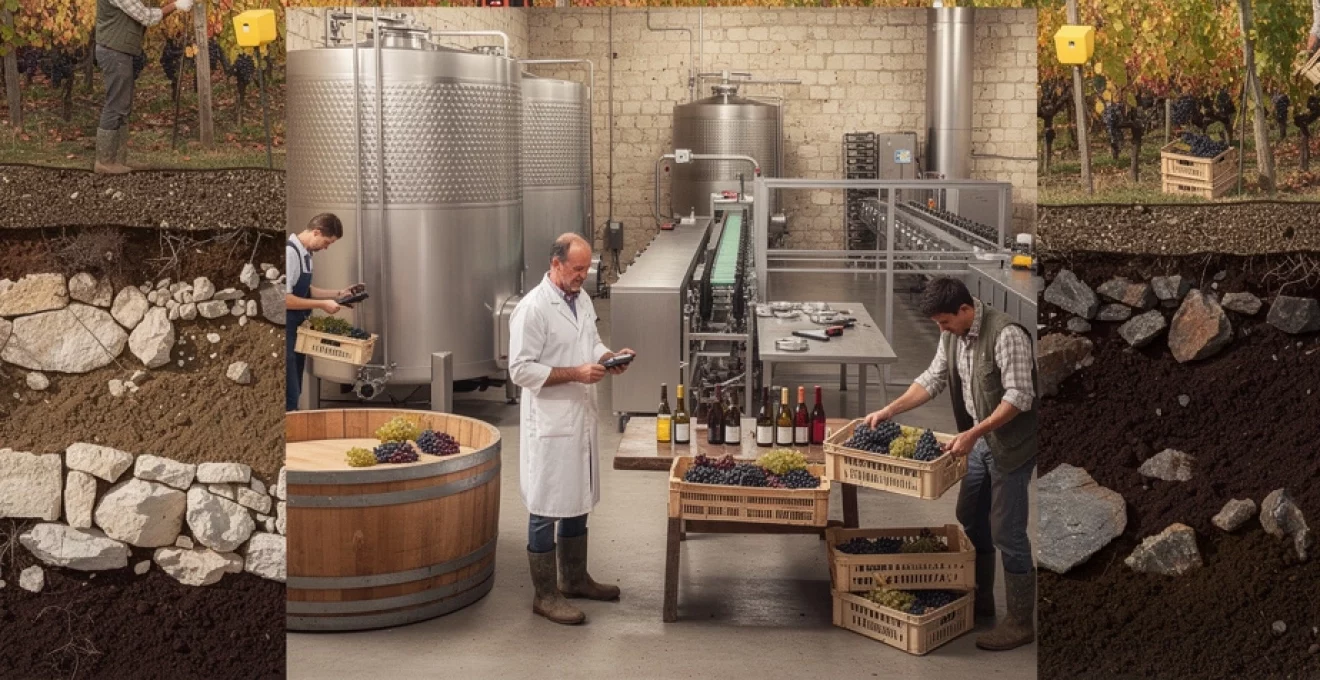
French winemaking represents the pinnacle of centuries-old traditions merged with modern precision, creating wines that express the unique character of their terroir while maintaining the highest quality standards. The process begins long before harvest, rooted in meticulous site selection and continues through sophisticated production techniques that have been refined over generations. From the limestone soils of Champagne to the gravelly terraces of Bordeaux, each French wine tells the story of its origin through careful cultivation, traditional winemaking methods, and an unwavering commitment to authenticity. Understanding how French wine is made reveals not just a production process, but a cultural heritage that has shaped global winemaking standards and continues to influence wine regions worldwide.
French terroir classification and vineyard site selection
The foundation of exceptional French wine begins with terroir, a concept that encompasses the complete environmental fingerprint of a vineyard site. This includes soil composition, climate patterns, topography, and the human element of winemaking tradition. French vignerons have spent centuries mapping and understanding these characteristics, leading to the world’s most sophisticated wine classification system.
Appellation d’origine contrôlée (AOC) system and regional boundaries
The AOC system, established in 1935, governs French wine production with unprecedented precision. This regulatory framework defines not only geographical boundaries but also permitted grape varieties, maximum yields, pruning methods, and winemaking techniques for each appellation. For instance, Champagne AOC restricts production to seven approved grape varieties, with Chardonnay, Pinot Noir, and Pinot Meunier comprising 99% of plantings. The system ensures that wines genuinely reflect their designated terroir whilst maintaining consistent quality standards.
Each AOC classification represents generations of trial and refinement, identifying the optimal grape varieties for specific locations. Burgundy’s AOC hierarchy demonstrates this complexity, with over 100 appellations ranging from regional Bourgogne AOC to individual Grand Cru vineyards covering mere hectares. This granular approach allows consumers to understand precisely what environmental conditions contributed to their wine’s character.
Soil composition analysis: limestone, clay, and schist influences
French winemakers conduct extensive soil analysis to match grape varieties with optimal growing conditions. Limestone soils, prevalent in Champagne and Chablis, provide excellent drainage whilst retaining sufficient moisture during dry periods. The calcium carbonate content influences vine nutrition and contributes to the mineral complexity found in wines from these regions. Clay soils, common in Saint-Émilion, retain water effectively and suit Merlot cultivation, producing wines with rich texture and concentrated flavours.
Schist and granite soils in regions like Côte-Rôtie create dramatically different wine profiles. These crystalline rocks warm during the day and radiate heat at night, extending the growing season and enhancing phenolic development in red grapes. Soil analysis includes measuring pH levels, nutrient availability, and drainage capacity, with many estates conducting annual soil testing to monitor vineyard health and adjust cultivation practices accordingly.
Microclimate assessment in burgundy and bordeaux regions
Microclimate evaluation involves detailed monitoring of temperature variations, humidity levels, wind patterns, and solar exposure across individual vineyard plots. In Burgundy, south-facing slopes receive optimal sunlight for Pinot Noir ripening, whilst cooler exposures suit Chardonnay cultivation. These microclimatic differences can vary significantly within single appellations, explaining why neighbouring vineyards produce distinctly different wines.
Bordeaux’s Left Bank benefits from the Gironde estuary’s moderating influence, creating consistent temperatures that favour Cabernet Sauvignon ripening. The Right Bank’s continental climate with greater temperature variation suits Merlot’s earlier ripening characteristics. Modern vineyard management incorporates weather stations and satellite imagery to monitor these conditions precisely, allowing vintners to make informed decisions about harvest timing and vineyard practices.
Altitude and slope orientation impact on grape development
Elevation significantly affects grape development through temperature gradients and drainage patterns. Higher altitude vineyards experience cooler temperatures, extending the growing season and preserving acidity in the grapes. The Loire Valley’s hillside vineyards
offer cooler nights and better air circulation, which help to protect grapes from disease pressure and retain vibrant natural acidity. In regions such as the Languedoc and the southern Rhône, planting at higher elevations mitigates intense summer heat, producing fresher, more balanced wines despite a warm Mediterranean climate.
Slope orientation determines how much sunlight vines receive and how quickly soils warm in spring. South and southeast-facing slopes in the Northern Hemisphere capture more solar energy, ideal for late-ripening varieties like Cabernet Sauvignon and Syrah. Steeper slopes also improve water drainage and force roots deeper into the subsoil, enhancing mineral uptake and resilience. However, the steepest sites can be difficult to mechanise, so French growers often weigh the trade-off between optimal grape quality and practical vineyard management when planning new plantings.
Viticulture techniques and seasonal vineyard management
Once the ideal vineyard site is established, French wine quality depends on precise viticulture techniques carried out throughout the year. From winter pruning to summer canopy management, each intervention influences grape composition, yield levels, and ultimately the style of the final wine. Many of these practices are enshrined in AOC regulations, but individual domaines refine them to match their specific terroir and grape varieties.
Seasonal vineyard work follows a predictable rhythm: winter pruning to shape the vine, spring shoot selection and tying, early summer leaf thinning and green harvesting if necessary, and late-season crop monitoring as ripeness approaches. Increasingly, French vignerons integrate sustainable and organic methods, reducing chemical inputs and focusing on soil health to produce grapes that fully express their origin. The combination of traditional savoir‑faire and modern agronomy underpins France’s reputation for world-class viticulture.
Pruning methods: guyot simple and cordon de royat systems
Pruning is one of the most decisive operations in vineyard management, as it controls yield, balances vegetative growth, and sets the structure of the vine for decades. In many French wine regions, particularly Burgundy and parts of the Loire, the Guyot simple system dominates. This method retains one fruiting cane and one renewal spur per vine, limiting the number of buds and ensuring a controlled, even crop. For varieties like Pinot Noir and Sauvignon Blanc, Guyot encourages good exposure of the grape clusters and reduces the risk of excessive vigour.
The Cordon de Royat system, common in Champagne, the Rhône Valley, and areas of Bordeaux, uses a permanent horizontal arm (cordon) with multiple short spurs. Each spur carries two or three buds, creating a more uniform distribution of fruit along the trellis wire. This system is particularly well-suited to mechanised vineyard work and to vigorous varieties such as Syrah or some clones of Merlot. When you see low, evenly spaced vines in a French vineyard, there is a good chance you are looking at a carefully pruned Cordon de Royat or Guyot system tailored to that specific terroir.
Canopy management and leaf thinning protocols
Canopy management refers to the way growers arrange and adjust shoots and leaves to optimise light, air circulation, and grape health. In cooler regions like Chablis or Alsace, vignerons may aim for slightly denser canopies to protect bunches from wind and excessive sun, while still allowing enough light for proper ripening. In warmer zones such as Provence or the southern Rhône, leaf thinning on the morning-sun side of the row helps prevent fungal disease and improves flavour development, whilst preserving shade on the afternoon side to avoid sunburn.
Leaf removal around the fruit zone is usually carried out between fruit set and veraison (when grapes change colour). This timing allows improved airflow, which reduces the incidence of Botrytis and powdery mildew. It also increases the concentration of phenolic compounds, enhancing colour and tannin in red grapes. However, excessive leaf thinning can lead to overexposure and burnt aromas, so French growers often treat canopy work like fine-tuning an instrument: small, precise adjustments rather than radical changes.
Integrated pest management in champagne vineyards
Champagne’s cool, often humid climate makes it particularly susceptible to fungal diseases such as downy mildew and powdery mildew. To address this, many Champagne houses have adopted Integrated Pest Management (IPM), a holistic approach that combines monitoring, biological controls, and limited, targeted treatments. Instead of relying on systematic spraying, growers track disease pressure using weather data, spore traps, and regular vineyard scouting, applying treatments only when thresholds are reached.
Biological controls, such as encouraging beneficial insects that prey on pests, and promoting biodiversity through grass cover and hedgerows, help to stabilise the vineyard ecosystem. More than 60% of Champagne’s surface now follows some form of environmental certification, including HVE (High Environmental Value) and organic or biodynamic farming. The goal is clear: protect vine health and maintain high yields without compromising soil life or the long-term expression of terroir in these world-famous sparkling wines.
Harvest timing determination through sugar and acid analysis
Determining the exact harvest date is one of the most critical decisions in French winemaking. Pick too early and the wine may be thin and sharply acidic; too late and it risks high alcohol and jammy flavours. To find the sweet spot, growers combine traditional tasting of berries with modern laboratory analysis. Samples from multiple vineyard parcels are tested for sugar concentration (measured in potential alcohol), total acidity, pH, and phenolic maturity, especially for red wines.
In regions like Bordeaux and the Rhône, winemakers often wait for “physiological ripeness,” when tannins in the skins and seeds have softened, even if this means slightly higher sugar levels. For sparkling wine production in Champagne, by contrast, grapes are harvested earlier to preserve high acidity and moderate sugar, crucial for balanced base wines. As climate change shifts ripening patterns—bringing earlier harvests and riper fruit—this analytical approach helps French vignerons maintain the classic balance that defines their regional styles.
Traditional french winemaking processes and equipment
Once grapes reach the cellar, the transformation from fruit to wine begins in earnest. Traditional French winemaking combines time-honoured techniques such as gentle pressing, gravity flow, and barrel ageing with selective use of technology like temperature-controlled tanks and optical sorting. Rather than following a rigid recipe, each estate adapts its process to grape variety, vintage conditions, and desired wine style.
Red wines typically undergo destemming, followed by maceration on the skins to extract colour, tannin, and aroma compounds. Many top domaines still use open-top wooden vats or concrete tanks, which offer natural temperature stability and micro-oxygenation. White wines, especially in Burgundy and the Loire, may be pressed as whole clusters to obtain pure, delicate juice before fermentation in stainless steel or oak barrels. Throughout, the guiding principle remains the same: intervene just enough to guide the fermentation, but not so much that the voice of the terroir is lost.
Fermentation science and yeast management in french cellars
Fermentation is the heart of winemaking, where grape sugars are converted into alcohol and carbon dioxide by yeast. In French cellars, winemakers pay close attention to yeast selection and fermentation conditions, as these choices have a profound impact on aroma profile, texture, and stability. Some producers rely on indigenous yeasts—microorganisms naturally present on grape skins and in the cellar—which can produce complex, terroir-driven wines but may be slower or less predictable. Others use carefully selected commercial yeast strains tailored to specific grape varieties or desired flavour outcomes.
Temperature control is critical: cool fermentations (around 12–18°C) for aromatic whites like Sauvignon Blanc help preserve delicate floral and citrus notes, while warmer fermentations (up to 30°C) for reds such as Syrah and Cabernet Sauvignon facilitate colour and tannin extraction. During red wine fermentation, techniques like pump-overs, punch-downs, or délestage (rack and return) manage the cap of skins and maximise gentle extraction. As you might imagine, managing fermentation is a bit like steering a sailing boat—you cannot control the wind, but you can trim the sails to reach your destination.
Oak ageing techniques and barrel selection criteria
Ageing in oak is one of the hallmarks of many French wines, adding structure, complexity, and subtle flavours such as vanilla, spice, and toast. Yet oak is a seasoning, not the main ingredient. French winemakers make careful decisions about whether to use oak at all, and if so, what type of barrel, size, age, and toast level best suits a particular cuvée. For fresh, fruit-driven wines like Muscadet or basic Beaujolais, stainless steel or concrete vessels often suffice, preserving primary fruit and crisp acidity. For structured reds from Bordeaux or refined whites from Burgundy, oak ageing can provide the framework necessary for long-term cellaring.
Barrel ageing typically ranges from 6 to 24 months, depending on the appellation and wine style. New barrels impart the most flavour and tannin, so many estates use a mix of new and previously used (one- to three-year-old) barrels to achieve balance. Larger formats such as 500-litre puncheons or traditional foudres (large wooden vats) offer more subtle oak impact than standard 225-litre barriques. In every case, the goal is integration: by the time the wine is bottled, oak and fruit should feel like a single, harmonious voice.
French oak forests: allier, vosges, and limousin cooperage sources
Not all oak is created equal. French coopers source wood from several renowned forests, each lending distinct characteristics to barrels. Oak from the Allier forest is prized for its fine grain and subtle tannins, ideal for high-end Burgundy and Bordeaux wines where finesse is paramount. Vosges oak tends to have slightly more pronounced aromatic impact, contributing spicy and smoky notes that pair well with robust reds like Syrah or Malbec.
Limousin oak, with its wider grain and higher tannin content, has traditionally been favoured for spirits such as Cognac but is also used for certain powerful red wines. Before a tree becomes a barrel, the staves are air-dried outdoors—often for 24 to 36 months—to mellow raw tannins and remove harsh green characters. The choice of forest, drying time, and cooper all form part of the “seasoning” decisions that shape the final profile of a French wine.
Toast levels and grain tightness selection for different wine styles
During barrel production, coopers toast the inside of the staves over an open fire, caramelising wood sugars and transforming raw oak aromas into nuanced flavours. Toast levels typically range from light to medium and heavy, each contributing different aromatic signatures. Light toast preserves more coconut and fresh wood notes, while medium toast brings vanilla, baking spice, and subtle smoke—common choices for balanced Bordeaux blends and Chardonnay. Heavy toast emphasises coffee, chocolate, and pronounced char, suitable for very powerful reds where the fruit can stand up to intense oak.
Grain tightness, determined by the growth rate of the oak tree, also influences oxygen transfer and flavour extraction. Tight-grained barrels release tannins slowly and gently, enhancing elegance and length, which is why they are often reserved for top cuvées. Looser-grained barrels provide more rapid integration and are sometimes chosen for wines intended for earlier drinking. By matching toast level and grain to grape variety and style, French winemakers use barrels much like a chef uses different pans and cooking techniques to achieve a precise culinary result.
Malolactic fermentation control in burgundian pinot noir
Malolactic fermentation (MLF) is a secondary, bacterial process that converts sharp malic acid (think green apple) into softer lactic acid (similar to cream). In Burgundy, MLF is almost universally encouraged for red Pinot Noir and for many white Chardonnays as well. For Pinot Noir, MLF helps to round tannins, stabilise colour, and contribute savoury, complex aromas, while reducing the perception of angular acidity. Typically, MLF takes place in barrel after the primary alcoholic fermentation, often without inoculation, relying on native bacteria in the cellar.
Winemakers manage MLF through temperature and sulphur dioxide levels. Warmer cellar temperatures favour a smooth, timely conversion, while cooler conditions or higher SO₂ can delay or prevent the process. Careful monitoring is essential; incomplete MLF can lead to instability in bottle, whereas overly rapid MLF may produce unwanted aromas. When well controlled, however, malolactic fermentation is like the final brushstroke on a Burgundian Pinot Noir, giving the wine its silky texture and signature harmony.
Sur lie ageing protocols in loire valley muscadet production
In the Loire Valley’s Muscadet appellation, sur lie ageing is a traditional technique that defines the region’s best wines. After fermentation, Muscadet—made from the Melon de Bourgogne grape—is left to rest on its fine lees: the dead yeast cells and other microscopic particles that settle at the bottom of the tank or barrel. Instead of racking the wine off these lees immediately, producers keep it in contact for several months, often until just before bottling in spring or early summer.
Periodic stirring of the lees, known as bâtonnage, can increase mouthfeel and add subtle brioche and nutty notes, much like adding cream to a sauce. Sur lie ageing also protects the wine from oxidation and enhances its ability to age gracefully in bottle, despite its generally moderate alcohol and delicate structure. The result is a crisp, saline white wine with surprising depth and texture—an ideal partner for oysters and seafood—that showcases how a simple technique can elevate a regional specialty into a benchmark French wine style.
Quality control and bottling standards in french wineries
Before French wine reaches your glass, it passes through stringent quality control measures that safeguard both authenticity and consumer confidence. AOC and IGP regulations set parameters for yields, minimum alcohol levels, and analytical limits on factors such as volatile acidity and sulphur dioxide. Many appellations also require tasting panels to approve wines before they can be sold under the prestigious name, ensuring that each bottle reflects the expected style and typicity of its region.
In the cellar, estates routinely analyse wines for stability, clarity, and microbiological soundness before bottling. Filtration and fining are applied judiciously, with some producers opting for minimal intervention to preserve texture and aromatic intensity. Bottling itself is performed under strictly controlled conditions, using inert gases to minimise oxygen exposure and sterile lines to prevent contamination. Whether the wine is sealed with natural cork, technical cork, or screwcap, the objective remains the same: deliver a stable, expressive French wine that faithfully represents its vineyard origin from the moment you pull the cork.