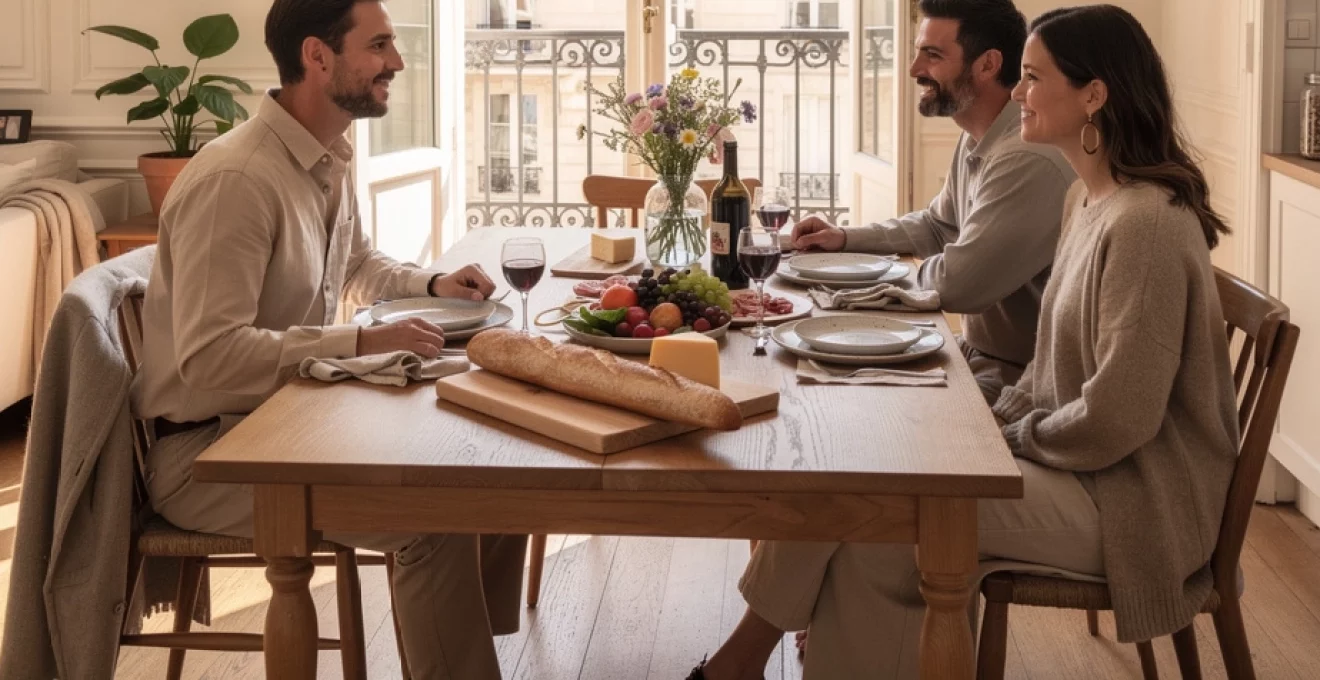
France has long captivated the world with its distinctive approach to living—one that seamlessly blends sophistication with simplicity, luxury with restraint. This cultural phenomenon extends far beyond stereotypical images of Parisian cafés and fashion runways, representing a fundamental philosophy that permeates every aspect of French domestic life. From the careful curation of living spaces to the thoughtful preparation of meals, French culture demonstrates that true elegance emerges not from excess, but from a deep appreciation of quality, authenticity, and mindful living.
The French mastery of l’art de vivre—literally « the art of living »—offers valuable insights for anyone seeking to cultivate a more refined yet accessible lifestyle. This approach prioritises pleasure derived from simple, well-chosen elements rather than accumulation of possessions or frantic pursuit of trends. Understanding these principles can transform how you approach everything from interior design choices to daily routines, creating spaces and experiences that feel both luxurious and genuinely liveable.
French lifestyle philosophy: L’Art de vivre and Savoir-Vivre principles
The foundation of French elegance rests upon two interconnected concepts: l’art de vivre and savoir-vivre. These principles, deeply embedded in French culture, guide how individuals approach everything from personal relationships to material possessions. L’art de vivre encompasses the ability to extract maximum pleasure and meaning from life’s experiences, whilst savoir-vivre refers to the knowledge of how to conduct oneself appropriately in various social situations.
These philosophies manifest in distinctly French approaches to time management and social interaction. Rather than viewing leisure as indulgence, French culture treats rest and reflection as essential components of a well-lived life. This perspective influences everything from the sacred nature of lunch breaks to the importance of annual holidays, creating a rhythm that prioritises quality experiences over quantity of activities.
The French understand that true luxury lies not in having everything, but in deeply appreciating what you choose to surround yourself with.
Minimalist aesthetics in french interior design: marie kondo meets parisian chic
French interior design embodies a sophisticated minimalism that predates modern decluttering movements by centuries. This aesthetic philosophy centres on selecting fewer, higher-quality pieces that serve both functional and beautiful purposes. French homes typically feature carefully chosen antiques alongside modern pieces, creating spaces that feel layered yet uncluttered.
The colour palette in French interiors tends towards neutrals—creams, soft greys, and muted blues—allowing architectural features and carefully selected accent pieces to command attention. This restraint creates visual calm whilst highlighting the inherent beauty of well-crafted furniture and accessories.
Capsule wardrobe methodology: quality over quantity in french fashion
French fashion epitomises the capsule wardrobe concept through its emphasis on timeless pieces that can be mixed, matched, and worn across seasons. This approach involves investing in well-made basics—a perfectly tailored blazer, quality leather shoes, classic trench coats—rather than following fleeting trends. The result is a wardrobe that requires less space, less decision-making, yet offers more genuine style flexibility.
This methodology extends beyond clothing to accessories, where French women often own fewer pieces but choose items that complement multiple outfits. A silk scarf might serve as a hair accessory, bag embellishment, or neck accent, demonstrating the French preference for versatile, multi-functional beauty.
Slow living movement: embracing the french concept of « prendre son temps »
Prendre son temps—taking one’s time—represents a cornerstone of French lifestyle philosophy. This concept challenges the prevalent culture of rushing and multitasking, instead advocating for deliberate, mindful engagement with daily activities. Whether savoring a morning coffee or preparing an evening meal, the French approach emphasises presence and attention to the task at hand.
This philosophy influences everything from work-life balance to social interactions. French culture supports longer lunch breaks, extensive holiday periods, and social gatherings that unfold naturally rather than
forced into rigid time slots. An apéritif might begin at 7 p.m. and continue well past sunset, not because of inefficiency, but because human connection is given space to breathe. In practical terms, embracing this French slow living mindset might mean protecting mealtimes from screens, scheduling fewer but more meaningful commitments, or even walking instead of driving when possible, simply to enjoy the journey as much as the destination.
Importantly, prendre son temps is not about laziness. Rather, it is a conscious decision to move through life at a pace that allows you to notice details—the aroma of fresh bread on your street, the changing light on your balcony, the tone of a friend’s voice. Much like reading a good novel slowly instead of skimming the pages, the French lifestyle philosophy invites you to extract more pleasure and meaning from the same 24 hours you already have.
Mindful consumption patterns: anti-consumerist culture in modern france
While France is undeniably a consumer society, everyday life often reflects a more restrained, mindful approach to buying and owning. French households tend to prioritise durability and emotional connection over volume and novelty. The typical Parisian apartment simply does not have the storage space for endless impulse purchases, encouraging a more curated relationship with possessions.
This anti-consumerist tendency appears in small but telling habits: repairing shoes instead of replacing them, re-covering a well-loved armchair rather than buying new, or inheriting family tableware that is used every week, not stored for “special occasions”. You are more likely to find a modest but high-quality collection of objects than cupboards bursting with rarely used items. In this way, consumption becomes deliberate rather than automatic, aligning with the broader French preference for quality over quantity.
For anyone wanting to adopt this French lifestyle principle, a useful question is: “Will I still want and use this in five years?” If the answer is unclear, the French response is often to wait, reflect, and perhaps walk away. This gentle resistance to instant gratification can feel counter-cultural, yet it contributes to calmer homes, healthier finances, and a more sustainable relationship with the environment.
Culinary sophistication through simplicity: french gastronomic traditions
Nowhere is the French art of living more visible than at the table. French gastronomy has a reputation for sophistication, yet much of its magic lies in elevating simple, seasonal ingredients rather than relying on complexity. Everyday meals in France are rarely extravagant, but they are thoughtfully composed: a crisp green salad, a slice of quiche, fresh fruit, and a glass of wine can form a perfectly balanced dinner.
This approach to food is less about elaborate recipes and more about rituals: planning the menu, visiting the market, setting a proper table, taking time to savour each course. In 2010, UNESCO recognised the “gastronomic meal of the French” as part of the world’s intangible cultural heritage, highlighting its emphasis on togetherness, pleasure, and respect for good products. You do not need a Michelin-starred kitchen to benefit from these traditions; you simply need a willingness to cook and eat with intention.
Farm-to-table philosophy: terroir and seasonal ingredient sourcing
The French notion of terroir—the unique character imparted by soil, climate, and local know-how—shapes how people think about everything from wine to cheese to tomatoes. Instead of treating ingredients as interchangeable, French cooks pay attention to where food comes from and when it is in season. A strawberry from the south of France in May is celebrated differently from an imported berry in December, and menus adjust accordingly.
Local markets exemplify this farm-to-table philosophy. In almost every town, weekly markets bring together small producers selling seasonal vegetables, regional cheeses, cured meats, and artisanal bread. Recent surveys by France’s agriculture ministry indicate that more than 70% of French consumers buy at a local market at least once a month, illustrating how deeply embedded this habit is. By aligning meals with the rhythm of the seasons, households enjoy better flavour and naturally diversify their diet across the year.
If you wish to adopt this French-style farm-to-table approach at home, start small. Choose one or two ingredients—perhaps tomatoes in summer, squash in autumn—and buy them when they are at their peak from a farmers’ market or trusted greengrocer. Build your weekly menus around these star ingredients. Over time, you will find that cooking becomes simpler because the raw materials provide so much inherent flavour, reducing the need for heavy sauces or complicated techniques.
Classic french cooking techniques: julia child’s mastery of fundamental methods
Julia Child famously demystified French cooking for anglophone audiences, not by focusing on restaurant-level complexity, but by teaching fundamental techniques that anyone could learn. Her emphasis on methods such as sautéing, braising, roasting, and creating simple pan sauces reflects the backbone of French home cooking. Once you master these basic skills, you can prepare a wide range of dishes with confidence and minimal stress.
Consider, for example, the humble roast chicken—a staple of French Sunday lunches. With proper seasoning, a hot oven, and occasional basting, this simple dish becomes a centrepiece that feels both comforting and elegant. The same applies to vegetable dishes: lightly sautéed green beans with butter and garlic, or leeks slowly braised in stock and finished with cream, transform everyday produce into something memorable without requiring advanced expertise.
From an everyday perspective, learning a few classic French techniques is like acquiring a reliable toolkit. Instead of following rigid recipes, you begin to understand principles: how heat affects texture, when to salt, how to deglaze a pan to capture flavour. This technical foundation supports a more relaxed, improvisational style of cooking, perfectly aligned with the French belief that good food should be pleasurable rather than stressful to prepare.
Wine pairing expertise: sommelier-level appreciation in daily dining
Wine in France is not reserved solely for special occasions; instead, it often plays a modest but meaningful role in daily meals. What distinguishes the French approach is not lavish consumption, but informed, respectful enjoyment. Even without formal sommelier training, many households pay attention to basic pairing principles—lighter wines with fish and poultry, fuller-bodied reds with red meat or robust stews, sweet wines with dessert or blue cheese.
This everyday wine culture encourages curiosity rather than snobbery. Supermarkets and local cavistes (wine merchants) offer regional selections at accessible prices, and labels commonly highlight the appellation, grape variety, and suggested food pairings. According to recent industry data, the average French adult drinks less wine than in previous decades, but they tend to drink better wine, focusing on quality and origin over volume.
If you wish to cultivate French-style wine appreciation at home, start by exploring wines from a single region—Bordeaux, Loire, Rhône, or Languedoc, for instance—and taste them alongside simple meals you already enjoy. Keep a small notebook or digital log of what you liked and why. Over time, you will develop your own internal “sommelier”, making it easier to select a bottle that enhances your dinner without needing an encyclopaedic knowledge of oenology.
Artisanal food production: fromager, boulanger, and charcutier craftsmanship
Artisanal food shops are central to French everyday life, even in an era of large supermarkets. The boulanger (baker) provides daily bread, the fromager (cheesemonger) curates regional cheeses, and the charcutier (specialist in cured meats) prepares pâtés, terrines, and sausages. Each craft represents generations of accumulated knowledge, much like a family-owned workshop that refines its expertise over time.
For many French people, visiting these specialised shops is as much a social ritual as a practical task. You ask the fromager which cheese is at its best this week or request a baker’s recommendation for the perfect loaf to accompany soup. This exchange of advice and stories reinforces a culture where food is connected to people, places, and traditions rather than anonymous supply chains.
Even if you do not have access to the same density of speciality shops, you can bring this artisanal mindset into your own kitchen. Choose one product—bread, jam, yoghurt, or even simple pickles—and learn to make it from scratch, paying attention to texture, flavour, and presentation. Over time, you will likely discover that a few homemade or carefully chosen artisanal items can elevate your daily meals, echoing the French principle that simple food, well made, is enough.
Architectural elegance and spatial design in french domestic environments
The French art of living is inseparable from the spaces in which it unfolds. Whether in a compact Parisian apartment or a farmhouse in Provence, French homes are designed to balance practicality with aesthetic pleasure. High ceilings and tall windows might coexist with creaking parquet floors and imperfect plaster walls, creating an environment where age and patina are embraced rather than concealed.
French domestic architecture favours clear spatial hierarchies: distinct areas for cooking, dining, and relaxing, even in small footprints. Instead of open-plan expanses filled with furniture, you are more likely to find carefully defined rooms that each serve a specific purpose. This structure supports daily rituals—lingering over breakfast at a small table by the window, reading in a dedicated corner, or preparing meals in a kitchen optimised for efficiency rather than spectacle.
Haussmann architecture: optimising living spaces in parisian apartments
In Paris, much of the city’s visual harmony comes from Haussmann-era buildings, characterised by stone façades, wrought-iron balconies, and uniform rooflines. Inside, these apartments offer high ceilings, large windows, and often original features such as decorative mouldings and fireplaces. At first glance, they might appear grand, yet the actual living area is frequently modest, requiring clever design to make the most of every square metre.
Parisians respond to this constraint with ingenuity. Built-in cupboards line hallways, mezzanines transform high ceilings into additional sleeping or storage space, and multi-functional furniture—such as sofa beds or extendable tables—allows one room to serve different roles across the day. The goal is to preserve a sense of openness and light while ensuring the apartment remains fully usable, a balance that exemplifies living simply yet elegantly.
For those looking to apply Haussmann-inspired principles elsewhere, consider focusing on three elements: verticality, symmetry, and light. Use tall bookcases or curtain rods hung close to the ceiling to draw the eye upward, arrange furniture in balanced groupings to create visual calm, and keep window areas as uncluttered as possible to maximise daylight. Even without ornate mouldings or original fireplaces, you can create a similar impression of refined spaciousness.
Provincial design elements: provence and normandy regional aesthetics
Outside Paris, regional aesthetics help define the character of French homes. In Provence, interiors often feature sun-washed colours—ochres, soft yellows, and terracotta tones—paired with natural materials such as stone, linen, and aged wood. Windows are designed to capture breezes, shutters control the intense southern light, and outdoor spaces like terraces or shaded courtyards function as natural extensions of the home.
Normandy, by contrast, leans toward cooler hues and sturdier forms that reflect its maritime climate. Half-timbered houses, slate roofs, and thick walls create a sense of shelter, while interiors might incorporate checks, stripes, and simple white ceramics. Kitchens often centre around a solid wooden table that doubles as a workspace and gathering spot, echoing the region’s agricultural traditions.
Adapting these provincial design ideas does not require a complete remodel. You might introduce Provençal touches through linen tablecloths, woven baskets, and terracotta pots filled with herbs, or evoke Normandy with blue-and-white textiles and rustic wooden furniture. In both cases, the emphasis is on authenticity and comfort: materials that age gracefully, colours that echo the local landscape, and objects that are both beautiful and useful.
Sustainable building practices: eco-conscious renovation techniques
Modern French households are increasingly integrating sustainability into their domestic environments. Government incentives encourage energy-efficient renovations, such as improved insulation, double-glazed windows, and more efficient heating systems. In cities and countryside alike, there is growing interest in using eco-friendly materials—lime-based plasters, reclaimed wood, and low-VOC paints—that respect both the building’s heritage and the environment.
Renovating in a French context often means working with rather than against an existing structure. Instead of demolishing interior walls indiscriminately, homeowners might preserve original beams, stone walls, or tiles, combining them with contemporary fixtures. This approach reduces waste and maintains architectural character while still achieving modern standards of comfort and energy performance.
If you are considering eco-conscious improvements in your own home, you can take inspiration from this blend of old and new. Start with high-impact, low-visibility upgrades—insulation, efficient windows, LED lighting—then move to aesthetic choices like natural fabrics and responsibly sourced wood. Think of your renovation as a conversation between past and present, where each decision contributes to a more sustainable, yet still elegant, way of living.
Natural light optimisation: window placement and reflective surfaces strategy
Natural light is treated almost as a design material in French interiors. Rooms are often organised to ensure that key living areas—such as the salon and dining space—benefit from the best daylight. Even in older buildings where window placement is fixed, careful use of colour, mirrors, and reflective surfaces helps distribute light deeper into the home.
White or light-coloured walls are common, not because they are fashionable, but because they enhance brightness in often compact spaces. Mirrors are strategically placed opposite windows to bounce light and visually expand the room, while glass elements—such as internal doors with panes or slim console tables—help maintain a sense of openness. Heavy curtains might be used for privacy at night, but during the day, sheer fabrics allow light to filter through softly.
To apply this French strategy, imagine light as water flowing into your space. Where does it enter, and where does it pool or disappear? Position mirrors and lighter surfaces where they can “catch” and redirect this flow. Clear window sills of unnecessary objects, choose lighter window treatments, and consider using glossy or satin finishes on select furnishings to subtly reflect light without creating glare. The result is a home that feels more serene and spacious, even if its actual dimensions remain unchanged.
Social rituals and cultural practices: refined interpersonal engagement
French elegance is not confined to objects and spaces; it also manifests in how people interact. Everyday social rituals—saying bonjour upon entering a shop, exchanging la bise (cheek kisses) among friends, or lingering at the table after a meal—create a fabric of politeness and connection. These practices express the savoir-vivre principle: knowing how to behave in ways that show respect for others and for the moment you share.
Meals are particularly important social anchors. Even a simple weekday dinner often includes a proper table setting, conversation without background television, and a clear beginning and end. Guests are welcomed not with grand displays, but with thoughtful gestures: fresh flowers, a small apéritif, or a carefully chosen cheese board. In this context, etiquette is less about rigid rules and more about making others feel comfortable and valued.
If you want to integrate these refined social habits into your own life, start with small, consistent rituals. Greet neighbours when you cross paths, resist the urge to check your phone at the table, and take a few extra minutes to lay out plates, cutlery, and glasses even for solo meals. Over time, these gestures transform routine interactions into moments of shared humanity, echoing the French belief that everyday life deserves a touch of ceremony.
Economic sustainability and conscious spending habits in french households
Beneath the visible elegance of French living lies a pragmatic approach to money. Many households prioritise financial stability and long-term value over showy consumption. It is not uncommon to find a modest-sized apartment furnished with a mix of inherited pieces, second-hand finds, and a few carefully chosen new items, rather than a full set of brand-new furniture bought on credit.
This mindset extends to daily expenses. Eating out at fine restaurants may be reserved for special occasions, while most meals are cooked at home using affordable, seasonal ingredients. A good baguette, cheese, and salad can form an inexpensive yet satisfying dinner. According to recent consumer studies, French families still allocate a significant portion of their budget to food compared with some other European countries, but this is often seen as an investment in quality of life rather than a luxury.
Conscious spending also appears in the preference for repairing, reselling, or donating items instead of discarding them. Second-hand marketplaces, vintage clothing shops, and repair services are widely used, reflecting both economic and environmental considerations. If you are seeking to align your own finances with this French-inspired philosophy, consider focusing your budget on what genuinely enhances daily life—good food, comfortable housing, occasional travel—and reducing expenditure on status-driven or rarely used items.
Wellness integration: french approaches to physical and mental health balance
Wellness in France is woven into daily routines rather than treated as a separate project. Walking remains one of the most common forms of physical activity; many city dwellers easily surpass recommended daily step counts simply by doing errands on foot. Instead of relying solely on gyms, people integrate movement into life—climbing stairs, cycling to work, or taking weekend hikes.
Mental well-being is supported by cultural norms that protect leisure time. Generous holiday allowances, regulated working hours, and an expectation that emails will not be answered late at night all contribute to clearer boundaries between professional and personal life. While no system is perfect, these structures reflect a collective understanding that rest is not a reward but a necessity.
Food, again, plays a central role. Regular mealtimes, balanced portions, and the habit of eating at the table rather than on the go support digestion and mindful eating. Rather than following extreme diet trends, the French approach favours moderation: enjoy rich foods occasionally, counterbalance them with lighter meals, and pay attention to satiety cues. It is an analogy often made with budgeting—small, consistent habits have more impact than dramatic, short-lived efforts.
To bring this integrated wellness approach into your own life, you might start by choosing one or two “anchor” habits: a daily walk without headphones, a tech-free lunch break, or a weekly evening dedicated to cooking and eating a simple, nourishing meal. These practices, modest as they seem, embody the essence of living simply yet elegantly: honouring your body and mind with the same care you give to your home and relationships.