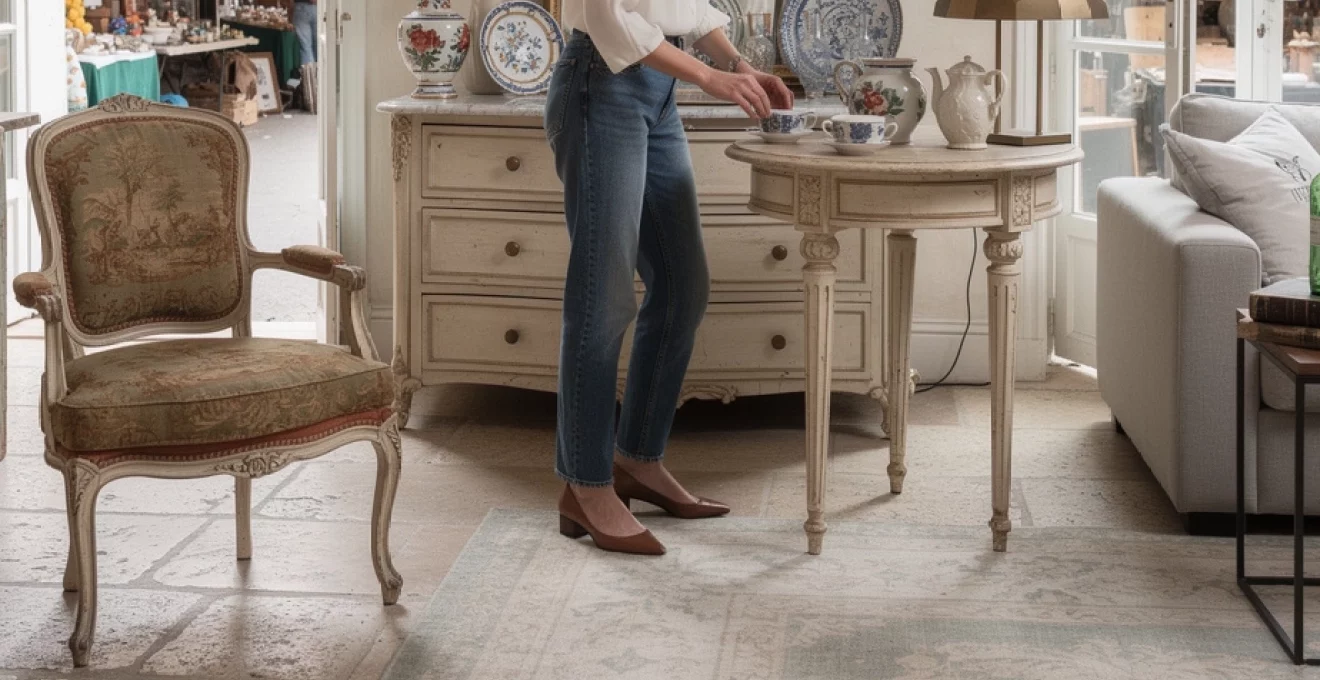
The French approach to decorating with antiques transcends mere collecting—it represents a sophisticated art form that marries history with contemporary living. From the bustling alleys of Les Puces de Saint-Ouen to the charming weekend vide-greniers scattered across provincial towns, France’s rich tradition of antique hunting has cultivated a distinctive decorating philosophy that emphasises authenticity, provenance, and the subtle integration of historical pieces into modern homes. This deeply ingrained cultural appreciation for objets anciens has transformed French interior design into a coveted aesthetic that balances elegance with lived-in comfort, creating spaces that feel both curated and effortlessly natural.
Understanding french brocante culture and market dynamics
French brocante culture represents far more than casual antiquing—it embodies a national passion for preserving history through decorative arts. The terminology itself reveals the sophistication of this market system, where brocanteurs specialise in second-hand goods with character, whilst antiquaires focus on verified historical pieces. This distinction shapes not only pricing structures but also the entire shopping experience, creating distinct market segments that cater to different collecting philosophies and budgetary considerations.
The seasonal rhythm of French flea markets follows centuries-old traditions, with peak activity occurring during spring and autumn months when weather conditions optimise outdoor browsing. Professional dealers often maintain year-round schedules, establishing regular circuits between major markets and smaller regional events. Understanding these patterns becomes crucial for serious collectors, as the best pieces frequently appear during specific seasonal cycles when estates are cleared or collections are refreshed.
Les puces de Saint-Ouen: europe’s largest antiques market navigation
Navigating Les Puces de Saint-Ouen requires strategic planning and market knowledge that extends beyond simple tourist recommendations. This sprawling complex comprises fourteen distinct markets, each with specialised focus areas ranging from high-end antiques in Marché Biron to industrial salvage in Marché Dauphine. Professional decorators typically begin their visits before 8 AM, when dealers are still arranging displays and negotiation opportunities remain most flexible.
The market’s internal geography reflects decades of organic development, with established dealers maintaining prime locations whilst newcomers occupy peripheral stalls. Savvy buyers develop relationships with specific vendors, creating networks that provide advance notice of exceptional pieces. The most successful acquisitions often result from these ongoing professional relationships rather than chance discoveries during casual browsing sessions.
Marché aux puces de vanves weekend trading patterns
Vanves operates under fundamentally different dynamics compared to its larger Saint-Ouen counterpart, functioning primarily as a weekend destination for both amateur collectors and professional scouts. The market’s compact size enables comprehensive coverage within a single morning, making it particularly attractive for targeted searches. Dealers here specialise in smaller decorative objects, vintage textiles, and mid-century pieces that complement contemporary interiors without overwhelming existing décor schemes.
Weekend trading patterns at Vanves reveal distinct buying behaviours, with serious collectors arriving early Saturday mornings whilst casual browsers dominate Sunday afternoons. This temporal distribution affects both available inventory and pricing flexibility, as vendors adjust their strategies based on anticipated customer demographics and remaining stock levels.
Regional Vide-Grenier events and seasonal scheduling
Regional vide-grenier events represent France’s grassroots antique culture, where private individuals clear family estates and personal collections. These events often yield the most authentic discoveries, as pieces emerge directly from their original domestic contexts without dealer intervention. However, successful vide-grenier shopping requires understanding local scheduling patterns, which typically coincide with school holidays and traditional festival periods.
The quality and character of regional events vary significantly based on local demographics and economic conditions. Affluent suburban areas often produce higher-quality furnishings and decorative objects, whilst rural locations specialise in agricultural antiques and folk art pieces. Smart collectors maintain detailed calendars tracking the most productive regional circuits, developing expertise in predicting which events will yield the most valuable discoveries.
French antiquaire vs brocanteur vendor classifications
The distinction between antiquaires and brocanteurs fundamentally shapes French antique market dynamics and purchasing strategies. Antiquaires operate
The distinction between antiquaires and brocanteurs fundamentally shapes French antique market dynamics and purchasing strategies. Antiquaires operate as regulated professionals, typically with permanent shops, specialised expertise, and a legal obligation to provide accurate descriptions and, where applicable, documentation of authenticity. Their stock skews toward museum-quality furniture, fine art, and vetted decorative arts, with pricing that reflects both provenance and restoration costs. Brocanteurs, by contrast, inhabit the more informal end of the spectrum, dealing in second-hand and vintage pieces that may not meet strict age or rarity criteria but carry strong decorative potential.
For international buyers, understanding this division helps calibrate expectations and negotiation strategies. You might visit an antiquaire when seeking a signed Louis XVI commode with documented provenance, and turn to brocanteurs for charming woven baskets, gilt mirrors, or farmhouse tables that evoke French country style without the premium of blue-chip collectables. Many successful decorators blend both sources, using high-value antiques as focal points and brocante finds to add layers of character, texture, and that coveted “lived-in” French look.
Authentic french antique authentication and provenance verification
Authenticating French antiques requires more than a quick glance at a dealer’s label; it is a methodical process that combines stylistic analysis, construction details, and documentary evidence. While you may not become an expert overnight, learning basic authentication techniques for key categories—such as Louis XV and Louis XVI furniture, Limoges porcelain, and French faience—dramatically reduces the risk of costly mistakes. You are not only buying an attractive object, you are buying a fragment of French decorative history, and verifying provenance is how you ensure that story is real.
In practice, provenance verification in France often involves a blend of oral history, receipts from previous sales, auction catalogues, and, in rare cases, archival evidence. When a piece is described as “sortie de château”, ask what that claim is based on. Serious antiquaires will welcome your questions and may show old photographs, expert reports, or prior valuations. When documentation is thin, focus on physical clues: tool marks, hardware, patina, and wear patterns that match (or contradict) the stated age.
Louis XV and louis XVI furniture period identification techniques
Differentiating between Louis XV and Louis XVI furniture is one of the most useful skills for anyone decorating the French way with antiques. Louis XV (circa 1723–1774) is associated with the Rococo movement: think sinuous curves, cabriole legs, asymmetrical carvings, and a general sense of movement and lightness. Louis XVI (circa 1774–1793) marks a return to classical order, with straighter lines, fluted legs, and motifs drawn from antiquity such as laurel wreaths, Greek key, and urns. Spotting these differences in form is your first line of authentication when browsing French flea markets.
Construction details provide even stronger evidence. On genuine 18th-century pieces, you will often find hand-cut dovetail joints that are slightly irregular, tool marks on hidden surfaces, and oxidation consistent with age on iron nails and screws. Drawer bottoms may be chamfered and run front to back rather than side to side, and back panels are typically in solid planks rather than plywood. If a piece advertised as Louis XV features machine-cut dovetails, MDF panels, or Phillips-head screws, you are likely looking at a later reproduction or a heavily restored item whose value is primarily decorative.
Limoges porcelain maker’s marks and dating methods
Limoges porcelain is one of the most collected French decorative arts categories, and understanding marks is essential if you hope to distinguish a late-19th-century dinner service from a contemporary tourist souvenir. Most genuine Limoges pieces carry at least two marks: one from the factory (e.g., Haviland, Bernardaud) and another from the decorator. These are usually found on the underside, often in green, blue, or red, and may include the word “Limoges”, a company name, and, on export pieces, “France”.
Dating Limoges porcelain involves cross-referencing these marks with published reference guides and online databases maintained by collectors’ associations. Subtle shifts in typography, border shapes around the logo, or the presence of “Depose” can indicate a specific production decade. For example, many export wares produced after the McKinley Tariff Act of 1891 include “France” in English, while earlier domestic pieces might carry only a factory stamp. Hairline cracks, crazing, and minor kiln imperfections are normal in older porcelain and can even support an earlier date, but be wary of artificially aged items where distress appears too uniform or has been deliberately stained.
French faience regional style recognition from quimper to rouen
French faience, or tin-glazed earthenware, is highly regional, and recognising these regional signatures instantly makes you a more confident buyer at brocantes. Quimper, in Brittany, is famous for its naïve, folkloric figures in traditional dress, often framed by floral borders in blue, yellow, and rusty red. Rouen faience, by contrast, tends toward intricate lambrequin borders, stylised florals, and a more formal palette dominated by cobalt blue with touches of red and yellow. Nevers, Moustiers, and Strasbourg each have their own visual dialects, from mythological scenes to delicate bird motifs.
When evaluating faience, inspect the glaze closely. Authentic 18th and 19th-century pieces usually show slight pitting, minor glaze pooling around edges, and hand-painted decoration with visible brushstrokes and small inconsistencies—these “imperfections” are part of their charm. Many 20th-century reproductions are perfectly valid decorative purchases but should be priced accordingly; their glazes are often more uniform and their colours brighter. Lifting a plate or platter, you may find incised initials, numbers, or factory marks that can be cross-checked in reference books to confirm both region and approximate date.
Art nouveau and art deco period verification protocols
Art Nouveau and Art Deco objects are particularly prominent in French flea markets, from glass and lighting to furniture and jewellery. Art Nouveau (circa 1890–1910) is characterised by whiplash curves, vegetal motifs, and an almost organic fluidity—it is the visual equivalent of a vine unfurling. Art Deco (circa 1910–1939), on the other hand, prefers geometry, stepped forms, sunbursts, and streamlined silhouettes inspired by the machine age. When you identify the design language correctly, you are already halfway to accurate period verification.
Because both styles have been heavily reproduced, protocol matters. Check materials first: early Art Deco furniture often uses solid woods with veneer inlays and original brass hardware, whereas later reproductions may rely on chipboard or plastic details. In lighting, look for original cloth-covered wiring (often replaced for safety), thick glass shades, and patina consistent with decades of oxidation. Signatures on glass (Gallé, Daum, Lalique) and metalwork can be etched, moulded, or engraved; be wary of crude, shallow signatures that sit awkwardly on the surface. When in doubt, photograph the piece and compare it to archived auction results—it is like matching handwriting samples when verifying a signature.
Strategic sourcing techniques for french flea market acquisitions
Strategic sourcing in French flea markets is about approaching the hunt as both a treasure seeker and a tactician. Before you even step into a brocante, define your priorities: are you building a collection of authentic French antiques, or seeking decorative pieces to achieve a French country aesthetic at a manageable price? Knowing your goals informs which markets to prioritise, how early you arrive, and how assertively you negotiate. It also helps you decide when to walk away—a crucial skill when something feels overpriced or inauthentic.
Time of day plays a significant role in acquisition strategy. Early morning, especially on dealer-only or trade-preview days, offers first access to the best French antique furniture and decorative objects, but prices tend to be firmer. Late afternoon, by contrast, can be ideal for negotiating on bulk buys or larger pieces that sellers are reluctant to pack away. Many seasoned buyers adopt a two-pass approach: a rapid reconnaissance round to identify promising stalls and a second, more focused circuit to negotiate and purchase once they have a sense of prevailing price levels.
Logistics are equally important. Measure your spaces at home, carry a small tape measure, and keep photographs of your rooms on your phone so you can quickly visualise how a potential purchase will integrate. For larger items, ask vendors about delivery options—many French antique dealers collaborate with transporters who specialise in shipping to the UK, US, and other international destinations. If you are travelling, factor customs regulations and shipping costs into your budget; a bargain armoire loses its charm if freight doubles the total investment.
Finally, cultivate relationships the way the French do. Consistently returning to the same vendors, greeting them politely, and showing genuine interest in their stock builds trust over time. You may be offered better prices, early access to fresh inventory, or even notified of private estate clearances. In a world where online platforms make everything feel transactional, this human network is one of the most powerful strategic sourcing tools available to you.
Interior design integration using french antique styling principles
Acquiring French antiques is only half the story; the real magic lies in how you integrate them into your home. French interiors rarely resemble static museum displays. Instead, they feel evolving, personal, and layered, with antiques living alongside contemporary pieces in a way that seems almost accidental—though in reality it reflects an intuitive grasp of scale, proportion, and contrast. When you apply these French antique styling principles, even a modest apartment can evoke the richness of a Parisian or Provençal home.
At a high level, think of your interior as a composition in three registers: architectural envelope (walls, floors, mouldings), main furniture pieces, and decorative accents. French decorators often use a relatively calm, neutral base—stone, plaster, timber floors—and allow antiques to carry visual interest through patina, carving, and intricate detail. This approach prevents a heavily furnished room from feeling oppressive, and it allows each antique object to “breathe”, much like a painting benefits from white space around it.
Château-style room composition with period furniture
Creating a château-style room does not require owning an actual château, but it does call for a more formal approach to composition. Start with one or two strong anchor pieces of authentic French antique furniture—a Louis XV bergère, a Louis XVI commode, or a large gilded trumeau mirror—and build the rest of the scheme around them. These statement items establish both period and tone, setting expectations for the rest of the space. To avoid pastiche, keep supporting furniture simpler and slightly less ornate.
Symmetry is a key principle in château-style interiors. Pair armchairs on either side of a fireplace, position matching candelabra or table lamps on a console, and centre a chandelier over the main seating group or dining table. This balanced arrangement instantly evokes grand French rooms, even if your own space is modest in scale. Use textiles like silk damask, velvet, or fine linen in muted tones—ivory, dove grey, celadon, or faded gold—to echo historical luxury without tipping into theatricality.
Wall treatment can further reinforce the château aesthetic. If installing full panelling is not an option, consider creating “faux boiseries” with simple mouldings painted in the same colour as the walls, then hanging a curated selection of antique mirrors, engravings, or oil paintings within these framed sections. The goal is to suggest architectural depth and heritage, not to copy Versailles. Well-placed antiques—such as a marquetry writing desk or marble-topped guéridon—should feel as though they have accumulated over generations rather than arriving all at once from a showroom.
Provençal rustic aesthetic implementation strategies
The Provençal rustic look is softer and more relaxed, ideal if you love French country interiors infused with light and texture. Here, you will lean more on brocante finds than on high-value antiques: farmhouse tables with scrubbed tops, simple ladder-back chairs with rush seats, and confit pots in mustard and ochre glazes. Natural materials—linen, cotton, wicker, raw wood—dominate, creating an atmosphere where patina and imperfection are not just tolerated but celebrated.
Colour plays a decisive role. Draw your palette from the Provençal landscape: sun-bleached neutrals, stone greys, soft blues, sage greens, and touches of terracotta or mustard. A French farmhouse kitchen, for example, might combine a vintage wooden table, open shelving with stacks of white ironstone, and a cluster of copper pans sourced from a village brocante. In the living room, a faded kilim rug, linen slipcovered sofas, and oversized ceramic jugs filled with olive branches or lavender effortlessly anchor the French country style.
To prevent the rustic aesthetic from tipping into pastiche, balance it with restraint. You do not need roosters on every surface; a single vintage French poster, an old bread board hung on the wall, or a worn zinc watering can used as a vase can evoke rural life without becoming kitsch. Think of each antique or flea market find as a chapter in a story rather than a costume prop—you are building a narrative of quiet, timeless comfort, not a stage set.
Parisian apartment maximalist antique display methods
Parisian apartments often demonstrate a more maximalist approach to decorating with antiques, especially where space is limited but collections are extensive. The secret is considered layering. Walls may be densely hung with a mix of oil paintings, etchings, and antique mirrors in mismatched gilded frames, creating a salon-style display that feels rich rather than cluttered. Bookshelves double as mini-curiosity cabinets, housing small bronzes, porcelain figurines, and framed photographs alongside volumes of art and literature.
To achieve this look, start by designating one or two “high-density” zones—perhaps a wall above a sofa or the area around a fireplace—and keep other walls relatively calm. Arrange artworks and objects by visual weight rather than period, alternating heavy frames with lighter ones and interspersing dark pieces with those on pale grounds. In a Parisian-style bedroom, a petite Louis XVI writing table can sit comfortably next to a modern steel lamp, while a stack of vintage suitcases at the foot of the bed adds both storage and vertical interest.
Surface styling is where maximalism really comes into its own. Console tables might host layered still lifes of candlesticks, antique books, small vases, and a single standout piece such as a marble bust or Art Deco clock. The key is to give your eye places to rest within the abundance—leave pockets of negative space on shelves and tabletops, and ensure that each antique treasure has a reason to be there. Ask yourself: does this object add story, texture, or contrast? If the answer is no, consider editing.
Modern eclectic mixing with french vintage pieces
For many contemporary homes, the most realistic and appealing approach is a modern eclectic mix, where French antiques live comfortably alongside Scandinavian seating, industrial lighting, or minimalist architecture. Conceptually, think of antiques as the jewellery of the room: they add sparkle, depth, and personality to an otherwise streamlined outfit. A single Louis Philippe mirror over a sleek modern console can completely shift the mood of an entryway, grounding the space in history while keeping it resolutely current.
Scale and contrast are your allies here. Pair a chunky rustic French farm table with refined contemporary chairs, or place an ornate Louis XV side chair next to a low, boxy sofa in a solid neutral fabric. This juxtaposition of eras enhances both elements—the curves feel more dramatic against clean lines, and the minimal pieces prevent the antiques from feeling overly precious. To unify the mix, repeat a few key materials or colours, such as black metal, warm oak, or a consistent palette of creams and smoky blues.
Function can also be reimagined. A small walnut commode can become a chic bathroom vanity with a stone basin on top, while an old shop counter might serve as a kitchen island. Repurposing antiques in this way respects their craftsmanship while adapting them to contemporary life. As long as structural integrity is preserved and irreversible modifications are carefully considered, this fusion approach yields interiors that feel both rooted and refreshingly individual.
Investment value assessment for french decorative arts
Beyond their decorative appeal, many French antiques and flea market finds represent tangible investments. Evaluating investment value, however, requires clear-eyed assessment rather than wishful thinking. While categories such as top-tier 18th-century furniture, signed Art Deco glass, and museum-quality faience have historically held or increased their value, more common items—like mass-produced ceramics or generic reproduction armoires—should be regarded as consumables whose return is measured primarily in daily enjoyment.
When assessing potential investment pieces, consider four main criteria: authenticity, rarity, condition, and market demand. An authentic, signed Art Nouveau glass vase in good condition from a renowned maker such as Gallé or Daum, for instance, ticks all four boxes and is likely to remain desirable. By contrast, a heavily restored Louis XV-style commode with replacement veneer and modern hardware may be visually impressive but has limited resale potential beyond its decorative function. Ask vendors about prior restorations and do not hesitate to walk away if answers are vague or inconsistent.
Market trends also play a role. In recent years, there has been increased interest in 20th-century design—Art Deco, mid-century modern, and even 1970s pieces—while some categories of dark, heavy Victorian furniture have softened in value. Younger collectors often gravitate toward items that blend easily into contemporary interiors: clean-lined Louis XVI chairs, painted Gustavian-inspired pieces, or rustic French farmhouse tables. If your goal is long-term value preservation, favour items that combine historical significance with crossover appeal rather than relying on niche tastes.
Finally, remember that return on investment in French antiques is as much emotional as financial. A carefully chosen mirror that anchors your living room for twenty years, or a set of Limoges plates that becomes part of your family rituals, provides daily dividends in pleasure. In that sense, the “French way” of decorating inherently balances investment and enjoyment, encouraging you to buy less but better, and to live intimately with the pieces you choose.
Restoration and conservation protocols for french antique preservation
Once you have brought French antiques and brocante treasures into your home, proper restoration and conservation ensure they remain beautiful and structurally sound. The French approach typically favours conservation—stabilising and gently cleaning—over aggressive restoration that erases patina. After all, those worn edges, subtle colour variations, and tiny dents are the very features that give a piece soul. Over-restoring an antique can be like over-editing a photograph: technically flawless, but strangely lifeless.
For wooden furniture, begin with the least invasive methods. Light surface dirt can often be removed with a barely damp cloth followed by a dry one, while deeper grime may respond to a specialised wood cleaner or a solution recommended by a professional restorer. Traditional wax finishes, applied sparingly and buffed by hand, nourish the wood and bring up a soft sheen without creating a glossy, modern look. Avoid polyurethane varnishes and harsh chemical strippers, which can destroy original finishes and significantly diminish both value and charm.
Textiles, porcelain, and metalwork require their own protocols. Antique linens and tapestries should be cleaned cautiously, often by hand or entrusted to a textile conservator if they are particularly fragile or valuable. Limoges porcelain and faience are best washed gently in warm water with mild soap, avoiding sudden temperature changes that could cause crazing or cracks. For brass and copper, consider whether you truly want a bright polish; many French homes intentionally leave a light patina, cleaning only enough to remove active corrosion while preserving depth of colour.
When more serious work is required—stabilising woodworm damage, reupholstering a bergère, rewiring a chandelier—seek professionals familiar with French antiques. An experienced restorer will respect original materials and techniques wherever possible, documenting any interventions for future reference. Before commissioning major work, request a written estimate and discuss how the restoration may affect value; in some cases, leaving a piece in honest, gently worn condition is wiser than pursuing an overzealous “makeover”. By following these thoughtful conservation practices, you honour not only the financial value of your antiques but also the centuries of craftsmanship embedded in every joint, stitch, and brushstroke.