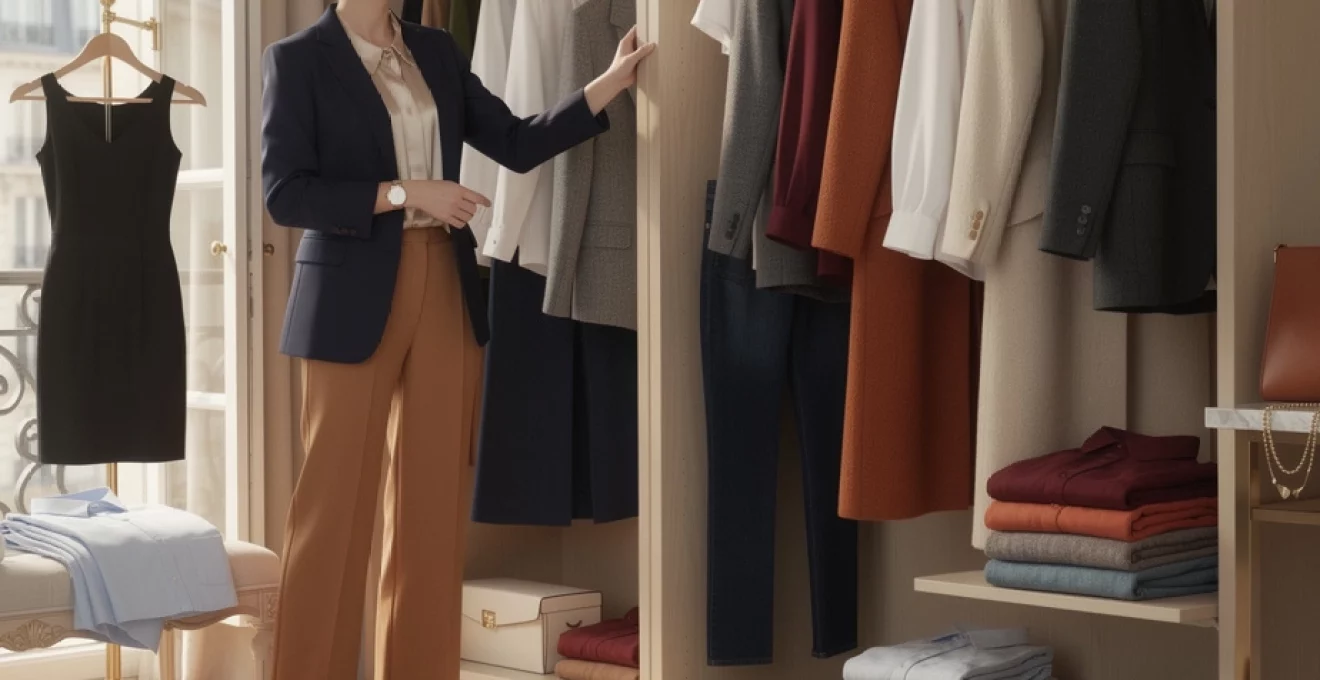
# How to Create a Wardrobe That Reflects the French Lifestyle
The allure of French style transcends fleeting fashion cycles, rooted instead in a philosophy that prizes enduring elegance over temporary trends. At its core, the French approach to dressing involves curating a thoughtfully edited collection of high-quality garments that work harmoniously together, eliminating the morning struggle of deciding what to wear whilst simultaneously projecting an air of effortless sophistication. This methodology, far from being exclusive to those living along the Seine, represents an accessible framework for anyone seeking to build a wardrobe that combines practicality with timeless refinement. The principles underlying this aesthetic—investment in quality textiles, adherence to classic silhouettes, and restraint in both colour and embellishment—create a sustainable approach to personal style that becomes increasingly relevant as consumers worldwide reconsider their relationship with consumption and fashion’s environmental impact.
Decoding the french wardrobe philosophy: capsule collections and quality over quantity
The foundation of French wardrobe construction rests upon the capsule concept, which originated in the 1970s when London boutique owner Susie Faux coined the term to describe a collection of essential items that transcend seasonal whims. French women have long embraced this approach, typically maintaining wardrobes of approximately thirty to forty carefully selected pieces that can be mixed and matched to create numerous outfit combinations. This restraint stands in stark contrast to the average British wardrobe, which according to recent studies contains over 118 items, with roughly 30% rarely or never worn.
The economic logic behind this philosophy proves compelling when examined closely. Whilst an individual cashmere jumper from a reputable French mill might cost £300, its longevity of fifteen to twenty years with proper care translates to roughly £15-20 per year of wear. Compare this to purchasing five £60 jumpers over the same period—an expenditure of £300 that yields garments likely to pill, lose shape, or fade within two to three seasons. The mathematics of quality investment becomes even more favourable when you consider the intangible benefits: the pleasure of wearing a garment that feels luxurious against your skin, the confidence that comes from knowing your clothing looks impeccable, and the reduced environmental footprint of consuming fewer items.
This minimalist approach delivers profound psychological benefits as well. Decision fatigue, a phenomenon documented extensively in behavioural psychology research, occurs when individuals must make too many choices throughout the day, depleting mental resources needed for more important decisions. By limiting wardrobe options to pieces that all coordinate seamlessly, you eliminate the cognitive burden of outfit selection each morning. Fashion insiders have long understood this principle—many creative directors and designers maintain remarkably spare personal wardrobes despite having access to entire collections, recognising that true style emerges from knowing yourself rather than owning everything.
The sustainability credentials of the capsule wardrobe methodology have gained particular relevance as the fashion industry grapples with its environmental impact. The sector currently accounts for approximately 10% of global carbon emissions and remains the second-largest consumer of water worldwide. By shifting focus from quantity to quality, choosing natural fibres that biodegrade rather than synthetic alternatives that shed microplastics, and selecting timeless designs that won’t feel dated next season, you participate in a more responsible approach to consumption that aligns with the values increasingly prioritised by conscious consumers.
Essential silhouettes and cuts that define parisian elegance
French wardrobe architecture relies upon specific silhouettes that have proven their versatility across decades. These shapes possess an inherent balance—neither too tight nor too loose, neither overly feminine nor excessively masculine—that creates visual harmony and allows for creative layering throughout changing seasons. Understanding these foundational pieces transforms wardrobe building from an overwhelming task into a systematic process of acquiring items that will genuinely earn their place in your daily rotation.
The breton striped marinière: from saint james to modern interpretations
The striped sailor shirt, or marinière, originated in 1858 as official uniform for French naval seamen, featuring twenty-one white stripes (representing Napoleon’s victories) against a navy background. Coco Chanel popularised the garment for civilian wear in the 1920s, recognising its ability
to bridge workwear and weekend style. Today, the marinière remains a cornerstone of the French wardrobe: cut a little boxy through the body, with a crew neck that sits neatly at the collarbone and sleeves that skim the wrist. Worn with straight-leg denim and loafers, it evokes Brittany holiday nonchalance; half-tucked into high-waisted trousers and grounded with a trench coat, it becomes a quiet power piece for city life. When shopping, prioritise dense, combed cotton from heritage houses such as Saint James or Armor-Lux, whose knits resist twisting and fading, ensuring your striped top ages gracefully rather than stretching out of shape after one season.
Tailored blazers and structured jackets: mastering the effortless fit
In the French lifestyle, the blazer functions almost like armour—sharpening even the simplest jeans-and-tee combination without appearing overthought. The key lies in proportion: look for a shoulder line that creates subtle structure without veering into boardroom rigidity, a slightly relaxed torso that allows for layering knitwear, and a hem that hits around the mid-hip to flatter most body types. Parisian women often favour single-breasted styles in wool or wool-blend twill, with minimal detailing and horn or tortoiseshell buttons that feel quietly luxurious.
To master that “I just threw this on” effect, consider how your blazer moves as you sit, walk, and cycle through your day. A half-lining or breathable viscose lining will drape more fluidly and allow your shirt cuffs to peep out, adding that nonchalant touch. You might opt for a camel blazer over a silk slip dress and boots in autumn, then wear the same piece open over a Breton top and straight-cut denim in spring—the blazer anchors both looks, illustrating how one well-tailored jacket can replace several trend-led outer layers in a French-inspired capsule wardrobe.
High-waisted wide-leg trousers and straight-cut denim
If you study street photography from the Marais or Saint-Germain, you will notice that French women rarely rely on ultra-tight silhouettes for everyday wear. Instead, high-waisted wide-leg trousers and straight-cut denim dominate, creating clean vertical lines that elongate the leg and flatter a wide range of body types. A gently nipped-in waist paired with a wider hem also reflects the French love of balance: a structured bottom half allows for softer knits, fluid blouses, or oversized outerwear on top without overwhelming the frame.
For a wardrobe that reflects the French lifestyle, invest in one pair of navy or charcoal wool trousers with sharp pleats and one pair of straight-leg jeans in a mid-indigo or vintage wash. Avoid excessive whiskering or distressing, which can date quickly; instead, prioritise dense denim that softens over time, like 100% cotton or a low-stretch blend. These pieces become the backbone of your capsule wardrobe, ready to be worn with ballet flats and a white shirt to the office, or with a marinière and leather jacket for weekends. Think of them as the architectural pillars of your closet—once they are in place, everything else becomes easier to style.
The little black dress principle: versatility through simplicity
The French approach to the little black dress is less about a specific hemline and more about a principle: one impeccably cut, understated black dress that can navigate multiple contexts with minimal adjustment. Rather than sequins or dramatic cut-outs, attention is placed on fabric quality, drape, and fit through the shoulders and waist. A mid-length dress in matte crepe or fine wool that skims, rather than clings, will serve you far better than a hyper-trendy silhouette that feels dated after one season.
Consider how this single garment might work for your own lifestyle. Could you wear it with flats and a trench for a client meeting, then later with red lipstick, slingback heels, and a silk scarf for dinner? If the answer is yes, you have likely found a piece that truly embodies French wardrobe values: discretion, longevity, and adaptability. Many Parisiennes keep their LBD free of obvious branding and heavy embellishment, preferring to shift its character through accessories—demonstrating how smart styling, not constant shopping, is what keeps a French-inspired wardrobe feeling current.
Silk blouses and cotton poplin shirts for year-round layering
No French wardrobe feels complete without a small rotation of silk blouses and crisp cotton poplin shirts. These tops act as the linking threads between smart and casual, capable of softening a trouser suit or elevating a pair of jeans. Silk brings a subtle lustre and movement that catches the light without appearing ostentatious, while high-quality poplin offers structure and breathability, especially welcome in transitional seasons. The interplay between these textures is central to the understated luxury so often associated with French style.
Opt for neutral shades—ivory, soft blush, pale blue—to maximise their layering potential, and pay close attention to collar shape and cuff design. A slightly elongated cuff peeking out beneath a blazer sleeve, or a fluid silk tie-neck left undone, can whisper sophistication far more effectively than a loud logo. You might wear the same ivory silk blouse under a navy blazer at the office and then loosely half-tucked into straight-leg denim with ballet flats at the weekend. This kind of versatility is precisely why Parisian women are willing to invest in a handful of premium shirts rather than an overflowing rail of disposable tops.
Colour palette construction: neutral foundations and strategic accent integration
Once you understand the key silhouettes, the next step in creating a wardrobe that reflects the French lifestyle is constructing a cohesive colour palette. A considered palette functions much like a well-curated art collection: each piece can stand alone, but together they tell a harmonious story. French wardrobes are rarely monochrome in the strict sense; instead, they are anchored by a handful of neutral hues, with carefully chosen accent shades that add warmth, depth, or a hint of personality without disrupting coherence. This approach ensures that almost every garment can be combined, dramatically increasing outfit possibilities without increasing the number of items.
Building a base with navy, camel, ivory, and charcoal
Navy, camel, ivory, and charcoal form the backbone of many Parisian closets because they are both flattering and endlessly adaptable. Navy softens the severity of black while still feeling polished; camel brings warmth and a subtle hint of luxury; ivory brightens the complexion more gently than stark white; and charcoal offers a modern alternative to classic grey or black tailoring. When you prioritise these shades for major investments—coats, tailoring, knitwear, and high-quality shoes—you create a visual “glue” that holds your wardrobe together.
Ask yourself: if you laid your clothes flat on a bed, would the colours sit comfortably together, like tones in a painting? If the answer is no, refining your base palette is one of the most impactful changes you can make. For example, a camel trench, navy blazer, charcoal trousers, and ivory knit can be recombined into numerous outfits that transition seamlessly from autumn to spring. This neutral framework also makes packing for travel astonishingly simple: you can fit a week’s worth of chic, French-inspired outfits into a carry-on because every element has been pre-edited to belong to the same chromatic family.
Incorporating bordeaux, terracotta, and olive as signature accents
Whilst neutrals provide structure, nuanced accent colours such as bordeaux, terracotta, and olive introduce depth and individuality. French women tend to avoid overly saturated or neon tones in their everyday wardrobes, favouring instead these more muted, wine-inspired shades that age well and pair beautifully with navy, camel, and charcoal. A bordeaux cashmere jumper, terracotta silk scarf, or olive utility jacket can instantly enliven a neutral base without clashing or dominating the overall look.
Think of these accent shades as the seasoning in a recipe: used sparingly and deliberately, they transform something simple into something memorable. You might wrap an olive trench over an ivory knit and straight denim, or choose a terracotta belt bag as the single colourful note in an otherwise monochrome ensemble. Over time, repeating one or two signature accent colours becomes part of your personal style code, much like a favourite fragrance—subtle, recognisable, and uniquely yours within a French-style wardrobe.
Seasonal colour adaptation without compromising cohesion
A common misconception is that adhering to a curated palette will make your wardrobe feel repetitive or dull across the year. In practice, French women adapt their colours seasonally through nuance rather than radical change. In spring and summer, the same navy and camel base might be lightened with touches of soft blush, sky blue, or ecru linen, while autumn and winter see deeper iterations—ink navy, forest olive, or rich chocolate—introduced through heavier fabrics. The overarching undertone, however, remains consistent, ensuring effortless mix-and-match potential.
To apply this in your own closet, consider building a “core” palette that functions year-round, then a micro-palette of two or three seasonal tones you rotate in and out. Perhaps you add butter yellow and light denim in summer, then swap them for bordeaux and deep olive as the weather cools. This strategy allows you to respond to mood and climate without diluting the coherence of your French-inspired capsule wardrobe. It is a subtle, intelligent way to keep your style feeling alive while avoiding the trap of chasing every seasonal trend.
Fabric selection and textile quality standards for longevity
Silhouette and colour may be the most visible elements of French style, but fabric selection is what determines how a garment behaves over time. The French lifestyle places great emphasis on tactile pleasure—how a shirt feels against the skin, how a coat drapes when left unbuttoned, how knitwear softens with each wear. Choosing the right textiles is akin to selecting building materials for a house: if the foundation is weak, even the most beautiful design will deteriorate quickly. By educating yourself on fibre content, weave, and construction, you equip yourself to make purchases that truly stand the test of time.
Natural fibres: merino wool, silk, linen, and egyptian cotton
French wardrobes lean heavily on natural fibres not only for environmental reasons but also for their superior comfort and ageing properties. Merino wool offers excellent temperature regulation, making it ideal for lightweight knits and fine-gauge turtlenecks that layer easily under blazers and trench coats. Silk, with its characteristic sheen and fluidity, brings a quiet luxury to blouses, linings, and scarves, while also being remarkably strong when cared for correctly. Linen, beloved for its breathability and softly rumpled texture, appears in summer shirting, dresses, and wide-leg trousers that embody easy, coastal French living.
Egyptian or long-staple cotton is another cornerstone of the French capsule wardrobe, especially for poplin shirts and marinières. Longer fibres create smoother yarns, resulting in fabrics that feel softer, resist pilling, and maintain their structure after repeated washing. When you read clothing labels, look for clear fibre information and avoid blends that contain high percentages of polyester or acrylic, which tend to trap odour and wear out less gracefully. By prioritising natural materials, you build a wardrobe that not only looks refined but also feels more pleasant to wear across diverse climates and occasions.
Understanding thread count, weave density, and fabric weight
Many consumers are familiar with thread count from bed linen marketing, but in clothing, thread count and weave density are only meaningful in context. A tightly woven cotton poplin with a balanced thread count (often between 80s and 120s for shirting) will feel crisp yet breathable, whereas an excessively high thread count can lead to stiffness and reduced durability. Similarly, in wool tailoring, a fabric labelled “Super 100s” or “Super 120s” indicates finer yarns and a smoother handle, but beyond a certain point, ultra-fine fibres can become fragile for daily wear.
Fabric weight, usually measured in grams per square metre (gsm), also plays a crucial role in how a garment performs. A 180–220 gsm cotton is ideal for shirts that hold their shape under a blazer, while a 260–320 gsm wool flannel offers enough substance for winter trousers without feeling bulky. Understanding these metrics is a bit like learning to read nutrition labels: once you grasp them, you can quickly assess whether a piece is likely to drape well, resist showing every crease, or keep you warm. This technical knowledge empowers you to invest in fewer, better garments that behave predictably over years of use.
Sourcing from french textile regions: lyon silk and troyes knitwear
France’s textile heritage provides a useful guide when evaluating quality, even if you are shopping internationally. Lyon, historically known as the capital of silk, remains associated with exquisite jacquards, satins, and chiffons used by haute couture houses. While you may not be purchasing couture-level fabrics, brands that reference Lyonnais mills or traditional silk weaving techniques often signal a commitment to craftsmanship. Similarly, the town of Troyes has long been a hub for knitwear and hosiery, producing resilient jerseys and ribbed knits renowned for their comfort and longevity.
When brands highlight partnerships with these regions—or with comparable textile centres in Italy or Portugal—it is often a marker that more attention has been paid to sourcing and production. You might, for example, choose a simple navy cardigan knowing it has been knitted in Troyes, confident that its ribbing will retain shape and its colour will fade gracefully. Incorporating pieces rooted in this kind of heritage into your wardrobe is an understated way of aligning your everyday clothing choices with the deeper traditions of French style and craftsmanship.
Recognising craftsmanship markers and construction techniques
Beyond fabric choice, subtle details in construction can tell you a great deal about how long a garment will last. Look for dense, even stitching with no loose threads, pattern matching at side seams (especially in stripes and checks), and reinforced stress points such as pocket corners and button plackets. In tailored jackets and coats, features like canvas interlining rather than glued fusible, functional sleeve buttons, and well-shaped lapels that sit flat against the chest all indicate a higher level of workmanship.
Inside garments, finishing details matter as well: cleanly bound seams, quality zips, and securely attached buttons suggest that durability has been prioritised over cost-cutting. While such pieces may require a greater upfront investment, the cost-per-wear often proves far lower than that of cheaper, poorly constructed items that fail after a single season. By training your eye to spot these craftsmanship markers, you cultivate a more discerning, French-informed approach to shopping—treating each purchase as an addition to a long-term wardrobe architecture rather than a fleeting impulse buy.
Footwear investment strategy: classic styles from repetto to roger vivier
No discussion of a wardrobe that reflects the French lifestyle would be complete without addressing footwear. In Paris, shoes are expected to bridge beauty and practicality; after all, cobblestones, metro stairs, and long café-lined boulevards demand comfort as much as they do style. Instead of filling their closets with dozens of options, many French women rely on a concise rotation: ballet flats, loafers, ankle boots, and one or two pairs of refined heels for evening. Each pair is chosen with care, often repaired and resoled rather than replaced, reinforcing the ethos of quality over quantity.
Heritage brands illustrate this philosophy well. Repetto, originally founded to craft ballet slippers, became famous for its supple ballet flats that mould to the foot and lend a feminine finish to straight-leg denim or cigarette trousers. At the more formal end of the spectrum, Roger Vivier’s signature buckle pumps and low-heeled slingbacks demonstrate how a distinctive yet classic shoe can instantly elevate a simple little black dress or tailored suit. When planning your own footwear investment strategy, consider allocating your budget to a few such timeless styles in neutral colours—black, tan, navy—that integrate smoothly into your existing palette.
Ask yourself what your daily life actually requires. Do you walk extensively, commute by car, or work in an office with a relaxed dress code? Your answers should dictate proportion: perhaps two pairs of high-quality flats and one pair of heeled boots will serve you better than a row of stilettos you rarely wear. Think of your shoes as the punctuation marks of your outfits; in the French system, they are rarely the loud exclamation point, but rather the considered full stop that makes the whole sentence feel complete.
Accessorising with restraint: scarves, leather goods, and minimalist jewellery
Accessories are where many wardrobes lose their coherence, but in France they are treated as a refined language rather than a shout for attention. Scarves, leather goods, and minimalist jewellery play a crucial supporting role, adding texture and personality while respecting the overall simplicity of the look. The guiding principle is restraint: instead of layering multiple statement pieces at once, a French-inspired outfit might feature just one focal accessory—a silk scarf tied at the neck, a vintage leather belt, or a pair of delicate gold hoops.
Silk scarves, in particular, possess almost mythical status in French style. Whether knotted at the throat, looped through a bag handle, or worn as a headband, they introduce colour and print without overwhelming the outfit’s clean lines. A single carré in bordeaux and navy can work year-round with a camel coat, ivory knit, or navy blazer, proving far more versatile than a drawer full of novelty accessories. High-quality leather goods—structured cross-body bags, slim belts, and compact wallets—further reinforce the sense of quiet luxury, ageing beautifully as they develop patina.
Jewellery tends toward the understated: fine chains, signet rings, slim bangles, and small pearl or gold studs. The idea is not to display wealth but to highlight the wearer’s features and complement the clothes. By adopting this less-is-more philosophy, you avoid the common trap of over-accessorising in an attempt to “fix” an outfit; instead, each element in your French-inspired wardrobe is chosen so thoughtfully that it requires only the lightest touch of adornment. In the end, this is perhaps the most important lesson from the French lifestyle: when quality, coherence, and personal authenticity guide your choices, elegance becomes not an effort, but a natural extension of how you move through the world.