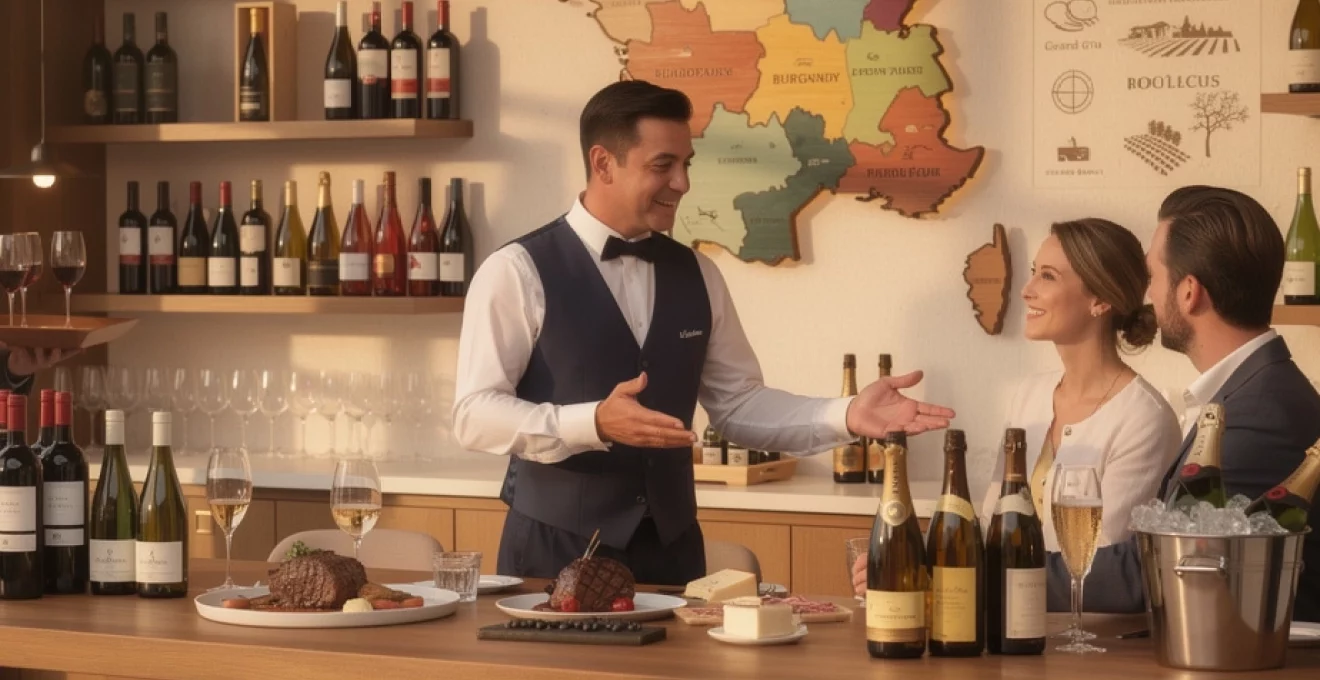
French wine represents the pinnacle of winemaking excellence, with a heritage spanning centuries and a complexity that can initially overwhelm even experienced wine enthusiasts. Standing before shelves lined with hundreds of bottles or perusing extensive restaurant wine lists, you face choices that encompass over 2,900 different wine types, more than 360 appellations, and 200 indigenous grape varieties. The key to navigating this remarkable landscape lies in understanding the systematic approach that French winemakers have developed over generations. Rather than relying solely on price or marketing appeal, successful wine selection begins with recognising your personal taste preferences and matching them to France’s diverse regional expressions. This methodical approach transforms what might seem like an intimidating selection process into an enjoyable journey of discovery, where each bottle tells the story of its terroir and the passionate vignerons who craft these liquid masterpieces.
Understanding french wine classification systems and AOC designations
The French wine classification system serves as the foundation for understanding quality and authenticity in French winemaking. This hierarchical structure, developed over decades, provides consumers with reliable indicators of provenance, production methods, and expected quality levels. At its core, the system reflects France’s commitment to preserving regional wine traditions whilst maintaining rigorous standards that have made French wines globally renowned.
Appellation d’origine contrôlée (AOC) hierarchy and regional boundaries
The AOC system represents the highest tier of French wine classification, encompassing approximately 475 designated appellations across the country. Each AOC designation establishes strict geographical boundaries, permitted grape varieties, maximum yields, and specific winemaking practices that vintners must follow. The Institut National de l’Origine et de la Qualité (INAO) oversees this system, ensuring that wines bearing an AOC label authentically represent their designated region’s unique characteristics.
These appellations range from broad regional designations covering entire wine regions to highly specific lieu-dit classifications that may encompass just a few hectares. For instance, the Bordeaux AOC covers the entire Bordeaux region, whilst Pauillac AOC represents a much smaller commune within the Left Bank. Understanding this hierarchy helps you appreciate why wines from more specific appellations typically command higher prices and offer more distinctive regional characteristics.
Vin de pays and indication géographique protégée (IGP) categories
Below the AOC level, the IGP classification (formerly known as Vin de Pays) offers greater production flexibility whilst maintaining geographical authenticity. These wines come from larger geographical areas and permit winemakers to experiment with grape varieties that might not be allowed under stricter AOC regulations. IGP wines often represent excellent value propositions, particularly from regions like Languedoc-Roussillon, where innovative producers create remarkable wines at accessible price points.
The IGP system encompasses 74 designations across France, allowing winemakers to showcase regional character whilst embracing modern winemaking techniques. Many producers use IGP classifications to craft wines that express terroir characteristics without the constraints of traditional AOC regulations, resulting in innovative blends that maintain French elegance whilst appealing to contemporary palates.
Grand cru and premier cru classifications in burgundy and bordeaux
Burgundy and Bordeaux employ additional classification systems that further refine quality designations within their respective AOC frameworks. Burgundy’s classification system, based on climat (specific vineyard plots), recognises 33 Grand Cru appellations and over 600 Premier Cru vineyards. These classifications reflect centuries of observation regarding which specific plots consistently produce wines of exceptional quality.
Bordeaux’s classification system differs significantly, focusing on châteaux rather than vineyard sites. The famous 1855 Classification established by Napoleon III still influences pricing and prestige today, ranking Left Bank châteaux into five growth levels. Meanwhile, Saint-Émilion employs its own classification system, revised approximately every decade, which evaluates both vineyard quality and château facilities. Understanding these classifications helps you navigate the premium segments of French wine with greater confidence.
Champagne appellation requirements and quality standards
Champagne operates under uniquely stringent AOC requirements that
govern everything from permitted grape varieties to maximum yields and pressing techniques. Only wines produced within the strictly defined Champagne region, using the traditional method with a second fermentation in bottle, may legally bear the name “Champagne.” Ageing requirements are also rigorous: non-vintage Champagne must rest at least 15 months on the lees, while vintage bottlings require a minimum of 36 months, though many top producers exceed these benchmarks significantly.
These regulations ensure that every bottle of Champagne offers the characteristic fine mousse, high acidity, and complex autolytic notes of brioche, toast, and pastry. When choosing the perfect French sparkling wine for a celebration, looking for the Champagne AOC on the label guarantees adherence to these quality standards. Non-vintage cuvées are generally crafted for consistency and immediate pleasure, whilst vintage Champagnes showcase the nuances of a particular year and often reward additional cellaring. Understanding this distinction helps you align your selection with the occasion, whether it is a casual aperitif or a milestone celebration.
Decoding french wine regions and their signature characteristics
Once you are comfortable with French wine classifications, the next step in choosing the perfect French wine is to understand the major regions and their hallmark styles. Each region offers a distinct expression of French terroir, shaped by climate, soil, and grape variety. Rather than memorising every appellation, focus on a handful of key regions and what they do best. This regional roadmap allows you to move confidently from a wine list description to a glass that truly matches your taste and the occasion at hand.
Bordeaux left bank cabernet sauvignon blends from médoc and graves
The Left Bank of Bordeaux, encompassing the Médoc and Graves, is globally renowned for structured, age-worthy red blends dominated by Cabernet Sauvignon. The gravelly soils of appellations such as Pauillac, Margaux, Saint-Julien, and Pessac-Léognan provide excellent drainage, encouraging deep root systems and concentrating flavour. Cabernet Sauvignon here typically delivers blackcurrant, cedar, graphite, and that classic “cigar box” character, supported by Merlot, Cabernet Franc, and occasionally Petit Verdot to add flesh, aroma, and colour.
For many drinkers, these Left Bank wines are the benchmark when looking for a French red wine for roast lamb, beef, or game. Younger examples can be firm and tannic, so if you prefer a smoother texture, consider bottles with a few years of bottle age or look for more approachable appellations such as Haut-Médoc or basic Graves. When budget is a concern, you can often find excellent value in so-called “second wines” of top châteaux, which capture the house style in a more accessible and earlier-drinking form.
Burgundy pinot noir terroir expression from côte d’or vineyards
If Bordeaux is about blending, Burgundy is about precision. In the Côte d’Or, Pinot Noir is the undisputed star for red wines, and tiny changes in slope, soil, or exposure can yield dramatically different expressions. Villages like Gevrey-Chambertin, Nuits-Saint-Georges, Vosne-Romanée, and Volnay each have a recognisable personality: Gevrey tends to be muscular and earthy, Vosne more perfumed and exotic, Volnay lighter and silkier. This is where the concept of climat becomes tangible, with individual vineyard parcels expressing their own micro-terroir.
For those seeking an elegant French red wine for poultry, duck, mushroom dishes, or even richer fish such as salmon, Burgundy Pinot Noir is an exceptional choice. Entry-level Bourgogne Rouge or wines from lesser-known villages (for example, Marsannay or Santenay) can offer a more affordable introduction to the style. Expect red cherry, raspberry, and violet notes, with subtle spice and a fine, almost filigree tannin structure that makes these wines so versatile at the table.
Rhône valley northern syrah versus southern Grenache-Based blends
The Rhône Valley offers two markedly different red wine profiles, depending on whether you look north or south. In the Northern Rhône, appellations such as Côte-Rôtie, Hermitage, Cornas, and Saint-Joseph focus almost exclusively on Syrah. Here, the cooler climate and steep granite slopes yield wines with dark berry fruit, black olive, pepper, smoked meat, and a distinctive savoury edge. The tannins can be firm yet refined, and the best examples have excellent ageing potential.
Travel south and the climate becomes warmer and more Mediterranean, shifting the style dramatically. Southern Rhône appellations like Châteauneuf-du-Pape, Gigondas, Vacqueyras, and Côtes du Rhône Villages rely heavily on Grenache, often blended with Syrah, Mourvèdre, and Carignan. These wines are typically richer and more opulent, with sun-drenched flavours of ripe plum, strawberry jam, garrigue herbs, and spice. When you are planning hearty dishes such as grilled meats, stews, or garlicky Mediterranean cuisine, a Southern Rhône blend is often the ideal French red wine for the occasion.
Loire valley sauvignon blanc from sancerre and muscadet from melon de bourgogne
The Loire Valley stretches across northern France and offers an impressive spectrum of styles, but for many wine lovers it is synonymous with crisp, refreshing whites. Sancerre and Pouilly-Fumé, both based on Sauvignon Blanc, are benchmarks for those who prefer dry, zesty white wines with pronounced minerality. Typical flavours include gooseberry, citrus, green apple, and sometimes a flinty, smoky note. These wines shine as aperitifs and are outstanding with goat’s cheese, seafood, and salads.
Further west, near the Atlantic coast, Muscadet (from the Melon de Bourgogne grape) offers another style of high-acid French white wine that is perfect for shellfish and lighter fish dishes. Often labelled Muscadet Sèvre-et-Maine and sometimes aged sur lie (on its lees), these wines bring subtle citrus, saline, and yeasty notes, with a mouthwatering finish. If you enjoy clean, ocean-influenced whites and are seeking a budget-friendly alternative to more famous appellations, Muscadet is a savvy choice.
Alsace riesling and gewürztraminer varietal expressions
Alsace, nestled along France’s eastern border near Germany, is distinctive for its emphasis on single-varietal wines and its dry, aromatic whites. Riesling from Alsace is typically bone-dry, with high acidity, pronounced citrus and stone-fruit flavours, and a strong mineral spine. These wines are precise and gastronomic, pairing beautifully with fish, white meats, and dishes with a touch of spice. Over time, top Rieslings can develop complex petrol, honey, and smoky notes.
Gewürztraminer from Alsace offers a stark contrast. Intensely aromatic, it bursts with rose petal, lychee, exotic spices, and tropical fruit. Texturally, it is richer and sometimes slightly off-dry, making it a fascinating French white wine for spicy Asian dishes, strong cheeses like Munster, or as a contemplative glass on its own. When you want to surprise guests with something outside the usual Chardonnay–Sauvignon spectrum, a well-chosen Gewürztraminer is both memorable and versatile.
Vintage analysis and optimal drinking windows for french wines
Even within the same appellation, not all years are created equal. Weather conditions during a growing season can dramatically influence wine quality, style, and longevity. While modern viticulture has improved consistency, vintage still matters, especially for regions like Bordeaux, Burgundy, and the Northern Rhône. Understanding vintage variation helps you decide whether to drink a bottle now or cellar it for a special future occasion. It also equips you to spot excellent value from underappreciated years.
Bordeaux vintage chart assessment for pauillac and Saint-Émilion
For Bordeaux, professional critics and trade bodies publish detailed vintage charts that summarise each year’s performance by sub-region. Pauillac on the Left Bank and Saint-Émilion on the Right Bank often show different strengths in the same year, due to their contrasting soil types and grape compositions. In hotter, drier years, Left Bank Cabernet Sauvignon can achieve fantastic ripeness and structure, whereas Merlot-dominant Right Bank wines may veer towards higher alcohol and jammy fruit. Cooler, wetter vintages may favour Merlot and Cabernet Franc, giving Saint-Émilion more charm in its youth.
When consulting a Bordeaux vintage chart, treat it as a guide rather than a rigid rulebook. Highly rated vintages (such as 2009, 2010, 2015, 2016 or 2019) often offer powerful, age-worthy wines, ideal if you are building a cellar for long-term enjoyment. More moderate vintages can provide earlier-drinking pleasure at lower prices, which is perfect if you are looking for a French red wine to serve in the next few years. Always consider producer reputation alongside vintage scores: a conscientious château can make excellent wine in challenging years.
Burgundy vintage variations impact on Gevrey-Chambertin and Puligny-Montrachet
Burgundy’s sensitivity to climate means that vintage plays a particularly important role in shaping style. In Gevrey-Chambertin, a cooler year may result in lighter-bodied, red-fruited Pinot Noir with higher acidity, while a warmer vintage produces riper, darker fruit and softer tannins. Similarly, Puligny-Montrachet Chardonnay in a cool vintage tends to be tightly wound, with razor-sharp acidity and pronounced mineral notes, whereas warm years bring more generous stone-fruit flavours and a rounder mouthfeel.
Because Burgundy vineyards are small and fragmented, yields can swing dramatically with frost, hail, or heatwaves. As a result, supply from top years may be limited and prices correspondingly higher. If you are selecting a French wine for a specific future celebration, it can be wise to consult recent vintage reports and, if possible, buy multiple bottles from a favoured producer in a good year. This allows you to follow the wine’s evolution and open each bottle at its optimal drinking window, rather than guessing based on age alone.
Champagne vintage declaration criteria and Non-Vintage blending
Champagne houses only declare a vintage in years they deem truly exceptional, often fewer than three times per decade. In these vintages, the wines are crafted exclusively from grapes harvested in that year and usually come from the best parcels. They are designed for longer ageing and more complex development in bottle, making them ideal candidates for anniversaries or significant milestones. However, this also means vintage Champagne typically commands a premium price and may require patience before reaching its peak.
In contrast, non-vintage (NV) Champagne is the workhorse of the region and the style you will encounter most often. NV wines are blends of multiple years, carefully assembled to achieve a consistent house style that you can rely on whenever you open a bottle. Reserve wines from older vintages add depth and complexity, while younger components provide freshness and energy. If you are choosing a French sparkling wine for an aperitif, reception, or casual gathering, a well-made non-vintage Champagne is often the most versatile and cost-effective option.
Cellaring potential for northern rhône hermitage and Côte-Rôtie
Northern Rhône Syrah from appellations such as Hermitage and Côte-Rôtie is among the most age-worthy red wine in France, thanks to its combination of firm tannins, high acidity, and concentrated fruit. In youth, these wines can appear tight and reserved, with their full aromatic complexity still locked away. Over 10–20 years, they evolve to reveal layers of smoked meat, leather, truffle, and savoury spice, while maintaining a solid core of fruit and structure.
If you enjoy the idea of buying French wine to lay down for future occasions, Hermitage and Côte-Rôtie are excellent candidates. Look for strong vintages noted for balance rather than just ripeness, and store the bottles in a cool, dark place with stable temperature. For more immediate drinking, consider wines from Saint-Joseph or Crozes-Hermitage, which often share the regional character of Northern Rhône Syrah but are crafted in a more approachable style, with shorter optimal drinking windows.
Food pairing principles using french wine tannin structure and acidity
Food and wine pairing can seem mysterious, but a few core principles based on tannin and acidity will guide you towards harmonious combinations. Tannins, most prominent in red wines, bind with proteins and fats, which is why structured reds such as Bordeaux or Northern Rhône Syrah work so well with red meat. High-tannin wines paired with light dishes, however, can feel harsh and overpowering. When you are planning a menu, think about matching the weight and texture of the wine to the richness of the dish.
Acidity acts like a squeeze of lemon on food, cutting through fat and refreshing the palate. This makes high-acid French wines—such as Sancerre, Chablis, Muscadet, or many Champagnes—fantastic with fried dishes, creamy sauces, and seafood. A useful analogy is to think of wine as another ingredient on the plate: tannin behaves like a drying spice, while acidity behaves like citrus. If a dish already relies on acidity (for example, salads with vinaigrette), pairing it with a low-acid wine can leave the wine tasting flat; in such cases, you are better off choosing a crisp white or rosé.
Sweets and desserts introduce another rule of thumb: ensure the wine is at least as sweet as the dish, or the wine may taste thin and sour. Classic French dessert pairings include Sauternes with fruit tarts or blue cheese, and late-harvest Alsace wines with pâté or foie gras. If you prefer to keep things simple, you can remember one versatile guideline: when in doubt, choose a dry sparkling wine or a balanced rosé from Provence, as both tend to adapt gracefully to a wide variety of foods.
Occasion-specific wine selection strategies
Different occasions call for different approaches to choosing French wine. For a relaxed weeknight meal, you might prioritise drinkability and value, gravitating towards IGP wines from Languedoc, simple Côtes du Rhône, or Bordeaux Supérieur. These wines deliver authentic regional character without demanding long ageing or complex decanting rituals. For larger gatherings, it can be wise to select crowd-pleasing styles—fresh Loire whites, fruit-forward Beaujolais, or Crémant de Loire—rather than highly idiosyncratic bottles that may divide opinion.
When you are invited to a dinner party and wish to make a good impression, bringing a bottle with a story often matters as much as the label’s prestige. A well-chosen Chablis from a family domaine, a lesser-known cru from Beaujolais, or an artisanal Champagne from a grower-producer gives you something to talk about beyond price. For formal occasions or gifts where signalling matters—such as business dinners or milestone celebrations—iconic appellations like Pauillac, Châteauneuf-du-Pape, or vintage Champagne can be appropriate, provided they align with your budget.
It is also helpful to tailor your French wine selection to the level of wine knowledge among your guests. Enthusiasts may appreciate more adventurous choices, such as Jura whites, Loire Cabernet Franc from Chinon, or single-vineyard Alsace Riesling. For a mixed crowd, wines that are aromatic, balanced, and not excessively tannic tend to fare best. In every case, do not hesitate to ask your merchant or sommelier for guidance; a brief description of the occasion, food, and preferences will usually yield several well-targeted recommendations.
Professional wine evaluation techniques and tasting protocols
Developing a more professional approach to tasting will sharpen your ability to choose the perfect French wine for any occasion. Sommeliers typically follow a structured protocol that evaluates appearance, nose, palate, and overall quality. You can adopt a simplified version at home: first, observe the colour and clarity of the wine against a white background; then swirl the glass gently to release aromas and take a series of short sniffs. Ask yourself what primary fruits you detect, whether there are floral, herbal, or spicy notes, and if any oak-derived characters such as vanilla or toast are present.
On the palate, pay attention to sweetness, acidity, tannin, alcohol, body, and flavour intensity. Is the wine light, medium, or full-bodied? Do the tannins feel fine-grained or coarse? How long do the flavours linger after you swallow—the finish? A long, complex finish is often a sign of higher quality. Using a consistent mental checklist, or even jotting a few notes, helps you compare different French wines more objectively, rather than relying on vague impressions.
Spitting during tastings, although unusual at the dinner table, is standard practice in professional settings when many wines must be assessed. This allows you to stay focused and avoid palate fatigue. Blind tasting, where the bottle is concealed, can also be a powerful learning tool, forcing you to rely on sensory evidence rather than labels or price. Over time, these techniques deepen your understanding of regional styles, vintage variation, and quality levels, making each wine purchase—whether for a casual evening or a grand celebration—more confident and rewarding.