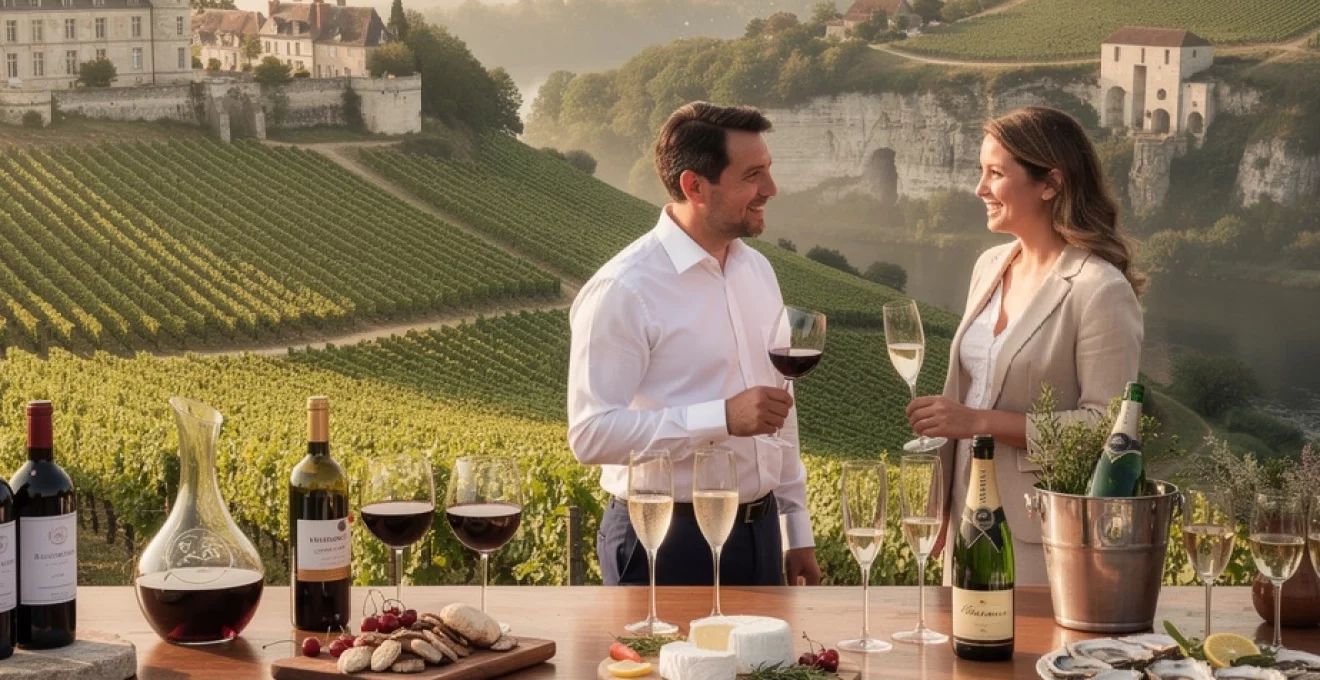
France remains the undisputed epicentre of fine wine production, where centuries of viticultural excellence have shaped the global wine industry. From the prestigious châteaux of Bordeaux to the intimate domaines of Burgundy, French wine regions represent the pinnacle of terroir expression and winemaking artistry. Each region tells a unique story through its indigenous grape varieties, distinctive soil compositions, and time-honoured traditions that continue to influence winemakers worldwide. Understanding these iconic wine regions provides essential knowledge for any serious wine enthusiast seeking to appreciate the complexity and heritage that define exceptional viticulture.
Bordeaux: premier cru terroir and left bank cabernet sauvignon excellence
Bordeaux stands as France’s most commercially significant wine region, encompassing over 120,000 hectares of vineyards across the Gironde département. The region’s reputation for producing world-class wines stems from its unique geographical position where the Dordogne and Garonne rivers converge to form the Gironde estuary. This maritime influence creates a temperate oceanic climate that moderates temperature extremes and provides the consistent growing conditions essential for premium grape development.
The Left Bank’s gravelly soils, deposited over millennia by the Garonne river, create the perfect foundation for Cabernet Sauvignon cultivation. These well-draining terroirs reflect heat during the day and provide excellent root penetration, allowing the late-ripening Cabernet Sauvignon to achieve full phenolic maturity. The resulting wines display remarkable structure, with firm tannins and exceptional ageing potential that can span decades.
Médoc appellations: pauillac, Saint-Estèphe, and Saint-Julien classifications
The Médoc peninsula represents Bordeaux’s most prestigious wine-producing area, where four communal appellations—Pauillac, Saint-Estèphe, Saint-Julien, and Margaux—dominate the quality hierarchy. Pauillac, home to three of the five First Growth châteaux, produces wines of extraordinary power and longevity. The appellation’s deep gravel beds over limestone create ideal drainage whilst maintaining sufficient water retention for sustained vine health.
Saint-Estèphe distinguishes itself through cooler temperatures and higher clay content in its soils, resulting in wines with more pronounced acidity and mineral complexity. The appellation’s wines typically require extended cellaring to reach their peak, often developing remarkable secondary characteristics after 15-20 years. Saint-Julien occupies a middle ground, producing elegantly structured wines that balance power with finesse, making them amongst the most harmonious expressions of Left Bank terroir.
Right bank merlot dominance: Saint-Émilion and pomerol estate analysis
The Right Bank’s clay and limestone soils favour Merlot cultivation, creating wines with softer tannins and more immediate approachability compared to their Left Bank counterparts. Saint-Émilion, classified as a UNESCO World Heritage site, encompasses diverse terroirs from the limestone plateau to the sandy-gravel côtes. This geological diversity produces wines ranging from powerful, mineral-driven expressions to more opulent, fruit-forward styles.
Pomerol, though geographically small at just 800 hectares, produces some of Bordeaux’s most expensive wines. The appellation’s unique blue clay subsoil, combined with iron-rich surface layers, creates exceptional conditions for Merlot. Properties like Château Pétrus have demonstrated that Right Bank wines can achieve the same level of complexity and longevity as the most celebrated Left Bank estates, often with greater approachability in their youth.
Bordeaux en primeur system and château investment strategies
The en primeur system, established in the 18th century, allows wine enthusiasts to purchase Bordeaux wines whilst they remain in barrel, typically 18-24 months before bottling. This unique marketing approach provides châteaux with immediate cash flow whilst offering consumers access to prestigious wines at potentially advantageous prices. The system has evolved into a sophisticated futures market where vintage quality, critic scores, and economic conditions influence pricing dynamics.
Investment
Investment-focused buyers often treat classified growth Bordeaux as an asset class, tracking release prices, secondary market performance, and critic consensus in the same way equity investors analyse stocks. For long-term cellaring, many collectors prioritise strong vintages (such as 2000, 2005, 2009, 2010, 2016) from established châteaux with consistent quality and limited production. Diversifying across Left Bank and Right Bank estates, as well as across appellations and vintages, can help mitigate the risk of vintage variation and changing market tastes. You should also consider storage and provenance: professionally stored cases in original wooden boxes with impeccable documentation will always command a premium on the secondary market.
While blue-chip names like Lafite Rothschild or Pétrus dominate headlines, savvy enthusiasts often look one tier below, focusing on so‑called “super seconds”, high-performing cru bourgeois, and well-rated Pomerol and Saint-Émilion estates that offer better value-to-quality ratios. Monitoring en primeur reports from reputable critics and merchants, and comparing release prices with back vintages already in bottle, is a pragmatic way to judge whether a futures offer is compelling. Ultimately, Bordeaux wine investment should complement, not replace, the pleasure of drinking: the most successful collectors build cellars that balance financial appreciation with the joy of opening a perfectly mature bottle at the right moment.
1855 classification impact on lafite, latour, and margaux valuations
The historic 1855 Classification, commissioned for the Exposition Universelle in Paris, still exerts a profound influence on Bordeaux wine pricing and perception today. Based largely on the market value of wines at the time, it ranked 61 Médoc and one Graves château into five tiers, from First Growth (Premier Cru Classé) to Fifth Growth. Estates such as Château Lafite Rothschild, Château Latour, Château Margaux, and later Château Mouton Rothschild (elevated in 1973) sit at the summit of this hierarchy, commanding some of the highest prices of any French wine region.
For collectors and investors, the 1855 ranking acts almost like a luxury brand logo, instantly signalling prestige and long-term ageing potential. While changes in ownership, vineyard practices, and climate have altered the relative quality of some estates, First Growths continue to enjoy extraordinary global demand, particularly in Asia and North America. This brand equity means that even in weaker vintages, these châteaux tend to hold their value better than lower-ranked peers. However, it also creates opportunities: astute buyers can explore high-performing Third, Fourth, and Fifth Growths whose quality today may rival or surpass their historical status, yet whose prices remain more accessible.
It is worth remembering that the 1855 Classification covers only a portion of Bordeaux, leaving out the entire Right Bank and many excellent Left Bank appellations. Modern classifications in Saint-Émilion and quality-focused, unclassified estates in Pomerol demonstrate that great Bordeaux wine is not confined to the 1855 list. As you refine your understanding of French wine regions, using the 1855 Classification as a guide—but not a straightjacket—allows you to balance heritage with contemporary quality when selecting bottles.
Burgundy: pinot noir precision and côte d’or vineyard hierarchy
If Bordeaux is defined by grand estates, Burgundy is defined by its vineyards. The narrow Côte d’Or, stretching roughly 60 kilometres from Dijon to Santenay, is a patchwork of small climats—precisely delineated parcels whose individual character has been studied and revered for centuries. Here, the focus is on Pinot Noir for red wines and Chardonnay for whites, with the concept of terroir reaching its most intricate expression. Rather than emphasising châteaux, labels highlight the village, vineyard, and sometimes even specific rows of vines.
The Burgundy vineyard hierarchy, from regional Bourgogne to village, Premier Cru, and finally Grand Cru, provides a framework for understanding quality and price. However, due to tiny production volumes and high global demand, many sought-after wines are allocated, making them difficult to find at release. Does this mean Burgundy is off-limits to most enthusiasts? Not at all: by exploring less famous villages and producers, you can still experience the finesse, perfume, and precision that define this iconic French wine region without paying stratospheric prices.
Grand cru monopoles: romanée-conti and la tâche terroir characteristics
Among Burgundy’s Grand Cru vineyards, a few legendary monopoles—sites controlled by a single domaine—occupy almost mythical status. The most famous is undoubtedly Romanée-Conti, a tiny 1.8-hectare Grand Cru owned exclusively by Domaine de la Romanée-Conti (DRC). Situated in Vosne-Romanée, this vineyard lies on a gentle east-facing slope with shallow, well-drained limestone and clay soils over fractured rock, providing ideal stress conditions for Pinot Noir. Yields are kept extremely low, resulting in wines of haunting aromatic complexity, combining red and black fruit, exotic spices, floral notes, and profound minerality.
La Tâche, also a DRC monopole in Vosne-Romanée, is larger at just over 6 hectares but shares similar exposition and soil structure, albeit with slightly deeper clay in some sections. La Tâche wines often show more immediate power and opulence than Romanée-Conti, with denser fruit, more pronounced tannic structure, and an almost savoury depth that unfolds over decades. Think of Romanée-Conti as a whisper of perfect poetry and La Tâche as a symphonic performance—both extraordinary, but with different emotional registers. For most enthusiasts, these bottles remain aspirational, yet understanding their terroir characteristics helps calibrate what constitutes greatness in Pinot Noir.
From a practical perspective, studying Grand Cru monopoles is like examining the “purest laboratory” of terroir expression. With a single producer, variations from year to year can be attributed mostly to vintage conditions rather than differing winemaking philosophies. If you ever have the chance to taste even a modest pour of these wines, pay close attention to texture, length, and aromatic detail—benchmarks you can then apply when assessing more accessible Burgundies from other French wine regions.
Premier cru climat distinctions across gevrey-chambertin and vosne-romanée
Below Grand Cru in the Burgundy hierarchy lies a treasure trove of Premier Cru vineyards, many of which offer outstanding quality at (relatively) attainable prices. In Gevrey-Chambertin, to the north of the Côte de Nuits, sites like Clos Saint-Jacques, Cazetiers, and Lavaux Saint-Jacques are renowned for producing structured, long-lived Pinot Noir. Gevrey wines typically show dark cherry and blackcurrant fruit, firm tannins, and a muscular frame, often described as the “most masculine” style of the Côte d’Or. The soils here often contain more marl and iron-rich components, contributing to their robustness and earthy complexity.
Further south in Vosne-Romanée, Premier Cru vineyards such as Les Malconsorts, Cros Parantoux, and Les Suchots emphasise perfume and silkiness over raw power. The wines frequently display aromas of rose petal, violet, exotic spices, and red berry fruit, with ultra-fine tannins and a sensual, layered palate. It is not unusual for top Vosne Premier Crus to rival or even surpass some lesser Grand Crus in quality, particularly when crafted by skilled domaines. Here, the subtle interplay of limestone, clay, and gravel, combined with ideal mid-slope positioning, creates what many consider the epitome of Pinot Noir finesse.
Comparing Gevrey-Chambertin and Vosne-Romanée Premier Crus side by side is one of the most instructive exercises you can undertake in French wine education. It is like listening to two virtuoso violinists playing the same piece on different instruments: the melody (Pinot Noir) remains constant, but the timbre, tone, and emotional impact change with terroir. When building a collection, focusing on high-quality Premier Crus from trusted producers is often a smarter strategy than chasing elusive Grand Crus, offering outstanding drinking experiences with slightly less financial exposure.
Côte de beaune chardonnay: montrachet and corton-charlemagne expressions
While the Côte de Nuits is synonymous with red wine, the Côte de Beaune is revered for some of the finest Chardonnay in the world. At the pinnacle stands Montrachet, a Grand Cru vineyard straddling the communes of Puligny-Montrachet and Chassagne-Montrachet. With its optimal south-east exposition, thin, stony soils, and perfect drainage, Montrachet yields white Burgundies of extraordinary depth and balance. Classic descriptors include ripe stone fruit, citrus oil, hazelnut, and a subtle smokiness, all wrapped in a powerful yet finely etched structure that can evolve gracefully for 15–20 years or more.
To the north, on the hill of Corton, lies Corton-Charlemagne, another legendary Grand Cru for Chardonnay. Here, higher altitude and slightly cooler conditions, combined with limestone-rich soils, produce wines that are often more taut and mineral-driven in youth, with intense acidity and notes of green apple, lemon zest, flint, and white flowers. Over time, Corton-Charlemagne can develop complex layers of honey, toasted nuts, and brioche, all while retaining remarkable freshness. If Montrachet is akin to a grand piano—rich, resonant, and commanding—Corton-Charlemagne is more like a finely tuned harpsichord: precise, crystalline, and intricately detailed.
For enthusiasts seeking to experience Côte de Beaune Chardonnay without entering Grand Cru territory, Premier Cru vineyards in Meursault, Puligny-Montrachet, and Chassagne-Montrachet offer superb alternatives. Labels such as Meursault Les Charmes or Puligny-Montrachet Les Pucelles frequently deliver much of the region’s signature tension between richness and minerality at a fraction of Grand Cru prices. When pairing these wines with food, think of dishes that echo their balance: butter-poached lobster, roasted poulet de Bresse, or simply a perfectly aged Comté.
Négociant houses versus domaine bottling: jadot, drouhin, and bouchard père
One unique feature of Burgundy, compared with other French wine regions, is the coexistence of domaine bottlings and large négociant houses. Historically, many growers sold their grapes or wines to négociants, who then blended, aged, and bottled under their own labels. Today, leading houses such as Louis Jadot, Joseph Drouhin, and Bouchard Père & Fils manage a combination of estate vineyards and purchased fruit, offering broad portfolios that span regional to Grand Cru levels. For newcomers to Burgundy, these names can serve as reliable entry points, providing consistent style and quality across vintages.
Domaine bottlings, by contrast, come from producers who grow, vinify, and bottle their own wines, often from small holdings scattered across multiple climats. These wines tend to express a more individualistic style, reflecting both terroir and the winemaker’s philosophy. As you explore, you may find yourself gravitating towards certain domaines whose approach resonates with your palate—whether that means minimal intervention, whole-cluster fermentation, or a particular stance on new oak. The diversity can be dizzying at first, but it is also what makes Burgundy endlessly fascinating.
How should you navigate this landscape in practical terms? A balanced strategy is to use established négociants as a foundation—especially for regional and village wines—while gradually seeking out domaine bottlings for Premier and Grand Crus. Think of négociant wines as well-produced “reference recordings” and domaine wines as unique live performances. Over time, tasting across producers, appellations, and vintages will sharpen your understanding of how human decisions interact with terroir in this most intricate of French wine regions.
Champagne: méthode champenoise and prestige cuvée production
Champagne occupies a singular place among French wine regions, both culturally and technically. Located in the cool, northerly vineyards around Reims, Épernay, and the Côte des Bar, the region specialises in sparkling wines produced exclusively using the méthode champenoise (also known as traditional method). This labour-intensive process involves a secondary fermentation in the bottle, where a mixture of sugar and yeast—liqueur de tirage—creates natural carbonation. After ageing sur lie (on the yeast sediment) for at least 15 months for non-vintage and three years for vintage wines, bottles are riddled, disgorged, and dosed before final corking.
The primary grape varieties in Champagne are Chardonnay, Pinot Noir, and Pinot Meunier, each contributing different structural and aromatic elements to the final blend. Non-vintage Brut Champagne, the most common style, is typically a multi-year blend designed to maintain a consistent house style despite vintage variation. Prestige cuvées—such as Dom Pérignon, Cristal, or Krug Grande Cuvée—are produced from the finest parcels and base wines, often incorporating extended lees ageing and meticulous selection. This attention to detail yields wines with extraordinary finesse, complexity, and ageing potential.
For enthusiasts looking beyond the best-known brands, grower Champagnes from the Côte des Blancs, Montagne de Reims, and Vallée de la Marne offer terroir-driven alternatives. These wines, often labelled with the designation RM (Récoltant-Manipulant), can showcase single-village or single-vineyard character in a way that mirrors Burgundy more than traditional Grand Marques. When choosing Champagne, pay attention to sweetness levels—from Brut Nature (no added dosage) to Doux (sweet)—as well as whether the wine is non-vintage, vintage, or a specific cuvée de prestige. Matching style to occasion and food—from oysters and sashimi to roast poultry or aged cheeses—will help you get the most from this iconic French sparkling wine region.
Rhône valley: northern syrah concentration versus southern gsm blending
The Rhône Valley, running from just south of Lyon down to Avignon, offers a compelling contrast between its cool, steep Northern Rhône and the warmer, sun-baked Southern Rhône. In the north, Syrah reigns supreme, producing some of the world’s most profound and age-worthy red wines in appellations such as Côte-Rôtie, Hermitage, Cornas, and Saint-Joseph. These vineyards, often terraced on vertiginous slopes overlooking the river, rely on granitic and schistous soils that naturally limit yields and concentrate flavour. Classic Northern Rhône Syrah combines black fruit, pepper, olives, and smoked meat notes with firm tannins and vibrant acidity.
By contrast, the Southern Rhône—home to Côtes du Rhône, Châteauneuf-du-Pape, Gigondas, and Vacqueyras—is dominated by GSM blends (Grenache, Syrah, Mourvèdre), with additional varieties such as Cinsault and Carignan also playing a role. Here, the climate is more Mediterranean, with abundant sunshine, mistral winds, and a mix of clay, limestone, sand, and the famous galets roulés (rounded pebbles) that retain heat and aid ripening. The resulting reds tend to be fuller-bodied, with ripe, sometimes confit fruit, garrigue herbs, and supple tannins. White and rosé wines, often based on Grenache Blanc, Roussanne, and Clairette, add further diversity to this dynamic French wine region.
For collectors and drinkers alike, the Rhône offers outstanding value relative to Bordeaux and Burgundy, especially in mid-tier appellations. Northern Rhône Syrah from Saint-Joseph or Crozes-Hermitage can provide a superb introduction to the region’s savoury, peppery style at reasonable prices. In the south, well-made Côtes du Rhône and Côtes du Rhône Villages often punch above their appellation, delivering complex GSM blends ideal for weeknight dinners and casual gatherings. Think of the Rhône as a bridge between the structure of Bordeaux and the perfume of Burgundy—versatile, food-friendly, and increasingly important in any well-rounded exploration of French wine regions.
Loire valley: mineral-driven whites and cabernet franc expressions
Stretching from the Atlantic coast near Nantes to the heart of central France, the Loire Valley encompasses one of the most diverse French wine regions. Along its length, you will encounter everything from crisp, saline Muscadet and racy Sauvignon Blanc to honeyed Chenin Blanc and elegant Cabernet Franc. The unifying thread is a generally cooler climate and a strong emphasis on freshness, acidity, and terroir transparency. For lovers of mineral-driven white wines and savoury, medium-bodied reds, the Loire offers a treasure trove of styles and appellations to explore.
In the west, near the Atlantic, Muscadet Sèvre-et-Maine produces dry, light-bodied whites from the Melon de Bourgogne grape, often aged sur lie for extra texture and complexity—perfect companions for oysters and shellfish. Moving east into Anjou and Touraine, Chenin Blanc takes centre stage in appellations such as Vouvray, Savennières, and Montlouis-sur-Loire, where it can range from bone-dry and mineral to lusciously sweet, as in Côteaux du Layon and Quarts de Chaume. These Chenin-based wines are among the most age-worthy whites in France, developing layers of honey, lanolin, and dried fruit over decades.
Red wine enthusiasts should focus on Cabernet Franc from appellations like Chinon, Bourgueil, and Saumur-Champigny. Here, the grape expresses itself with redcurrant and raspberry fruit, floral notes, and a characteristic graphite or pencil-shaving complexity, supported by fine, sometimes slightly leafy tannins. When well-ripened, Loire Cabernet Franc can rival top Left Bank Bordeaux in elegance, while remaining more graceful and food-friendly. These wines pair beautifully with roast poultry, charcuterie, and classic Loire goat cheeses such as Crottin de Chavignol.
Further east, in the Centre-Loire, appellations like Sancerre and Pouilly-Fumé have become international benchmarks for Sauvignon Blanc. Their flint, limestone, and clay-limestone soils contribute to wines with piercing acidity, citrus and gooseberry aromatics, and a distinctive smoky or “gunflint” character in some terroirs. As you deepen your journey through French wine regions, the Loire Valley’s combination of versatility, relative value, and gastronomic compatibility makes it an essential area to understand and explore.
Alsace: varietal purity and grand cru riesling terroir mapping
Nestled between the Vosges Mountains and the Rhine River, Alsace occupies a unique position among French wine regions, both geographically and stylistically. Sheltered by the Vosges, it enjoys one of the driest climates in France, with long, sunny autumns that favour the slow, even ripening of grapes. This, combined with an extraordinary mosaic of soil types—from granite and schist to limestone, sandstone, and volcanic compositions—creates ideal conditions for producing aromatic white wines with remarkable clarity and longevity. Unlike most French regions, Alsace primarily labels wines by grape variety, making it a particularly approachable entry point for enthusiasts seeking to understand varietal character.
The region’s principal grapes include Riesling, Gewurztraminer, Pinot Gris, Muscat, and Pinot Blanc, with Riesling often considered the flagship variety. Alsace Rieslings are typically dry, with high acidity, pronounced citrus and stone-fruit notes, and a strong mineral backbone that reflects their specific terroir. The Grand Cru system, formalised in 1975 and expanded to 51 sites, highlights vineyards deemed to have exceptional potential. Names such as Schlossberg, Rangen, and Brand are increasingly recognised by collectors and sommeliers around the world, especially as interest in terroir-driven white wines grows.
Mapping Alsace Grand Cru Riesling terroirs is akin to studying a geological atlas in liquid form. For example, Rieslings from granite-based sites like Schlossberg often show piercing acidity and crystalline citrus notes, while those from limestone-rich vineyards such as Altenberg de Bergheim may exhibit broader texture and a more opulent fruit profile. Volcanic soils in Rangen can impart a smoky, almost flinty edge that adds further complexity. By tasting across these terroirs, you can train your palate to detect how soil and microclimate shape the same grape variety—one of the most rewarding exercises in advanced French wine education.
Beyond dry styles, Alsace also produces late-harvest Vendanges Tardives and intensely sweet Sélection de Grains Nobles wines, where noble rot concentrates sugars and flavours. These wines, particularly from Riesling and Pinot Gris, can age for decades, evolving into layered expressions of candied citrus, dried apricot, spice, and honey. Whether you are just beginning to explore French wine regions or refining an already sophisticated cellar, Alsace offers a compelling combination of varietal purity, terroir specificity, and ageing potential that rewards both intellectual curiosity and sensory pleasure.