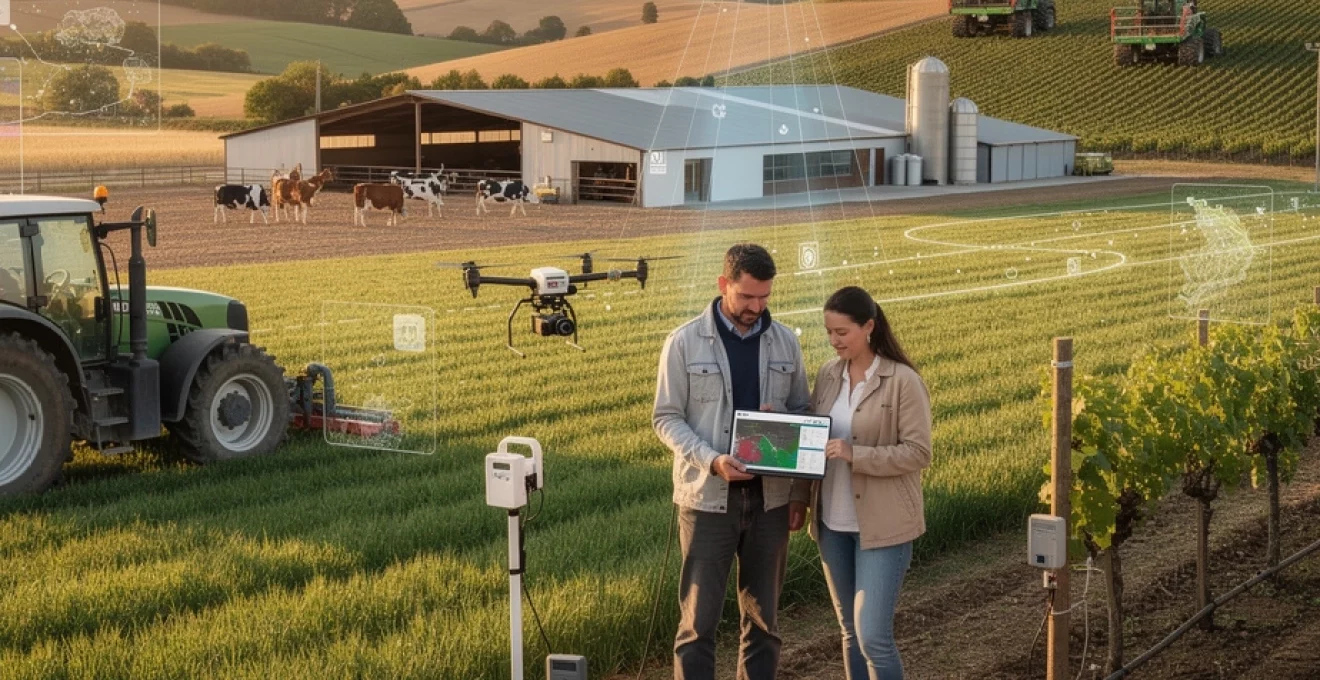
French agriculture stands at the forefront of a technological revolution that’s fundamentally transforming how farmers cultivate crops, manage livestock, and optimise yields. With the European Union’s Common Agricultural Policy driving innovation and France’s ambitious €2.3 billion investment through the France 2030 plan, the country has emerged as a leading hub for agricultural technology adoption. This digital transformation encompasses everything from precision farming techniques to automated harvesting systems, creating new opportunities for sustainable food production whilst addressing the mounting pressures of climate change and global food security.
The French agricultural sector’s embrace of cutting-edge technologies has positioned the nation as Europe’s champion in agritech innovation. From the sprawling wheat fields of Beauce to the prestigious vineyards of Champagne-Ardenne, farmers are increasingly leveraging sophisticated digital tools to enhance productivity, reduce environmental impact, and ensure long-term sustainability. This technological revolution isn’t merely about adopting new gadgets; it represents a fundamental shift towards data-driven agriculture that promises to reshape the entire food production landscape.
Precision agriculture technologies transforming french farming operations
Modern French farms are rapidly evolving into sophisticated data centres where every aspect of agricultural production is monitored, analysed, and optimised through advanced technological systems. The integration of precision agriculture technologies has enabled farmers to achieve unprecedented levels of efficiency whilst significantly reducing input costs and environmental impact. These innovations represent a paradigm shift from traditional farming methods towards scientific, evidence-based approaches that maximise both productivity and sustainability.
Gps-guided tractors and variable rate application systems
French farmers have embraced GPS-guided machinery with remarkable enthusiasm, recognising the technology’s potential to revolutionise field operations. These sophisticated systems enable tractors to navigate fields with centimetre-level accuracy, ensuring optimal seed placement, fertiliser application, and crop protection measures. Variable rate application technology allows farmers to adjust input rates based on specific field conditions, soil types, and crop requirements, resulting in cost savings of up to 15% on fertiliser and pesticide expenses.
The adoption rate of GPS-guided equipment in France has reached approximately 65% among medium to large-scale operations, particularly in regions specialising in cereal production. These systems integrate seamlessly with farm management software, creating detailed field maps that track productivity zones and identify areas requiring special attention. The technology’s precision capabilities have proven especially valuable in reducing overlapping applications, minimising waste, and ensuring consistent coverage across entire fields.
Satellite imagery integration with NDVI monitoring platforms
Satellite-based crop monitoring has become an indispensable tool for French agricultural operations, providing farmers with real-time insights into crop health, growth patterns, and potential stress indicators. Normalised Difference Vegetation Index (NDVI) monitoring platforms analyse satellite imagery to assess chlorophyll content, vegetation density, and overall plant vigour across large agricultural areas. This technology enables early detection of disease outbreaks, nutrient deficiencies, and irrigation issues before they become visible to the naked eye.
French farmers utilise platforms like Sentinel-2 and commercial services such as Climate FieldView to monitor crop development throughout growing seasons. These systems generate detailed vegetation maps that highlight areas of concern, allowing for targeted interventions rather than blanket treatments. The technology has proven particularly valuable in viticulture, where precise monitoring of vine stress levels can significantly impact wine quality and yield outcomes.
Iot soil sensors and Real-Time nutrient management
Internet of Things (IoT) sensor networks have revolutionised soil management practices across French agricultural landscapes, providing continuous monitoring of critical parameters such as moisture content, temperature, pH levels, and nutrient availability. These wireless sensor systems transmit data directly to farmers’ smartphones or computers, enabling immediate responses to changing soil conditions. Smart soil monitoring has become particularly crucial for optimising irrigation schedules and fertiliser applications, reducing water consumption by up to 30% in some operations.
The deployment of soil sensor networks has proven especially beneficial in high-value crops such as wine grapes and specialty vegetables. Farmers can now detect moisture stress, nutrient imbalances, and pH fluctuations in real-time, allowing for precise adjustments that maintain optimal growing conditions. This technology has also enabled the development of predictive models that anticipate crop needs based on historical data patterns and weather
forecasts. By combining live sensor readings with multi-year soil and yield maps, French farmers are moving from reactive to truly proactive nutrient management, applying fertiliser and organic amendments only where and when they are needed. This not only improves margins but also reduces nitrate leaching and helps producers comply with stringent European environmental regulations.
Drone-based crop surveillance and thermal imaging analysis
Complementing satellite imagery, drone-based crop surveillance has become a powerful agritech tool on many French farms, particularly in high-value sectors like vineyards, orchards, and seed production. Equipped with multispectral and thermal cameras, drones can capture ultra-high-resolution images that reveal plant stress, pest infestations, and canopy irregularities at the plot level. Whereas satellites might miss small patches of disease between two passes, drones allow French agronomists to “zoom in” on problem areas and validate field conditions within hours.
Thermal imaging analysis is especially useful for monitoring water stress and irrigation performance. In southern regions such as Occitanie and Provence, drone flights help identify clogged drippers, uneven sprinkler coverage, or compacted zones that limit root development. You can think of these drones as aerial diagnostic tools, performing the same kind of scan a doctor would use to detect early-stage issues before they turn critical. As data from drones is fed into farm management platforms, farmers can generate precise intervention maps for variable-rate spraying, targeted mechanical weeding, or selective harvesting, cutting costs and environmental impact while protecting yields.
Digital farm management platforms adopted by french agricultural cooperatives
Beyond individual technologies, the real revolution in French agriculture comes from integrated digital farm management platforms adopted at scale by cooperatives and producer organisations. These cloud-based systems centralise agronomic records, regulatory documents, and financial data, enabling farmers to make better decisions and demonstrate compliance with European standards. Agricultural cooperatives play a decisive role here: by negotiating licences, providing training, and offering agronomic support, they accelerate digital adoption even among smaller and more traditional farms.
In many ways, these platforms act as the “operating system” of the modern French farm, connecting machinery, sensors, satellites, and even accounting tools. They help streamline everything from traceability and organic certification to carbon footprint reporting and sustainability audits. For dairy, arable, and wine cooperatives alike, shared digital infrastructures also facilitate benchmarking between members, allowing each farmer to compare their performance with regional averages and identify improvement opportunities.
Myeasyfarm and smag integration across Champagne-Ardenne vineyards
In the renowned Champagne-Ardenne region, platforms such as MyEasyFarm and Smag have become reference tools for precision viticulture and cereal production. Many cooperatives and large estates integrate these solutions to manage their entire cropping system, from plot inventories and soil analyses to input records and harvest logistics. MyEasyFarm, for example, connects directly with GPS-guided tractors and sprayers, allowing growers to design and send variable-rate maps for fertiliser or plant protection products straight to the cab terminal.
Smag, widely used by French agronomists and cooperatives, adds powerful traceability and regulatory compliance features. Vineyard managers can log every intervention—pruning, spraying, mechanical weeding—and automatically generate the official treatment registers required under French and EU rules. When these platforms are combined, Champagne producers gain a complete digital twin of their vineyards, making it easier to adjust practices by micro-plot, optimise labour planning during harvest, and document sustainability credentials for export markets that demand proof of responsible production.
Climate FieldView implementation in beauce wheat production
In the Beauce region, often dubbed France’s “breadbasket”, agritech adoption is particularly advanced in cereal farming. Climate FieldView has gained significant traction among wheat and barley producers seeking to make data-driven decisions about seeding, fertilisation, and crop protection. By aggregating yield maps, satellite NDVI data, and in-cab sensor readings, the platform allows Beauce farmers to pinpoint the most and least productive zones within each field.
This granularity enables more sophisticated strategies, such as reducing nitrogen in consistently low-yielding patches and investing more in high-potential areas. Some cooperatives are even using FieldView to run on-farm trials: different varieties or input regimes are tested side by side, and yield monitors record performance automatically. For farmers, it’s like having a continuous, scientifically robust experiment across their fields every season. As the dataset grows year after year, Beauce cereal producers are better equipped to cope with climate volatility and shifting EU environmental constraints.
Ekylibre open-source solutions for organic farming certification
For the growing number of French farms converting to organic agriculture, open-source tools like Ekylibre offer a cost-effective and highly customisable alternative to proprietary platforms. Ekylibre integrates production records, inventory management, invoicing, and traceability in a single system, helping organic farmers maintain the detailed documentation required by French and European certification bodies. Because it is open-source, cooperatives and advisory services can adapt modules to specific sectors, whether it’s mixed livestock–arable farms in Nouvelle-Aquitaine or market gardeners around Nantes.
Organic certification audits often hinge on the ability to trace every input and output on the farm, from seed purchase to final sale. Ekylibre simplifies this process with centralised logs and automatic report generation, reducing the administrative burden that many small-scale organic producers cite as a barrier to growth. It also fosters a collaborative ecosystem: developers, agronomists, and farmers contribute improvements, ensuring the software evolves in line with field realities. For you as an organic farmer, this means less time in front of spreadsheets and more time focusing on soil health, biodiversity, and direct relationships with consumers.
Farmlogs data analytics for normandy dairy operations
In Normandy, where grass-based dairy systems dominate, platforms such as FarmLogs and similar analytics tools are being adapted to pasture and forage management. By combining satellite imagery, weather data, and grazing records, these systems help dairy farmers optimise when and where to move herds, when to cut silage, and how to balance feed rations. Forage production is highly sensitive to rainfall distribution and temperature shifts, so having a digital record of past seasons allows farmers to anticipate shortages and avoid costly emergency feed purchases.
Norman cooperatives are also using these analytics platforms to benchmark milk yields, feed efficiency, and methane emissions across their member farms. This data-driven approach supports France’s broader climate strategy by identifying best practices that reduce emissions intensity per litre of milk. From your perspective as a dairy producer, the technology offers tangible benefits: better pasture utilisation, improved animal welfare, and more resilient farm finances in the face of volatile feed and energy prices.
Biotechnology applications in french viticulture and cereal production
While digital technologies often grab headlines, biotechnology is quietly reshaping French viticulture and cereal production. Rather than relying solely on traditional genetic modification, French researchers and companies increasingly focus on transgene-free methods, advanced breeding, and biological inputs that align with European consumer expectations. In vineyards, this translates into new disease-resistant grape varieties, biocontrol products, and microbial inoculants that improve vine health without resorting to heavy chemical use.
For cereals, biotechnology is enabling the development of varieties with improved drought tolerance, nitrogen-use efficiency, and resistance to fungal diseases such as septoria and rust. Public research institutions like INRAE, working with seed companies and cooperatives, use marker-assisted selection and genomic tools to accelerate breeding cycles while staying within European regulatory frameworks. It’s a bit like switching from a paper map to GPS when breeding plants: scientists can navigate the genetic landscape far more precisely, bringing better-adapted varieties to French farmers faster than before.
Automated harvesting systems revolutionising french wine and grain industries
Automation is also transforming the most labour-intensive stage of the production cycle: harvesting. In cereal regions, combines equipped with advanced yield monitors, automatic steering, and loss sensors are now standard, allowing operators to harvest more hectares per day with less fatigue and better grain quality. Some machines can automatically adjust drum speed, fan settings, and sieve openings in real time, responding to changes in crop moisture or density as they move across the field.
In viticulture, modern grape harvesters have evolved from simple mechanical shakers into sophisticated robots capable of selective picking and gentle handling that preserves berry integrity. In steep or high-value appellations where manual picking remains essential, collaborative robots and smart logistics systems help improve ergonomics and reduce physical strain on workers. France is also seeing the first trials of fully autonomous harvesting units that can operate in defined zones under human supervision, a development that could help address ongoing labour shortages during peak harvest periods.
Sustainable water management through smart irrigation technologies
With climate change intensifying drought episodes and altering rainfall patterns, smart irrigation technologies have become a cornerstone of sustainable French agriculture. Rather than relying on fixed schedules or visual inspection, farmers increasingly use data from soil sensors, weather stations, and satellite or drone imagery to fine-tune water applications. This approach is particularly crucial in southern and western regions where competition for water resources is high and regulatory frameworks are tightening.
France’s transition towards more efficient irrigation resembles upgrading from a simple on/off light switch to a dimmer that responds automatically to daylight. By matching water supply to actual crop demand, farmers can maintain yields while significantly reducing withdrawals from aquifers and rivers. This is not only an environmental necessity but also a competitive advantage when marketing products as sustainable and climate-resilient.
Netafim precision drip systems in provence olive groves
In Provence, many olive growers have adopted precision drip irrigation systems, often supplied by technology providers like Netafim, to cope with hotter, drier summers. Drip lines deliver water directly to the root zone, minimising evaporation and runoff compared with traditional flood or sprinkler systems. When combined with pressure-compensating emitters and filtration units, these systems ensure uniform distribution even in hilly orchards with variable pressure.
Crucially, many of these drip networks are now controlled by smart controllers that ingest data from soil moisture probes and local weather forecasts. If a mistral-driven heatwave is predicted, for instance, the system can automatically adjust irrigation set points to prevent stress while still respecting pre-set water quotas. For olive producers facing rising energy and water costs, this type of precision irrigation allows them to stabilise yields and oil quality without overexploiting scarce resources.
Valley irrigation pivot systems with weather station integration
In large-scale maize and seed production areas, centre-pivot systems from manufacturers such as Valley Irrigation are being upgraded with digital controls and on-farm weather station integration. These pivot systems can apply different water amounts in distinct field zones, guided by soil maps, topography, and crop growth stages. When linked to real-time weather data—wind speed, rainfall, evapotranspiration—the system can automatically suspend irrigation during rainfall events or adapt application rates during hot, dry spells.
For French arable farmers, this intelligent control translates into fewer passes, lower pumping costs, and reduced risk of lodging or disease triggered by over-irrigation. It also simplifies compliance with local water-use regulations, since detailed logs of irrigation events can be exported and shared with authorities if required. In effect, the pivot becomes more than a mechanical structure; it turns into a connected, responsive component of the farm’s overall agritech ecosystem.
Soil moisture telemetry networks across loire valley vineyards
Loire Valley vineyards, vulnerable to both spring frost and summer drought, are increasingly relying on soil moisture telemetry networks to guide irrigation and canopy management decisions. Wireless probes installed at different depths transmit moisture levels to cloud platforms every few minutes or hours. Growers and cooperatives can then visualise this data on dashboards, often alongside weather forecasts and historical records, to determine the most critical intervention windows.
This approach helps winemakers balance water stress—beneficial up to a point for grape concentration—with the risk of yield loss or vine damage during extreme events. Some networks also integrate with frost-protection systems, triggering sprinklers or wind machines when temperatures and humidity cross danger thresholds. For you as a vineyard manager, such telemetry transforms guesswork into informed risk management, improving both wine quality and long-term vineyard resilience.
Automated fertigation controllers for greenhouse tomato production
In greenhouse hubs like Brittany and the south of France, automated fertigation controllers are becoming standard for tomato and other high-value horticultural crops. These systems precisely mix fertilisers with irrigation water and adjust nutrient concentrations based on crop stage, drain analysis, and sensor feedback on electrical conductivity and pH. By continuously fine-tuning the nutrient solution, growers can reduce fertiliser use while maximising yield and fruit quality.
Automated fertigation is often integrated with climate control software that manages ventilation, heating, and CO₂ enrichment. The result is a tightly controlled environment where plants receive the exact combination of water, nutrients, and climate conditions needed at each growth phase. If you compare it to traditional manual mixing, the difference is like moving from cooking “by eye” to using a professional lab-grade recipe: consistency improves, waste shrinks, and the margin for error narrows considerably.
Government initiatives and EU funding supporting french agritech innovation
The rapid expansion of agritech in France is not occurring in a vacuum; it is underpinned by robust government initiatives and European funding frameworks. The France 2030 plan alone allocates around €2.3 billion to accelerate the “third agricultural revolution”, focusing on digitalisation, robotics, and genetics. Complementing this, the French AgriTech initiative and programmes such as French Tech 2030 and La Ferme Digitale provide incubation, mentoring, and financing opportunities for startups developing solutions in precision farming, robotics, and sustainable inputs.
At the European level, the Common Agricultural Policy (CAP) offers eco-schemes and rural development funds that can be used to co-finance precision agriculture equipment, digital advisory services, and on-farm innovation projects. Horizon Europe research grants further support collaborations between universities, research institutes like INRAE, and private companies to pilot new technologies in real farm settings. For farmers and cooperatives, understanding these funding channels can make the difference between merely aspiring to adopt agritech and actually implementing it.
Of course, challenges remain: navigating application procedures, ensuring that small and medium-sized farms are not left behind, and aligning innovation with social and environmental expectations. Yet the direction of travel is clear. By combining public investment, private initiative, and the practical know-how of farmers, France is positioning its agricultural sector at the cutting edge of agritech, offering a model for how digital and sustainable agriculture can go hand in hand.