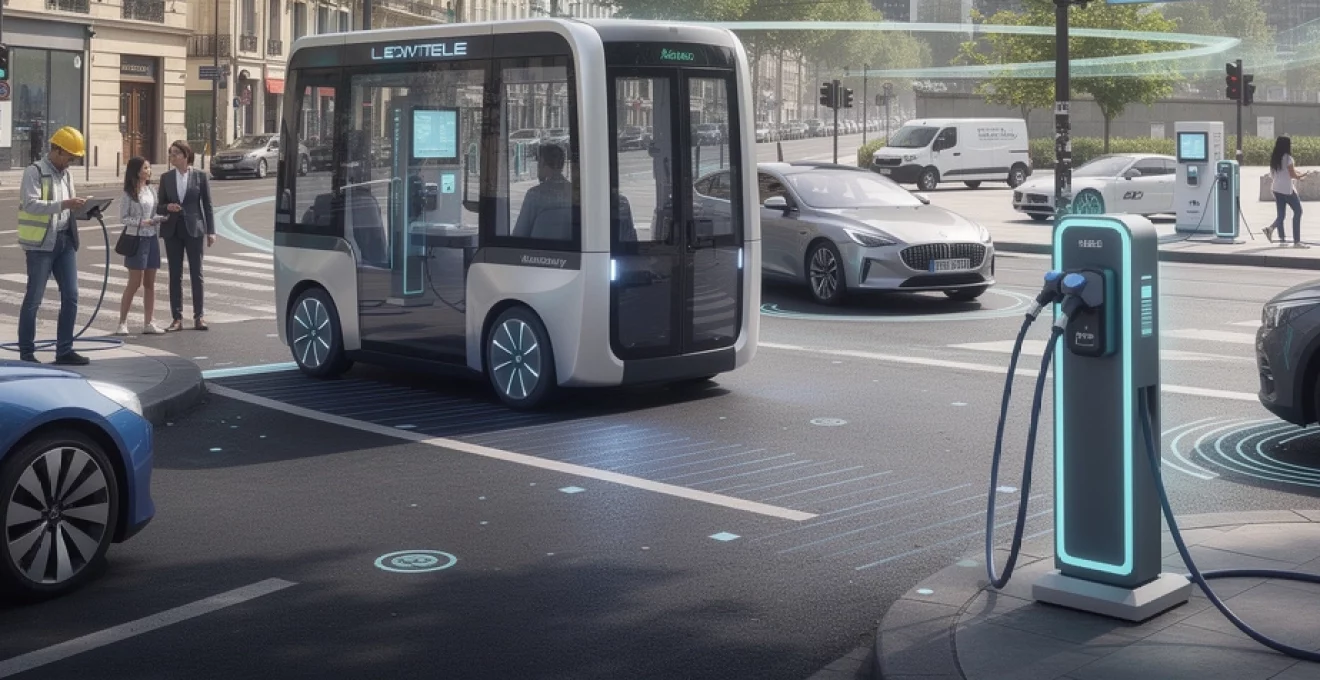
France has emerged as a pivotal player in reshaping Europe’s transportation landscape, positioning itself at the intersection of automotive innovation and environmental responsibility. The convergence of electric vehicle adoption and autonomous mobility technologies represents more than a technological shift—it signals a fundamental transformation in how French cities, industries, and citizens approach transportation. With government initiatives driving investment in clean mobility infrastructure and French automotive manufacturers pivoting toward electrification, the country has created a dynamic ecosystem where innovation meets practical implementation. The challenges of decarbonising transport whilst maintaining industrial competitiveness require coordinated efforts across public and private sectors, and France’s integrated approach offers valuable insights for other nations navigating similar transitions.
Electric vehicle infrastructure development across french regions
The expansion of electric vehicle infrastructure across France demonstrates the country’s commitment to supporting widespread EV adoption. The charging network has grown exponentially, with over 100,000 public charging points now operational nationwide, reflecting a strategic recognition that infrastructure accessibility directly influences consumer confidence in electric mobility. This infrastructure buildout extends beyond major metropolitan areas, though regional disparities remain a significant concern for policymakers and industry stakeholders alike.
Ionity and TotalEnergies Fast-Charging network expansion
The collaboration between Ionity and TotalEnergies has created one of Europe’s most comprehensive high-power charging networks, with strategic placement along France’s major motorway corridors. These ultra-rapid charging stations, capable of delivering up to 350 kW, reduce charging times to approximately 20-30 minutes for most modern electric vehicles. The partnership has established over 150 charging sites across France, with plans to double this number by 2027. What makes this deployment particularly effective is the focus on interoperability—drivers can access these facilities regardless of their vehicle manufacturer or service subscription, addressing one of the persistent friction points in early EV adoption.
TotalEnergies has integrated renewable energy sources into many of these charging hubs, aligning with broader sustainability objectives. The company’s investment in solar canopies at select charging locations demonstrates how infrastructure development can serve multiple environmental purposes simultaneously. This approach also addresses concerns about the carbon intensity of electricity used for vehicle charging, ensuring that the environmental benefits of electric vehicles extend throughout their operational lifecycle.
Enedis grid modernisation for EV integration
Enedis, France’s primary electricity distribution network operator, has undertaken substantial grid modernisation efforts to accommodate the projected increase in EV charging demand. The company has invested approximately €1.3 billion in smart grid technologies that enable dynamic load management, preventing grid congestion during peak charging periods. These intelligent systems monitor electricity demand in real-time and can adjust charging speeds to maintain network stability—a capability that becomes increasingly critical as EV penetration rates climb.
The modernisation programme includes the installation of advanced metering infrastructure (AMI) across millions of connection points, providing granular data on electricity consumption patterns. This data enables predictive modelling that helps anticipate future infrastructure needs and identify areas requiring reinforcement before capacity constraints emerge. Smart grid technology transforms the electricity network from a passive distribution system into an active platform for energy management, creating opportunities for vehicle-to-grid applications that we’ll explore in greater detail later.
Paris métropole and lyon smart charging hubs
Urban charging infrastructure presents unique challenges and opportunities compared to highway networks. Paris Métropole has deployed over 2,000 on-street charging points across the capital region, with a target of 10,000 by 2026. These installations prioritise accessibility for residents without private parking, addressing one of the most significant barriers to EV adoption in dense urban environments. The charging stations incorporate dynamic pricing mechanisms that incentivise off-peak charging, helping to distribute demand more evenly throughout the day.
Lyon has taken a different approach, focusing on destination charging hubs integrated with multimodal transport nodes. These facilities combine EV charging with bike-sharing stations, electric scooter parking, and public transport connections, creating comprehensive mobility ecosystems. The city has also pioneered workplace charging requirements for new commercial developments, ensuring that charging infrastructure grows in tandem with EV adoption. Both cities demonstrate that successful urban charging strategies require more than simply installing equipment—they demand integrated planning that considers land use, grid capacity, and user behaviour patterns.
Rural electrification challenges in normandy and bretagne</h3
Despite significant progress, rural electrification in regions such as Normandy and Bretagne lags behind urban centres, creating a two-speed landscape for electric mobility. Lower population density, dispersed housing, and longer average travel distances make the business case for high-power charging infrastructure more complex. Many villages still rely on standard domestic outlets or a handful of 7–22 kW public chargers, which limits the practicality of long-distance EV travel for residents and tourists. Local authorities, often constrained by budgets, depend heavily on national subsidies and EU funds to upgrade networks and install modern charging stations.
To address these disparities, regional energy agencies and inter-municipal councils are experimenting with innovative deployment models. These include shared charging hubs at supermarkets, town halls, and park-and-ride facilities, where demand can be aggregated to justify investment. Mobile charging solutions and slower but cheaper AC chargers are also being tested for rural fleets, including postal vehicles and municipal services. Over time, lessons learned from these territories could define a blueprint for inclusive EV infrastructure that ensures the transition to low-carbon mobility does not leave rural communities behind.
Autonomous vehicle testing corridors and regulatory framework
While electric vehicles are transforming how energy is used in transport, autonomous mobility is reshaping how vehicles are operated and managed. France has positioned itself as a testbed for self-driving technologies, combining dedicated testing corridors, urban pilots, and a structured regulatory framework. The objective is clear: enable safe experimentation while building public trust in autonomous vehicles. To achieve this, French authorities have created a progressive legal environment that allows real-world trials, provided strict safety and supervision rules are respected.
This balanced approach recognises that autonomous driving is not just a technological challenge but also a societal one. How do we guarantee safety, allocate liability, and integrate autonomous shuttles or robotaxis into existing traffic? By coordinating transport ministries, local authorities, and research institutions, France is building the foundations for scalable deployments. Several flagship initiatives illustrate how autonomous mobility is moving from closed test tracks to mixed-traffic urban environments.
Transpolis urban testing facility in ain department
Located in the Ain department near Lyon, Transpolis is one of Europe’s most advanced test facilities for smart and autonomous mobility. Built on a former military site, it recreates complex urban and peri-urban environments, including roundabouts, traffic lights, tunnels, and bus lanes. This controlled “mini city” allows engineers to test autonomous vehicles, connected infrastructure, and advanced driver-assistance systems (ADAS) under realistic conditions without endangering the public. It is particularly valuable for simulating rare or dangerous scenarios that are difficult to encounter during standard road trials.
Transpolis also serves as a collaborative platform, bringing together OEMs, start-ups, equipment suppliers, and public authorities. By pooling data and expertise, stakeholders can accelerate the validation of perception algorithms, sensor fusion systems, and V2X (vehicle-to-everything) communication. In practice, this means a shuttle can be tested for how it reacts to a pedestrian suddenly crossing the road or a cyclist appearing from a blind corner. As we move toward Level 4 autonomy, such structured environments play a role similar to flight simulators in aviation—essential for safety before large-scale deployment.
Rouen-normandie autonomous shuttle trials
The Rouen-Normandie metropolitan area has emerged as a pioneer in real-world autonomous shuttle operations in France. Starting in 2017, the region launched one of Europe’s first on-demand autonomous mobility services on open roads, integrating shuttles into a multimodal public transport network. Operating on predefined routes with remote supervision, these vehicles transported passengers between tram stops, residential areas, and business districts. The trials generated valuable insights into user acceptance, operational constraints, and the interaction between self-driving shuttles and other road users.
Rouen’s experience highlighted both the promise and the challenges of autonomous public transport. On the one hand, users appreciated first- and last-mile connectivity, especially in low-density areas where traditional bus services are less frequent. On the other hand, weather conditions, roadworks, and unpredictable human behaviour often required the system to revert to manual control or suspend operations. These lessons are now feeding into newer projects across France, refining service design, safety protocols, and human-machine interfaces to make autonomous shuttles more robust and user-friendly.
LOTI legislation and type approval requirements
The legal framework underpinning autonomous mobility in France is grounded in the evolution of the LOTI (Loi d’Orientation des Transports Intérieurs) and subsequent mobility laws. These regulations define how new transport services can be deployed, what responsibilities operators carry, and how safety is ensured. For autonomous vehicles, type approval processes remain stringent: vehicles must comply with UNECE regulations, national decrees, and specific authorisations for experimental use. This layered approach aims to ensure that even during trials, autonomous vehicles meet high standards of reliability and cybersecurity.
Recent updates to French mobility legislation have created a specific status for automated driving systems, clarifying liability between the driver, vehicle manufacturer, and software provider. As vehicles move from Level 2 and 3 assistance features to Level 4 automation, this clarity becomes crucial for insurance, accident investigation, and consumer confidence. In many ways, the legal framework acts like the “operating system” of autonomous mobility—often invisible, but essential for everything else to function safely and predictably.
CEREMA safety standards for level 4 autonomy
CEREMA (Centre for Studies and Expertise on Risks, Environment, Mobility and Urban Planning) plays a central role in defining safety methodologies for advanced autonomous driving in France. For Level 4 autonomy, where vehicles can operate without human intervention in specific conditions, CEREMA develops guidance on risk analysis, test protocols, and performance benchmarks. These frameworks help authorities assess whether a given autonomous service is safe enough to be deployed on public roads, and under which constraints. The focus is on a system-wide view that includes infrastructure, signage, connectivity, and interactions with vulnerable road users.
CEREMA works closely with cities, operators, and technology providers to translate abstract safety principles into practical rules. For instance, they may recommend reduced speeds in mixed-traffic environments, enhanced digital mapping, or dedicated lanes for certain use cases. By adopting a pragmatic approach, CEREMA ensures that innovation is not stifled, while maintaining a clear margin of safety. The long-term objective is to make Level 4 services at least as safe as, if not safer than, conventional human-driven public transport.
French automotive manufacturers’ electrification strategies
France’s transition to electric and autonomous mobility would be incomplete without a fundamental shift in its automotive industry. French manufacturers have embraced electrification not only as a regulatory necessity but also as a strategic opportunity to reposition themselves in a global market increasingly dominated by zero-emission vehicles. This involves massive investments in battery production, software-defined vehicles, and new manufacturing ecosystems. For consumers, it translates into a growing range of electric cars—from compact city models to premium sports vehicles—tailored to different use cases and budgets.
The electrification strategies of French OEMs are closely aligned with European Green Deal targets and national policies such as the “bonus écologique” and conversion premiums. By localising battery and EV production, companies also aim to reduce supply-chain risks and create high-value manufacturing jobs in regions affected by the decline of internal combustion engine (ICE) technologies. The result is a new industrial landscape where gigafactories and software centres stand alongside traditional assembly plants.
Renault electricity gigafactory in hauts-de-france
At the heart of Renault’s electric strategy is the Renault ElectriCity industrial cluster in Hauts-de-France, bringing together sites in Douai, Maubeuge, and Ruitz. This integrated complex aims to produce hundreds of thousands of electric vehicles per year, including models based on the CMF-EV and CMF-BEV platforms. By centralising engineering, production, and logistics, Renault seeks to achieve economies of scale comparable to leading global EV manufacturers. The cluster is also designed to reduce the carbon footprint of manufacturing by leveraging renewable electricity and optimised logistics.
ElectriCity works in close partnership with Envision AESC, which is building a large-scale battery plant in Douai to supply next-generation cells for Renault vehicles. This proximity between assembly lines and battery production shortens supply chains and enhances quality control. For the wider region, the project represents a major industrial reconversion, creating thousands of direct and indirect jobs. If you are considering an electric vehicle made in France, there is a growing chance it will have been engineered and assembled within this new ecosystem.
Stellantis battery production at douvrin and hordain
Stellantis, the group formed from the merger of PSA and FCA, has also embarked on an ambitious electrification roadmap. Through the Automotive Cells Company (ACC) joint venture with TotalEnergies and Mercedes-Benz, Stellantis is establishing gigafactories in Douvrin (Hauts-de-France) and other European locations. The Douvrin site, historically associated with combustion engines, is being transformed into a high-tech battery production facility capable of supplying cells for millions of vehicles. This shift symbolises the broader transition from fossil-fuel technologies to electrified powertrains across France and Europe.
In Hordain, near Valenciennes, Stellantis is ramping up production of electric light commercial vehicles (e-LCVs) for multiple brands, including Peugeot, Citroën, Opel, and Fiat Professional. These vans are essential for decarbonising urban logistics, last-mile delivery, and corporate fleets. By combining local battery sourcing with modular electric platforms, Stellantis aims to lower costs and make zero-emission commercial vehicles competitive with diesel equivalents. For fleet operators, this opens the door to cleaner transport without sacrificing practicality or total cost of ownership.
Alpine pure electric sports car development
Alpine, Renault’s performance brand, illustrates how electrification can coexist with driving passion. The company has announced a line-up of pure electric sports cars, including successors to the A110 and new models developed in partnership with Lotus and other technology partners. These vehicles aim to combine lightweight construction, advanced battery technology, and agile handling to preserve the brand’s DNA in an electric era. Instead of treating batteries as a handicap, Alpine engineers are exploring packaging and chassis solutions that use the mass of battery packs to enhance stability and performance.
The development of electric sports cars also serves as a laboratory for technologies that will later reach mainstream models. High-density battery modules, advanced thermal management, and sophisticated torque vectoring systems can significantly improve efficiency and safety in everyday vehicles. For enthusiasts, Alpine’s projects send a reassuring message: the future of mobility in France can be both sustainable and exciting, offering new forms of performance that were not possible with conventional drivetrains.
Vehicle-to-grid technology and energy storage solutions
As the number of electric vehicles on French roads grows, their role is expanding beyond simple transport. EVs are increasingly seen as mobile energy assets that can support the electricity system through vehicle-to-grid (V2G) and vehicle-to-home (V2H) technologies. Imagine millions of car batteries acting like a distributed “virtual power plant”, helping to balance supply and demand—this is the vision that underpins France’s emerging V2G ecosystem. Such integration is particularly relevant as renewable energy sources like wind and solar introduce more variability into the grid.
To unlock this potential, France is investing in pilot projects, regulatory adaptations, and new business models. Energy companies, grid operators, and automakers are collaborating to test bidirectional charging, dynamic tariffs, and aggregated flexibility services. While the technology is still maturing, early results suggest that V2G could reduce grid congestion, cut charging costs for EV owners, and enhance the resilience of local energy systems during peak events.
RTE network bidirectional charging integration
RTE, France’s transmission system operator, plays a strategic role in integrating bidirectional charging into the national electricity network. By modelling different EV adoption scenarios, RTE assesses how much flexible capacity could be provided by connected vehicles at various times of day and year. The operator is working on market mechanisms that would allow aggregators to offer EV flexibility as a resource, much like power plants or industrial demand response. In practice, this could mean that thousands of parked EVs momentarily reduce or shift their charging to help stabilise frequency or relieve overloaded lines.
To make this vision a reality, RTE collaborates with distribution operators like Enedis, charging point operators, and technology providers. Standardisation of communication protocols and smart metering is essential so that EVs can “talk” to the grid in a secure and interoperable way. Over the coming decade, bidirectional charging integration has the potential to transform EVs from passive loads into active participants in France’s energy transition, lowering overall system costs while supporting the growth of renewable generation.
Dreev V2G pilot programmes with EDF
Dreev, a joint venture between EDF and Nuvve, is at the forefront of practical V2G deployments in France. The company has launched several pilot programmes with corporate fleets, local authorities, and public operators, equipping chargers with bidirectional capabilities and advanced control software. These projects test how EV fleets can feed electricity back into the grid during peak hours and recharge when prices and demand are low. For fleet owners, the model offers a new revenue stream that helps offset the higher upfront cost of electric vehicles.
Participants in Dreev pilots often report that V2G operations are almost invisible from a user perspective: vehicles remain available for daily use, while algorithms manage charging and discharging in the background. One might compare it to a savings account that automatically invests idle funds and returns interest without constant attention. As regulatory frameworks evolve and energy markets become more flexible, such solutions could scale up, turning thousands of parking lots and depots across France into intelligent energy hubs.
Battery second-life applications through renault and veolia partnership
Another key dimension of France’s electric mobility strategy is the development of second-life applications for EV batteries. Once a battery’s capacity falls below the threshold required for automotive use—typically around 70–80%—it can still serve in stationary storage for many years. Renault, Veolia, and other partners are building industrial processes to collect, assess, and repurpose used batteries from electric vehicles. These second-life systems are then deployed in applications such as grid balancing, renewable energy storage, and backup power for buildings.
By extending the useful life of batteries, second-life projects improve the overall environmental footprint and economics of electric mobility. They also reduce the immediate need for raw material extraction, buying time for recycling technologies to advance. For France, this circular approach supports a domestic value chain that spans from battery manufacturing and vehicle production to reuse and end-of-life processing. It is the energy equivalent of turning old railway tracks into new steel for bridges—an example of industrial ecology applied to the future of transport.
Artificial intelligence and adas implementation in french mobility
Artificial intelligence (AI) and advanced driver-assistance systems are the digital backbone of France’s evolving mobility ecosystem. From automated emergency braking to lane-keeping assistance and adaptive cruise control, ADAS features are already widespread in vehicles on French roads. These systems not only enhance safety but also pave the way for higher levels of automation by familiarising drivers with partial self-driving functions. Behind the scenes, AI algorithms process vast amounts of sensor data—camera feeds, radar reflections, LiDAR point clouds—to understand complex traffic environments in real time.
French technology suppliers and mobility start-ups are playing a prominent role in this domain, supplying key components and software to global OEMs. As we move from assisted driving to autonomous mobility, the boundary between automotive engineering and digital technology is blurring. Vehicles are becoming more like rolling computers, updated over the air and constantly learning from new data. This shift raises questions about cybersecurity, data governance, and ethics, but it also creates enormous opportunities for innovation and value creation within France.
Valeo lidar sensors and perception systems
Valeo is one of the leading suppliers of LiDAR sensors and perception systems for the automotive industry, with strong research and manufacturing footprints in France. Its latest generations of LiDAR can generate high-resolution 3D maps of the vehicle’s surroundings, even in low-light or adverse weather conditions where cameras struggle. By combining LiDAR data with inputs from radar and cameras, Valeo’s perception systems provide a reliable understanding of other vehicles, pedestrians, and obstacles. This multi-sensor fusion is essential for enabling safe ADAS and autonomous driving features at motorway speeds and in dense urban traffic.
Beyond hardware, Valeo invests heavily in AI algorithms that interpret sensor data and predict the behaviour of road users. For instance, the system can anticipate whether a pedestrian is likely to cross the road or if a nearby vehicle is about to change lanes. Think of it as a digital co-pilot that never gets tired, constantly scanning the environment and assisting the human driver or automated system. As these technologies mature, they will support not only private cars but also robo-taxis, delivery robots, and connected infrastructure projects across France.
Easymile EZ10 autonomous shuttle neural networks
EasyMile, a Toulouse-based company, has become a reference in the field of autonomous shuttles with its EZ10 vehicle. Designed for low-speed, shared mobility in campuses, business parks, and city centres, the EZ10 relies on a suite of sensors and neural networks to navigate safely. Its AI models are trained on extensive datasets capturing diverse road layouts, obstacles, and traffic behaviours. Over time, continuous learning improves the shuttle’s ability to handle complex scenarios, such as temporary road closures or unexpected objects blocking its path.
France has hosted numerous EZ10 deployments, from hospital campuses to suburban park-and-ride facilities, offering real-world conditions to refine the technology. These shuttles are often geofenced to specific routes, striking a practical balance between autonomy and control. For public transport authorities, they provide a flexible tool to extend service coverage without the cost of traditional bus operations. In many ways, the EZ10 and its neural networks function like a trainee driver constantly supervised by a virtual instructor, getting better with every trip.
Navya AUTONOM CAB machine learning algorithms
Navya, headquartered near Lyon, has developed the AUTONOM CAB, an autonomous taxi concept leveraging advanced machine learning algorithms. Although the company has faced financial headwinds, its technological contributions remain significant for the French autonomous mobility ecosystem. The AUTONOM CAB’s software stack integrates perception, localisation, decision-making, and control into a unified platform. Machine learning models interpret sensor data to classify objects, understand road rules, and plan safe trajectories in real time.
Navya’s pilots in France and abroad have explored how autonomous cabs could complement public transport and reduce private car dependency. For cities, such services raise important questions: how do we allocate curb space, regulate pricing, and ensure accessibility for all users? Experiments with the AUTONOM CAB have provided policy-makers and operators with valuable feedback on service design, fleet management, and user expectations. Even as market dynamics evolve, the core algorithms and expertise developed by Navya continue to inform new generations of French autonomous mobility solutions.
Hydrogen fuel cell vehicles and infrastructure programmes
While battery electric vehicles dominate headlines, hydrogen fuel cell mobility is gaining momentum in specific segments of the French transport ecosystem. Hydrogen is particularly attractive for heavy-duty vehicles, long-distance coaches, and certain fleet applications where fast refuelling and long range are critical. France has articulated a national hydrogen strategy with multi-billion-euro investments to scale up production, storage, and distribution infrastructure. The goal is to create a competitive value chain that supports both industrial decarbonisation and zero-emission mobility.
Hydrogen mobility can be seen as a complement to battery-electric transport rather than a direct competitor. For urban cars and short commutes, EVs with charging points are often the most efficient option. For regional logistics, intercity buses, or intensive professional use, hydrogen fuel cell vehicles may offer operational benefits. French companies and consortia are therefore focusing on targeted use cases, pilot corridors, and integrated ecosystems where hydrogen can deliver the greatest climate and economic value.
Hyvolution refuelling station network development
HyVolution, initially known as a trade fair dedicated to the hydrogen sector in France, has become a focal point for initiatives involving hydrogen refuelling infrastructure. Around this ecosystem, energy companies, equipment manufacturers, and local authorities are collaborating to roll out hydrogen refuelling stations along major freight corridors and in metropolitan areas. These stations are designed to serve buses, trucks, and professional fleets, with refuelling times comparable to diesel vehicles. The network is still in its early phase, but planned projects aim to create contiguous corridors linking regions such as Île-de-France, Auvergne-Rhône-Alpes, and Occitanie.
Developing hydrogen stations is more complex than installing EV chargers, due to stringent safety standards, high-pressure storage, and supply logistics. However, France is leveraging its strong industrial base in gas technologies and its decarbonisation targets for public transport to justify early investments. As green hydrogen production ramps up through electrolysis powered by renewable or low-carbon electricity, these refuelling sites will become key nodes in a cleaner, more resilient mobility system.
Hopium māchina vision hydrogen sedan specifications
Hopium, a French start-up, has attracted attention with its Māchina Vision hydrogen sedan concept, positioning itself at the intersection of premium automotive design and zero-emission technology. The vehicle aims to offer a range of around 1,000 kilometres and refuelling times of just a few minutes, thanks to a high-performance fuel cell system and optimised hydrogen storage. Its design emphasises aerodynamics, lightweight materials, and an advanced digital cockpit to compete with top-tier electric and combustion models in terms of comfort and performance.
Although the project remains in development and faces the usual challenges of funding, industrialisation, and market entry, it symbolises France’s ambition to play a leading role in hydrogen mobility innovation. If realised, the Māchina Vision would demonstrate that hydrogen fuel cell vehicles can deliver both long-distance practicality and a premium driving experience. For the broader ecosystem, such flagship projects help attract talent, investment, and partnerships, accelerating the maturation of hydrogen technologies in France.
AFHYPAC industrial consortium zero-emission commercial vehicles
The French Hydrogen Association, formerly AFHYPAC and now integrated into France Hydrogène, acts as a key coordinator for industrial efforts in hydrogen mobility. Within this framework, multiple companies are developing zero-emission commercial vehicles, including fuel cell trucks, delivery vans, and buses. Demonstration projects in cities such as Paris, Lyon, and Pau showcase hydrogen-powered bus lines and municipal fleets that operate daily with zero tailpipe emissions. These initiatives validate technical performance, refuelling logistics, and total cost of ownership in real operating conditions.
By bringing together vehicle manufacturers, energy providers, and public authorities, the consortium model helps share risk and align investments. It also facilitates standardisation of components and refuelling interfaces, which is essential for scaling up deployment. Over time, lessons from these early projects will inform broader roll-outs across French regions and neighbouring countries, contributing to a diversified, resilient, and low-carbon mobility landscape where electric, autonomous, and hydrogen solutions each play their part.