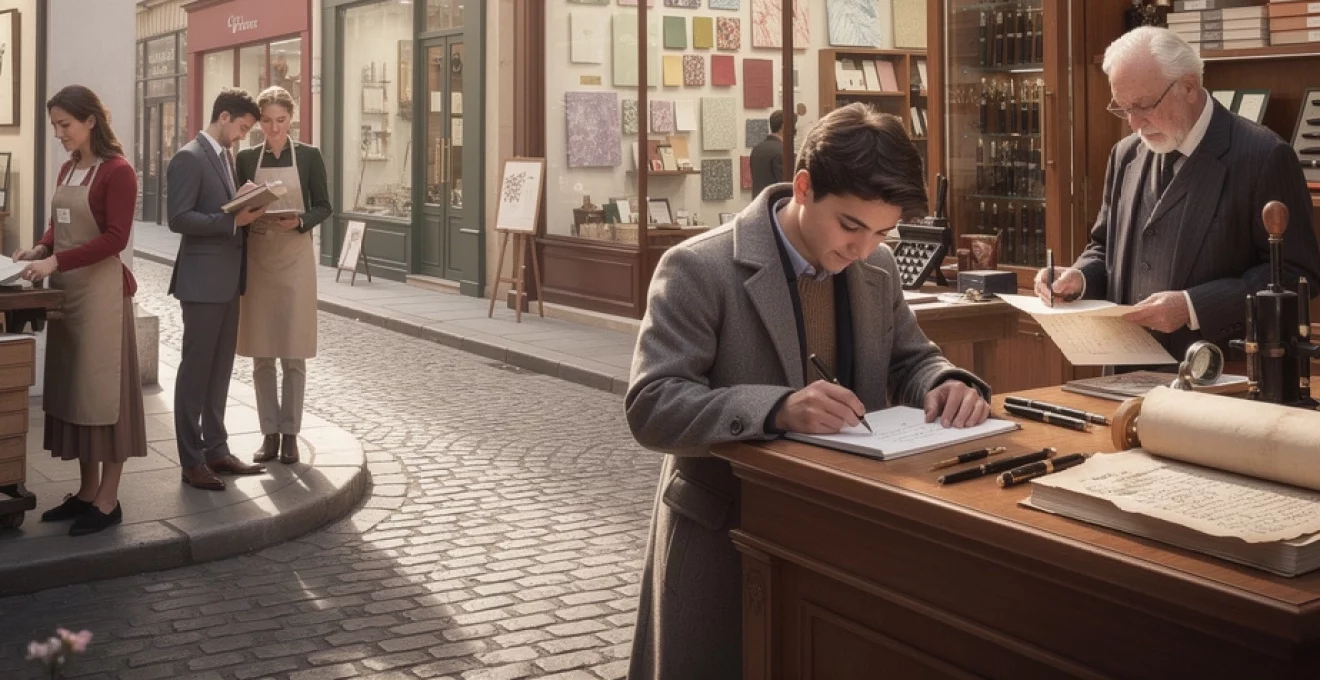
Paris remains the undisputed capital of refined paper culture, where centuries-old traditions merge seamlessly with contemporary design innovation. The city’s legendary papeteries represent far more than mere retail establishments—they embody a profound reverence for the written word, artistic expression, and the tactile pleasure of premium stationery materials. From historic Latin Quarter establishments that have served generations of scholars to avant-garde Marais boutiques pushing creative boundaries, Paris offers an unparalleled journey through the world of exceptional paper goods, writing instruments, and bookbinding artistry.
Historic quartier latin papeteries: Saint-Germain-des-Prés heritage stationery districts
The Latin Quarter’s intellectual legacy permeates every corner of its distinguished papeteries, where academic tradition and artistic heritage create an atmosphere unlike anywhere else in the world. These establishments have witnessed centuries of scholarly discourse, revolutionary ideas, and literary masterpieces taking shape on their premium papers.
Gibert jeune boulevard Saint-Michel: academic fountain pen collections and manuscript paper specialists
Established in 1886, Gibert Jeune represents the quintessential Parisian academic stationer, serving the Sorbonne community and discerning writers for over a century. The Boulevard Saint-Michel flagship location houses an extraordinary collection of fountain pens ranging from student-friendly models to professional-grade instruments worth several thousand euros. Their manuscript paper selection reflects decades of expertise in understanding scholarly requirements, offering everything from thesis-quality watermarked sheets to specialised formats for mathematical equations and musical notation.
The shop’s fountain pen restoration service attracts collectors from across Europe, with master craftsmen capable of reviving vintage Waterman, Parker, and Montblanc pieces to their original glory. Manuscript paper specialists work closely with doctoral candidates to ensure proper formatting standards, whilst their binding department offers dissertation services that meet the strictest university requirements.
La procure Saint-Sulpice: ecclesiastical calligraphy supplies and handmade parchment trading
Adjacent to the magnificent Saint-Sulpice church, La Procure maintains an extraordinary inventory of ecclesiastical writing materials that reflects centuries of religious manuscript traditions. Their handmade parchment selection includes authentic vellum sourced from traditional European suppliers, alongside modern synthetic alternatives that offer similar aesthetic properties without ethical concerns.
The calligraphy department stocks professional-grade nibs specifically designed for Gothic, Carolingian, and modern ecclesiastical scripts. Illuminated manuscript supplies encompass gold leaf sheets, traditional pigments, and binding tools used by contemporary scribes creating religious texts. Their workshop programme offers intensive courses in medieval lettering techniques, attracting both amateur enthusiasts and professional calligraphers seeking to master historical methods.
Librairie-papeterie de la sorbonne: University-Grade technical drawing materials and thesis binding services
Directly serving the academic community since 1954, this institution specialises in technical drawing materials that meet professional engineering and architectural standards. Their comprehensive selection includes precision drafting instruments, technical pens with interchangeable nib sizes, and specialised papers designed for various technical applications.
The thesis binding service represents decades of expertise in academic presentation standards, offering both traditional hardcover binding and modern spiral configurations. University-grade materials extend beyond standard supplies to include archival-quality storage solutions, ensuring research materials remain preserved for decades. Their consultation service helps students navigate complex formatting requirements whilst maintaining aesthetic excellence throughout their academic presentations.
L’écritoire rue Saint-André-des-Arts: vintage letterpress equipment and artisanal ink manufacturing
L’Écritoire occupies a unique position within Paris’s stationery landscape, combining retail operations with active letterpress production facilities. Their vintage equipment collection includes functional printing presses dating from the early 20th century, alongside comprehensive type libraries representing classic and contemporary fonts.
The artisanal ink manufacturing operation produces small-batch formulations using traditional recipes and modern quality control methods. Letterpress enthusiasts can purchase everything from basic printing supplies to complete workshop setups, whilst their educational programme offers hands-on
hands-on training in typesetting, colour registration, and traditional printing techniques. Visiting L’Écritoire feels less like entering a shop and more like stepping into a working print studio, where the scent of ink and the rhythm of old presses provide an immersive backdrop to your stationery browsing. For writers and designers seeking truly bespoke correspondence cards, wedding stationery or limited-edition prints, this is one of the Latin Quarter’s most rewarding destinations.
Luxury marais stationery boutiques: artisanal paper crafting and bespoke writing instruments
The Marais district has evolved into Paris’s epicentre of contemporary design, and its stationery boutiques reflect this creative energy while preserving meticulous craftsmanship. Here, historic streets lined with hôtels particuliers conceal ateliers where hand-marbled paper is still made sheet by sheet, and where you can commission a custom fountain pen or monogrammed stationery suite to your exact specifications. These boutiques are ideal if you are looking for artisanal paper crafting techniques, bespoke writing instruments, or simply a luxury stationery souvenir that encapsulates the spirit of Paris.
Mélodies graphiques rue de rosiers: hand-marbled paper techniques and custom monogramming services
Tucked between bakeries and galleries in the historic Jewish quarter, Mélodies Graphiques on Rue de Rosiers embodies the romance of old-world Parisian papeteries. The moment you cross the threshold, walls lined with marbled papers, engraved cards and calligraphy samples draw your eye in every direction. Many of the hand-marbled paper techniques showcased here follow 19th‑century methods, where pigments are carefully floated on a water bath and manipulated with combs before being transferred to cotton-rich sheets.
For those seeking personalised stationery, Mélodies Graphiques offers custom monogramming services using traditional copperplate or Roman scripts. You can work with in-house designers to select paper weight, edge colouring, and envelope lining to create a bespoke set suited to everything from wedding invitations to professional correspondence. If you are unsure where to start, ask to see the archival books of past commissions—much like browsing a tailor’s lookbook, this gives a tangible sense of how typefaces, ink colours and formats combine in finished sets.
Papier plus place des vosges: japanese washi paper collections and mont blanc limited editions
A short walk from the arcades of Place des Vosges brings you to Papier Plus, a boutique that marries minimalist French design with carefully curated global influences. Shelves are stacked with impeccably constructed boxes, albums and portfolios in an array of solid colours, many wrapped in textured linen or cotton cloth. The highlight for many visitors is the dedicated corner for Japanese washi paper collections, where you will find translucent kozo sheets, deckle-edged cards and printed chiyogami patterns ideal for collage, origami or fine letter writing.
While Papier Plus focuses on its own paper goods, it also maintains a tightly edited selection of Mont Blanc limited editions and other high-end writing instruments. Rather than overwhelming you with hundreds of models, the staff present a small number of carefully chosen pens and can guide you through nib sizes, filling mechanisms and maintenance routines. If you are considering investing in a luxury fountain pen in Paris, this boutique offers a calm, informed environment to test options on premium paper, ensuring the pen you choose truly suits your hand and writing style.
Calligrane rue du pont Louis-Philippe: professional calligraphy nibs and illuminated manuscript supplies
Calligrane, often described as a gallery of paper art, takes a more contemplative approach to stationery retail. The space is serene and sparsely arranged, inviting you to slow down and examine texture, fibre and grain the way one might appreciate brushwork in a painting. Behind minimalist displays you will find drawers filled with handmade sheets from Japan and Europe, along with professional calligraphy nibs sourced for their precision and durability.
For artists working in historical scripts or book arts, Calligrane also functions as a discreet source of illuminated manuscript supplies. Gold and silver leaf, burnishing tools, gum arabic, and fine sable brushes are stocked alongside pigmented inks and gouaches with high lightfastness—vital if you want your work to endure. Not sure which paper weight or surface is best for gilding or layered wash techniques? Staff can usually provide sample offcuts so you can test adhesion and absorbency before investing in full sheets, saving both time and frustration.
L’art du papier rue Sainte-Croix: pergamano parchment craft materials and embossing tool specialists
Just off the bustling arteries of the Marais, L’Art du Papier on Rue Sainte‑Croix specialises in transforming raw materials into refined paper projects. While the brand is known for its wedding invitations and custom corporate stationery, this particular location is a treasure trove for hands-on crafters. One of its more niche offerings is a wide range of pergamano parchment craft materials, from translucent vellum-like sheets to fine mapping tools and perforating plates used to create lace-like patterns.
To complement its parchment and cardstock selection, L’Art du Papier has become something of an embossing tool specialist. You will find everything from handheld embossers for monograms and logos to heat-embossing powders in metallic and pearlescent finishes. If you are planning DIY invitations or personalised business cards, consider bringing a sample design on a USB drive or your phone; staff can advise whether an embossing, letterpress or digital-foil finish will best suit your budget and desired effect, much like a printer’s version of a fabric consultation at a couture house.
Contemporary Saint-Honoré paper emporiums: modern design aesthetics and digital integration
The Saint-Honoré district, long synonymous with haute couture and luxury retail, has seen a new generation of stationery emporiums emerge that blend tactile paper traditions with digital tools. These spaces cater to design-conscious professionals who move fluidly between analogue and online workflows. Expect to see smart notebooks that sync handwritten notes to cloud services, RFID-protected planners, and packaging studios that translate hand-drawn logos into vector formats ready for e‑commerce.
Many Saint-Honoré papeteries operate more like creative agencies than conventional shops, offering in-house graphic design, custom logo development, and digital mock‑ups of stationery suites. You might, for example, sketch a business card concept in-store, then watch as it is scanned, vectorised and laid out with various type options on a nearby screen. For remote workers or entrepreneurs visiting Paris, this is particularly useful: you can leave not only with beautifully printed cards or letterheads, but also with digital files optimised for email signatures, social media headers and online storefronts.
These contemporary paper emporiums also respond to sustainability concerns by tracking and communicating the environmental impact of their materials. Some display QR codes on sample books that link to details about recycled content, FSC certification, or carbon-neutral printing processes. If you are building a brand that values transparency, you can ask for documentation on paper sourcing and printing inks—much like checking the origin and processing of fabrics in a fashion boutique. The result is stationery that looks refined while aligning with your ethical standards.
Specialist montparnasse bookbinding ateliers: traditional restoration techniques and conservation materials
South of the Seine, the Montparnasse district retains echoes of its bohemian past, when writers, artists and publishers converged in smoky cafés. Today, several discreet bookbinding ateliers continue this legacy by focusing on restoration and conservation-grade binding. Behind unassuming façades, craftsmen practice traditional restoration techniques that have changed little in a century, repairing cracked leather, re-sewing loose signatures and recreating missing endpapers for rare volumes.
If you own a cherished first edition, family bible or artist’s sketchbook that has seen better days, Montparnasse is where you can entrust it to experts. Typical consultations include a detailed assessment of paper acidity, binding structure and previous repairs—rather like a doctor’s check‑up for your books. The binders can then propose interventions ranging from simple re-casing to full leather re‑backing, using reversible adhesives and conservation materials that meet international archival standards. This is crucial if you want to preserve not only the appearance but also the historical integrity of your collection.
Beyond restoration, many ateliers also produce new hand-bound journals, albums and clamshell boxes using acid-free board, linen tapes and hand-marbled or cloth coverings. Some allow visitors to observe parts of the process: you might watch as signatures are sewn onto cords, or as leather is pared and moulded around raised bands on a spine. For stationery enthusiasts, such experiences demystify the construction behind the notebooks and sketchbooks we use daily. Have you ever wondered why one journal lies perfectly flat while another fights to close? A brief conversation with a Montparnasse binder—paired with handling different models in person—can make you far more discerning in future purchases.
Belleville artisan paper mills: small-batch production methods and sustainable fibre sourcing
On the eastern edge of Paris, the Belleville neighbourhood has developed into a hub for independent makers and experimental studios. Among them are small artisan paper mills and workshops devoted to small-batch production methods, often housed in former industrial spaces. Visitors can sometimes see the full cycle of papermaking, from pulping and dyeing fibres to couching sheets on moulds and pressing them under heavy rollers. The resulting papers frequently display irregular deckled edges, subtle inclusions and a tactile surface that mass‑produced stock cannot replicate.
These Belleville studios place particular emphasis on sustainable fibre sourcing. Instead of relying solely on wood pulp, many incorporate cotton linters, agricultural by-products such as straw, or even upcycled textile offcuts from local fashion houses. Some collaborate with nearby cafés to reclaim paper cups and packaging, closing the loop on waste streams within the neighbourhood. If environmental impact is a priority for you, ask makers about their water recycling systems or energy use—several workshops publish annual reports or infographics outlining their footprint, mirroring trends in the broader eco‑design industry.
For visitors, the practical question is often: what can you actually do with these artisanal sheets? The answer is almost anything that benefits from tactility and uniqueness: letterpress-printed invitations, fine‑art prints, sketching, watercolour studies, or even packaging for limited‑run products. Some mills host short courses where you can pull your own sheets or experiment with embedding petals, thread or metallic leaf into the pulp. Like baking your own loaf of bread before returning to a favourite bakery, making paper by hand—even once—gives you a deeper appreciation of the skill behind every sheet you pick up in a Parisian papeterie.