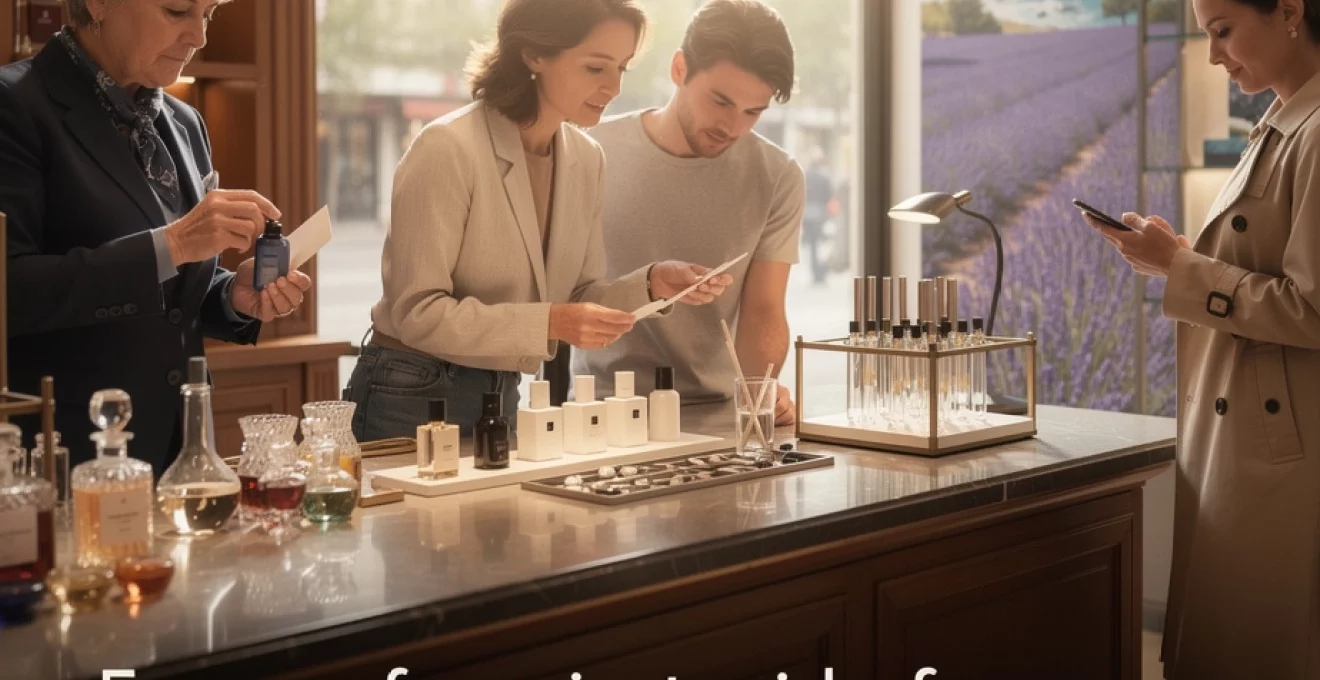
France’s relationship with fragrance transcends mere commerce, representing a centuries-old cultural heritage that continues to evolve in fascinating ways. The country’s perfume landscape has transformed dramatically from traditional parfumeries housed in historic buildings to cutting-edge niche fragrance boutiques that challenge conventional olfactory boundaries. This evolution reflects not only changing consumer preferences but also the democratisation of luxury perfumery, where artisanal creators like Pierre Guillaume Paris offer contemporary and poetic creations alongside established luxury houses.
Today’s French fragrance retail environment presents an extraordinary tapestry of shopping experiences, from the lavender fields of Provence to the sophisticated boutiques of Saint-Germain-des-Prés. Whether you’re seeking a signature scent from a heritage maison or exploring avant-garde compositions from independent perfumers, France offers unparalleled access to the world’s finest fragrances. The country’s unique position as both the birthplace of modern perfumery and a hotbed of contemporary innovation creates shopping opportunities that simply cannot be replicated elsewhere.
Traditional french perfumery heritage and iconic maisons
The foundation of French perfumery excellence rests upon generations of master perfumers who established techniques and traditions that continue to influence global fragrance creation. These heritage houses represent more than retail destinations; they serve as living museums where visitors can experience the evolution of scent from its artisanal origins to contemporary luxury expressions.
Grasse perfume capital: fragonard, molinard, and galimard legacy houses
Nestled in the hills above the French Riviera, Grasse maintains its position as the undisputed capital of perfumery, where three historic houses continue operations that began centuries ago. Fragonard, established in 1926, offers visitors an immersive journey through traditional perfume-making processes, complete with guided tours of their historic factory and extensive gardens where jasmine, rose, and lavender flourish under the Mediterranean sun.
Molinard’s approach combines reverence for tradition with contemporary innovation, showcasing their private label collections alongside bespoke fragrance creation services. Their flagship boutique features an impressive archive of vintage bottles and rare essences, allowing visitors to trace the evolution of popular fragrance families. The house’s commitment to artisanal excellence becomes evident through their hands-on workshops where participants can create personalised scents using traditional techniques.
Galimard distinguishes itself through its educational approach, offering comprehensive perfumery courses that attract both enthusiasts and industry professionals. Their retail spaces feature interactive elements that explain the science behind scent creation, making complex olfactory concepts accessible to newcomers while providing depth for experienced fragrance lovers. The combination of historical significance and educational value makes these Grasse institutions essential destinations for anyone serious about understanding French perfumery.
Parisian luxury establishments: guerlain flagship store and Champs-Élysées experience
The Guerlain flagship store on the Champs-Élysées represents the pinnacle of luxury perfume retail, where opulent interiors reflect the maison’s prestigious heritage dating back to 1828. This architectural masterpiece features custom-designed consultation rooms where expert advisors guide customers through Guerlain’s extensive collection, from iconic classics like Shalimar to contemporary creations that push creative boundaries.
The store’s personalisation services exemplify French luxury retail at its finest, offering everything from custom engraving to bespoke fragrance blending sessions with master perfumers. Interactive displays showcase the house’s most precious ingredients, including rare oud, Bulgarian rose, and Tahitian vanilla, allowing customers to appreciate the quality that justifies premium pricing. The experience extends beyond mere shopping, creating educational moments that deepen appreciation for perfumery as an art form.
Beyond Guerlain, the Champs-Élysées corridor hosts numerous luxury perfume retailers, each offering unique interpretations of French elegance. These establishments maintain the tradition of exceptional customer service that characterises French luxury retail, where knowledgeable staff provide personalised consultations rather than simple transactional exchanges. The concentration of prestige brands creates a competitive environment that drives innovation in both product
and service, with many houses offering limited editions, travel exclusives, and boutique-only creations that reward those who take the time to explore beyond the most famous names. As you wander this iconic avenue, you quickly realise that shopping for perfume in Paris is as much about theatre and storytelling as it is about the bottle you take home.
Regional artisanal perfumers: L’Artisan parfumeur and diptyque origins
While today both L'Artisan Parfumeur and Diptyque are firmly associated with elegant Parisian boutiques, their origins lie in a more artisanal, experimental approach to scent. L’Artisan Parfumeur emerged in the late 1970s as a counterpoint to mass-market launches, focusing on unusual raw materials and seasonal compositions inspired by nature. Early creations like Mûre et Musc and Premier Figuier introduced many perfume lovers to the idea of niche fragrances long before the term became popular.
Diptyque began in the 1960s as a chic design and fabric shop on Boulevard Saint-Germain, gradually introducing scented candles and eaux de toilette that reflected the founders’ travels and artistic sensibility. Their perfumes and home fragrances often blur the boundary between interior atmosphere and personal scent, making them ideal for shoppers who see fragrance as a complete lifestyle experience. Visiting their historic boutique offers insight into how contemporary niche perfumery grew from bohemian, creative roots rather than purely from luxury marketing strategies.
Both houses remain essential stops for anyone interested in the evolution from traditional perfumeries to niche fragrances in France. Their boutiques often feel more like intimate salons than conventional shops, with staff trained to guide you through olfactory families and layering techniques. If you enjoy discovering fragrances that sit between mainstream and avant-garde, allocating time to explore these origins of French niche perfumery can be particularly rewarding.
Historic department store perfume counters: galeries lafayette and le bon marché
For many visitors, stepping into the perfume halls of Galeries Lafayette or Le Bon Marché is their first real encounter with the breadth of French fragrance culture. Underneath Galeries Lafayette’s famous Art Nouveau dome, you will find an extensive perfume floor where heritage maisons, designer brands, and carefully selected niche lines coexist. The scale can be overwhelming, but it offers the advantage of comparing multiple styles, concentrations, and price points in one location.
Le Bon Marché, often considered Paris’s most refined department store, takes a more curated, gallery-like approach to perfume retail. Displays are designed to encourage discovery, with themed corners dedicated to artistic perfumers, exclusive collaborations, and seasonal scent edits. For shoppers who want to understand current French fragrance trends, these counters provide a live snapshot of what is resonating with local consumers, from fresh colognes to bold oud-based compositions.
Shopping in these historic department stores also offers a practical benefit: generous sample policies and expert multilingual staff. You can often request samples of niche fragrances you are unsure about, allowing you to test them over several days before committing to a full bottle. Think of these counters as an open library of scent where you can train your nose and refine your preferences before venturing into more specialised boutiques.
Contemporary niche fragrance revolution in french retail
Over the past two decades, niche fragrances in France have shifted from insider secret to a powerful force reshaping how perfumes are created, marketed, and sold. Instead of chasing mass appeal, these independent and semi-independent houses focus on storytelling, unusual raw materials, and limited distribution. For you as a shopper, this means a richer variety of olfactory experiences and more intimate retail environments where the emphasis is on consultation rather than quick transactions.
Selective distribution networks: nose paris and jovoy concept stores
Concept stores such as Nose Paris and Jovoy illustrate how selective distribution has become central to the niche fragrance revolution. Nose, located near Les Halles, is renowned for its diagnostic approach: you answer questions about your tastes, existing perfumes, and lifestyle, and their algorithm plus in-house experts suggest a tailored selection. This personalised service is ideal if you feel lost in the sea of niche perfumes and want guidance grounded in both data and expertise.
Jovoy, situated near Place Vendôme, operates more like a curated art gallery of scent, with hundreds of references from independent perfume houses arranged by style and intensity. Staff encourage slow exploration, often inviting you to smell raw materials or compare different interpretations of the same note, such as iris or patchouli. For travellers serious about niche fragrance shopping in France, setting aside at least an hour in one of these stores can transform your understanding of what modern perfumery can be.
Because these concept stores work with selective distribution networks, they often stock limited editions, early releases, and hard-to-find brands that are not available in traditional perfumeries. This exclusivity can be appealing if you are seeking a signature scent that feels truly personal. However, it also means that you should not hesitate to ask for samples or written notes; once you leave France, some of these creations can be difficult to find again.
Independent perfume houses: maison francis kurkdjian and serge lutens boutiques
Independent houses such as Maison Francis Kurkdjian and Serge Lutens have played a decisive role in normalising the idea that a perfumer, like a fashion designer, can be a creative auteur. At the Maison Francis Kurkdjian boutiques, particularly the one in the Rue des Francs-Bourgeois area, the emphasis is on streamlined luxury and luminous, often musky compositions. Bestsellers like Baccarat Rouge 540 have achieved cult status, but the house continues to release more intimate, quietly sophisticated scents that reward close attention.
The Serge Lutens boutique in the Palais Royal offers a very different atmosphere, almost like entering a theatrical set or a perfumed chapel. Dark woods, mirrored surfaces, and jewel-toned bottles set the tone for intense, often unconventional creations that have influenced an entire generation of niche perfumers. Sampling these fragrances is a bit like stepping into short stories written in scent, with each composition evoking a distinct place, time, or emotion.
What unites these independent houses is the combination of strong creative direction and carefully controlled distribution. You are not simply buying a pleasant smell; you are buying into a coherent olfactory universe. If you appreciate perfume as an art form, it is worth visiting at least one such boutique during your trip to France to experience how architecture, lighting, and sound are orchestrated to enhance the act of smelling.
Artistic fragrance collections: le labo laboratory retail model
Le Labo, though originally founded in New York, has found a natural home in the French niche perfume landscape thanks to its artisanal, laboratory-style retail model. In their Paris boutiques, such as the one in Le Marais, each fragrance is freshly compounded at the counter when you purchase it, with the label displaying your name and the date. This semi-bespoke approach underlines the idea that perfume is a living creation rather than a static product on a shelf.
The brand’s numbered fragrances, like Santal 33 or Rose 31, are built around a central note but often subvert expectations through unexpected supporting accords. If you have ever felt that mainstream launches smell similar, trying several Le Labo compositions side by side can be an eye-opener. The experience is comparable to visiting a craft coffee roaster after years of drinking generic blends: suddenly subtle differences in origin, roasting, and preparation become visible, or rather, smellable.
For shoppers, the laboratory model also encourages a slower, more deliberate approach to buying perfume. Because the bottle is prepared specifically for you, there is a brief waiting period that naturally invites more conversation with staff and more time to test scents on skin. This pacing can help prevent impulse purchases and ensures that the fragrance you take home truly matches your personal taste and the climate where you live.
Exclusive perfume bars: by kilian and creed private shopping experiences
Some luxury houses have embraced the concept of the perfume bar or private salon to elevate niche fragrance shopping into a full ritual. At By Kilian boutiques, you may be invited to sit at a counter lined with black lacquer, where staff present fragrances in small glasses or on ceramic testers, almost like a wine tasting. The emphasis is on storytelling, with each fragrance framed as a chapter in a broader narrative of seduction, nightlife, or personal rebellion.
Creed, known for its aristocratic heritage and long list of historical clients, offers a different but equally exclusive approach. In its Parisian locations, private consultations can be booked, during which a fragrance expert guides you through the house’s extensive archive, from Green Irish Tweed to Aventus. For travellers interested in understanding why certain perfumes become status symbols, these sessions provide useful context on factors such as longevity, projection, and the role of storytelling in luxury branding.
These perfume bars and salons can feel intimidating at first, but remember that French retail culture values informed clients who ask precise questions. If you share your budget, preferred notes, and the occasions you have in mind—daytime office wear, evening events, or special ceremonies—you are more likely to receive meaningful recommendations. Think of the experience as a conversation between equals rather than a hard sell; you’re there to explore, not to impress.
French perfume shopping geography and regional specialities
Beyond Paris and Grasse, France offers a surprisingly diverse geography of fragrance experiences, each shaped by local raw materials and cultural traditions. Planning your itinerary around perfume can be a practical way to discover lesser-known regions while deepening your understanding of how climate and history influence scent. Whether you follow the lavender route in Provence or explore urban perfume quarters, you will encounter different interpretations of what “French fragrance” means in everyday life.
Provence lavender route: L’Occitane factory stores and local distilleries
The lavender fields of Provence, stretching across the plateaus of Valensole and Sault, are perhaps the most iconic natural backdrop to French perfumery. During the summer months, many local distilleries open their doors to visitors, offering tours that explain how steam distillation transforms fresh lavender into essential oil. Watching copper stills at work and inhaling the intense aroma helps you appreciate why this humble flower underpins so many classic French colognes and relaxing home fragrances.
Along this route, L'Occitane en Provence plays a key educational role through its museum and factory store in Manosque. Here, you can follow the production process of soaps, skincare, and fragrances that highlight not only lavender but also immortelle, almond, and verbena. Factory stores typically offer value sets and exclusive editions, making this a good opportunity to stock up on gifts that reflect authentic Provençal ingredients at more accessible prices than haute parfumerie.
To make the most of lavender-themed fragrance tourism, consider timing your visit around late June to mid-July when the fields are in full bloom. Many small producers sell directly on-site, often with simple but charming boutiques that allow you to compare organic, wild, and cultivated varieties. If you are sensitive to strong smells, remember that concentrated essential oils can be powerful; ask staff to demonstrate appropriate dilution for personal use so that you can enjoy the scent safely once you return home.
Lyon perfume quarter: traditional apothecaries and modern boutiques
Lyon, historically known for its silk trade, has developed a discreet but sophisticated perfume scene that bridges old-world apothecary culture and contemporary niche boutiques. In the Presqu’île and Vieux Lyon districts, you will find pharmacies and herbalists that still stock traditional eaux de Cologne alongside aromatherapy blends and home fragrance. These spaces often feel more intimate than Parisian department stores, giving you time to ask detailed questions about ingredients and concentration.
In parallel, modern concept boutiques have emerged, showcasing both French and international niche houses with a focus on craftsmanship and sustainability. It is not unusual to see shelves where classic French colognes sit beside experimental creations featuring smoky tea, leather, or gourmand accords. For travellers who enjoy discovering “local secrets,” Lyon’s perfume quarter can feel like stumbling into a less crowded, more approachable version of Paris’s high-end niche scene.
Because prices and assortments can vary significantly from shop to shop, it is wise to compare before buying, especially if you are considering higher-end niche fragrances. Many Lyon boutiques also host occasional workshops on topics such as creating your own solid perfume or understanding natural versus synthetic ingredients. These sessions are a practical way to deepen your knowledge while engaging with the city’s quieter, more reflective approach to scent culture.
Nice côte d’azur fragrance tourism: villa ephrussi and perfume workshops
The French Riviera offers a different angle on perfume tourism, combining coastal glamour with easy access to historic fragrance sites. In Nice and nearby towns like Saint-Jean-Cap-Ferrat, cultural landmarks such as Villa Ephrussi de Rothschild showcase themed gardens where roses, citrus trees, and Mediterranean herbs provide a living library of traditional perfume ingredients. Walking through these spaces can help you connect the abstract lists of notes you see on perfume boxes with actual plants and blossoms.
Many local institutions and brands also organise perfume workshops aimed at both beginners and enthusiasts. In these sessions, you typically learn about top, heart, and base notes before composing a simple eau de toilette under the guidance of a professional. It is a bit like cooking classes for scent: by assembling your own accord, you quickly grasp why balance and maturation time are essential to a successful composition.
Nice itself hosts a mix of mainstream and niche perfumeries, often with a stronger emphasis on sunny, marine, and citrus fragrances that suit the local climate. If you live in a cooler or more humid environment, it can be helpful to ask staff how a particular scent behaves in different weather conditions—does it become heavier, fresher, or more discreet? This attention to context ensures that your Riviera perfume souvenir feels just as wearable at home as it did under the Mediterranean sun.
Digital transformation of french fragrance retail
The rise of e-commerce and digital tools has transformed how perfume lovers interact with French brands, especially when niche fragrances are involved. Many maisons now offer rich online experiences combining storytelling, ingredient transparency, and personalised recommendations that replicate aspects of in-store consultation. For international customers who cannot easily travel to France, this digital shift has opened access to limited editions and smaller independent houses that were once available only in Parisian boutiques.
Virtual discovery kits and sample programs have become particularly important, allowing you to test several fragrances at home before committing to a full bottle. Some retailers provide credit toward a larger purchase when you buy a curated set, effectively turning sampling into a low-risk investment. This model mirrors the French in-store tradition of generous sampling, adapted to a global audience that relies on shipping rather than physical counters.
Social media and online communities have also accelerated the spread of information about French niche perfumes. Platforms dedicated to fragrance reviews and “scent of the day” posts can help you identify which creations have strong longevity, unique compositions, or better value. However, just as tasting notes for wine can be subjective, online perfume opinions reflect personal skin chemistry and cultural preferences; the most reliable approach is still to order samples or visit a counter when possible.
Perfume connoisseurship and french shopping etiquette
Developing your perfume connoisseurship while shopping in France involves not only training your nose but also understanding local retail etiquette. In many perfumeries, especially smaller niche boutiques, it is customary to greet staff with a simple “Bonjour” when entering; skipping this can be perceived as abrupt. Once the basic politeness is established, you will generally find that sales associates are happy to spend time helping you explore, even if you do not buy immediately.
How can you make the most of these interactions? Start by clearly sharing what you already wear, what you like or dislike (for example, “I enjoy vanilla but not too sweet”), and your budget. This level of transparency allows staff to narrow down options quickly, saving you from olfactory fatigue. Remember that your skin can only handle a limited number of sprayed tests—usually three or four at a time—so use blotters first and then select your favourites for on-skin evaluation.
French perfume shoppers often take a “try, then decide later” approach, returning after a few days once they have lived with a fragrance in different situations. You can adopt the same habit by asking for samples or having the advisor write down the names of perfumes that stood out. Much like learning to appreciate fine wine or specialty coffee, becoming a perfume connoisseur is a gradual process: each test teaches you something about your preferences and about how French perfumery expresses its heritage and modernity.
Seasonal fragrance trends and french consumer preferences
Seasonal changes play a significant role in how French consumers choose and wear fragrances, and understanding these patterns can help you shop more strategically. In spring and early summer, lighter compositions featuring citrus, green notes, and transparent florals tend to dominate, reflecting the desire for freshness and lift. In contrast, autumn and winter bring a shift toward woods, resins, spices, and gourmand accords that feel comforting in cooler weather.
Over the last decade, data from industry reports has shown consistent growth in unisex and gender-fluid fragrances in the French market, especially within the niche segment. Many shoppers now prioritise mood and personal identity over traditional “for her” and “for him” marketing. This trend is evident in the success of minimalist, clean musks and smoky, incense-driven compositions that appeal across demographics.
Looking ahead, sustainability and ingredient transparency are likely to shape future French fragrance trends. Consumers increasingly ask where raw materials are sourced, whether packaging is recyclable, and how brands minimise environmental impact—questions that niche houses are often well-positioned to answer. As you explore perfumeries from Paris to Provence, paying attention to these evolving preferences will not only help you choose scents that feel current but also deepen your appreciation of how French perfumery continues to reinvent itself with each new season.