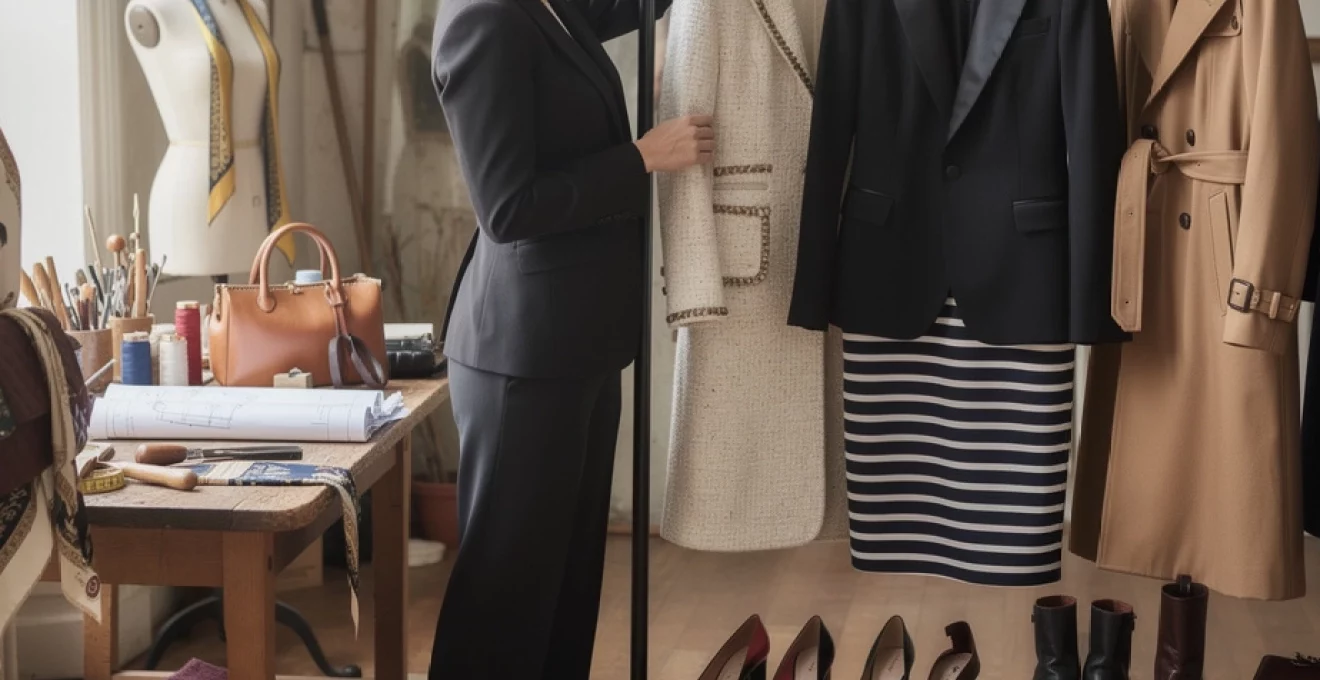
French fashion represents the epitome of savoir-vivre and timeless elegance, offering a blueprint for creating a wardrobe that transcends fleeting trends. The allure of Parisian style lies not in its complexity, but in its refined simplicity—a carefully curated collection of exceptional pieces that work harmoniously together. Building a timeless wardrobe with French brands requires understanding the philosophy behind l’art de vivre, where quality craftsmanship meets effortless sophistication. This approach to fashion investment prioritises longevity over novelty, creating a foundation of versatile pieces that serve you for decades rather than seasons.
The French approach to fashion is fundamentally different from fast fashion culture. It emphasises the concept of moins mais mieux—less but better—where each piece in your wardrobe serves multiple purposes and maintains its relevance year after year. This philosophy transforms shopping from an impulsive activity into a thoughtful investment strategy, where understanding brand heritage, construction quality, and versatility becomes paramount.
French fashion heritage: understanding maisons de couture and Prêt-à-Porter excellence
The foundation of French fashion excellence rests upon centuries of artisanal tradition, where maisons de couture have perfected their craft through generations of skilled artisans. Understanding this heritage provides crucial insight into why French brands command premium prices and deliver exceptional longevity. The distinction between haute couture and prêt-à-porter represents more than price points—it reflects different philosophies of construction, attention to detail, and commitment to excellence.
French fashion houses operate on principles established during the golden age of couture, where techniques were passed down through apprenticeship systems that prioritised mastery over speed. This tradition continues to influence contemporary French brands, even those operating in the accessible luxury market. The emphasis on savoir-faire means that whether you’re investing in a £3,000 Chanel jacket or a £300 Sézane coat, you’re accessing design principles and quality standards that have been refined over decades.
Hermès craftsmanship legacy: leather goods and silk carré techniques
Hermès represents the pinnacle of French craftsmanship, where traditional techniques meet contemporary functionality. The brand’s leather goods demonstrate why French manufacturing commands global respect—each Birkin bag requires over 18 hours of handwork by a single artisan, using techniques that have remained unchanged since the 1930s. This commitment to traditional methods ensures that Hermès pieces not only maintain their value but often appreciate over time, making them genuine investment pieces rather than mere fashion purchases.
The silk carré production at Hermès exemplifies French textile excellence, where each scarf requires up to 18 months from initial design to final product. The screen-printing process uses up to 27 different colours, applied by hand in a sequence that ensures perfect registration and colour saturation. This meticulous approach explains why Hermès scarves retain their vibrancy and drape after decades of wear, representing exceptional value despite their initial investment.
Chanel coco’s revolutionary design philosophy: tweed suits and quilted handbags
Coco Chanel revolutionised women’s fashion by introducing masculine tailoring principles into feminine silhouettes, creating designs that liberated women from restrictive clothing whilst maintaining elegance. The Chanel suit, with its collarless jacket and straight skirt, established a template for professional women’s wear that remains relevant nearly a century later. The construction techniques—hand-finished seams, weighted chains in jacket hems, and perfectly balanced proportions—ensure that vintage Chanel pieces look as contemporary today as they did decades ago.
The quilted handbag design, inspired by jockey jackets, demonstrates how practical considerations can create iconic aesthetics. The diamond quilting pattern isn’t merely decorative—it provides structural integrity that prevents leather sagging whilst creating visual interest through light and shadow play. This fusion of form and function exemplifies the French approach to design, where beauty emerges from purposeful construction rather than superficial ornamentation.
Saint laurent rive gauche innovation: le smoking tuxedo and Ready-to-Wear evolution
The introduction of Le Smoking in 1966 marked a turning point in womenswear, as Yves Saint Laurent reinterpreted the traditional tuxedo for the female body. The sharp shoulders, nipped-in waist, and perfectly cut trousers offered an alternative to evening gowns, allowing women to claim the authority and allure of menswear tailoring without sacrificing sensuality. This radical move foreshadowed the modern idea of a “power suit” and remains one of the most referenced silhouettes in contemporary French fashion.
Saint Laurent’s Rive Gauche line was equally revolutionary for its role in democratising style. By moving beyond couture clients and embracing ready-to-wear, the house helped shift fashion from a rarefied luxury into something that could be accessed, interpreted, and personalised by a broader audience. When you invest in a Saint Laurent blazer or pair of cigarette trousers today, you’re not just buying a logo; you’re tapping into a lineage of design that redefined how women inhabit their clothes in everyday life.
Dior new look silhouette: bar suit construction and haute couture savoir-faire
Christian Dior’s 1947 “New Look” transformed post-war austerity into an era of sculpted femininity, with the Bar suit at its core. The cinched waist, padded hips, and rounded shoulders created an hourglass silhouette that celebrated the body while relying on highly engineered construction. Beneath the soft curves lies a precise internal architecture of padding, boning, and interlinings, demonstrating how French couture uses structure to create seemingly effortless shapes.
Modern Dior ready-to-wear continues to reference the Bar jacket through subtle peplums, emphasized waistlines, and meticulously placed seams. When assessing Dior tailoring as an investment piece, pay attention to the weight and drape of the fabric, the sharpness of the lapels, and the precision of the waist suppression. These details ensure that the jacket holds its shape over years of wear, turning it into a cornerstone of a timeless wardrobe with French brands rather than a fleeting trend.
Investment piece selection: identifying french wardrobe staples with enduring value
Creating a timeless wardrobe with French brands means choosing fewer, better pieces that can anchor countless outfits. Investment pieces should combine quality materials, thoughtful construction, and a design language that feels current but not tied to a single season. Instead of asking, “Is this on trend?”, a more useful question is, “Will this still feel right in five or ten years—and can I imagine at least five ways to wear it?” This shift in mindset turns your closet into a long-term portfolio rather than a series of short-lived experiments.
To identify true wardrobe staples, look for items that appear again and again on well-dressed Parisians: a trench coat, a well-cut blazer, straight-leg denim, refined knitwear, and understated leather shoes and bags. These pieces may differ in price point—from accessible labels like A.P.C. and Sézane to heritage houses—but they share common denominators: natural fibres, precise cuts, and a restrained colour palette that plays well with the rest of your wardrobe. By focusing your budget on these anchors, you create the freedom to experiment with smaller, more affordable accents.
Trench coat architecture: APC and sézane weather-resistant construction methods
The trench coat is one of the most reliable French wardrobe staples, functioning as a year-round outer layer in many climates. Brands like A.P.C. and Sézane reinterpret this classic through clean lines, muted colour palettes, and subtle updates in fabric technology. While the overall silhouette remains timeless—double-breasted front, epaulettes, belt—the construction details distinguish a truly investment-worthy trench from a purely decorative one.
When evaluating a trench, examine the fabric density and composition: tightly woven cotton gabardine or cotton-blend twill offers superior wind and water resistance without feeling plastic or stiff. Check that seams are properly bound or taped and that the lining—whether full or partial—supports the coat’s structure rather than weighing it down. Thoughtful features such as storm flaps, adjustable cuffs, and removable linings extend the coat’s usability from early spring showers to crisp autumn days, ensuring your trench earns its place as a foundational piece in a timeless French-inspired wardrobe.
Cashmere knitwear assessment: eric bompard and zadig & voltaire quality indicators
Cashmere knitwear is a quiet luxury at the heart of many French minimalist wardrobes, providing warmth without bulk and elegance without effort. Eric Bompard is renowned for its classic, long-lasting knits, while Zadig & Voltaire offers a rock-chic take with slightly edgier cuts and details. Regardless of brand, quality assessment comes down to fibre length, knit density, and finishing techniques.
Run your hand over the sweater: high-quality cashmere should feel soft but not overly fluffy, as excessive fuzz can indicate shorter fibres that pill quickly. Hold the knit up to the light—if you can see through it easily in a supposedly “medium” gauge piece, the yarn may be too thin to withstand frequent wear. Look closely at ribbing around cuffs and hems; crisp, elastic ribs suggest better construction and longer shape retention. By learning these simple indicators, you can decide whether to invest in a premium French cashmere brand or opt for a more accessible alternative while still building a refined, timeless wardrobe.
Leather footwear investment: christian louboutin and roger vivier sole construction
Leather footwear is where French brands often justify their price through engineering that you feel more than you see. Christian Louboutin is famed for its red soles and sensual shapes, while Roger Vivier is associated with architectural buckles and elegant, mid-height heels. Beyond the aesthetics, both houses pay rigorous attention to last design (the form that shapes the shoe), sole construction, and balance, all of which determine comfort and longevity.
Before committing to a pair of investment heels or flats, inspect the sole thickness and stitching: a leather sole with a protective thin rubber layer will wear better in urban environments than bare leather alone. Examine the heel attachment; it should feel solid, with no wobble, and the transition between heel and sole should be clean and precise. Try both shoes on and walk—do you feel supported through the arch, or are you relying solely on the ball of your foot? A well-constructed French shoe distributes weight evenly, allowing you to move confidently rather than treating the shoe as a “sitting only” piece.
Silk scarf versatility: longchamp and gérard darel pattern selection criteria
A silk scarf is one of the most cost-effective French investment pieces due to its extraordinary versatility. Longchamp and Gérard Darel both produce scarves that combine print heritage with approachable price points compared to haute-couture houses. The key to choosing a scarf that feels timeless rather than seasonal lies in pattern scale, colour harmony, and fabric quality.
Opt for motifs that feel graphic yet understated—geometric prints, subtle florals, or stylised equestrian references—rather than overt logos or novelty patterns. Choose a colour palette that echoes your existing wardrobe: if you mostly wear navy, beige, and white, a scarf with those tones plus a touch of red or gold will integrate seamlessly. In terms of quality, the silk should feel smooth and substantial, with hand-rolled hems that indicate careful finishing. Once in your collection, you can wear it around your neck, tied to a handbag, woven into your hair, or even framed as art—a perfect example of how French women extract maximum value from minimal wardrobe additions.
Sustainable french fashion: atelier craftsmanship and ethical production standards
As conversations around sustainability intensify, French fashion is re-examining its roots in craftsmanship and slow production. Many ateliers already operate at smaller scales compared to mass-market chains, allowing for tighter quality control and more transparent supply chains. For you, this means that building a timeless wardrobe with French brands can align not only with aesthetic goals but also with ethical ones—if you know what to look for.
Smaller labels and established houses alike are increasingly publishing information about their materials, production locations, and certifications. When evaluating a brand, ask: Is the garment made in France, Europe, or in audited factories elsewhere? Does the brand disclose the origin of its leather, wool, or cotton, and does it use recognised standards such as GOTS (for organic cotton) or RWS (for responsible wool)? While certifications are not a perfect guarantee, they act as useful indicators that a label is engaging seriously with environmental and social responsibility.
Another sustainable hallmark is repairability. Traditional French ateliers often offer in-house repair services or can recommend trusted craftspeople for resoling shoes, re-lining handbags, or mending knitwear. A blazer with spare buttons and reinforced seams, or a bag with replaceable straps, is more sustainable by design, as it extends the garment’s life cycle. In this way, sustainability is less of a marketing buzzword and more of a return to the original principles of couture: buy thoughtfully, care for your pieces, and wear them for years.
Capsule wardrobe construction: french minimalism and effortless chic principles
A French-inspired capsule wardrobe is not about strict austerity but about clarity: knowing which pieces truly carry your style from season to season. Many style experts suggest a range of 30 to 40 core items, but the exact number matters less than the cohesion between them. Imagine your closet as a well-edited novel rather than a chaotic anthology; every chapter (or garment) should contribute meaningfully to the overall story of how you dress.
Begin by identifying your daily uniform: perhaps straight-leg jeans and a white shirt, or a midi skirt with a fine-knit sweater. Then build around this with high-quality outerwear, versatile shoes, and a few signature accessories. French minimalism often relies on a neutral colour base—black, navy, beige, white, grey—with one or two accent shades such as red, burgundy, or forest green. This limited palette allows you to mix and match effortlessly, reducing decision fatigue each morning while increasing the number of outfits you can create.
To translate these principles into practice, you might structure your French capsule wardrobe around the following categories:
- Core basics: 2–3 shirts, 2–3 t-shirts, 2 pairs of jeans, 1 pair of tailored trousers, 1 simple dress.
- Elevated layers: 1 trench coat, 1 wool coat, 1 blazer, 2–3 high-quality knits.
- Footwear & accessories: 1 pair of loafers, 1 pair of ballet flats, 1 pair of ankle boots, 1 leather handbag, 1 silk scarf, minimal jewellery.
Once this foundation is in place, you can refresh your wardrobe seasonally with small, considered additions rather than full overhauls. Ask yourself before each purchase: “Does this work with at least three other pieces I already own?” and “Will I still reach for this in two years?” These questions act like a filter, keeping your closet aligned with the French ideal of moins mais mieux.
Authentication and sourcing: navigating french fashion retail channels and vintage markets
Sourcing French brands for a timeless wardrobe now spans multiple channels: flagship boutiques, multi-brand retailers, online platforms, and an increasingly sophisticated pre-loved market. Each option has its advantages. Buying directly from the brand ensures access to full collections, aftercare, and unquestionable authenticity, while department stores and concept shops allow you to compare silhouettes and price points across labels. For those building a wardrobe on a more moderate budget, vintage and second-hand platforms can be an invaluable resource.
The rise of authenticated resale sites has made it easier to access iconic pieces—Chanel jackets, Hermès scarves, vintage Céline bags—at a fraction of their original price. However, authentication remains crucial. Look for platforms that provide third-party or in-house experts, detailed photos, and clear return policies. When buying in person at Parisian flea markets or vintage boutiques, take your time to inspect stitching, hardware engravings, logo placement, and serial numbers where applicable. If something feels “off”—whether in quality, proportion, or seller behaviour—trust your intuition and walk away.
For contemporary purchases, consider supporting French multi-brand boutiques that carefully curate their selection; their buyers often filter trends through a timeless lens, doing part of the work for you. Outlets and end-of-season sales can also be strategic opportunities to invest in quality coats, shoes, or bags at reduced prices, provided you stay focused on classic styles rather than impulse-driven statement pieces. Ultimately, whether you source your wardrobe new or vintage, the goal remains the same: to assemble a collection of French fashion staples that feels coherent, authentic, and deeply aligned with how you live.