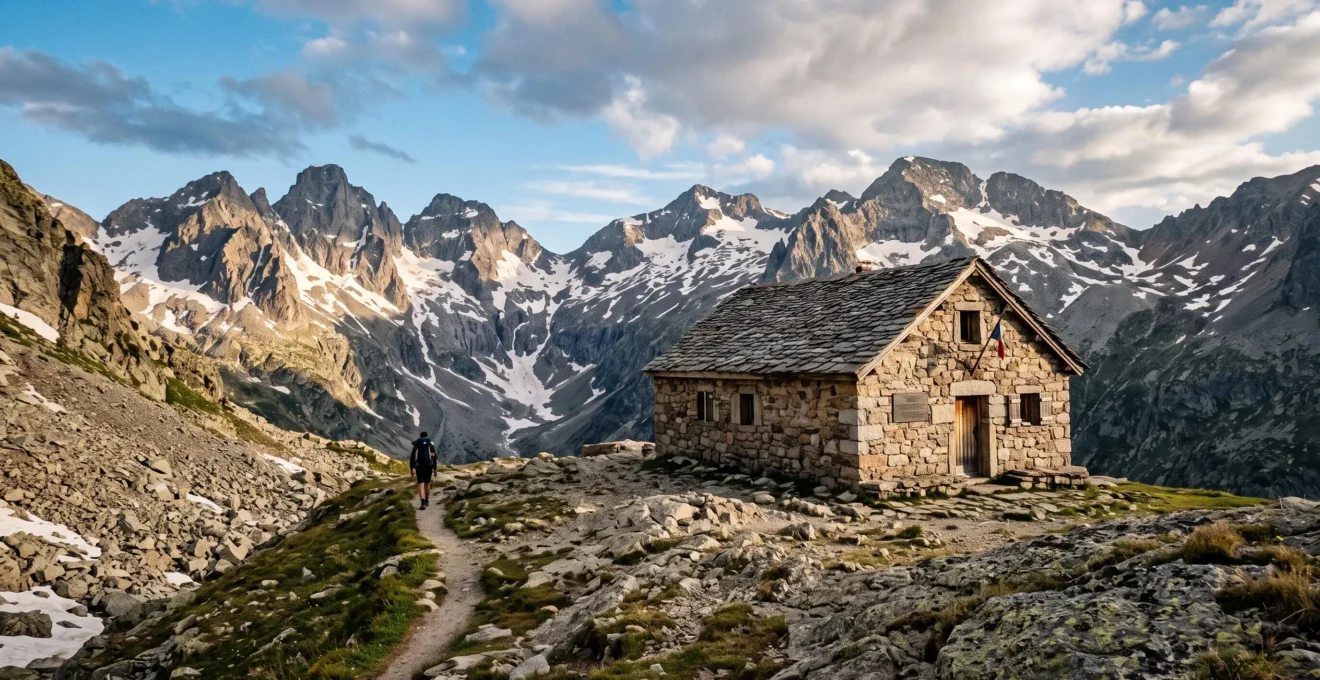
The French Pyrenees stand as one of Europe’s most dramatic and unspoiled mountain ranges, where ancient stone refuges cling to cliffsides, thermal waters rise from deep within the massif, and isolated valleys preserve centuries-old traditions. Stretching across the southern frontier of France, these peaks offer sanctuary for travellers seeking respite from modern life’s relentless pace—whether that means a high-altitude hiking base, a Belle Époque spa town, or a remote hamlet where time seems suspended.
The region’s accommodation landscape mirrors its geological diversity, from spartan mountain huts reachable only on foot to wellness retreats where sulphurous waters have soothed weary bodies since Roman times. Each retreat type suits a different mountain philosophy: fitness level, appetite for wilderness, and desire for comfort versus authenticity. This guide breaks down the five main options so you can match your next stay to the experience you actually want.
- Ski resorts such as Saint-Lary, Peyragudes and Grand Tourmalet work as year-round bases, with premium serviced accommodation available through specialists.
- Guarded refuges like Bayssellance, Oulettes de Gaube and la Brèche de Roland offer high-altitude immersion with meals; unguarded bergeries like Cabane d’Arlet offer solitude on an honesty system.
- Thermal spa villages—Bagnères-de-Luchon, Cauterets and Barèges—combine historic bathhouses with direct access to hiking and ski terrain.
- Remote valleys in Ariège and Haute-Garonne provide off-grid gîtes, eco-lodges and wildlife-rich landscapes for slow, disconnected stays.
- Pilgrimage guesthouses and regulated bivouac in the Parc National des Pyrénées are the most stripped-back retreats, governed by silence, schedules and leave-no-trace rules.
Ski resort hotels and mountain stays with premium services
When winter snow blankets the Pyrenees, many visitors gravitate towards ski stations, where lifts, groomed runs and après-ski culture create a more structured form of mountain retreat. Even within resorts, you can prioritise tranquillity and scenery over nightlife: mountain hotels above village centres, chalets d’altitude reachable by ski or snowshoe, and self-catering apartments with panoramic balconies all let you wake up surrounded by peaks without sacrificing comfort. In summer, the same properties pivot to hiking, biking and trail-running clientele, making them viable year-round bases.
Resorts such as Saint-Lary, Peyragudes, Cauterets and Grand Tourmalet (La Mongie/Barèges) illustrate the range. Families might prefer slope-side residences with kids’ clubs and easy access to ski schools; couples could opt for boutique hotels with spa facilities and gourmet restaurants; strong skiers might book one or two nights in a high-altitude chalet accessible only during lift operating hours—spending the night above the last chairlift can feel like having the mountain to yourself once day trippers descend.
For travellers who want the peaks without giving up high-end comfort, it is worth turning to a specialist in premium mountain accommodation. Agencies with long-standing expertise—such as the official Altitude Courchevel website, a reference in luxury alpine stays for 30 years across Courchevel 1650-Moriond and 1550-Village—show what a specialist can offer: rental and sale of chalets, apartments, studios and duplexes, tailored concierge services (ski equipment, activities, personalised services) and property management for owners. Applying that same standard to a Pyrenean stay—booking early, choosing accommodations with spa and concierge options, and using professionals who manage mountain properties daily—makes the difference between a standard ski holiday and a genuinely restorative retreat.
Booking tip: Reserve early for school holiday periods, and target shoulder-season stays (January outside New Year, or March after the peak) for quieter slopes and better value.
High-altitude refuges and bergeries in the Hautes-Pyrénées
The Hautes-Pyrénées harbour some of the most spectacular alpine refuges in the entire chain, serving as essential staging posts for summit attempts and multi-day treks. Guarded refuges follow the French tradition of guardianship, typically staffed from June through September when snowmelt renders them accessible; unguarded bergeries and cabanes, by contrast, stay open to self-sufficient travellers year-round on an honesty basis. Pyrenean refuges are often more intimate than their Alpine counterparts—many sleep fewer than thirty guests—and the guardian culture emphasises communal dining, where strangers become companions over hearty plates and local Madiran wine.
Choose a guarded refuge if you want meals, a bed and a social alpine atmosphere; choose an unguarded bergerie if you can carry all your own supplies and value solitude over services.
Refuge de Bayssellance: Gateway to the Vignemale
Perched at 2,651 metres on the northern flanks of the Vignemale—the highest peak in the French Pyrenees at 3,298 metres—Refuge de Bayssellance is the quintessential high-mountain experience. Originally built in 1889 and significantly renovated in 2017 while preserving its historical character, the refuge is reached from Gavarnie in roughly 4–5 hours of steady climbing, with panoramic views over the Cirque de Gavarnie and the Spanish peaks beyond. Its 72 beds fill quickly in peak season, especially when weather windows open for Vignemale summit bids via the Glacier d’Ossoue route.
Expect a genuine alpine atmosphere: temperatures rarely exceed 15°C even in August, and afternoon thunderstorms can transform sunny mornings into dramatic weather theatre. The guardian serves substantial evening meals to replenish altitude-depleted energy and an early breakfast for pre-dawn departures. Sleeping is dormitory-style with thin mattresses and communal blankets—comfort takes second place to location at this elevation, and reservations are essential throughout summer.
Cabane d’Arlet: Traditional Shepherd’s Stone Dwelling
In contrast to larger refuges, bergeries like Cabane d’Arlet offer primitive shelter reflecting the pastoral heritage of the Pyrenean valleys. Located in the Cauterets sector at around 2,000 metres, this stone cabin provides basic accommodation for twelve people on wooden platforms. It is unguarded and runs on an honesty system—visitors leave payment in a designated box and maintain cleanliness for the next guests—so it appeals to experienced mountain travellers with full self-sufficiency.
The cabin sits in prime wildlife observation territory: marmot colonies inhabit the surrounding boulder fields and isards (Pyrenean chamois) graze on adjacent slopes in the early morning. There is no electricity or running water, but a wood-burning stove provides warmth during unexpectedly cold snaps, even in late spring and early autumn—pack as if for a lightweight winter trek. In exchange, you gain star-strewn skies and a silence that hotel-based visitors rarely encounter. For hikers building a multi-day itinerary, Cabane d’Arlet works well as an overnight stage on longer traverses between guarded refuges.
Refuge des Oulettes de Gaube: Lakeside Alpine Sanctuary
Nestled at 2,151 metres in a glacial cirque beneath the imposing north face of the Vignemale, Refuge des Oulettes de Gaube combines easy access with exceptional scenery. Most visitors first encounter the area on the classic day hike from Pont d’Espagne via Lac de Gaube, but an overnight stay rewards you with sunsets that bathe the Vignemale icefields in pink and orange, and tranquil mornings before day trippers arrive—making it one of the most photogenic mountain retreats in the French Pyrenees.
The refuge offers around 70 beds in dormitory-style rooms around a convivial dining hall. Facilities are simple but well maintained: cold running water, basic toilets, hearty set menus and limited electricity for lighting rather than device charging. Because Oulettes sits on several long-distance routes, including variants of the GR10 and the HRP (Haute Randonnée Pyrénéenne), you will likely share tables with both thru-hikers and families on their first multi-day adventure. If you plan to continue higher or cross into Spain the next day, an early breakfast and packed lunch can be arranged with the guardian.
Refuge de la Brèche de Roland: Cirque de Gavarnie Access Point
For a front-row seat to one of the Pyrenees’ most iconic rock formations, Refuge de la Brèche de Roland is unmatched. Perched around 2,580 metres near the Spanish border just below the legendary Brèche de Roland—a natural notch in the ridge that folklore credits to the Paladin Roland’s sword—the hut is accessed from the Col des Tentes or the Plateau de Bellevue above Gavarnie. The approach involves steep snow or scree well into summer, so surefootedness and proper equipment are essential; in return, views sweep across the Cirque de Gavarnie, the Ordesa canyon and far into Aragón.
Accommodation is deliberately simple—compact dorms, shared blankets and set mealtimes—and the clientele of alpinists and strong hikers creates a focused yet friendly atmosphere. Weather changes quickly at this altitude and fog often rolls through the brèche, so a solid mountain forecast and flexible plans are crucial. If you dream of sunrise from the Brèche itself, stay overnight and climb the final stretch in soft early light, long before the day crowds arrive.
Attention: At all these altitudes, weather can shift abruptly. Check mountain forecasts before setting out, carry proper equipment even in midsummer, and book guarded refuges well in advance—their capacity cannot meet peak-season demand.
Thermal spa villages: wellness and recovery retreats
Where high refuges offer rugged immersion in the elements, the thermal spa villages of the French Pyrenees provide a very different kind of mountain retreat. Centuries-old bathhouses harness naturally heated, mineral-rich waters, blending medical tradition with modern wellness. The region counts more than a dozen stations thermales, many at their peak in the 19th century when Europe’s elite flocked to the mountains for cures. Today you can combine hiking, skiing or cycling with afternoons soaking tired muscles in thermal pools—the perfect balance of adventure and recovery.
Bagnères-de-Luchon: Historic Thermes and Belle Époque Architecture
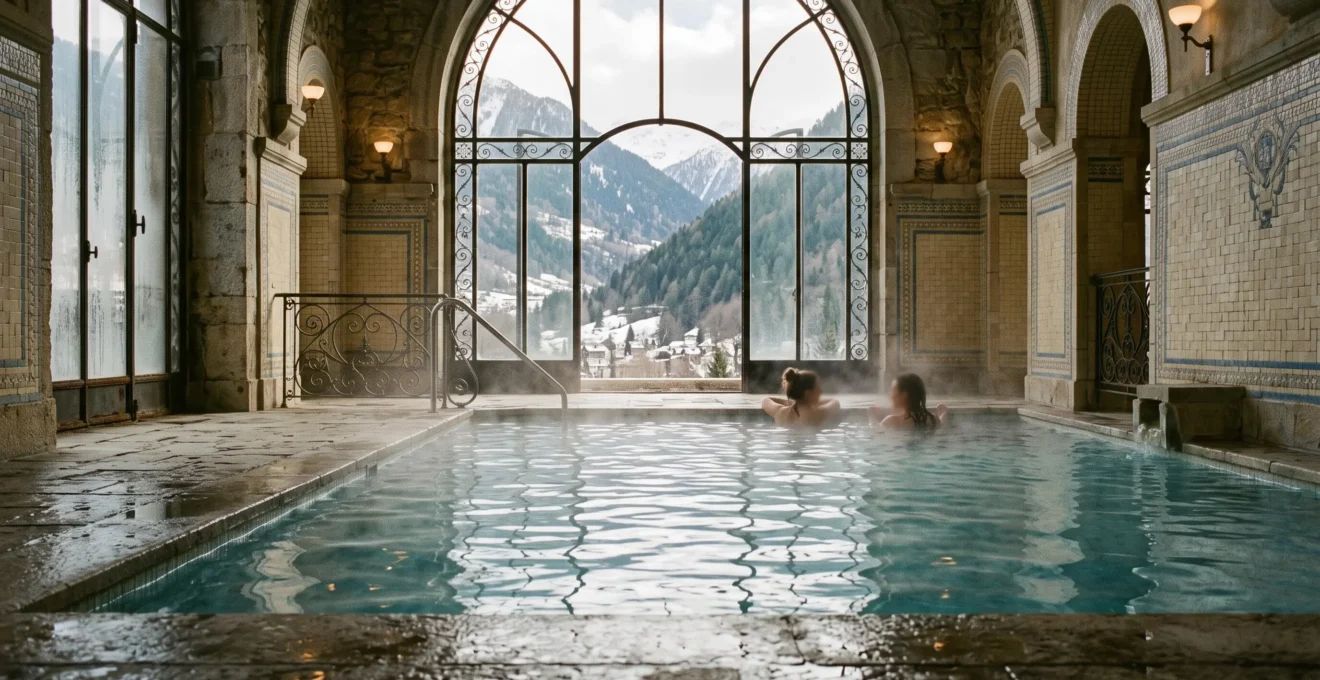
Often dubbed the “Queen of the Pyrenees”, Bagnères-de-Luchon is one of France’s most storied spa towns. The grand Thermes de Luchon trace their roots to Roman times but achieved fame in the 19th century, when elegant façades, manicured parks and tree-lined avenues turned the town into a Belle Époque showcase. Visitors wander past ornate villas before slipping into steaming sulphurous pools averaging around 34–38°C, and the town’s unique vaporarium—a natural steam bath inside a 150-metre-long rock gallery—is a highlight for anyone curious about traditional hydrotherapy.
Luchon is also a practical all-season base. In summer, cable cars whisk you up towards Superbagnères for hiking and paragliding, while road cyclists tackle legendary Tour de France climbs such as the Col de Peyresourde; in winter, the same slopes convert into ski terrain. Accommodation ranges from classic spa hotels with half-board wellness packages to self-catering apartments. If you plan daily thermal sessions, look for multi-day spa passes, which typically reduce per-entry costs and include saunas, Jacuzzis and relaxation lounges.
Cauterets: Sulphurous Waters and National Park Proximity
Cauterets blends small-town charm with the amenities of a major spa and ski resort. Its sulphur-rich springs have been used therapeutically for respiratory and rheumatic conditions for over 150 years, and the modern Bains du Rocher complex offers both medical cures and leisure circuits: indoor thermal pools, outdoor infinity baths, hammams and salt rooms, with floor-to-ceiling windows framing snowy peaks. Waters here hover around 38–40°C—deeply relaxing without being overwhelming.
Location is Cauterets’ trump card. The town sits at the gateway to the Parc National des Pyrénées, with direct access to Pont d’Espagne, the Gaube valley and the high plateaus around the Marcadau. In practice, you can leave after breakfast, hike all day among waterfalls and glacial lakes, and be back for an evening soak and dinner of local trout or garbure stew. In shoulder seasons (May–June and September–October), visitor numbers drop, giving quieter trails and less crowded pools.
Barèges: Altitude Thermal Resort with Military Heritage
Barèges, perched at around 1,250 metres on the road to the Col du Tourmalet, is one of France’s highest spa villages, with a character shaped by military history. Its hot springs were formally “discovered” in the 17th century and soon became a rehabilitation centre for injured soldiers. Today’s Cieléo spa complex nods to this heritage with a dome-roofed thermal pool, jets, bubble beds and a panoramic terrace. Thanks to its altitude, Barèges enjoys cooler summer nights and snowy winters, heightening the contrast between crisp mountain air and soothing hot water.
As a base for the central Pyrenees, Barèges links directly into the Grand Tourmalet ski area and sits close to the Néouvielle lakes, the Bastan valley and routes into the heart of the national park. The village is smaller and more low-key than Lourdes or Cauterets, appealing if you want a quieter thermal retreat with a local feel. Small family-run hotels, apartments and guesthouses often offer combined ski-and-spa or hike-and-spa packages that are cost-effective if you use the thermal centre daily.
Choosing between the three: Luchon suits travellers who want grand spa heritage plus all-season activities; Cauterets suits hikers who want national park trails on the doorstep; Barèges suits those seeking a quieter village base at altitude with direct ski-in access.
Remote Valley Hamlets in Ariège and Haute-Garonne
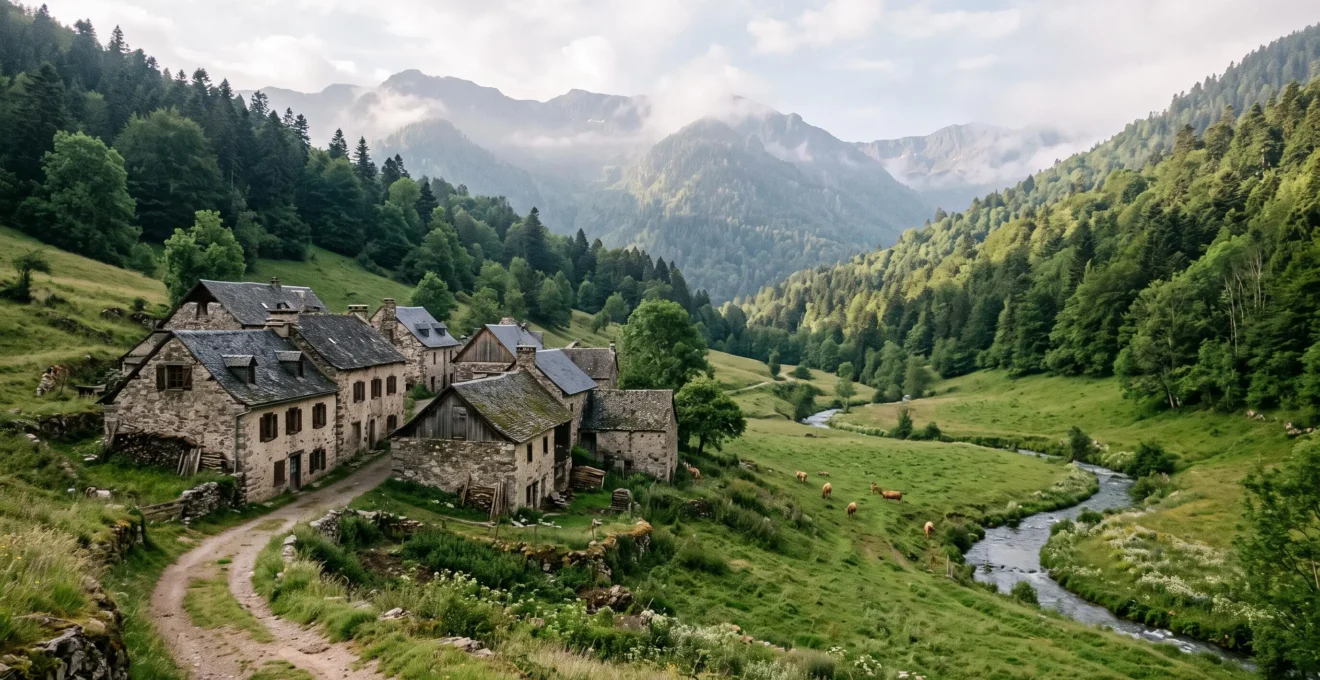
Move eastwards towards Ariège and Haute-Garonne and the character of the French Pyrenees shifts noticeably. Deep forested valleys and light tourism infrastructure create a remoteness that feels closer to the 19th century than the 21st. Instead of grand hotels you find stone farmhouses converted into gîtes, eco-lodges powered by solar panels, and tiny hamlets where church bells still mark the rhythm of the day—ideal for travellers seeking stillness, reflection and slow living, often far from phone signal as well as crowds.
Cirque de Cagateille: Secluded Mountain Basin Accommodation
The Cirque de Cagateille in Ariège is sometimes compared to a miniature Gavarnie, yet sees only a fraction of the visitors. This amphitheatre, ringed by 2,800-metre peaks and lush forests, sits at the head of a valley where narrow roads give way to footpaths. Accommodation is intentionally sparse: simple mountain gîtes in hamlets like Ustou, small riverside campsites and a handful of rustic cabins higher up. The emphasis is on immersion in nature—the soundtrack here is waterfalls and cowbells rather than traffic.
From Cagateille, hiking routes fan out towards lakes such as the Étang de Guzet and onto ridges along the Spanish border. Wildlife sightings are common: griffon vultures circling overhead, isards on the scree if you start early. Weather can be wetter on this flank of the chain, so robust rain gear and waterproof footwear are essential. For longer stays, mix nights in a comfortable valley gîte with one or two in basic cabanes or bivouacs higher up—comfort and adventure in the same trip.
Vallée du Lys: Off-Grid Gîtes and Eco-Lodges
The Vallée du Lys, near Bagnères-de-Luchon but worlds away in atmosphere, shows how sustainable tourism is reshaping mountain retreats in the French Pyrenees. Narrow and steep-sided, the valley leads towards the Glère and Port de Vénasque sectors, with much of its accommodation consisting of small off-grid properties running on solar energy, spring water and wood-burning stoves—a low-impact base for travellers concerned about their environmental footprint.
Staying here means accepting trade-offs: limited Wi-Fi, slower access to shops and restaurants, sometimes rough access tracks. In exchange you gain exceptional tranquillity, dark skies for stargazing and trailheads at your door. Hosts often offer home-grown vegetables, local cheeses or guided walks, blurring the line between accommodation and hosted retreat. If you have ever wondered what living in a mountain cabin for a week would feel like, the Vallée du Lys is a safe, comfortable way to test that dream.
Bethmale Valley: Traditional Wooden Chalets and Local Cuisine
The Bethmale valley, in Ariège’s Couserans region, feels like a postcard come to life. Timber-framed chalets with carved balconies dot the slopes, and Lac de Bethmale mirrors the surrounding forests on calm days. The area is renowned for its artisanal traditions, including the famous sabots de Bethmale (wooden clogs) and distinctive local cheeses—a living cultural landscape where gastronomy, craftsmanship and pastoralism intertwine.
Accommodation leans towards small chalets, guesthouses and family-run auberges serving set menus from local produce: stream trout, wild mushrooms in autumn, hearty stews in winter. Hiking ranges from gentle lakeside circuits to sustained climbs onto panoramic ridges above the Couserans peaks. Check seasonal calendars for village festivals and markets, which add a rich cultural layer to a longer stay; the valley’s blend of calm, beauty and good food is also particularly conducive to creative work for writers, artists and remote workers.
Orlu Valley: Wildlife Observation and Nature Reserve Lodging
The Orlu valley, southeast of Ax-les-Thermes, is best known for its Réserve Nationale d’Orlu, one of the prime wildlife observation zones in the French Pyrenees. Human activity is carefully regulated to protect isards, marmots, bearded vultures and other emblematic species, and lodging reflects this conservation ethos: understated gîtes, a research-oriented visitor centre and small mountain hotels catering to hikers, naturalists and families—a retreat that doubles as an open-air classroom in ecology.
Marked trails lead through riverbanks, mixed forests and high meadows where marmots whistle warnings at approaching hikers; interpretive panels and summer guided walks explain the balance that keeps these ecosystems thriving. Respect path closures during breeding seasons and keep noise low to maximise sightings. Because Orlu lies close to the spa town of Ax-les-Thermes, you can easily combine days of nature immersion with evenings of thermal baths—a compelling combination for groups with mixed priorities.
Pilgrimage accommodations and backcountry bivouac
Not every Pyrenean retreat revolves around sports or spas. For many travellers, the range’s spiritual heritage—woven through centuries of pilgrimage and monastic life—is equally compelling, and for others the purest retreat is a night of wild camping under regulations designed to protect the mountains. Both paths share the same principle: voluntary simplicity, whether spiritual or wilderness-based, where routine, silence and respect for the milieu do the restoring.
Monasteries and Pilgrimage Route Guesthouses
Benedictine monasteries, simple guesthouses on the Camino de Santiago and hermitage-style retreats offer spaces where silence, shared liturgy and unhurried days create a different kind of restoration. Even without a faith tradition, the combination of disciplined routine and expansive landscapes can be grounding. Along routes such as the Chemin du Piémont and the Arles Way, pilgrims find gîtes d’étape that prioritise affordability, community meals and early nights over luxury—dormitory rooms, basic facilities, and dinner conversations that range from blister care to life-changing decisions.
Monastic guesthouses typically offer private or semi-private rooms, simple nourishing meals and the option to join daily offices in the chapel. Stays may be limited to a few days or open-ended for retreats and sabbaticals, with suggested donations based on means rather than fixed rates. Expectations vary: some houses restrict conversation to certain times or spaces, others encourage exchange; most ask guests to share daily chores or respect communal meal schedules. Pack modest clothing suitable for both chapel and mountain weather, and expect very limited Wi-Fi—an intentional digital detox many guests come to value.
Bivouac in the Parc National des Pyrénées
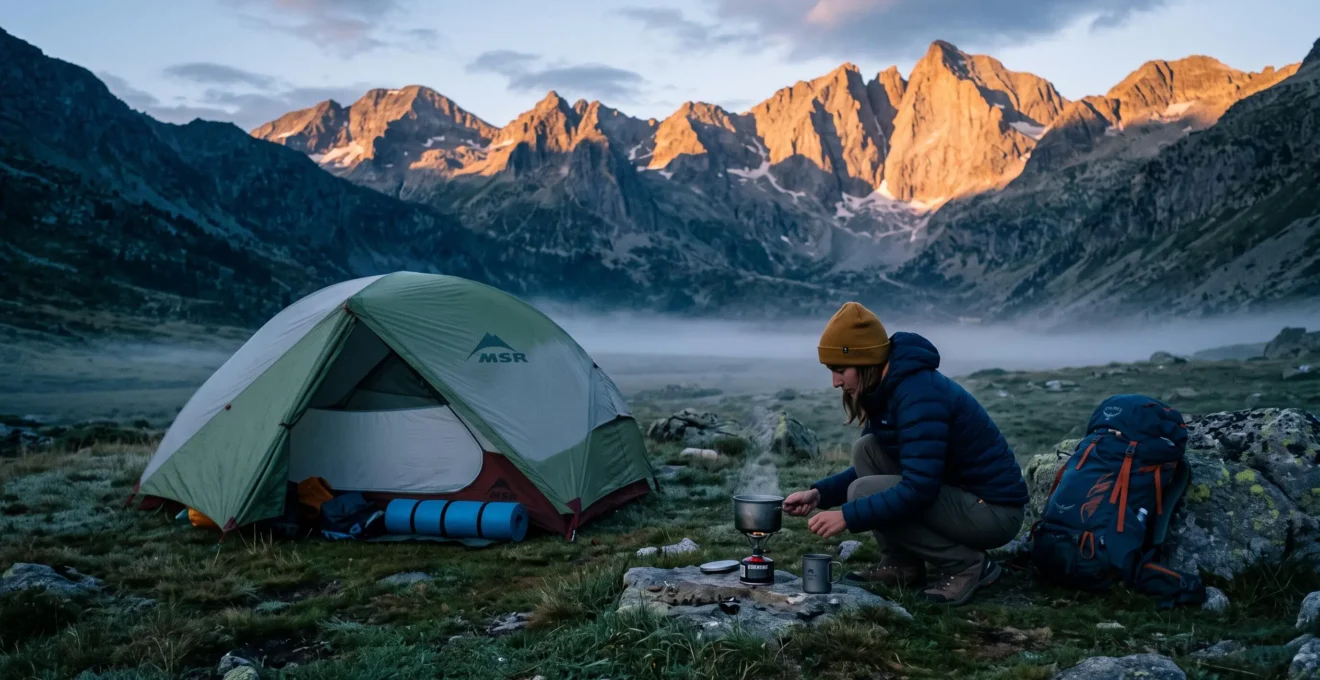
For experienced hikers seeking maximum freedom, bivouacking in the Parc National des Pyrénées is the purest form of mountain retreat—but it comes with clear rules protecting fragile alpine ecosystems. In most of the park, bivouac (lightweight overnight camping) is permitted above certain altitudes or at specified distances from roads and park boundaries, but only between roughly 19:00 and 09:00. Full-scale camping with large tents and extended stays is restricted to designated areas outside core protection zones. Rules vary between sectors and may be updated in response to erosion, wildlife needs or visitor numbers, so consult current guidelines from park authorities before setting out.
Operate as if your camp were invisible by day: arrive late, leave early, use existing tent spots, avoid wetlands and flower meadows, and follow strict leave no trace principles. Human waste must be buried well away from water sources, and campfires are generally prohibited due to fire risk and wood scarcity—carry a lightweight stove instead. Preparation is decisive: nocturnal temperatures can approach freezing even in high summer above 2,000 metres, so a three-season sleeping bag, insulated mat and reliable shelter are non-negotiable. Many hikers alternate guarded refuges with one or two bivouacs, reserving wild nights for the most scenic or remote spots—and earning dawn light on solitary ridges that no hotel stay can match.
Warning: Bivouac windows, authorised zones and campfire bans can change by sector and season. Always check the latest Parc National des Pyrénées regulations before your trip.