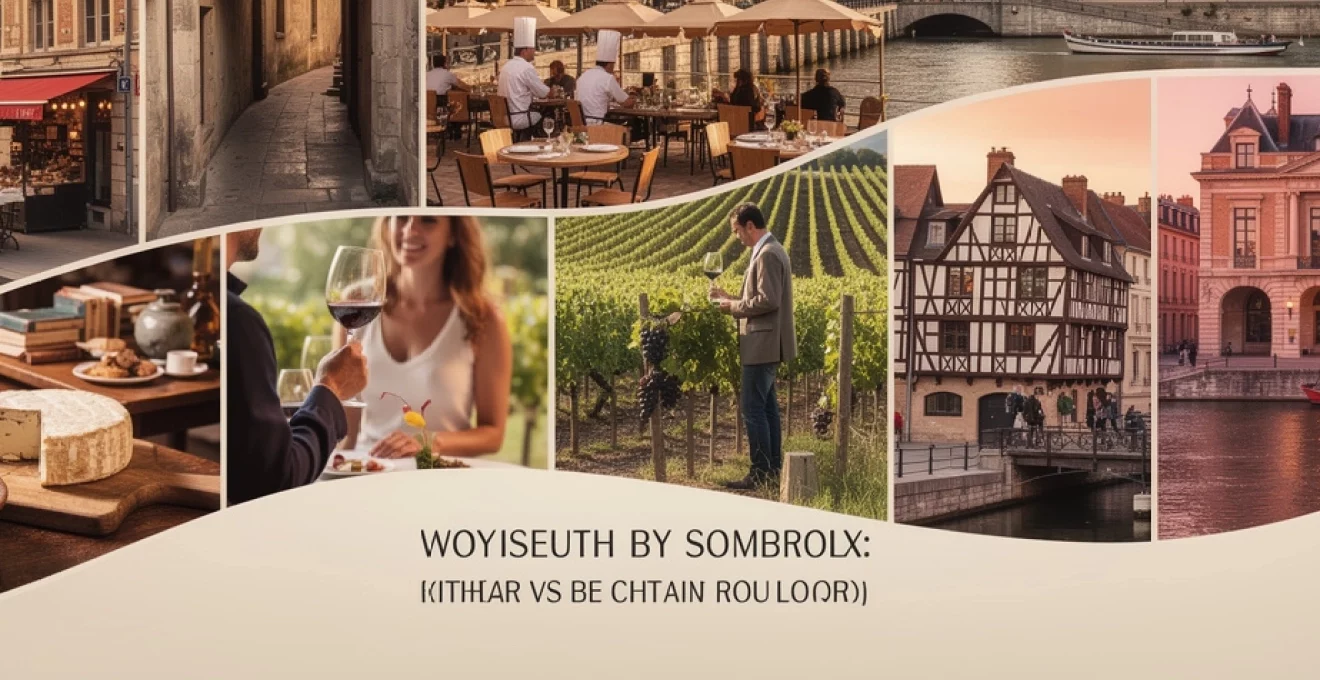
France’s urban landscape extends far beyond the glittering allure of Paris, offering a remarkable tapestry of cities that showcase the nation’s rich cultural heritage, architectural diversity, and regional specialities. From the Flemish-influenced streets of northern Lille to the rose-brick buildings of southern Toulouse, these destinations represent centuries of history, innovation, and artistic achievement. Each city tells its own unique story through Gothic cathedrals, Renaissance districts, industrial heritage, and modern aerospace facilities, creating an unparalleled journey through French civilisation.
The 556-mile journey from Lille to Toulouse traverses multiple regions, each with distinct characteristics shaped by geography, climate, and historical influences. This vast distance encompasses not merely physical space but cultural transitions that reflect France’s position as a crossroads of European civilisation. Whether you’re drawn to medieval architecture, world-renowned gastronomy, cutting-edge technology, or UNESCO World Heritage sites, these French cities offer experiences that rival any destination in Europe.
Northern france’s cultural epicentre: lille’s flemish architecture and gastronomic heritage
Lille stands as the vibrant capital of northern France, where centuries of Flemish influence have created a distinctive urban character unlike anywhere else in the country. The city’s strategic position near the Belgian border has fostered a unique cultural blend that manifests in its architecture, cuisine, and social traditions. With over 230,000 residents in the metropolitan area, Lille serves as a major economic and educational hub, hosting numerous universities and research institutions that contribute to its dynamic atmosphere.
The city’s transformation from an industrial powerhouse to a modern cultural centre exemplifies successful urban renewal. Former textile factories have been converted into contemporary art spaces, while traditional markets continue to thrive alongside modern shopping districts. This juxtaposition of old and new creates an authentically European experience that attracts millions of visitors annually.
Vieux-lille’s 17th-century baroque facades and cobblestone quarter navigation
The historic heart of Vieux-Lille presents one of Europe’s most remarkably preserved baroque districts, where narrow cobblestone streets wind between ornate facades dating from the 17th and 18th centuries. These buildings, constructed during Spanish and later French rule, showcase distinctive Flemish architectural elements including stepped gables, decorative stonework, and colourful shutters that create a picturesque streetscape.
Navigation through Vieux-Lille requires comfortable walking shoes and an appreciation for architectural detail. The quarter’s irregular street pattern, inherited from medieval times, can initially confuse visitors accustomed to more grid-like urban layouts. However, this maze-like quality contributes to the area’s charm, as each turn reveals new architectural discoveries and hidden courtyards.
Palais des Beaux-Arts museum: second largest fine arts collection in france
The Palais des Beaux-Arts houses France’s second-largest fine arts collection after the Louvre, containing over 72,000 works spanning archaeology, painting, sculpture, and decorative arts. The museum’s comprehensive European art collection includes masterpieces by Rubens, Van Dyck, Goya, and Delacroix, while its archaeology section features remarkable Egyptian, Greek, and Roman artefacts.
Recent renovations have transformed the museum experience, incorporating modern display techniques while preserving the building’s 19th-century grandeur. Interactive exhibits and multimedia presentations make complex artistic concepts accessible to diverse audiences, from art historians to casual visitors seeking cultural enrichment.
Braderie de lille: europe’s largest annual flea market experience
Each September, Lille hosts the Braderie, Europe’s largest flea market, transforming the entire city centre into a sprawling marketplace that attracts over two million visitors. This centuries-old tradition sees residents and professional dealers sell everything from antique furniture to vintage clothing along 100 kilometres of streets and squares.
The event’s scale is truly staggering – over 10,000 vendors participate, creating a treasure hunter’s paradise that extends throughout the metropolitan area. Beyond commercial activity, the Braderie represents a cultural celebration where traditional foods, live music, and community spirit converge in an atmosphere
of lively conviviality. Traditionally, restaurants serve towering piles of moules-frites during the Braderie weekend, with an informal competition over who can create the largest mountain of empty mussel shells. If you are planning a Lille to Toulouse road trip, booking accommodation months in advance for this particular weekend is essential, as hotels and guesthouses reach capacity quickly. Arriving early in the morning also gives you the best chance of finding unique antiques and negotiating fair prices with vendors before the streets become crowded.
Traditional flemish cuisine: carbonnade flamande and maroilles cheese specialities
Lille’s gastronomic heritage reflects its historic ties to Flanders, and sampling traditional Flemish cuisine is an essential component of any visit. One of the most emblematic dishes is carbonnade flamande, a slow-cooked beef stew simmered in dark beer with onions and spices, resulting in a rich, slightly sweet sauce that pairs perfectly with crispy fries. Another regional hallmark is maroilles, a strong, washed-rind cheese used in savoury tarts, gratins, and even on gourmet burgers, offering an unmistakably pungent aroma and complex flavour.
Local estaminets — rustic tavern-style restaurants — provide the most authentic setting to explore these northern French specialities. Menus often feature hearty fare designed for the cool, damp climate of Hauts-de-France, including chicory gratins and generous charcuterie platters. For travellers driving from Lille to Toulouse, these establishments offer a memorable introduction to regional French cuisine before heading south towards lighter Mediterranean-inspired dishes. You can complement your meal with regional beers or a glass of genever, a juniper-based spirit reflecting the city’s cross-border influences.
Lyon’s renaissance districts: traboules architecture and michelin-starred gastronomy
Continuing south from Lille, Lyon emerges as a pivotal stop between northern France and Toulouse, renowned both for its Renaissance districts and its reputation as the gastronomic capital of France. Strategically located at the confluence of the Rhône and Saône rivers, Lyon has long served as a commercial and cultural crossroads, shaping its distinctive urban fabric. The city’s historic centre, designated a UNESCO World Heritage Site, brings together Roman ruins, medieval streets, and 19th-century boulevards within a remarkably walkable area.
For travellers charting an itinerary from Lille to Toulouse, Lyon offers a compelling blend of architecture and cuisine that rewards at least two full days of exploration. High-speed TGV trains link Lille to Lyon in under five hours, making it a convenient intermediate stop even on a tighter schedule. Whether you are tracing the city’s hidden passageways, known as traboules, or indulging in a multi-course tasting menu at a Michelin-starred restaurant, Lyon encapsulates the sophistication of urban France outside Paris.
Vieux-lyon’s unesco world heritage traboules and renaissance courtyards
Vieux-Lyon, on the western bank of the Saône, is one of the largest Renaissance quarters in Europe, with pastel-coloured townhouses, arcaded galleries, and ornate courtyards. The district’s most distinctive feature is its network of traboules — covered passageways that slice through buildings and courtyards to connect parallel streets. Originally used by silk traders in the 16th century to transport delicate fabrics while sheltered from the elements, these traboules later played an important role in the French Resistance during World War II.
Today, around 40 traboules remain accessible to the public, mostly concentrated in the Saint-Jean, Saint-Paul, and Saint-Georges quarters. Discovering them can feel like solving an architectural puzzle, as you gently push heavy wooden doors to reveal unexpected inner courtyards, spiral staircases, and stone galleries. A guided walking tour can be particularly helpful if you are short on time, as it highlights the most emblematic passages and explains their historical context. For independent travellers on a Lille to Toulouse city-hopping itinerary, allocating a morning to wandering Vieux-Lyon on foot is an excellent way to understand the city’s layered past.
Presqu’île peninsula: 19th-century haussmannian urban planning
Across the Saône, the Presqu’île peninsula showcases a different face of Lyon, shaped by 19th-century urban planning reminiscent of Baron Haussmann’s redesign of Paris. Grand boulevards, symmetrical squares, and elegant facades create a cohesive cityscape anchored by landmarks such as Place Bellecour and Place des Terreaux. This area concentrates many of the city’s shops, theatres, and cultural institutions, making it the de facto downtown for both residents and visitors.
Strolling along Rue de la République and its surrounding streets, you will encounter a mix of historic department stores, contemporary boutiques, and traditional cafés. The Presqu’île is also where you will find several of Lyon’s major museums, including the Musée des Beaux-Arts, housed in a former Benedictine convent with a peaceful cloistered garden. For travellers driving from Lille to Toulouse, the peninsula offers convenient parking options in underground garages, allowing you to explore on foot without navigating narrow medieval lanes. In many ways, the Presqu’île serves as an open-air textbook of 19th-century French urbanism, blending monumental architecture with everyday commercial life.
Bouchon restaurants: traditional lyonnaise cuisine and coq au vin origins
No exploration of Lyon is complete without a meal in a traditional bouchon, the small, convivial restaurants that serve hearty Lyonnaise cuisine. Historically frequented by silk workers and local merchants, these establishments specialise in rustic dishes such as quenelles de brochet (pike dumplings in crayfish sauce), andouillette sausages, and tablier de sapeur (breaded, marinated tripe). Portions are generous, tables are close together, and the atmosphere is intentionally informal, encouraging conversation between diners.
Although coq au vin is now associated with Burgundy, many culinary historians point to regional variants in the Lyonnais and Beaujolais areas, where local wine was used to tenderise tougher cuts of poultry. Today, you will find refined versions of this classic dish on menus throughout the city, often accompanied by gratins and seasonal vegetables. Because bouchons are typically small and popular with both locals and visitors, advance reservations are strongly recommended, especially on weekends or during school holidays. If you are planning a multi-city trip from Lille to Toulouse, consider booking at least one traditional bouchon and one contemporary bistro to experience both the old and new faces of Lyon’s food culture.
Paul bocuse institute legacy: modern french culinary innovation hub
Lyon’s global culinary reputation owes much to Paul Bocuse, the legendary chef credited with popularising nouvelle cuisine in the 20th century. His legacy lives on through the Institut Paul Bocuse, an internationally renowned school of hospitality and culinary arts located just outside the city centre. The institute trains future chefs and hotel managers from around the world, combining classical French techniques with contemporary approaches to sustainability, nutrition, and global flavours.
For visitors, the most tangible expression of this legacy can be found at the Halles de Lyon – Paul Bocuse, an indoor food market showcasing top regional producers and artisans. Here, you can sample everything from Saint-Marcellin cheese and cured sausages to praline brioches and fine wines from the Rhône Valley. Think of it as a condensed, edible map of Lyon and its surrounding terroir, ideal for travellers who want to taste widely without leaving the city. If your route from Lille to Toulouse includes a self-catering apartment or a picnic along the Rhône, stocking up at the Halles is a practical and enjoyable way to bring a slice of Lyon with you on the road.
Bordeaux wine capital: 18th-century port architecture and vineyard terroir
Heading west from Lyon, or directly south from Lille via high-speed rail, Bordeaux offers a compelling combination of maritime heritage and world-famous vineyards. Often described as a “stone ship” anchored on the banks of the Garonne, the city underwent a major transformation in the 18th century, when local merchants financed an ambitious programme of urban renewal. The result is a harmonious ensemble of neoclassical facades, wide quays, and elegant squares that has earned Bordeaux a UNESCO World Heritage designation.
For travellers planning a Lille to Toulouse route, Bordeaux functions as both a cultural destination and a gateway to the surrounding wine country. The Garonne riverfront has been revitalised with promenades, cycle paths, and the striking Miroir d’Eau, a vast reflecting pool that mirrors the Place de la Bourse. Just beyond the historic centre lies the Cité du Vin, an immersive museum dedicated to the culture of wine worldwide, where interactive exhibits explain everything from grape varieties to food pairings. Even if you are not a wine expert, the museum’s panoramic viewing platform and curated tastings offer an accessible introduction to Bordeaux’s most famous export.
Beyond the city, hundreds of châteaux stretch across appellations such as Médoc, Saint-Émilion, and Graves, each with its own soil composition, microclimate, and winemaking traditions. Many estates now welcome visitors for guided tours and tastings, often by prior reservation, allowing you to explore the concept of terroir in a tangible way. If you are driving from Lille to Toulouse, it is crucial to plan ahead, not only to secure appointments but also to respect French drink-driving regulations, which are stricter than in many other countries. Alternatively, you can base yourself in Bordeaux and book organised excursions, ensuring that you can enjoy multiple tastings without worrying about navigating country roads.
Strasbourg’s franco-germanic heritage: gothic cathedral and european parliament seat
While Strasbourg lies to the east of the most direct Lille to Toulouse route, it is easily accessible by TGV and well worth considering for travellers with a few extra days. Situated on the border with Germany, Strasbourg embodies the complex history of Alsace, a region that has alternated between French and German control several times over the past centuries. This dual heritage is visible in everything from the city’s architecture and street names to its cuisine and Christmas markets.
The crowning glory of Strasbourg is its Gothic cathedral, Notre-Dame de Strasbourg, whose intricate sandstone facade and single spire dominate the skyline. Completed mainly between the 12th and 15th centuries, it was once the tallest building in the world and remains a masterpiece of medieval engineering and religious art. Inside, visitors can admire stained glass windows, a monumental astronomical clock, and soaring vaults that seem to defy gravity. Climbing the cathedral platform rewards you with panoramic views over the city’s half-timbered houses and, on clear days, towards the Vosges mountains and the Black Forest.
Just as significant, albeit in a very different way, is Strasbourg’s role as one of the de facto capitals of the European Union. The city hosts the European Parliament, the Council of Europe, and the European Court of Human Rights, cementing its identity as a hub of continental governance. Guided tours of the Parliament building offer insights into the legislative process and the challenges of coordinating policies across 27 member states, making Strasbourg a compelling stop for travellers interested in contemporary European politics. When you stroll from the medieval core of the Grande Île to the modern glass structures of the EU quarter, you are effectively walking through a living timeline of European integration.
Strasbourg’s compact centre, criss-crossed by canals and lined with flower-decked balconies, invites exploration on foot or by boat. The Petite France district, once home to tanners and millers, now buzzes with cafés and restaurants serving Alsatian specialities such as choucroute garnie, flammekueche, and baeckeoffe. If you are weaving Strasbourg into a broader itinerary from Lille to Toulouse, you may notice how its half-timbered architecture and German-influenced dishes contrast with the Flemish tones of Lille and the Mediterranean flavours of Toulouse. This diversity is one of the great strengths of a multi-city tour through France.
Toulouse’s aerospace industry hub: capitole rose brick architecture and airbus manufacturing
Arriving in Toulouse, you reach the southern anchor of the Lille to Toulouse journey and one of France’s most distinctive cities. Nicknamed La Ville Rose (the Pink City) for its warm-toned brick buildings, Toulouse combines a relaxed southern lifestyle with cutting-edge aerospace research and manufacturing. With a metropolitan population exceeding 1.3 million, it is the fourth-largest city in France and a key economic engine for the Occitanie region.
The city centre is organised around the Place du Capitole, a grand square framed by the 18th-century Capitole building, which houses both the town hall and an opera house. From here, a network of pedestrian streets leads to historic churches, lively markets, and riverfront promenades along the Garonne. Toulouse’s student population — supported by several universities and engineering schools — contributes to a youthful, energetic atmosphere, particularly in the evening when bars and terraces fill with locals and visitors alike. For many travellers, the city offers an ideal balance between heritage and innovation, making it a fitting final stop after exploring northern and central French cities.
Basilique saint-sernin: largest romanesque church in western europe
One of Toulouse’s most important monuments is the Basilique Saint-Sernin, considered the largest preserved Romanesque church in Western Europe. Built primarily between the 11th and 12th centuries, it formed a key stop on the pilgrimage route to Santiago de Compostela and continues to draw visitors for both spiritual and architectural reasons. The basilica’s imposing brick and stone structure, octagonal bell tower, and radiating chapels exemplify the Romanesque style at its most ambitious.
Inside, the vast nave, barrel vaults, and sculpted capitals create a sense of solemn grandeur, while the ambulatory allows pilgrims and visitors to circulate around the chancel without disturbing services. The crypt houses an important collection of relics, further underlining the church’s historic religious significance. If you are following a Lille to Toulouse itinerary with an interest in sacred architecture, Saint-Sernin forms an enlightening counterpart to the Gothic verticality of Strasbourg or Amiens. Because the basilica is located within walking distance of the city centre, it is easy to integrate into a half-day walking tour that also includes the Couvent des Jacobins and the Pont Neuf.
Cité de l’espace: interactive aerospace technology and satellite communications
Toulouse’s modern identity is closely tied to the aerospace sector, and nowhere is this more apparent than at the Cité de l’Espace, a large theme park and museum dedicated to space exploration. Located a short bus or tram ride from the city centre, the complex features full-scale replicas of the Ariane 5 rocket, the Mir space station, and sections of the International Space Station. Interactive exhibits explain the principles of orbital mechanics, satellite communications, and planetary science in accessible language, making the site engaging for both adults and children.
Given that Toulouse hosts the headquarters of Airbus and numerous aerospace subcontractors, the Cité de l’Espace also highlights the region’s contribution to European and global aviation. Flight simulators, planetarium shows, and hands-on experiments invite you to think about space travel not as an abstract concept but as a tangible field of research and industry. If you are driving the full length from Lille to Toulouse, a visit here can feel like shifting from a history book into a science fiction novel brought to life. Booking tickets in advance, especially during school holidays, is advisable to avoid queues and to secure spots for timed shows.
Canal du midi: 17th-century engineering marvel and unesco waterway
Another defining feature of Toulouse is its connection to the Canal du Midi, a 17th-century waterway linking the Garonne River to the Mediterranean Sea. Conceived by engineer Pierre-Paul Riquet and completed in 1681, the canal was a major engineering achievement of its time, reducing the need to navigate around Spain and through pirate-infested waters. Today, it is recognised as a UNESCO World Heritage Site and serves primarily for leisure boating, cycling, and walking rather than commercial transport.
In Toulouse, the canal runs just east of the city centre, bordered by tree-lined towpaths that offer a tranquil escape from urban noise. Renting a bicycle or taking a short cruise provides an alternative perspective on the city, as you glide past locks, bridges, and waterside villas. For travellers planning a longer stay at the end of a Lille to Toulouse itinerary, multi-day canal boat rentals allow you to continue your journey at a slower, more contemplative pace, heading towards Carcassonne or the Mediterranean. Think of the Canal du Midi as a historical highway turned green corridor, where centuries of engineering, commerce, and tourism converge in a single landscape.
Regional transportation networks: tgv high-speed rail connections and domestic flight routes
Linking all of these cities — Lille, Lyon, Bordeaux, Strasbourg, and Toulouse — is a sophisticated transportation network that makes multi-city itineraries both practical and efficient. France’s TGV high-speed trains connect Lille to Paris in about one hour, Paris to Lyon in roughly two hours, and Lyon to Toulouse in around four hours, with many direct services each day. These connections allow you to cover long distances quickly while enjoying comfortable seating, onboard Wi-Fi on many routes, and the possibility to work or relax as the countryside flashes by at up to 320 km/h.
From Lille, there are also direct TGV services to Bordeaux and seasonal connections to other regional hubs, reducing the need to transit through Paris. If you are short on time, domestic flights can further compress travel times, with routes such as Lille–Toulouse, Lyon–Bordeaux, or Strasbourg–Toulouse frequently available. However, many travellers now opt for rail over air for environmental reasons and for the convenience of arriving directly in city centres rather than outlying airports. When planning your route, it can be helpful to compare door-to-door journey times, including transfers, rather than focusing solely on flight duration.
For those who prefer the flexibility of driving from Lille to Toulouse, France’s well-maintained motorway network offers a straightforward if sometimes costly option, due to tolls and fuel prices. The approximate 894 km distance can be driven in about 7.5 hours under normal traffic conditions, though breaking the journey into stages allows you to incorporate overnight stays in cities like Lyon or Bordeaux. Car hire is widely available in all major cities, and many urban centres now feature park-and-ride facilities that let you avoid congested cores while still accessing key sights. Ultimately, whether you choose high-speed trains, regional flights, or a rental car, France’s transport infrastructure makes it remarkably easy to stitch together an itinerary that showcases the full diversity of its cities from Lille to Toulouse.