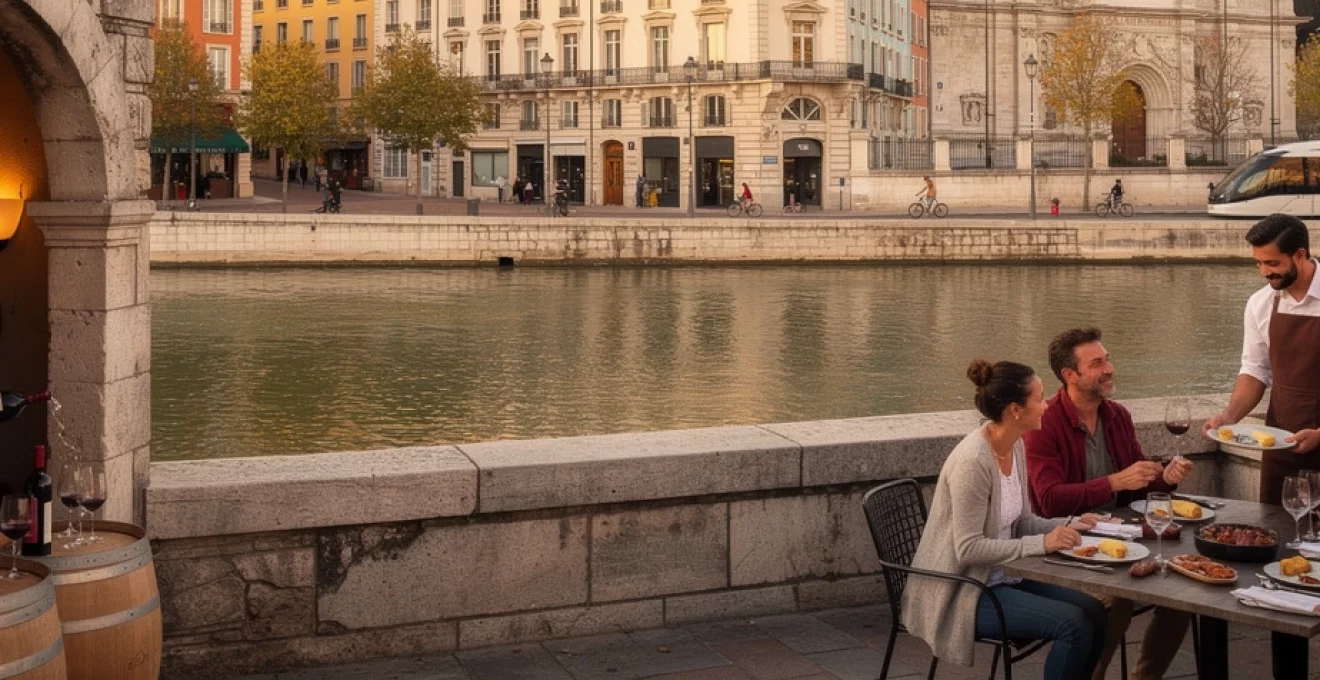
Lyon stands as France’s cultural jewel beyond Paris, offering an extraordinary blend of Renaissance architecture, world-renowned gastronomy, and cutting-edge contemporary art that rivals any European capital. This UNESCO World Heritage city, birthplace of cinema and capital of French culinary excellence, presents visitors with over 2,000 years of continuous history layered across four distinct districts. From the mysterious traboules of medieval Vieux Lyon to the avant-garde exhibitions at the Musée des Confluences, Lyon delivers an immersive cultural experience that satisfies both casual tourists and dedicated culture enthusiasts.
The city’s unique position at the confluence of the Rhône and Saône rivers has shaped its identity as a crossroads of European culture, where Roman ruins coexist with modernist architecture, and traditional bouchons serve alongside Michelin-starred establishments. Lyon’s compact size makes it ideal for extended exploration, while its strategic location provides perfect access to the French Alps, Beaujolais wine region, and other significant European cultural destinations.
Lyon’s UNESCO world heritage architecture and renaissance quarter exploration
Lyon’s architectural heritage spans over two millennia, creating a living museum where each district tells a different chapter of European history. The city’s UNESCO World Heritage designation encompasses 427 hectares, making it one of the most extensive protected urban areas in France. This recognition acknowledges not only individual monuments but the entire urban fabric that has evolved organically over centuries.
Vieux lyon’s traboules network and hidden medieval passageways
The traboules of Vieux Lyon represent one of Europe’s most remarkable urban phenomena – over 400 secret passageways threading through Renaissance buildings, connecting courtyards and creating a hidden network that once served silk merchants and later provided crucial escape routes for World War II resistance fighters. These architectural marvels, accessible through unmarked doors, reveal stunning spiral staircases, galleried courtyards, and vaulted ceilings that exemplify 15th and 16th-century craftsmanship.
Walking through the traboules feels like stepping into a medieval thriller, where each passage reveals architectural details from Gothic pointed arches to Renaissance medallions. The most famous include the Traboule de la Cour des Voraces in Croix-Rousse and the Pink Tower passage connecting Rue du Bœuf to Rue Saint-Jean. These passageways demonstrate Lyon’s practical approach to urban planning, where private property served public convenience long before modern city planning concepts emerged.
Basilique Notre-Dame de fourvière’s Romano-Byzantine architectural elements
Dominating Lyon’s skyline from Fourvière Hill, the Basilique Notre-Dame de Fourvière showcases an extraordinary fusion of Romano-Byzantine architecture that makes it one of France’s most distinctive religious monuments. Completed in 1884, this architectural masterpiece features four octagonal towers, elaborate mosaics covering over 2,000 square metres, and a crypt that rivals the main church in artistic splendour.
The basilica’s interior overwhelms visitors with its golden mosaics depicting scenes from Mary’s life, executed by renowned artists including Lameire and Boutterin. The building’s design philosophy embraces both vertical aspiration and horizontal grandeur, with its massive crypt extending beneath the entire structure. From the esplanade, panoramic views encompass the entire city, the Alps, and on clear days, Mont Blanc itself, making this both an architectural pilgrimage and a scenic highlight.
Presqu’île district’s 19th century haussmannian urban planning
The Presqu’île peninsula, literally meaning “almost an island,” demonstrates 19th-century urban planning at its most sophisticated, rivalling Paris’s Haussmannian transformations. This district between the Rhône and Saône rivers showcases wide boulevards, uniform façades, and grand squares that create architectural harmony across several kilometres. Place Bellecour, Europe’s largest pedestrian square, anchors this urban composition with its 62,000 square metres of open space.
The district’s architectural coherence results from deliberate planning that balanced commercial needs with aesthetic principles. Buildings maintain consistent heights, cornice lines, and material palettes while accommodating diverse functions from luxury shopping to civic administration. The Opéra de Lyon
continues the architectural narrative with its neoclassical façade and bold 1990s glass dome by Jean Nouvel, symbolising Lyon’s ability to blend heritage with innovation. Around Place des Terreaux, the Hôtel de Ville and Bartholdi Fountain create one of the most photogenic ensembles in the city, especially when illuminated at night. For a cultural city break, this district is ideal as you can move seamlessly from museums and theatres to riverside promenades and designer boutiques within minutes on foot.
As you explore Presqu’île, look up to appreciate the stone balconies, wrought-iron railings and sculpted pediments that give the district its refined character. Many buildings hide interior courtyards and passages that echo the traboules of Vieux Lyon, but in a more formal 19th-century idiom. Cafés spill onto pavements along Rue de la République and Rue Victor Hugo, turning the area into an open-air salon where Lyon’s cultural life is on full display. If you enjoy cities where urban planning and everyday life are in constant dialogue, Presqu’île will quickly become your base of operations.
Croix-rousse silk weaving district’s industrial heritage buildings
Perched above the city, the Croix-Rousse district tells the story of Lyon’s industrial past through its distinctive architecture. The so‑called canut buildings, named after the silk workers who once lived and laboured here, are characterised by their unusual ceiling heights of up to 4.5 metres. These lofty interiors were designed to accommodate Jacquard looms, making each apartment both a home and a workshop at the height of Lyon’s silk trade in the 18th and 19th centuries.
Walking through Croix-Rousse today, you can still sense this dual identity. Steep staircases, internal courtyards and discreet traboules form a vertical city where artisans once hauled rolls of silk down to the river. Many former workshops have been converted into artist studios, galleries and creative agencies, turning the area into a living example of how industrial heritage can be repurposed for contemporary culture. If you want to understand how Lyon moved from textile power-house to creative hub, a stroll along the slopes of Croix-Rousse is essential.
Gastronomic heritage through traditional bouchons and michelin-starred establishments
Lyon’s reputation as the gastronomic capital of France is more than a marketing slogan; it is woven into the city’s identity as tightly as silk threads on a loom. With more restaurants per capita than anywhere else in the country, Lyon offers a culinary spectrum that runs from rustic bouchons to cutting‑edge tasting menus. For a cultural city break, exploring this food culture is as important as visiting museums or historic sites, because every meal tells part of Lyon’s story.
What makes Lyon’s gastronomy unique for culture lovers? It is the way traditional techniques and local ingredients coexist with innovation and global influences. You can enjoy a hearty plate of quenelles de brochet at lunch and a refined Michelin-starred dinner in the evening, all within walking distance. This culinary diversity turns the city into an edible museum where each dish serves as an exhibit.
Paul bocuse’s culinary legacy and les halles de lyon food market
No discussion of Lyon’s gastronomic heritage is complete without mentioning Paul Bocuse, the legendary chef who helped define modern French cuisine. His flagship restaurant, L’Auberge du Pont de Collonges, held three Michelin stars for 55 consecutive years, a record that cemented Lyon’s global culinary status. Bocuse championed seasonal produce, precise technique and the idea that regional dishes could achieve international acclaim.
Today, his legacy lives on most tangibly at Les Halles de Lyon – Paul Bocuse, an indoor food market that functions as a gourmet theatre. Here, more than 50 vendors showcase everything from andouillette sausages and creamy Saint-Marcellin cheese to glossy pâtisserie and oysters shucked to order. Visiting Les Halles during your Lyon city break allows you to see—and taste—the full range of local specialities under one roof. Aim to arrive mid‑morning when stalls are in full swing and pull up a stool at a seafood bar or charcuterie counter for an informal yet quintessentially Lyonnais meal.
Traditional lyonnaise specialities: quenelles de brochet and coq au vin
One of the joys of a cultural city break in Lyon is discovering how local dishes reflect the region’s geography and history. Take quenelles de brochet, for example: these light, oval dumplings made from pike, eggs and flour are a direct product of the nearby rivers and lakes. Traditionally served with a rich crayfish or Nantua sauce, they encapsulate the Lyonnais knack for transforming humble ingredients into something elegant and memorable.
Another emblematic dish is coq au vin in its Lyonnais interpretation, often prepared with wine from nearby Beaujolais or Burgundy. Slow-braised rooster with lardons, mushrooms and aromatic vegetables becomes more than comfort food; it is a culinary bridge between Lyon and its surrounding vineyards. When you sit down in a traditional bouchon—recognisable by their cosy interiors and red‑and‑white checked tablecloths—you are not just ordering dinner, you are participating in a ritual that has nourished generations of locals. To make the most of this experience, reserve ahead for popular spots, especially at weekends.
Beaujolais and côtes du rhône wine tasting in historic cellars
Lyon’s location between the Beaujolais and Côtes du Rhône wine regions makes it an ideal base for oenophiles. Within less than an hour’s drive—or an organised tour—you can move from city streets to rolling vineyards. Beaujolais, just to the north, is known for its light, fruit‑forward reds made from Gamay, while Côtes du Rhône to the south offers robust blends featuring Grenache, Syrah and Mourvèdre. Both regions supply the wine lists of Lyon’s restaurants and wine bars, creating a direct connection between countryside and city.
If you prefer to stay within Lyon, you can still immerse yourself in this wine culture through tastings in historic cellars. Many bars à vins on the Presqu’île and in Vieux Lyon are housed in vaulted stone spaces that once stored silk or provisions. Here, sommeliers guide you through flights of regional wines, often paired with local cheeses or charcuterie. For a deeper experience, look for themed tastings focused on specific appellations or biodynamic producers—an excellent way to turn your evening drink into an educational highlight of your cultural city break.
Michelin guide recognition: L’Auberge du pont de collonges and contemporary scene
While L’Auberge du Pont de Collonges remains a pilgrimage site for food lovers, Lyon’s contemporary restaurant scene shows that the city is not content to rest on its laurels. As of the mid‑2020s, the greater Lyon area counts more than a dozen Michelin‑starred establishments, ranging from classic fine‑dining rooms to experimental neo‑bistros. This concentration of talent confirms Lyon’s status as a must‑visit destination for serious gastronomes.
What distinguishes the modern Lyonnais scene is its balance between tradition and creativity. Young chefs often trained in Bocuse’s orbit are now reinterpreting local specialities with lighter sauces, plant‑forward sides and global influences, without losing sight of regional identity. When planning your cultural city break, consider mixing one dinner in a traditional bouchon with another in a Michelin‑starred or Bib Gourmand restaurant. Booking a tasting menu can feel like attending a performance where each course is a carefully staged act in Lyon’s ongoing culinary story.
World-class museum collections and contemporary art installations
Beyond food and architecture, Lyon stands out for the quality and diversity of its museums and contemporary art spaces. For a city of roughly 1.7 million people in its metropolitan area, the density of cultural institutions is remarkable. This makes Lyon ideal for a museum‑focused city break, whether your interests lean towards classical painting, anthropology, cinema or 20th‑century history.
What sets Lyon apart from larger capitals is the accessibility of its collections. Distances between major institutions are short, opening hours are visitor‑friendly, and combined tickets or city cards help keep costs manageable. You can move from Egyptian sarcophagi to experimental installations in a single afternoon, without spending half your time on public transport.
Musée des Beaux-Arts’ european masters and egyptian antiquities collection
Often described as the “little Louvre”, the Musée des Beaux‑Arts de Lyon occupies a former Benedictine convent on Place des Terreaux. Its collections span 5,000 years of art history, from ancient Egypt to 20th‑century modernism. Highlights include works by European masters such as Rubens, Rembrandt, Delacroix, Monet and Picasso, displayed in spacious, well‑lit galleries that encourage slow looking rather than box‑ticking.
The museum’s Egyptian antiquities collection is particularly impressive, with mummies, funerary statues and everyday objects that offer a window into one of the world’s oldest civilisations. For culture‑oriented travellers, this combination of fine arts and archaeology makes the Musée des Beaux‑Arts a cornerstone of any Lyon itinerary. Audio guides and temporary exhibitions, often themed around specific movements or artists, provide additional layers of interpretation that enrich your visit.
Musée des confluences’ anthropological exhibits and deconstructivist architecture
At the southern tip of Presqu’île, where the Rhône and Saône meet, the Musée des Confluences announces itself with a bold deconstructivist silhouette of glass and steel. Designed by Coop Himmelb(l)au, the building resembles a grounded spaceship, making it an attraction in its own right. Inside, the museum explores big questions about humanity, nature and science through immersive, multimedia displays.
Permanent exhibitions trace themes such as the origins of life, the evolution of societies and humanity’s relationship with the environment, using a mix of ethnographic objects, fossils and interactive installations. For visitors on a cultural city break, the Musée des Confluences offers a refreshing counterpoint to traditional art museums, inviting you to consider how scientific and cultural narratives intersect. Its riverside location also makes it easy to combine with a walk or bike ride along the waterfront, particularly on a sunny afternoon.
Institut lumière’s cinematographic heritage and birthplace of cinema
Lyon’s claim as the birthplace of cinema rests on the pioneering work of the Lumière brothers, who shot some of the first motion pictures here in 1895. The Institut Lumière, housed in their former family mansion in the Monplaisir district, is both a museum and an active cinematheque. Its exhibitions showcase early cameras, projectors and film reels, demonstrating how revolutionary the brothers’ inventions were at the time.
For film enthusiasts, a visit to the Institut Lumière is akin to a pilgrimage to cinema’s point of origin. You can stroll through the gardens where the famous “Workers Leaving the Lumière Factory” was filmed and attend screenings in beautifully restored theatres that celebrate global cinema. If your cultural city break coincides with the Lumière Festival, usually held in October, you will find retrospectives, premieres and guest appearances by major directors—a reminder that Lyon remains a key player on the international film scene.
Musée de la résistance’s world war II documentation and historical archives
To understand Lyon’s role in 20th‑century history, the Centre d’Histoire de la Résistance et de la Déportation (often referred to as the Musée de la Résistance) is essential. Located in a former Gestapo headquarters, the museum documents the city’s pivotal position in the French Resistance during World War II. Exhibits combine personal testimonies, archival documents, photographs and multimedia installations to convey the complexity of life under occupation.
Visiting this museum adds a sober, reflective dimension to your city break, reminding you that the picturesque traboules and quiet courtyards once served as escape routes and meeting points for clandestine networks. For those interested in modern European history, the Centre d’Histoire offers valuable context about resistance movements, collaboration and memory. Plan at least two hours for your visit, as the narratives are dense and deserve unhurried attention.
Seasonal cultural programming and festival calendar integration
Lyon’s cultural energy does not stop at its permanent institutions; it pulses throughout the year in a rich calendar of festivals and events. Timing your city break to coincide with one of these programmes can transform your stay from enjoyable to unforgettable. Perhaps the most famous is the Fête des Lumières in early December, when light installations by artists from around the world turn the entire city into an open‑air gallery, drawing millions of visitors over four dazzling nights.
In late spring, Nuits Sonores fills former industrial spaces and riverside venues with electronic, independent and experimental music, attracting a young, international crowd. Summer brings the Nuits de Fourvière, a multidisciplinary festival of theatre, dance, classical concerts and contemporary music staged in the ancient Roman theatre overlooking the city. Even outside these peak moments, Lyon hosts regular cultural programming—from contemporary art biennials to food and wine fairs—that can be woven into your itinerary. Before you book your trip, it is worth checking the city’s official events calendar so you can align your visit with the cultural experiences that interest you most.
Strategic location advantages for multi-destination european cultural tours
Lyon’s central position in southeastern France makes it an ideal anchor for a broader European cultural journey. High‑speed TGV trains connect the city to Paris in about two hours, Geneva in under two hours and Marseille in around 90 minutes, allowing you to link several major cultural destinations without the hassle of air travel. From Lyon-Part‑Dieu and Lyon-Perrache stations, regular services also reach Avignon, Turin and Milan, opening up cross‑border itineraries that combine French and Italian heritage cities.
If you prefer to stay closer to base, Lyon is the natural gateway to the Beaujolais vineyards, the medieval towns of Burgundy and the Alpine landscapes around Grenoble and Annecy. This strategic location means you can structure your trip like a hub‑and‑spoke model: use Lyon as your cultural home base, then add day trips or overnight excursions to explore different facets of European history, architecture and landscape. For travellers planning a 10‑day France itinerary with a strong cultural focus, including three or four nights in Lyon creates a satisfying balance between urban discovery and regional exploration.
Sustainable urban mobility solutions for cultural site navigation
One of the most appealing aspects of a cultural city break in Lyon is how easy it is to move between sights without relying on a car. The city’s public transport network—comprising metro lines, trams, buses and two funiculars—is efficient, affordable and designed with visitors in mind. Many key cultural sites, from Vieux Lyon to the Musée des Confluences, sit within a short walk of a metro or tram stop, making it simple to build an itinerary that minimises transfer times and maximises time spent exploring.
For shorter distances, walking and cycling are often the most enjoyable options. Lyon has invested heavily in riverside promenades and bike lanes, with more than 1,000 kilometres of cycling routes in the wider metropolitan area. The self‑service bike system and widespread availability of e‑scooters offer flexible ways to get around, especially along the Rhône quays and between districts like Presqu’île and Croix‑Rousse. If you plan to visit several museums and use public transport frequently, consider purchasing the Lyon City Card, which bundles unlimited transit with free or discounted entry to many cultural attractions. Not only does this reduce logistical friction, it also supports the city’s broader strategy of promoting sustainable, low‑impact tourism.