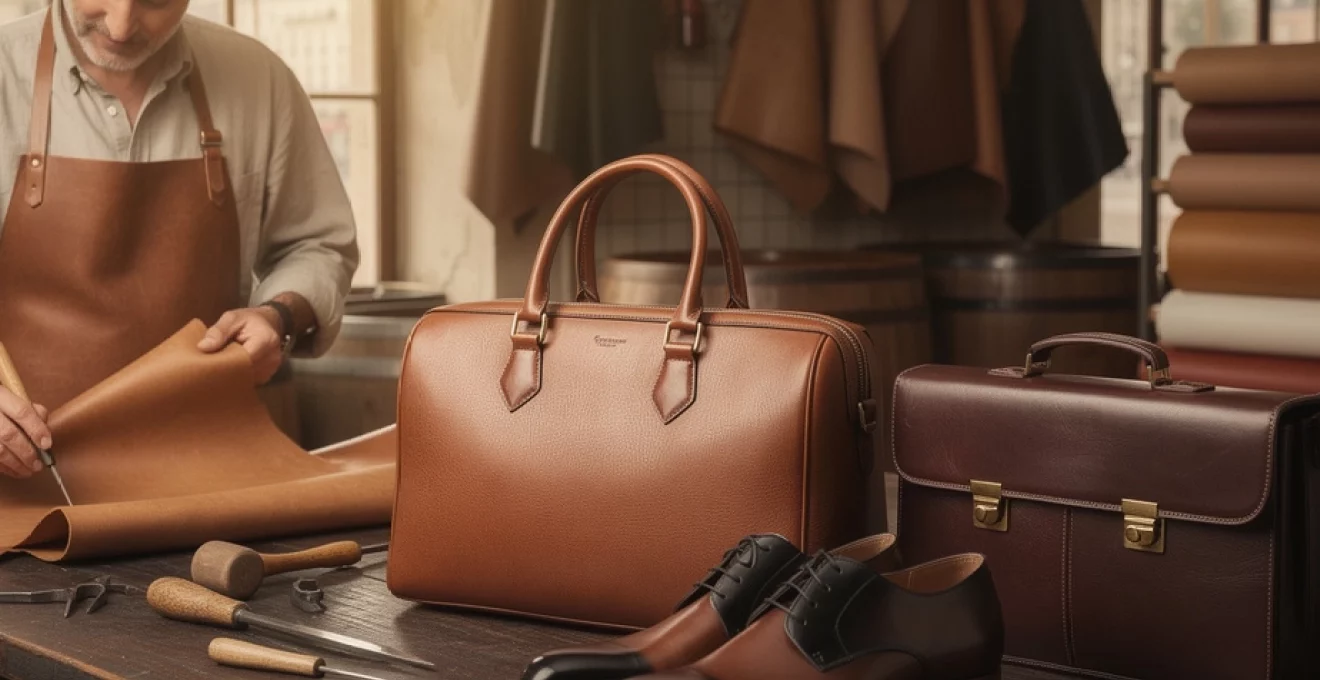
French leather craftsmanship represents the pinnacle of luxury manufacturing, where centuries-old traditions merge with contemporary innovation to create pieces that transcend fleeting fashion trends. The savoir-faire embedded within France’s historic tanneries and artisanal workshops has established an unparalleled reputation for quality that continues to drive global demand. Unlike mass-produced alternatives flooding today’s market, authentic French leather goods undergo meticulous manufacturing processes that emphasise durability, aesthetic refinement, and sustainable production methods.
The investment potential of French leather goods extends far beyond their initial purchase price. Market data consistently demonstrates that premium French leather accessories maintain exceptional resale values, with certain iconic pieces appreciating significantly over time. This financial resilience stems from the inherent quality of French manufacturing standards, the exclusivity of production methods, and the enduring cultural prestige associated with French luxury brands. For discerning consumers seeking both immediate satisfaction and long-term value, French leather goods represent one of the most compelling investment opportunities in the luxury market.
Heritage tanneries and traditional french leather manufacturing techniques
France’s leather industry has evolved through eight centuries of continuous refinement, establishing manufacturing standards that remain unmatched worldwide. The concentration of expertise within specific regions has created specialised knowledge clusters where techniques pass from generation to generation, ensuring consistency and innovation in equal measure. This geographical specialisation allows French tanneries to maintain extremely high quality control whilst developing new methods that enhance both product performance and environmental sustainability.
The French leather industry ranks as the world’s third-largest leather exporter, with exported French bags commanding an average price of €500 compared to €89 for imported alternatives.
Regional specialisation has created distinct centres of excellence across France, each focusing on particular aspects of leather production. Millau has maintained its position as Europe’s premier leather-working town since the 17th century, whilst Lyon’s historic leather district continues to supply luxury brands with the finest materials. These established centres benefit from centuries of accumulated knowledge, sophisticated infrastructure, and close relationships between tanneries and craftspeople that enable rapid quality feedback and continuous improvement.
Vegetable tanning methods at hermès petit H and tanneries du puy
Vegetable tanning represents the most traditional and environmentally conscious approach to leather processing, utilising natural tannins extracted from oak, chestnut, mimosa, and acacia trees. This method requires significantly longer processing times than chemical alternatives, often extending beyond six months for premium leather grades. The extended duration allows natural compounds to penetrate leather fibres completely, creating exceptional durability and developing the distinctive patina that French leather goods are renowned for.
French tanneries employing vegetable tanning methods maintain strict quality standards throughout the entire process. Temperature control, humidity monitoring, and precise timing ensure consistent results whilst preserving the leather’s natural characteristics. The resulting material exhibits superior aging properties, becoming more beautiful and supple over decades of use rather than deteriorating like chemically processed alternatives.
Full-grain leather selection processes in lyon’s historic leather district
Full-grain leather represents the highest quality grade available, utilising the complete grain layer without surface alterations or corrections. Lyon’s historic leather district has perfected selection processes that identify only the finest hides, typically representing less than 5% of available raw materials. This stringent selection ensures that French luxury goods maintain consistent quality standards whilst maximising the natural beauty and durability characteristics of premium leather.
The selection process involves detailed inspection of each hide, examining grain structure, thickness consistency, and natural markings. Master craftspeople can identify subtle quality variations that impact final product performance, ensuring that only exceptional materials proceed to manufacturing. This expertise, developed over generations, enables French leather goods to maintain their reputation for uncompromising quality standards.
Chrome-free tanning innovations by rémy carriat and degermann tanneries
Contemporary French tanneries have pioneered chrome-free tanning innovations that eliminate heavy metal pollution whilst maintaining exceptional leather quality. These advanced methods utilise synthetic tannins, aldehydes, and other environmentally friendly compounds to achieve desired characteristics without compromising durability or aesthetic appeal. The development of chrome-free processes demonstrates France’s commitment to sustainable luxury production whilst preserving traditional craftsmanship values.
Chrome-free tanning methods require
precise formulation and control to match or exceed the performance of traditional chrome tanning. Tanneries such as Rémy Carriat and Degermann have invested heavily in research and development, fine-tuning recipes that deliver supple, colourfast and resilient hides without the environmental burden associated with heavy metals. The result is leather that satisfies strict European regulations while aligning with the expectations of conscious luxury buyers who refuse to compromise on either ethics or quality.
For investors and collectors, chrome-free tanning innovations enhance the long-term appeal of French leather goods. Bags produced from these leathers are less likely to trigger skin sensitivities, age in a more predictable way and carry stronger storytelling value around sustainability. As more markets implement tighter environmental standards, French manufacturers that have already mastered chrome-free tanning will be strategically positioned, reinforcing the notion that a French leather bag is a future-proof investment rather than a short-lived purchase.
French glazing and hot-stuffing finishing techniques
Beyond tanning, finishing techniques are where French leather goods acquire their distinctive look and handfeel. Glazing, a traditional method perfected in historic workshops, involves buffing the leather with glass or agate rollers to compact the grain and create a subtle, high-gloss sheen. This process is particularly prized for box calf and certain smooth calfskins, giving French handbags their mirror-like surfaces that reflect light without appearing plastic or coated.
Hot-stuffing is another hallmark of premium French leather finishing. In this technique, tanners infuse the leather fibres with a blend of natural waxes, oils and fats under controlled heat, ensuring deep penetration rather than a superficial topical layer. You can think of it as “conditioning from the inside out”: the leather becomes more resistant to moisture, cracking and surface abrasion while retaining a rich, natural appearance. Over time, hot-stuffed leather develops a nuanced patina, with colours deepening and surfaces softening instead of peeling or flaking.
These finishing methods require considerable manual skill and time, which is why you rarely find them in mass-market production. They also contribute directly to the investment value of French leather goods: a properly glazed and hot-stuffed bag can be polished, refurbished and enjoyed for decades, often passing from one generation to the next. When you run your hand over a French-made full-grain bag and feel that dense yet buttery texture, you are experiencing centuries of finishing expertise compressed into a single object.
Premium leather types and regional sourcing standards
The value of French leather goods is also rooted in the meticulous selection of specific leather types, each sourced from regions that specialise in particular qualities. Unlike generic “genuine leather” used in fast fashion, these premium materials are tightly controlled in terms of origin, treatment and intended use. The result is a palette of leathers—Barenia, Veau Box, Chamonix, Swift and more—each with its own performance profile and aesthetic character.
Regional standards play a crucial role here. French tanneries work closely with European farms that comply with strict animal welfare and traceability regulations, ensuring hides are a by-product of the food industry rather than a primary driver of livestock. Combined with short supply chains and transparent documentation, this approach reassures discerning buyers that their investment pieces align with modern expectations around provenance and ethics. Understanding these leather types helps you choose a French leather bag that fits both your lifestyle and your long-term investment goals.
Barenia leather production exclusively for hermès equestrian lines
Barenia leather is one of the most legendary French leathers, originally developed for saddles and equestrian equipment. Exclusively produced for Hermès, it is a double-tanned, vegetable-based calfskin that combines extraordinary softness with outstanding resistance to water and everyday wear. Because it was designed to withstand the rigours of the stables, Barenia offers a performance level that far exceeds most fashion leathers, while retaining a velvety, almost waxy touch that luxury collectors prize.
The production process for Barenia is slow and highly controlled, with extended tanning times and meticulous hot-stuffing to saturate the fibres with natural oils. Each hide is inspected multiple times, as Barenia is not corrected or heavily pigmented; natural marks remain visible and contribute to its character. Over time, Barenia develops a distinctive patina, darkening and smoothing in the areas that are most frequently touched, somewhat like the way a well-loved saddle or heirloom watch strap ages.
For investors, Hermès bags made in Barenia are particularly compelling. Their rarity, equestrian heritage and unique aging characteristics make them desirable on the secondary market, where collectors actively seek out well-maintained Barenia pieces. If you are looking for a French leather bag that will gain depth and personality with every year of use, while holding or even increasing its market value, Barenia stands out as one of the most rewarding options.
Veau box calf manufacturing in annonay’s haas tannery
Veau Box, often simply called box calf, is another cornerstone of French luxury leather. Characterised by its firm temper, extremely fine grain and high-gloss glazed finish, this calfskin is synonymous with structured, formal handbags that retain their shape over decades. One of the most respected producers is the Haas tannery in Annonay, a town with a long tradition of fine calfskin production for the European luxury sector.
Manufacturing Veau Box involves chrome tanning followed by a series of specialised re-tanning and finishing stages that refine the grain and stabilise the leather’s structure. The hides are then glazed repeatedly to achieve that characteristic mirror-like surface, which reflects light and emphasises the bag’s architectural lines. Despite its polished appearance, high-quality box calf from Haas remains surprisingly resilient, resisting surface scratching better than many synthetic-coated leathers.
From an investment perspective, Veau Box calf is ideal for buyers who favour a classic, dressy aesthetic—think rigid top-handle bags and structured clutches. Its long-standing association with iconic French designs means that demand for box calf pieces remains high on the resale market, particularly in neutral colours such as black, navy and burgundy. If you are building a core collection of French leather goods, a box calf piece from a respected tannery like Haas provides a timeless anchor.
Chamonix leather characteristics and limited production volumes
Chamonix leather is less widely known than Barenia or box calf, yet it holds a special place among connoisseurs of French leather goods. Typically a smooth, matte calfskin with a lightly sanded surface, Chamonix offers a refined, understated appearance that appeals to enthusiasts of “quiet luxury”. Its touch is silky rather than glossy, and its colours tend to appear slightly muted, giving handbags a sophisticated, low-profile look.
One of the defining characteristics of Chamonix is its relatively limited production volume. Because it requires exceptionally clean hides and very precise finishing, only a small percentage of raw material is suitable for transformation into Chamonix-grade leather. Tanneries and maisons therefore reserve it for specific models and small runs, which adds to its exclusivity. This scarcity naturally reinforces its investment appeal, as collectors often seek out discontinued or low-volume leathers for their uniqueness.
Chamonix does not develop as pronounced a patina as Barenia, but it ages gracefully, with minor surface marks blending into a soft, even sheen over time. For someone who wants a French leather bag that is discreet yet rare, Chamonix offers an excellent compromise: you gain the benefits of meticulous French leather craftsmanship and limited-edition feel, without resorting to flashy branding or extreme finishes.
Swift leather grain structure and durability specifications
Swift leather, sometimes referred to as a modern successor to certain older calfskins, is prized for its fine, uniform grain and gentle, almost “powdery” surface. It is a supple, semi-matte leather that drapes slightly more than box calf, making it ideal for handbags and accessories that require soft curves and comfortable handling. Because of its tight grain structure, Swift takes colour exceptionally well, which is why you often see it used for vibrant hues and seasonal shades in French collections.
From a technical standpoint, Swift is engineered to balance softness with robustness. It is typically chrome-tanned and then carefully finished to maintain flexibility without becoming overly delicate. With normal care, Swift resists cracking and retains its shape, although it is more prone to minor surface scratches than heavily coated leathers. The advantage is that these light marks can often be buffed or conditioned away, and over time they blend into a subtle patina that adds character rather than detracting from the bag’s appeal.
For those weighing the investment value of different French leather types, Swift occupies a sweet spot between everyday practicality and high-end refinement. It is comfortable to carry, visually rich, and widely used by top French maisons, which supports strong recognition and liquidity on the resale market. If you prefer a slightly softer, more modern look than box calf, yet still want a reliable, long-lasting leather, Swift is a compelling choice.
Artisanal construction methods and hardware excellence
Premium leather is only one part of the equation; what truly distinguishes French leather goods is the way these materials are transformed into finished objects. Many French workshops still follow the principle of “one artisan, one bag”, where a single craftsperson oversees all stages of construction—from cutting and skiving to stitching and edge finishing. This approach, used by maisons and independent ateliers alike, ensures that each item reflects an individual’s skill and attention rather than a fragmented production line.
One of the most recognisable hallmarks of French leather craftsmanship is saddle stitching, a hand-sewing technique that uses two needles and a single thread passed in opposite directions through each hole. Unlike machine stitching, where a broken thread can unravel a seam, saddle stitching creates a more secure, interlocking structure that is far less likely to fail. Yes, it is slower and more labour-intensive, but this is precisely why high-end French leather bags retain their integrity even after years of daily use.
Edge finishing is another area where French artisans excel. Instead of leaving raw, cut edges, they may sand, dye, burnish and wax the edges multiple times to achieve a smooth, sealed profile that resists fraying and moisture. This meticulous edge work is often invisible to the casual observer, yet it dramatically influences how a bag ages. When you run your finger along the edge of a French-made handle or strap and feel no roughness, you are experiencing craftsmanship that many industrial manufacturers simply skip to save time.
Hardware, too, is treated as an integral part of the investment value rather than an afterthought. High-quality French leather goods use solid brass or stainless steel fittings, often plated with precious metals such as palladium or gold and rigorously tested for corrosion resistance and mechanical strength. Clasps, buckles and zips are engineered to withstand thousands of open-and-close cycles without misaligning or losing their finish. In some workshops, each metal component is individually inspected and sometimes hand-polished before assembly.
Why does this level of detail matter if you view leather goods as an investment? Because construction quality and hardware excellence directly influence resale prices and longevity. A bag that keeps its shape, hardware shine and structural integrity after a decade will always command higher demand than one that sags, tarnishes or fails. When you choose French leather goods, you are effectively investing in an object whose entire design and manufacture have been optimised for durability, repairability and long-term desirability.
Market value retention and authentication protocols
One of the strongest arguments for investing in French leather goods is their exceptional market value retention. Industry analyses from platforms such as Vestiaire Collective, Rebag and Baghunter regularly show that top French maisons lead global rankings in resale performance. While average luxury handbags may retain 50–60% of their retail price, iconic French models can reach or exceed 100%, particularly in rare leathers or limited editions. Some pieces have even outperformed traditional asset classes over specific time frames.
Value retention is not only about brand name; it is the result of controlled production volumes, rigorous quality assurance and consistent global demand. Limited supply ensures that the market is never flooded, while timeless designs and recognisable silhouettes keep older models relevant. For you as a buyer, this means that choosing a well-known French leather brand is less a sunk cost and more akin to purchasing a tangible asset that can be liquidated if needed. It is no coincidence that many collectors describe their wardrobes as “wearable portfolios”.
However, strong resale markets inevitably attract counterfeits, which is why authentication protocols are crucial. Leading French brands embed multiple layers of identifiers into their products: blind stamps and date codes, specific stamp fonts, stitching counts, heat-embossed hallmarks, micro-engraved hardware and unique packaging details. While these elements may seem minor on their own, together they form a complex security system that experts can verify to distinguish authentic pieces from imitations.
Professional authentication services—both independent and platform-based—rely on high-resolution imagery and increasingly, AI-assisted pattern recognition, to analyse a bag’s construction, leather type and markings. Many resale platforms now guarantee authenticity with money-back policies, which further reinforces confidence in French leather goods as investable items. If you intend to build a serious collection, it is wise to keep original receipts, dust bags and boxes, as complete “full set” packages tend to command higher prices on the secondary market.
From a practical standpoint, you can protect the value of your French leather bag by following a few simple protocols: avoid overstuffing or excessive weight, store it in a breathable dust bag away from direct sunlight, and schedule occasional professional spa treatments for cleaning and conditioning. These steps are comparable to servicing a mechanical watch or maintaining a classic car—they preserve both the functional life and the financial performance of your luxury asset.
Comparative analysis with italian and german leather manufacturing
How do French leather goods compare with those from other renowned manufacturing countries like Italy and Germany? Italy is often celebrated for its dynamic fashion culture, bold colour palettes and a vast network of artisans, especially in regions such as Tuscany and Veneto. Italian leather is superb, and “Made in Italy” is legally protected, but Italian brands sometimes lean more into trend-driven designs and a wide spectrum of price points, from accessible premium to ultra-luxury.
French leather goods, by contrast, typically place more emphasis on heritage storytelling, restrained aesthetics and tight control over distribution and production volumes. This does not mean Italian bags are inferior; rather, France positions itself at the intersection of craftsmanship, exclusivity and investment-grade desirability. If Italian leather goods embody exuberant style and variety, French pieces often represent continuity, rigour and long-term value. For a buyer focused on “forever pieces”, this French approach can be particularly reassuring.
Germany has its own leather tradition, especially in the fields of footwear, saddlery and technical goods. German manufacturers are renowned for precision, engineering and functionality, favouring robust leathers and minimalist, utilitarian designs. You will find excellent backpacks, business cases and performance-driven accessories produced under strict quality standards. Yet, compared with France and Italy, German leather goods play a smaller role in the global fashion and luxury narrative, with fewer globally iconic handbag models driving speculative or collector interest.
From an investment perspective, this difference in perception matters. While Italian and German leather products may offer outstanding day-to-day durability, French leather goods are more likely to benefit from brand mythology, celebrity exposure and consistent coverage in luxury resale reports. It is similar to comparing wines: many regions produce excellent bottles, but only certain appellations consistently command premium prices at auction. In the world of handbags and small leather goods, France is one of those blue-chip appellations.
Investment portfolio performance of iconic french leather brands
Thinking of French leather goods as part of an alternative investment portfolio is no longer unusual. Over the past decade, several market studies have compared the price evolution of iconic French handbags with indices tracking equities, gold and even fine art. While results vary by period and model, certain flagship bags have demonstrated average annualised gains in the high single digits, sometimes outperforming traditional assets during volatile market phases.
For instance, well-preserved classics from leading French maisons—especially in neutral colours and popular sizes—often resell above their original retail price within a few years, particularly after official price adjustments by the brands. Limited editions, rare leathers and collaboration pieces can see even steeper appreciation, driven by scarcity and collector demand. Of course, as with any investment, past performance is not a guarantee of future returns, but historical data does highlight the resilience of this niche asset class.
How can you approach French leather goods strategically if you are thinking beyond simple consumption? One way is to diversify by category and horizon. You might, for example, combine a high-ticket, iconic model intended as a long-term hold with more moderately priced French leather goods—such as wallets or belts—that still retain strong resale potential but can be enjoyed daily. Another approach is to focus on heritage colours and leathers (black box calf, gold Barenia, neutral Swift), which tend to age well both aesthetically and financially.
It is also wise to consider liquidity. Bags from globally recognised French brands trade more easily on resale platforms and at specialist auctions than niche labels, especially in cities such as Paris, Hong Kong, New York and London where demand is concentrated. Keeping documentation, maintaining condition and staying informed about market trends will help you time sales or acquisitions more effectively. In that sense, building a French leather goods collection is similar to curating a small art portfolio: knowledge, patience and selectivity usually yield the best outcomes.
Ultimately, the reason French leather goods perform so well as investments is that they satisfy three dimensions at once: intrinsic quality, emotional satisfaction and financial resilience. You are not only buying a logo or riding a trend; you are acquiring an object shaped by centuries of leather craftsmanship, strict environmental and ethical standards, and an enduring cultural fascination with French style. For many owners, the real return is measured not only in euros but in years of daily use, compliments received and stories carried—proof that some of the most compelling investments are the ones you can wear on your arm.