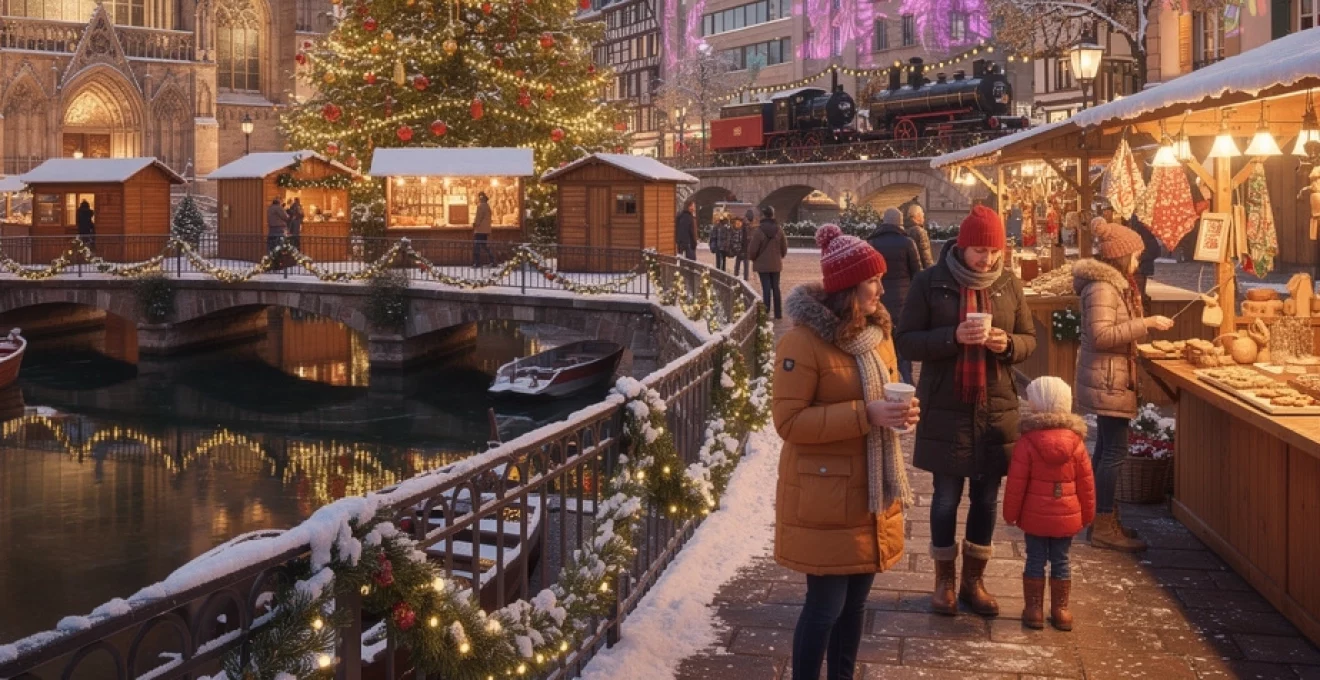
France transforms into a winter wonderland during the festive season, with Christmas markets creating enchanting experiences that capture the imagination of millions of visitors each year. These traditional marchés de Noël offer far more than simple shopping opportunities; they represent centuries-old customs where medieval architecture, twinkling lights, and aromatic seasonal treats combine to create truly magical atmospheres. From the timber-framed houses of Alsace to the Gothic splendour of cathedral squares, French Christmas markets provide authentic cultural experiences that embody the country’s rich heritage and festive traditions.
The magic of French Christmas markets lies not only in their visual appeal but also in their ability to transport visitors into fairytale-like settings. Whether you’re sipping vin chaud beneath illuminated Gothic spires or browsing handcrafted treasures in medieval courtyards, these markets offer immersive experiences that awaken all the senses and create lasting memories.
Strasbourg christmas market: capital of christmas tradition and christkindelsmärik heritage
Strasbourg rightfully claims the title of France’s Christmas capital, hosting one of Europe’s oldest and most prestigious Christmas markets. Dating back to 1570, the Christkindelsmärik (Market of the Child Jesus) spreads across multiple locations throughout the historic city centre, creating a comprehensive festive experience that attracts over two million visitors annually. The market’s authenticity stems from its deep-rooted Alsatian traditions, where German and French cultures blend seamlessly to produce a uniquely magical atmosphere.
The market encompasses more than 300 wooden chalets distributed across eleven different locations, each offering distinct experiences while maintaining the cohesive charm that makes Strasbourg’s Christmas market legendary. The careful integration of stalls with the city’s stunning architecture creates picture-perfect scenes at every turn, where medieval guild halls and Renaissance facades provide dramatic backdrops for festive celebrations.
Place kléber’s grande sapin de noël and cathedral square illuminations
The centrepiece of Strasbourg’s Christmas magic stands proudly in Place Kléber, where the Grande Sapin de Noël towers above visitors as one of Europe’s tallest Christmas trees. This magnificent 30-metre spruce, adorned with thousands of lights and ornaments, creates a focal point that draws crowds throughout the evening hours. The surrounding market stalls offer premium Alsatian crafts, from hand-blown glass ornaments to intricate wood carvings that reflect the region’s artisanal heritage.
Cathedral Square provides an equally spectacular setting, where the Gothic masterpiece of Notre-Dame de Strasbourg serves as a breathtaking backdrop for traditional market activities. The evening illuminations cast ethereal shadows across the square, creating photographic opportunities that capture the essence of European Christmas traditions. Street performers and carollers add musical accompaniment to the visual splendour, completing the sensory experience that makes this location truly unforgettable.
Petite france district Timber-Framed architecture and market stalls integration
The historic Petite France district showcases how Christmas markets can enhance rather than overshadow architectural heritage. Here, traditional timber-framed houses dating from the 16th and 17th centuries create intimate courtyards where smaller market stalls offer specialised products and personalised service. The narrow cobblestone streets, lined with festively decorated colombages, transport visitors back centuries while providing modern comforts and conveniences.
Canal-side positioning allows for stunning reflections of illuminated buildings and market lights in the water, creating double images that enhance the magical atmosphere. The integration of stalls with existing architecture demonstrates careful planning that respects historical integrity while accommodating contemporary festivities. Local artisans take advantage of this picturesque setting to display their finest work, from traditional Alsatian pottery to contemporary Christmas decorations inspired by regional motifs.
Vin chaud alsacien and traditional bredele biscuit offerings
Strasbourg’s Christmas market distinguishes itself through authentic culinary offerings that represent centuries of Alsatian tradition. Vin chaud Alsacien, the region’s signature mulled wine, combines local
aromatic white wine with cinnamon, cloves, star anise and citrus peel, resulting in a fragrant drink that warms you from the inside out. You will quickly notice subtle variations in flavour from stall to stall, as each vendor guards their own family recipe, adjusting sweetness, spice intensity and even adding a splash of local fruit liqueur. Alongside your steaming cup, you can sample bredele, the small spiced biscuits that are baked in Alsatian homes throughout Advent. These come in countless shapes and flavours—cinnamon stars, anise cookies, buttery vanilla crescents—turning each tasting into a miniature culinary journey through regional Christmas traditions. For many visitors, the simple ritual of enjoying vin chaud and bredele beneath the lights is what makes Strasbourg feel like the most magical Christmas market in France.
Culinary authenticity is central to Strasbourg’s festive atmosphere, so it is well worth seeking out stalls that clearly display the “Produit en Alsace” or similar local labels. This not only ensures higher quality but also supports small producers who keep regional recipes alive. If you are travelling with children or prefer non-alcoholic options, many chalets offer spiced apple juice or grape juice prepared in the same style as traditional mulled wine. Planning to spend a full evening here? You can easily build a progressive tasting route: begin with savoury options such as flammekueche (Alsatian tarte flambée), move on to sausages or pretzels, and finish with bredele and vin chaud while strolling past the illuminated cathedral.
Medieval guild traditions and artisanal craft demonstrations
Strasbourg’s Christmas market is not only about lights and flavours; it also preserves medieval guild traditions through high-quality crafts and live demonstrations. Many of the city’s Christmas “villages” are organised thematically, echoing the days when artisans gathered by trade in separate streets and squares. You might watch a glassblower shaping delicate ornaments, a woodcarver engraving Alsatian motifs, or a candle maker demonstrating traditional dipping techniques. These interactive encounters allow you to understand how many of the objects sold in the market are created, turning simple shopping into a cultural experience.
Look in particular for stalls run by recognised artisans and cooperatives, often grouped together in dedicated areas such as the “Carré d’Or” district or around the historic squares. Here you will find hand-painted ceramics, embroidered table linens, marquetry music boxes and nativity scenes crafted in wood or clay, all reflecting centuries of regional expertise. Taking the time to speak with artisans gives you insight into their craft stories—some families have been working in the same trade for generations. In an era of mass-produced decorations, these guild-inspired stalls help Strasbourg maintain a sense of authenticity that feels closer to an open-air museum than a commercial fair.
Colmar’s fairytale setting: little venice canal networks and half-timbered market venues
If Strasbourg is the grand capital of Christmas, Colmar is its fairytale cousin, offering a more intimate yet equally magical atmosphere. The historic centre is a perfectly preserved ensemble of medieval and Renaissance houses, many of them half-timbered and painted in pastel colours that seem lifted from an illustrated storybook. During Advent, six distinct Christmas markets are scattered through this pedestrian old town, each forming its own festive “village” with a specific character. The concentration of stalls within such a compact area means you can wander from square to square in just a few minutes, constantly discovering new views, scents and sounds.
The Little Venice district is particularly enchanting, with canals winding between narrow streets and flower-decked balconies now garlanded with fir branches and lights. Wooden chalets, carefully integrated into existing squares and quaysides, never overwhelm the architectural fabric; instead, they highlight Colmar’s heritage, framing views of church spires, oriels and cobbled alleys. Because car access is restricted in much of the centre, the overall atmosphere feels quieter and more contemplative than in larger cities, making Colmar a perfect choice if you are seeking a Christmas market with a truly immersive old-town charm.
Place des dominicains christmas tree spectacle and gothic architecture backdrop
Place des Dominicains is one of Colmar’s most striking festive settings, dominated by the Gothic Dominican Church whose tall stained-glass windows glow warmly after dark. In front of the church, a large Christmas tree rises above the chalets, decorated with traditional ornaments that echo Alsatian folk motifs and colours. When the square’s lights are switched on at dusk, the combination of pointed arches, stone tracery and illuminated branches creates an atmosphere that feels both solemn and joyful, as if the architecture and decorations were designed together.
The market here focuses on high-quality seasonal products and decorations: hand-carved nativity figurines, Advent wreaths, delicate glass baubles and candle holders inspired by Colmar’s emblematic houses. Because Place des Dominicains is relatively open, it is also one of the best spots to pause with a cup of vin chaud and take in the scene. If you enjoy photography, arrive just before the “blue hour” when the sky deepens in colour; this is when the silhouettes of the church and Christmas tree stand out most beautifully against the evening light, making it one of the most magical Christmas market squares in France.
Koïfhus historic customs house market integration
Colmar’s former customs house, the Koïfhus, plays a central role in the city’s Christmas celebrations by hosting an indoor craft market. This Renaissance building, with its steep tiled roof and arcaded ground floor, once controlled the flow of goods through the city. Today, it symbolically continues that function by showcasing the finest creations from local artisans and artists. Inside, vaulted rooms are lined with stalls offering ceramics, glasswork, textiles, jewellery and woodwork, all selected for quality and originality.
Visiting the Koïfhus is particularly appealing on colder or wetter evenings, as it allows you to continue exploring the Christmas market atmosphere in a warm, historic setting. You can watch demonstrations of pottery throwing, glass engraving or lace-making, and talk directly with makers about their techniques and inspirations. For travellers wishing to bring home meaningful souvenirs rather than mass-produced items, this is one of the best places in Alsace to invest in unique gifts. The contrast between the centuries-old stone walls and contemporary creative work adds another layer of magic to Colmar’s already captivating Christmas landscape.
Unterlinden museum quarter artisanal workshop displays
Just a short walk from the main market squares, the Unterlinden Museum quarter provides another perspective on Colmar’s festive spirit. The museum itself, housed in a former convent, is renowned for masterpieces such as the Isenheim Altarpiece, but during Advent the surrounding streets host smaller clusters of Christmas stalls and occasional artisan workshops. Here, the focus often shifts towards cultural and artistic experiences rather than purely commercial activity, making it an ideal area if you prefer quieter corners.
Depending on the year’s programme, you might find temporary exhibitions highlighting Christmas iconography in Alsatian art, or workshops where children can decorate gingerbread, carve simple wooden ornaments or learn about traditional Advent customs. This neighbourhood feels like a bridge between Colmar’s artistic heritage and its living Christmas traditions. Planning to combine culture and festive ambience in a single day? You can visit the museum in the morning, then step straight out into the seasonal lights and chalets for an evening of browsing and tasting.
Lauch river reflections and illuminated bridges photography opportunities
The Lauch River threads through Colmar’s Little Venice district, creating a series of bridges and quays that become prime photography spots at Christmas. As dusk falls, strings of lights and illuminated façades reflect in the slow-moving water, doubling the visual impact and giving the impression of walking through a scene painted on glass. Wooden chalets along the banks sell hot drinks, regional snacks and handmade gifts, allowing you to pause frequently and absorb the atmosphere from different vantage points.
Several bridges are decorated with garlands, lanterns and sometimes even small Christmas trees, turning a simple stroll into a succession of picture-perfect moments. If you enjoy night photography, bring a tripod or use railings to stabilise your camera, and experiment with long exposures to capture the glow of lights on the water. Even without professional equipment, simply slowing down and observing how the reflections change as you move can make your visit feel more immersive. Many travellers report that it is along the Lauch, under these reflections, that Colmar feels most like a living Christmas postcard.
Lyon festival of lights integration: fête des lumières and christmas market synergy
Lyon offers a different kind of Christmas magic by combining its Christmas markets with the world-famous Fête des Lumières, or Festival of Lights. Held each year around 8 December, this event transforms the city into a vast open-air light gallery, with monumental projections on façades, interactive installations in parks and poetic illuminations on bridges and riversides. While the festival only lasts a few days, its influence extends throughout Advent, with many neighbourhoods retaining enhanced lighting schemes and decorations that complement the seasonal markets.
The main Christmas market in Lyon typically takes place on Place Carnot near the Perrache station, featuring more than a hundred chalets selling regional specialities, crafts and festive street food. When the Festival of Lights is underway, the synergy between the two events creates an almost cinematic atmosphere: you can wander from light installation to market stall, from artistic projections to mulled wine stands, in a continuous loop of sensory experiences. Planning your trip to coincide with the festival requires advance booking, but it offers one of the most immersive combinations of culture, art and Christmas market ambience in France.
Beyond Place Carnot, smaller markets and pop-up stalls appear in districts such as Croix-Rousse and Vieux Lyon, each benefiting from the city’s historic architecture and hillside views. Illuminated traboules (hidden passageways), coloured floodlights on Renaissance façades and artful projections on the Fourvière Basilica all contribute to a layered visual experience. If you are asking yourself whether Lyon belongs on a list of the most magical Christmas markets in France, the answer lies in this fusion: few other cities manage to blend a major international light festival and traditional festive markets so successfully.
Reims champagne region markets: cathedral notre-dame gothic splendour and sparkling wine tastings
Reims, in the heart of the Champagne region, offers a Christmas market experience that pairs Gothic grandeur with sparkling wine tastings. The main market, often referred to as the “Village de Noël”, unfolds in the pedestrian streets and squares near Notre-Dame de Reims, a UNESCO-listed cathedral where French kings were once crowned. At night, the façade becomes a canvas for subtle light shows that highlight its sculpted portals and stained glass, creating a majestic backdrop for the rows of wooden chalets below.
With around 130 to 150 stalls depending on the year, Reims hosts one of the largest Christmas markets in France, yet the layout remains compact enough to explore comfortably in an evening. You will find gourmet regional products—Champagne obviously, but also biscuits roses de Reims, artisanal chocolates, pâtés en croûte and festive charcuterie—alongside decorative items and handicrafts. One of the highlights is the Ferris wheel, which offers panoramic views over the illuminated cathedral and rooftops; few experiences capture the city’s festive spirit more effectively than sipping a glass of bubbly before or after your ride.
Because Reims is only about 45 minutes from Paris by high-speed train, it is a popular choice for day trips or short festive getaways. To make the most of the atmosphere, consider arriving mid-afternoon to visit a Champagne cellar—many houses offer special holiday tours—and then heading to the market as the lights come on. If you are driving through the wider region, follow the “Route des Crèches” (World Nativity Scene Route), where dozens of villages display creative nativity scenes in their churches and public spaces. This combination of sacred heritage, sparkling wines and charming Christmas displays makes Reims one of the most distinctive festive destinations in France.
Mulhouse industrial heritage christmas markets: cité du train and automobile museum themed installations
Mulhouse, in southern Alsace, stands out for its ability to weave industrial heritage into its Christmas celebrations. Once a major textile and manufacturing centre, the city now celebrates this past each December with a unique “Christmas fabric”: a specially designed pattern produced by local manufacturers and used to decorate façades, chalets and streets. Nearly ten kilometres of this fabric can adorn the city in some years, wrapping the historic Place de la Réunion in colours and motifs that change annually. The result is a Christmas market that feels both traditional and distinctly Mulhousien.
Around the Church of Saint-Étienne and the painted town hall, more than a hundred stalls offer a mix of classic Alsatian specialities and contemporary creations. You can sample bredalas, waffles and mulled wine, but also browse textiles, scarves, tablecloths and decorative objects featuring the year’s Christmas fabric. This focus on cloth-making gives the market a stronger sense of identity, reminding visitors that the magic of Christmas in France can be rooted as much in industrial history as in medieval architecture.
Mulhouse’s major museums also join the festive season, adding another layer to the experience. The Cité du Train, Europe’s largest railway museum, often organises special family activities, themed illuminations or miniature markets among historic locomotives, turning a visit into a whimsical journey through time. Likewise, the Cité de l’Automobile may host vintage car parades, light installations or temporary exhibitions linked to winter travel and holiday traditions. For families or enthusiasts, combining a day in these museums with an evening stroll through the old town’s Christmas market creates a varied and memorable itinerary.
Metz lorraine cross symbolism: place saint-louis medieval architecture and german-french cultural fusion
Metz, in the Lorraine region, is another city where a strong sense of identity shapes the Christmas atmosphere. The historic centre revolves around Saint-Étienne Cathedral, nicknamed the “Lantern of God” for its exceptional stained glass, and a series of medieval squares that host different themed markets. Among them, Place Saint-Louis stands out for its arcaded houses and unmistakable Lorraine cross motifs that appear on decorations and signage. This symbol, with its double horizontal bar, reflects the region’s history and provides a visual thread linking stalls and squares throughout the festive season.
Metz’s Christmas market usually spans several sites—from the cathedral square with its traditional chalets and ice rink, to Place de la République and Place d’Armes with larger rides and a Ferris wheel. Place Saint-Louis, with its Italianate arches and former merchants’ houses, offers a more intimate setting focused on crafts, local delicacies and design objects. German and French influences are equally present in the food: you might move from pain d’épices and French pastries to sausages, pretzels and Glühwein, reflecting the city’s cross-border cultural fusion.
One of the most popular attractions is the illuminated Ferris wheel near the cathedral, which gives sweeping views over the city’s roofs and the glowing market squares below. For families, Santa’s “floating sleigh” on the Moselle and various children’s villages add playful touches to the medieval backdrop. Because Metz is only about 90 minutes from Paris by TGV and close to Germany and Luxembourg, it attracts an international crowd, yet still manages to preserve a warm, local feel. If you are seeking a Christmas market in France where architectural drama, regional symbolism and cross-cultural flavours come together, Metz deserves a place high on your list.