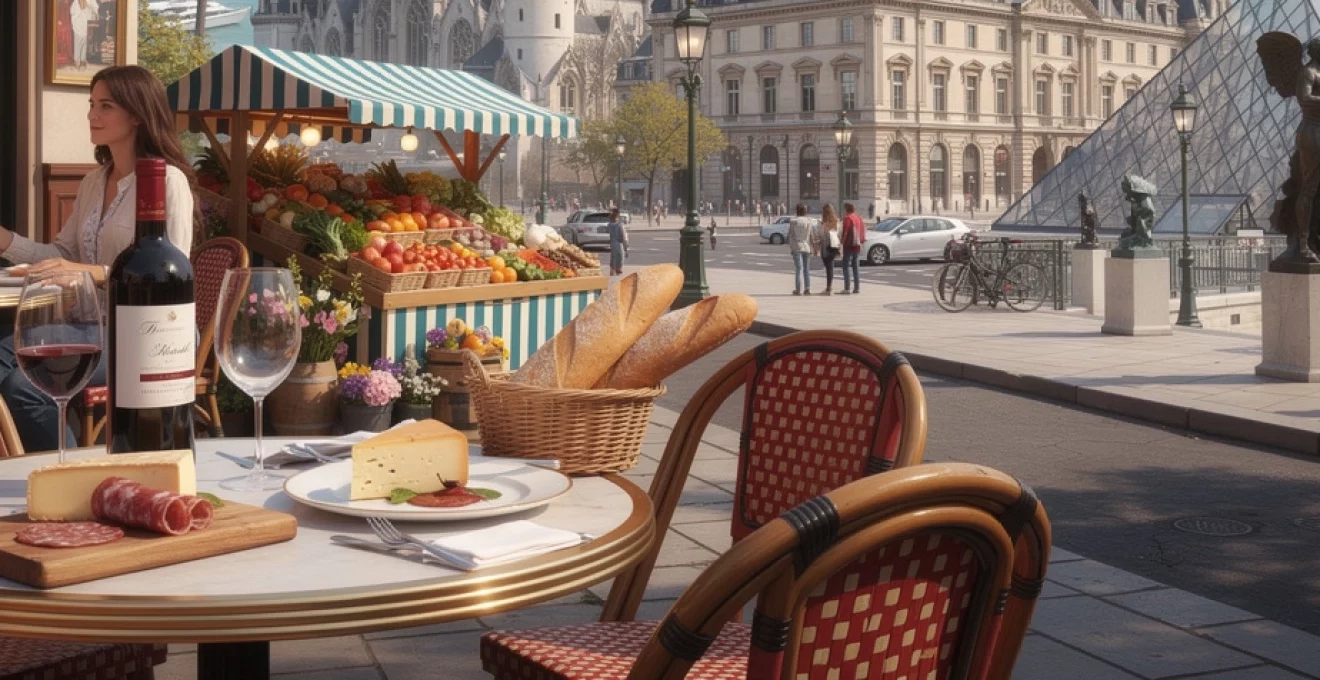
France continues to captivate millions of visitors annually, maintaining its position as the world’s most visited country with nearly 90 million international arrivals each year. This remarkable achievement stems from the nation’s extraordinary ability to blend centuries-old traditions with modern sophistication, creating an unparalleled travel experience that appeals to discerning travellers worldwide. From the cobblestone streets of medieval villages to the glamorous boulevards of Paris, France offers an intoxicating mixture of cultural refinement, gastronomic excellence, and diverse landscapes that few destinations can match.
The country’s enduring appeal lies in its art de vivre – a uniquely French approach to living well that permeates every aspect of the visitor experience. Whether you’re exploring hidden traboules in Lyon, cycling through Burgundian vineyards, or discovering remote villages tucked away in the Dordogne Valley, France consistently delivers moments of pure magic that create lasting memories. This timeless destination continues to evolve while preserving its authentic character, offering both first-time visitors and seasoned Francophiles new discoveries around every corner.
Gastronomic excellence: Michelin-Starred cuisine and regional culinary traditions
French cuisine represents the pinnacle of culinary artistry, with its influence extending far beyond national borders to shape global gastronomy. The country boasts over 630 Michelin-starred establishments, more than any other nation, demonstrating an unwavering commitment to culinary excellence that spans from intimate bistros to grand palace restaurants. This dedication to gastronomic perfection reflects centuries of refined cooking techniques, seasonal ingredient appreciation, and an almost religious reverence for the dining experience itself.
Michelin guide recognition: lyon’s bouchons and paris’s Three-Star establishments
Lyon, rightfully crowned as France’s gastronomic capital, houses an extraordinary concentration of culinary talent within its traditional bouchons – authentic Lyonnaise restaurants that serve hearty, soul-warming dishes passed down through generations. These establishments, often family-run for decades, offer specialities such as quenelles de brochet and coq au vin prepared according to time-honoured recipes. The city’s culinary prestige extends beyond traditional fare, with renowned chefs like Paul Bocuse having established a legacy that continues to inspire contemporary gastronomy throughout the region.
Paris showcases the absolute zenith of French culinary achievement, home to prestigious three-star Michelin establishments that represent the ultimate dining experience. These temples of gastronomy, helmed by legendary chefs, offer tasting menus that are nothing short of edible artworks, combining innovative techniques with classical French foundations. The capital’s dining scene encompasses everything from neighbourhood bistros serving perfect steak frites to avant-garde establishments pushing the boundaries of molecular gastronomy, ensuring that every palate finds its perfect match.
Appellation d’origine contrôlée (AOC) wine regions: bordeaux, burgundy, and champagne
France’s wine heritage represents one of humanity’s greatest cultural achievements, with AOC regulations ensuring that each bottle tells the authentic story of its terroir. Bordeaux, the world’s wine capital, produces legendary vintages from its Left Bank Médoc region and Right Bank Saint-Émilion appellations, where centuries-old châteaux continue family winemaking traditions. The region’s unique combination of gravelly soils, maritime climate, and meticulous vineyard management creates wines of exceptional complexity and longevity that command respect from collectors worldwide.
Burgundy’s patchwork of prestigious climats produces some of the planet’s most sought-after Pinot Noir and Chardonnay wines, with individual vineyard plots often measuring mere hectares yet commanding astronomical prices. The region’s monastic winemaking heritage, dating back to medieval Cistercian monks, established quality standards that modern vignerons continue to uphold with religious devotion. Champagne, meanwhile, has become synonymous with celebration itself, with the méthode champenoise creating effervescent masterpieces that grace the world’s most important moments.
Traditional charcuterie and artisanal cheese production methods
France’s charcuterie traditions
France’s charcuterie traditions reflect a deep respect for nose-to-tail cooking and regional identity, with each area boasting distinctive cured meats, pâtés, and sausages. In Lyon and the surrounding Rhône-Alpes, you will encounter robust specialities such as rosette de Lyon and saucisson brioché, while southwestern regions like the Dordogne and Gers are renowned for silky duck rillettes and richly seasoned pâtés de foie. These artisanal products are often made according to strict, time-tested methods, using free-range animals and natural curing processes that foreground flavour over industrial efficiency. Visiting a traditional charcutier offers a window into French daily life, as locals queue for weekend treats, festive hams, and picnic essentials.
Equally emblematic is France’s artisanal cheese production, protected and elevated by appellations such as AOP (Appellation d’Origine Protégée). From the cave-aged blues of Roquefort to the nutty complexity of Comté and the delicate bloom of Normandy’s Camembert, each cheese expresses its terroir as clearly as a fine wine. Many dairies still rely on raw milk, wooden ageing boards, and natural rinds, techniques that modern food science might streamline but never truly replicate. As you travel between regions, tasting cheese can feel like reading a living map of France, where climate, pasture, and human know-how combine to create thousands of distinct varieties.
Seasonal market culture: les halles de lyon and marché des enfants rouges
To understand why France remains a dream destination for food lovers, you only need to step into one of its bustling markets. Les Halles de Lyon – Paul Bocuse, often described as the city’s “stomach”, brings together dozens of top-tier producers under one roof: oyster shuckers, cheese affineurs, truffle merchants, and traiteurs showcasing prepared dishes that rival restaurant menus. Here, you can construct a gourmet lunch from seasonal produce and local specialities, then watch as Lyonnais residents do the same for their weekly shopping, reaffirming how central fresh ingredients are to French daily life. The atmosphere is part theatre, part pantry, with vendors offering tastings and advice as freely as conversation.
In Paris, the Marché des Enfants Rouges in the Marais district offers a different but equally compelling experience. As the oldest covered market in the city, it blends traditional French stalls with international cuisine, reflecting the capital’s cosmopolitan character. You might pick up heirloom tomatoes from a small-scale vegetable grower, then sit down for a plate of Moroccan couscous or a freshly made galette. This market culture, repeated in every corner of the country, teaches visitors to follow the rhythm of the seasons: asparagus and morels in spring, sun-drenched tomatoes and peaches in summer, wild mushrooms and game in autumn, and comforting root vegetables in winter.
Architectural heritage: UNESCO world heritage sites and gothic masterpieces
Beyond its celebrated cuisine, France stands out for an architectural heritage that spans more than a millennium, from Roman ruins to visionary contemporary designs. The country’s 49 UNESCO World Heritage sites (as of 2024) include not only individual monuments, but also historic city centres, cultural landscapes, and entire river valleys shaped by human hands. Walking through these sites, you feel as if you are moving through a living textbook of European architecture: Gothic cathedrals soaring skyward, Renaissance châteaux overlooking mirror-like canals, and harmonious city squares laid out with mathematical precision. Each building tells a story of power, faith, innovation, and aesthetic ambition.
Gothic architecture: Notre-Dame de paris and chartres cathedral engineering
French Gothic architecture revolutionised how sacred spaces were conceived, with cathedrals designed to be vast stone skeletons filled with light. Notre-Dame de Paris, currently undergoing meticulous restoration after the 2019 fire, remains a symbol of this engineering genius. Its pointed arches, ribbed vaults, and flying buttresses allowed medieval builders to reach unprecedented heights while thinning the walls to accommodate immense stained-glass windows. For visitors, the experience is as much about physics as faith: how could craftsmen working with limited tools create such structural daring?
Chartres Cathedral, about an hour from Paris by train, offers perhaps the purest expression of the High Gothic style. Famous for its almost perfectly preserved stained glass and its labyrinth embedded in the nave floor, Chartres demonstrates how light was used as a theological metaphor made tangible. Engineers and historians still marvel at the precision with which its vaults distribute weight, and how its asymmetrical towers nonetheless feel balanced to the eye. If you are fascinated by architectural innovation, standing beneath Chartres’ soaring ceilings is like stepping into a medieval research lab where stone, glass, and geometry converge.
Renaissance châteaux: loire valley’s chambord and chenonceau castle design
The Loire Valley, often called the “Garden of France”, is dotted with hundreds of châteaux that chart the evolution of Renaissance architecture north of the Alps. Château de Chambord, commissioned by François I, is both a hunting lodge and a manifesto of royal power, with an extraordinary double-helix staircase often attributed to Leonardo da Vinci. Its façade bristles with turrets, chimneys, and lanterns, creating a skyline that looks almost like an elaborate stone crown against the woods that surround it. Inside, the interplay of symmetry and exuberant ornamentation reflects a period when France was absorbing Italian Renaissance ideas and transforming them into something distinctly French.
Chenonceau, sometimes called the “Château des Dames” because of the influential women who shaped it, offers a more intimate but equally remarkable vision. Built over the Cher River, its elegant arches and galleries seem to float on the water, blurring the line between architecture and landscape design. Here, Renaissance ideals of proportion and harmony are softened by lush gardens, riverside perspectives, and interior spaces that feel designed for conversation and reflection rather than mere spectacle. By visiting both Chambord and Chenonceau, you can trace how French architecture evolved from fortresses to pleasure palaces, mirroring a shift from war to courtly life.
Baroque urban planning: place vendôme and place des vosges symmetrical layout
While the countryside boasts châteaux, France’s cities reveal another facet of its architectural heritage: carefully planned public squares that function as open-air salons. Paris’s Place Vendôme, initiated in the late 17th century, embodies the Baroque desire for order, grandeur, and royal symbolism. Its perfectly regular façades, designed as a continuous architectural backdrop, create a unified frame for what is now one of the world’s most prestigious luxury districts. The square’s precise geometry and controlled ornamentation convey an impression of calm power, an architectural echo of the absolutist state that built it.
Place des Vosges, completed earlier in the same century in the Marais, is often described as Paris’s first planned square. Surrounded by harmonious red-brick and stone arcaded houses, it combines symmetry with human scale, making it a favourite spot for both locals and visitors. Sitting beneath the arcades or on the central lawns, you experience how Baroque urban planning sought not only to glorify rulers but also to shape everyday life, offering coherent, walkable environments. For urbanists and travellers alike, these squares demonstrate why France is a constant reference point in discussions of city design and liveability.
Art nouveau movement: hector guimard’s métro stations and villa majorelle
Fast-forward to the turn of the 20th century, and France emerges again as a laboratory for new architectural ideas with the Art Nouveau movement. Hector Guimard’s iconic Paris Métro entrances, with their sinuous ironwork and organic motifs, transformed mundane infrastructure into poetic objects. Inspired by plant forms and asymmetrical lines, these structures signalled a break from historical pastiche and an embrace of modern materials like iron and glass. Even today, descending into the Métro via a Guimard entrance feels like stepping through an iron-and-glass vine into the underworld of the city.
In Nancy, the Villa Majorelle stands as a complete Art Nouveau manifesto, from its flowing façade to its custom-designed furniture and decorative details. Designed for furniture designer Louis Majorelle, the house integrates architecture, interior design, and applied arts into a single, coherent vision, much like a piece of music with recurring themes. Visitors interested in design will appreciate how Art Nouveau tried to erase the boundaries between structure and ornament, house and object, everyday life and art. Exploring these sites, you understand why France is still seen as a place where aesthetics permeate even the most functional aspects of urban living.
Cultural sophistication: louvre collections and avant-garde art movements
France’s cultural prestige rests not only on its buildings, but also on the ideas and artworks they contain. The Louvre, the world’s most visited museum, is practically a microcosm of global art history, offering everything from Egyptian antiquities to neoclassical French painting under one vast roof. With more than 35,000 works on display, it rewards both planned itineraries and aimless wandering; you might arrive for the Mona Lisa or the Winged Victory of Samothrace, then find yourself unexpectedly captivated by Islamic ceramics or 18th-century decorative arts. For many visitors, the Louvre is reason enough to put France on their bucket list, and repeat visits reveal new layers each time.
Yet the country’s artistic allure goes far beyond a single museum. Paris and cities such as Lyon, Marseille, and Lille have long been incubators for avant-garde art movements that changed the course of modern culture. Impressionism, born in and around Paris, redefined how light and colour could be used, while later movements like Fauvism, Cubism, and Surrealism pushed the boundaries of representation and narrative. To walk through the Musée d’Orsay, the Centre Pompidou, or smaller galleries in the Marais and Belleville is to trace a continuous thread of experimentation. If you are seeking creative inspiration, few destinations can match France’s combination of historic collections and cutting-edge contemporary scenes.
Diverse terroir: mediterranean coastlines and alpine adventure tourism
One of the reasons France remains a perennial dream destination is its extraordinary geographical diversity compressed into a relatively compact territory. Within a day’s journey, you can move from Mediterranean beaches to Alpine glaciers, from Atlantic surf spots to lavender-covered hills. This variety underpins the idea of terroir not just in food and wine, but in lifestyle and recreation: each region offers a distinct blend of climate, landscape, and local culture. For travellers who like to combine city breaks with outdoor adventures, France feels almost like several countries in one.
Côte d’azur luxury tourism: cannes film festival and monte carlo prestige
The Côte d’Azur, or French Riviera, epitomises Mediterranean glamour with its dazzling light, turquoise waters, and Belle Époque villas. Cities like Nice, Antibes, and Cannes have drawn artists, writers, and the international jet set since the 19th century, a tradition that continues with today’s luxury hotels and beach clubs. The annual Cannes Film Festival turns the city into a global stage each May, where red carpets and yacht parties sit alongside serious cinema and industry negotiations. Even if you never step onto the Croisette during the festival, walking its palm-lined promenade gives you a taste of this enduring prestige.
Just along the coast, the microstate of Monaco and its Monte Carlo district offer another layer of Riviera opulence. Here you find legendary casinos, grand hotels, and superyachts moored in the harbour, set against steep hillsides. For some travellers, this is the ultimate expression of luxury tourism in France, a place where high-end shopping, fine dining, and Formula 1 racing intersect. Yet even amid the glitz, you can find quieter corners—harbour cafés, cliffside walks, and hilltop villages like Èze—reminding you that the Côte d’Azur’s appeal is not only about status, but also about spectacular sea views and sun-drenched days.
French alps ski infrastructure: val d’isère and Chamonix-Mont-Blanc resorts
On the opposite end of the climatic spectrum, the French Alps provide world-class conditions for winter sports and year-round mountain adventures. Resorts such as Val d’Isère form part of vast interconnected ski areas, offering hundreds of kilometres of pistes served by modern lift systems that minimise wait times and maximise time on the snow. Snow-making infrastructure and high-altitude slopes help ensure reliable conditions from early December through April, while après-ski villages combine wooden chalets with vibrant nightlife. Whether you are a beginner learning on gentle greens or an expert carving down black runs, the variety is almost unmatched.
Chamonix-Mont-Blanc, meanwhile, holds a near-mythical status among mountaineers and off-piste skiers. Nestled at the foot of Western Europe’s highest peak, the town serves as a base for glacier hikes, ice climbing, and challenging descents like the Vallée Blanche. Even if you are not an adrenaline seeker, taking the Aiguille du Midi cable car up to panoramic viewpoints over the Mont-Blanc massif is an unforgettable experience. With extensive hiking and trail running routes in summer, the Alps prove that France’s adventure tourism is not limited to a single season. How many other countries allow you to breakfast in a café in Lyon and stand among snow-capped peaks before lunch?
Atlantic coast surfing culture: biarritz and hossegor wave conditions
France’s Atlantic coast brings a different energy, shaped by powerful swells and long sandy beaches. Biarritz, once a favourite of European royalty, has reinvented itself as a surfing capital, with consistent waves rolling in from the Bay of Biscay. Surf schools line the promenade, catering to beginners and intermediates, while experienced surfers chase larger winter swells. The town’s blend of elegant 19th-century architecture and laid-back board culture creates a unique atmosphere, somewhere between a traditional French resort and a Californian beach town.
Further north, Hossegor has earned a reputation as Europe’s answer to Hawaii’s Pipeline, thanks to heavy, fast-breaking barrels that attract professional surfers and major competitions. The annual World Surf League events here and along the Landes coastline put France firmly on the global surfing map. For travellers who prefer to watch rather than ride, these beaches offer excellent people-watching, coastal walks through pine forests, and seafood shacks serving oysters and grilled fish. It is another facet of France’s diverse terroir: the same Atlantic winds that shape vineyards inland create world-class wave conditions along the coast.
In contrast to the ocean’s drama, Provence’s interior landscapes offer a gentler, more fragrant kind of escape. The Valensole Plateau, typically in full bloom from late June to mid-July, transforms into a patchwork of purple lavender fields interspersed with golden wheat. Photographers and travellers arrive from around the world to capture the glowing rows at sunrise or sunset, when bees hum in the air and the scent of essential oils is almost intoxicating. Standing amid these fields, you understand why Provence has inspired countless painters and writers over the centuries.
Nearby, the Cistercian Sénanque Abbey provides a more contemplative setting for the same iconic plant. Founded in the 12th century, the abbey is surrounded by lavender fields that frame its simple stone structure, creating one of France’s most recognisable images. Visiting at quieter times of day allows you to absorb the monastic calm, where ancient rituals continue against a backdrop of cicadas and rustling olive trees. For many travellers, this combination of natural beauty and spiritual heritage encapsulates what makes France unique: everyday life elevated to an art form by setting, tradition, and meticulous care.
Luxury shopping districts: Champs-Élysées boutiques and haute couture ateliers
For those drawn to fashion and design, France offers another irresistible dimension: a shopping culture that treats clothing, jewellery, and even stationery as expressions of identity. The Avenue des Champs-Élysées in Paris remains one of the world’s most famous boulevards, lined with flagship stores from international and French brands alike. At its upper end, near the Arc de Triomphe, you will find luxury maisons displaying their latest collections like curated art exhibitions. Even window-shopping here can feel like visiting an open-air museum of contemporary style, where storefronts change with the seasons and major events.
Yet the true heart of French fashion lies just off these grand avenues, in the haute couture ateliers and multi-brand boutiques of districts like Avenue Montaigne, Rue Saint-Honoré, and the Marais. Behind discreet façades and wrought-iron doors, artisans cut, sew, and embroider garments by hand, creating pieces that may be worn only a handful of times on red carpets and runways. While access to the most exclusive salons is limited, many brands now offer guided visits, exhibitions, or made-to-measure services that give a glimpse into this rarefied world. Even if you simply browse, you will notice how French style prizes mixing high and low, vintage and new, rather than a “total look” from one label.
Outside the capital, cities such as Lyon, Bordeaux, and Lille maintain their own distinctive fashion scenes, often focused on independent designers and concept stores. Exploring these neighbourhoods can be as rewarding as visiting a museum, especially if you enjoy discovering emerging brands and unique accessories. France’s commitment to craftsmanship—whether in leather goods from the southwest, lace from Calais, or silk from Lyon—ensures that shopping here can feel like collecting small pieces of the country’s cultural DNA. If you are wondering how to bring home a tangible memory of your trip, a thoughtfully chosen garment or accessory often carries more meaning than any mass-produced souvenir.
Transportation infrastructure: TGV high-speed rail network and regional connectivity
Another major reason France remains a dream destination is how easy it is to explore once you arrive. The country’s TGV (Train à Grande Vitesse) high-speed rail network links major cities at speeds of up to 320 km/h, turning what would once have been full-day journeys into comfortable trips of just a few hours. Paris to Marseille in about 3 hours, Paris to Bordeaux in just over 2 hours, Paris to Lyon in around 2 hours—the distances shrink, and weekend getaways become entirely feasible. Travelling by train also reduces your carbon footprint compared with domestic flights, aligning with the growing trend towards sustainable tourism in France.
Beyond the flagship TGV lines, an extensive network of Intercités and TER regional trains connects smaller towns, coastal resorts, and rural areas. This means you can step off a long-haul flight in Paris and, with a single change of train, find yourself in a medieval village in the Dordogne or a vineyard town in Burgundy by evening. Many regions also support integrated ticketing with local buses and trams, simplifying multimodal journeys. For travellers who prefer not to drive—or who want to avoid the stress of unfamiliar roads and parking—this connectivity is a major advantage.
France’s transportation infrastructure does not stop at rail. Well-maintained motorways, including scenic routes nationales and lesser-known departmental roads, invite leisurely road trips through wine country, along river valleys, or between hilltop villages. Increasingly, dedicated cycling routes such as the Loire à Vélo, the ViaRhôna, and stretches of the EuroVelo network make it possible to traverse regions at a slower, more immersive pace. Combining high-speed trains with local public transport, occasional rental cars, or bicycles allows you to tailor your itinerary to your interests and energy levels.
In the end, this dense, efficient infrastructure ensures that France’s many attractions—its Michelin-starred restaurants, Gothic cathedrals, lavender fields, surf beaches, and Alpine ski slopes—are not isolated experiences, but parts of a coherent, accessible whole. You can wake up in a Left Bank hotel, spend the afternoon tasting oysters on the Atlantic coast, and be back in Paris for a late-night jazz set, all without boarding a plane. That ease of movement, together with the country’s culinary, cultural, and natural riches, is a key reason France continues to occupy a special place in the imagination of travellers worldwide.