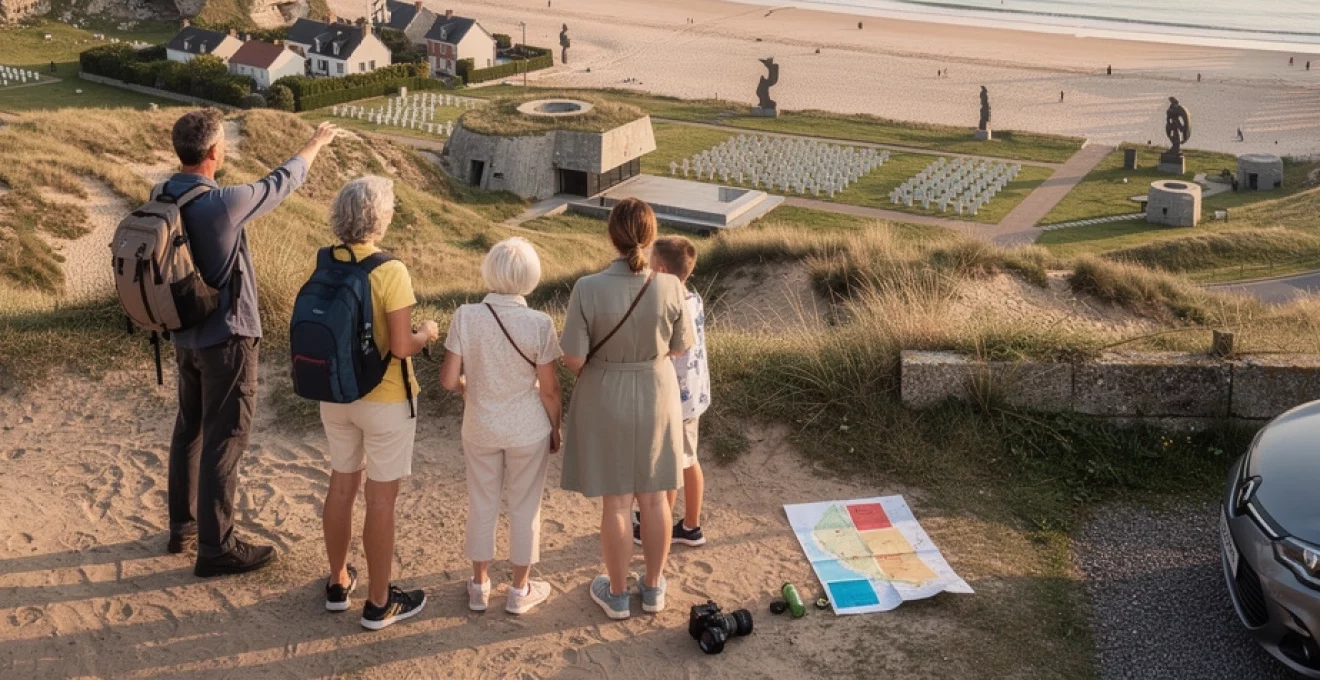
The Normandy coastline stands as one of history’s most significant military landscapes, where the tide of World War II turned on 6 June 1944. These sacred shores witnessed the largest amphibious invasion in human history, as over 156,000 Allied troops stormed five designated beaches in Operation Overlord. Today, millions of visitors journey to these hallowed grounds to honour the sacrifice of those who fought for freedom and to understand the pivotal moment that shaped the modern world. The D-Day beaches offer an unparalleled opportunity to walk in the footsteps of heroes whilst exploring meticulously preserved historical sites, world-class museums, and poignant memorials that tell the story of liberation.
Historical context and military significance of operation overlord landing sites
The strategic importance of the Normandy landings cannot be overstated in the context of Allied victory in Europe. Operation Overlord represented the culmination of years of meticulous planning, involving the coordination of British, American, Canadian, and Free French forces alongside numerous other Allied nations. The operation’s success hinged on achieving surprise through Operation Fortitude, an elaborate deception campaign that convinced German high command the invasion would occur at Pas-de-Calais rather than Normandy.
The choice of Normandy’s coastline proved tactically brilliant, offering a 50-mile stretch of beaches that could accommodate massive troop landings whilst remaining within fighter aircraft range from England. Each beach sector received specific designations based on extensive reconnaissance: Utah and Omaha for American forces, Gold and Sword for British troops, and Juno for Canadian divisions. This distribution ensured optimal force deployment whilst maximising the element of surprise across multiple fronts.
Strategic planning behind omaha beach and utah beach assault operations
American forces faced distinctly different challenges at their assigned landing zones, with Omaha Beach earning its grim reputation as “Bloody Omaha” due to fierce German resistance. The 1st and 29th Infantry Divisions encountered well-fortified positions atop 30-metre cliffs, defended by the experienced 352nd Infantry Division. Pre-invasion bombardment had minimal effect on these concrete fortifications, leaving assault troops exposed on open beaches with limited cover.
Utah Beach presented contrasting conditions, with the 4th Infantry Division benefiting from lighter German fortifications and successful airborne operations. The 82nd and 101st Airborne Divisions had secured key inland positions during the night, disrupting German communication lines and neutralising artillery positions. This coordination between airborne and amphibious forces exemplified the meticulous planning that characterised successful D-Day operations.
British forces landing zones: gold beach and sword beach tactical analysis
British operations at Gold and Sword beaches demonstrated exceptional tactical execution under General Montgomery’s 21st Army Group command. The 50th Northumbrian Division’s assault on Gold Beach achieved its primary objectives, including the capture of Arromanches where engineers constructed the vital Mulberry artificial harbour. This engineering marvel enabled the rapid unloading of supplies and reinforcements essential for sustained operations.
Sword Beach operations integrated seamlessly with airborne assaults on Pegasus Bridge and Merville Battery, showcasing the importance of combined arms tactics. The 3rd Infantry Division’s advance from Sword linked with 6th Airborne Division forces, securing the eastern flank and establishing bridgeheads across the Orne River. These coordinated operations prevented German counterattacks from isolating beachheads.
Canadian 3rd infantry division operations at juno beach
Canadian forces at Juno Beach faced particularly challenging conditions, with delayed landings due to rough seas and extensive beach obstacles. The Royal Canadian Navy’s difficulties in clearing approach channels resulted in higher landing craft casualties, with 30% suffering damage or destruction. Despite these setbacks, Canadian determination proved decisive, with units advancing further inland than any other Allied force on D-Day.
The success at Juno Beach reflected superior training and leadership, with Canadian units adapting quickly to battlefield conditions. Villages like Courseulles-sur-Mer and Bernières-sur-Mer fell to Canadian advances, establishing secure footholds for subsequent operations. Canadian casualties totalled approximately 1,200 men, including 340 killed, representing the highest proportional losses
among the Commonwealth forces on D-Day. Today, visitors to Juno Beach encounter a powerful blend of quiet seaside villages, preserved German bunkers, and the Juno Beach Centre, which interprets Canada’s contribution to the Normandy campaign through interactive exhibits and personal testimonies. Walking the dunes and nearby streets, you can still recognise buildings from period photographs, making the historical narrative feel remarkably tangible.
German atlantic wall fortifications and defensive positions
Underlying the ferocity of the fighting along the Normandy coast was the German Atlantic Wall, an extensive network of fortifications stretching from Norway to the Spanish border. In Normandy, this defensive system included concrete bunkers, artillery batteries, anti-tank ditches, minefields, and layers of beach obstacles designed to destroy landing craft before troops could even reach the sand. Key strongpoints at Omaha, Pointe du Hoc, Longues-sur-Mer, and Merville were carefully sited to create interlocking fields of fire.
When you explore the D-Day beaches today, many of these Atlantic Wall positions remain in situ, their thick concrete scarred but largely intact. They provide a stark, physical reminder of what Allied soldiers faced as they advanced across open beaches under direct fire. The surviving bunkers, gun casemates, and observation posts now serve as open-air exhibits, allowing you to step inside former German positions, look out over the same arcs of fire, and better appreciate how difficult the assault on these landing sites truly was.
Essential D-Day beach landing sites and memorial locations
Beyond their military significance, the Normandy landing zones are now carefully curated remembrance landscapes, combining preserved terrain, museums, and cemeteries. Each sector offers a distinct experience, from the windswept dunes of Utah to the dramatic bluffs of Omaha and the bustling seafront of Arromanches. Planning which D-Day beaches to visit can feel overwhelming, so it helps to focus on a handful of key sites that offer strong interpretation and easy access.
Most visitors choose a mix of beaches, inland battlefields, and major memorials to gain a rounded view of Operation Overlord. As you move from one location to another, notice how the geography changes: broad tidal flats give way to cliffs, dunes to bocage hedgerows. This varied landscape shaped the battle and still shapes your experience as a modern traveller tracing the course of the invasion.
Omaha beach: Colleville-sur-Mer and Vierville-sur-Mer access points
Omaha Beach stretches between Vierville-sur-Mer in the west and Colleville-sur-Mer in the east, with several signed access points leading down to the sand. The eastern sector, near Colleville, is dominated by the Normandy American Cemetery, where over 9,000 white marble crosses and Stars of David overlook the sea. A visitor centre beneath the cemetery offers a detailed historical exhibit on the American landings and the broader campaign, making it an essential stop before or after you walk the beach.
At Vierville-sur-Mer and neighbouring Saint-Laurent-sur-Mer, you can reach Omaha Beach directly by road and park close to the seafront. Here, contemporary sculptures like the “Les Braves” memorial stand alongside remains of German bunkers and the traces of former beach obstacles. Standing on the gently sloping sands, it can be hard to imagine the chaos of 6 June 1944, yet the combination of landscape, interpretation panels, and memorials helps you reconstruct how the assault unfolded sector by sector.
Utah beach museum and Sainte-Mère-Église paratrooper landing zone
Utah Beach, at the base of the Cotentin Peninsula, offers one of the most accessible and well-interpreted D-Day sites. The Utah Beach Museum sits almost directly on the dunes, integrating an original German bunker into its design. Inside, large artefacts such as a B-26 bomber, landing craft, and dioramas trace the American 4th Infantry Division’s relatively successful assault, as well as the crucial role of naval gunfire and airborne troops in reducing German resistance.
A short drive inland brings you to Sainte-Mère-Église, one of the first towns liberated on D-Day and a focal point for US airborne operations. The Airborne Museum, spread across several modern pavilions, uses immersive exhibits and original gliders and aircraft to explain the night-time parachute drops. Outside, the church roof still features an effigy of paratrooper John Steele, whose parachute snagged on the steeple—an image now emblematic of the airborne landings and a powerful reminder of the human stories behind the wider strategy.
Arromanches-les-bains mulberry harbour archaeological remains
On Gold Beach, the coastal town of Arromanches-les-Bains holds one of the most remarkable engineering legacies of D-Day: the remains of Mulberry B, an artificial harbour assembled in the days following the landings. Huge concrete caissons, known as Phoenix blocks, were towed across the Channel and sunk to create breakwaters and piers, allowing ships to unload vehicles and supplies regardless of the tide. At low water, many of these structures are still visible offshore, creating a unique seascape that is as much archaeological site as it is beach view.
The D-Day Museum in Arromanches explains how the Mulberry harbour functioned and why it was so vital to sustaining Allied operations after the initial landings. From the clifftop viewpoints above town, you gain a panoramic perspective over the bay, ideal for understanding the harbour’s scale and layout. Arromanches itself offers cafés, accommodation, and easy parking, making it an excellent base if you wish to explore several D-Day beaches without changing hotels every night.
Pegasus bridge and ranville british airborne operations site
East of Sword Beach, the bridges over the Caen Canal and the River Orne were critical objectives for British airborne troops. Today, Pegasus Bridge at Bénouville symbolises the daring glider assault that secured the eastern flank of the invasion. The modern bridge carries road traffic, but the original 1944 structure has been preserved at the nearby Pegasus Memorial Museum, where you can walk across it and examine a full-size replica of the Horsa gliders used in the operation.
Ranville, a short distance away, was one of the first villages liberated in France. The village churchyard and adjacent Commonwealth War Graves cemetery contain the graves of many 6th Airborne Division soldiers, offering a quiet counterpoint to the busier coastal sites. Visiting Pegasus Bridge and Ranville together helps you see how airborne landings, canal crossings, and beach assaults were interwoven, much like the pieces of a complex jigsaw puzzle forming the broader picture of Operation Overlord.
Pointe du hoc ranger assault cliff fortifications
Perched on a dramatic promontory between Utah and Omaha, Pointe du Hoc was one of the most heavily fortified positions along the coast. US Army Rangers scaled its near-vertical cliffs under fire to neutralise a battery believed capable of shelling both American beaches. Although the main guns had been moved inland by D-Day, the assault denied the Germans a commanding artillery platform and became one of the invasion’s most legendary exploits.
Today, the Pointe du Hoc site is managed as a preserved battlefield, its ground still pockmarked by bomb craters and its massive bunkers partially shattered by naval gunfire. A visitor trail leads you safely around the cliff top, into surviving casemates, and out to viewpoints overlooking the Channel. Standing at the edge of the cliffs, you can visualise the Rangers’ ascent and grasp why seizing this headland was so important to protecting the wider Normandy beachhead.
Transportation infrastructure and regional access routes
Reaching the D-Day beaches is relatively straightforward thanks to Normandy’s modern transport infrastructure, which overlays the historic invasion area with efficient road and rail links. Whether you are arriving from Paris, elsewhere in France, or across the Channel from the UK, you will find that most key sites can be reached within a three- to four-hour journey. Planning your routes in advance helps you maximise time on the ground, especially if you aim to visit more than one landing beach in a single day.
Because the D-Day coastline extends over roughly 70–80 kilometres, it is helpful to think of it in clusters: the western American sector around Utah and Sainte-Mère-Église; the central zone around Omaha and Bayeux; and the eastern Commonwealth beaches near Arromanches, Courseulles, and Ouistreham. Good regional roads link these zones, but distances between them still require some driving time, so factor this into your itinerary.
Caen-carpiquet airport and regional railway connections
For visitors arriving by air, Caen–Carpiquet Airport is the closest regional hub to the D-Day beaches, situated less than 20 kilometres from the coast. It offers domestic flights and limited international connections that can significantly shorten travel times compared with flying into Paris. From the airport, rental cars and taxis are available, and you can be in Bayeux, Arromanches, or Ouistreham within 30–45 minutes, depending on traffic.
If you prefer rail travel, frequent trains run from Paris Saint-Lazare station to both Caen and Bayeux, generally taking around two to two and a half hours. Bayeux is particularly convenient as a base for visiting Omaha and Gold beaches, while Caen offers good access to Sword Beach and Pegasus Bridge. Once in these towns, you can either hire a car, join a guided tour, or in some cases use local bus services to reach major D-Day museums and memorials.
Bayeux ring road and coastal D-Day highway navigation
Driving remains the most flexible way to explore multiple D-Day sites, and the regional road network is straightforward to navigate. The A13 motorway links Paris to Caen, after which smaller routes such as the N13 and D roads lead you towards Bayeux, Carentan, and the coast. Around Bayeux, a ring road system allows you to bypass the town centre quickly and connect to signposted routes for Omaha Beach, Arromanches, and the British Normandy Memorial.
Along the shoreline itself, a series of coastal roads loosely parallel the invasion beaches, sometimes offering sea views and at other points winding through villages just behind the dunes. Brown tourist signs mark sites of interest with names like “Plage du Débarquement”, “Musée du Débarquement”, or “Cimetière Militaire”. Having a GPS or offline map on your phone is helpful, but many travellers find that following these signs and local wayfinding panels turns the drive into part of the historical experience.
Cross-channel ferry services from portsmouth and dover
For visitors travelling from the United Kingdom, cross-Channel ferries provide a direct link into the heart of the D-Day region. Services from Portsmouth to Ouistreham (Caen) are particularly convenient, placing you less than an hour’s drive from Sword, Juno, and Gold beaches. Other routes from Portsmouth and Poole to Cherbourg give excellent access to Utah Beach and Sainte-Mère-Église, with driving times of around 45–60 minutes from the ferry terminal.
Ferries from Dover typically arrive in Calais, further to the east, and require a longer drive—often around four hours—to reach the main Normandy landing beaches. However, this option can still be attractive if you plan a wider road trip through France. When you disembark on the French side, you will find clear motorway connections, good roadside services, and plenty of signage directing you towards Caen, Bayeux, and the coastal D-Day route.
Rental vehicle requirements and parking facilities at memorial sites
Hiring a car in Normandy is straightforward, with rental companies operating at major airports, railway stations, and in larger towns such as Caen and Bayeux. To rent a vehicle, you will typically need a valid driving licence, a credit card, and, for some companies, an International Driving Permit if your licence is issued outside the EU. Automatic transmission cars are available but may be less common than manuals, so reserving in advance is highly recommended, especially in peak season.
One practical advantage of visiting the D-Day beaches by car is the abundance of parking at major memorials and museums. Sites like the Normandy American Cemetery, Utah Beach Museum, Juno Beach Centre, and the British Normandy Memorial offer large car parks, many of which are free or charge only a modest fee used for site maintenance. Even during busier periods, overflow areas and coach parks help absorb visitor numbers, so you rarely need to worry about finding a space if you arrive outside the very busiest midday window.
Accommodation options and visitor facility planning
Because the D-Day beaches span several communes and departments, you have a wide range of accommodation options, from coastal hotels with sea views to quiet rural gîtes and in-town guesthouses. Choosing where to stay often depends on which beaches you plan to prioritise. Bayeux is a perennial favourite thanks to its central location, well-preserved medieval centre, and direct road access to Omaha and Gold beaches. It also offers numerous restaurants, shops, and additional attractions such as the famous Bayeux Tapestry and the Battle of Normandy Museum.
Arromanches-les-Bains and Courseulles-sur-Mer are excellent bases if you want to focus on Gold and Juno beaches, with the added advantage of being able to stroll along the seafront in the evening. To the west, Sainte-Mère-Église and Carentan provide convenient access to Utah Beach, the airborne landing zones, and the Cotentin countryside. Wherever you choose, booking early for June—particularly around the D-Day anniversary—is wise, as demand rises sharply and smaller family-run hotels can fill months in advance.
Visitor facilities across the region are generally very good, with on-site cafés or snack bars at most major museums, as well as picnic tables and accessible restrooms. Many D-Day museums are designed with international audiences in mind, providing multilingual displays, audio guides, and family-friendly exhibits. If you are travelling with children or older relatives, it can be helpful to alternate emotionally intense sites such as cemeteries with open-air stops on the beach itself, allowing time for quiet reflection and rest.
Guided tour operations and educational programme selection
While it is entirely possible to visit the Normandy D-Day beaches independently, many travellers value the insight and context provided by specialist guides. A good battlefield guide can transform a stretch of seemingly empty sand into a vivid, three-dimensional story, pointing out former strongpoints, explaining unit movements, and sharing personal accounts from veterans. This can be especially helpful if you are short on time and want to understand the key events at each landing site without extensive pre-trip research.
Guided tours come in many formats: full-day or half-day group excursions from Bayeux or Caen, private tours tailored to specific national perspectives, and even themed itineraries focusing on airborne operations, armoured units, or particular divisions. If you are researching a family member who fought in Normandy, some operators can help trace unit histories and build a custom route that follows their likely path through the campaign. When choosing a tour, look for companies that limit group size, employ accredited or well-reviewed guides, and allocate generous time at each major stop rather than rushing from site to site.
Educational programmes are not limited to adults. Several museums, including the Juno Beach Centre and the Caen Memorial, offer age-appropriate materials, workshops, and school group packages designed to introduce younger visitors to D-Day history. Audio guides, interactive exhibits, and outdoor interpretive trails help keep students engaged while reinforcing key concepts such as planning, sacrifice, and the importance of international cooperation. Whether you join a formal tour or craft your own itinerary, the Normandy beaches lend themselves to meaningful learning experiences that bridge generations.
Seasonal considerations and commemoration event calendar
Normandy’s D-Day beaches can be visited year-round, but the season you choose will shape your experience. Late spring and early autumn are often ideal, combining relatively mild weather with lighter crowds than the peak summer months. In May and September, you are more likely to enjoy comfortable temperatures for walking beaches and open-air sites, yet still find most museums operating on extended hours. Winter visits, while quieter and sometimes damp, can offer a powerful sense of solitude and reflection, especially if you prefer to avoid busy periods.
June is the most significant month in the regional calendar, with a concentration of ceremonies and commemorative events around the D-Day anniversary on 6 June. During major anniversaries—such as the 80th in 2024—heads of state, veterans’ groups, and large numbers of visitors converge on key sites for wreath-laying, flypasts, and special exhibitions. If you hope to attend these ceremonies, plan accommodation and transport many months in advance. Conversely, if you prefer a more contemplative visit, you may wish to schedule your trip outside the first half of June to avoid road closures, security zones, and large crowds.
Throughout the year, smaller local events also take place in villages along the coast: historical reenactments, temporary exhibitions, public talks, and guided walks led by local historians. Tourist offices in Bayeux, Caen, and the coastal towns publish up-to-date event calendars, often in English as well as French. Checking these resources before and during your trip can help you time your visits to coincide with special activities—or deliberately choose quieter days—ensuring that your journey to the D-Day beaches in Normandy matches the pace, depth, and atmosphere you are seeking.