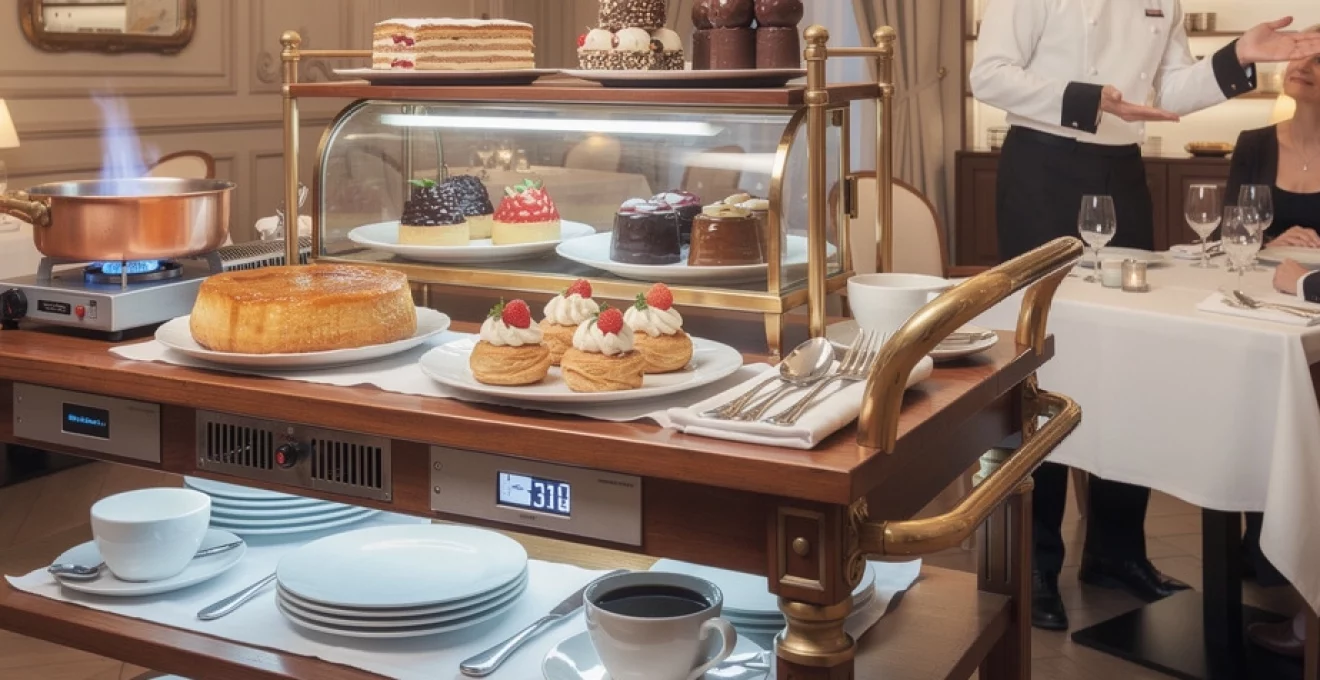
The French dessert trolley represents more than a simple service method—it embodies centuries of culinary artistry, theatrical presentation, and gastronomic excellence. From its origins in aristocratic dining rooms to its contemporary adaptations in luxury establishments, the dessert trolley remains a symbol of refined hospitality and culinary sophistication. This mobile showcase transforms the final course from a mere conclusion into a dramatic crescendo, where visual spectacle meets exceptional craftsmanship. Today’s hospitality professionals recognise that mastering dessert trolley service requires understanding both traditional techniques and modern operational excellence, creating memorable experiences that elevate dining from sustenance to theatre.
Historical evolution of french dessert trolley service from belle époque to modern gastronomy
The dessert trolley emerged during the 19th century as French dining evolved from service à la française to service à la russe, fundamentally changing how courses were presented. This transformation began around 1810, when the formal presentation of sequential courses replaced the previous method of displaying all dishes simultaneously. The trolley became a bridge between these service styles, allowing restaurants to maintain dramatic presentation whilst adhering to the new structured approach.
During the Belle Époque period, dessert trolleys represented the pinnacle of dining luxury, featuring elaborate silver constructions wheeled between tables by formally trained staff. These early trolleys showcased not merely desserts but entire architectural displays of confectionery artistry. The theatrical element was paramount—diners expected performance alongside their puddings, with flambéing, carving, and elaborate plating executed tableside with ceremonial precision.
The mid-20th century brought significant design innovations, as modernist influences transformed trolley aesthetics. Designers like Alvar Aalto and Jean Royère reimagined these service pieces, introducing sleek lines, chrome finishes, and glass shelving that reflected contemporary design sensibilities. The 1955 three-wheeled brass and glass trolley by architect Josef Frank exemplified this evolution, featuring fluid lines that seemed to float between tables rather than lumber.
The flash of chromium sets these trolleys firmly in the world of art deco chic, where brilliant little cakes were piled on glass shelves, creating visual feasts before the actual tasting began.
Post-war dining culture saw dessert trolleys becoming symbols of hospitality recovery and abundance. Establishments used these mobile displays to demonstrate prosperity and sophistication, often featuring multiple tiers laden with cream-filled profiteroles, glazed fruit tarts, and towering croquembouche. The psychological impact was profound—diners’ anticipation built as trolleys approached, creating emotional engagement that modern plated desserts struggle to replicate.
Contemporary dessert trolley service has evolved from pure spectacle towards curated experiences emphasising seasonal ingredients and artisanal techniques. Modern interpretations balance traditional theatricality with contemporary dietary considerations, featuring gluten-free options, vegan alternatives, and reduced-sugar preparations without compromising visual impact. The challenge for today’s pâtissiers lies in maintaining the magical qualities that make trolley service special whilst adapting to evolving guest expectations and operational realities.
Essential components and professional setup of traditional french dessert trolleys
Professional dessert trolley architecture requires meticulous attention to both functionality and aesthetic appeal. The foundation rests upon understanding how each component contributes to operational efficiency whilst maintaining the theatrical elements that define exceptional service. Modern establishments must balance historical authenticity with contemporary food safety requirements, creating systems that honour tradition whilst meeting current hospitality standards.
Multi-tier trolley architecture and temperature control systems
Traditional French dessert trolleys feature three distinct levels, each designed for specific dessert categories. The top tier showcases ambient-temperature items like fruit tarts and petits fours, positioned at eye level for maximum visual impact. The middle section houses cream-based desserts requiring moderate cooling, whilst the bottom level accommodates ice creams and frozen preparations with integrated refrigeration systems.
Temperature control represents the most critical technical challenge in trolley design. Professional units incorporate multiple climate zones using discrete cooling elements that maintain optimal conditions without creating condensation or affecting presentation. Advanced systems feature individual compartment controls, allowing simultaneous service of hot soufflés alongside frozen parfaits without temperature compromise.
To preserve structure and manoeuvrability, weight distribution must be calculated as carefully as in a professional wine cellar. Heavier porcelain, metal stands and refrigerated drawers should sit low, while lighter glass domes and sugar work can occupy the higher levels without compromising stability. Many contemporary French dessert trolleys now integrate silent casters with locking mechanisms, discreet power feeds for mini refrigeration units, and insulated compartments that maintain narrow temperature bands crucial for chocolate work and dairy-based pâtisserie.
Forward-thinking establishments also consider service ergonomics when designing multi-tier architecture. Staff should be able to access each dessert without excessive bending or twisting, which reduces service time and protects delicate constructions such as mille-feuille or Saint-Honoré. Ideally, every key element—sauce jugs, portioning knives, palette knives and garnishes—has an allocated position, turning the trolley into a mobile mise en place. When well designed, the dessert trolley becomes the pastry equivalent of a chef’s station: efficient, precise and visually compelling.
Professional display equipment for tarte tatin and mille-feuille presentation
Showcasing classics such as tarte Tatin and mille-feuille on a French dessert trolley demands specialised display equipment. Tarte Tatin benefits from heavy copper or cast-iron baking dishes that retain heat, paired with pre-warmed porcelain platters for tableside unmoulding. Mille-feuille, by contrast, requires perfectly flat, chilled trays to preserve its laminated layers and prevent cream from softening the pastry before service.
Professional pastry operations frequently use raised cake stands with non-slip bases to bring signature desserts closer to eye level without risking movement as the trolley rolls. Transparent cloches protect against temperature fluctuation and airborne contamination, while also building anticipation as guests glimpse the caramel sheen of the tart or the sharp layers of puff pastry through the glass. For high-volume service, some brigades prep individual portions in metal frames, ensuring uniform slices that can be cleanly released and plated in seconds.
Cutting and plating tools are just as important as the stands themselves. Long, thin-bladed knives, offset palette knives and rigid cake servers are chosen specifically to avoid compressing mille-feuille or shattering caramelised pastry. Many restaurants commission custom-made rectangular plates for mille-feuille presentation, allowing space for linear garnishes, piped creams and sauce designs that echo the architecture of the dessert. The goal is always the same: to transport the elegance of the pâtisserie laboratory directly to the guest, without any loss of precision.
Sterling silver service utensils and porcelain selection standards
The aesthetic language of a French dessert trolley is written in sterling silver and fine porcelain. Traditional grand maisons still favour silver-plated or solid silver service utensils—ladles for sauces, long-handled spoons for mousses and sorbets, and engraved cake servers for tarts and entremets. Beyond visual impact, professional-grade silver retains temperature well, helping to keep sauces warm and sorbets cold during the short but critical journey from trolley to plate.
Porcelain selection follows strict criteria that balance beauty, durability and practicality. High-fired white porcelain remains the benchmark for French dessert plating, offering a neutral canvas that highlights colours from fruit glazes, chocolate sauces and spun sugar. Many establishments opt for a mix of classic round plates and elongated rectangles to accommodate different presentation styles—round plates for rustic tarte Tatin, linear formats for contemporary mille-feuille or deconstructed desserts.
From an operational perspective, stackability, chip resistance and compatibility with warming drawers or plate chillers are essential. Plates destined for hot desserts must tolerate repeated passes through plate warmers without warping or discolouration, while those used for iced preparations should hold a cool temperature without condensation marks. A well-curated porcelain collection ensures that every dessert—whether a traditional île flottante or a modern citrus entremets—has a plate that complements its form and reinforces the restaurant’s visual identity.
Ambient lighting and tableside theatrical elements
Lighting is the invisible seasoning of the French dessert trolley, subtly guiding guest attention and amplifying the sense of occasion. Soft, warm ambient lighting flatters chocolate glazes, fruit glistens and sugar work, avoiding harsh reflections or unappealing colour casts. Some contemporary trolleys integrate low-voltage LED strips hidden beneath shelves or under rails, casting a gentle glow that makes each tier feel like a miniature stage.
Theatrical elements—when used judiciously—transform service into performance. A polished silver dome lifted with a slight pause, the hiss of a sauce being poured over sizzling crêpes, or the sudden flare of a controlled flambé can captivate an entire dining room. Background music, if present, should support rather than compete with this theatre, allowing guests to hear the soft crack of caramel as a crème brûlée is tapped or the rustle of crisp puff pastry being sliced.
Staff choreography is equally important. The approach of the trolley, its precise stop at the table, and the fluent explanation of each dessert create a rhythm not unlike classical service in haute cuisine. Eye contact, confident handling of utensils and a calm demeanour during dramatic moments such as flambéing subtly reassure guests that what they are witnessing is both exciting and entirely under control. In this way, ambient lighting and performance details turn the dessert trolley into the dining room’s final, unforgettable act.
Mastering classic french dessert preparation techniques for trolley service
Executing French dessert trolley service at a professional level depends on rock-solid pâtisserie techniques adapted for mobility and delayed service. Unlike plated desserts that travel only a few metres from pass to table, trolley items may sit on display for extended periods, making structure, stability and food safety crucial. This reality influences everything from how choux pastry is baked to how fruit tarts are glazed and how chocolate is tempered for glossy profiteroles.
For pastry chefs, the key question becomes: how can we preserve the sensory qualities of freshly made French desserts while accommodating the constraints of tableside service? The answer lies in smart mise en place, precise timing and a clear understanding of how each component behaves over time. When done correctly, guests experience desserts that feel as immediate and vibrant as if they had come straight from the pastry pass, yet benefit from the drama of trolley presentation.
Pâtisserie fundamentals: choux pastry and crème pâtissière execution
Choux pastry and crème pâtissière form the backbone of many classic French dessert trolley offerings, from profiteroles and éclairs to Paris-Brest. Perfect choux for trolley service must be light yet robust, with a well-dried shell that resists sogginess during display. Professional chefs often bake choux slightly longer at a reduced temperature towards the end of cooking, ensuring all internal moisture evaporates and leaving a crisp, hollow structure ready to be filled.
Crème pâtissière for trolley desserts must balance flavour intensity with structural integrity. A higher proportion of egg yolks and starch, combined with meticulous cooking to at least 82–84°C, produces a filling that holds its shape while remaining smooth and luxurious. Rapid chilling—ideally in a shallow tray covered with contact film—guards against bacterial growth and prevents skin formation. Shortly before service, pastry teams whip or relax the cream to restore its silky texture, sometimes enriching it with whipped cream to create crème diplomate for lighter éclairs.
For mobile dessert service, strategic timing of assembly is non-negotiable. Many brigades keep choux shells and crème pâtissière separate until shortly before trolley deployment, filling only what is expected to sell within a given window. This approach minimises the risk of soggy pastry and allows for last-minute customisation—such as different fillings for chocolate, coffee or pistachio éclairs—without compromising consistency.
Temperature-sensitive dessert management for soufflé au grand marnier
Soufflé au Grand Marnier is rarely placed directly on the dessert trolley due to its extreme sensitivity to time and temperature. Instead, it exemplifies how trolley service can integrate made-to-order elements with mobile presentation. Guests might first encounter the base components—the liqueur, citrus garnishes, or a display ramekin—on the trolley, while the actual soufflé is fired to order in the kitchen and synchronised with the trolley’s return.
For consistent results, professional kitchens rely on rigorously tested base recipes and strict oven management. Egg whites are whipped to medium peaks—firm enough to hold structure yet flexible enough to expand dramatically in the oven. The mixture is portioned into pre-buttered, sugar-coated ramekins, which are then baked at a stable, high heat. Any fluctuation can lead to uneven rise or collapse, a risk heightened when coordinating multiple orders in a busy service.
To integrate soufflé with French dessert trolley service, timing and communication are paramount. The chef de rang or pastry server takes orders at the trolley, relays them instantly to the kitchen, and plans their return to the table to coincide with the soufflés’ emergence from the oven. At the table, the final touch—opening the top of the soufflé and pouring in Grand Marnier crème anglaise—can be performed as a brief piece of theatre, reinforcing the connection between kitchen craftsmanship and trolley spectacle.
Advanced chocolate tempering for profiteroles au chocolat display
Profiteroles au chocolat are a cornerstone of many French dessert trolleys, but their success hinges on impeccable chocolate tempering. Properly tempered couverture delivers the glossy, fluid sauce and delicate snap that guests expect, while resisting bloom and dullness under the trolley’s ambient lighting. Professional pastry chefs typically work within precise temperature curves—around 45–50°C for melting, 27–28°C for cooling, and 31–32°C for service, depending on the chocolate’s cocoa butter content.
In a trolley context, maintaining this ideal working temperature is more challenging than in a static pastry lab. Many establishments employ insulated sauce jugs, small bain-marie inserts, or induction warmers built discreetly into the trolley to keep chocolate within a narrow range. Too hot, and the sauce becomes thin and can scorch; too cool, and it thickens, losing its elegant pour and creating streaks on the profiteroles.
For visual impact, some teams prepare two chocolate preparations: a slightly thicker, high-cocoa sauce for coating profiteroles tableside and a lighter, more fluid sauce for plate decoration. Both must remain in temper during the entire service window. Regular stirring, the addition of small pieces of pre-tempered chocolate, and periodic temperature checks with an instant-read thermometer help maintain stability, ensuring every plate showcases the hallmark shine of well-handled French chocolate.
Fruit tart glazing and seasonal presentation techniques
Fruit tarts are among the most visually compelling residents of a French dessert trolley, and glazing techniques are what make them truly shine—literally and figuratively. A professional apricot or neutral nappage, applied while just warm, locks in moisture, prevents oxidation and creates a jewel-like sheen on berries, stone fruits or citrus segments. The glaze must be thin enough not to mask flavours yet robust enough to withstand an hour or more on the trolley without weeping or cracking.
Seasonality underpins modern tart presentation. In spring, chefs might showcase gariguette strawberries with a light vanilla crème pâtissière; in summer, glossy apricots and peaches take centre stage; autumn invites figs, pears and roasted grapes; winter highlights citrus, candied chestnuts and spiced poached fruits. Rotating the tart offering throughout the year not only supports sustainable sourcing but also gives returning guests a reason to revisit the dessert trolley experience.
Structurally, tart shells must be baked to a deep golden colour with well-caramelised edges to resist sogginess. Many pastry chefs line the base with a thin layer of chocolate, nut praline, or sponge to create a moisture barrier. On the trolley, elevating fruit tarts on stands and surrounding them with whole seasonal fruits or herb sprigs—such as basil, mint or verbena—reinforces their freshness and tells a visual story about the current season’s produce.
Flambé safety protocols for crêpes suzette tableside service
Crêpes Suzette remains one of the most theatrical elements of French dessert trolley service, but flambéing tableside requires rigorous safety protocols. Only trained staff should handle open flames, and they must be familiar with the flash point of the alcohol used—typically Grand Marnier, Curaçao or brandy. Professional practice dictates pre-measuring liqueur into small vessels, ensuring that no large bottles are ever brought near the flame or guest area.
The trolley itself must be configured for safe flambéing, with a stable burner, heat-resistant surfaces and a clear zone around the working area. Servers should position the trolley so that flames rise away from guests, curtains and decorative elements, maintaining a safe vertical clearance. A discreet fire blanket or extinguisher kept within easy reach—but out of sight—provides an additional layer of security in line with modern hospitality risk management.
Clear communication with guests is also part of safe flambé protocol. A brief warning before ignition, careful control of flame height and a composed demeanour all reassure diners while preserving the excitement of the moment. When executed correctly, the brief bloom of blue-orange flame over caramelised sugar and citrus not only perfumes the room but also symbolises the perfect fusion of French dessert technique and tableside theatre.
Operational excellence in french dessert trolley management
Behind the charm and nostalgia of a French dessert trolley lies a highly choreographed operation. To maintain consistency, safety and profitability, hotels and restaurants treat the trolley as a mobile extension of the pastry pass, subject to the same standards and controls. This involves aligning HACCP procedures with movement around the dining room, implementing disciplined stock rotation, and equipping staff with deep product knowledge and communication skills.
In many establishments, the dessert trolley is also a performance benchmark. It reveals how well the front-of-house and pastry brigade cooperate, how accurately demand is forecast, and how effectively premium ingredients are turned into revenue. When operational systems function smoothly, the trolley becomes not just an aesthetic highlight, but a reliable, high-margin component of the business model.
HACCP compliance and food safety standards for mobile dessert service
HACCP compliance is non-negotiable for any professional French dessert trolley, especially given the prevalence of dairy, eggs and fresh fruit. Critical control points start in the pastry kitchen—during cooking, cooling and storage—and continue as desserts are transferred to the trolley and moved through the dining room. Temperature logs, calibrated thermometers and clearly defined holding times are essential tools in preventing bacterial growth and ensuring guest safety.
Cold items, such as mousses, creams and fresh-fruit desserts, typically must remain below 5°C, while hot items should be held above 63°C where applicable. Because the trolley spends extended periods away from fixed refrigeration, many operators adopt a “short window” display policy, refreshing sensitive desserts every 30–60 minutes. Covered containers, glass cloches and sneeze guards integrated into modern trolley designs offer additional protection from environmental contamination.
Staff training on cross-contamination is just as important. Dedicated utensils for nut-based desserts, gluten-free items or allergen-free preparations help prevent accidental exposure. Clear labelling on internal mise en place containers and up-to-date allergen charts available to the service team reduce risk and build guest confidence, which is crucial in an era when diners are increasingly conscious of food safety and transparency.
Inventory rotation systems for perishable pâtisserie items
Effective inventory rotation for a French dessert trolley mirrors the principles used in professional pastry labs, but with extra attention to visual quality. First In, First Out (FIFO) is the baseline, yet many chefs refine this to First Expiring, First Out (FEFO) based on the specific shelf life of each dessert. Items with delicate garnishes or high fresh-fruit content are prioritised earlier in service, while structurally robust options like macarons or baked cheesecakes can appear later.
Pre-service briefings typically include a run-through of available quantities, recommended upsell priorities and any items that must be sold that day to minimise waste. Smart operators use the trolley to feature surplus but still pristine desserts, turning potential waste into incremental revenue. At the same time, strict standards ensure that anything past its visual or textural peak is removed before guests ever see it.
Digital tools increasingly support inventory management for dessert trolleys. Pastry teams may log daily production and sales into simple spreadsheets or specialised software, tracking which items perform best on which days and at what times. This data-driven approach allows them to fine-tune future production volumes, align with seasonal fluctuations, and avoid both stockouts and costly overproduction.
Staff training protocols for sommelier-level dessert knowledge
To maximise the impact of a French dessert trolley, front-of-house staff need a level of expertise comparable to that of a sommelier. Guests expect more than a list of options; they want stories about origins, ingredients, textures and ideal pairings. Training programmes therefore cover not only basic descriptions but also in-depth knowledge about each dessert’s history, production method and flavour profile.
Many establishments organise regular tastings where servers sample current trolley items, take notes, and practice explaining them in clear, engaging language. These sessions can also explore pairing suggestions—such as matching tarte Tatin with Calvados, or chocolate-based desserts with particular fortified wines or coffee roasts. The aim is to equip staff to answer questions like “Which is the lightest option?” or “What would you recommend after a rich main course?” with confidence and nuance.
Ongoing evaluation helps maintain standards. Managers might shadow new staff during service, listening to how they introduce the trolley and stepping in with coaching where needed. Over time, seasoned servers develop their own style, but the core information remains accurate and consistent, reinforcing the restaurant’s authority in French dessert culture.
Guest interaction scripts and french dessert etymology
Structured yet flexible guest interaction scripts help ensure every table receives a polished, informative presentation without sounding rehearsed. A typical approach begins with a brief overview—“Allow me to introduce our French dessert trolley this evening”—followed by a clockwise tour of the display. Servers highlight 4–6 key items, tailoring depth of detail to guest interest and time constraints. Strategic pauses invite questions and encourage guests to linger mentally over tempting options.
Integrating French dessert etymology into these scripts adds a layer of storytelling that many diners find irresistible. Explaining that “profiterole” once referred to a small reward, or that “mille-feuille” literally means “a thousand leaves,” transforms the trolley from a mere display into a cultural conversation. Similarly, referencing regional origins—such as Paris-Brest’s cycling heritage or the Loire Valley roots of certain fruit tarts—creates memorable anchors that guests are likely to recount later.
Well-crafted language also supports upselling and cross-selling. Phrases like “If you enjoy citrus, you might appreciate our Crêpes Suzette, flambéed tableside with Grand Marnier,” or “For chocolate lovers, our profiteroles with warm, hand-tempered couverture are particularly indulgent,” guide choices without pressure. Over time, these interactions turn the dessert trolley into a signature ritual that guests actively anticipate.
Contemporary adaptations of traditional french dessert trolley concepts
As dining trends evolve, the French dessert trolley has been reimagined to align with modern expectations around health, sustainability and experiential dining. Many contemporary restaurants now curate trolleys that balance classic indulgence with lighter options, such as fruit-forward verrines, dairy-free sorbets and reduced-sugar adaptations of traditional recipes. This allows guests with diverse dietary needs to participate fully in the theatre of trolley service.
Design-wise, some operators have moved beyond the traditional chrome-and-glass aesthetic, commissioning bespoke trolleys that reflect their brand identity. Rustic bistros might opt for wood-and-brass carts evoking countryside pâtisseries, while high-concept venues choose minimalist, gallery-like structures that frame each dessert as an art piece. A few avant-garde restaurants even experiment with “deconstructed” trolleys—modular trays or trays carried by staff in sequence—bringing the essence of trolley service to spaces where a wheeled cart is impractical.
Technology is also reshaping guest interaction. QR codes discreetly placed on the trolley or menu can link to detailed descriptions, allergen information, or even short videos of desserts being prepared in the pastry kitchen. Some hotels integrate the dessert trolley into tasting-menu experiences, using it as a platform for interactive elements like custom sauce choices, tableside garnishes or miniature “build your own” components. These adaptations preserve the core magic of the French dessert trolley while keeping it relevant to 21st-century diners.
Revenue optimisation strategies through premium dessert trolley positioning
When strategically managed, the French dessert trolley can become one of the most profitable elements of a dining operation. Visual merchandising plays a central role: high-margin items such as chocolate entremets, liqueur-infused desserts and artisanal cheese selections are positioned at eye level, while smaller add-ons—macarons, mignardises, candied fruits—occupy lower tiers where they invite impulse selection. By designing the trolley as a curated “gallery” of premium options, you subtly encourage higher average spend per guest.
Pricing strategies can further enhance revenue. Some restaurants adopt a per-selection model with tiered pricing, while others offer a fixed-price “unlimited from the trolley” option that feels generous yet remains cost-effective due to portion control. Creative pairings—dessert plus digestif, or dessert plus specialty coffee—add perceived value and increase check size without overcomplicating service. Tracking sales data by dessert, day and season helps refine the mix so that the trolley consistently features best-sellers alongside limited-run items that generate buzz.
Finally, the dessert trolley serves as a powerful branding and loyalty tool. Guests often photograph the trolley and share it on social media, providing organic promotion for the restaurant. By ensuring that the trolley appears at just the right moment in the meal—neither too early nor too late—you capitalise on peak willingness to indulge. Over time, a well-executed French dessert trolley becomes synonymous with the establishment itself, turning a traditional service method into a signature experience that drives repeat visits and long-term profitability.