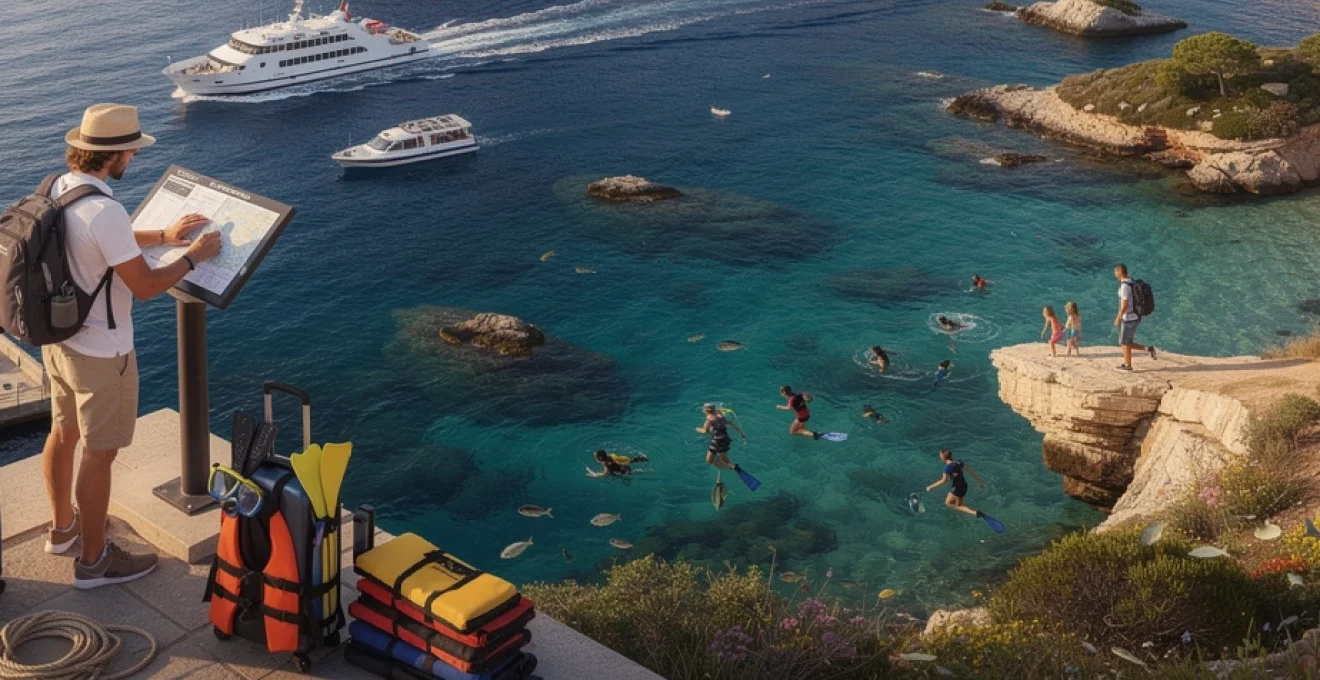
Corsica stands as the Mediterranean’s fourth-largest island, offering an extraordinary collection of smaller islands and coastal formations that create some of Europe’s most captivating maritime destinations. From the dramatic limestone cliffs of Bonifacio to the pristine waters surrounding the Lavezzi Islands, Corsican archipelago presents a diverse array of island experiences that rival any tropical paradise. The combination of crystalline waters, protected marine reserves, and centuries-old maritime heritage makes these island getaways particularly appealing to discerning travellers seeking both natural beauty and cultural authenticity.
The strategic positioning of Corsica between mainland France and Italy has created a unique collection of satellite islands, each offering distinct characteristics and attractions. These maritime gems provide everything from secluded snorkelling sanctuaries to historic lighthouse stations, making them essential destinations for anyone exploring the region’s coastal treasures.
Corsican coastal geography and maritime accessibility
The Corsican coastline extends over 1,000 kilometres, featuring a remarkable diversity of geological formations that have created numerous islands, islets, and coastal access points. This extensive maritime boundary encompasses everything from granite formations in the north to limestone cliffs in the south, each contributing to the island’s reputation as L’Île de Beauté or the Island of Beauty. The coastal geography directly influences accessibility patterns, with certain areas offering natural harbours whilst others present more challenging navigation conditions that require experienced maritime knowledge.
Understanding Corsica’s coastal geography proves essential for planning successful island-hopping adventures. The western coastline features dramatic granite formations and deeper waters, whilst the eastern shores present gentler approaches with extensive sandy beaches and shallow bays. These geographical variations create distinct microclimates and marine ecosystems, influencing everything from departure schedules to the types of marine life you might encounter during island excursions.
Cap corse peninsula: northern maritime gateways and ferry terminals
Cap Corse extends northward like a finger pointing towards the French Riviera, creating a series of natural harbours and maritime access points that serve as gateways to several offshore destinations. The peninsula’s eastern and western coasts offer contrasting experiences, with the eastern side providing more sheltered waters ideal for smaller vessel departures. Bastia, positioned at the base of Cap Corse, serves as the primary ferry terminal for connections to mainland Europe and provides access to charter services targeting the peninsula’s satellite islands.
The Genoese towers that dot Cap Corse’s coastline historically served as navigational aids and defensive positions, and today they provide excellent reference points for maritime navigation. Many island excursions from this region incorporate visits to these historic structures, combining natural beauty with cultural heritage. The consistent Mistral winds in this area create excellent sailing conditions, though they can also present challenges for smaller vessels during peak wind periods.
Golfe de porto UNESCO world heritage coastal features
The Golfe de Porto represents one of Corsica’s most spectacular coastal regions, designated as a UNESCO World Heritage site for its outstanding geological and ecological significance. The dramatic red granite cliffs of the Calanques de Piana create a stunning backdrop for island excursions, whilst the gulf’s protected waters provide ideal conditions for exploring nearby islets and coastal formations. This area serves as the primary departure point for visits to the Scandola Nature Reserve, one of Europe’s most important marine protected areas.
The unique geological formations surrounding Porto create exceptional snorkelling and diving opportunities, with underwater granite formations providing habitat for diverse marine life. The gulf’s configuration offers protection from prevailing winds, making it an reliable departure point throughout most of the sailing season. Professional marine guides frequently recommend Porto as the optimal base for combining scenic coastal cruising with visits to protected island environments.
Bonifacio limestone cliffs and southern island access points
Bonifacio’s position atop dramatic white limestone cliffs creates one of the Mediterranean’s most photographed harbours, serving as the gateway to the Lavezzi Islands and Sardinian waters. The natural harbour below the medieval citadel provides excellent protection for vessels of all sizes, whilst the town’s marina facilities cater to everything from day-trip boats to luxury yachts. The limestone geology of this region has created numerous sea caves and underwater formations that enhance the island-hopping experience.
The proximity
The proximity of Bonifacio to both the Lavezzi archipelago and the northern coast of Sardinia makes it the island’s principal southern hub for Corsica island getaways. Regular boat shuttles depart from the marina to nearby islets, with crossing times often under 30 minutes in good conditions. However, the same winds that carve the famous limestone cliffs can create short, steep waves in the narrow straits, so operators sometimes adjust or cancel departures when the vent d’ouest strengthens. When planning southern island-hopping from Bonifacio, it is wise to build some flexibility into your itinerary and to check marine forecasts a day in advance.
Calvi bay citadel positioning and nautical infrastructure
Calvi Bay, dominated by its imposing Genoese citadel, offers one of Corsica’s most sheltered natural anchorages and is a key starting point for island getaways in the northwest. The bay’s broad arc of sand and relatively shallow gradient provide secure mooring options for small craft, while the modern marina infrastructure caters to visiting yachts and excursion boats. From here, travellers can access nearby headlands, minor islets, and offshore reefs that create excellent diving and snorkelling conditions. The citadel itself functions as a visual waypoint, making coastal navigation more intuitive even for less experienced skippers.
The nautical infrastructure around Calvi has expanded in recent years, with improved fuel docks, charter bases, and regulated mooring fields designed to protect sensitive seagrass meadows. For visitors, this means you can comfortably arrange half-day coastal cruises, sunset sails, or private charters focusing on hidden coves such as those around the Revellata Peninsula. While Calvi does not offer large ferry terminals on the scale of Bastia or Ajaccio, its harbour is exceptionally well suited to leisure boating and small-group excursions. If you are looking for a balanced base that combines historic atmosphere with easy maritime access, Calvi Bay ranks among the best choices on the island.
Premier island destinations within corsican archipelago
Beyond the main island, Corsica’s satellite islets and small archipelagos provide distinct micro-destinations, each with its own character and regulations. Some are fully protected marine reserves where landing is forbidden, while others feature lighthouses, walking paths, or modest beaches accessible on day trips. Knowing which Corsican islands you can actually set foot on, and which are best admired from the water, is crucial when designing a realistic island-hopping itinerary. In all cases, respecting local conservation rules is part of what keeps these Corsica island escapes so special.
Îles lavezzi marine reserve snorkelling sanctuaries
The Îles Lavezzi, lying roughly halfway between Bonifacio and Sardinia, form one of the Mediterranean’s most renowned snorkelling sanctuaries. This granite archipelago, with its smooth boulders and turquoise channels, belongs to the Réserve Naturelle des Bouches de Bonifacio, one of France’s largest marine protected areas. Boat transfers from Bonifacio typically take 30–40 minutes, and services increase significantly between June and September. Once ashore on Lavezzu, the main island, you will find marked paths, basic facilities, and designated swimming zones where marine life flourishes.
Why is snorkelling here so exceptional? The combination of clear water, sheltered coves, and strict fishing restrictions has allowed populations of sea bream, groupers, and barracudas to rebound. In many spots, you can observe dense shoals of fish just metres from the shore, making it ideal even for beginners equipped only with a mask and snorkel. To minimise impact, authorities limit where boats can anchor and have installed mooring buoys to protect Posidonia oceanica seagrass beds. When visiting, consider bringing your own reef-safe sunscreen and lightweight reef shoes, as the granite slabs can be both slippery and sharp in places.
Île de la pietra lighthouse peninsula at île-rousse
On Corsica’s northwestern coast, Île de la Pietra forms a striking reddish promontory just off the seaside town of L’Île-Rousse. Originally a small island, it is now linked to the mainland by a causeway that also serves the local ferry dock. At its highest point, the Pietra lighthouse watches over the Balagne coastline and marks an excellent vantage point for observing maritime traffic and sunsets. Unlike more remote islets, this destination is easily accessible on foot, making it one of the most convenient Corsica island day trips for families and casual walkers.
A paved path and steps lead from the car park near the ferry terminal up to the lighthouse, taking around 20–30 minutes at a relaxed pace. Along the way, you will pass viewpoints overlooking rocky inlets where locals swim and fish, especially in late afternoon. Although snorkelling here is less dramatic than in the Lavezzi or Scandola, the clear waters and flat rocks make it an appealing spot for a quick dip after exploring L’Île-Rousse’s markets and cafés. If you time your visit towards golden hour, you can watch the sun sinking into the sea with panoramic views of the surrounding headlands and offshore rocks.
Scandola nature reserve volcanic island formations
The Scandola Nature Reserve, located between Porto and Calvi, showcases some of the most extraordinary volcanic island formations in the Mediterranean. Accessible only by boat, this UNESCO-listed site combines sheer red cliffs, sea stacks, and isolated islets sculpted by erosion into arches, pinnacles, and caves. Because landing is prohibited on the reserve’s islets, Scandola is best appreciated from the water during a regulated boat tour. Departures are available from Porto, Calvi, and occasionally Galeria, with itineraries lasting from half a day to full-day cruises that may include swimming stops outside the strictest protection zones.
From an ecological perspective, Scandola’s offshore rocks and underwater slopes harbour rare species such as giant limpets and brown groupers, along with extensive seagrass meadows that act as nurseries for countless fish. The reserve’s strict rules—no anchoring in core zones, no fishing, no landing—might feel restrictive at first, but they are the reason this area remains a benchmark for marine conservation in the region. Think of Scandola as an open-air geology and biology museum, where your boat is the viewing platform. Opting for smaller, eco-certified operators often means quieter experiences, better commentary, and lower environmental impact.
Îlot de la parata sanguinaires archipelago sunset viewpoints
On the western side of Corsica near Ajaccio, the Sanguinaires archipelago forms a chain of dark, jagged islets that glow crimson at sunset, giving them their evocative name. While the main islets are generally not open for casual landing, the nearby Îlot de la Parata and its headland provide one of the island’s most iconic coastal viewpoints. A Genoese tower crowns the promontory, and well-maintained trails circle the headland, offering uninterrupted views over the archipelago and the open sea beyond. For many visitors, an evening walk to Pointe de la Parata is a highlight of any stay in the Ajaccio region.
The site is easily reached by road from Ajaccio, with parking areas and a short, gently graded path suitable for most fitness levels. From late spring to early autumn, boat trips also depart from Ajaccio’s port for closer views of the Sanguinaires, often timed to coincide with sunset. If you prefer to stay on land, you can bring a picnic and watch the light shift across the rocks, an experience that feels almost theatrical as colours move from gold to deep red. Given its popularity, arriving an hour before sunset helps you secure quiet spots along the trail and allows time for photography without crowds.
Seasonal navigation patterns and weather considerations
Seasonal weather patterns in Corsica play a decisive role in planning any island-hopping itinerary. The main navigation season runs from late April to October, with peak maritime traffic in July and August when sea temperatures are warmest. During these months, you can expect a dense schedule of boat tours to the Lavezzi Islands, Scandola, and the Sanguinaires, as well as frequent ferry connections around the main ports. However, summer also brings afternoon thermal winds and occasional thunderstorms, particularly in the mountainous interior, that can influence sea conditions along exposed coasts.
Spring (April–June) and early autumn (September–mid October) often provide the best compromise between calm seas, moderate temperatures, and lower visitor numbers. In these shoulder seasons, you will find fewer departures overall, but those that operate typically offer more relaxed experiences. The north of the island is more exposed to the Tramontane and Mistral winds, which can quickly raise wave heights and reduce comfort for smaller vessels. By contrast, the east coast and certain gulfs such as Ajaccio and Porto tend to remain navigable more often, thanks to their sheltered orientations.
What does this mean in practical terms for your Corsica coastal itinerary? If island excursions are a priority, aim to build them into your schedule early in your stay, leaving room for rescheduling in case of adverse forecasts. Checking local maritime bulletins (often posted at harbours and online) the evening before planned outings helps you avoid disappointment. Many experienced travellers treat boat tours somewhat like mountain hikes: conditions can change quickly, and flexibility is key. When winds exceed 25–30 knots in the major straits or around Cap Corse, it is often wiser to enjoy land-based activities and wait for calmer seas.
Corsican island hopping transportation networks
Reaching Corsica’s smaller islands requires a combination of public ferries, scheduled excursion boats, and, in some cases, private charters. Unlike archipelagos such as the Greek islands, there is no dense network of inter-island ferries between Corsican islets themselves. Instead, most trips operate as out-and-back excursions from main coastal towns like Bonifacio, Porto, Calvi, Ajaccio, and L’Île-Rousse. This means that effective island hopping in Corsica relies on choosing strategic bases along the coast rather than trying to sleep on the islets, which are generally uninhabited and protected.
At the larger scale, car ferries link Corsica to mainland France and Italy, arriving at ports such as Bastia, Ajaccio, Île-Rousse, and Porto-Vecchio. From these gateways, you can either drive or use local buses and trains to reach excursion harbours. For example, travellers arriving in Bastia can access Cap Corse and Saint-Florent by road before joining boat trips to the Agriates Desert beaches or circumnavigating Cap Corse’s headlands. Similarly, those based in Ajaccio have easy access to daily shuttles to the Sanguinaires, while visitors in Bonifacio can book frequent crossings to the Lavezzi Marine Reserve.
Boat operators typically offer a range of formats, from large, narrated cruises suitable for all ages to smaller semi-rigid RIBs that cover more distance in less time. Which is best for you? If your priority is comfort and photography, larger boats with shaded decks may suit you better. If you are keen to reach remote coves or combine several sites in a single outing, smaller craft provide greater agility, though they can be bouncier in choppy seas. Private charters, while more expensive, allow you to fully customise routes and timing, which can be invaluable in peak season or if you have specific interests such as underwater photography or ornithology.
Endemic flora conservation areas on corsican islets
Many of Corsica’s offshore islets function as refuges for rare and endemic plant species that struggle to survive on the more developed main island. The isolation of these rocky outcrops, combined with harsh maritime conditions, has led to the evolution of specialised flora adapted to salt spray, intense sunlight, and thin soils. Examples include varieties of rock samphire, sea lavender, and endemic daisies that cling to crevices just above the tide line. On certain islets within the Lavezzi archipelago and around Scandola, botanists have identified plant communities that rank among the most distinctive in the western Mediterranean.
To protect these fragile ecosystems, conservation authorities strictly regulate foot traffic and, in some cases, completely prohibit landing on specific islets. Even on islands where visitors are allowed, designated paths and information panels often remind you to stay on marked trails and avoid trampling low vegetation. It can be tempting to step off the path for a better photo or a secluded picnic spot, but repeated small disturbances quickly degrade thin soils and root systems. Think of these plant communities as living carpets: one footprint may seem insignificant, but thousands over a season can tear the fabric beyond repair.
When planning island getaways in Corsica with a focus on nature, you may wish to join guided excursions that highlight local flora and conservation efforts. Some operators collaborate with park rangers or naturalists who can point out endemic species and explain ongoing monitoring programmes. Simple gestures such as carrying out all waste, avoiding the collection of shells or plants, and using refillable water bottles help reduce pressure on these constrained environments. In the long term, responsible behaviour from visitors is as crucial as formal regulations in ensuring that Corsica’s offshore islets retain their unique botanical heritage.
Archaeological heritage sites on corsican offshore islands
Although Corsica’s main archaeological sites lie inland or along its primary coasts, several offshore islands and promontories bear traces of earlier human presence. On some islets, researchers have discovered remnants of prehistoric occupation, small stone structures, or fragments of ceramics indicating seasonal use by fishermen, shepherds, or traders. The Lavezzi archipelago, for example, contains memorials and remains related to the 19th-century shipwreck of the French frigate Sémillante, as well as older markers of maritime passage. While much of this heritage is subtle and not always visible to casual visitors, it adds a deeper temporal dimension to Corsica’s island landscapes.
Other sites, such as Île de la Pietra near L’Île-Rousse, host more conspicuous historical features, including lighthouses, watchtowers, and old military installations. These structures testify to the strategic importance of Corsican headlands and islets in controlling sea lanes between mainland France, Italy, and Sardinia. Walking the paths around these promontories, you are never far from some form of human imprint, whether in the form of a Genoese tower, a Napoleonic-era fortification, or a modern navigation beacon. Each layer tells part of the story of how island communities have interacted with the sea over centuries.
Because many offshore archaeological remains are both fragile and poorly documented, visitors are encouraged to observe but not disturb any artefacts or structural elements they encounter. Removing objects, entering fenced-off ruins, or climbing on old walls can cause irreversible damage and disrupt ongoing research. If you are particularly interested in Corsica’s maritime archaeology, consider visiting local museums in towns like Bastia, Ajaccio, or Bonifacio before or after your island excursions. These institutions often display finds from coastal and insular sites, helping you interpret what you see in the field and appreciate the depth of history beneath Corsica’s spectacular island scenery.