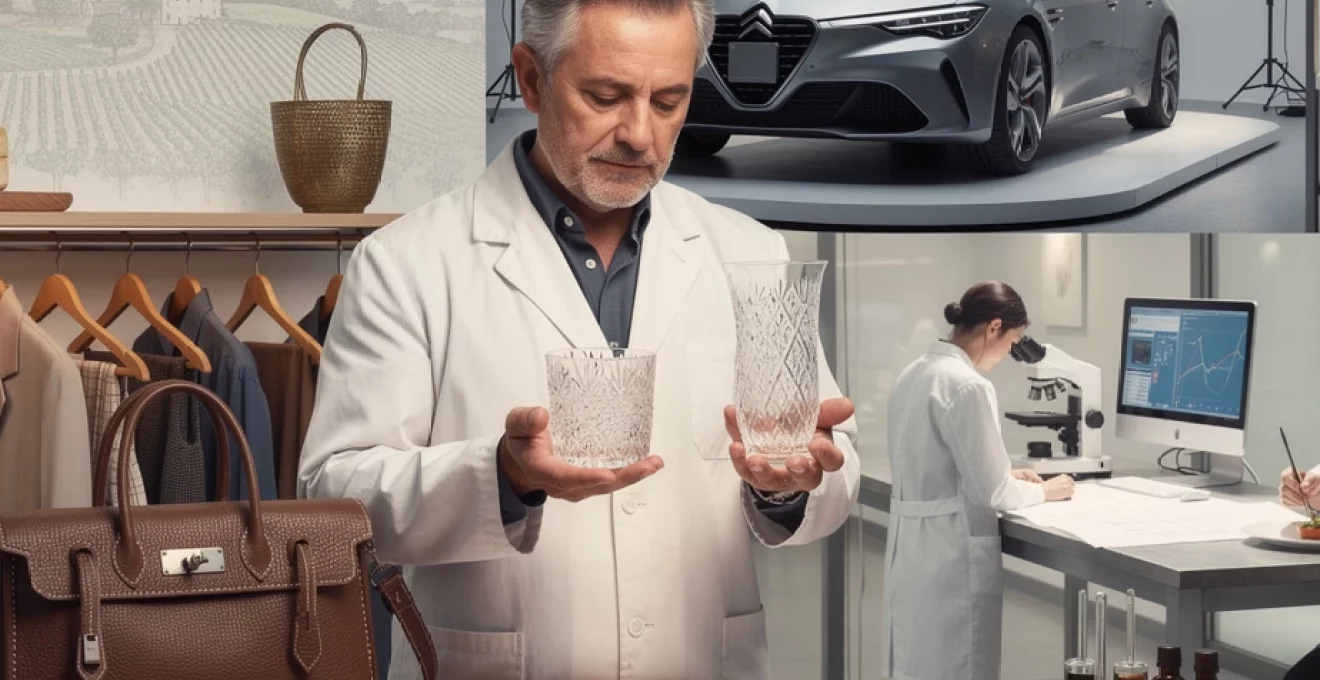
The French approach to consumption represents a fascinating paradox in our modern world of mass production and disposable culture. While global markets increasingly prioritise volume, speed, and cost-effectiveness, France maintains a steadfast commitment to craftsmanship, authenticity, and enduring excellence. This cultural preference extends far beyond mere purchasing decisions—it reflects centuries of intellectual tradition, economic structure, and social values that have shaped one of the world’s most distinctive consumer markets. From the meticulous selection of ingredients in a neighbourhood bistro to the painstaking creation of a luxury handbag, French consumers consistently demonstrate their willingness to pay premium prices for superior products whilst rejecting mediocrity regardless of its affordability.
Cultural heritage and artisanal craftsmanship: france’s Quality-Driven consumer psychology
French consumer behaviour stems from deep-rooted cultural traditions that have evolved over centuries. The nation’s relationship with quality begins in childhood, where families prioritise savoir-vivre (the art of living well) over material accumulation. This philosophy manifests in daily purchasing decisions, where a French consumer might choose to eat vegetarian meals rather than compromise on inferior meat quality, or save for months to acquire a single, exceptional piece rather than settle for multiple mediocre alternatives.
The French dedication to quality extends beyond luxury goods into everyday necessities. A typical French household will invest significantly more in kitchen equipment, choosing professional-grade appliances that last decades over cheaper alternatives requiring frequent replacement.
This mindset creates a unique market dynamic where manufacturers must compete on excellence rather than price points. French consumers have been observed to completely abandon product categories rather than accept declining standards, forcing suppliers to maintain rigorous quality controls or risk losing their customer base entirely.
Compagnonnage tradition: medieval guild systems shaping modern manufacturing standards
The Compagnonnage system, dating back to medieval times, continues to influence modern French manufacturing philosophy. These ancient guilds established comprehensive apprenticeship programmes lasting seven to ten years, during which craftsmen mastered every aspect of their trade before earning recognition as compagnons. Today, this tradition survives in industries ranging from carpentry to patisserie, ensuring that technical expertise passes between generations intact.
Modern French manufacturers frequently cite compagnonnage principles when explaining their production methodologies. The system emphasises perfectionism over productivity, encouraging artisans to view each creation as a reflection of their personal honour and professional legacy. This approach directly contradicts mass production efficiency models, yet French companies consistently achieve higher profit margins through premium pricing strategies supported by exceptional quality reputations.
Terroir philosophy: geographic authenticity in product development across french industries
The concept of terroir, traditionally associated with wine production, has expanded throughout French manufacturing sectors. This philosophy asserts that products derive unique characteristics from their geographic origins, encompassing climate, soil composition, local traditions, and cultural knowledge specific to each region. French consumers actively seek these authentic regional products, creating robust demand for locally-produced goods over standardised national or international alternatives.
Terroir thinking influences industries beyond agriculture and viticulture. French textile manufacturers in specific regions develop distinctive weaving techniques, metalworkers perfect unique alloy compositions, and furniture makers utilise local wood species to create products that cannot be replicated elsewhere. This geographic specificity commands premium pricing whilst building customer loyalty based on authenticity rather than convenience or cost.
Maison heritage: Multi-Generational brand stewardship from hermès to baccarat crystal
French luxury houses exemplify multi-generational brand stewardship, where families maintain control over companies for centuries rather than seeking short-term financial gains through public offerings or acquisitions. Hermès, founded in 1837, remains family-controlled through six generations, enabling consistent quality standards without quarterly profit pressures that might compromise craftsmanship. Similarly, Baccarat Crystal has maintained its reputation for excellence since 1764 through careful stewardship of traditional techniques combined with selective innovation.
This long-term perspective allows French manufacturers to invest in training programmes, research and development, and infrastructure improvements that may not generate immediate returns but strengthen quality capabilities over decades. Family ownership structures protect these investments from external pressure to maximise short-term profitability at quality’s expense.
Savoir-faire preservation: technical expertise transfer in luxury manufacturing sectors
The French concept of savoir-faire goes beyond simple technical skill; it encompasses judgement, aesthetic sensitivity, and an almost moral obligation to do things properly. In many French luxury sectors, this expertise is preserved through long apprenticeships inside ateliers where younger employees work side by side with master artisans. Rather than relying solely on manuals or digital training modules, companies prioritise tacit knowledge transfer—the subtle gestures, pressure, and timing that define exceptional quality.
To protect this savoir-faire, major houses such as Hermès, Chanel, and Louis Vuitton have created internal schools and training academies. These institutions formalise what was once purely oral tradition, while still insisting on slow, hands-on practice rather than rapid output. The economic result is clear: by preserving rare skills that are difficult to copy, French manufacturers justify premium pricing and maintain strong export positions in global luxury markets.
This quality-driven approach also influences hiring and workforce planning. Instead of viewing employees as interchangeable, French luxury firms often map out 10–20 year career paths, ensuring that retirees pass on their knowledge before leaving. In practice, this means a single artisan might train only a few successors during their career—yet each of those successors will carry forward a standard of excellence that defines the brand for decades.
Economic framework: french market structures supporting premium product positioning
France’s preference for quality over quantity is reinforced by structural characteristics of its economy. Public policy, labour regulations, and industrial strategies often prioritise long-term capability over short-term cost cutting. While this framework is sometimes criticised for limiting flexibility, it also creates an environment in which premium products, research-intensive manufacturing, and artisanal industries can flourish.
From legal protections for geographical indications to tax incentives for research and development, the French state actively supports quality-focused production models. Rather than competing solely on price with high-volume manufacturing hubs, France positions itself in segments where craftsmanship, innovation, and reputation command higher margins. This strategic choice influences everything from how companies invest to how consumers perceive value.
Appellation d’origine contrôlée (AOC): legal quality certification systems
The Appellation d’Origine Contrôlée (AOC) system is one of the clearest examples of institutionalised quality preference. Originally created for wine, AOC now covers cheeses, butters, meats, and even lentils. To qualify, producers must respect strict rules governing origin, production methods, and quality standards, often audited by independent bodies. For consumers, the AOC label functions as a reliable shorthand for authenticity and superior quality.
This legal framework has measurable economic impact. According to recent European Commission data, products with geographical indications—including French AOC and AOP labels—achieve price premiums averaging 2–3 times those of comparable non-certified goods. Rather than encouraging low-cost mass production, the system rewards meticulous adherence to tradition, sustainable practices, and traceable supply chains.
For international markets, AOC and related certifications provide a powerful branding tool. When you buy a bottle of Champagne or a piece of Roquefort, you are not just purchasing a product; you are buying into a regulated history, a specific landscape, and a codified method. This transforms ordinary consumption into an experience, reinforcing the idea that one small but exceptional item is preferable to larger quantities of generic alternatives.
Labour market rigidity: employment protection enabling long-term skill development
France’s labour market is often described as “rigid” due to strong employment protection laws and collective bargaining agreements. From a purely cost-focused perspective, this rigidity might appear as a disadvantage. Yet for quality-oriented industries, employment stability can be an asset because it encourages companies to invest heavily in training, and it motivates workers to cultivate deep expertise over time. Why spend five years developing a rare skill if you may be replaced next quarter?
In sectors where savoir-faire and precision are crucial—such as aerospace, luxury goods, and high-end gastronomy—firms rely on employees who accumulate experience across decades. Legal and cultural norms that favour long-term employment relationships reduce staff turnover, helping preserve quality standards. For consumers, this means that the pastry chef preparing their dessert or the technician assembling an aircraft component is likely to be a seasoned professional rather than a short-term hire.
Of course, this system has trade-offs, including higher labour costs and slower restructuring. However, it also supports a particular economic identity. Instead of chasing the lowest production costs, France positions itself as a producer of complex, high-value goods that require stable teams of highly trained workers. For buyers seeking reliability and excellence, this labour model reinforces trust in French products.
Crédit d’impôt recherche: tax incentives for innovation-driven manufacturing
The Crédit d’Impôt Recherche (CIR), or Research Tax Credit, illustrates how public policy reinforces a quality-centric industrial strategy. This generous tax incentive encourages companies of all sizes to invest in research and development, from new aerospace technologies to advanced materials for luxury goods. Instead of relying on cheap labour or aggressive cost cutting, firms are nudged to compete through innovation and technical sophistication.
As a result, France consistently ranks among Europe’s leading countries for R&D expenditure as a share of GDP, particularly in sectors like pharmaceuticals, aerospace, and automotive engineering. These investments translate into better-performing products, more durable components, and refined manufacturing processes. When a French car offers an unusually smooth suspension or a French skincare product boasts clinically proven ingredients, CIR-backed research is often part of the story.
For consumers and business clients alike, continuous innovation reinforces the idea that French products justify their premium. Instead of paying extra for mere branding, buyers can see and feel the difference in performance, comfort, or longevity. In this way, public support for R&D strengthens the economic logic of choosing quality over quantity.
SME ecosystem: regional specialisation in niche premium markets
Beyond famous multinationals, France’s economic fabric is rich in small and medium-sized enterprises (SMEs) that specialise in niche, high-quality segments. Many of these companies are deeply rooted in specific regions—a cutlery maker in Thiers, a glove maker in Millau, or a silk weaver in Lyon. Their business model is not based on scale, but on mastery of a narrow field where they can deliver unmatched excellence.
These SMEs often collaborate with major luxury houses or global industrial groups as specialised suppliers. Their regional identity, combined with generations of technical refinement, enables them to command higher prices and resist direct competition from low-cost producers. Instead of chasing mass-market volumes, they secure stable demand by being indispensable for demanding clients who value reliability and craftsmanship.
For the wider French economy, this ecosystem supports employment in rural and semi-urban areas while reinforcing the national reputation for quality. When you encounter a premium French product, you are often seeing the visible result of invisible networks of small workshops. Each workshop contributes a small but irreplaceable piece to the final object, making the case once again that carefully crafted quality can be more resilient than sheer quantity.
Philosophical foundations: french intellectual frameworks prioritising aesthetic excellence
Behind observable consumer habits lies a deeper intellectual tradition that shapes how the French think about quality. From the Enlightenment to contemporary philosophy, French thinkers have explored questions of taste, beauty, and the “good life” with unusual intensity. These debates have filtered into everyday culture, influencing everything from national education to how a simple café terrace is designed.
French philosophy often emphasises the pursuit of qualité de vie—quality of life—rather than mere accumulation of goods. Thinkers such as Voltaire, Rousseau, and later Bourdieu and Barthes examined how taste and distinction operate in society. While their conclusions differ, a recurring theme is that true refinement involves making conscious, selective choices rather than embracing abundance for its own sake.
This intellectual backdrop helps explain why a modest Parisian flat might contain fewer items than a suburban home elsewhere, yet each object—lamp, chair, coffee cup—has been chosen with care. In this context, consumption becomes almost a philosophical act: you are not simply buying; you are expressing values about beauty, durability, and authenticity. For readers interested in adopting a more French approach, this suggests a shift in mindset: ask not “How much can I get?” but “What is truly worth having?”
Consumer behavioural analysis: quality assessment methodologies in french purchasing decisions
French consumers rarely see themselves as passive recipients of marketing messages. Instead, they often behave like informed critics, applying specific criteria—origin, craftsmanship, ingredient lists, and brand history—before deciding whether a product deserves their money. This evaluative mindset helps explain why impulsive bulk buying is less common, and why “buy less, buy better” remains more than a slogan.
In practice, quality assessment can be surprisingly systematic. For food, shoppers scrutinise labels for AOC or AOP certifications, organic logos, and indications of local sourcing. For clothing, they may check seams, fabric weight, and country of manufacture. For electronics or household goods, reputation and after-sales service carry significant weight. The result is a purchasing process that may be slower but tends to produce higher long-term satisfaction.
Curiously, this behaviour extends even to lower-income consumers. As the anecdotes about refusing poor-quality meat illustrate, many French households would rather adjust their consumption patterns—eating less meat, postponing a purchase—than accept a decline in quality. From a behavioural economics perspective, we might say that perceived quality and authenticity have more “utility” than quantity or frequency of consumption.
Industry case studies: quality-over-quantity implementation across french sectors
The preference for quality over quantity is not an abstract ideal; it is operationalised daily in French industries from fashion to automotive. By examining a few emblematic sectors, we can see how philosophy, policy, and consumer expectations converge into concrete production methods. Each case study offers lessons that you can apply whether you run a business, manage a brand, or simply want to make more discerning choices as a consumer.
Haute couture: chanel and dior’s atelier production methodologies
In haute couture, French quality ideals reach their most visible expression. Houses like Chanel and Dior maintain ateliers where garments are made almost entirely by hand, often requiring hundreds of hours of work by specialised artisans. Each dress or suit is created for a specific client, fitted multiple times, and constructed with an attention to detail that industrial production could never match. The objective is not to produce many pieces, but to achieve near-perfection in a few.
These ateliers preserve rare techniques such as intricate embroidery, feather work, and pleating, often in collaboration with independent métiers d’art workshops. Rather than outsourcing to reduce costs, the brands invest in maintaining these partners, sometimes even acquiring them to ensure continuity. When you see a couture gown on a runway, you are witnessing the combined expertise of dozens of specialists, each contributing a micro-layer of quality.
From a business standpoint, haute couture is not primarily about volume or direct profit. Instead, it acts as an R&D laboratory and a prestige engine that elevates the entire brand. The aura of uncompromising quality surrounding a couture piece influences how consumers perceive everything from fragrances to small leather goods. In this sense, investing heavily in extreme quality at the top of the range enables sustainable sales across more accessible product lines.
Culinary excellence: michelin star restaurant supply chain management
French gastronomy offers another illuminating example of quality-over-quantity logic in action. Michelin-starred restaurants, whether in Paris or in small provincial towns, build their reputation on the absolute consistency of what arrives on the plate. To achieve this, chefs cultivate long-term relationships with farmers, fishermen, and artisans who can deliver exceptional ingredients. Supply chains are deliberately short, traceable, and seasonal.
Rather than designing menus around what is cheapest or easiest to store, top French chefs start with the best available produce and then craft dishes that showcase its character. Many limit the number of daily covers to maintain standards, even if that caps revenue. You will rarely see “all you can eat” offers in such establishments; portion sizes remain moderate, but flavours and textures are intense and precise.
For everyday consumers, this restaurant culture influences expectations when shopping or cooking at home. If you know that a simple roast chicken can taste extraordinary when the bird is well-raised and properly cooked, you are less likely to accept bland, mass-produced alternatives. Even if you never dine in a three-star restaurant, its standards ripple through food media, cooking classes, and local markets, reinforcing the national preference for quality ingredients and careful preparation.
Automotive engineering: citroën’s innovative design philosophy over mass production
The French automotive industry has long pursued a distinct path that privileges innovation and driving experience over sheer production volume. Citroën, in particular, built its identity on daring engineering choices: hydropneumatic suspension for exceptional comfort, aerodynamic body shapes, and unconventional interior layouts. While these features sometimes increased complexity and cost, they also created vehicles with a unique character, appealing to drivers who value originality and ride quality.
This philosophy contrasts with manufacturers who standardise components across multiple models to maximise economies of scale. Citroën repeatedly took risks—such as the DS in the 1950s or the CX and XM later—that prioritised road handling, comfort, and design innovation over easy mass adoption. Even today, the brand continues to experiment with suspension setups, interior ergonomics, and electric mobility solutions aimed at enhancing everyday driving pleasure.
For international consumers, French cars symbolise an alternative to purely functional transport: they offer a more “civilised” driving experience, where comfort and aesthetics matter as much as acceleration figures. While not every experiment succeeded commercially, the consistent willingness to innovate rather than imitate demonstrates how a quality-focused mindset can differentiate a brand even in a mature, competitive industry.
Perfumery artisanship: grasse’s natural ingredient sourcing and blending techniques
The town of Grasse, in Provence, represents the global epicentre of traditional perfumery, and its methods provide a textbook case of quality-driven production. For centuries, growers around Grasse have cultivated jasmine, roses, tuberose, and other delicate flowers specifically for fragrance houses. Harvesting often happens at dawn when aromatic compounds are at their peak, and extraction techniques are designed to capture nuances that synthetic substitutes cannot fully replicate.
Master perfumers—known as nez, or “noses”—train for many years to recognise and balance thousands of scent components. Crafting a perfume is akin to composing music: each note must be precisely calibrated so that the overall harmony evolves pleasingly over time. This artisanal process stands in sharp contrast to mass-market fragrances that rely heavily on cheaper synthetic bases and rapid trend cycles.
As global consumers become more interested in authenticity and natural ingredients, Grasse’s commitment to meticulous sourcing and blending has become a powerful competitive advantage. Niche perfume brands proudly highlight their use of Grasse essences, knowing that the mention alone signals elevated quality. For buyers, a small bottle of such fragrance often replaces multiple cheaper perfumes, once again reinforcing the French tendency to invest in one exceptional object rather than many average ones.
Economic impact analysis: quality-focused manufacturing’s contribution to french GDP and export markets
Choosing quality over quantity is not merely a cultural preference; it is a strategic economic orientation with tangible macroeconomic effects. France is consistently among the world’s top exporters of luxury goods, wines and spirits, aerospace equipment, and high-end cosmetics. In each of these sectors, value creation comes less from volume and more from the premium margins associated with trusted quality and strong branding.
According to recent industry estimates, luxury goods alone account for tens of billions of euros in annual exports, with French brands occupying leading positions in fashion, leather goods, jewellery, and beauty. The wine and spirits sector, dominated by Champagne, Bordeaux, Burgundy, and Cognac, also generates outsized revenue relative to volume, thanks to strict quality standards and geographical indications. These industries contribute significantly to France’s trade surplus in goods where quality is the key differentiator.
Furthermore, quality-focused manufacturing supports a broad ecosystem of skilled jobs, from artisans and engineers to designers and hospitality professionals. While France may produce fewer units than some competitors, the economic value per unit is often much higher. For policymakers and business leaders elsewhere, the French case suggests an important question: in an era of resource constraints and environmental concerns, might an economy built on durable, high-quality products be more sustainable than one chasing ever-greater volumes?