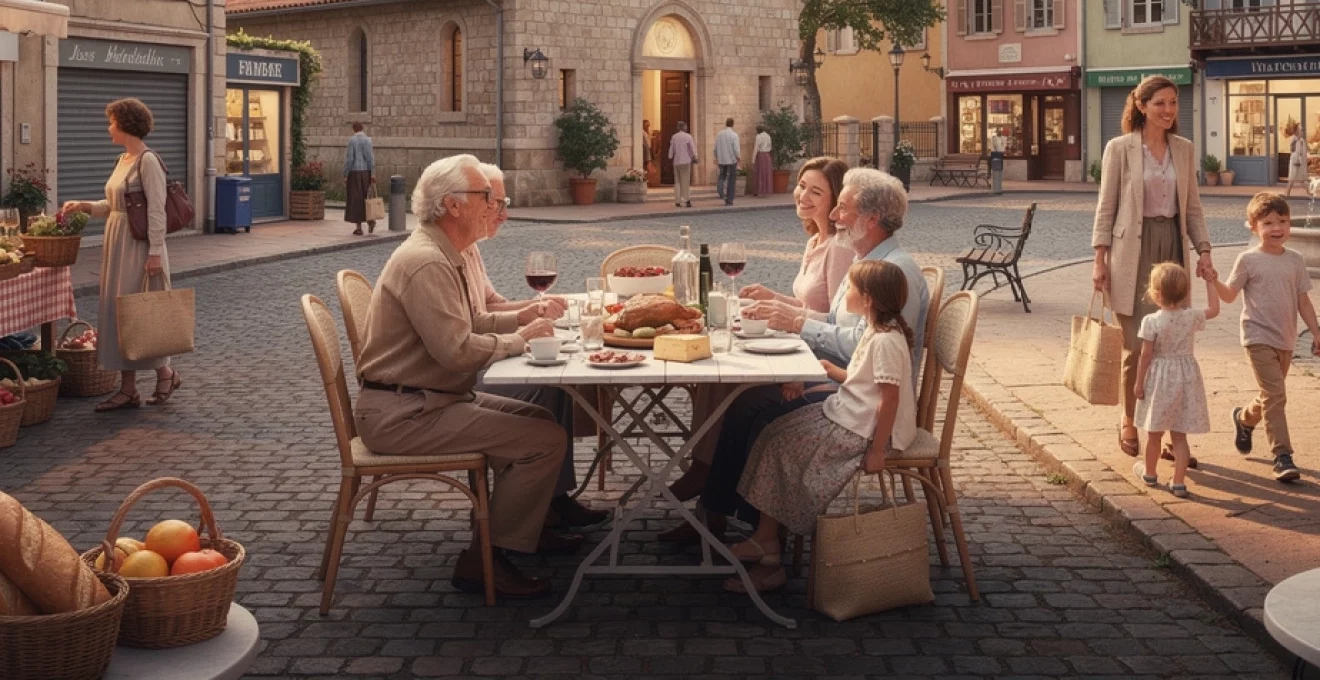
In a world where 24/7 commerce has become the norm, France stands as a remarkable exception, steadfastly protecting the sanctity of Sunday as a day of rest. This commitment runs deeper than mere tradition—it’s embedded in French law, culture, and collective consciousness. The concept of dimanche (Sunday) in France represents more than just the end of the week; it embodies a philosophical approach to life that prioritises human well-being over commercial imperatives. From the bustling streets of Paris to the quiet villages of Provence, Sundays transform France into a nation that deliberately slows down, creating space for family, reflection, and the simple pleasure of being rather than doing.
French labour code article L3132-3: sunday trading restrictions and legislative framework
The French Labour Code, particularly Article L3132-3, forms the backbone of France’s Sunday trading restrictions, establishing a comprehensive legal framework that has evolved significantly since the landmark 1906 legislation. This article stipulates that repos dominical (Sunday rest) remains the fundamental principle governing French commerce, with specific provisions that protect workers’ rights to weekly rest periods whilst acknowledging the economic realities of modern retail.
Code du travail sunday work prohibitions in retail sectors
The Code du Travail explicitly prohibits Sunday work across most retail sectors, with violations resulting in substantial penalties that can reach €135,000 per day for non-compliant businesses. These restrictions apply particularly stringently to large retail establishments, home improvement stores, and general merchandise outlets. The legislation recognises that travail dominical (Sunday work) fundamentally alters the social fabric of communities, disrupting family time and traditional patterns of rest.
Retail workers benefit from enhanced protections under these provisions, including mandatory double-time pay rates for any authorised Sunday work and guaranteed compensatory rest periods. The legislation ensures that no employee can be compelled to work on Sundays without explicit consent, creating a robust framework that prioritises worker autonomy over commercial pressures.
Maire municipal authority: local sunday opening exemptions
French mayors possess significant discretionary powers under the Labour Code to grant limited Sunday opening exemptions for businesses within their jurisdictions. This local authority system, known as dérogation municipale, allows municipal leaders to balance community needs with commercial interests. Mayors typically consider factors such as tourism impact, local employment levels, and community sentiment when evaluating exemption requests.
The municipal exemption process requires extensive consultation with local trade unions, business associations, and resident groups. This democratic approach ensures that Sunday trading decisions reflect genuine community needs rather than purely commercial considerations, maintaining the delicate balance between economic development and quality of life that characterises French municipal governance.
Tourist zone classifications: zones touristiques internationales impact
France’s designation of zones touristiques internationales represents a pragmatic adaptation of Sunday trading restrictions to accommodate international visitors’ expectations. These specially designated areas, primarily located in Paris, Nice, Cannes, and other major tourist destinations, permit extended Sunday shopping hours for businesses serving international clientele.
The tourist zone classification system recognises that France’s tourism industry contributes approximately €60 billion annually to the national economy, making strategic concessions necessary to remain competitive with destinations like London or Barcelona. However, even within these zones, strict labour protections remain in place, ensuring that tourism revenue doesn’t come at the expense of worker welfare or community cohesion.
Collective bargaining agreements: convention collective sunday provisions
French conventions collectives (collective bargaining agreements) play a crucial role in shaping Sunday work arrangements across different industries. These sector-specific agreements often provide more generous protections than the basic Labour Code requirements, reflecting the strong tradition of worker representation in French industrial relations. For instance, retail workers covered by comprehensive collective agreements typically receive additional compensation, flexible scheduling options, and enhanced rest period guarantees.
The collective bargaining process ensures that Sunday work arrangements reflect genuine negotiation between employers and employee representatives rather than unilateral management decisions. This approach has proven particularly effective in sectors like hospitality and tourism, where Sunday operations are economically necessary but worker protection remains paramount.
Catholic church influence on french
Catholic church influence on french sunday observance traditions
Although contemporary France is often described as a secular republic, the roots of Sunday observance lie firmly in its Catholic past. For centuries, the rhythm of French life was organised around the liturgical calendar, with le dimanche marking both a religious obligation and a social anchor. Even as formal religious practice has declined, many of the patterns established by the Catholic Church – from shared meals after Mass to the slower tempo of public life – continue to shape why Sundays in France are still experienced as sacred time.
Concordat of 1801: State-Church relations shaping weekly rest
The Concordat of 1801, negotiated between Napoleon Bonaparte and Pope Pius VII, was a decisive moment in redefining the place of the Catholic Church in French society. While it reasserted state control over Church structures, it also formally recognised Catholicism as “the religion of the majority of French citizens” and preserved Sunday as the principal day of worship. In practice, this meant that the state acknowledged Sunday as a special day in the weekly cycle, which in turn influenced administrative schedules, school timetables, and early labour regulations.
Even after the 1905 law on the separation of Church and State, this historical framework continued to exert influence. The idea that there should be a collective day of rest each week – coinciding with the Christian Sunday – had already become embedded in both legal thought and popular expectations. When the 1906 law on weekly rest for employees was adopted, it did not emerge in a vacuum; it drew on more than a millennium of Christian practice that treated dies Dominica as a time set apart from ordinary economic life.
Papal encyclicals dies domini: vatican sunday doctrine in france
In the late 20th century, the Vatican reaffirmed the theological and social importance of Sunday through documents such as Pope John Paul II’s 1998 apostolic letter Dies Domini. While France is a secular republic, these teachings nonetheless resonated among practising Catholics and indirectly influenced debates about Sunday work and Sunday trading. Dies Domini described Sunday as a day of “joy, rest and solidarity,” language that closely mirrors contemporary French arguments in favour of protecting repos dominical from commercial pressures.
In France, bishops’ conferences and Catholic intellectuals drew on this encyclical to argue that Sunday rest is not simply about religious observance but about human dignity and social cohesion. When unions and civil-society groups defended restrictions on Sunday commerce, they often found themselves, perhaps unexpectedly, aligned with Church rhetoric about resisting a purely economic view of time. This convergence illustrates how Catholic doctrine continues to inform, even indirectly, the way many French people understand the value of a slower, more intentional Sunday.
Parish mass attendance patterns: demographic sunday religious participation
Today, regular church attendance in France remains relatively low compared with the country’s Catholic heritage. Surveys often estimate that around 5–10% of French Catholics attend Sunday Mass weekly, with higher participation in rural areas and among older generations. Yet on major feast days such as Christmas, Easter, and certain Marian celebrations, parish churches still fill with families who may not attend regularly but retain a cultural connection to Sunday worship.
These demographic patterns create a layered experience of Sunday in France. For practising Catholics, the day still revolves around the parish: morning Mass, followed by coffee with fellow parishioners and an extended lunch at home. For many others, the religious dimension is more symbolic than active, but it nonetheless underpins the idea that Sunday is not just “a free day,” but a moment for reflection, relationships, and stepping back from the demands of work. Even those who never enter a church often benefit from a social timetable originally designed around Sunday liturgy.
Feast day calendar integration: saints’ days and sunday celebrations
The Catholic liturgical calendar, rich with saints’ days and solemnities, has long shaped French perceptions of time and festivity. While many of these feasts fall on weekdays, they often culminate in or spill over into Sunday celebrations: processions, local fairs, special meals, and village gatherings. In regions with strong devotional traditions – Brittany, the Basque Country, parts of Provence – pardons, pilgrimages, and fêtes patronales still structure the communal life of Sundays throughout the year.
Over time, some religious feast days have become largely cultural, yet they continue to reinforce the idea of Sunday as a privileged moment for community life. National holidays like Assumption (15 August) or All Saints’ Day (1 November) may not always fall on a Sunday, but when they do, they intensify the sense of shared pause. In this way, the Catholic calendar and the civil calendar interact, sustaining a pattern in which Sunday remains the natural backdrop for celebrating not only religious events but also local identity and family traditions.
Economic sectoral analysis: sunday commerce restrictions across industries
Sunday restrictions in France do not apply uniformly across the entire economy. Instead, they are carefully calibrated according to sector, business size, and local context, creating a complex mosaic of rules. Understanding how different industries navigate Sunday trading rules helps explain why Sundays in France can feel both peaceful and quietly active: certain services operate out of necessity, while others remain deliberately dormant to protect collective rest.
Core public services – healthcare, public transport, emergency services, hospitality, and certain cultural institutions – have long been exempt from the strictest Sunday prohibitions. These sectors are considered essential to public welfare or to France’s role as a major tourist destination. By contrast, large-scale retail, DIY superstores, and general merchandise outlets face far tighter limitations. The underlying logic is straightforward: sectors that are indispensable to daily life or cultural vibrancy may operate on Sundays, while those driven primarily by consumer convenience are expected to respect the weekly pause.
Over the past decade, reforms such as the “Macron law” of 2015 have introduced more flexibility, especially in major urban centres and tourist zones. Large department stores, fashion boutiques, and luxury brands in designated areas can now open more Sundays per year, provided employee rights are strictly protected and Sunday work remains voluntary and better paid. This has created a two-speed system: in central Paris, for example, Sunday shopping in certain districts has become part of the tourist experience, while smaller towns and suburban retail parks still largely shut down, preserving a more traditional Sunday atmosphere.
Cultural anthropology of french sunday rituals: family and social practices
Beyond law and economics, the “sacred” character of Sundays in France is most visible in everyday rituals. Anthropologists often describe Sunday as a key moment for reaffirming social bonds: families gather around the table, neighbours meet at the market, and friends stroll together through public parks or along riverbanks. These seemingly ordinary activities form a weekly ceremony that reinforces identity, belonging, and a shared sense of time that is not subordinated to productivity.
If we think of the working week as a straight line, Sunday in France functions more like a comma than a full stop: a deliberate pause that allows people to breathe, recalibrate, and reconnect before continuing. This is why many French people resist the idea of turning Sunday into a day “like any other.” To remove that pause would not only change shopping habits; it would alter the rhythm of family life, social interaction, and even personal introspection that makes the French Sunday feel distinctive.
Déjeuner dominical: traditional sunday lunch social structure
At the heart of the French Sunday lies the déjeuner dominical, the traditional Sunday lunch. More than just a meal, it is a social institution that can last several hours and often involves multiple generations. Grandparents, parents, children, and sometimes cousins or close friends gather around a table for a multi-course meal that might include an apéritif, starter, main course, cheese, dessert, coffee, and perhaps a digestif. Time seems to stretch: there is no rush to clear the plates or return to errands.
This Sunday lunch ritual performs an important social function. In a society where work and school schedules can fragment family life during the week, the déjeuner dominical offers a predictable space for transmission of stories, values, and memories. Children hear family anecdotes, recipes are passed down, and conversations can drift from politics to holidays to everyday worries. In anthropological terms, the table becomes a weekly “stage” where family identity is enacted and renewed. Is it any wonder that many French people see Sunday work as a direct threat to this cherished ritual?
Marché dominical: sunday market culture in french towns
While most shops remain closed, Sunday mornings in many French towns and villages are anything but empty. The marché dominical – the Sunday market – is a vibrant focal point where local producers, artisans, and residents converge. Stalls laden with seasonal fruit and vegetables, cheeses, charcuterie, flowers, and freshly baked goods line village squares and city streets, turning Sunday into a sensory celebration of local life.
These markets serve a dual role. Economically, they support small-scale producers and foster short supply chains that keep regional food cultures alive. Socially, they provide a weekly meeting place where neighbours chat, exchange news, and enjoy a coffee or glass of wine at a nearby café. For many, a stroll through the Sunday market replaces a trip to a shopping mall: it satisfies practical needs while reinforcing a slower, more convivial relationship with consumption and community.
Promenade familiale: sunday walking traditions and public spaces
Another hallmark of Sundays in France is the promenade familiale, the family walk. After lunch, families and couples often take to parks, riverbanks, forests, or seaside promenades to stroll at an unhurried pace. Children ride bicycles or scooters, grandparents sit on benches, and dogs patrol the paths. The purpose is not exercise in the athletic sense, but gentle movement, conversation, and observation – what the French sometimes call flânerie, the art of wandering.
From an anthropological perspective, this tradition highlights the importance of public space in French Sunday life. Parks, places (squares), and pedestrian streets become outdoor living rooms where people see and are seen, reinforcing a sense of shared urban or village identity. In contrast to weekends dominated by private consumption in closed commercial spaces, the French Sunday invites people outdoors, into spaces that are open, free, and collectively enjoyed. This is one reason why debates about Sunday opening are not just about economics; they are also about what kinds of spaces and experiences we want to prioritise.
Regional variations: alsace-lorraine sunday observance compared to provence
Although national legislation provides a common framework, Sunday observance in France varies significantly by region. Historical, religious, and cultural differences create distinct Sunday “atmospheres” that you can feel as you travel from one part of the country to another. Two illustrative examples are Alsace-Lorraine in the northeast and Provence in the south, each with its own history and style of living le dimanche.
Alsace-Moselle, in particular, still applies parts of the local law inherited from the period when the region was part of the German Empire (1871–1918). This includes stricter rules on Sunday work and the public exercise of certain professions, especially in small towns and rural areas. As a result, Sundays in Alsace-Lorraine can feel especially quiet and observant, with a strong emphasis on churchgoing, family meals, and village life. Bakeries and a handful of essential shops might open in the morning, but the afternoon is typically reserved for rest and community activities.
Provence, by contrast, offers a more Mediterranean interpretation of the sacred Sunday. Here, the rhythm is shaped by the climate, outdoor culture, and a strong emphasis on conviviality. Sunday mornings may begin with a visit to the market, followed by pastis on a terrace, a lengthy lunch often featuring local specialities, and then a game of pétanque under the plane trees. In coastal areas, beaches and seaside promenades fill with families enjoying the sun. While legal rules remain in force, the overall atmosphere is more festive than austere, illustrating how the same principle of Sunday rest can take on very different flavours across the country.
These regional contrasts underline an important point: when we talk about Sundays in France being “sacred,” we are not describing a single, uniform model. Rather, we are looking at a shared legal and cultural framework that is interpreted and lived in diverse ways, from the quiet villages of Alsace to the lively squares of Marseille or Nice. Yet in all these places, Sunday remains recognisably distinct from the rest of the week – a day when commercial logic steps back and other values come to the fore.
Contemporary challenges: e-commerce impact on sunday sacred time protection
In recent years, the rise of e-commerce has introduced a new and subtle challenge to the French Sunday. Even as physical shops close their doors, online platforms remain open around the clock, inviting consumers to order groceries, clothes, electronics, and almost anything else with a few clicks. On the surface, this seems compatible with Sunday rest: workers in physical stores are protected, while consumers enjoy flexibility. But does 24/7 online shopping gradually erode the collective sense of a shared pause?
One key issue is the often-invisible labour behind e-commerce. Warehouse staff, delivery drivers, and customer service teams may find themselves working irregular hours, including Sundays, to satisfy expectations of near-instant delivery. While French labour law still limits Sunday work in logistics and transport, the pressure to compete with international platforms can be intense. Policymakers, unions, and employers continue to debate how to balance innovation and competitiveness with the longstanding French commitment to Sunday as a protected time for rest and family life.
For individuals and families, the digitalisation of consumption also raises practical questions. If you can browse, buy, and book everything from your sofa on a Sunday, how do you preserve the psychological boundary that makes the day feel different? Some French households address this by setting personal rules: no work emails on Sunday, limited screen time, or a conscious choice to delay non-essential online purchases until Monday. In a sense, the challenge has shifted from purely legal regulation to a more intimate question of digital self-discipline.
Looking ahead, the impact of e-commerce on Sunday sacred time in France will likely depend on collective choices as much as on formal rules. Will we treat Sunday as just another opportunity to consume, or as a chance to disconnect, slow down, and inhabit time differently? France’s experience suggests that protecting a weekly day of rest requires more than statutes; it requires a shared cultural will to say, at least once a week, that life is about more than efficiency. In that ongoing negotiation between screens and silence, convenience and connection, the French Sunday remains a powerful reminder that how we organise our time ultimately shapes how we live.