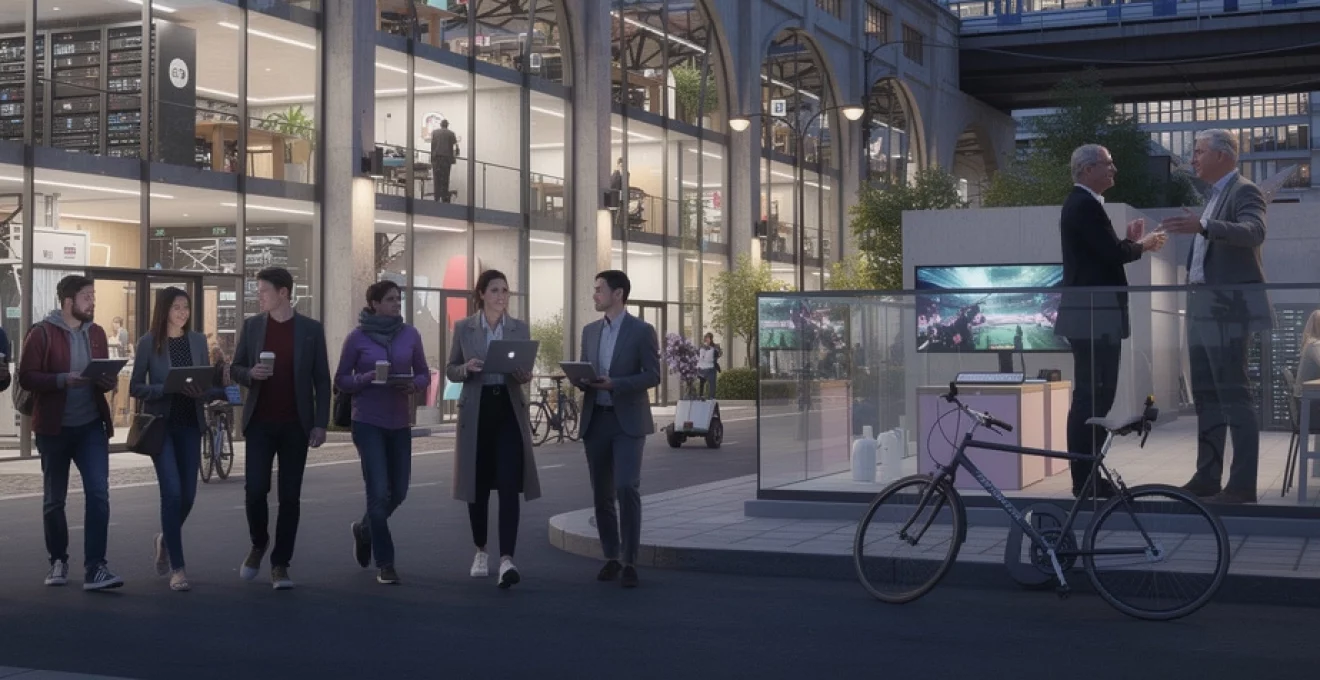
Station F represents more than just another startup incubator; it embodies France’s bold transformation into a global technology powerhouse. Located in the heart of Paris, this ambitious project has redefined how Europe approaches entrepreneurial infrastructure, positioning France as a serious competitor to Silicon Valley and London’s tech corridors. Since its inception, Station F has attracted international attention from tech luminaries, government officials, and investors worldwide, demonstrating that French innovation can command global respect. The campus serves as a testament to France’s commitment to fostering technological advancement and economic diversification in the digital age.
Station f’s strategic location and infrastructure development in paris
Halle freyssinet transformation from railway heritage to tech campus
The transformation of Halle Freyssinet from a 1920s railway depot into the world’s largest startup campus represents a masterful blend of historical preservation and modern innovation. Designed by renowned engineer Eugène Freyssinet, this architectural gem has been meticulously restored to accommodate contemporary technological needs whilst maintaining its industrial heritage character. The renovation project required extensive engineering expertise to integrate modern electrical systems, high-speed internet infrastructure, and climate control throughout the vast space without compromising the building’s structural integrity.
This adaptive reuse project demonstrates how urban regeneration can breathe new life into obsolete industrial infrastructure. The decision to preserve and repurpose this historic building rather than demolish it reflects France’s commitment to sustainable development and cultural heritage conservation. The resulting space offers entrepreneurs an inspiring environment that connects them to Paris’s industrial legacy whilst providing cutting-edge facilities for 21st-century business development.
13th arrondissement technology corridor and metro connectivity
The 13th arrondissement has emerged as Paris’s primary technology corridor, with Station F serving as its flagship anchor point. This strategic location benefits from excellent transport connectivity, including multiple metro lines and bus routes that connect entrepreneurs to central Paris, major universities, and international airports. The area’s proximity to the Seine River and major educational institutions creates a vibrant ecosystem that attracts both international talent and domestic innovators.
The district’s ongoing urban development includes housing projects specifically designed for young professionals and entrepreneurs, addressing one of Paris’s most pressing challenges: affordable accommodation near technology hubs. Local authorities have invested heavily in improving digital infrastructure throughout the arrondissement, ensuring that startups have access to high-speed connectivity and reliable telecommunications services essential for modern business operations.
34,000 square metre capacity and co-working space architecture
Station F’s impressive 34,000 square metre footprint provides workspace for over 1,000 startups simultaneously, creating an environment that rivals the world’s largest corporate headquarters. The architectural design emphasises open collaboration spaces, flexible meeting areas, and specialised zones for different types of entrepreneurial activities. This thoughtful space planning allows for organic networking opportunities whilst providing companies with the privacy and focus areas necessary for concentrated work.
The campus architecture incorporates modern ergonomic principles and environmental sustainability features, including energy-efficient lighting systems, air quality monitoring, and noise management solutions. These design elements create a productive working environment that can accommodate the intense demands of startup culture. The space allocation includes dedicated areas for product development, testing laboratories, presentation theatres, and social gathering spaces that foster community building among entrepreneurs.
Digital infrastructure and High-Speed connectivity systems
Station F’s digital infrastructure represents state-of-the-art connectivity solutions designed to support high-growth technology companies. The campus features redundant fibre-optic connections, enterprise-grade Wi-Fi networks, and dedicated server facilities that ensure reliable internet access for all resident companies. This robust technical foundation enables startups to focus on product development without worrying about connectivity limitations or technical infrastructure constraints.
The digital systems include advanced security protocols, data backup solutions, and scalable bandwidth allocation that can adapt to growing companies’ evolving needs. Additionally, the campus provides access to cloud computing resources, development tools, and technical support services that reduce operational costs for early-stage companies. This comprehensive digital ecosystem demonstrates France’s commitment to providing world-class technological infrastructure that rivals established tech hubs globally.
Xavier niel’s vision and french tech ecosystem leadership
Iliad founder’s strategic investment in european startup infrastructure
His decision to invest over €250 million of private capital into redeveloping Halle Freyssinet into Station F signalled a profound shift in European startup infrastructure. Rather than creating yet another small incubator, Xavier Niel chose to build an entire startup city under one roof, concentrating resources, mentors, and investors in a single, accessible location. This large-scale, privately funded approach contrasts with many government-driven initiatives across Europe and underlines Niel’s belief that French tech ambition must be backed by bold, risk-tolerant capital. By assuming the financial risk himself, he was able to move quickly, experiment with new models, and design an ecosystem optimised for founders rather than bureaucracy.
Niel’s background as the founder of telecoms group Iliad and his role in seed fund Kima Ventures strongly influenced Station F’s design. Having seen thousands of early-stage pitches, he understood that access to high-quality infrastructure, networks, and early customers can be as critical as seed financing. Station F therefore functions as a physical extension of the French and European venture ecosystem, giving founders immediate proximity to investors, corporate partners, and international mentors. In doing so, it reinforces France’s position as a European leader in startup campus infrastructure and strengthens Paris’s credibility as a long-term competitor to London Tech City and Berlin’s Factory and Silicon Allee.
Partnership with roxanne varza and director leadership model
To bring this ambitious vision to life, Niel appointed Roxanne Varza as director of Station F, a strategic move that blended entrepreneurial experience with international perspective. Varza, who previously led Microsoft Ventures Paris and worked closely with the French tech ecosystem, brought deep knowledge of both corporate innovation and grassroots startup communities. Her leadership model is deliberately hands-on yet community-driven, favouring transparency, open communication, and direct feedback from founders. Rather than simply managing real estate, she acts as a curator of programmes, partners, and policies that support long-term startup success.
Under Varza’s stewardship, Station F has adopted a structure closer to a university campus than a traditional coworking space. Startups apply to specific programmes with clear entry criteria, support services, and graduation timelines, echoing the way students apply to master’s degrees. This approach avoids the “tourist coworking” trap and ensures that residents are highly motivated founders committed to growth. By combining Niel’s financial backing with Varza’s operational leadership and ecosystem expertise, Station F has become a flagship of French tech governance, showing how strong private-sector leadership can complement, rather than compete with, public initiatives like French Tech.
Integration with école 42 coding school and talent pipeline
One of Station F’s most significant strategic advantages is its alignment with École 42, Niel’s tuition-free coding school that trains thousands of developers each year. While the two institutions are geographically separate, they are conceptually intertwined: École 42 produces highly skilled technical talent, and Station F offers a natural landing zone for alumni who want to launch or join startups. This creates a powerful talent pipeline for French startups, reducing one of the biggest bottlenecks facing fast-growing technology companies: access to developers and technical co-founders.
For founders at Station F, this connection translates into a practical advantage. Startups can tap into a pool of job-ready developers, often already familiar with agile methods, open-source tools, and collaborative problem-solving. Conversely, students from École 42 gain early exposure to entrepreneurial culture, real-world product challenges, and potential co-founders or employers based in Paris. In an ecosystem where talent competition is fierce and salaries in Silicon Valley or London can be hard to match, this tight integration between education and entrepreneurship is a major asset for France’s long-term digital competitiveness.
NUMA and TheFamily accelerator programme consolidation
Before Station F opened its doors, Paris’s startup landscape was dispersed across multiple accelerators such as NUMA and TheFamily, each with its own community, events, and mentoring networks. While this fragmentation reflected a certain dynamism, it also made it harder for international investors and partners to gain a unified view of the French tech scene. Station F did not seek to replace these players outright; instead, it offered a neutral, large-scale platform where different programmes could coexist, collaborate, or evolve under one roof. This consolidation helped harmonise standards and brought more visibility to the most promising founders.
By hosting or collaborating with existing accelerator programmes, Station F contributed to a gradual rationalisation of the Paris ecosystem. Rather than duplicating efforts around mentorship, events, or investor access, programmes are encouraged to focus on their sectoral strengths—whether fintech, gaming, deep tech, or impact entrepreneurship—and leverage Station F’s shared services. For you as a founder, this means that the French startup acceleration ecosystem feels more coherent and navigable: instead of hopping from one venue to another, you can access multiple networks and resources in a single campus, while still benefiting from the diversity of philosophies that made NUMA, TheFamily and others influential in the first place.
Startup incubation programmes and acceleration methodologies
Founders programme selection criteria and equity models
At the core of Station F’s offering lies its Founders Programme, a selective incubation track designed for early-stage startups with strong growth potential. Unlike open coworking models, access is granted through a competitive application process that assesses the quality of the founding team, the scalability of the business model, and the degree of technological innovation. Applicants are evaluated on traction indicators such as user growth, pilot customers, or intellectual property, but also on the clarity of their vision and their ability to execute in a fast-paced environment. This ensures that residents share a similar level of ambition, which is crucial for maintaining a high-energy, results-driven culture.
One distinctive feature of Station F is its flexible approach to equity. While some partner programmes apply their own equity models—typically taking a small stake in exchange for mentorship, network access, or initial funding—the core infrastructure of Station F is not built on extracting equity from every startup on campus. This approach is closer to a startup campus-as-a-service model, where founders pay affordable fees for world-class infrastructure and programme access, without systematically diluting ownership. For many early-stage teams, especially those bootstrapping their way to product-market fit, this makes Station F an attractive alternative to traditional accelerators that require equity from day one.
Facebook startup garage and microsoft ventures partnership integration
Station F’s partnership with global technology leaders such as Meta (through the former Facebook Startup Garage) and Microsoft has been key to its rapid rise. The Facebook Startup Garage was one of the first flagship programmes on campus, offering selected startups access to technical mentors, data expertise, and product advice from experienced Facebook engineers and product managers. Rather than focusing only on advertising or social integration, the programme concentrated on data-driven innovation, privacy best practices, and scalable architecture—critical topics for any founder serious about building robust digital products in regulated markets.
Microsoft, through its startup-focused initiatives and venture arm, has also played a significant role in Station F’s ecosystem. Startups benefit from access to cloud credits, technical workshops, and dedicated support teams that help them architect solutions on Azure and integrate AI or data analytics tools. For a young company, this kind of in-depth, hands-on support can reduce infrastructure costs and accelerate product development timelines by months. In practical terms, the integration of corporate startup programmes within Station F allows founders to validate technologies, meet potential enterprise customers, and secure reference partners without leaving the campus—an advantage that would be hard to replicate in a fragmented environment.
Ubisoft entrepreneurs lab gaming industry specialisation
Not all innovation at Station F revolves around SaaS, fintech, or B2B platforms. Through the Ubisoft Entrepreneurs Lab, the campus has developed a strong foothold in the gaming and entertainment industries. This specialised programme targets startups working on areas such as virtual reality, blockchain for gaming assets, player engagement analytics, or new forms of interactive storytelling. For founders in these niches, gaining access to Ubisoft’s production, design, and marketing expertise can be a game-changer, much like stepping into a professional studio after years of practising in a garage.
The Ubisoft Entrepreneurs Lab exemplifies how Station F blends sector-specific depth with horizontal support services. While the programme itself focuses on game design, monetisation models, and player community management, participants still benefit from the campus’s broader investor networks, legal resources, and infrastructure. If you are building a gaming or immersive technology startup, being embedded in such a programme means you can test prototypes, gather user feedback, and refine your go-to-market strategy alongside one of the world’s most experienced publishers. This kind of gaming-focused startup acceleration is rare in Europe and further differentiates Station F from more generic innovation hubs.
LVMH la maison des startups luxury tech innovation hub
Another distinctive pillar of Station F’s programme portfolio is LVMH’s La Maison des Startups, which anchors the campus firmly in the luxury and retail tech space. France’s global strength in luxury fashion, cosmetics, and premium consumer goods gives this collaboration particular strategic weight. Through this hub, LVMH scouts and supports startups working on topics such as clienteling tools, in-store experience technologies, supply chain traceability, and data-driven personalisation. Startups are invited to co-create pilots with iconic brands within the LVMH group, from Louis Vuitton to Sephora, benefiting from access to global distribution and discerning customer bases.
For the wider French tech ecosystem, this initiative demonstrates how traditional sectors can leverage digital innovation to stay ahead of global competition. It is one thing to build a retail tech solution in isolation; it is quite another to validate it with a luxury conglomerate whose standards for brand safety, customer experience, and data security are exceptionally high. If your startup operates in retail, beauty tech, or customer experience, La Maison des Startups provides a rare opportunity to test and refine your solution at the cutting edge of the luxury technology innovation landscape. Successful collaborations often translate into commercial contracts, international exposure, and significantly accelerated growth.
Viva technology event hosting and corporate innovation showcases
Station F is not just a daily workspace; it is also a stage on which the French tech ecosystem presents itself to the world. Its close relationship with Viva Technology—one of Europe’s largest tech events held annually in Paris—has helped reinforce this role. During VivaTech, Station F becomes an extension of the conference, hosting side events, meetups, and founder–investor sessions that deepen connections made on the exhibition floor. This creates a powerful flywheel: international visitors discover Station F through VivaTech, and Station F’s residents gain unique visibility during a week when the global tech community’s attention is firmly fixed on Paris.
Beyond VivaTech, the campus frequently hosts corporate innovation days, demo sessions, and thematic conferences focused on sectors like fintech, AI, health tech, and climate technology. For you as a founder, this means that potential clients, partners, and investors routinely come to your “home turf” rather than the other way around. Think of it as having a permanent trade fair booth in one of Europe’s most-visited technology venues. By combining daily incubation with high-profile events, Station F helps founders move more quickly from pitch to pilot, a critical factor in any corporate innovation collaboration strategy.
International expansion strategy and global tech hub positioning
From its earliest days, Station F set out to be more than a national incubator; it aimed to function as a global landing zone for entrepreneurs looking to access European markets. Today, a significant share of the startups hosted on campus are international, with founders originating from dozens of countries across Europe, North America, Asia, and Africa. Dedicated programmes—such as tracks for foreign entrepreneurs or initiatives like the Fighters Programme for underprivileged founders—facilitate this diversity. For many international teams, Station F offers a soft landing in the European Union, combining visa support, practical guidance on French regulation, and access to a large consumer market.
This internationalisation strategy has a double effect. On one hand, it enriches the local ecosystem by bringing in diverse perspectives, new business models, and cross-border partnerships. On the other, it reinforces France’s brand as an open, innovation-friendly nation at a time when some traditional tech hubs face political or regulatory uncertainty. Station F actively collaborates with other global tech hubs, participating in exchange programmes, joint demo days, and ecosystem delegations. In doing so, it positions Paris as a gateway hub for European tech expansion, where international founders can test their products, understand EU regulations like GDPR, and build pan-European go-to-market strategies.
Economic impact on french digital transformation and employment creation
The economic impact of Station F extends far beyond the walls of Halle Freyssinet. By hosting more than 1,000 startups and thousands of entrepreneurs, the campus functions as a powerful engine for job creation in France. Many resident companies move from pre-revenue to scale-up stages within a few years, hiring engineers, sales teams, marketers, and operations staff as they grow. According to various ecosystem estimates, the French startup sector has contributed tens of thousands of new jobs over the past decade, and large campuses like Station F are major contributors to this trend. When you consider indirect employment—service providers, legal advisers, recruiters, and suppliers—the ripple effect becomes even more substantial.
Station F also plays a pivotal role in accelerating France’s broader digital transformation. Startups based on campus develop solutions in fintech, cybersecurity, health tech, mobility, and green tech that are adopted by established companies and public institutions. This diffusion of innovation helps modernise legacy processes, improve citizen services, and increase the competitiveness of French industry. By concentrating talent and innovation in a single site, Station F acts as a living laboratory where new tools can be tested quickly and scaled nationally. Over the long term, this contributes to a more resilient economy, better prepared to face technological disruptions and global competition in the digital transformation era.
Competitive analysis against london tech city and berlin startup ecosystem
How does Station F compare to established European hubs like London’s Tech City (Silicon Roundabout) or Berlin’s vibrant startup scene? Each ecosystem has its own strengths: London benefits from deep financial markets and a strong fintech cluster, while Berlin offers lower living costs and a reputation for creative, design-led ventures. Station F, and by extension Paris, differentiates itself through its scale, centralisation, and strong integration with France’s elite educational institutions and corporate sector. Instead of relying on a loose network of dispersed workspaces, Station F concentrates an entire value chain—from talent and training to incubation, corporate partnerships, and investors—within a single, highly visible campus.
This does not mean that France has already overtaken its rivals in every metric, but the gap has undeniably narrowed. Large funding rounds for French scale-ups, the rise of French unicorns, and record-level VC investment in Paris over recent years reflect this momentum. For founders evaluating where to base their European operations, Station F offers a compelling value proposition: access to the EU market, competitive infrastructure costs compared to London, and a growing pool of technical talent. While London Tech City and Berlin will remain formidable competitors, the emergence of Station F has ensured that France is now firmly part of the conversation when we talk about Europe’s leading startup ecosystems. Ultimately, this healthy competition benefits founders and investors alike, fostering a more dynamic and diverse European tech landscape.