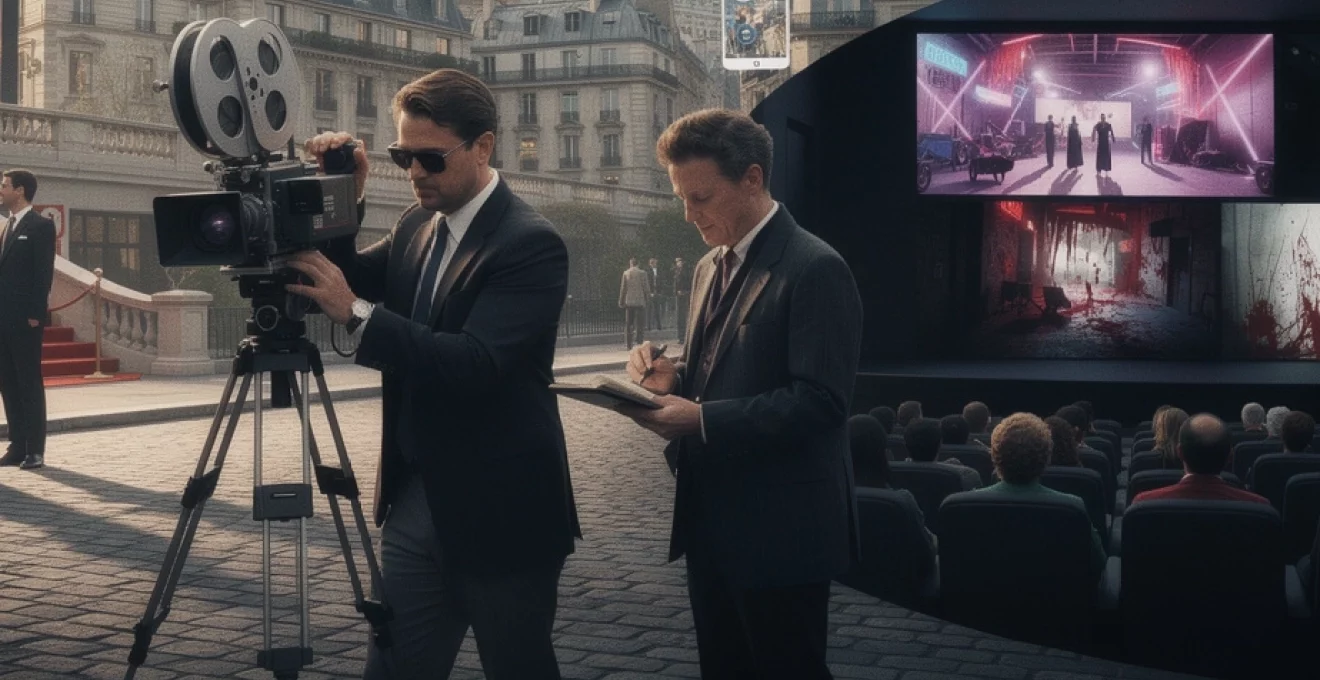
French cinema remains a cornerstone of global film culture, wielding influence that extends far beyond the boundaries of traditional European arthouse cinema. From the revolutionary techniques pioneered during the Nouvelle Vague movement to contemporary innovations in digital distribution and cross-cultural storytelling, French filmmakers continue to shape how stories are told, funded, and distributed worldwide. This enduring influence stems from France’s unique approach to cinema as both an artistic medium and a cultural export, supported by robust government policies and a deep-rooted cinéphile tradition that values innovation over commercial conformity.
The impact of French cinema on global culture manifests through multiple channels: technical innovations that have become industry standards, festival programming that sets international quality benchmarks, philosophical approaches to narrative that challenge conventional storytelling, and financing models that support creative risk-taking. Understanding these contributions provides insight into why French cinema continues to punch above its weight in an increasingly globalised entertainment landscape dominated by Hollywood productions and streaming platforms.
Nouvelle vague revolutionary techniques that transformed modern filmmaking
The Nouvelle Vague movement of the late 1950s and 1960s fundamentally revolutionised how films could be made, distributed, and consumed globally. This cinematic revolution emerged from film criticism, with directors like Jean-Luc Godard, François Truffaut, and Claude Chabrol transitioning from writing about cinema to creating it. Their rejection of traditional studio practices in favour of location shooting, natural lighting, and improvised dialogue established new aesthetic standards that continue to influence contemporary filmmaking across all genres and budgets.
Jean-luc godard’s jump cut innovation and narrative deconstruction methods
Godard’s introduction of the jump cut in À bout de souffle (Breathless) represented more than a stylistic choice—it fundamentally challenged linear narrative construction. This technique, initially considered a technical error, became a powerful storytelling tool that compressed time, created rhythm, and acknowledged cinema’s artificial nature. Modern filmmakers from Quentin Tarantino to Edgar Wright have adopted and adapted Godard’s jump cut methodology, using it to create energetic pacing in action sequences and comedic timing in dialogue scenes.
The influence of Godard’s narrative deconstruction extends beyond technical innovation to philosophical approaches to storytelling. His method of breaking the fourth wall and acknowledging the filmmaking process has become standard practice in contemporary meta-cinema, from Marvel’s Deadpool franchise to Charlie Kaufman’s experimental narratives. This self-reflexive approach encourages audiences to engage critically with media consumption rather than passive entertainment absorption.
François truffaut’s auteur theory implementation in contemporary cinema
Truffaut’s articulation of auteur theory through his essay “A Certain Tendency in French Cinema” established the director as the primary creative force behind cinematic works. This concept transformed how films are marketed, critiqued, and understood globally, shifting focus from studio systems to individual artistic vision. Contemporary directors like Christopher Nolan, Denis Villeneuve, and Greta Gerwig benefit directly from auteur theory’s emphasis on directorial signature and personal storytelling approaches.
The practical implementation of auteur theory has created new funding models where investors support directors based on their previous work rather than solely on script content or star power. This approach has enabled more experimental and personal filmmaking to receive commercial backing, as seen in the success of directors like Jordan Peele and Ari Aster who developed distinct stylistic signatures that guarantee audience recognition and critical attention.
Handheld camera aesthetics from breathless to marvel cinematography
The handheld camera techniques pioneered by Nouvelle Vague cinematographers created an immediacy and intimacy that traditional studio cinematography couldn’t achieve. Raoul Coutard’s work on Breathless demonstrated how handheld cameras could capture spontaneous performances and create documentary-like realism within fictional narratives. This technique has been adopted across genres, from horror films seeking visceral impact to action sequences requiring dynamic movement.
Modern blockbuster cinematography, including Marvel Cinematic Universe productions, regularly employs handheld camera movements to create kinetic energy during fight sequences and intimate character moments. The Russo Brothers’ work on Captain America:
Modern blockbuster cinematography, including Marvel Cinematic Universe productions, regularly employs handheld camera movements to create kinetic energy during fight sequences and intimate character moments. The Russo Brothers’ work on Captain America: The Winter Soldier and Avengers: Endgame demonstrates how this once-radical technique has been fully absorbed into big-budget visual language, balancing large-scale spectacle with a sense of grounded physicality. You can see the Nouvelle Vague legacy in the way action scenes are staged closer to the body, with slight camera shake and off-centre framing conveying chaos and vulnerability rather than pristine choreography. For filmmakers and cinematographers working today, handheld aesthetics are no longer merely a low-budget necessity but a deliberate stylistic choice that signals realism, urgency, and emotional proximity to characters.
Natural lighting techniques pioneered by raoul coutard’s cinematography
Raoul Coutard, the key cinematographer of the Nouvelle Vague, radically redefined how natural and available light could be used as a primary creative tool. On films like Jules et Jim and À bout de souffle, Coutard relied on existing daylight, practical lamps, and fast film stock instead of extensive studio lighting setups. This approach not only reduced costs but also produced an organic visual texture that contrasted sharply with the polished artificiality of classic studio cinema.
Today, this philosophy echoes in the work of cinematographers such as Emmanuel Lubezki and Bradford Young, whose preference for natural light gives films like The Revenant and Arrival a tactile, immersive quality. Streaming-era productions, which often favour fast turnarounds and location-heavy schedules, frequently adopt similar techniques, using high-ISO digital sensors and LED fixtures to emulate Coutard’s soft, directional lighting. For aspiring filmmakers, the lesson is clear: you don’t need a huge lighting truck to create compelling images—mastering how to shape available light can become a powerful part of your visual identity.
French arthouse cinema’s impact on international festival circuit programming
Beyond stylistic innovation, French cinema has profoundly reshaped how the international festival circuit selects, evaluates, and promotes films. French arthouse films have long functioned as benchmarks of cinematic quality, encouraging programmers to prioritise formally daring, thematically rich works over purely commercial fare. As a result, global festivals—from Berlin and Venice to Toronto and Busan—now routinely curate lineups where French films sit alongside emerging voices from Latin America, Asia, and Africa, helping define what “serious cinema” looks like in each era.
Because French cinema historically treats audiences as active interpreters rather than passive consumers, its presence on festival slates has pushed curators to favour challenging narratives, ambiguous endings, and politically engaged storytelling. This has directly shaped international streaming acquisitions as well, since platforms now use festival selections as a filter for high-quality global content. If you’re tracking future trends in world cinema, paying attention to which French films appear on festival programmes remains a reliable way to anticipate where global film culture is heading.
Cannes film festival’s role in establishing global cinematic standards
The Cannes Film Festival arguably sits at the centre of French cinema’s global influence. Founded in 1946, Cannes has become the gold standard for artistic prestige, with its selections often setting the tone for an entire year of international film discourse. Programmers at Cannes have historically championed French auteurs alongside global innovators, creating a canon in real time and signalling to critics, distributors, and audiences which films matter.
Cannes has also defined the visual and thematic thresholds of what is considered “festival cinema”: long takes, complex character studies, and bold formal experiments often find their first major audience on the Croisette. When a film debuts in Competition or Un Certain Regard, it immediately gains symbolic capital that can translate into awards campaigns, theatrical distribution, and streaming visibility. For filmmakers and producers, understanding the aesthetic and thematic preferences shaped by Cannes is essential for positioning a project within the international arthouse marketplace.
Palme d’or winners’ influence on distributor acquisition strategies
The Palme d’Or, Cannes’ top prize, functions as a powerful economic signal in the global film industry. A Palme win can transform a modestly budgeted French or international film into a must-buy property for distributors in North America, Asia, and beyond. Titles like Parasite, Amour, and Titane illustrate how Palme d’Or winners often secure broad release even when their subject matter or form appears challenging on paper.
This dynamic has reshaped acquisition strategies: buyers now actively scout Cannes for films that combine festival prestige with crossover potential, frequently prioritising Palme winners and French co-productions in key markets. As streamers compete with traditional distributors, Palme-branded titles are used to enhance catalogues with “curated” and “award-winning” content that appeals to cinephiles. For producers working in or with French cinema, aligning a project with festival-friendly qualities—strong directorial vision, social resonance, and formal risk—can significantly improve its chances of international sale.
French co-production models adopted by european film councils
French cinema’s influence is not limited to aesthetics; it also extends to the financial and legal frameworks that make ambitious films possible. The French model of international co-production—combining support from the CNC (Centre national du cinéma et de l’image animée), regional funds, and television pre-sales—has become a template for neighbouring European film councils. Countries like Belgium, Germany, and the Netherlands have adopted similar mechanisms to pool resources and share risk across borders.
These co-production treaties enable films to access multiple funding streams while qualifying as “national cinema” in more than one territory, unlocking tax incentives and quotas. For example, French–Belgian co-productions such as the Dardenne brothers’ films or Raw benefit from French arthouse credibility, Belgian incentives, and broader European distribution. If you’re developing a project with transnational appeal, studying French co-production frameworks can help you design a financing package that maximises both creative freedom and market reach.
Arte france cinéma’s international financing framework evolution
Arte France Cinéma, the film arm of the Franco-German broadcaster Arte, has played a quiet but decisive role in shaping global independent cinema financing. Since the 1990s, Arte has invested in risky, auteur-driven projects that might struggle to secure purely commercial backing—from Michael Haneke’s Caché to Céline Sciamma’s Portrait of a Lady on Fire. Its model blends public-service broadcasting mandates with a curated approach to international co-production, prioritising cultural value alongside audience reach.
Over time, Arte France Cinéma has adapted to the digital era by coordinating theatrical, broadcast, and streaming windows, ensuring that funded films circulate widely across Europe and beyond. This multi-platform strategy has inspired similar initiatives in other regions, where broadcasters and public funders now collaborate more closely with festivals and VoD platforms. For producers, understanding Arte’s criteria—strong authorial voice, cross-border relevance, and high artistic standards—offers a roadmap for building projects that can travel within an increasingly interconnected funding ecosystem.
Philosophical existentialism integration through french cinematic narratives
One of the reasons French cinema resonates so deeply worldwide is its longstanding engagement with existentialist philosophy. From the post-war period onwards, filmmakers influenced by Jean-Paul Sartre, Simone de Beauvoir, and Albert Camus began weaving questions of freedom, responsibility, and absurdity into their narratives. Rather than offering neat moral lessons, French films often leave viewers with lingering uncertainty: what does it mean to live authentically, to choose, to fail?
We see this existential integration in classics like Robert Bresson’s Pickpocket, where sparse dialogue and restrained performances focus our attention on internal struggles rather than external plot twists. Contemporary works such as Mia Hansen-Løve’s Eden or Olivier Assayas’ Personal Shopper continue this tradition, exploring identity, grief, and spiritual dislocation in a globalised world. For international filmmakers, French cinema demonstrates how complex philosophical ideas can be embedded in character arcs and everyday situations, making abstract thought emotionally accessible rather than purely academic.
This philosophical dimension also influences how audiences relate to French films. Instead of being told what to think, viewers are invited to reflect—much like reading a novel that refuses to tie up every loose end. In a media landscape often driven by clear-cut heroes and villains, this existential ambiguity feels both challenging and refreshing. If you’re crafting your own scripts, looking at how French cinema uses silence, open endings, and moral grey zones can help you build narratives that stay with viewers long after the credits roll.
French genre cinema’s technical innovations in horror and thriller production
While many people associate French cinema with romance and arthouse drama, its contributions to horror and thriller filmmaking have been just as influential. In the early 2000s, a wave often labelled the “New French Extremity” pushed boundaries of on-screen violence and psychological intensity, drawing attention from horror fans and studios worldwide. These films combined visceral imagery with sophisticated craftsmanship, proving that genre cinema could be both technically innovative and thematically ambitious.
French thrillers and horror films have since become a laboratory for new approaches to cinematography, sound design, and practical effects. Techniques developed in relatively low-budget French productions have been adopted by American and British studios seeking fresh visual languages. If you’ve ever watched a contemporary horror film and noticed its raw handheld intensity, claustrophobic framing, or unsettling soundscapes, there’s a good chance you’re seeing the downstream impact of French genre experiments.
New french extremity movement’s visceral cinematography techniques
The New French Extremity, associated with directors like Alexandre Aja, Pascal Laugier, and Gaspar Noé, is characterised by an immersive and often confrontational visual style. Cinematographers use tight close-ups, shallow depth of field, and roaming handheld shots to place viewers uncomfortably close to violence and emotional breakdown. Rather than cutting away at the moment of impact, the camera lingers, forcing us to confront what mainstream Hollywood horror might only suggest.
This visceral cinematography has influenced global horror aesthetics by shifting emphasis from jump scares to sustained dread and embodiment. Films like Martyrs or Inside create tension not only through plot but through the physical way images are captured—shaky tracking shots down narrow corridors, blood-streaked colour palettes, and oppressive low lighting. International filmmakers have adopted these techniques to increase immersion, making audiences feel less like observers and more like participants trapped within the diegetic space.
Gaspar noé’s experimental sound design in climax and enter the void
Gaspar Noé stands out as one of the most formally daring French directors, and his experiments with sound design have had a notable impact on global cinema. In Enter the Void, Noé uses low-frequency rumbles, disorienting sound pans, and subjective audio to mimic altered states of consciousness, syncing the viewer’s sensory experience with the protagonist’s perspective. Climax takes a different but equally radical approach, building much of its tension around an oppressive, nearly continuous soundtrack of diegetic electronic music.
By treating sound not just as accompaniment but as structural backbone, Noé has inspired other filmmakers to design audio environments that shape narrative rhythm and emotional tone. You can see echoes of this approach in A24-backed projects and high-end television, where soundscapes guide our experience as much as images do. For creators, the takeaway is that experimental sound design—layered ambience, off-screen noises, and subjective audio shifts—can be as powerful a storytelling tool as any camera move or edit.
High tension’s practical effects influence on american horror studios
Alexandre Aja’s Haute Tension (High Tension, 2003) became a cult favourite among horror aficionados in part because of its uncompromising use of practical effects. Rather than relying heavily on early CGI, Aja and his team favoured prosthetics, squibs, and in-camera tricks to achieve gore that felt disturbingly real. This commitment to tangible effects generated a tactile horror experience that many viewers found more convincing than digital blood and wounds.
The film’s success in international markets caught the attention of American studios, leading to Aja being recruited for Hollywood projects like The Hills Have Eyes remake and Piranha 3D. His influence helped fuel a broader resurgence of practical effects in American horror during the late 2000s and 2010s, visible in films that prioritise physical stunts and makeup work over pure CGI. For horror producers, the lesson from French cinema is strategic: investing in skilled practical effects teams can deliver both artistic credibility and a marketing edge in an era when audiences are increasingly savvy about digital trickery.
Raw’s body horror cinematography adopted by a24 productions
Julia Ducournau’s Raw (2016) offers another key example of French genre cinema shaping international trends, particularly within the A24 ecosystem. The film’s body horror is captured with an almost clinical precision: static frames, controlled camera movements, and a cool colour palette that clashes with the visceral subject matter. Instead of frenetic cutting, Ducournau often lets disturbing actions unfold in relatively long takes, heightening discomfort through stillness and framing rather than spectacle.
This approach closely aligns with the “elevated horror” aesthetic popularised by A24 in films like Hereditary, The Witch, and Saint Maud. In these works, horror emerges from psychological tension and visual restraint as much as from explicit shocks. Ducournau’s later Palme d’Or-winning Titane further cemented her influence, blending genre elements with arthouse sensibilities in a way that many international producers now cite as a model. If you’re interested in body horror that feels both sophisticated and unsettling, French films like Raw demonstrate how careful composition and colour design can intensify impact without relying on endless gore.
Digital distribution models pioneered by french independent cinema networks
As viewing habits shifted from theatrical to online platforms, French independent cinema adapted early, experimenting with digital distribution models that many other territories later emulated. Niche VoD platforms such as UniversCiné and later international services like MUBI built their catalogues around French and European arthouse titles, positioning themselves as curated alternatives to mainstream streamers. By combining editorial content—essays, interviews, retrospectives—with on-demand viewing, these platforms helped sustain cinephile culture in the digital age.
French distributors were also among the first to test day-and-date releases, simultaneous festival streams, and hybrid models that blend limited theatrical runs with rapid online availability. During the COVID-19 pandemic, initiatives like the virtual edition of Cannes’ Marché du Film and online screenings by the Cinémathèque Française demonstrated how French institutions could pivot quickly while preserving a sense of communal viewing. For filmmakers and producers, studying these models offers concrete strategies: create tiered release windows, partner with curated platforms, and use festivals not only as physical events but as digital launchpads.
Another important aspect of French digital distribution is its integration with public funding and cultural policy. The CNC has progressively adjusted its support schemes to include VoD releases and online promotion, ensuring that independent films can reach audiences even as theatrical attendance patterns evolve. This synergy between state policy, indie distributors, and niche platforms provides a blueprint for other countries trying to balance cultural protection with technological change. In practical terms, if you’re plotting a release strategy today, French digital experiments show that thinking beyond a single medium—cinema or streaming—can significantly extend a film’s life cycle.
Cross-cultural adaptation strategies from french literary properties to global markets
French cinema has long drawn from the country’s rich literary heritage, and its methods of adapting novels, graphic works, and plays have had wide-reaching influence. From classic Balzac and Zola adaptations to contemporary takes like Persepolis or The Count of Monte Cristo, French filmmakers tend to emphasise thematic fidelity over strict plot reproduction. Rather than translating every narrative beat, they focus on capturing a work’s emotional core and philosophical questions—an approach that has inspired adaptation strategies in Hollywood and beyond.
Cross-cultural remakes further illustrate this dynamic. Films such as Les Intouchables have spawned English-language versions (The Upside) that retain the central relationship while recalibrating cultural specifics for new audiences. Similarly, French thrillers and comedies are frequently optioned for remakes in Asia and Latin America, with producers treating the French original as a narrative blueprint to be localised rather than copied. If you’re adapting material for international markets, French practice suggests asking: which elements are universal, and which need tailoring to local humour, politics, or social norms?
French cinema’s influence on adaptation also functions in reverse: international literary properties are often first adapted through French co-productions before entering Anglophone markets. This intermediary step can help test complex or controversial material in a context that values auteur-driven experimentation. Ultimately, the French approach shows that adaptation is less about perfect translation and more about dialogue between cultures. By treating stories as flexible frameworks rather than fixed monuments, French filmmakers have developed cross-cultural strategies that keep narratives alive as they migrate across languages, formats, and audiences worldwide.