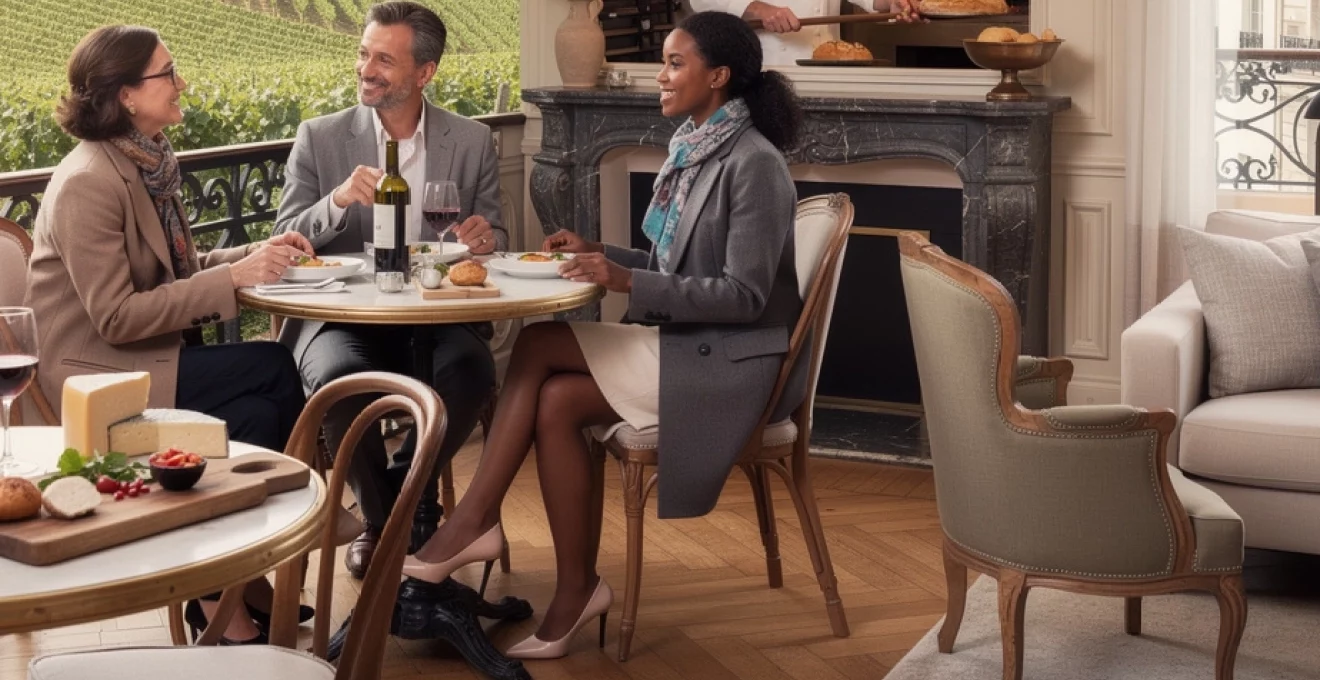
The French art of living, or art de vivre, transcends mere lifestyle choices to become a profound philosophy that has captivated global audiences for centuries. This sophisticated approach to daily existence encompasses far more than stereotypical images of Parisians sipping wine at sidewalk cafés. It represents a carefully cultivated balance between pleasure and refinement, spontaneity and structure, tradition and innovation. From the bustling streets of New York to the serene landscapes of rural Japan, elements of French living philosophy have taken root, adapted to local cultures while maintaining their essential character. The influence extends through multiple dimensions of human experience: culinary traditions that prioritise quality and conviviality, architectural principles that harmonise beauty with functionality, social protocols that elevate conversation to an art form, and time management philosophies that integrate work with leisure in meaningful ways.
Culinary heritage as cultural ambassador: french gastronomic philosophy across continents
French culinary traditions serve as perhaps the most recognisable ambassadors of the nation’s art of living, spreading across continents through restaurants, culinary schools, and home kitchens alike. The philosophy extends beyond mere cooking techniques to encompass a complete approach to food culture that emphasises seasonality, terroir, and the ritualistic aspects of dining. This gastronomic diplomacy has established French cuisine as a universal language of refinement, with UNESCO recognition of the French gastronomic meal as an intangible cultural heritage underlining its global significance.
The French approach to food represents a holistic philosophy that treats meals as cultural experiences rather than mere sustenance. This perspective influences how French culinary principles are interpreted worldwide, with adaptations that respect local ingredients while maintaining the essential French emphasis on technique, presentation, and the social aspects of dining. The concept of terroir has become particularly influential, inspiring food movements globally that prioritise local sourcing and seasonal awareness.
Michelin-starred french restaurants preserving authenticity in global markets
Michelin-starred establishments worldwide serve as guardians of French culinary authenticity, maintaining rigorous standards that reflect the original art de vivre philosophy. These restaurants face the complex challenge of preserving traditional techniques while adapting to local palates and ingredient availability. The success of French culinary concepts in international markets demonstrates the universal appeal of the French approach to hospitality and gastronomy.
Contemporary French restaurants abroad often serve as cultural centres, introducing diners to French wine culture, service protocols, and the leisurely pace of French dining. The influence extends beyond high-end establishments to casual bistros and brasseries that replicate the convivial atmosphere of French neighbourhood dining. This proliferation has created a global network of establishments that serve as touchstones for French cultural values.
Traditional boulangerie techniques maintaining artisanal standards worldwide
The artisanal bread-making traditions of French boulangeries have established international standards for quality and craftsmanship that extend far beyond France’s borders. French bakeries worldwide maintain strict adherence to traditional methods, from the preparation of levain to the precise timing of fermentation processes. These establishments serve as cultural institutions, preserving not only culinary techniques but also the social function of neighbourhood bakeries in daily French life.
The global expansion of French bakery techniques has influenced local bread cultures, introducing concepts such as the daily fresh bread ritual and the importance of crust texture and crumb structure. Many international bakers train extensively in France to master these traditional methods, creating a network of artisans who maintain authentic standards while adapting to local preferences and regulations.
Wine terroir expression through french viticulture methods in international vineyards
French viticulture principles have revolutionised wine production globally, with the concept of terroir becoming a fundamental framework for quality wine production worldwide. International winemakers increasingly adopt French methods of vineyard management, fermentation techniques, and ageing processes to achieve wines that express their unique geographical characteristics. This influence has created a global wine culture that values authenticity and place-based character over mass production.
The French appellation system has inspired similar quality control frameworks in wine regions across the globe, from California’s American Viticultural Areas to Australia’s Geographic Indications. These systems reflect the French philosophy that great wine emerges from the marriage of human skill
between climate, soil, grape variety, and careful human intervention. As vineyards in regions such as Chile, South Africa, and New Zealand adopt French pruning, blending, and barrel-ageing techniques, they are not simply copying a style; they are applying a philosophy that respects the identity of each plot of land. In this way, the French art of living in wine becomes a global practice: taking time, observing nature, and allowing each bottle to tell the story of its origin.
For wine enthusiasts around the world, this approach encourages a more mindful way of drinking. Instead of treating wine as a generic beverage, French-inspired viticulture invites us to consider where and how it was produced, with whom we share it, and in what setting. Whether you are opening a Bordeaux-style blend from California or a méthode traditionnelle sparkling wine from England, you are participating in a global conversation shaped by French art de vivre: quality over quantity, patience over haste, and shared pleasure over solitary consumption.
Slow food movement integration with french culinary traditions
The global slow food movement has found a natural ally in French culinary traditions, which have long valued seasonality, regional identity, and respect for producers. In many ways, France was practising slow food principles long before the term was coined in Italy in the late 1980s. Weekly markets, firm lunchtime rituals, and the cultural importance of the family table illustrate how the art of living is anchored in taking time, not just to eat, but to enjoy and connect.
Across continents, restaurants and home cooks who look to French gastronomy for inspiration often adopt similar habits: sourcing ingredients from local farms, planning menus around the seasons, and favouring small, independent producers. This slow food integration is not about rigidly copying French recipes; it is about absorbing a French mindset that sees each meal as an opportunity to express care, creativity, and cultural identity. When a chef in Tokyo or Toronto pairs simple, high-quality ingredients with unhurried preparation and convivial service, they are echoing the French belief that eating well is inseparable from living well.
For readers who want to incorporate this aspect of the French art of living into their own routines, the steps can be surprisingly simple. You might choose to reserve time for one unhurried meal each day, visit a local farmers’ market once a week, or learn one classic French technique—such as making a basic vinaigrette or roasting a chicken—that elevates ordinary ingredients. What matters most is not complexity, but intention: slowing down enough to transform food from fuel into a daily ritual of pleasure and connection.
Architectural aesthetics and interior design philosophy: french spatial harmony principles
Beyond the table, the French art of living manifests itself in the spaces people inhabit. From Parisian boulevards to Provençal farmhouses, French architecture and interior design share a common thread: a search for harmony between function and beauty, history and modernity. This spatial philosophy has travelled widely, influencing how cities are planned, hotels are designed, and homes are furnished across the world.
At its core, French spatial harmony is about proportion, light, and circulation. Rooms are designed for specific uses—eating, reading, conversing—but they also encourage interaction and comfort. Decorative elements, whether ornate mouldings or a simple linen curtain, are never purely ornamental; they contribute to a sense of balance and ease that underpins the broader art de vivre. As you will see, these principles have left a mark on urban planning, interior design, and even the way residential colour palettes are chosen globally.
Haussmannian urban planning influence on contemporary city development
Baron Haussmann’s 19th-century transformation of Paris created more than iconic boulevards and uniform façades; it established a model of urban life that continues to inspire planners worldwide. The wide avenues, open squares, and carefully framed vistas were not only aesthetic choices but also an attempt to improve air circulation, facilitate movement, and create pleasant public spaces. Today, elements of this approach are visible in cities from Buenos Aires to Seoul, where planners seek to balance density with liveability.
Contemporary urban projects often echo Haussmannian logic: prioritising walkable streets, mixed-use neighbourhoods, and visual coherence. Even when the architectural style is completely different, the underlying principle—that a city should invite people to stroll, linger at cafés, and enjoy public life—comes directly from the French art of living. When you see tree-lined promenades, generous pavements with terrace seating, and sightlines that deliberately highlight monuments or natural features, you are seeing Haussmann’s legacy adapted to a new context.
This influence also raises questions about how we want to live together in increasingly dense cities. Do we design purely for efficiency, or do we reserve space for beauty, conversation, and leisure? French-inspired planning tends to choose the latter, reminding us that urban environments can nurture a sense of community and pleasure rather than simply serving as transit corridors between work and home.
French provincial decorative elements in modern interior architecture
Inside homes and hospitality spaces, French provincial style has become a global shorthand for relaxed elegance. Originating in the countryside—with its stone farmhouses, exposed beams, and sun-washed colours—this aesthetic blends rustic materials with refined details. Natural wood, linen textiles, wrought iron, and softly muted palettes create a sense of warmth and authenticity that many people now seek, whether they live in a London townhouse or an apartment in Sydney.
Designers worldwide borrow from French provincial decor to craft interiors that feel lived-in yet curated. A single antique armoire, a farmhouse table surrounded by mismatched chairs, or a collection of inherited ceramics displayed on open shelving can all evoke this approach. Rather than aiming for perfection, French-inspired interiors embrace patina and imperfection, seeing them as evidence of life well lived. In this way, the art of living enters the home not through expensive objects but through a thoughtful layering of history, texture, and comfort.
For anyone wishing to incorporate French provincial elements, the key is restraint and authenticity. Instead of filling a room with themed accessories, focus on a few high-quality pieces, natural materials, and a connection to local craftsmanship. Just as French cuisine values good ingredients prepared simply, French interior style values honest materials arranged with care.
Château design principles adapted for luxury hospitality properties
The grandeur of French châteaux has long fascinated international travellers, and their design principles have significantly influenced luxury hotels and resorts around the world. High ceilings, symmetrical layouts, formal gardens, and ceremonial entrances convey a sense of occasion from the moment guests arrive. Yet behind the opulence lies a more subtle idea: that hospitality should feel both exceptional and welcoming, like being invited into a gracious private estate.
Modern luxury properties in regions as diverse as Napa Valley, the Caribbean, and the Middle East often reinterpret château aesthetics for contemporary travellers. You might find classical façades paired with minimalist interiors, or historic mansions restored with discreet modern conveniences. The goal is not to reproduce Versailles, but to capture a feeling of timeless elegance and generous hosting that is central to the French art of living.
This château-inspired approach also changes the way guests experience their stay. Instead of anonymous corridors and purely functional rooms, spaces are designed for lingering: libraries, salons, landscaped terraces, and intimate dining rooms that encourage guests to slow down. In this sense, architecture becomes a silent host, shaping experiences that value conversation, contemplation, and shared pleasure over constant movement.
Art de vivre colour psychology in residential space planning
Colour plays a crucial role in how the French art of living is expressed at home. Far from being an afterthought, colour is used strategically to create mood, highlight architectural details, and support the activities that take place in each room. Soft neutrals—greys, beiges, creams—often provide a calm background, while richer hues such as deep blues, forest greens, or burgundy are reserved for spaces of intimacy and reflection.
Designers inspired by French colour psychology pay close attention to light. In Parisian apartments with tall windows, muted tones help diffuse daylight and make spaces feel larger and more serene. In country houses, warmer tones echo the surrounding landscape, reinforcing the connection between interior and exterior. The aim is always harmony: colours should support daily rituals, whether that means a soothing bedroom palette that encourages rest or a lively kitchen scheme that invites conversation.
For readers considering how to apply this at home, a simple analogy can help: think of your rooms as courses in a meal. Not every dish needs powerful flavours; some should cleanse the palate or provide balance. Similarly, not every room needs bold colour. A French-inspired palette often relies on one or two accent tones used sparingly against a foundation of soft, natural shades, allowing objects, books, and artworks to add character over time.
Social rituals and conversational culture: french interpersonal engagement protocols
The French art of living is perhaps most visible in the way people relate to one another. Social rituals—from formal greetings to informal debates over coffee—are guided by unwritten rules that value respect, curiosity, and intellectual engagement. Around the world, Francophiles and French-inspired institutions have adopted aspects of this conversational culture to foster richer human connections.
At its simplest, this begins with how we say hello. The French emphasis on proper greetings, whether through a handshake, la bise, or a courteous “bonjour”, sets the tone for interactions that acknowledge the other person’s presence and dignity. In professional and diplomatic settings, these protocols reinforce mutual respect, while in everyday life they remind us that even brief exchanges can be conducted with grace.
Conversation itself is treated as an art form. Rather than avoiding disagreement, the French often see thoughtful debate as a sign of engagement and interest. This tradition has influenced universities, salons, and even coworking spaces worldwide, where structured discussion, book clubs, and themed dinners encourage participants to exchange ideas rather than merely share updates. As you reflect on your own social habits, you might ask: do your gatherings leave space for meaningful conversation, or are they dominated by screens and small talk?
Another distinctive element is the ritual of shared time: the long lunch with colleagues, the evening apéritif with neighbours, or the coffee that turns into an impromptu philosophy session. These moments illustrate a fundamental tenet of French art de vivre: relationships are built slowly, through repeated, unhurried encounters. Around the world, communities seeking deeper connection increasingly look to these French-inspired rituals as models for creating a richer social fabric in an age of digital distraction.
Fashion and aesthetic refinement: parisian style codes in global fashion markets
French fashion, and particularly Parisian style, has become one of the most recognisable expressions of the art of living. Yet what truly defines it is not constant novelty, but a distinctive mix of restraint, quality, and personal expression. This aesthetic philosophy has influenced designers, retailers, and consumers on every continent, shaping how people think about elegance and everyday dress.
Parisian style codes emphasise a curated wardrobe built around timeless pieces: a well-cut blazer, a pair of perfectly fitted jeans, a little black dress, or a trench coat that works across seasons. Rather than chasing every trend, the French approach favours selective adoption of new elements, integrated into a coherent personal look. This mindset has fuelled global trends such as capsule wardrobes, investment dressing, and the preference for fewer but better garments.
In fashion capitals from New York to Tokyo, brands promote collections inspired by “French girl style” or “Parisian chic”, highlighting neutral palettes, natural fabrics, and subtle details—a silk scarf, red lipstick, or understated jewellery—that transform simple outfits. The popularity of this aesthetic reflects a deeper desire: to appear confident and put-together without seeming to try too hard. In other words, to embody the effortless poise that many associate with French art de vivre.
For individuals, adopting these style principles can also be an exercise in sustainability and self-knowledge. By choosing high-quality pieces, supporting craftsmanship, and refining a personal uniform rather than constantly consuming, we align our wardrobes with broader values of balance and intentionality. Fashion becomes not just a surface display, but a daily practice of living with coherence and care.
Leisure philosophy and work-life integration: french time management methodologies
One of the most admired—and debated—aspects of the French art of living is its approach to time. In contrast to cultures that prioritise constant availability and long working hours, the French model seeks a structured balance between professional obligations and personal life. This does not mean a lack of ambition; rather, it reflects a belief that rest, culture, and family time are essential to a fulfilling and productive existence.
As this philosophy spreads globally, many organisations and individuals are reconsidering what it means to manage time well. Is success measured only in hours worked, or also in the quality of attention we bring to our tasks and relationships? French-inspired time management methodologies tend to choose the latter, favouring clear boundaries, protected leisure, and deliberate moments of doing “nothing” to recharge creativity and mental health.
Statutory holiday preservation systems and cultural time protection
France is known for its robust system of paid leave and public holidays, which function as structural guardians of the art of living. With a legal minimum of five weeks of paid vacation and strong protections around working hours, French labour law actively supports the idea that everyone, not just the elite, should have access to rest and leisure. This approach has inspired debates and policy experiments in other countries, from four-day workweek trials to “right to disconnect” regulations.
These statutory protections are not only legal mechanisms; they are cultural signals. When an entire country slows down in August or during key public holidays, it reinforces a collective understanding that time away from work is legitimate and valuable. Companies that adopt similar policies elsewhere—encouraging employees to fully use their leave, discouraging after-hours emails, or planning around collective breaks—often report improved morale, lower burnout, and, paradoxically, higher productivity.
For individuals, embracing a French-style respect for holidays and rest can mean planning time off as carefully as professional projects. It might involve setting boundaries around weekends, protecting one evening a week from obligations, or even practising digital sabbaths. The underlying principle is simple but powerful: you are not more effective because you are always on; you are more effective when you are regularly restored.
Café culture as professional networking infrastructure
Cafés in France are more than places to drink coffee; they are informal offices, meeting rooms, and social laboratories. Historically, Parisian cafés hosted writers, philosophers, and politicians who shaped public opinion and cultural trends. Today, that tradition continues in a modern form, as professionals, entrepreneurs, and students use cafés as spaces for networking, brainstorming, and quiet work.
Around the world, this French café culture has influenced the rise of coworking cafés and hybrid spaces that blend hospitality with productivity. These environments encourage a different rhythm from formal offices: conversations unfold over espresso rather than in booked meeting rooms, and ideas are exchanged in a more relaxed, egalitarian setting. In cities that embrace this model, professional life becomes visibly intertwined with public space, reinforcing the notion that work and leisure need not be strictly segregated.
If you wish to import a piece of this lifestyle into your own routine, consider designating a local café as your “annex office” for certain tasks—email catch-up, creative planning, or informal meetings. The change of setting, background noise, and opportunity for spontaneous encounters can enhance both focus and social connection, echoing the French belief that good ideas often emerge in convivial environments.
Weekend ritual structures supporting community engagement
Weekends in France are traditionally reserved for activities that nourish personal and community life: market visits, family lunches, countryside walks, cultural outings, or simple gatherings with friends. Rather than treating Saturday and Sunday as merely an extension of the workweek, many French households follow a loose but meaningful structure of rituals that create continuity and belonging.
This pattern has inspired communities worldwide that seek to rebuild local ties and slow down the pace of life. Farmers’ markets, neighbourhood festivals, and recurring Sunday brunch traditions all reflect a similar impulse: to use shared time off as an opportunity to strengthen relationships and enjoy simple pleasures. Even in large cities, you can see this in the way cafés and parks fill with groups lingering over meals or conversations, rather than rushing from one obligation to the next.
For readers looking to adopt a more French approach to weekends, the key is not to schedule more, but to schedule better. You might choose one or two recurring rituals—a weekly market visit, a standing lunch with friends, or a cultural outing—that anchor your time off and give you something to anticipate. Over time, these small habits can transform weekends from recovery periods into active expressions of your own art of living.
Cultural preservation through language and educational systems
Language and education are powerful vehicles for transmitting the French art of living across generations and borders. The French language itself carries nuances of politeness, hierarchy, and intellectual precision that reflect the culture’s values. Through expressions such as joie de vivre, savoir-vivre, and bon vivant, the language encodes an entire worldview that prizes pleasure, manners, and cultivated enjoyment.
Educational institutions, from primary schools to universities and lycées français abroad, play a crucial role in preserving and exporting this ethos. The French curriculum traditionally emphasises literature, philosophy, and critical thinking, encouraging students to analyse, debate, and articulate their views. Subjects like philosophy, taught to almost all students in their final year of secondary school, exemplify the belief that a good life requires not only technical skills but also the ability to reflect on meaning, ethics, and society.
Globally, French cultural institutes and language schools extend this influence by offering courses that combine language learning with exposure to French history, cinema, gastronomy, and art. Students do not simply memorise vocabulary; they learn how to navigate a French meal, write a formal letter, or participate in a thoughtful discussion. In doing so, they gain access to the subtleties of art de vivre that cannot be translated directly but must be experienced.
For anyone interested in embracing the French art of living, engaging with the language and its associated cultural resources is a powerful starting point. Whether through literature, films, or conversation classes, each step into the French-speaking world opens a window onto a way of life where elegance, reflection, and everyday pleasure are treated not as luxuries, but as essential components of a balanced and meaningful existence.