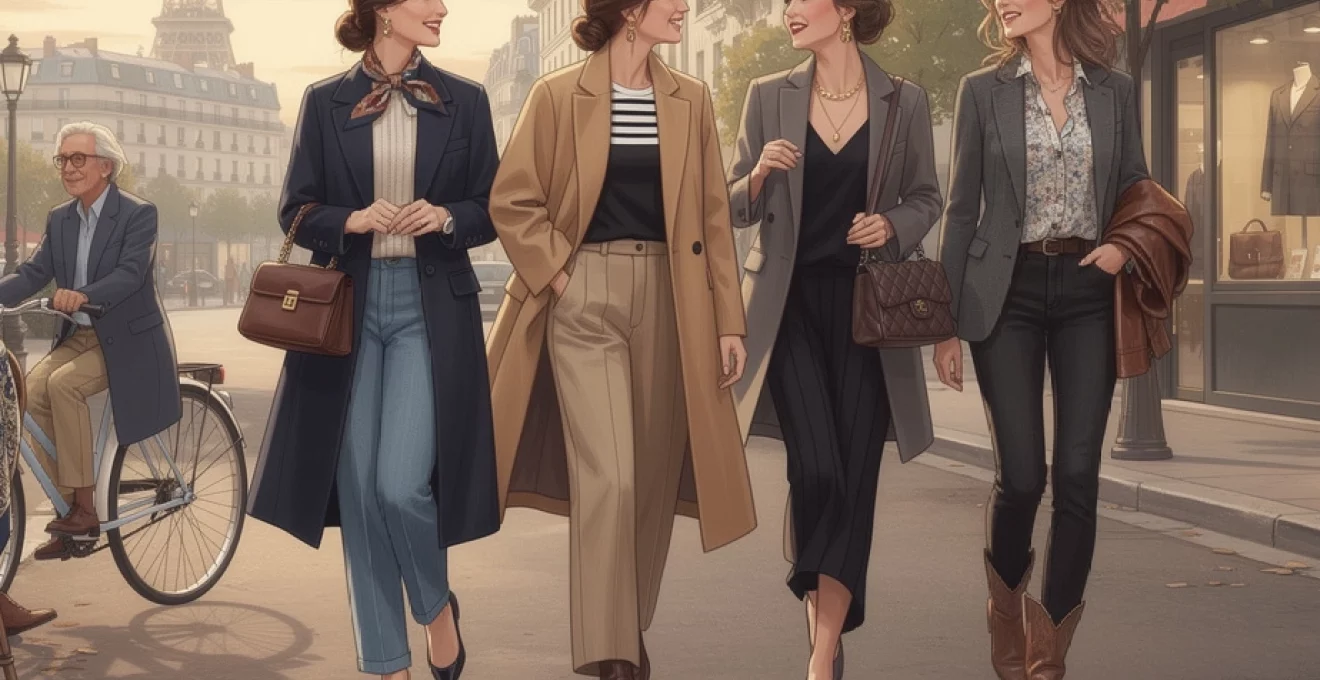
Parisian style has captivated the fashion world for decades, representing an elusive combination of sophistication, nonchalance, and timeless elegance that women worldwide attempt to replicate. The French approach to dressing transcends seasonal trends and fast fashion cycles, instead focusing on a carefully curated wardrobe built around versatile pieces that reflect personal identity rather than fleeting Instagram moments. From the cobblestone streets of the Marais to the elegant boulevards of Saint-Germain-des-Prés, Parisian women demonstrate that true style isn’t about wearing the most expensive garments or following every runway trend—it’s about understanding proportion, quality, and the art of restraint. This distinctive aesthetic philosophy has influenced contemporary fashion at every level, from high-street retailers to luxury maisons, yet its core principles remain refreshingly simple and accessible to anyone willing to embrace a more thoughtful approach to personal style.
The capsule wardrobe philosophy: quality over quantity in parisian fashion
The foundation of Parisian style rests upon a concept that directly challenges contemporary consumer culture: buying less but buying better. Rather than accumulating wardrobes filled with disposable pieces that quickly lose their appeal, French women invest in fewer garments of superior quality that will serve them for years, even decades. This approach doesn’t necessarily require vast financial resources—it demands strategic thinking about what truly deserves space in your wardrobe. Consider the mathematical reality: a £1,000 coat worn consistently for five years costs £200 annually, whilst an £85 jumper worn twice before being relegated to the back of the closet represents poor value regardless of its affordable price point. This value-based purchasing philosophy transforms shopping from an impulsive activity into a deliberate curation process.
Investment pieces: hermès scarves and saint laurent leather jackets
Certain items have achieved iconic status within the Parisian wardrobe precisely because they transcend temporary trends and deliver enduring style dividends. The silk scarf, particularly those from heritage houses like Hermès, exemplifies this principle—a single well-chosen scarf can elevate countless outfits, worn traditionally around the neck, tied to handbag handles, or even styled as a headband. Similarly, the leather jacket represents an investment that pays aesthetic returns season after season. Whether you choose a classic black biker style or a more refined blazer-cut leather piece, this garment bridges the gap between polish and edge that defines contemporary Parisian style. These pieces become more appealing with age, developing a patina and character that fast-fashion alternatives simply cannot replicate.
Neutral colour palettes: black, navy, beige and ivory foundations
Walk through any Parisian neighbourhood and you’ll notice an immediate absence of neon hues, loud patterns, and colour combinations that demand attention. Instead, French women construct their wardrobes around a sophisticated palette of neutrals—predominantly black, navy, various shades of beige and taupe, crisp white, and soft ivory. This chromatic restraint isn’t about playing it safe; rather, it creates infinite possibilities for mixing and matching whilst maintaining visual coherence. When your wardrobe consists primarily of complementary neutrals, getting dressed becomes exponentially easier as virtually everything coordinates. The occasional pop of colour appears more impactful against this neutral foundation, whether through a burgundy lip, a camel coat, or a structured tan handbag. This approach also ensures your clothing remains seasonally appropriate year-round, as neutral tones transition seamlessly between winter’s grey skies and summer’s bright sunshine.
Timeless silhouettes: the breton stripe and tailored blazer
Certain garment styles have earned permanent residence in the Parisian wardrobe through their proven versatility and enduring appeal. The Breton stripe shirt, originally worn by French naval officers in the 19th century, has become synonymous with effortless French style—equally appropriate paired with tailored trousers for a café meeting or with denim for weekend errands. Brands like Saint James continue producing these striped pieces with minimal design changes because the formula simply works. The tailored blazer represents another non-negotiable element, but Parisian women favour slightly oversized silhouettes that suggest borrowed-from-the-boys ins
pired-by-a-lover’s wardrobe rather than a corporate uniform. This slightly relaxed fit also makes layering easier and feels more approachable than a sharply cinched jacket. When you combine a classic Breton stripe with a casually tailored blazer, you have a uniform that works in almost any setting—from office meetings to weekend gallery visits—without ever looking over-styled.
Fabric selection: natural fibres and italian wool
Beyond silhouettes and colour, Parisian women pay close attention to the fabrics that touch their skin. Natural fibres such as cotton, linen, silk, cashmere and wool dominate their wardrobes because they age gracefully, breathe better and often drape more elegantly than synthetic alternatives. A simple white shirt in crisp cotton poplin or a navy jumper in pure merino wool immediately looks more elevated than a polyester blend, even if the cut is similar. This focus on fabric quality is one of the reasons a “simple” Parisian outfit rarely looks cheap, even when the budget behind it is modest.
Italian wool in particular holds a special place in the Parisian fashion vocabulary. Many of the best blazers and coats are cut from tightly woven Italian wool suiting, which offers warmth without bulk and maintains its shape for years. When you run your hand down the sleeve of a well-made wool coat, there’s a certain weight and smoothness that signals quality before you even check the label. Think of fabric the way a chef thinks of ingredients: the recipe (or outfit) can be simple, but if the raw materials are excellent, the final result will feel luxurious. By choosing natural fibres wherever possible, you give even the most minimalist wardrobe a rich, tactile dimension.
Effortless styling techniques mastered by left bank women
If the capsule wardrobe philosophy explains what Parisian women buy, their everyday styling habits show us how they wear it. On the Left Bank, from Saint-Germain to the quiet streets of the 6th arrondissement, style is performed in a way that feels lived-in rather than staged. Outfits appear as though they were thrown together in five minutes—even if there was a little more thought involved. This sense of ease comes from mastering a few key techniques: keeping hair and makeup understated, layering cleverly, choosing accessories with intention, and transitioning pieces across seasons instead of reinventing the wardrobe every three months.
The art of undone chic: hair and makeup minimalism
One of the most striking style lessons we can learn from Parisian women is that perfection is not the goal. Instead of hyper-defined brows, heavy contour and immaculate curls, you’ll more often see slightly tousled hair, bare or lightly tinted skin and a single point of focus like a red lip. This “undone chic” approach allows their clothes and natural features to breathe. The message is subtle but powerful: you look like yourself, only a little more polished. It’s the opposite of costume dressing, and it’s why so many of us associate Parisian beauty with authenticity.
Practically speaking, this translates into a streamlined routine. A good haircut that air-dries well, a skincare-first approach, a light base or concealer only where needed, mascara and perhaps a smudged eyeliner are usually enough. When a bold red lipstick appears, it’s rarely paired with dramatic eyes; one feature takes centre stage while everything else recedes. Think of it as visual balance—just as you wouldn’t wear every statement piece in your wardrobe at once, you also don’t need every makeup trend on your face simultaneously. This is a powerful reminder that a “French girl look” is less about products and more about restraint.
Layering methods: trench coats over slim-fit denim
Paris is a walking city with unpredictable weather, so effective layering is almost a survival skill. You’ll often see a classic beige trench coat thrown over slim-fit denim, a lightweight knit and simple ankle boots—a combination that has become a shorthand for Parisian street style. The trench provides structure and sophistication, while the denim grounds the look in practicality. Together, they create a silhouette that is long, lean and dynamic, moving with you rather than against you as you navigate metro steps or cobblestone streets.
The key to mastering French layering is to think in thin, compatible layers rather than one bulky piece. A cotton T-shirt, a fine merino jumper and a mid-weight trench can cover a wide range of temperatures simply by unbuttoning, rolling sleeves or removing one layer. This is similar to building a good playlist: each item works on its own, but the real magic is in how they transition together. When you invest in a well-cut trench and a pair of flattering slim or straight-leg jeans, you gain endless outfit possibilities with minimal effort.
Accessorising strategy: delicate gold jewellery and structured handbags
Accessories are where many wardrobes become chaotic, but Parisian women approach them with the same discipline they apply to clothing. Rather than following every micro-trend—chunky logos one year, oversized chains the next—they tend to choose a small rotation of delicate gold jewellery and structured handbags that work with almost everything. A pair of small gold hoops, a fine chain necklace and a slim bracelet can be worn daily without overwhelming an outfit, acting more like a personal signature than a loud statement. Over time, these pieces begin to feel like part of the wearer’s identity.
Structured bags play a similarly important role. Instead of constantly switching between novelty shapes, many Parisian women commit to one or two classic silhouettes: a medium leather shoulder bag for everyday wear and perhaps a smaller crossbody or clutch for evening. This consistency not only streamlines morning decisions but also reinforces the “less but better” philosophy. Ask yourself: if you wore the same jewellery and bag every day for a month, would they still feel right with your outfits? If the answer is yes, you’re thinking like a Parisian.
Seasonal transitions: lightweight cashmere and silk scarves
Parisian wardrobes are designed to flex across seasons rather than being replaced four times a year. Lightweight cashmere sweaters and silk scarves are central to this strategy, acting as transitional tools when the weather can’t make up its mind. A fine-gauge cashmere knit can be layered over a summer dress in early autumn or worn under a wool coat in winter without adding visual bulk. Its softness and breathability make it more comfortable than synthetic layers, which often trap heat and feel clammy.
Silk scarves, meanwhile, are the true multitaskers of French style. Beyond the classic neck tie, they can be knotted in hair, wrapped around a ponytail, tied to the handle of a handbag or even used as a belt. In practical terms, they add warmth on cool mornings and can be slipped into a bag when the sun emerges. In aesthetic terms, they inject colour and pattern into an otherwise neutral look. Think of them as the Parisian equivalent of a smartphone wallpaper: a small, easily changed detail that can shift the entire mood of your outfit without requiring a new wardrobe.
Iconic parisian style icons and their signature looks
While the concept of “French girl style” can sometimes feel like a cliché, real women living and working in Paris continue to evolve and embody this aesthetic. Looking at specific style icons allows us to see how the same principles—quality, restraint, and individuality—can manifest in different ways. From the retro romanticism of Jeanne Damas to the androgynous ease of Caroline de Maigret, each woman interprets Parisian fashion through her own lens. Studying their wardrobes is not about copying them item for item, but about understanding how they build coherent, personal uniforms.
Jeanne damas: vintage florals and high-waisted trousers
Jeanne Damas, founder of Rouje and often dubbed the unofficial queen of modern Parisian style, epitomises the blend of vintage charm and contemporary practicality. Her look frequently centres around high-waisted jeans or trousers paired with delicate floral blouses or 1940s-inspired dresses. These pieces celebrate the waistline, skim rather than cling to the body and often feature subtle details such as covered buttons, puffed shoulders or sweetheart necklines. The result is feminine without being saccharine, nostalgic yet grounded in present-day city life.
Damas demonstrates how a small set of signatures can anchor an entire wardrobe. She rarely appears without some combination of red lipstick, a basket bag, a men’s-style blazer or mid-heel mules, which together form a recognisable uniform. For anyone looking to apply her lessons, start by choosing one or two silhouettes you always feel good in—perhaps high-waisted denim or wrap dresses—and then repeat them in slightly varied fabrics and colours. Over time, this repetition creates cohesion and makes getting dressed instinctive rather than stressful.
Inès de la fressange: masculine-feminine balance
Inès de la Fressange, former Chanel muse and author of several style guides, is synonymous with the art of masculine-feminine balance. Her signature outfit often includes straight-leg jeans or slim tailored trousers, a men’s-inspired blazer, a simple shirt and loafers or low heels. There is a clear nod to classic menswear, but never at the expense of softness; sleeves are pushed up, collars are popped, and jewellery is subtle yet present. This interplay between structure and ease is at the heart of what makes her look timeless.
For those of us building a Paris-inspired wardrobe, de la Fressange’s approach suggests a simple formula: start with something tailored and slightly boyish, then add a touch of femininity. That might mean pairing a navy blazer with a silk camisole, or styling dark denim with a lace-trim blouse and penny loafers. The aim is not to erase gendered references but to combine them in a way that feels balanced and authentic. When you master this, even the most basic combination of jeans and blazer can feel as considered as a runway look.
Caroline de maigret: rock ‘n’ roll elegance
Caroline de Maigret brings a distinctly rock ‘n’ roll attitude to Parisian fashion while still respecting its core tenets. Her style leans towards androgynous tailoring, unstructured coats, worn-in jeans and boots, often in a predominantly dark palette. You’ll rarely see her in fussy prints or bodycon silhouettes; instead, she prefers long, lean lines, classic shirts and a deliberately unpolished finish. Her hair is famously undone, and makeup is kept minimal, reinforcing the idea that confidence is the real accessory.
What can we learn from her? That elegance doesn’t have to be pristine. A slightly frayed hem on your jeans, a vintage band T-shirt under a sharp blazer, or a pair of ankle boots replacing high heels can all shift an outfit into de Maigret territory. The guiding principle is to let one element of rebellion—be it a leather jacket, messy hair or a smoky eye—play against otherwise classic pieces. Think of it like adding distortion to a clean guitar track: the structure remains, but there’s an edge that keeps things interesting.
The role of french heritage brands in cultivating personal style
Parisian fashion is not only about individual taste; it is also deeply intertwined with the city’s heritage brands. These maisons and labels have shaped how French women dress for over a century, offering both aspirational icons and practical staples. Even if most wardrobes do not overflow with luxury pieces, the design language of brands such as Chanel, A.P.C., Isabel Marant and Sézane filters down through high-street interpretations, vintage finds and contemporary independent designers. Understanding what each of these brands represents can help you make more intentional choices, whether you are investing in a single piece or seeking affordable alternatives.
Chanel: the little black dress and quilted handbag legacy
Coco Chanel radically transformed women’s wardrobes in the early 20th century, and her influence remains visible every time a Parisian woman reaches for a little black dress or a quilted shoulder bag. The petite robe noire distilled eveningwear to its essentials, proving that simplicity could be more impactful than opulence. Today, the little black dress still functions as a wardrobe anchor: it can be worn with ballet flats and a cardigan for daytime, then elevated with heels and jewellery for night. The versatility of this one item mirrors the larger Parisian philosophy of building a wardrobe around multi-use pieces.
The quilted handbag, particularly the Chanel 2.55 or Classic Flap, has become a global status symbol, but in Paris it is also appreciated for practical reasons. The chain strap, secure closure and compact yet roomy interior make it genuinely functional for city life. Even if an authentic Chanel bag is not in your budget, the lesson is clear: a medium-sized, structured handbag in black or neutral leather is one of the best investments you can make. Used daily, its cost per wear diminishes rapidly, and it can elevate even the simplest jeans-and-T-shirt combination.
A.P.C.: minimalist denim and ready-to-wear essentials
A.P.C. (Atelier de Production et de Création) represents the minimalist, urban side of Parisian style. Known for its clean-cut raw denim, understated shirts, and simple dresses, the brand proves that you don’t need logos or complex designs to look refined. Many Parisian women turn to A.P.C. for wardrobe foundations: a perfectly straight pair of jeans, a navy pea coat, a camel knit. These items rarely scream for attention, yet they quietly support countless outfits, season after season.
From an everyday perspective, A.P.C. teaches us the power of disciplined editing. Imagine your wardrobe as a well-designed apartment in the Marais: every piece has a purpose, there is little visual noise, and the beauty comes from proportion and quality rather than clutter. When you apply this mindset to shopping, you begin to ask different questions—does this shirt work with at least three things I own? Will I still want to wear this coat in five years? By treating your basics with the same respect often reserved for statement pieces, you create a truly functional capsule wardrobe.
Isabel marant: bohemian tailoring and ankle boots
Isabel Marant is often credited with defining the cool, bohemian side of French fashion that dominated the 2010s and continues to influence how Parisian women dress today. Her collections mix tailored jackets with embroidered blouses, slouchy trousers, ruffled minis and, of course, ankle boots. The look is relaxed but never sloppy, feminine but grounded with practical footwear. Many Parisian women rely on this aesthetic for day-to-night dressing: a printed blouse, slim jeans and suede boots can move from office to wine bar with just a change of lipstick.
The enduring popularity of Marant’s ankle boots offers an important style lesson. A comfortable, mid-heel boot in neutral leather or suede can become as essential as a white T-shirt. It adds height without sacrificing stability, works with jeans, dresses and skirts alike and looks appropriate in almost any casual or semi-formal setting. If you’re refining your own wardrobe, consider prioritising a pair of ankle boots that fit this description; they may quietly become your most-worn shoes.
Sézane: modern vintage aesthetic for contemporary wardrobes
Sézane, founded by Morgane Sézalory, has quickly become a go-to label for women seeking a modern yet romantic take on Parisian style. The brand’s aesthetic blends vintage-inspired prints, pretty blouses, high-waisted denim, knitwear and polished accessories. Unlike some luxury houses, Sézane aims to be relatively accessible, offering pieces that feel special without requiring couture-level budgets. This has made it particularly popular with international audiences trying to recreate a French wardrobe from afar.
What Sézane illustrates beautifully is how to integrate “romance” into an otherwise practical closet. A statement floral dress might be grounded with simple espadrilles and a basket bag; a lace-trim camisole can be worn under a blazer with straight-leg jeans; a colourful cardigan may be the only bright piece in an otherwise neutral outfit. Instead of buying entire looks, you can adopt the Sézane spirit by adding one or two vintage-inspired items to your existing basics, allowing them to inject personality without overwhelming your style.
Proportions and fit: tailoring principles from rue du faubourg saint-honoré
Strolling down Rue du Faubourg Saint-Honoré, lined with prestigious fashion houses and impeccably dressed clients, you quickly notice a common thread: nothing is ill-fitting. Coats skim shoulders perfectly, trousers break at exactly the right point above the shoe, and sleeves are neither too short nor pooling at the wrist. Parisian women understand that even the most beautiful garment looks ordinary if the proportions are off. Fit, more than any other factor, is what makes an outfit look expensive.
Applying this in your own life doesn’t necessarily mean shopping on that famous street; it means embracing the tailor as an essential ally. Buying trousers slightly large and having the waist nipped in, shortening a hem to reveal the slimmest part of your ankle, or adjusting a blazer so it sits correctly on your shoulders can transform how pieces sit on your body. Think of off-the-rack clothing as a draft, and tailoring as the edit that turns it into a final manuscript. By prioritising alterations—especially on key items like jeans, coats and blazers—you bring your wardrobe closer to the made-to-measure ideal that defines Parisian elegance.
Sustainable fashion practices in the marais district
While Paris is known for luxury, it is also at the forefront of more sustainable and conscious fashion habits, particularly in neighbourhoods like the Marais. Here, you’ll find a mix of independent designers, vintage boutiques, repair workshops and concept stores that encourage thoughtful consumption. Many Parisian women already practice a form of sustainability simply by buying less, choosing high-quality items and wearing them for years. However, the rise of second-hand platforms and local dépôt-ventes (consignment shops) has added new layers to this approach, making it easier to build a chic wardrobe with a lower environmental footprint.
Vintage shopping culture: kilo shops and depot-ventes
Vintage and second-hand shopping are not fringe activities in Paris; they’re mainstream. Kilo shops—where you pay by weight rather than by item—and curated dépôt-ventes attract everyone from students to stylists. This culture allows Parisian women to experiment with unique pieces while maintaining a commitment to longevity and circular fashion. A well-cut men’s blazer from the 1980s, a silk blouse from the 70s or a pair of high-waisted Levi’s can be found at a fraction of the cost of new items, yet often offer superior fabric and construction.
For those outside France, adopting this mindset might mean exploring local thrift stores, charity shops or online resale platforms in search of timeless gems rather than fleeting trends. Approach vintage shopping with a clear idea of what you need—perhaps a camel coat or a black leather belt—rather than browsing aimlessly. This focused strategy mirrors the Parisian capsule wardrobe philosophy and prevents clutter. Think of the vintage market as an ever-changing archive: if you’re patient and precise, you can uncover pieces that become the most distinctive components of your wardrobe.
Care and maintenance: prolonging garment lifespan
A crucial but often overlooked aspect of Parisian style is how diligently clothing is cared for. When you invest in fewer, higher-quality garments, it becomes instinctive to treat them well. Many French households still use air-drying rather than tumble dryers, which preserves fabric integrity and shape. Shoes are taken to cobblers to resole, knitwear is de-pilled and coats are brushed and occasionally professionally cleaned. These small habits add years to a garment’s life, reducing the need for frequent replacements.
You can adopt similar practices regardless of where you live. Simple changes—like using a gentle detergent, washing clothes at lower temperatures, storing knitwear folded rather than hung and learning basic repairs—can dramatically increase how long your favourite pieces last. Consider it akin to regular car maintenance: small, consistent actions prevent major breakdowns. In a world where textile waste is a growing environmental concern, caring for what you already own is one of the most effective style lessons we can learn from Parisian women.
Second-hand luxury: vestiaire collective and local consignment
Paris has also played a pivotal role in normalising the resale of high-end fashion, thanks in part to platforms like Vestiaire Collective, founded in the city in 2009. This online marketplace allows fashion lovers to buy and sell authenticated pre-owned luxury items, making iconic pieces from brands like Chanel, Celine or Hermès more accessible while extending their useful life. For Parisian women, it offers a practical way to rotate their wardrobes without engaging in wasteful overconsumption. Selling an underused designer bag or coat can help fund a new investment piece that better suits their evolving style.
Local consignment stores operate on the same principle but with a more intimate feel. Stylists and everyday shoppers alike can bring in well-kept garments and accessories for resale, often receiving store credit in return. If you’re building a Paris-inspired wardrobe, exploring second-hand luxury—whether through online platforms or local boutiques—can be a strategic way to acquire quality pieces at a more manageable price point. More importantly, it reinforces a mindset in which clothes are seen as long-term companions circulating between owners, rather than disposable items destined for landfill.