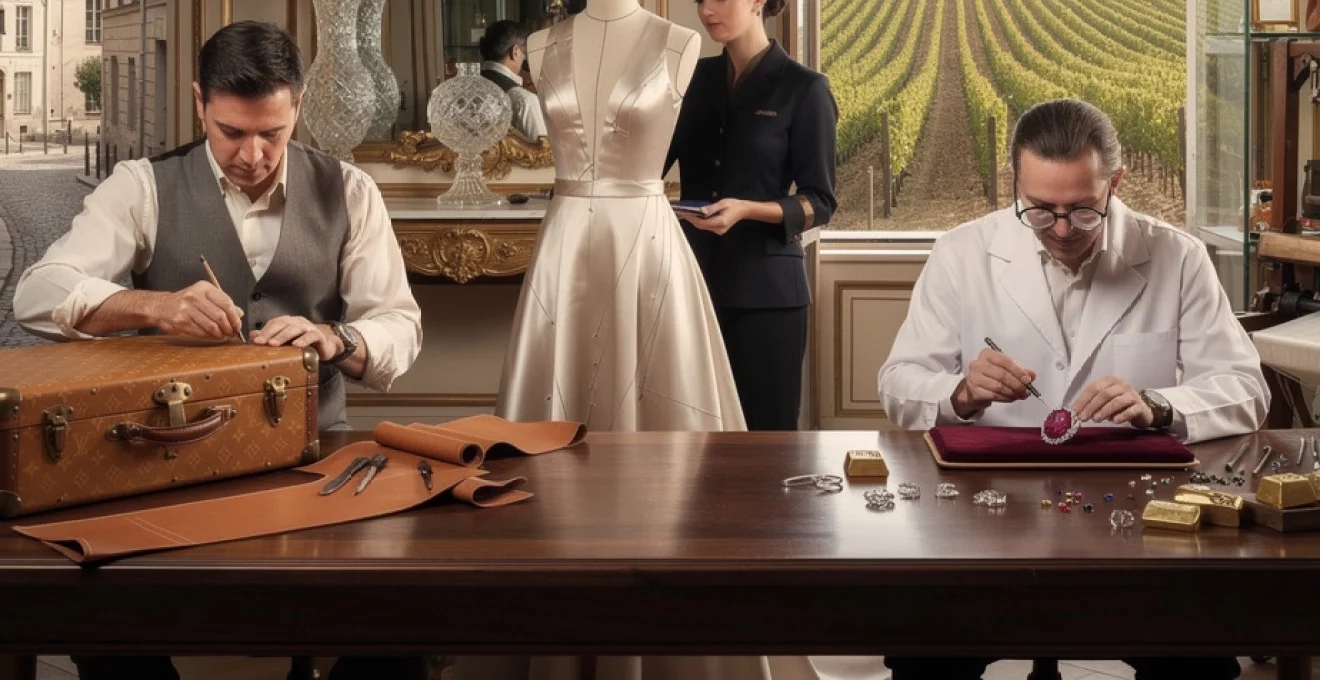
French luxury represents the pinnacle of sophisticated craftsmanship, embodying centuries of cultural refinement that has shaped global perceptions of excellence. From the opulent halls of Versailles to the modern ateliers of Place Vendôme, France has consistently demonstrated an unparalleled commitment to quality that transcends mere commerce. This dedication to perfection has established France as the undisputed leader in luxury goods, commanding 130 of the world’s 270 recognised luxury brands and generating €39.6 billion in annual turnover within France alone. The French approach to luxury manufacturing combines time-honoured traditions with innovative techniques, creating products that serve as symbols of identity rather than mere objects, embodying a philosophy where heritage and excellence converge to define what truly constitutes luxury in the global marketplace.
Historical foundations of french luxury craftsmanship excellence
The roots of French luxury craftsmanship trace back to medieval guild systems that established the fundamental principles of quality control and artisanal expertise. These early foundations created a framework for excellence that continues to influence luxury production methods today, establishing France’s reputation as the global epicentre for refined manufacturing techniques and superior craftsmanship standards.
Artisanal guild system origins in medieval france
Medieval French guilds established the first systematic approach to luxury craftsmanship, creating rigorous apprenticeship programmes that ensured knowledge transfer across generations. These guilds implemented strict quality standards and protected trade secrets, laying the groundwork for what would become France’s most prestigious luxury houses. The guild system fostered specialisation in specific crafts, from goldsmithing to textile weaving, creating distinct regional centres of excellence that remain influential today. Master craftsmen within these guilds developed techniques that prioritised quality over quantity, establishing production philosophies that emphasise meticulous attention to detail and time-intensive creation processes.
Louis XIV’s versailles court influence on luxury standards
The court of Louis XIV at Versailles revolutionised luxury consumption by establishing unprecedented standards of opulence and sophistication. Royal patronage elevated French artisans to international prominence, creating demand for exquisite furniture, textiles, and decorative arts that showcased French savoir-faire. The Sun King’s commitment to domestic luxury production protected French craftsmen from foreign competition whilst simultaneously establishing France as the arbiter of European taste. Versailles became a showcase for French excellence, where diplomatic visitors experienced firsthand the superior quality of French luxury goods, creating international demand that persists centuries later.
Industrial revolution transformation of traditional métiers d’art
France’s approach to industrialisation differed significantly from other European nations, emphasising the preservation of traditional craftsmanship whilst selectively adopting new technologies. French luxury manufacturers maintained hand-finishing processes even as mechanisation increased production capabilities, creating a hybrid approach that combined efficiency with artisanal quality. This balanced integration preserved the human element in luxury production, ensuring that mechanisation enhanced rather than replaced skilled craftsmanship. The result was increased production capacity without compromising the quality standards that distinguished French luxury goods from mass-produced alternatives.
Post-war reconstruction and luxury industry modernisation
The post-1945 period marked a crucial transformation in French luxury manufacturing, as established houses modernised their operations whilst maintaining traditional excellence standards. Government initiatives supported luxury industry reconstruction, recognising its importance to France’s cultural and economic identity. New organisational structures emerged, combining family-owned heritage with professional management practices, creating the foundation for today’s luxury conglomerates. This modernisation period established vertical integration strategies that allowed French luxury houses to control every aspect of production, from raw material sourcing to final distribution.
Maison heritage and Savoir-Faire preservation techniques
French luxury houses have developed sophisticated systems for preserving and transmitting traditional craftsmanship knowledge, ensuring continuity across generations whilst adapting to contemporary requirements. These preservation techniques combine formal training programmes with hands-on apprenticeships, creating a unique educational framework that maintains the highest standards of artisanal excellence. The commitment to savoir-faire preservation distinguishes French luxury from competitors, as each maison invests significantly in maintaining traditional techniques that define their brand identity.
Hermès leather working traditions and craftsman training programmes
Hermès exemplifies how French luxury transforms everyday objects into heirlooms through uncompromising leather craftsmanship. Each artisan completes an intensive training programme that can span up to two years before being entrusted with a single bag, learning traditional saddle-stitch techniques, edge-dyeing, and leather selection by hand. Rather than fragmenting production, Hermès follows a “one craftsperson, one bag” philosophy, which reinforces accountability and gives each piece a unique, almost signature touch. The brand also invests in dedicated leather schools and partnerships with vocational institutions across France, ensuring that rare skills in maroquinerie are passed on in a structured yet deeply human way. This slow, disciplined approach stands in stark contrast to mass production and is a core reason why Hermès remains synonymous with refinement and excellence in French luxury.
Chanel’s haute couture atelier methods and pattern making
Chanel’s haute couture ateliers illustrate how French luxury fashion elevates garment construction to an art form. In the maison’s Paris workrooms, experienced premières (head seamstresses) oversee teams that specialise in distinct disciplines, from flou (soft dressmaking) to tailleur (structured tailoring), maintaining an unbroken line of savoir-faire dating back to Gabrielle Chanel. Each couture piece begins with a hand-drafted pattern on paper or canvas, followed by multiple toiles (prototypes) fitted directly on a mannequin or client, a process that can require dozens of adjustments. Far from being a simple technical step, pattern making at Chanel is a three-dimensional exercise in architecture, balancing fabric weight, drape, and movement much like an engineer balances loads in a bridge. By keeping these techniques in-house and meticulously documented, Chanel preserves an exacting standard that ensures its silhouettes remain instantly recognisable yet continually renewed.
Cartier’s high jewellery setting techniques and gemstone selection
At Cartier, refinement is expressed through exceptional gemstone selection and some of the most advanced high jewellery setting techniques in the world. Stones are sourced not merely for size or clarity, but for harmony of colour and internal “life”, with gemmologists sometimes rejecting a majority of stones to preserve Cartier’s visual signature. Once selected, gems are entrusted to master setters who use methods such as invisible setting, pavé, and closed-back settings to maximise brilliance while minimising visible metal. This work can be likened to micro-sculpture: under magnification, each claw, bead, and groove must be perfectly aligned to create a seamless surface of light. By investing years in training setters and gemmologists, Cartier ensures that every piece, from a solitaire ring to an ornate necklace, embodies the discreet opulence that defines French high jewellery.
Louis vuitton’s malletier craftsmanship and trunk construction
Louis Vuitton’s reputation as a malletier—master trunk maker—remains the foundation of its status in French luxury. Traditional trunks are still built around a wooden frame, often in poplar or beech, chosen for lightness and resilience, then reinforced with brass corners and locks developed in-house to resist tampering. Craftsmen stretch and align coated canvas or rare leathers over the structure by hand, paying particular attention to pattern placement so that monograms and motifs flow seamlessly across edges and corners. Inside, compartments are customised to the client’s lifestyle, from watch drawers to fragrance safes, turning each trunk into a portable, highly personal universe. Even as Louis Vuitton expands into ready-to-wear and accessories, the rigorous standards of trunk construction continue to inform its broader design philosophy: utility elevated into enduring elegance.
Baccarat crystal manufacturing and hand-cutting precision
Baccarat, founded in 1764, showcases another facet of French luxury savoir-faire: the mastery of crystal. Production begins with a secret blend of silica, lead oxide, and other minerals melted at extremely high temperatures, then mouth-blown by glassmakers who rely on experience rather than sensors to judge thickness and form. Once cooled, each piece passes into the hands of cutters who etch facets, grooves, and patterns with millimetre precision using diamond-tipped wheels. Much like a luthier tuning a violin by ear, these artisans rely on sight, touch, and the sound of the crystal to assess perfection, discarding any piece that deviates from Baccarat’s standards. The result is crystalware whose weight, clarity, and scintillation embody the quiet extravagance at the heart of French luxury.
Terroir concept application in french luxury production
The concept of terroir, widely known from French wine culture, plays a central role across many French luxury categories. Terroir refers to the unique combination of geography, climate, soil, and human know-how that shapes a product’s character, making it impossible to replicate elsewhere. In luxury, terroir transforms goods into cultural artefacts: a silk scarf from Lyon, a perfume from Grasse, or a champagne from Reims all carry the imprint of their origin. This idea also reinforces the perception of French luxury as deeply rooted rather than manufactured, appealing to consumers who seek authenticity and traceability. In practice, terroir enables French brands to command premium prices by anchoring their stories in specific landscapes and communities.
Premium raw material sourcing and quality control standards
Behind every French luxury product lies a rigorous approach to raw material sourcing and quality control that far exceeds typical industrial standards. French maisons often establish long-term partnerships with farmers, tanneries, weavers, and mines to secure consistent access to top-tier inputs, sometimes even acquiring suppliers outright to protect know-how. Quality control is not a single checkpoint but a chain of verifications: materials are inspected upon arrival, during transformation, and after finishing, with defective batches rejected regardless of sunk costs. This discipline allows French luxury houses to deliver what you might think of as “emotional durability”: products that not only last physically, but also maintain their prestige and desirability over decades. Let’s look at how this plays out across key sectors.
Champagne appellation d’origine contrôlée regulations
Champagne embodies how legal frameworks can institutionalise excellence in French luxury. Protected by the Appellation d’Origine Contrôlée (AOC) system, the name “Champagne” can only be used for sparkling wines produced within a strictly defined region using authorised grape varieties and methods. Regulations govern everything from maximum yields per hectare and hand-harvesting requirements to minimum ageing periods on lees, ensuring a consistent baseline of quality and style. Maisons such as Veuve Clicquot or Dom Pérignon then layer their own blending philosophies on top of these rules, using reserve wines and proprietary techniques to create distinctive house signatures. For the consumer, the AOC serves as a powerful trust mark, turning each bottle into a certified expression of French terroir and savoir-faire.
Silk production in lyon’s traditional weaving houses
Lyon has been the historical heart of French silk production since the Renaissance, and its traditional weaving houses remain crucial to luxury fashion and interior decoration. High-end textiles used by maisons like Dior or Chanel often begin as raw silk threads carefully selected for uniformity and strength, then warped and woven on specialised looms—sometimes Jacquard looms that merge 19th-century innovation with digital control. Patterns are developed in collaboration between designers and dessinateurs textiles, who translate creative concepts into technically feasible weaves with precise thread counts. The resulting fabrics, whether brocades, satin duchesse, or complex jacquards, possess a tactile richness and depth of colour that mass-market materials cannot replicate. By anchoring production in Lyon, French luxury brands reinforce both geographical identity and a standard of textile refinement recognised worldwide.
Precious metal sourcing for place vendôme jewellers
Place Vendôme, home to some of the world’s most prestigious jewellers, is also a centre of stringent precious metal sourcing and refinement. Houses such as Boucheron, Van Cleef & Arpels, and Chaumet increasingly favour traceable gold and platinum, often certified by responsible mining schemes or recycled from existing sources, to align with evolving expectations around ethical luxury. Once acquired, metals are alloyed and refined in specialised workshops to achieve the exact colour and hardness required for fine settings, from warm rose gold to bright white alloys that enhance diamond brilliance. Each batch is tested for purity and mechanical performance, then stamped with French hallmarks that guarantee fineness and origin. This chain of custody, from mine or recycler to finished jewel, underpins consumer trust and reinforces the notion of French jewellery as both materially and morally refined.
Exotic leather procurement for haute maroquinerie
In the sphere of haute maroquinerie, exotic leathers such as crocodile, ostrich, or lizard are among the most controlled and scrutinised materials. Leading French maisons work with tanneries that comply with international regulations like CITES, ensuring that skins are sourced from monitored populations and certified farms rather than endangered wild stocks. Beyond legality, brands apply their own selection criteria, examining each hide for uniform scale patterns, minimal defects, and optimal thickness for cutting and stitching. Tanning recipes—often guarded as closely as perfume formulas—determine the final suppleness, colour saturation, and sheen, giving each brand a recognisable “hand feel”. By combining strict ethical oversight with obsessive aesthetic standards, French luxury houses transform a sensitive raw material category into a benchmark for responsible excellence.
Innovation integration within traditional luxury manufacturing
One of the reasons French luxury remains globally relevant is its ability to integrate innovation without eroding its artisanal core. Rather than chasing every technological trend, maisons adopt tools selectively, using them to enhance precision, safety, or sustainability while preserving the human touch that clients value. For example, 3D modelling and prototyping are now common in high jewellery and leather goods design, allowing teams to test proportions and ergonomics digitally before moving to expensive physical materials. In watchmaking and fragrance, advanced analytics and laboratory equipment help stabilise quality and performance, while final assembly and finishing still rely on skilled hands.
We can think of this relationship between tradition and innovation as similar to a symphony orchestra incorporating electronic instruments: the new sounds enrich the score, but the core identity of the music remains orchestral. Many French luxury groups invest in R&D labs focused on sustainable materials, such as metal-free tanning processes, bio-based textiles, or low-impact glass and crystal production. At the same time, they open their archives to young designers and apprentices, encouraging them to reinterpret historical motifs through contemporary lenses. This dual movement—forward into technology, back into heritage—allows French luxury to address modern concerns like traceability and carbon footprint while still promising the emotional resonance of time-honoured craft.
Global brand positioning and cultural diplomacy strategies
French luxury brands have also mastered the art of positioning themselves as cultural ambassadors, turning their maisons into soft power instruments for France itself. Flagship stores in Paris, Shanghai, New York, or Dubai are conceived less as retail spaces and more as immersive experiences, often incorporating exhibition areas, cafés, or archives that narrate the brand’s history and the broader French art de vivre. Collaborations with artists, architects, and curators—think of Louis Vuitton’s Fondation or Cartier’s contemporary art initiatives—extend this influence beyond commerce into the realm of culture, where brands contribute to debates on creativity, heritage, and innovation.
On a strategic level, French luxury houses carefully calibrate their messaging to balance universality and Frenchness. Advertising campaigns may feature global faces and diverse narratives, yet the underlying codes—elegance, restraint, craftsmanship, romance—remain unmistakably French. In emerging markets, maisons often invest in education before expansion, hosting exhibitions or masterclasses on topics like perfumery, wine tasting, or leather craftsmanship to build appreciation for their savoir-faire. This patient, pedagogical approach contrasts with quick-win marketing and helps cultivate informed clients who see their purchases as entry tickets to a cultural universe rather than mere status symbols.
Finally, French luxury increasingly aligns its global diplomacy with societal expectations around sustainability and inclusion. By publishing environmental roadmaps, supporting heritage restoration projects, or sponsoring artisanal training in developing countries, brands signal that refinement today includes responsibility. For business leaders and marketers, the lesson is clear: to reach the level of trust and desire enjoyed by French maisons, a brand must aspire to be more than a label—it must become a long-term cultural actor, embodying values that resonate far beyond the boutique door.