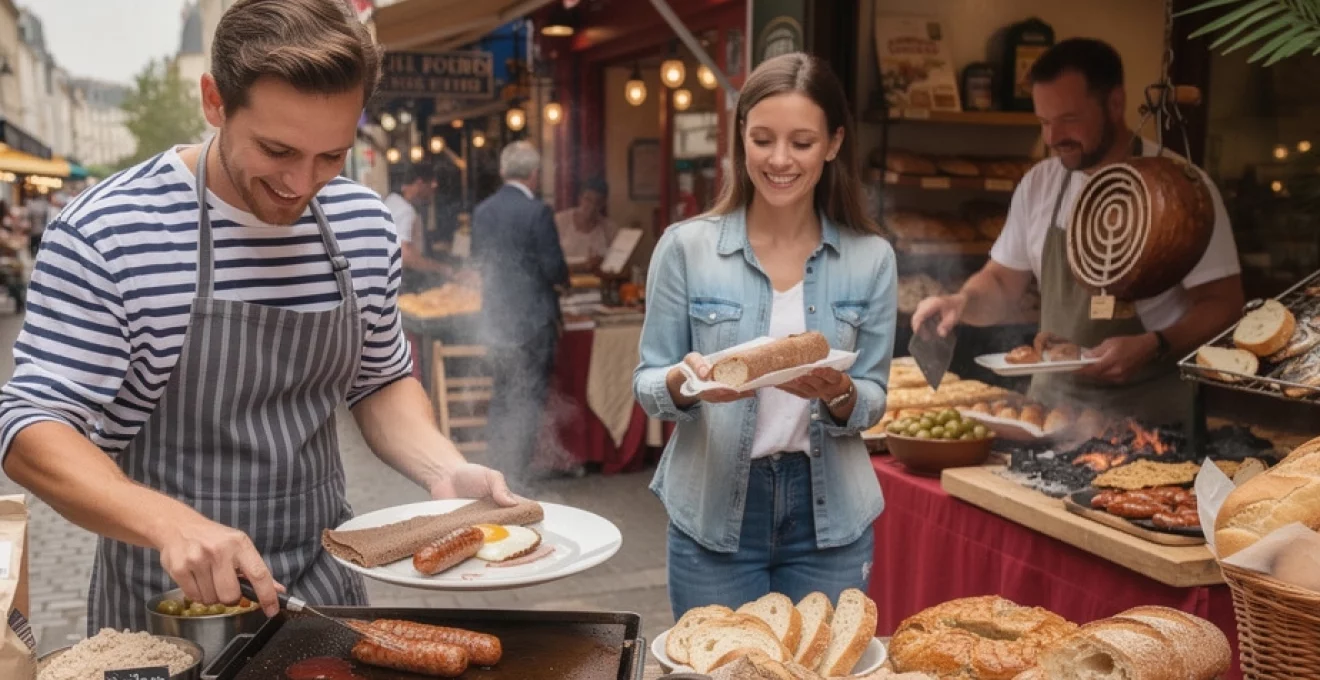
French street food culture extends far beyond the beloved crêpe, offering a remarkable culinary landscape that reflects centuries of regional traditions and artisanal expertise. While tourists often gravitate towards the iconic thin pancakes sold at bustling markets, France’s true street food heritage encompasses an extraordinary diversity of portable delicacies that showcase the country’s gastronomic prowess. From the buckwheat galettes of Brittany to the maritime specialities of Provence, each region contributes unique flavours and preparation techniques that transform simple ingredients into sophisticated handheld meals.
The evolution of French street food mirrors the nation’s complex cultural identity, blending Germanic influences in Alsace-Lorraine with Mediterranean traditions along the Côte d’Azur. Modern food trucks and traditional market stalls coexist harmoniously, creating an ecosystem where centuries-old recipes meet contemporary innovation. This dynamic environment has produced some of Europe’s most distinctive portable cuisine, characterised by meticulous attention to quality ingredients and time-honoured preparation methods that elevate street food from mere convenience to culinary art.
Savoury galettes and regional buckwheat specialities
Brittany’s contribution to French street food centres around the versatile galette, a savoury buckwheat crêpe that serves as both canvas and container for an impressive array of regional ingredients. Unlike its wheat-based cousin, the galette employs sarrasin flour, creating a distinctive nutty flavour profile and darker appearance that immediately distinguishes it from conventional crêpes. This ancient grain, perfectly suited to Brittany’s climate and soil conditions, has sustained the region’s population for centuries while developing into one of France’s most sophisticated street food offerings.
Galette complète with gruyère and jambon de bayonne
The galette complète represents the pinnacle of Breton street food artistry, combining aged Gruyère cheese with premium Jambon de Bayonne and a perfectly cooked egg. This trinity of ingredients requires precise timing and temperature control to achieve the ideal balance of textures. The cheese must melt uniformly without becoming greasy, while the ham warms through without losing its delicate flavour, and the egg yolk remains creamy enough to act as a natural sauce when broken.
Street vendors specialising in galettes complètes often maintain relationships with specific dairy farms in the Comté region to ensure consistent cheese quality throughout the year. The Jambon de Bayonne, protected by AOC designation, adds a subtle saltiness that complements rather than overwhelms the earthy buckwheat base. Preparation techniques passed down through generations ensure that each galette achieves the characteristic lacy edges and tender centre that distinguishes authentic Breton street food from mass-produced imitations.
Galette saucisse bretonne traditional preparation methods
The galette saucisse embodies rustic Breton cuisine at its most elemental, wrapping a grilled pork sausage in a warm buckwheat galette with nothing more than butter and perhaps a touch of Dijon mustard. This apparent simplicity masks considerable technical skill, as achieving the perfect galette requires years of practice to master batter consistency, cooking temperature, and timing. Traditional preparation begins with soaking buckwheat flour overnight, creating a fermented base that develops complex flavours impossible to replicate with quick-mix alternatives.
Authentic galette saucisse vendors pride themselves on sourcing sausages from local charcutiers who follow traditional recipes featuring coarse-ground pork, sea salt from Guérande, and carefully selected spices. The cooking process demands split-second timing to ensure the sausage reaches optimal temperature while the galette maintains its characteristic flexibility. Street food artisans often develop signature techniques for folding the galette around the sausage, creating distinctive presentations that become part of their brand identity within local markets.
Sarrasin flour sourcing from brittany’s morbihan region
The Morbihan region produces some of France’s finest buckwheat flour, with specific terroir characteristics that influence flavour profiles and cooking properties. Local mills maintain traditional stone-grinding techniques that preserve the grain’s natural oils and complex flavour compounds, resulting in flour that produces galettes with superior taste
and texture. Many Breton crêperies and street stalls advertise the precise origin of their sarrasin, highlighting small family-run farms in Morbihan that prioritise low-input, sustainable agriculture. For travellers keen to taste authentic French street food, looking for mentions of “100% blé noir de Bretagne” on menus is a reliable indicator of quality. You will notice the difference immediately: the resulting galettes are more fragrant, with a slight bitterness and an elastic crumb that folds neatly around generous fillings without cracking.
Beyond flavour, sarrasin flour from Morbihan also performs better on the traditional billig (cast-iron griddle) used by expert galette makers. Its specific protein structure allows for ultra-thin yet robust pancakes, essential for street vendors who need to work quickly during peak hours. As demand for high-quality buckwheat has grown alongside the resurgence of regional French street food, cooperatives in Morbihan have invested in modern milling facilities while preserving age-old stone-grinding methods. This synergy of tradition and technology ensures that the humble galette remains one of the most compelling French street foods to try beyond crêpes.
Andouille de guémené integration techniques
For those seeking a more assertive flavour profile, the integration of Andouille de Guémené into buckwheat galettes offers an unforgettable encounter with Breton charcuterie. This smoked tripe sausage, produced according to strict regional standards around the town of Guémené-sur-Scorff, brings layers of smokiness and gentle spice that pair beautifully with nutty buckwheat. Street vendors who work with andouille often slice it into thin rounds and lightly sear it on the griddle before adding it to the galette, intensifying its aroma while rendering some of the natural fat.
Balancing such a powerful ingredient requires thoughtful construction of the galette. Many artisans add a base of caramelised onions or slow-cooked leeks to introduce sweetness, then finish with a modest amount of cheese or a spoonful of crème fraîche to soften the edges of the andouille’s flavour. The folding technique also matters: by enclosing the sausage slices in a tight square fold, vendors create an almost sandwich-like parcel that is easy to eat with one hand while wandering a Breton market. If you enjoy bold, heritage-driven French street food, an andouille galette is a benchmark experience that captures Brittany’s rustic soul in portable form.
Artisanal charcuterie street preparations
While Brittany excels with buckwheat-based specialities, many French regions express their culinary identity through artisanal charcuterie adapted to street food formats. From bustling Parisian markets to village fairs, grills and planchas sizzle with sausages, skewers and cured meats transformed into quick, satisfying meals. The best vendors treat charcuterie with the same respect as fine dining restaurants, paying close attention to cooking temperatures, resting times and serving methods that showcase each product at its peak.
In recent years, renewed consumer interest in traceability and traditional breeds has further elevated charcuterie-focused French street food. Producers highlight free-range pork, heritage cattle and even lamb raised on specific pastures, knowing that informed travellers want to understand the story behind every bite. This emphasis on provenance turns a simple sandwich or skewer into a lesson in French regional gastronomy. As you explore markets and food halls, you will notice how different vendors adapt classic products such as merguez, rillettes or boudin noir for convenient, on-the-go enjoyment.
Merguez grilling techniques at marché des enfants rouges
At Paris’s historic Marché des Enfants Rouges, one of the city’s oldest covered markets, the aroma of sizzling merguez sausages often guides visitors more effectively than any map. These slender lamb or beef sausages, seasoned with cumin, paprika and harissa, require careful grill management to avoid drying out. Skilled vendors maintain zones of varying heat on their planchas or charcoal grills, starting the merguez over high flames to sear the casing before moving them to a gentler zone to finish cooking through.
To transform merguez into a satisfying French street food, many stalls tuck them into split baguettes or soft flatbreads with a choice of condiments and grilled vegetables. The contrast between the crisp bread, juicy sausage and cooling sauces such as yoghurt-mint or harissa-mayo creates a balanced, multi-layered bite. Have you ever noticed how the best street sandwiches seem to stay intact until the final mouthful? That is no accident: vendors at Marché des Enfants Rouges often toast the bread lightly and stagger the placement of sausages and garnishes to prevent sogginess, an approach as strategic as building a sturdy bridge.
Rillettes du mans serving temperature optimisation
Rillettes du Mans, a slow-cooked pork spread from the Sarthe region, may not immediately seem like an obvious street food candidate. Yet in markets and food festivals across western France, you will find vendors assembling baguette sandwiches generously filled with this silky preparation. The secret lies in serving temperature: too cold, and the rillettes remain hard and waxy; too warm, and the fat separates, making the bread greasy. Most experienced sellers aim for a window around 12–16°C, where the texture is spreadable but cohesive.
To achieve this in a street environment, rillettes are often stored in insulated containers, then brought out in small batches to avoid repeated temperature shocks. Some vendors briefly warm the bread before spreading, which softens the rillettes just enough through residual heat. The result is a sandwich that feels indulgent but not heavy, ideal for travellers looking to sample authentic French street food without committing to a long restaurant lunch. Think of it as the French equivalent of a premium deli roll, but with centuries of rural know-how packed into every mouthful.
Boudin noir blood sausage regional variations
Boudin noir, France’s celebrated blood sausage, appears in numerous regional forms, many of which lend themselves surprisingly well to street-style presentations. In Normandy, for example, you may encounter boudin noir grilled and served with warm apple compote in a soft roll, a portable nod to the region’s famous cider orchards. In the southwest, versions enriched with onions, chestnuts or even Espelette pepper provide deeper, spicier flavours that pair beautifully with grilled peppers or roasted potatoes in paper cones.
Cooking boudin noir for street service demands finesse, as the sausage is delicate and prone to bursting if handled roughly. Vendors often slice it into thick rounds and sear it gently on a plancha, allowing the exterior to crisp while the interior remains creamy. Some even dust the slices lightly with flour beforehand, creating a thin crust that protects the filling, much like a batter shields fish in classic fish-and-chips. For visitors curious about more adventurous French street foods beyond crêpes and croque-monsieur, tasting boudin noir in a market setting provides an accessible, well-executed introduction to this traditional delicacy.
Pâté de campagne preservation standards for street vendors
Pâté de campagne, or country-style pâté, is another cornerstone of French charcuterie that transitions naturally into street food through simple yet refined sandwiches. Because it contains a mix of meats, liver and spices, maintaining strict hygiene and temperature control is crucial when serving pâté outdoors. French regulations typically require chilled storage below 4°C and encourage vendors to use refrigerated display cases that protect the product while still allowing customers to admire its rustic marbling.
Many reputable vendors portion pâté de campagne in advance, wrapping individual slices in compostable paper to minimise handling during busy service. This not only speeds up assembly of baguette sandwiches but also reduces oxidisation, preserving both colour and flavour. When you watch a stallholder carefully layer a slice of pâté, a few cornichons and perhaps a smear of strong mustard into fresh bread, you are witnessing a daily ritual that balances safety with pleasure. In a way, these preservation standards act like a well-tuned traffic system: largely invisible when everything works, but essential to keeping the flow of French street food safe and enjoyable.
Traditional boulangerie street offerings
No exploration of French street food would be complete without stepping into a traditional boulangerie, where the line between bakery and street stall often blurs. For many locals, a quick lunch or late-afternoon snack is as simple as picking up a still-warm baguette sandwich, a slice of quiche or a generously filled pain bagnat and enjoying it on a nearby bench. Unlike restaurant meals, these portable options require no reservations, tipping calculations or lengthy menus—just point, pay and go.
Across France, boulangeries have expanded their offerings to cater to modern, on-the-go lifestyles. Alongside classic jambon-beurre sandwiches, you will find vegetarian options with grilled vegetables and goat’s cheese, as well as seasonal creations featuring ingredients such as roasted pumpkin, Comté cheese or Provençal tapenade. Have you ever stood in front of a bakery counter unable to decide between a savoury tart and a filled baguette? You are not alone, and that abundance of choice reflects how French bakers now see themselves as key players in the country’s street food culture.
- Jambon-beurre: the archetypal French baguette sandwich, combining quality ham, salted butter and crisp bread.
- Quiche lorraine and seasonal quiches: convenient slices eaten by hand, often wrapped in paper for mess-free snacking.
- Fougasse and stuffed breads: tear-and-share loaves studded with olives, cheese or lardons, ideal for picnics.
In major cities such as Paris, Lyon and Bordeaux, data from industry associations indicates that up to 60% of bakery sales around midday now come from takeaway savoury items rather than plain bread. This shift has encouraged bakers to reconsider everything from crumb structure to crust thickness to ensure their creations travel well. For travellers, the practical advice is simple: if you see a steady line of locals at a boulangerie around 12:30 p.m., you have likely found an excellent source of authentic French street food beyond crêpes.
Provence-alpes-côte d’azur maritime street cuisine
Further south, along the sun-drenched shores of the Mediterranean, French street food takes on a distinctly maritime character. The Provence-Alpes-Côte d’Azur region blends French techniques with Italian and North African influences, resulting in a vibrant repertoire of portable dishes centred on seafood, olive oil and aromatic herbs. Stroll through the old ports of Marseille or Nice, and you will encounter stalls serving everything from fried smelt to socca, each bite infused with sea air and sunshine.
One of the most emblematic regional snacks is socca, a thin chickpea pancake cooked in enormous copper pans inside wood-fired ovens, then sliced into rough wedges and eaten with fingers. Traditionally sprinkled with nothing more than salt and pepper, socca exemplifies how a few humble ingredients can become a beloved French street food when technique and timing are perfected. Vendors must manage blistering oven temperatures and rotate the pans constantly to achieve the elusive combination of crisp edges and creamy centre that socca aficionados demand.
Seafood plays a starring role in many other local street specialities. In Marseille, some modern vendors reinterpret the city’s iconic bouillabaisse as sandwiches or wraps filled with marinated fish, fennel and saffron-infused sauces, making the once-formal dish accessible for casual coastal strolls. Along the Riviera, cones of fried anchovies, squid or whitebait are sold from kiosks, echoing similar traditions in neighbouring Italy while remaining firmly rooted in French ingredients and regulations. If you enjoy discovering regional flavours through handheld snacks, this maritime region offers some of the most distinctive French street foods to try beyond crêpes.
Vegetable-based dishes also shine in Provence-Alpes-Côte d’Azur’s street food repertoire. Pan bagnat, essentially a portable version of Niçoise salad served inside a round bread roll, combines tuna, eggs, olives, tomatoes and anchovies in a format that withstands heat and travel. Thanks to its sturdy construction and oil-based dressing, pan bagnat was historically popular with fishermen and workers who needed a satisfying meal that could sit for several hours without spoiling. Today, you will find it in markets and bakeries across the region, a testament to how traditional practicality often shapes the best street food.
Alsace-lorraine germanic-influenced portable foods
In northeastern France, the regions of Alsace and Lorraine reveal how Germanic influences have enriched the country’s street food landscape. Here, portable dishes lean heartier, designed to sustain residents through cold winters and long days in vineyards or workshops. Think of it as the comfort food chapter in the story of French street cuisine, where bread, cheese and smoked meats play leading roles.
One of the most beloved local specialities is flammekueche (or tarte flambée), a thin disk of dough traditionally topped with crème fraîche, onions and lardons, then baked quickly in a wood-fired oven. In street contexts, vendors often cut the finished tart into strips or squares, serving them in cardboard trays for easy sharing, much like pizza slices. The high baking temperatures—often exceeding 300°C—create a blistered, lightly charred crust that contrasts beautifully with the creamy topping, making each bite unexpectedly light despite the rich ingredients.
Another staple is the pretzel (or bretzel in Alsatian), which straddles the border between snack and meal depending on its size and filling. Street vendors sell both plain, salt-dusted versions and more elaborate pretzels stuffed with cheese, ham or even munster cheese, a pungent regional speciality. Have you ever wondered why pretzels keep their glossy surface and distinctive chew even after several hours on display? The answer lies in the alkaline bath they receive before baking, a technique shared with German bakeries and carefully preserved by Alsatian artisans.
- Flammekueche slices: ideal for groups, often garnished with regional cheeses or mushrooms.
- Filled bretzels: hand-held, protein-rich snacks popular at festivals and Christmas markets.
Lorraine contributes its own portable icons, notably pâté lorrain, a puff-pastry-encased terrine of marinated pork and veal. Sold warm or at room temperature in bakeries and market stalls, it functions as a substantial snack or light meal when paired with a simple salad. Across both regions, Christmas markets further amplify the Germanic influence on French street food with mulled wine, sausages and potato-based dishes such as grumbeerekiechle (potato pancakes) served hot from the griddle. For travellers, this corner of France demonstrates how borders can blur on a plate, creating a hybrid street food culture that feels both familiar and distinctly local.
Modern french fusion street food innovation hubs
As much as France treasures its culinary heritage, its street food scene is anything but static. In cities such as Paris, Lyon, Bordeaux and Lille, modern food trucks and covered food halls have become laboratories where chefs experiment with fusing classic French techniques with global flavours. You might find boeuf bourguignon reimagined as a bao bun filling, or duck confit layered into a banh mi-style sandwich—creative mashups that respect tradition while appealing to contemporary palates.
This wave of innovation is driven in part by younger chefs who trained in fine-dining kitchens before seeking more flexible, entrepreneurial paths. Street formats allow them to test concepts quickly, adjust menus based on customer feedback and reduce overhead compared to conventional restaurants. Industry reports suggest that the number of licensed food trucks in France has grown steadily over the past decade, reflecting both consumer demand for high-quality casual dining and municipal support for revitalising urban spaces. For you as a visitor, this means that some of the most exciting French street foods to try beyond crêpes may be found not in historic markets, but at pop-up events and rotating food truck parks.
Innovation hubs also place a growing emphasis on sustainability and dietary diversity. Many vendors prioritise seasonal, locally sourced ingredients, offering vegetarian and vegan twists on classics such as croque-monsieur or tartines topped with organic vegetables and artisanal spreads. Some trucks experiment with gluten-free galettes or plant-based versions of merguez and rillettes, ensuring that more people can participate in the shared pleasure of French street food. It can feel a bit like visiting a contemporary art gallery where every stall represents a different creative vision—only here, you get to eat the exhibits.
For travellers hoping to make the most of these modern French fusion hubs, a few practical tips apply. Checking local event listings and social media accounts is often the best way to locate itinerant trucks and short-lived pop-ups, as many publish their weekly routes online. When in doubt, look for crowds of locals rather than relying solely on tourist guides; word-of-mouth remains a powerful indicator of quality in the street food world. Ultimately, whether you are savouring a centuries-old galette in Brittany or a cutting-edge foie-gras burger in Paris, you are participating in a living tradition that continues to evolve with every new stall, market and food truck that appears on the French culinary map.