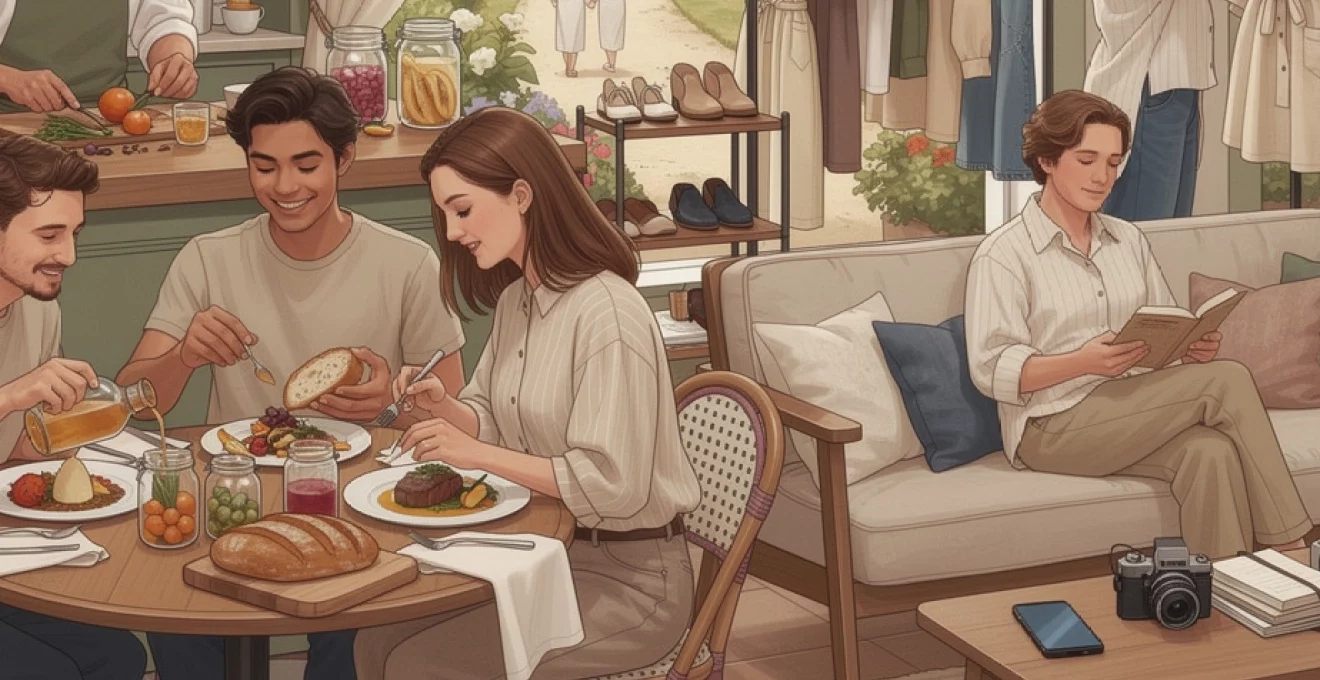
France has always been a cultural trendsetter, from haute couture to culinary excellence. Today, French lifestyle innovations are reshaping global perspectives on wellness, sustainability, and conscious living. With 78% of French consumers actively pursuing healthier lifestyles and the country’s wellness market valued at over €506 billion, France continues to pioneer movements that prioritize quality over quantity, mindful consumption over mass production, and holistic well-being over superficial trends. These emerging lifestyle patterns reflect a sophisticated understanding of modern challenges while drawing inspiration from traditional French values of craftsmanship, community, and joie de vivre.
The convergence of technology, sustainability, and wellness in French culture has created unique approaches to modern living that balance innovation with authenticity. From revolutionary culinary movements to digital minimalism practices, French lifestyle trends demonstrate how traditional elegance can adapt to contemporary concerns about environmental impact, mental health, and meaningful consumption.
French culinary movement: from bistronomy to Plant-Based gastronomy
The French culinary landscape is experiencing a renaissance that extends far beyond traditional haute cuisine. This transformation encompasses everything from accessible fine dining to fermentation artistry, reflecting changing consumer values while maintaining France’s reputation for gastronomic excellence. Modern French food culture emphasizes transparency, seasonality, and innovation within classical frameworks, creating dining experiences that satisfy both palate and conscience.
Bistronomy revolution: Michelin-Starred techniques in casual settings
The bistronomy movement represents perhaps the most significant shift in French dining since nouvelle cuisine. This trend democratizes haute cuisine techniques by presenting them in relaxed, approachable environments without the formality or expense of traditional fine dining. Bistronomy chefs employ sophisticated cooking methods learned in Michelin-starred kitchens while embracing casual service styles and moderate pricing structures.
These establishments typically feature open kitchens, simple décor, and ever-changing menus that reflect seasonal availability and chef inspiration. The movement has gained international recognition, with bistronomy-inspired restaurants opening in major cities worldwide. What sets authentic bistronomy apart is its commitment to ingredient quality and technical precision without pretension or excessive presentation complexity.
Fermentation artisanship: kombucha, kimchi, and artisanal sourdough culture
French fermentation culture has evolved beyond traditional cheese and wine production to embrace global fermentation techniques. Urban French households increasingly experiment with kombucha brewing, kimchi preparation, and sourdough maintenance as both culinary pursuits and wellness practices. This trend reflects growing awareness of gut health benefits and desire for food production control.
Artisanal fermentation workshops have become popular social activities, combining education with community building. French entrepreneurs have established specialized fermentation supply stores and online communities that share techniques and recipes. The movement emphasizes slow food principles while incorporating probiotics and traditional preservation methods into modern dietary routines.
Locavore philosophy: circuit court supply chains and AMAP networks
The locavore movement in France has institutionalized through Association pour le Maintien d’une Agriculture Paysanne (AMAP) networks, which connect consumers directly with local farmers through subscription-based partnerships. These systems guarantee farmers steady income while providing consumers with seasonal, organic produce and transparency about food origins. AMAP participation has increased by 35% over the past five years, demonstrating strong commitment to local food systems.
Circuit court (short supply chain) principles extend beyond produce to include local bread, dairy, and meat distribution networks. Many French cities have established permanent farmers’ markets and food halls that prioritize regional producers. This approach reduces environmental impact while supporting rural economies and preserving traditional farming practices.
Vegan haute cuisine: Plant-Based interpretations of classical french techniques
French chefs are reimagining classical techniques for plant-based cuisine, creating sophisticated vegan dishes that maintain the complexity and refinement associated with French gastronomy. This movement challenges traditional protein-centric French cooking while demonstrating that plant-based cuisine can achieve equivalent culinary sophistication through proper technique and ingredient selection.
Vegan French restaurants now earn critical acclaim and attract non-vegan diners seeking culinary innovation. These establishments employ techniques such as vegetable protein extraction, plant-
protein texturizing, and slow roasting of root vegetables to mimic the depth of classic dishes like boeuf bourguignon or coq au vin. Creamy sauces are recreated with emulsions based on cashew, oat, or almond, while reductions rely on mushroom, seaweed, and fermented vegetable stocks to deliver umami richness without animal products. Rather than simply removing meat or dairy, chefs are rebuilding recipes from the ground up, preserving the structure of a multi-course French tasting menu—apéritif, entrée, plat, fromage, dessert—through a fully plant-based lens.
This vegan haute cuisine wave aligns with broader French wellness trends, particularly the desire to age well and maintain vitality through balanced nutrition. Menus place greater emphasis on fiber, antioxidants, and low-sugar desserts, all while respecting the ritual of shared meals and leisurely dining. As French consumers seek to reconcile health goals with pleasure, plant-based gastronomy offers a blueprint for indulgent yet responsible eating that international restaurants are increasingly eager to replicate.
Digital minimalism and conscious technology consumption practices
Alongside food and fashion, one of the most striking French lifestyle trends reshaping global behavior is digital minimalism. Even as France invests heavily in AI and digital infrastructure, many consumers are looking for ways to reclaim their time, focus, and mental space from constant connectivity. With 64% of French users expressing only slight to moderate trust in social media and 65% showing limited confidence in AI, there is a strong appetite for more intentional, conscious technology consumption. The result is a growing ecosystem of digital detox retreats, slow tech practices, and mindful screen habits that other countries are beginning to emulate.
Digital detox retreats: château du fey and technology-free wellness tourism
Digital detox retreats in France—often hosted in historic châteaux or countryside estates—offer a structured break from screens and notifications. Venues such as Château du Fey in Burgundy have become emblematic of this movement, blending tech-free stays with yoga, meditation, farm-to-table cuisine, and nature immersion. Guests are encouraged (and sometimes required) to surrender smartphones at check-in, replacing endless scrolling with walks in the vineyard, journaling, and in-person conversation.
This form of wellness tourism responds directly to rising concerns around stress, insomnia, and anxiety among French Gen X and Millennials. By disconnecting from devices, participants report improved sleep quality, deeper relaxation, and renewed creativity—benefits that extend beyond the retreat itself. International travelers are increasingly drawn to these experiences, viewing France not only as a destination for gastronomy and culture but also as a place to reset their relationship with technology in a luxurious yet grounded setting.
Slow tech movement: analogue renaissance in urban french households
In many French cities, we see a quiet “slow tech” movement that mirrors the slow food philosophy. Instead of rejecting technology outright, households are choosing fewer, better devices and reintroducing analogue rituals into daily life. Vinyl records, film cameras, fountain pens, and printed books are making a comeback, particularly among younger urban consumers who crave tactile experiences as a counterbalance to constant screen exposure. Owning a mechanical watch or a well-made notebook has become a subtle statement of resistance to disposable digital culture.
This analogue renaissance is often paired with limits on device upgrades and a preference for repair over replacement, which dovetails with France’s broader sustainability and circular economy priorities. Just as you might savor a single glass of good wine rather than a cheap bottle, slow tech encourages you to use fewer apps and gadgets, but with more intention. Internationally, this French approach to technology—treating it like a fine accessory rather than a constant companion—is inspiring people to question whether “more tech” always means “better life.”
Mindful screen time: french parental control apps and family digital contracts
Given concerns over children’s mental health and screen addiction, French families are adopting more structured digital rules at home. Parental control apps developed locally—often in partnership with educators and psychologists—allow parents to set device-free hours, filter content, and monitor usage without fully invading children’s privacy. These tools are designed less as surveillance systems and more as coaching aids that help families discuss healthy digital habits together. In many households, “digital charters” or family contracts outline when and how devices can be used, from no-phones-at-dinner to screen-free Sunday mornings.
This mindful screen time approach reflects the French preference for balance rather than extremism. Rather than banning technology, parents seek to integrate it in ways that support learning, creativity, and connection while protecting sleep, study, and social interaction. For global audiences wondering how to set boundaries without constant conflict, the French model—combining clear rules, dialogue, and supportive tools—offers a practical, exportable framework for healthier digital living.
Artisanal craftsmanship revival: hand-made alternatives to mass production
Interestingly, conscious tech consumption in France often goes hand in hand with a renewed passion for artisanal craftsmanship. As people spend less time online, they rediscover the satisfaction of making and owning physical objects that tell a story—whether it’s hand-thrown ceramics, custom leather goods, or small-batch skincare produced in local ateliers. This revival is not a nostalgic retreat but a modern response to overproduction and disposable culture, emphasizing durability, repairability, and emotional value.
Workshops in pottery, woodworking, calligraphy, and natural cosmetics are thriving in cities like Paris, Lyon, and Bordeaux, attracting both locals and tourists seeking meaningful hands-on experiences. Choosing a hand-made soap over a mass-produced product, for example, becomes a small act of digital minimalism: you trade algorithm-driven advertising for a direct relationship with a maker. As international consumers grow weary of identical, factory-made goods, the French emphasis on savoir-faire and human touch is redefining what “premium” means in the age of automation.
Sustainable fashion: circular economy and ethical consumption models
France’s role as a fashion powerhouse has evolved beyond setting trends on the runway to shaping global conversations around sustainable fashion. With heritage houses like Louis Vuitton, Hermès, and Chanel leading in brand value, there is increasing pressure—and opportunity—to align luxury with responsibility. At the same time, smaller labels and digital-native brands are experimenting with circular economy models that prioritize longevity, repair, resale, and ethical sourcing. The result is a layered ecosystem where second-hand platforms, rental services, and upcycling ateliers sit alongside traditional couture.
Circular fashion in France is driven by both environmental awareness and economic pragmatism. Inflation and shifting consumption habits have made consumers more open to buying pre-owned items, repairing favorite pieces, or renting garments for special occasions. Online marketplaces for second-hand and vintage fashion, many of them French, have popularized the idea that style doesn’t require constant newness. In this context, the “Made in France” or Origine France Garantie labels signal not just prestige but also traceability and local job creation, helping buyers feel more confident in the sustainability of their wardrobe choices.
Ethical consumption models are also gaining ground through transparent supply chains and responsible materials. Brands highlight organic cotton, recycled fibers, plant-based dyes, and low-impact production techniques, often supported by eco-certifications. Some French fashion houses now publish environmental scores or life-cycle analyses of their collections, encouraging customers to factor durability and ecological footprint into purchasing decisions. For international observers seeking to reduce fashion waste without sacrificing aesthetics, the French approach offers a compelling equation: fewer pieces, higher quality, stronger identity.
Another pillar of this sustainable fashion trend is craftsmanship education and transmission. Public and private initiatives support apprenticeships in leatherwork, embroidery, weaving, and tailoring, ensuring that repair and customization remain accessible skills rather than luxury services. This emphasis on maintenance and personalization helps garments live multiple lives across owners and generations. If we picture our wardrobe more like a curated library than a fast-scrolling feed—thoughtfully built, regularly revisited, and occasionally edited—the French circular fashion model becomes a practical, inspiring template.
Wellness culture: holistic health integration in daily french living
Wellness in France is no longer confined to spa weekends or New Year’s resolutions; it is becoming an everyday practice that blends mental, physical, and emotional health. With more than half of French consumers focused on feeling well and 58% considering healthy aging extremely important, holistic health is now seen as a lifestyle rather than a temporary fix. Daily rituals—what you eat, how you move, how you sleep, and how you manage stress—are integrated into a coherent approach to long-term vitality and quality of life.
Physical activity remains at the heart of this wellness culture. Over two in five French consumers exercise regularly, often favoring outdoor activities such as cycling, hiking, and running along riverbanks or in city parks. These choices reflect not only fitness goals but also a desire for fresh air, sunlight, and nature contact—simple yet powerful mood boosters. Meanwhile, dietary strategies prioritize fresh, minimally processed foods, with many households reducing sugar, salt, and ultra-processed snacks in favor of seasonal produce and home-cooked meals. Supplements, especially vitamins and botanicals, are used to support specific goals like immunity, sleep quality, or stress resilience, though always as complements rather than substitutes for good nutrition.
Mental and emotional well-being have moved to the top of the wellness agenda, especially for Gen X and Millennials who report high levels of stress and sleep disturbances. Practices such as mindfulness, yoga, journaling, and even guided breathing apps are integrated into daily routines, sometimes in micro-doses of just five to ten minutes. French wellness retreats often combine these techniques with thermal spa treatments, forest bathing, and digital detox, creating holistic programs that treat the individual rather than isolated symptoms. For individuals abroad wondering how to make wellness sustainable instead of a short-lived challenge, the French model emphasizes realistic, pleasurable habits over rigid discipline.
Importantly, French wellness culture also embraces aesthetics and self-care as part of well-being. Skincare routines, hair rituals, and body care are perceived not as vanity but as moments of pause and tactile comfort. The rise of natural and eco-friendly personal care products, along with beauty tech tools like personalized skin diagnostics, enables consumers to connect appearance with health and ethics. In this way, a nightly skincare routine can feel more like a mini spa ritual than a chore, illustrating how small daily gestures can cumulatively support a balanced, fulfilling lifestyle.
Neo-traditional interior design: maximalist eclecticism and vintage curation
French interiors have long inspired global design trends, from Haussmannian apartments with high ceilings and parquet floors to rustic farmhouses in Provence. Today, a neo-traditional movement is putting a contemporary twist on these classics, favoring curated maximalism over minimalism. Rather than empty white spaces, you’ll find layered textures, bold patterns, and a mix of old and new: antique armoires next to modern lighting, flea-market ceramics beside sleek tech devices discreetly integrated into the décor. The goal is not perfection but personality, with each room telling a story about the people who live there.
Vintage furniture and décor play a central role in this French interior trend, reinforcing sustainability while adding character. Second-hand markets, online resale platforms, and neighborhood brocantes are treasure hunts where you can find everything from mid-century chairs to ornate mirrors at accessible prices. Restoring and repainting these pieces not only reduces waste but also creates unique items that mass-produced furniture simply cannot replicate. Internationally, this approach offers an attractive alternative to short-lived “fast furniture,” encouraging homeowners and renters alike to build spaces slowly, piece by piece, rather than furnishing everything in one click.
Maximalist eclecticism in French homes is also reflected in color choices and art displays. Deep blues, ochres, and terracotta tones are paired with botanical prints, vintage posters, and gallery walls of mismatched frames. Books, records, and travel souvenirs are left in view instead of hidden in storage, making the living space feel lived-in and inviting. This philosophy treats the home more like an evolving collage than a fixed showroom, allowing tastes to shift over time without constant renovation. For those abroad seeking to recreate “French chic” at home, the key takeaway is clear: embrace imperfection, honor your history, and let meaningful objects take center stage.
From a practical perspective, neo-traditional French design often prioritizes multifunctional spaces and small-space solutions, especially in dense urban areas like Paris or Lyon. Fold-out desks, daybeds, and modular shelving support hybrid lifestyles that blend remote work, relaxation, and social gatherings in the same square meters. Here again, form and function meet: thoughtful lighting, textiles, and natural materials make these compact spaces feel cozy rather than cramped. In a world of rising housing costs and shrinking floor plans, this French approach to interior design shows that comfort, style, and sustainability can coexist beautifully—even in a 30-square-meter apartment.
Micro-mobility revolution: urban transportation innovation and infrastructure adaptation
French cities are also at the forefront of a micro-mobility revolution that is transforming how people move through urban spaces. Bicycles, e-bikes, electric scooters, and shared mobility services have surged in popularity as residents seek cleaner, quicker, and more flexible alternatives to cars. Paris, for example, has invested heavily in cycling infrastructure, expanding bike lanes, pedestrian zones, and low-emission areas, all of which support healthier, more sustainable daily commutes. This shift is not only environmental but also cultural, redefining the rhythm of city life.
Micro-mobility aligns closely with broader French lifestyle trends around wellness and local living. Commuting by bike or scooter doubles as a daily workout and a mental reset, often replacing time spent in traffic with fresh air and spontaneous encounters. As hybrid work arrangements become more common, many people now move between home, co-working spaces, cafés, and leisure spots throughout the day, using light, flexible modes of transport. It’s a bit like trading a heavy, inflexible suitcase for a well-designed backpack: mobility becomes more agile, adaptable, and enjoyable.
To support this transformation, French municipalities are rethinking urban planning and infrastructure. Investments in secure bike parking, charging stations for e-bikes and scooters, and integrated ticketing systems with public transport make it easier to combine different modes of travel. Some cities are experimenting with “15-minute city” principles, ensuring that essential services—schools, shops, parks, healthcare—are accessible within a short walk or ride. For international cities grappling with congestion, pollution, and public health issues, the French micro-mobility experiment offers concrete lessons in how infrastructure adaptation can nudge citizens toward better habits without heavy-handed restrictions.
Of course, micro-mobility also raises questions about safety, regulation, and inclusivity. French authorities have had to address concerns around shared scooter clutter, speeding on sidewalks, and equal access for those who cannot cycle. Updated traffic rules, designated parking zones, speed limits, and awareness campaigns are gradually shaping a more mature ecosystem. As we look ahead, the French model suggests that the most successful mobility systems will be those that balance freedom and responsibility—encouraging innovation while protecting public space and community well-being.