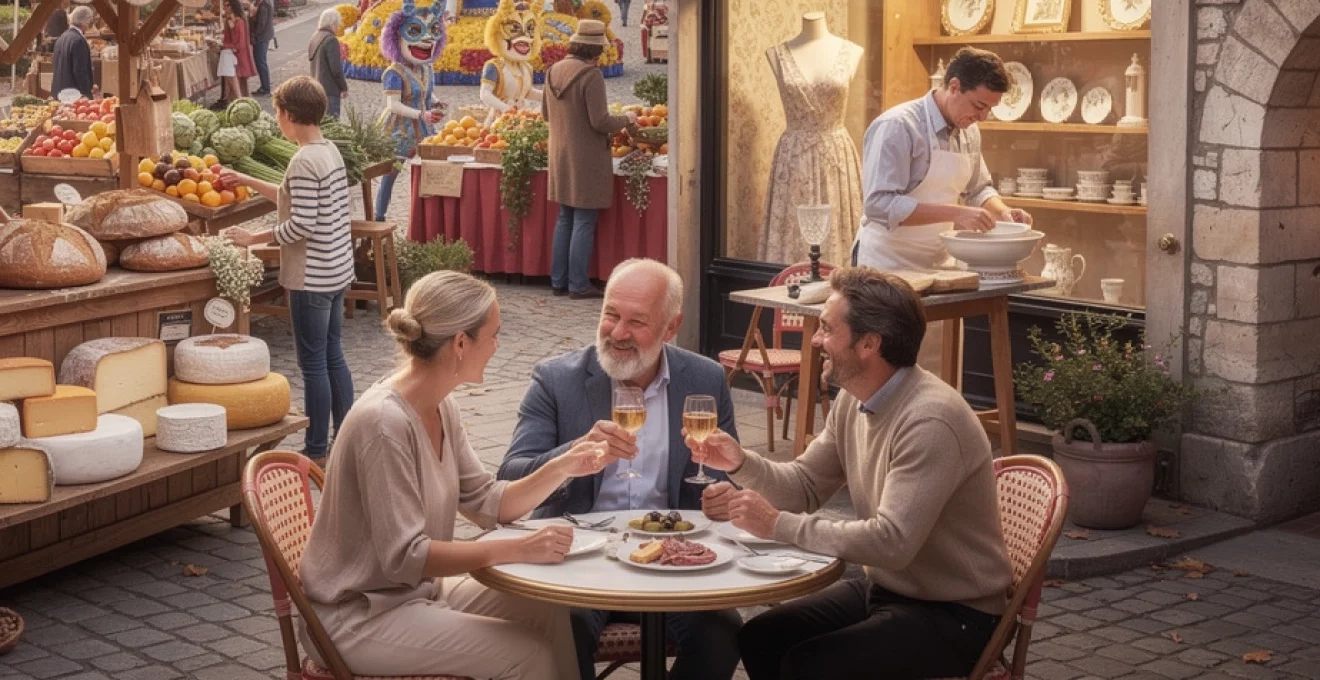
France stands as a remarkable testament to the enduring power of cultural tradition in the modern world. While many nations have seen their ancestral customs fade into memory, French society has managed to preserve and actively practice centuries-old traditions with unwavering dedication. From the daily ritual of selecting fresh bread at the local boulangerie to the elaborate ceremonial observances that mark the seasons, these cultural practices continue to shape French identity and daily life in profound ways.
The persistence of these traditions reflects something deeper than mere nostalgia—they represent a conscious choice by French society to maintain tangible connections to its past while adapting to contemporary realities. These customs serve as cultural anchors, providing stability and continuity in an increasingly globalised world. Understanding these living traditions offers invaluable insight into the French worldview and explains why France remains such a distinctively cultural nation, one where the past and present coexist in remarkable harmony.
Gastronomic heritage: traditional french culinary practices and regional specialities
French gastronomy represents far more than mere sustenance—it embodies a comprehensive philosophy about life, community, and the relationship between humans and their environment. The culinary traditions of France have achieved UNESCO recognition as an Intangible Cultural Heritage of Humanity, acknowledging their fundamental importance to French civilisation. These practices encompass not only specific dishes and preparation methods but also the social rituals, seasonal rhythms, and artisanal knowledge that surround food production and consumption.
The French approach to food emphasises terroir—the unique combination of soil, climate, and human expertise that gives regional specialities their distinctive character. This concept extends beyond wine to encompass everything from cheese and bread to honey and vegetables. Each region of France maintains its own culinary identity, with local traditions passed down through generations of families and professional guilds. The result is a mosaic of flavours and techniques that collectively define French cuisine while celebrating local diversity.
Boulangerie artisanale: daily bread rituals and pain de campagne traditions
The daily purchase of fresh bread remains one of France’s most enduring and widely practised traditions. Every neighbourhood maintains at least one boulangerie artisanale, where master bakers begin work before dawn to ensure fresh loaves are available throughout the day. The baguette, despite its iconic status, represents only one element of a broader bread culture that includes pain de campagne, pain complet, and dozens of regional variations, each with specific preparation requirements and cultural significance.
French bread laws, established in the 1990s, strictly regulate what can be called artisanal bread, ensuring that traditional methods and ingredients remain unchanged. Bakers must complete rigorous training programs that can span several years, learning not only technical skills but also the cultural importance of their craft. The rhythm of daily bread shopping creates natural gathering points in communities, where neighbours exchange greetings and local news while selecting their daily loaves.
Fromagerie culture: AOC protected cheese classifications and terroir expression
France produces over 400 distinct varieties of cheese, with 46 enjoying protected designation of origin (Appellation d’Origine Contrôlée) status. These classifications preserve traditional production methods that have remained largely unchanged for centuries. Each AOC cheese represents not merely a food product but a living expression of specific regional geography, climate, and cultural practices. The production of authentic Roquefort, for instance, requires sheep’s milk from specific breeds grazing on designated pastures, aged in the natural caves of the Aveyron region.
French fromageries serve as cultural institutions where maîtres fromagers guide customers through complex selection processes based on ripeness, season, and intended use. These specialists undergo extensive training to understand the subtle characteristics of each cheese variety and their proper handling requirements. The cheese course remains an integral part of formal French meals, served between the main course and dessert, allowing diners to appreciate the full complexity of flavours and textures.
Marché aux puces: weekly market systems and seasonal produce procurement
Weekly markets continue to serve as vital community institutions throughout France, maintaining trading patterns established during medieval times
These markets function as far more than simple retail spaces; they embody a living system of seasonal eating and direct relationships between producers and consumers. In many towns, the marché still operates on the same weekday and in the same square it has occupied for centuries, structuring local life around its timetable. Shoppers learn to anticipate the arrival of asparagus in spring, sun-ripened tomatoes in summer, wild mushrooms in autumn, and hearty root vegetables in winter, adjusting their household menus accordingly. This cyclical rhythm reinforces an intuitive understanding of sustainability and seasonality that many other countries are now trying to recover.
Alongside fruit and vegetable stalls, you will typically find butchers, fishmongers, charcutiers, and artisanal producers of honey, jams, and regional specialities. These direct-sales environments allow for detailed conversations about origin, production methods, and cooking techniques, turning a routine shopping trip into an informal culinary education. For visitors, participating in a weekly market is one of the most accessible ways to experience traditional French culture in practice, offering a vivid snapshot of how historical trading patterns continue to underpin contemporary food systems.
Apéritif ceremonies: pastis consumption and social dining protocols
The apéritif remains a cornerstone of French social life, marking the transition between the working day and the shared evening meal. Far from being a simple pre-dinner drink, the apéro constitutes a complex social ritual governed by subtle codes of hospitality and conviviality. In many regions—particularly in the south—this moment is synonymous with pastis, an anise-flavoured spirit diluted with cold water until it turns opalescent. The careful preparation of this drink, adjusting the water ratio to personal taste, becomes an almost meditative act that signals a slowing of pace.
Traditional apéritif gatherings include modest but thoughtful accompaniments: olives, slices of saucisson, small cubes of cheese, or simple crackers and nuts. The objective is not to eat heavily but to stimulate the appetite and create space for conversation. Guests typically wait until everyone has been served before raising glasses and offering a collective “à votre santé” or more informal “tchin-tchin”. Observing these protocols—such as not drinking before the host and avoiding overindulgence before the meal—demonstrates respect for the underlying philosophy of French dining, in which pleasure is inseparable from moderation and social connection.
Religious and secular festival calendars: ceremonial observances across french regions
France’s annual calendar remains deeply structured by a blend of religious feast days and secular civic celebrations. Even as active religious practice has declined in some areas, the associated traditions continue to shape community life, school holidays, and public rituals. Many of these festivals represent a layering of older pagan customs with Christian observances and, more recently, republican values, illustrating how French culture absorbs and reinterprets its own history rather than discarding it.
Regional variation is particularly strong in the realm of festivals. The way Christmas is celebrated in Alsace, for example, differs markedly from Provençal traditions, just as the Fête de la Musique has a different character in Paris than in a small Breton town. Yet across this diversity runs a common thread: festivals are moments when local identity becomes visible in public space, through costume, food, music, and ritual. For travellers seeking authentic cultural experiences, aligning a visit with these ceremonial dates can provide rare access to the intimate workings of French communal life.
Fête de la Saint-Jean: midsummer fire festivals and pagan-christian syncretism
The Fête de la Saint-Jean, celebrated around 24 June, offers a striking example of how pre-Christian solstice rituals have been absorbed into Christian and later secular frameworks. Traditionally associated with bonfires lit at dusk, the festival symbolises purification, protection, and the triumph of light at the height of summer. In rural areas of regions like Brittany, Occitanie, and the Massif Central, villagers still gather around towering fires, sometimes jumping over smaller flames for good luck or walking in procession with lit torches.
Historically, the Church reinterpreted these mid-summer rites as honouring Saint John the Baptist, while allowing many of the older symbolic practices to persist. In contemporary France, the festival often features folk music, communal dancing, and local food stalls, with municipal authorities organising firework displays in larger towns. You might experience it as a family-friendly evening concert or as a more intimate village gathering, but in both cases the underlying theme remains the same: reinforcing social bonds through shared participation in the elemental spectacle of fire and light.
Carnaval de nice: mediterranean masquerade traditions and corso fleuri parades
The Carnaval de Nice ranks among the oldest and most spectacular carnival celebrations in the world, with documented roots in the Middle Ages. Today, it transforms the Côte d’Azur city each February into a theatrical stage of floats, costumes, and elaborate satirical displays. The centrepiece of the festivities is the Corso Carnavalesque, a series of parades featuring giant papier-mâché figures that often caricature political leaders, celebrities, and cultural icons, reflecting the French tradition of witty social commentary.
Equally emblematic is the Corso Fleuri, or Battle of Flowers, during which elaborately decorated floats covered in local blooms progress along the Promenade des Anglais. Performers in ornate costumes throw thousands of flowers into the crowd, symbolically sharing the region’s floral abundance with spectators. While the event attracts large numbers of international visitors, it remains deeply rooted in local identity, drawing on Mediterranean masquerade traditions and providing a vital economic and cultural boost to the city in the quiet season between winter and spring.
Toussaint commemorations: cemetery visitation customs and chrysanthemum symbolism
La Toussaint, observed on 1 November, is one of the clearest examples of how religious observance and family tradition remain intertwined in contemporary France. Officially All Saints’ Day in the Catholic calendar, it functions in practice as a national moment of remembrance for deceased relatives and friends. Families typically visit cemeteries to clean gravestones, light candles, and place fresh flowers, with cemeteries across the country transformed by vibrant displays of chrysanthemums.
The chrysanthemum has acquired a particularly strong symbolic association with mourning and respect for the dead in France. Because of this, offering chrysanthemums as a gift in any other context is widely considered inappropriate—a cultural nuance that often surprises visitors. Despite ongoing secularisation, Toussaint remains a public holiday, schoolchildren enjoy a two-week break around this date, and florists and garden centres experience one of their busiest periods of the year. The enduring observance of these customs underlines how commemoration and care for ancestors continue to structure French family life.
Épiphanie celebrations: galette des rois rituals and fève collection practices
L’Épiphanie, celebrated on the first Sunday of January or on 6 January, extends the festive season through the beloved tradition of the galette des rois. This puff-pastry cake, typically filled with almond frangipane, conceals a small porcelain or plastic charm known as the fève. The cake is cut into as many slices as there are people present, plus one extra “for the poor” or an unexpected guest—a custom that subtly evokes historical values of charity and hospitality.
To ensure fairness in the distribution of the hidden charm, a child is often asked to sit under the table and designate who receives each slice. Whoever discovers the fève in their portion becomes “king” or “queen” for the day and wears the paper crown that accompanies the cake. Over time, collecting fèves has become a popular hobby; limited-edition series featuring themes from regional heritage to famous artworks are released each year. This simple domestic ritual, repeated in homes, offices, and schools across the country, illustrates how playful traditions can sustain a sense of shared cultural identity long after their religious origins fade from everyday awareness.
Language preservation movements: regional linguistic heritage and dialectal maintenance
While standard French dominates public life, administration, and media, France is also home to a rich tapestry of regional languages and dialects, many of which predate the modern French state. Breton in Brittany, Occitan in the south, Alsatian in Alsace, Basque in the southwest, and Corsican on the island of Corsica each embody distinct cultural histories and literary traditions. For much of the 19th and 20th centuries, these languages were actively discouraged in schools in favour of linguistic unity, leading to a decline in everyday use.
In recent decades, however, grassroots organisations, cultural associations, and some regional authorities have worked to revitalise this linguistic diversity. Immersion schools known as Diwan (for Breton), Calandreta (for Occitan), or Ikastola (for Basque) now offer bilingual education, and regional-language media outlets produce radio programmes, newspapers, and online content. Street signs in many areas appear in both French and the local language, visually asserting the survival of these identities. Although UNESCO still classifies several of these languages as vulnerable or endangered, their ongoing use in music, theatre, and festivals suggests a dynamic process of cultural renegotiation rather than simple decline.
For visitors interested in French cultural traditions, paying attention to these linguistic nuances can open a deeper level of understanding. Hearing a café conversation switch effortlessly between French and Alsatian, or seeing menus in both French and Basque, reminds us that national identity in France has always been plural. Supporting local bookshops, attending regional concerts, or simply learning a few words in the local language are modest yet meaningful ways to engage with this living heritage.
Artisanal craft guilds: traditional manufacturing techniques and compagnonnage systems
Beyond food and festivals, traditional French culture continues to thrive through the survival of highly specialised artisanal crafts. Many of these professions—ranging from stone masonry and carpentry to pastry-making and tailoring—are structured around the historic system of compagnonnage. Originating in the Middle Ages, this network of craft guilds combines rigorous technical training with strong ethical codes and a philosophy of lifelong learning. Apprentices undertake a Tour de France of placements in different workshops, acquiring regionally varied techniques and building a professional and social network that often lasts a lifetime.
The modern French state recognises this artisanal excellence through distinctions such as Meilleur Ouvrier de France (Best Craftsperson of France), a title awarded after demanding competitions that test both skill and creativity. Winners receive a tricolour-collared jacket and national recognition as masters of their craft. Whether in a family-run bakery, a couture atelier, or a porcelain factory, these systems ensure that traditional manufacturing techniques are not merely preserved in museums but actively practised and adapted to contemporary markets.
Haute couture ateliers: hand-stitching methods and parisian fashion house legacy
Parisian haute couture represents one of the most visible expressions of French artisanal heritage, yet its survival depends on a largely invisible ecosystem of specialist workshops. Within the grandes maisons, petites mains—literally “little hands”—execute thousands of hours of hand-stitching, embroidery, pleating, and finishing work on each collection. Techniques such as broderie Lunéville (a distinctive beading and embroidery method), plissé soleil pleating, or feather work require years of dedicated apprenticeship and are transmitted within small teams like closely guarded family recipes.
These ateliers often collaborate with independent maisons d’art—historic houses specialising in buttons, artificial flowers, lace, or embroidery—that have supplied Parisian fashion since the 19th century. Initiatives like Chanel’s acquisition and support of several such houses demonstrate how luxury brands now play a crucial role in safeguarding fragile artisanal ecosystems. For every runway moment photographed and shared worldwide, there are countless hours of traditional handiwork underpinning it, ensuring that the legacy of Paris as a fashion capital remains grounded in concrete, intergenerational know-how.
Limoges porcelain production: kaolin processing and decorative gilding techniques
The city of Limoges in central France has been synonymous with fine porcelain since the late 18th century, when deposits of high-quality kaolin clay were discovered nearby. This mineral, combined with feldspar and quartz, forms the basis of the translucent, high-fired porcelain that made Limoges famous across Europe. The production process remains remarkably faithful to its origins: raw clay is purified, shaped, dried, biscuit-fired, glazed, and then fired again at temperatures exceeding 1,300°C to achieve its signature whiteness and durability.
Decoration adds another layer of specialised craftsmanship. Artisans trained in traditional techniques apply cobalt blue underglaze painting, transfer prints, or hand-painted motifs before the final firing. Gilders use fine brushes to apply 24-carat gold accents, sometimes burnishing them by hand to achieve a particular lustre. While industrial methods have entered the sector, many Limoges manufacturers continue to maintain small workshops dedicated to bespoke pieces and restoration work. Visiting a porcelain factory showroom or museum offers tangible insight into how geology, chemistry, and artistry interact in this enduring French craft tradition.
Champagne méthode traditionnelle: riddling processes and cellar master expertise
The world-famous sparkling wines of Champagne are the product of a painstaking process known locally as méthode traditionnelle, itself a carefully preserved cultural tradition. After an initial fermentation, still wines are bottled with a mixture of sugar and yeast to provoke a second fermentation, during which carbon dioxide becomes trapped in the liquid, creating bubbles. Over months or years of ageing on the lees (dead yeast cells), the wine develops complexity and its characteristic fine mousse. Managing this transformation requires the expertise of a chef de cave, or cellar master, whose palate and experience guide decisions on blending, ageing duration, and dosage.
One of the most emblematic manual tasks in this process is remuage, or riddling, in which bottles are gradually rotated and tilted to encourage sediment to collect in the neck. Traditionally carried out by hand on wooden racks called pupitres, this work demands precision and rhythm, with experienced riddlers capable of turning tens of thousands of bottles per day. While many houses now use automated gyropalettes, manual riddling is still practised for prestige cuvées and as a way of maintaining the craft’s heritage. For visitors touring Champagne’s chalk cellars, observing these methods firsthand reveals how deeply time, patience, and human judgement remain embedded in the production of a drink often associated with effortless celebration.
Social etiquette frameworks: contemporary applications of historical courtesy systems
French social life continues to be structured by a nuanced system of etiquette that can initially seem formal to outsiders but in practice serves to create clarity and mutual respect. Many of these codes evolved in the salons and courts of the Ancien Régime, where precise rules governed everything from forms of address to seating arrangements. While the context has shifted from aristocratic drawing rooms to offices, cafés, and public transport, the underlying principles of measured interaction and clear boundaries endure.
One of the most fundamental expectations is the ritual of greeting. Saying “bonjour” upon entering a shop, before asking a question, or when joining a group is not optional politeness but a basic acknowledgement of another person’s presence. Similarly, the distinction between the formal vous and informal tu remains significant, signalling levels of familiarity and respect. You might wonder whether these conventions feel restrictive; in reality, many French people perceive them as liberating, providing a shared framework that reduces ambiguity in social situations.
At the table, etiquette continues to play a central role in expressing cultural values. Keeping both hands visible above the table, waiting for everyone to be served before beginning to eat, and responding to a host’s “bon appétit” are all simple but meaningful gestures. In professional contexts, exchanging handshakes on arrival and departure, using titles where appropriate (Madame, Monsieur), and avoiding overly personal questions with new acquaintances help maintain a respectful distance that can later soften into familiarity. For visitors, observing and gently adopting these practices is one of the most effective ways to integrate smoothly into French daily life and to experience firsthand how historical courtesy systems continue to shape contemporary social interactions.