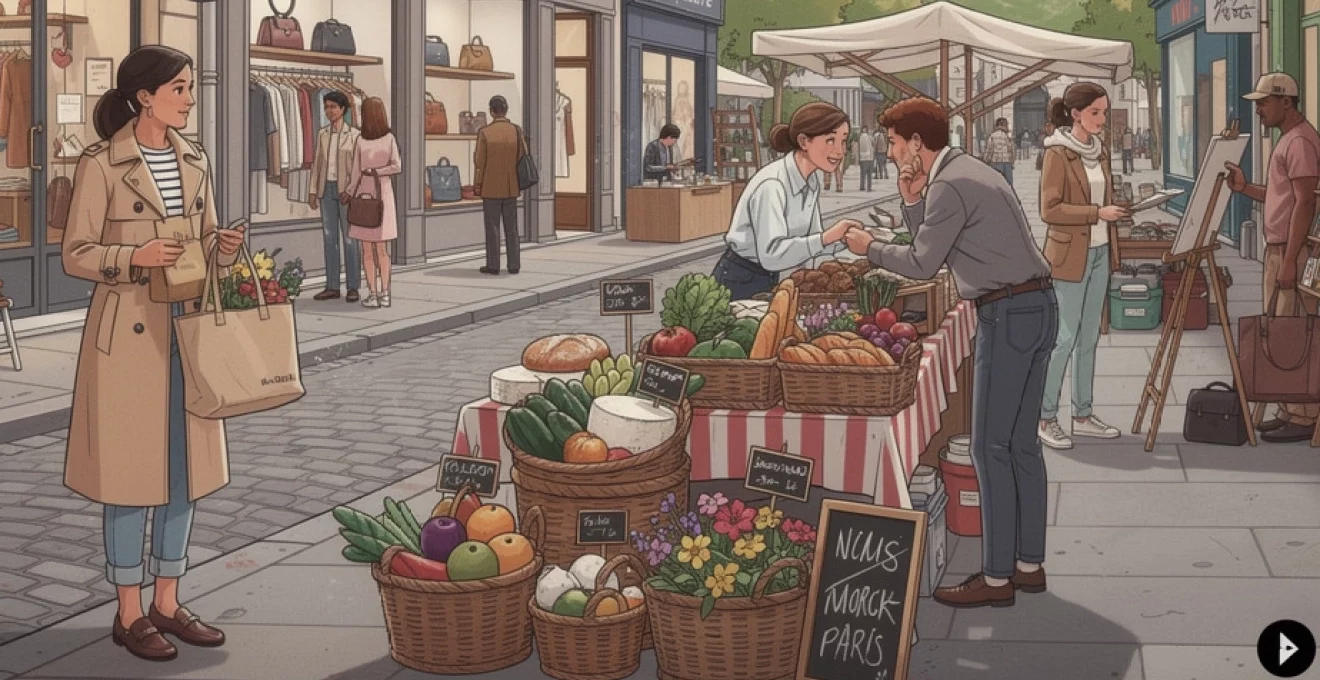
Paris transforms shopping from a mundane necessity into an art form, where each purchase becomes a carefully curated expression of French savoir-vivre. Beyond the tourist-packed flagship stores along the Champs-Élysées lies a sophisticated network of neighbourhood boutiques, artisan workshops, and centuries-old markets that reveal the authentic Parisian shopping experience. Understanding these local systems—from the morning ritual of selecting the perfect baguette to navigating the complex etiquette of vintage shopping at the Marché aux Puces—distinguishes the informed visitor from the casual tourist. Mastering Parisian shopping protocols opens doors to exclusive experiences, better prices, and the kind of insider access that transforms a simple purchase into a cultural exchange.
Decoding parisian shopping districts: from arrondissements to quartiers
Each Parisian arrondissement functions as a distinct shopping ecosystem, with its own retail personality, price points, and cultural codes. The 1st arrondissement centres around luxury retail theatres like Place Vendôme and the newly renovated Samaritaine department store, where international fashion houses stage their most elaborate flagship experiences. Meanwhile, the 3rd and 4th arrondissements house Le Marais, a labyrinth of medieval streets now populated by cutting-edge designers, vintage specialists, and artisan workshops that cater to both locals and fashion insiders.
The 6th and 7th arrondissements encompass Saint-Germain-des-Prés, historically the intellectual heart of Paris and now a sophisticated blend of literary cafés, contemporary art galleries, and established fashion boutiques. This district attracts Parisians seeking timeless pieces rather than trend-driven purchases, with shops like Le Bon Marché department store offering carefully curated selections that reflect refined French taste. The shopping rhythm here moves more slowly, encouraging browsing and conversation rather than quick transactions.
The key to authentic Parisian shopping lies not in following tourist guides, but in understanding how locals move through their neighbourhoods, treating each purchase as part of a larger lifestyle philosophy.
Le marais shopping ecosystem: vintage boutiques and artisan workshops
Le Marais operates on a different temporal schedule than the rest of Paris, with many shops remaining open on Sundays when other districts close entirely. This neighbourhood attracts both serious collectors searching for pièces rares and young Parisians hunting for affordable vintage finds. The Rue des Rosiers serves as the main commercial artery, but the most interesting discoveries happen along the smaller cross streets like Rue Vieille du Temple and Rue de Saintonge.
Vintage shopping in Le Marais requires understanding the difference between dépôt-vente (consignment shops), friperies (second-hand stores), and specialist boutiques focusing on particular decades or designers. The most respected vintage dealers maintain relationships with estate sale companies and private collectors, often receiving first access to exceptional pieces before they reach the public market.
Saint-germain-des-prés luxury retail landscape: designer flagships and concept stores
Saint-Germain shopping culture emphasises quality over quantity, with boutiques that have maintained their locations for decades building loyal clienteles through personalised service. The Boulevard Saint-Germain corridor houses flagship stores for established French brands, while the side streets contain smaller boutiques specialising in everything from artisanal perfumes to handmade shoes. Shopping here involves longer conversations with sales associates who often know customers by name and purchasing history.
The concept store phenomenon originated in this district, with spaces like Merci pioneering the combination of fashion, home goods, books, and café culture under one roof. These multi-brand retailers carefully curate their selections to tell cohesive stories about contemporary French lifestyle, making each visit feel like exploring a private collection rather than browsing commercial inventory.
Montmartre shopping microcosm: artist studios and independent retailers
Montmartre’s shopping scene centres around Place du Tertre and the winding streets leading to Sacré-Cœur, where artist studios double as retail spaces and independent boutiques occupy centuries-old buildings. The district attracts
more inquisitive travellers and creative professionals who value one-of-a-kind objects over mainstream brands. Around Rue des Abbesses and Rue Houdon, you’ll find small-run clothing labels, illustration shops, and ateliers where you can speak directly with the maker about fabrics, finishes, and customisation. Many studios keep irregular hours, so it’s worth checking door signs or social media before climbing the hill specifically to shop.
To shop Montmartre like a local, move away from the tourist traps selling mass-produced prints near Sacré-Cœur and head down towards Lamarck–Caulaincourt or Jules Joffrin. Here, slow fashion boutiques prioritise traceable production, and ceramics workshops sell pieces in limited quantities that rarely appear online. Think of Montmartre as an open-air showroom: you are not only buying an object, but also entering a conversation about process, inspiration, and the neighbourhood’s artistic heritage.
Belleville market dynamics: emerging brands and alternative shopping
Belleville, straddling the 19th and 20th arrondissements, functions as an incubator for emerging brands and experimental retail models. Former industrial spaces have been converted into shared studios, pop-up showrooms, and hybrid venues that combine galleries, fashion, and music. The shopping experience here often feels closer to visiting a creative residency than a traditional boutique, with designers present to explain their approach to upcycling, sustainable materials, or limited drops.
Street-level commerce in Belleville is shaped by its strong immigrant communities and weekly markets that stretch along Boulevard de Belleville. You’ll find everything from North African spices to second-hand electronics and discount clothing, often at prices significantly lower than in central Paris. For a more curated experience, explore side streets like Rue de Belleville and Rue Julien Lacroix, where small labels test new collections with local audiences before scaling up. Shopping in Belleville demands flexibility: stock rotates quickly, collaborations appear without much notice, and cash is often preferred, especially at street markets.
Mastering french retail etiquette and cultural shopping protocols
Parisian shopping etiquette can feel like an unwritten rulebook, but once you understand the logic, interactions become far smoother. French retail culture prioritises respect and clearly defined roles: the customer is welcome, but they are entering the shopkeeper’s domain. This is why seemingly small gestures—how you greet staff, how you handle merchandise, when you ask for another size—carry disproportionate weight. Ignoring these codes can result in cool service; following them often unlocks warmer exchanges, insider recommendations, and sometimes better treatment during busy periods.
Rather than viewing these protocols as rigid rules, think of them as choreography. When you move in rhythm with local expectations, the experience feels effortless. When you move against it, friction appears. Learning a few key phrases and gestures will help you navigate everything from luxury flagships in Saint-Germain to tiny vintage shops in Le Marais with confidence and ease.
Bonjour-au revoir ritual: essential greeting protocols in parisian boutiques
The single most important rule of shopping in Paris is the bonjour–au revoir ritual. Whenever you enter a boutique, even if you only intend to browse, you should make eye contact and say “Bonjour Madame” or “Bonjour Monsieur.” Skipping this greeting can be interpreted as rude or dismissive, and may explain why some visitors feel they receive “cold” service. You are essentially announcing your presence and acknowledging that you are stepping into someone else’s professional space.
When you leave—whether you bought anything or not—always say “Merci, au revoir.” This small courtesy signals that you appreciated the time and access to the space, even if you didn’t make a purchase. In crowded shops, a nod and a soft “merci” as you exit is usually enough. Think of these rituals as the opening and closing brackets of your shopping interaction: they frame the entire experience and set the tone for everything in between.
Désolé strategy: navigating french customer service expectations
French customer service tends to be less overtly accommodating than Anglo-American models, but it is not unfriendly—just more bounded. Staff are there to assist when needed, not to hover or upsell, which is why you might initially feel ignored. If you accidentally knock something over or unfold multiple items while browsing, a simple “Désolé” or “Pardon” can quickly defuse tension and show that you respect the space and the work required to maintain it.
When you do need help, call on staff with a polite “Excusez-moi, s’il vous plaît” and give them a moment to finish what they’re doing. Demanding immediate attention or snapping fingers is a guaranteed way to receive minimal assistance. You can think of French customer service like a formal dinner: you are expected to signal discreetly when you need something, and in return, you’ll usually receive thoughtful, if not overly effusive, attention.
Lunch closure navigation: understanding 12h-14h shopping blackouts
While major department stores and chains now stay open through lunch, many independent boutiques and specialty retailers still close between roughly 12:00 and 14:00. This midday pause reflects broader French work culture, which values a proper lunch break away from the counter. If you arrive at a small shop at 13:15 and find the shutters half-down, it’s not bad luck; it’s simply the daily rhythm of the neighbourhood. Planning your shopping routes with this “blackout” in mind will save you frustration.
A practical strategy is to schedule department store visits, covered passages, or larger supermarkets during this 12h–14h window, and focus on smaller ateliers and épiceries fines in the morning or late afternoon. In some areas, especially residential districts, closures can extend to 15:00, particularly on Mondays. Checking opening hours online is helpful, but not foolproof—Paris remains a city where hand-written signs on doors still carry more weight than digital listings.
Tutoiement vs vouvoiement: formal address systems in retail interactions
Understanding tutoiement (“tu”) versus vouvoiement (“vous”) is crucial for polite shopping in Paris. As a visitor, you should always start with “vous” when addressing staff, even if they appear young or the environment is casual. Using “tu” too quickly can come across as overly familiar or disrespectful, similar to calling a stranger by a nickname in English before being invited to. Most sales associates will also address you with “vous,” maintaining a respectful distance.
Occasionally, in very relaxed concept stores or youth-oriented boutiques, staff might switch to “tu” with you first, which can be read as a sign of inclusion or shared reference points. You are not obliged to mirror it, though many younger shoppers do. When in doubt, keep using “vous” and focus instead on clear, simple phrases: “Je voudrais essayer ceci” (I would like to try this), “Vous l’avez dans une autre taille ?” (Do you have this in another size?), or “Je réfléchis encore, merci” (I’m still thinking, thank you).
Strategic market shopping: marchés aux puces and covered market systems
Beyond boutiques and department stores, Parisian shopping relies heavily on its markets—both open-air and covered. These spaces operate according to their own micro-economies and unwritten rules, shaped by vendor relationships, seasonal availability, and neighbourhood demographics. From sprawling flea markets selling 19th-century furniture to compact covered markets specialising in organic produce, each market demands a slightly different strategy if you want to shop like a local rather than a tourist.
Approaching Paris markets with intention can significantly improve your experience. Arrive too late to a flea market, and the best pieces are gone; arrive too early at a gourmet covered market, and the atmosphere may still be half-asleep. Think of these spaces as living organisms whose “vital signs” are strongest at particular times of day and days of the week. By aligning your visit with their natural peaks, you increase your chances of finding both quality items and fair prices.
Marché aux puces de Saint-Ouen negotiation tactics
The Marché aux Puces de Saint-Ouen, often simply called “Les Puces,” is one of the largest flea markets in the world, with more than 1,700 merchants spread across distinct sub-markets. Prices here are not fixed in stone, but negotiation works very differently than in a street bazaar. Serious antiques dealers expect knowledgeable buyers; haggling aggressively over a museum-quality piece can be seen as disrespectful. Instead, focus your bargaining on mid-range furniture, decorative objects, and vintage clothing where margins are more flexible.
A useful tactic is to show genuine interest and ask questions about provenance or restoration before discussing price. Once you’ve established rapport, you might say “Est-ce que vous pouvez faire un petit geste sur le prix ?” (Could you do a little something on the price?) rather than naming an unrealistic number. Arriving early on weekends (around 10:00) gives you first pick, while late afternoons on Sundays can be better for negotiating if dealers prefer to sell rather than store an item. Cash remains king at Les Puces, especially for smaller vendors, and having a clear budget in mind will keep you from overcommitting in the excitement.
Marché des enfants rouges gourmet procurement strategies
Located in the upper Marais, the Marché des Enfants Rouges is Paris’s oldest covered market still in operation, and a prime example of how locals combine food shopping with casual dining. Stalls sell everything from organic vegetables and fresh flowers to Moroccan tagines and Japanese bento boxes, creating a hybrid space where you can both eat on-site and stock up for later. Because of its popularity, especially on weekends, seating and top products can disappear quickly.
To shop here like a Parisian, arrive just before lunchtime—around 11:30—to secure both the best produce and a place at your preferred food counter. Start with a quick circuit to compare quality and prices; you’ll soon notice which stands attract regulars versus occasional visitors. When ordering prepared food, it’s polite to decide before reaching the front of the line; hesitating holds everyone up in a tight space. For takeaway ingredients, don’t hesitate to ask vendors how to prepare unfamiliar items—most are happy to share cooking tips if they sense your interest is sincere.
Marché saint-germain seasonal vendor rotation patterns
Marché Saint-Germain, in the 6th arrondissement, blends traditional market culture with an upscale, design-forward environment. Unlike some outdoor markets where stands appear only on specific days, this covered market operates more like a curated collection of permanent and semi-permanent vendors. You’ll find high-quality butchers, fishmongers, and greengrocers alongside speciality stands selling regional French products, organic goods, and occasionally pop-up counters showcasing seasonal themes.
Local residents pay close attention to seasonal rotation: oyster stands appear in force from late autumn through winter, while summer months bring more berries, stone fruits, and picnic-ready salads. If you’re visiting during peak holiday periods—Christmas, New Year’s, or Easter—you’ll see elaborate displays of shellfish platters, pâtés en croûte, and festive desserts. Planning your visit around these seasonal peaks allows you to experience the market at its most expressive. As always in Paris food markets, building a quick rapport—“C’est la première fois que je viens, qu’est-ce que vous recommandez aujourd’hui ?”—can lead to generous tastings and insider suggestions.
Marché de la bastille Thursday-Sunday timing optimisation
The open-air Marché de la Bastille stretches along Boulevard Richard-Lenoir and is one of the city’s largest and most democratic markets, attracting a wide range of shoppers from local families to visiting chefs. The market runs on Thursdays and Sundays, with Sunday being busier and more atmospheric. Arriving early (around 9:00) offers a calmer experience and the freshest selection, while late mornings can feel more like a festival, complete with street musicians and samples offered from every direction.
If you want to shop strategically, start at the far ends of the market where prices are often lower, then work your way toward the centre for specialist stands—artisan charcuterie, organic produce, or regional cheeses. Keep in mind that many vendors begin packing up around 13:00, especially on Thursdays, even if official hours suggest a later closing. For budget-conscious shoppers, the last 30 minutes can be ideal: some vendors lower prices on highly perishable goods like herbs, berries, and salad greens rather than take them home.
Underground shopping networks: passage couverts and galeries
Paris’s 19th-century covered passages—such as Passage Jouffroy, Galerie Vivienne, and Passage des Panoramas—form a semi-hidden retail network that predates modern shopping malls. These glass-roofed arcades were designed to shelter shoppers from the weather while offering a curated mix of bookstores, toy shops, tea rooms, and specialised artisans. Today, they remain some of the best places in Paris to find niche products: rare prints, fountain pens, handmade toys, and independent fashion labels that eschew high-street visibility.
Shopping in the passages couverts requires a slower pace and an eye for detail. Many storefronts are small and densely packed; you might walk past a world-class stamp dealer or vintage postcard specialist without noticing if you only glance at the main window. Unlike the Champs-Élysées, where brands compete for your attention with neon and large signage, these passages operate more like quiet libraries of objects. Plan to visit during weekday afternoons when foot traffic is lighter, allowing you to linger and ask questions without blocking narrow walkways.
Local procurement channels: épiceries, boulangeries, and specialty retailers
For Parisians, “shopping” often refers less to fashion than to the daily ritual of sourcing bread, cheese, wine, and basic groceries from a trusted local circuit. Understanding this ecosystem is essential if you want to live—even briefly—like a local. Rather than making one weekly mega-trip to a hypermarket, many residents visit their boulangerie, fromagerie, and épicerie several times a week, if not daily. Each stop is an opportunity to check what’s fresh, exchange a few words with the owner, and adjust menus to what looks best.
In practice, this means choosing “your” bakery and cheese shop based on proximity and quality, then building a relationship over time. You’ll quickly notice that regulars are recognised and sometimes offered the last baguette tradition bien cuite or a taste of a new seasonal cheese. For visitors staying in apartments, replicating this routine—even for a few days—can transform your stay: instead of treating food shopping as a chore, it becomes a pleasurable part of your sightseeing itinerary, punctuated by small discoveries and spontaneous conversations.
Tax-free shopping mechanics: détaxe process and VAT reclaim systems
One of the practical advantages of shopping in Paris as a non-EU resident is access to détaxe, the tax-free shopping system that allows you to reclaim a portion of the value-added tax (VAT) on qualifying purchases. The standard VAT rate in France is around 20%, and while you won’t receive all of this back, refunds typically range from 10–13% after administrative fees, depending on the provider and total amount spent. To be eligible, you usually need to spend a minimum amount (around €100 in a single store on the same day, though thresholds can change), and you must export the goods unused to your home country within three months.
The process begins at the point of sale: when you make a significant purchase, ask the sales associate, “Est-ce que vous faites la détaxe, s’il vous plaît ?” Most larger boutiques and department stores are familiar with the procedure and will generate a digital or paper tax-free form requiring your passport details. Keep these forms, along with your receipts, in a safe place. At your final point of departure from the EU—often Charles de Gaulle or Orly airport—you’ll need to validate them at a dedicated kiosk or customs desk before checking in your luggage.
At the airport, follow signs for “Détaxe” or “Tax Refund.” If you have digital forms (for example, via the PABLO system used widely in France), you can usually scan the barcodes at self-service kiosks. For high-value items such as luxury watches or handbags, be prepared to show both the goods and receipts if customs officers request them, so keep those items easily accessible in your carry-on until validation is complete. Once your forms are approved, you can choose to receive your refund via credit card, bank transfer, or sometimes cash—though the latter may involve higher fees.
To maximise your tax-free savings, it can be worth consolidating purchases in fewer shops rather than spreading them across many boutiques that don’t meet the minimum threshold individually. Department stores often streamline the process further by having dedicated détaxe counters where multilingual staff assist with paperwork and explain the latest regulations. While the administrative side of shopping may not be as glamorous as browsing Place Vendôme or Le Marais, understanding the VAT reclaim system is like mastering a hidden level of the game: it allows you to reclaim part of what you’ve spent and, in true Parisian fashion, rewards those who pay attention to the details.