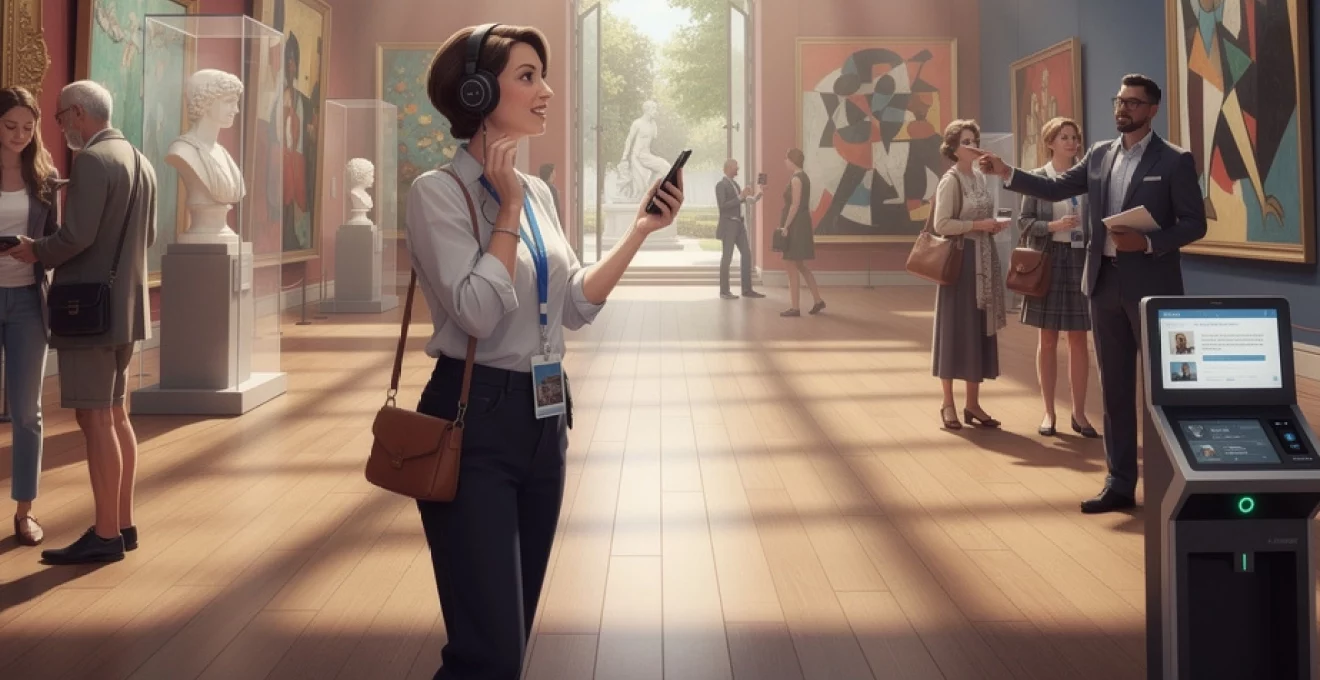
Paris stands as the undisputed global capital of art and culture, housing some of the world’s most prestigious museums and galleries within its elegant boulevards and historic districts. From the iconic halls of the Louvre to intimate artist studios preserved as museums, the City of Light offers an unparalleled journey through centuries of artistic achievement. Whether you’re drawn to classical masterpieces, revolutionary impressionist works, or cutting-edge contemporary installations, Paris provides an exhaustive cultural experience that continues to inspire millions of visitors annually.
The French capital’s museum landscape spans across 20 arrondissements, each offering unique artistic perspectives and collections that reflect both local heritage and international influence. Modern museum technology, expert curatorial programmes, and sophisticated visitor services have transformed these institutions into accessible cultural centres that cater to both casual art enthusiasts and serious collectors seeking profound artistic encounters.
Essential art museums every collector should visit in central paris
Central Paris concentrates some of the planet’s most significant art collections within walking distance of each other, creating an unprecedented opportunity for comprehensive cultural immersion. These flagship institutions represent centuries of artistic development and house works that have fundamentally shaped global art history.
Musée du louvre: navigating the world’s largest art repository
The Louvre Museum encompasses over 35,000 works displayed across 652,000 square feet of gallery space, making strategic navigation essential for meaningful visits. The museum’s four main wings – Denon, Sully, Richelieu, and the recently renovated Islamic Art galleries – each require dedicated exploration time to appreciate their distinctive collections fully.
Professional art enthusiasts recommend focusing on specific sections during individual visits rather than attempting comprehensive coverage in a single day. The Egyptian Antiquities department, featuring over 50,000 artifacts, provides exceptional insight into ancient artistic traditions, while the Italian Renaissance galleries showcase masterpieces by Leonardo da Vinci, Raphael, and Caravaggio that fundamentally influenced Western artistic development.
Contemporary digital mapping systems now allow visitors to customise their routes based on artistic interests, available time, and accessibility requirements. The museum’s mobile application provides detailed information about individual artworks, including provenance, restoration history, and cultural significance that enhances understanding for serious collectors.
Musée d’orsay: impressionist and Post-Impressionist masterpiece collections
Housed within a magnificently restored 19th-century railway station, the Musée d’Orsay contains the world’s finest collection of Impressionist and Post-Impressionist art, spanning the period from 1848 to 1914. The museum’s chronological arrangement allows visitors to trace the evolution of modern art through revolutionary movements that challenged traditional academic conventions.
The museum’s upper level galleries feature iconic works by Monet, Renoir, Degas, and Cézanne, presented with natural lighting that illuminates the innovative techniques these artists employed. Recent conservation efforts have revealed previously hidden details in major paintings, offering fresh perspectives on familiar masterpieces that continue to influence contemporary artistic practice.
Special rotating exhibitions regularly complement the permanent collection, often focusing on lesser-known artists or specific artistic movements that provide deeper understanding of the cultural forces that shaped late 19th-century European art. The museum’s research library and conservation workshops offer unprecedented access to scholarly resources for serious art historians and collectors.
Centre pompidou: contemporary art and modern movement exhibitions
The Centre Pompidou’s distinctive architectural design, featuring exposed structural elements and vibrant exterior escalators, houses Europe’s largest collection of contemporary and modern art. The museum’s collections span from 1905 to the present day, chronicling the development of avant-garde movements that continue to influence global artistic practice.
The museum’s permanent collection includes seminal works by Picasso, Kandinsky, Duchamp, and Warhol, presented alongside emerging artists whose innovative approaches challenge conventional artistic boundaries. Interactive multimedia installations and digital art pieces demonstrate how technology has transformed contemporary artistic expression, offering insights into future artistic directions.
Regular temporary exhibitions explore specific artistic movements, cultural themes, or individual artists’ complete oeuvres, often featuring works rarely displayed elsewhere. The museum’s extensive educational programmes include artist talks, curatorial discussions, and hands-on workshops that provide direct engagement
for visitors who want to engage more deeply with modern and contemporary movements. Although the main building is undergoing a long-term renovation, satellite exhibitions and partnerships across Paris continue to showcase highlights from the collection, so it is worth checking current venues and programming when planning your museum itinerary.
Musée rodin: sculptural heritage and garden gallery experience
The Musée Rodin offers one of the most atmospheric art experiences in Paris, combining an 18th-century mansion with expansive sculpture gardens. Dedicated primarily to Auguste Rodin and his circle, the museum presents more than 6,000 sculptures, including The Thinker, The Kiss, and models for The Gates of Hell. For collectors and sculpture enthusiasts, this is an ideal place to study the transition from academic classicism to a more expressive, fragmented modern form.
Inside the Hôtel Biron, plaster models, marbles, and bronzes are displayed alongside drawings and archival documents that reveal Rodin’s working methods and studio practice. Outside, monumental bronzes are set amid formal hedges and rose beds, demonstrating how sculpture interacts with light, weather, and landscape. If you are considering sculpture acquisitions or commissions, observing how different materials age outdoors here can be as instructive as a technical manual.
From a practical standpoint, the museum is compact enough to explore in two to three hours, making it easy to pair with nearby institutions like the Musée d’Orsay or Les Invalides. Booking timed-entry tickets online helps you avoid queues at peak times, especially during spring and early autumn when the gardens are at their most photogenic. You can also purchase a combined ticket that grants same-day access to the Rodin site at Meudon, where Rodin’s former home and studio offer a more immersive look at his creative environment.
Musée picasso: comprehensive blue period and cubist movement archives
The Musée Picasso Paris houses one of the world’s most comprehensive collections devoted to a single artist, with more than 5,000 works by Pablo Picasso and thousands of archival items. Located in the 17th-century Hôtel Salé in the Marais, the museum allows visitors to follow Picasso’s development from academic student to pioneering Cubist and beyond. You will encounter early realist portraits, Blue and Rose Period masterpieces, radical Cubist experiments, and late, exuberant canvases that challenge any linear notion of artistic “maturity.”
For those interested in the history of collecting and provenance, the museum is particularly valuable because it also preserves notebooks, sketchbooks, proofs, photographs, and personal documents. These materials show how Picasso worked through ideas in series, revisiting the same motif dozens of times until he exhausted its possibilities. Analysing these iterative processes can help serious art lovers understand how major works emerge from long cycles of experimentation, rather than from isolated moments of genius.
The museum frequently reorganises its displays thematically, focusing on topics such as Picasso and politics, Picasso’s collectors, or his relationships with other artists and writers. This curatorial approach means that repeat visits are rewarding, as you rarely see exactly the same narrative twice. Reservations are strongly recommended, especially on weekends and during special exhibitions, and early time slots generally offer the quietest environment for close looking and note-taking.
Specialised art collections and thematic gallery districts
Beyond the major national museums, Paris excels in specialised collections that explore particular artists, periods, or media in great depth. These institutions offer a more intimate scale and often a stronger sense of curatorial focus, making them ideal for art lovers who prefer concentrated viewing to marathon museum days. They also tend to be embedded in distinctive neighbourhoods, so visiting them naturally introduces you to Paris’s varied gallery districts and local art ecosystems.
Musée marmottan monet: claude monet estate and water lilies series
The Musée Marmottan Monet, located in a former hunting lodge in the 16th arrondissement, is a pilgrimage site for admirers of Impressionism and Claude Monet in particular. Housing the world’s largest collection of Monet’s work, including Impression, soleil levant (the painting that gave Impressionism its name), the museum offers a rare chance to trace the artist’s evolution across decades. You will see early realist canvases, views of London and Paris, Rouen Cathedral series, and late Giverny water lilies that verge on abstraction.
Unlike the more crowded central museums, Marmottan Monet usually offers a quieter, more reflective atmosphere, perfect for studying brushwork, colour harmonies, and surface texture up close. The basement galleries dedicated to the Water Lilies series provide an immersive, chapel-like environment that complements but differs from Monet’s panoramic cycles at the Orangerie. For collectors and advanced enthusiasts, this contrast demonstrates how display context can radically alter our reading of similar works.
In addition to Monet, the museum holds significant works by Berthe Morisot and other Impressionist and Post-Impressionist artists, as well as collections of medieval and Empire-period art. As the 16th arrondissement is more residential, combining your visit with a stroll through nearby parks or a café stop offers a glimpse of everyday Parisian life beyond the tourist core. Be sure to check the calendar for temporary exhibitions, which often highlight lesser-known Impressionists or related movements and can deepen your understanding of late 19th-century painting.
Musée Jacquemart-André: private collector renaissance and 18th century holdings
The Musée Jacquemart-André presents one of Paris’s most refined private collections, assembled in the late 19th century by banking heirs Édouard André and Nélie Jacquemart. Housed in their opulent mansion on Boulevard Haussmann, the museum offers a double attraction: an outstanding collection of Italian Renaissance and 18th-century French art, and an intact example of Belle Époque domestic architecture. Visiting feels less like touring a traditional museum and more like stepping into a collector’s home at the height of Parisian elegance.
The Italian galleries are especially strong, with works attributed to Botticelli, Bellini, Mantegna, and Titian, complemented by exquisite sculpture and decorative arts. Upstairs, French 18th-century painting, furniture, and objets d’art are displayed in richly decorated salons that underline how art functioned in elite private interiors. If you have ever wondered how period furniture and paintings were meant to be seen together, rather than isolated on white walls, this museum provides a compelling case study.
Because of its manageable scale, the Jacquemart-André is ideal for a focused two-hour visit, perhaps followed by tea in the former smoking room, now an ornate café overlooking the courtyard. Temporary exhibitions, often centred on Old Masters or drawing collections, are carefully curated and popular with local connoisseurs. Booking ahead for these shows is advisable, particularly on weekends, when the line for the special exhibition can grow even while the permanent collection remains relatively calm.
Palais galliera: fashion museum and textile art exhibitions
The Palais Galliera, officially the Musée de la Mode de la Ville de Paris, is essential for anyone interested in fashion history, textile art, and the intersection between clothing and visual culture. Rather than maintaining a constant permanent display, the museum organises major temporary exhibitions built from its collection of more than 200,000 garments, accessories, and fashion-related documents. This means each exhibition is conceived as a complete narrative, tracing themes such as haute couture, street style, or designers’ archives across decades.
For art lovers, the Galliera offers insight into how fashion operates as a form of applied art and cultural commentary, not merely as commerce. Mannequin presentations are often staged with the care of a sculpture exhibition, paying close attention to silhouette, spacing, and lighting. Textiles and embroidery can be appreciated like abstract paintings, while accessories become miniature sculptures that reveal extraordinary craftsmanship.
Because the museum is not open continuously between exhibitions, it is crucial to check dates and reserve tickets in advance. When shows are on, they draw a knowledgeable audience of designers, students, and collectors, making them fertile ground for observing current conversations about fashion as an art form. If you are constructing or refining a fashion or textile collection of your own, paying attention to how the curators group and sequence garments can yield useful strategies for display and storage at home.
Musée gustave moreau: symbolist movement and artist studio preservation
The Musée Gustave Moreau, hidden on a quiet street in the 9th arrondissement, preserves the former apartment and studio of the Symbolist painter Gustave Moreau. Climbing its dramatic spiral staircase to the vast studio rooms, you encounter hundreds of paintings, watercolours, and drawings covering the walls in dense, salon-style hangs. The effect is almost cinematic—a plunge into an intensely personal universe of mythological, biblical, and dreamlike imagery.
Unlike more neutral exhibition spaces, this preserved studio highlights how an artist chose to live with and arrange his own work. For those studying Symbolism and the late 19th-century transition toward abstraction and Surrealism, the museum provides a direct link between academic training and visionary experimentation. Many artists, including Henri Matisse, studied under Moreau, and you can sense how his intricate compositions and layered symbolism influenced future avant-garde movements.
From a practical perspective, the Musée Gustave Moreau is compact but visually dense, so it rewards slow looking and selective focus rather than an attempt to absorb every image. Visiting early or on a weekday helps you enjoy the quiet required to read wall labels and sketch details, if you are inclined. Combining the museum with a walk toward Montmartre offers a thoughtful way to connect 19th-century artistic Paris with the contemporary galleries and studios that still thrive on the nearby hill.
Advanced museum navigation strategies for art enthusiasts
With so many world-class museums concentrated in Paris, strategic planning becomes crucial if you want more than just a superficial overview. Long lines, dense crowds, and “museum fatigue” can undermine even the most enthusiastic art lover’s experience. By treating museum-going as an art in itself—balancing logistics, timing, and personal focus—you can transform your visits from rushed checklists into deeply rewarding encounters with individual works.
Priority booking systems and Skip-the-Line access methods
Most major Paris museums now operate on timed-entry systems, especially during peak seasons, making advance reservations more than just a convenience. Purchasing tickets online not only guarantees entry for a specific day and time but often provides access to dedicated security or ticket lines. For institutions like the Louvre, Musée d’Orsay, and Musée Picasso, skip-the-line entrances can save you an hour or more, time that is far better spent in front of artworks than on the pavement outside.
If you plan to visit multiple museums, consider city-wide passes or multi-museum cards that bundle priority access with reduced rates. While these passes require an upfront investment, they can quickly become cost-effective if you schedule three or more major visits over a few days. Think of them as a season ticket to a favourite theatre: once you have paid, you are freer to follow your curiosity without calculating the cost of every additional hour.
For particularly in-demand exhibitions, such as major retrospectives or loan shows, it is wise to book several weeks in advance, especially for weekend or evening slots. When you arrive, keep digital or printed confirmations ready and follow signs for “billets horodatés” (timed tickets) or “réservations.” This streamlined approach helps you begin each visit with a calm, focused mindset rather than the frustration of last-minute logistics.
Curatorial tour programmes and Expert-Led gallery walks
While self-guided exploration can be rewarding, expert-led tours often unlock layers of meaning that are easy to miss on your own. Many Paris museums offer curator talks, thematic tours, or small-group visits led by art historians, sometimes in multiple languages. These programmes can function like a live masterclass, connecting individual works to broader art-historical debates and current research.
Private guides, especially those specialising in Paris museums, can tailor visits to your interests—whether you want to focus on a specific movement, compare versions of a subject, or explore how collecting practices have shaped what we see today. This level of customisation is particularly useful if you are considering building or refining your own art collection, as guides can point out nuances of technique, condition, and provenance that casual visitors rarely notice.
When choosing a tour, look for options that emphasise depth over breadth: a 90-minute session concentrating on a single wing or theme is usually more valuable than a whirlwind museum “highlights” sprint. Ask in advance whether the guide uses visual aids, archival images, or technical analyses, as such materials can significantly enrich your understanding. And do not hesitate to ask questions—curators and guides often appreciate engaged audiences as much as you appreciate their expertise.
Digital audio guide technologies and multilingual commentary options
Modern audio guides have evolved far beyond simple number-coded commentary, and Paris museums have been at the forefront of this shift. Many institutions now offer smartphone-compatible audio tours with high-resolution images, zoom functions, and layered content that you can explore at your own pace. Some apps even allow you to bookmark works, take notes, and export your visit history, turning your museum day into a personalised study archive.
For international visitors, the availability of multilingual commentary is a major advantage, ensuring that nuanced curatorial insights are accessible even if you do not read French. Audio content often includes curator interviews, artist quotations, and music from the period, helping you situate artworks within their original cultural context. Think of it as having a discreet expert at your side—one you can pause or rewind whenever you wish to linger over a particular detail.
Before your trip, it is worth checking whether museums use their own proprietary apps or partner with broader cultural platforms, as downloading these in advance can save time on-site. Remember to bring headphones and a portable battery pack if you plan to rely on your phone for audio guidance throughout the day. Used thoughtfully, digital tools can enhance focus rather than distract from it, provided you alternate listening with moments of silent, uninterrupted looking.
Peak season timing optimisation and crowd management techniques
High visitor numbers are an unavoidable reality at major Paris museums, but careful timing can dramatically improve your experience. As a rule, early morning and late evening slots are quieter than midday, especially midweek. Museums like the Louvre and Musée d’Orsay often offer one or two late-night openings per week; visiting then can feel almost like having a private viewing compared with the daytime rush.
Inside the museum, consider reversing the usual route or starting with less famous sections before circling back to blockbuster works. At the Louvre, for instance, exploring Near Eastern antiquities, Islamic art, or lesser-known 19th-century French painting first can give you a calmer start, leaving the busiest galleries for later when large tour groups have moved on. This approach is a bit like swimming upstream: you expend slightly more planning effort but gain a far more relaxed viewing environment.
Finally, build intentional breaks into long museum days. Short pauses at quiet benches, cafés, or outdoor courtyards help counteract “visual overload” and keep your eyes fresh for close study. If you find yourself rushing past masterpieces just to cover ground, that is a clear sign to slow down, skip a section, and prioritise depth over quantity—you can always return to Paris, but the opportunity for sustained attention to a single painting or sculpture is precious in itself.
Hidden artistic treasures in Lesser-Known parisian institutions
Alongside its headline museums, Paris shelters a constellation of smaller institutions where remarkable collections can be seen without crowds or time pressure. These hidden gems often focus on a single medium, period, or patron, offering tightly curated narratives that are especially satisfying for experienced museum-goers. Think of them as the city’s “B-sides”: less famous than the hits, but often just as revealing for those who take the time to listen.
Examples include intimate house-museums such as the Musée Zadkine, tucked behind a modest gate near the Jardin du Luxembourg, where modernist sculptures are displayed in a leafy garden and former studio. Others, like the Musée de la Vie Romantique in the 9th arrondissement, combine painting, sculpture, and personal memorabilia to recreate the atmosphere of 19th-century artistic salons. Because these spaces are quieter, you can stand in front of a work for as long as you like, sketch, or take detailed notes without feeling pressured to move on.
If you are planning a longer stay, dedicating a full day to exploring just one or two lesser-known museums can be refreshing after the intensity of the Louvre or Orsay. Many of these institutions also collaborate with contemporary artists for interventions and temporary exhibitions, providing a dialogue between past and present practices. Checking municipal museum websites or local cultural listings will help you identify current highlights and themed trails that link several small collections across the city.
Professional art viewing techniques and gallery etiquette protocols
How you look at art is just as important as where you look at it. Developing professional-level viewing habits can transform even a brief museum visit into a meaningful experience, and Paris is an ideal training ground. By combining structured observation with considerate behaviour, you not only deepen your own understanding but also contribute to an environment in which everyone can appreciate the works on display.
One effective technique is to approach each artwork in three passes: first from a distance to take in composition and overall impact, then at a medium range to examine colour relationships and drawing, and finally closer (within conservation guidelines) to study brushwork, surface texture, and any restoration traces. This layered method is like reading a book three times—once for the story, once for the style, and once for the craft that holds it all together. Asking yourself structured questions along the way (“Where does my eye go first?” “What surprises me most?”) keeps your attention active rather than passive.
In terms of etiquette, simple practices make a significant difference. Maintaining a respectful distance from works, avoiding pointing with objects, and keeping bags or backpacks in front of you reduce the risk of accidental damage and allow others to see clearly. When you want to take notes or sketch, step to the side rather than blocking central sightlines. If photography is permitted, avoid flash and take care not to monopolise key viewpoints—remember that every visitor wants their own unhurried moment with a masterpiece.
Silencing mobile phones, keeping conversations low, and supervising children closely may seem obvious, but in crowded galleries even minor distractions can quickly accumulate. Think of yourself as a guest in a shared study room rather than a tourist passing through a spectacle. Museums in Paris, like elsewhere, are increasingly attentive to accessibility: if you have specific needs, do not hesitate to ask staff about seating, quiet rooms, or adapted tours. Respectful engagement benefits everyone, from security and conservation teams to fellow art lovers beside you.
Museum membership benefits and annual pass investment analysis
For frequent visitors or those planning an extended stay, museum memberships and annual passes can offer excellent value, both financially and experientially. Beyond simple ticket savings, they often provide priority entry, invitations to previews, and access to member-only events that deepen your relationship with a collection. Evaluating these options with the same care you might apply to an art purchase can help you decide which investment best matches your interests and visiting style.
Institution-specific memberships—such as those for the Louvre, Musée d’Orsay / Orangerie, or Centre Pompidou—are ideal if you expect to return to the same museum multiple times in a year. They usually include unlimited access, reduced rates for guests, and discounts in bookshops and cafés. If you are conducting research, building a collection, or simply wish to revisit favourite works repeatedly, the ability to drop in for an hour without worrying about ticket cost can be transformative.
City-wide or regional passes, by contrast, are designed for concentrated bursts of museum-going over a few days. When used strategically—planning two or three visits per day, focusing on institutions covered by the pass—they can reduce overall costs by 20–40% compared with buying individual tickets. However, if you prefer slower travel or want to intersperse museum days with other activities, a targeted membership may be more suitable than a time-limited pass that pushes you into a rushed itinerary.
Ultimately, the most valuable benefit of memberships and passes is not just financial but psychological: once access is pre-paid, you are more likely to follow your curiosity, revisit lesser-known galleries, and spend generous time with works that speak to you. For an art lover in Paris, this freedom to explore without constantly recalculating ticket prices can make the city’s extraordinary museum landscape feel less like a series of transactions and more like an ongoing, enriching conversation.