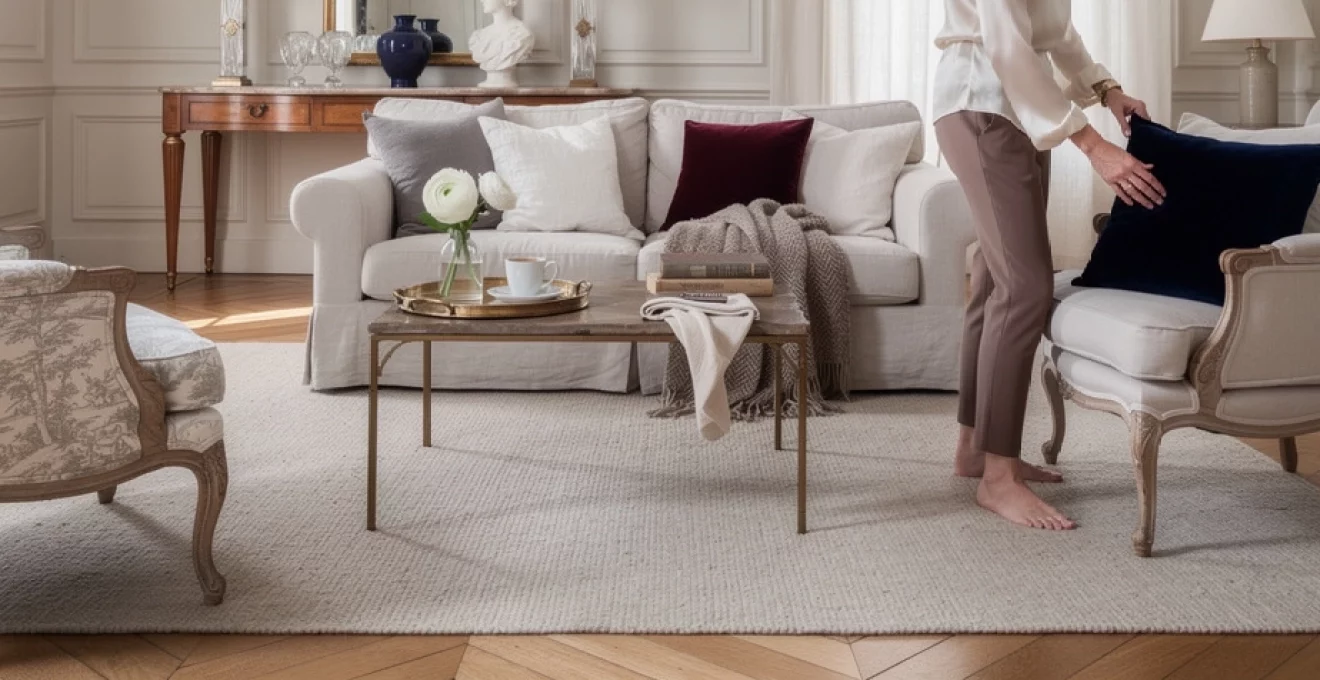
French interior design embodies a sophisticated elegance that transcends fleeting trends, creating spaces that exude timeless charm and refined sophistication. The art of Parisian chic at home represents more than mere decoration; it encompasses a philosophy of living beautifully through careful curation, thoughtful placement, and an innate understanding of balance between formality and comfort. This distinctive aesthetic approach combines centuries-old design principles with contemporary functionality, resulting in interiors that feel both historically grounded and refreshingly modern.
The essence of authentic French interior design lies in its ability to create atmospheres that feel effortlessly curated rather than meticulously planned. This paradoxical quality emerges from a deep understanding of proportion, colour psychology, and the strategic integration of vintage elements with contemporary necessities. Mastering this approach requires appreciation for quality craftsmanship, natural materials, and the subtle interplay between light, texture, and architectural features that define truly exceptional Parisian living spaces.
Mastering the fundamental principles of french interior colour psychology
French interior colour theory operates on the principle of restraint and refinement, prioritising sophisticated neutrals that create serene backdrops for daily life. The psychology behind these colour choices reflects a deep understanding of how different hues affect mood, perception of space, and overall atmosphere within residential environments. Professional interior designers recognise that successful French colour schemes rely heavily on understanding undertones, natural light patterns, and the emotional responses that specific colour combinations evoke in occupants.
The foundation of authentic French colour palettes centres around creating visual harmony through careful tonal relationships. Rather than relying on stark contrasts or bold statements, French design philosophy embraces subtle variations within similar colour families. This approach creates depth and interest while maintaining the serene sophistication that characterises truly exceptional Parisian interiors. The key lies in understanding how colours interact with architectural elements, natural lighting conditions, and existing furnishing pieces.
Implementing the timeless neutral palette: blanc cassé and taupe techniques
Blanc cassé, or off-white, serves as the cornerstone of sophisticated French neutral palettes, offering warmth and depth that pure white cannot achieve. This subtle cream tone provides an ideal backdrop for layering textures and introducing accent colours without overwhelming the space. Professional implementation requires understanding the various undertones within off-white variations, from pearl and ivory to cream and bone, each offering unique characteristics that affect how the colour appears throughout different lighting conditions.
Taupe represents another fundamental neutral in French design, bridging the gap between grey and brown with remarkable versatility. This complex colour family includes variations from mushroom and greige to warm sand and cool dove grey. Successful taupe implementation involves considering the room’s orientation, existing architectural features, and desired mood. Northern-facing rooms benefit from warmer taupe tones, while southern exposures can accommodate cooler variations without appearing stark or uninviting.
Strategic accent integration using bleu de france and bordeaux tones
Bleu de France, the traditional royal blue of French heraldry, provides sophisticated accent opportunities when implemented thoughtfully throughout interior spaces. This distinctive shade offers depth and elegance without appearing overwhelming, making it ideal for textiles, artwork, and decorative accessories. Strategic placement might include velvet cushions, ceramic pieces, or framed artwork that introduces this classic French colour in measured doses throughout the living space.
Bordeaux tones, inspired by the deep wine regions of France, add warmth and richness to neutral-based colour schemes. These sophisticated burgundy variations work exceptionally well in dining areas, studies, and bedroom spaces where intimate atmospheres are desired. Implementation techniques include incorporating these tones through leather-bound books, wine-coloured textiles, or carefully selected pottery pieces that reference the French countryside aesthetic.
Natural light manipulation through authentic haussmannian window treatments
Haussmannian architecture, characterising much of central Paris, features large windows designed to maximise natural light penetration throughout interior spaces. Modern interpretation of these principles involves selecting window treatments that enhance rather than obstruct light flow while maintaining privacy and visual interest. Traditional French approaches favour lightweight fabrics, neutral tones, and simple hardware that complement rather than compete with architectural details.
Authentic French
Authentic French window treatments typically layer sheer voiles with heavier curtains, allowing you to modulate light throughout the day. Sheers in blanc cassé filter harsh sunlight and create a soft, flattering glow, while lined linen or wool drapery in taupe or greige adds depth and insulation. Hardware is usually understated: slim iron rods or simple brass poles mounted high above the frame to elongate the walls and emphasise the generous Haussmannian proportions. Even if your home does not feature original Parisian architecture, you can recreate this effect by prioritising full-height curtains, avoiding bulky pelmets, and ensuring that fabric pools slightly on the floor for that relaxed yet considered finish.
To maximise natural light in a Parisian-inspired living room or bedroom, avoid heavy blinds that visually cut the window in half. Instead, consider slimline roller shades hidden within the frame for privacy, paired with floor-length curtains that remain largely open during the day. This combination preserves the vertical rhythm of the windows, a key feature of Haussmannian apartments. You might also paint window surrounds in a slightly warmer white than the walls to visually “extend” the light, much like a subtle frame around a painting.
Achieving sophisticated monochromatic layering with écru and ivoire variations
Monochromatic schemes in French interior design rely on nuanced shifts between tones such as écru, ivory, stone, and biscuit rather than stark black-and-white contrasts. This approach creates a calming, cohesive envelope in which furnishings and artwork can quietly shine. By working within a narrow spectrum of warm neutrals, you allow texture and patina to take centre stage, echoing the understated elegance of classic Parisian apartments. The result is a space that feels simultaneously minimalist and richly detailed.
To achieve this sophisticated monochromatic layering, begin by selecting a dominant base tone—perhaps an ivory wall colour with warm undertones. From there, introduce upholstery in slightly deeper shades of écru and rugs in sandy or oatmeal tones. Think of it as tuning a piano: every note belongs to the same family, but each has a slightly different pitch. Subtle contrasts come from mixing matte plaster walls, brushed linen, glazed ceramics, and aged wood, rather than from competing colours.
One practical technique is to build a simple hierarchy of tones, from lightest on the walls and ceiling to medium on large furniture pieces, and finally to the darkest tones on accent objects and small tables. For instance, an ivory wall, a natural linen sofa, and a slightly deeper flax armchair can be anchored by a weathered oak coffee table and antique brass lighting. This layered neutrality not only feels luxurious but also makes it easier to refresh the room seasonally with different throws, cushions, or fresh flowers, without disrupting the overall harmony.
Curating authentic french vintage furniture and antique investment pieces
Parisian chic at home relies heavily on the careful selection of vintage furniture and considered antique investment pieces. Rather than filling a space with brand-new, matching sets, French interiors favour a collected-over-time look that reflects personal history and cultural appreciation. This approach mirrors the way French women build a capsule wardrobe: a few exceptional, timeless items combined with more accessible pieces. The result is an interior that feels authentic, layered, and quietly luxurious rather than ostentatious.
Curating authentic French furniture starts with understanding key historical styles and how they can be adapted to contemporary living. From the refined lines of Louis XVI chairs to the bolder silhouettes of the Empire period, each piece brings with it a narrative and architectural presence. When these elements are introduced thoughtfully—alongside modern sofas, sleek lighting, or contemporary art—they elevate the room in much the same way that a vintage designer bag transforms a simple jeans-and-shirt outfit.
Identifying genuine louis xvi and empire period reproductions for modern spaces
Louis XVI and Empire styles are among the most recognisable in French furniture design, and they translate remarkably well into modern homes when chosen with care. Louis XVI pieces are characterised by straight, fluted legs, restrained carving, and elegant proportions, while Empire furniture tends to be more monumental, with bold silhouettes, darker woods, and classical motifs such as laurel wreaths, sphinxes, or eagles. Understanding these visual cues helps you identify quality reproductions that capture the spirit of the period without overwhelming contemporary interiors.
When sourcing Louis XVI–style chairs or consoles for a modern living room, prioritise balanced proportions and solid construction over elaborate ornamentation. Look closely at joinery, wood quality, and upholstery techniques; well-executed reproductions will exhibit precise carving, stable frames, and natural materials. In a small apartment, a pair of Louis XVI side chairs in neutral linen can flank a minimalist sofa, offering a refined counterpoint to clean-lined contemporary pieces while maintaining a light visual footprint.
Empire-style elements, such as a mahogany sideboard or a pedestal table with brass detailing, work best as singular statement pieces rather than as part of a full suite. Think of them as the “statement jewellery” of your interior—one or two carefully chosen items can transform the space without making it feel like a museum. To keep the look current, juxtapose an Empire commode with abstract art or a sleek metal floor lamp, creating a dialogue between past and present that feels deliberate rather than nostalgic.
Sourcing original bergère chairs and chaise longue from les puces de saint-ouen
For many design professionals, the iconic flea market Les Puces de Saint-Ouen on the northern edge of Paris remains a treasure trove for authentic French seating. Original bergère chairs and chaise longue pieces found here often retain their original frames and sometimes even period upholstery, offering a level of character that new furniture simply cannot replicate. While not every buyer can visit in person, understanding how these pieces are sourced and evaluated can guide your decisions when shopping online or through dealers.
A classic bergère—a deep, upholstered armchair with enclosed sides—brings instant Parisian charm to a living room or bedroom. When evaluating potential purchases, examine the curvature of the arms, the condition of the seat frame, and the integrity of the legs. Minor surface imperfections or worn finishes can be desirable, as they contribute to the patina and authenticity that define French chic. If the upholstery is dated or damaged, consider it an opportunity; re-covering the chair in a simple natural linen or subtle stripe can modernise the silhouette while preserving its soul.
The chaise longue, with its generous proportions and languid lines, is particularly suited to reading corners or bedroom niches. In smaller homes, you might opt for a more compact meridienne (a type of asymmetrical daybed) that offers the same romantic feel without dominating the room. Whether sourced directly from Les Puces or via reputable antique dealers, these seating pieces function much like a signature fragrance in a French wardrobe—quietly distinctive, undeniably personal, and instantly evocative of Parisian elegance.
Incorporating authentic french provincial armoires and commodes
French Provincial furniture, originating from regions such as Provence, Normandy, and Burgundy, softens the formality of Parisian interiors with its rustic elegance. Armoires and commodes in this style often feature curved panels, cabriole legs, and gently distressed paint finishes or warm honey-toned woods. Incorporating one or two substantial pieces into an otherwise urban setting introduces a relaxed, countryside sensibility without sacrificing sophistication.
An antique armoire, for instance, can serve as a focal point in a bedroom, hallway, or even a living room, providing generous storage while anchoring the space visually. To maintain a sense of lightness, opt for versions in pale oak, patinated grey, or soft cream rather than heavy, dark varnishes. Inside, you can discreetly modernise the piece with integrated shelving, lighting, or even a concealed media centre, preserving the exterior charm while adapting to contemporary needs.
Similarly, a French Provincial commode works beautifully as a hallway console, bathroom vanity, or bedside table. Pairing its curved front and ornate hardware with minimalist mirrors, simple linen shades, and monochrome artwork prevents the look from becoming overly nostalgic. The contrast between slightly imperfect, timeworn surfaces and crisp modern accessories is at the heart of effortless Parisian chic at home, echoing the way a French woman might combine a vintage jacket with pristine white sneakers.
Mixing periods: combining art deco elements with traditional french country aesthetics
One of the defining features of sophisticated French interiors is the confident mixing of periods and styles. Rather than adhering strictly to one era, Parisian homes often juxtapose Art Deco lighting with French Country furniture or contemporary art with 19th-century mirrors. This layered approach prevents spaces from feeling themed or contrived and instead creates the impression of a life well lived and tastefully curated over time.
Art Deco elements—think geometric brass lamps, lacquered side tables, or velvet-upholstered stools—introduce a sense of glamour and urbane polish that pairs surprisingly well with the informality of French Country pieces. For example, you might place a streamlined Art Deco console beneath a large, carved-wood Provencal mirror, allowing the tension between sleek geometry and organic curves to energise the room. In this sense, your interior becomes a conversation between city and countryside, tradition and modernity.
To ensure coherence when mixing periods, maintain a consistent colour palette and repeat key materials such as brass, walnut, or linen throughout. Consider scale as well: pair substantial rustic pieces with equally assertive Art Deco elements, rather than overwhelming them with too many small accessories. By curating with intention and restraint, you can achieve that quintessentially French balance where nothing appears overly coordinated, yet everything feels harmoniously connected.
Textile selection and fabric hierarchy in parisian interior design
Textiles play a central role in achieving effortless Parisian chic at home, acting as the connective tissue that ties furniture, colour, and architecture together. French interiors rarely rely on a single fabric type; instead, they orchestrate a subtle hierarchy of materials, from robust linens and cottons to luxurious silks and velvets. This tactile layering not only enhances visual depth but also affects how comfortable and inviting a space feels in daily life.
In much the same way that a French wardrobe balances denim, cashmere, silk, and lace, a Parisian-inspired interior combines humble and elevated textiles in carefully measured quantities. Durable, washable linens might dominate sofas and curtains, while smaller surfaces—cushions, ottomans, or bed throws—introduce more opulent materials. Understanding where to invest in premium fabrics and where to opt for hardworking basics is key to creating a home that feels refined yet realistically livable.
Deploying toile de jouy patterns in contemporary living spaces
Toile de Jouy, with its pastoral scenes and monochromatic motifs, is one of the most recognisable French fabrics. Used indiscriminately, it can feel old-fashioned, but when deployed thoughtfully it becomes a powerful tool for adding character to modern interiors. The key is to treat toile as an accent rather than a dominant theme, allowing its intricate patterns to punctuate otherwise calm, neutral backdrops.
In a contemporary living room, a single toile-covered armchair or a pair of cushions on a plain linen sofa can provide just the right amount of historical reference. Consider choosing updated colourways—charcoal on ivory, muted blue on stone, or sepia on cream—to harmonise with modern palettes. Much like a patterned silk scarf on a simple outfit, the toile motif should feel like a sophisticated flourish rather than a costume.
Another effective strategy is to introduce toile in small architectural moments: a panel of fabric framed as artwork, a discreet Roman blind in a powder room, or the back panels of a glass-fronted cabinet. These applications preserve the fabric’s narrative charm while keeping the overall aesthetic fresh and uncluttered. By limiting toile to a few carefully chosen surfaces, you maintain the balance between nostalgia and modernity that defines French chic decor.
Layering luxury french linens: selecting authentic linge de maison
High-quality linge de maison—household linens—are a quiet luxury that French homeowners treat as a long-term investment rather than a disposable accessory. Linen and cotton percale are favoured for their breathability, durability, and the way they soften beautifully over time. In bedrooms and dining rooms especially, these textiles play a crucial role in creating a sense of everyday indulgence that aligns with the French philosophy of l’art de vivre.
When selecting bed linens, prioritise natural fibres with a substantial yet soft hand. Stonewashed linen in shades of ivory, clay, or dove grey is particularly effective for achieving that relaxed, slightly rumpled Parisian aesthetic. Layering is essential: combine a fitted sheet in a slightly darker tone, a lighter top sheet, a textured coverlet, and a duvet in a complementary hue. This tonal variation replicates the depth of a monochromatic palette while remaining serene and inviting.
For dining, invest in a small collection of linen tablecloths and napkins that can be mixed and matched. A simple off-white cloth can be dressed up with charcoal napkins and brass candlesticks for evening, or kept casual with mismatched crockery and wildflowers for a weekend lunch. As with clothing, owning fewer, better-quality items—cared for meticulously and used regularly—contributes more to genuine Parisian chic than an overflowing cupboard of rarely used pieces.
Integrating velvet upholstery and silk damask accent pieces
Velvet and silk damask occupy the upper tiers of the French fabric hierarchy, reserved for moments where a touch of opulence is desired. In Parisian interiors, these materials are used sparingly but strategically, much like a statement necklace or a pair of exquisite heels that completes an otherwise simple ensemble. Their role is to introduce depth, sheen, and a sense of occasion without tipping the room into overt formality.
Velvet works particularly well on smaller, sculptural pieces such as accent chairs, stools, or cushions. A single emerald or midnight-blue velvet chair can anchor a reading corner, especially when contrasted with rougher textures like jute or raw wood. The soft, light-absorbing surface of velvet also adds visual warmth in rooms dominated by hard materials such as stone, metal, or glass. For high-traffic seating, consider performance velvets designed to withstand daily use while retaining their luxurious appearance.
Silk damask, with its intricate woven patterns, is best deployed in areas where it can be appreciated up close but protected from heavy wear—think scatter cushions on a bed, a panelled headboard, or even framed fabric panels as wall art. When combined with more relaxed textiles like washed linen or cotton, damask introduces an intriguing tension between refinement and ease. This contrast is at the core of Parisian chic decor: nothing is too precious to be lived with, yet everything feels thoughtfully chosen.
Mastering the art of mixing french provincial fabrics with modern textures
Successfully mixing French Provincial fabrics—such as checks, stripes, and small florals—with modern textures requires a clear sense of hierarchy and restraint. Rather than using all patterns at once, choose one or two motifs to serve as the “voice” of the room, then support them with solid, textured materials. Imagine orchestrating a piece of music: a few instruments carry the melody while the others provide subtle harmony.
A classic approach might involve pairing narrow blue-and-white ticking stripes on cushions with a solid linen sofa and a chunky wool throw. Add in a discreet gingham or small-scale floral on a single armchair to reference the countryside, while keeping curtains and rugs in calm, unpatterned tones. Contemporary elements—such as a leather ottoman, metal side tables, or a sleek floor lamp—prevent the look from feeling overly pastoral and ensure it remains aligned with urban Parisian sophistication.
Texture contrast is your greatest ally here. Rough, handwoven linens sit beautifully against smooth leather; nubby bouclé complements polished wood; and rustic hemp rugs ground more delicate fabrics. By consciously alternating between coarse and refined surfaces, you create a sensory richness that feels both authentic and current. The goal is not to recreate a farmhouse, but to borrow its warmth and comfort and translate them into a modern, city-appropriate context.
Advanced lighting design using french chandeliers and period-appropriate fixtures
Lighting is to a Parisian interior what jewellery is to a French outfit: it completes the look, adds subtle drama, and directs attention to key features. Advanced lighting design in this context goes beyond installing a central chandelier; it involves layering multiple sources—ambient, task, and accent lighting—to create a flexible, atmospheric environment. French homes rarely rely on harsh overhead light alone; instead, they favour a constellation of smaller fixtures that can be adjusted throughout the day.
Traditional French chandeliers, often in crystal, glass, or wrought iron, remain focal points in living rooms, dining rooms, and entryways. To avoid a dated effect, designers frequently pair these ornate fixtures with decidedly modern surroundings: think a classic crystal chandelier hanging above a simple oak table, or an iron version suspended in a minimalist hallway. Dimmers are non-negotiable; they allow you to shift from bright, functional light to a soft, candlelit glow that flatters both people and furnishings.
Beyond the chandelier, wall sconces, table lamps, and floor lamps play crucial roles. Period-appropriate sconces in brass or patinated bronze flanking a mirror or artwork add vertical emphasis and create flattering pools of light at eye level. Slim metal floor lamps with linen shades can tuck beside armchairs or sofas, providing dedicated reading light while contributing to the overall mood. By distributing light sources at different heights and intensities, you avoid stark shadows and achieve that enveloping, softly illuminated atmosphere so typical of Parisian apartments.
Creating sophisticated vignettes through strategic french décor placement
One of the most recognisable features of Parisian chic interiors is the presence of carefully composed vignettes—small visual stories arranged on mantels, side tables, consoles, and bookshelves. These groupings of objects may appear spontaneous, but in reality they are deliberately curated to balance height, texture, and negative space. Much like styling a coffee table with books, flowers, and a candle, mastering vignettes allows you to express personality while maintaining an overall sense of order.
Begin by selecting a focal point for each vignette: this might be a vintage mirror, a framed artwork, or a sculptural lamp. Around this anchor, layer objects of varying heights and materials—ceramic vessels, stacks of books, small framed photographs, or a single piece of coral or stone. Aim for asymmetrical balance rather than rigid symmetry; French interiors favour arrangements that feel relaxed and ever-so-slightly imperfect, as though they could evolve at any time.
Editing is as important as adding. To avoid visual clutter, leave intentional empty spaces on shelves and surfaces, allowing key pieces to breathe. Consider seasonal adjustments: fresh flowers in spring, a cluster of antique candlesticks in winter, or a bowl of fruit on the dining table that doubles as both décor and daily pleasure. Over time, these vignettes become a living archive of your tastes and travels, echoing the way Parisians mix heirlooms, flea-market finds, and contemporary design.
Implementing the philosophy of “l’art de vivre” in everyday home organisation
At the heart of effortless Parisian chic at home lies the broader philosophy of l’art de vivre—the art of living well. This mindset extends beyond aesthetics to influence how spaces are organised, used, and enjoyed on a daily basis. Rather than striving for sterile perfection or rigid minimalism, French home organisation focuses on making room for pleasure, spontaneity, and genuine comfort. The goal is to create an environment where beautiful objects are used, not merely displayed, and where daily rituals feel intentional rather than rushed.
Practically, this means designing storage solutions that support your real habits while keeping visual noise to a minimum. Open shelves might display your most-loved crockery, glasses, and cookbooks, while less attractive items are tucked away behind cabinet doors or in baskets. In living areas, woven trunks or vintage suitcases can conceal blankets, games, or paperwork without disrupting the room’s aesthetic. The guiding question is simple: does every item either serve a clear purpose or contribute meaningfully to the room’s beauty?
Incorporating l’art de vivre also involves carving out small zones dedicated to everyday pleasures: a reading chair with a lamp and side table ready for your current book; a console in the entryway where fresh flowers greet you as you come home; or a breakfast nook set with linen napkins and a ceramic teapot. These micro-scenes act as anchors in your routine, encouraging you to slow down and savour ordinary moments. Over time, such conscious organisation transforms your home from a mere backdrop into an active participant in your well-being.
Finally, remember that a truly Parisian interior is never “finished” in the traditional sense. Just as personal style evolves, so too does the home: a new painting hung above the mantel, an antique chair reupholstered in a contemporary fabric, a stack of magazines edited down to only the most inspiring. By accepting this ongoing, organic evolution, you align your space with the authentic French approach to chic living—one rooted not in perfection, but in personality, pleasure, and enduring elegance.