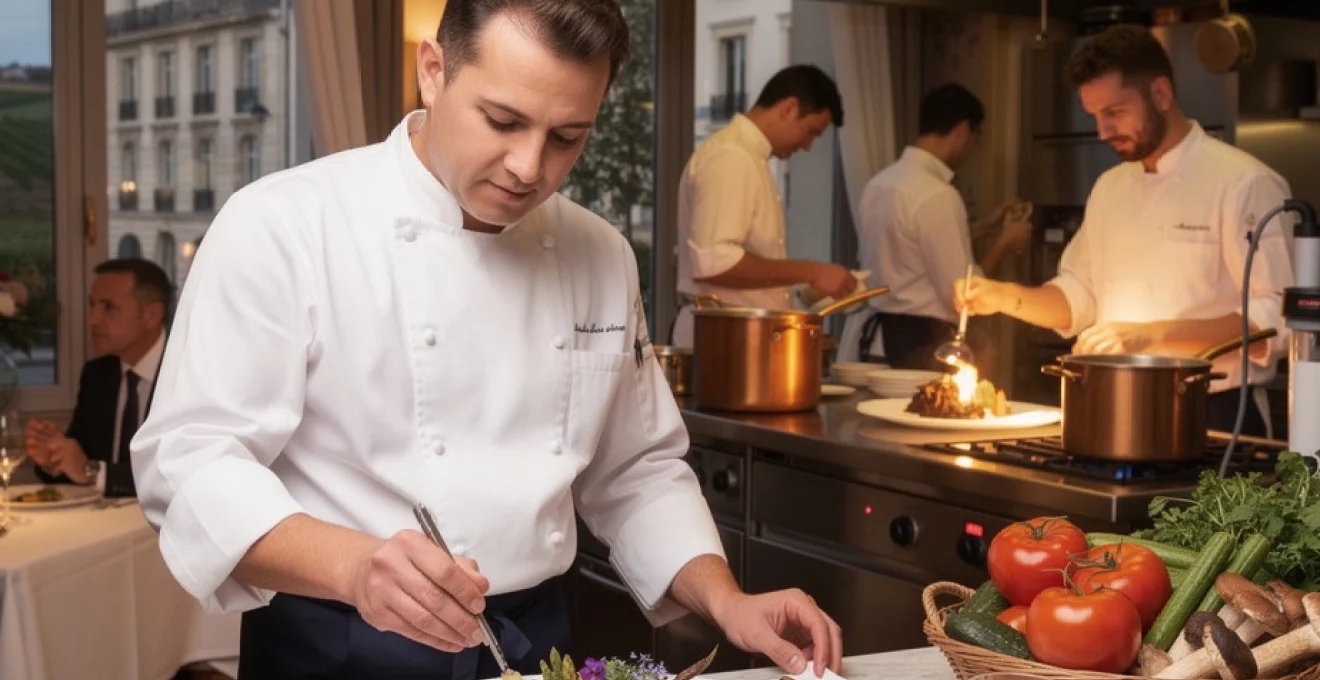
France’s gastronomic landscape is undergoing a remarkable transformation that challenges centuries of culinary tradition. The nation renowned for its butter-laden sauces, rich cheeses, and expertly prepared meats is embracing a plant-based revolution that extends far beyond simple salads and vegetable sides. This shift represents more than a dietary trend; it embodies a fundamental reimagining of French haute cuisine through the lens of sustainability, innovation, and ethical consciousness. From Michelin-starred establishments in Paris to charming bistros in the countryside, chefs are discovering that vegetables, grains, and legumes can deliver the same sophistication and complexity that has made French cuisine legendary worldwide.
The movement gains momentum as consumers increasingly seek dining experiences that align with their environmental values without compromising on culinary excellence. French chefs, traditionally guardians of classical techniques, are now pioneering methods to transform humble vegetables into extraordinary culinary experiences. This evolution demonstrates that plant-based gastronomy can maintain the elegance and refinement that defines French dining culture whilst addressing contemporary concerns about sustainability and health.
Historical evolution of Plant-Based gastronomy in traditional french culinary culture
The roots of plant-focused cuisine in France extend deeper than many realise, challenging the perception that French cooking has always centred exclusively on animal proteins. Medieval monastic traditions established sophisticated vegetable cultivation techniques and preservation methods that influenced regional cuisines across the country. Monastery gardens became laboratories for developing complex flavour profiles using herbs, roots, and seasonal produce that laid the groundwork for modern plant-based innovations.
During the nouvelle cuisine movement of the 1970s, pioneering chefs like Roger Vergé began elevating vegetables from mere accompaniments to starring roles. His legendary restaurant, Moulin de Mougins, featured dishes that celebrated the natural flavours of Provençal vegetables, demonstrating that plant-based ingredients could carry the same gastronomic weight as traditional proteins. However, these early efforts often faced resistance from both critics and diners who viewed vegetable-centric dishes as incomplete or insufficiently sophisticated.
The philosophy behind French plant-based cuisine has evolved significantly from those early experiments. Modern practitioners focus on terroir – the concept that ingredients should reflect their geographic origin and seasonal availability. This approach naturally emphasises local vegetables, herbs, and grains, creating dishes that tell stories about specific regions and microclimates. The emphasis on terroir has enabled French chefs to develop plant-based menus that maintain cultural authenticity whilst embracing contemporary dietary preferences.
Contemporary French plant-based cuisine also draws inspiration from the country’s rich peasant cooking traditions, where vegetables often played central roles due to economic necessity. Dishes like ratatouille, which originated as a humble Provençal stew, have been reinterpreted through sophisticated culinary techniques whilst maintaining their essential character. This connection to historical precedent helps legitimise plant-based cuisine within French culinary culture, demonstrating that vegetables have always been integral to authentic French cooking.
Michelin-starred establishments leading the végétal revolution
The Michelin Guide’s recognition of plant-based excellence has provided crucial validation for the movement within French haute cuisine. This acknowledgement represents a seismic shift in how culinary authorities view vegetable-focused cooking, moving it from the margins to the very centre of gastronomic achievement. The guide’s introduction of Green Stars in 2020 further emphasised the importance of sustainable practices, creating additional incentives for restaurants to develop exceptional plant-based offerings.
Alain passard’s L’Arpège and the pioneering Vegetable-Centric menu transformation
Alain Passard’s decision to eliminate meat from L’Arpège’s menu in 2001 marked a watershed moment in French gastronomy. This three-Michelin-starred establishment became a proving ground for sophisticated vegetable cookery, demonstrating that plant-based ingredients could sustain the highest levels of culinary excellence. Passard’s approach involves treating each vegetable with the same respect and technique traditionally reserved for premium proteins, utilising methods like slow roasting, precise timing, and innovative flavour combinations.
The restaurant’s recent transition to a fully plant-based menu (excluding honey) represents the culmination of over two decades of vegetable-focused innovation.
This bold evolution reinforces L’Arpège’s role as a benchmark for plant-based fine dining in France and beyond. By cultivating biodynamic gardens that supply much of the restaurant’s produce, Passard closes the loop between agriculture and gastronomy, showcasing what a fully integrated, plant-based haute cuisine model can look like in practice. For diners, it offers a powerful demonstration that a tasting menu built entirely around vegetables can still feel indulgent, luxurious, and unmistakably French.
Claire vallée’s ONA: first vegan restaurant to achieve michelin recognition
If L’Arpège represents a gradual shift toward vegetables, Claire Vallée’s restaurant ONA (Origine Non-Animale) symbolises a decisive leap into fully vegan territory. Located in Arès, near the Arcachon basin, ONA became in 2021 the first 100% vegan restaurant in France to receive a Michelin star, as well as a Green Star for sustainability. This recognition was particularly significant because Vallée had initially struggled to secure traditional bank financing, turning instead to ethical lenders and a crowdfunding campaign to bring her vision of plant-based fine dining to life.
ONA’s menu shows how far plant-based cuisine in French restaurants has come in a short time. Rather than relying on imitation meats, Vallée builds intricate dishes around herbs, roots, mushrooms and seasonal vegetables, sometimes combining ingredients like fir tree, boletus mushroom and sake, or celery, tonka bean and amber ale. The result is a cuisine that is both experimental and rooted in French gastronomic codes, with carefully structured tasting menus, refined plating, and a focus on balance and progression across courses.
What makes ONA especially influential is its clear ethical framework. The restaurant is not only free from animal products on the plate, but also avoids materials of animal origin in its décor and operations. For many French chefs and restaurateurs, ONA demonstrates that an uncompromising vegan concept can still meet Michelin’s rigorous standards of consistency, technique, and creativity. For diners, it also reassures them that choosing a plant-based restaurant in France need not mean compromising on the ritual, service, and sensory experience that define haute cuisine.
Yannick alléno’s terroir parisien seasonal Plant-Forward innovations
While some chefs have embraced fully vegan or vegetarian formats, others are steering their multi-Michelin-starred empires toward a more plant-forward balance. Yannick Alléno, known for his work at restaurants like Pavillon Ledoyen, has used concepts such as Terroir Parisien to foreground seasonal produce from the Île-de-France region. Although not strictly vegan, these menus highlight how vegetable-focused dishes can become anchors of contemporary French dining rather than afterthoughts.
Alléno’s approach to plant-based cuisine in French restaurants is grounded in terroir-driven creativity. He works closely with local producers to source heritage varieties of carrots, beetroots, cabbages and roots that express the particular character of Parisian soils and microclimates. These vegetables are then treated with the same technical sophistication as classic meat dishes: slow-cooked in clarified stocks, glazed, smoked or lightly fermented to deepen flavour without masking the ingredient’s identity.
By integrating plant-forward courses into tasting menus that still feature some animal products, Alléno has helped normalise the idea that a memorable French fine-dining experience can be built around a sequence of vegetable-led plates. For guests who are flexitarians or curious omnivores, this offers a gentle entry point into plant-based gastronomy, proving that the most exciting dish of the evening may well be a celeriac baked in a salt crust or a leek poached in vegetable stock and dressed with a concentrated jus.
Jean-françois piège’s clover restaurant Legume-Based signature techniques
Jean-François Piège, another luminary of contemporary French cuisine, has likewise contributed to the rise of plant-based cuisine in French restaurants through his Clover concepts. At Clover Green and related projects, he has explored the potential of legumes and seasonal vegetables as protagonists rather than side dishes. Lentils, chickpeas, beans and peas appear in refined preparations that highlight their natural texture and nutty depth, often supported by smoke, char or subtle acidity.
Piège’s signature techniques with legumes include slow confits, precise braising and gentle pressure-cooking to achieve silky textures without resorting to heavy fats or cream. In many dishes, legumes stand in for the structural role traditionally played by meat, forming the core around which sauces, garnishes and herbs revolve. Imagine a cassoulet reinterpretation where heirloom beans and vegetable-based “saucisses” are cooked in an umami-rich vegetable jus, or a velvety chickpea cream supporting roasted seasonal vegetables in place of foie gras.
By showcasing legumes in elevated formats, Piège helps break down the perception that beans belong only in rustic or inexpensive cooking. This shift is particularly important for the broader adoption of plant-based menus in France, as legumes provide both the protein density and comforting mouthfeel that many diners subconsciously associate with a “complete” meal. For chefs looking to expand their own plant-based offerings, Clover’s legume-focused dishes offer a technical and conceptual blueprint.
Culinary techniques and innovation in french Plant-Based gastronomy
The rapid rise of plant-based cuisine in French restaurants is as much a story of technique as it is of philosophy. French chefs have always excelled at extracting maximum flavour and texture from their ingredients, and they are now applying this expertise to vegetables, grains and legumes with remarkable results. Instead of simply omitting meat and dairy, they are re-engineering classic methods to build depth, umami and structure from plant-based components. The outcome is a new canon of techniques tailored to vegetal cooking, yet fully aligned with the precision of traditional French gastronomy.
Fermentation methods for developing umami in Vegetable-Based proteins
Fermentation has become a cornerstone of plant-based innovation in France, serving as a powerful tool to develop umami and complexity in vegetable-based proteins. By fermenting ingredients such as soybeans, chickpeas, sunflower seeds or even French lentils, chefs can create miso-style pastes, shoyu-like sauces and marinades that rival the savouriness of classic meat reductions. These fermented elements are then incorporated into broths, glazes and emulsions, adding a deep backbone of flavour to otherwise simple vegetables.
In many plant-based French restaurants, you will now find dedicated fermentation stations, with jars of pickles, kombuchas, garums and shoyus aging quietly in the background. A tomato garum made from tomato scraps and koji, for instance, can lend a surprising meat-like depth to a vegan sauce bordelaise or a jus for roasted root vegetables. Think of these ferments as the new equivalents of veal stock and demi-glace: concentrated sources of savoury notes that form the foundation of the kitchen’s flavour architecture.
For chefs and serious home cooks alike, mastering fermentation can be a game-changer. Starting small—with lacto-fermented carrots, sauerkraut or a simple chickpea miso—allows you to layer subtle acidity and umami into plant-forward dishes without relying on salt or fat alone. As you gain experience, more advanced ferments can help you create vegan versions of anchovy-rich sauces, fish sauces or cured-meat-style seasonings that make vegetable dishes feel surprisingly familiar and satisfying.
Molecular gastronomy applications in vegan texture replication
Alongside fermentation, molecular gastronomy has opened new avenues for texture replication in plant-based cuisine. French chefs trained in avant-garde techniques now use hydrocolloids, gels and foams to recreate the richness of custards, mousses and terrines without eggs, cream or gelatin. For many diners, it is the mouthfeel of these classics, rather than the animal products themselves, that defines the luxury of French patisserie and fine dining—and this is precisely what modern plant-based techniques aim to reproduce.
Starches such as tapioca and potato, as well as gelling agents like agar-agar and pectin, are used to stabilise vegan crème brûlée, panna cotta or fruit jellies. Aquafaba, the viscous liquid from cooked chickpeas, can be whipped into airy foams that mimic meringue or folded into a vegan chocolate mousse. In savoury contexts, chefs experiment with emulsions based on nut milks or vegetable oils, using lecithin to stabilise light sauces and airy sabayons that pair beautifully with roasted or grilled vegetables.
These molecular tools function like a sculptor’s chisel: they do not define the artwork, but they make it possible. When used judiciously, they allow plant-based cuisine in French restaurants to achieve textures that feel indulgent and familiar, from silky quenelles to delicate foams. For guests, this means you can enjoy the architectural plating and layered textures of high-end French gastronomy while still keeping the menu entirely plant-derived.
Traditional french sauce bases adapted for Plant-Based ingredients
No discussion of French culinary technique would be complete without addressing sauces, long considered the soul of the cuisine. The challenge for plant-based French gastronomy is clear: how do you recreate the depth of a sauce velouté, béarnaise or red wine jus without butter, cream or meat stock? The answer lies in a thoughtful re-imagining of classic techniques, using vegetables, legumes, nuts and even algae as the new building blocks.
Many plant-based kitchens start by constructing rich vegetable stocks using roasted onions, carrots, celeriac, mushrooms and tomatoes, often enhanced with kombu or dried seaweed for extra umami. These stocks are then reduced and thickened with roux made from plant-based fats, or with purees of root vegetables and legumes. A vegan sauce bordelaise, for example, might combine a deeply reduced red wine with a mushroom and onion stock, finished with a gloss of olive oil instead of butter.
Emulsified sauces like hollandaise and béarnaise are often recreated using cashew cream, silken tofu or emulsions of plant oils and aquafaba. The key is respecting the original structure of the sauce—its acidity, richness and temperature—while replacing animal-derived components with plant-based ones that match their functional role. For restaurant guests, the effect can be astonishingly close to the classics: asparagus with a lemony vegan hollandaise or artichokes accompanied by a tarragon-scented béarnaise that feels every bit as decadent as the traditional version.
Sous vide precision cooking for optimising vegetable protein structures
Sous vide, once used primarily for precise cooking of meat and fish, has become a vital technique for optimising the textures of vegetables and plant proteins. By cooking ingredients at low, controlled temperatures in vacuum-sealed bags, chefs can coax out ideal tenderness while preserving colour, nutrients and volatile aromas. In the context of plant-based cuisine in French restaurants, this means perfectly cooked carrots that retain a gentle bite, or beetroots whose flesh becomes almost dessert-like in its sweetness and density.
Vegetable proteins such as seitan, tofu and tempeh also benefit greatly from sous vide. Marinating them in aromatic oils, herb infusions or fermented sauces before low-temperature cooking allows flavours to penetrate deeply while preventing the dryness that can occur with high-heat methods. The result is a texture that feels more structured and satisfying, comparable in some ways to a slow-braised cut of meat, yet entirely plant-based.
For diners, sous vide vegetables can be revelatory. A leek cooked at a precise temperature and then briefly charred on the grill may have more nuance than many traditional meat dishes, with layers of sweetness, smokiness and gentle crunch. For chefs, this technique provides reliable consistency in service, ensuring that every plate leaving the pass meets the same high standard—a crucial requirement in Michelin-star-driven environments.
Regional french terroir integration with Plant-Based menu development
One of the most compelling aspects of the rise of plant-based cuisine in French restaurants is how naturally it dovetails with the country’s deep commitment to terroir. Rather than viewing plant-based cooking as an imported or purely ethical trend, many chefs are grounding their menus in local landscapes, climates and agricultural traditions. This approach reassures French diners that they are not abandoning their culinary heritage; instead, they are rediscovering it through a vegetal lens.
Across France, traditional regional dishes are being reinterpreted in plant-based formats that respect their origins. In Provence, for instance, ratatouille, tian and vegetable-laden soupes au pistou are refined through improved techniques and high-quality olive oils, transforming peasant dishes into elegant restaurant fare. In Alsace, chefs are crafting vegan versions of tarte flambée with cashew-based cream and seasonal vegetables, while in the Southwest, cassoulet is reimagined with beans, smoked tofu and vegetable jus instead of duck confit.
Terroir also guides the sourcing of grains, nuts and pulses that underpin modern plant-based menus. Ancient wheat varieties from Occitanie, lentils from Le Puy, walnuts from the Périgord or chestnuts from the Cévennes become signature elements in regionally anchored dishes. When you sit down to a plant-based tasting menu in Lyon, Bordeaux or Marseille, you are not simply eating “vegan food”; you are tasting a highly localised expression of the landscape, filtered through a contemporary ethical sensibility.
Economic impact and market dynamics of végétal cuisine in french hospitality
The growth of plant-based cuisine in French restaurants is not only a cultural phenomenon; it is also reshaping the economics of the hospitality sector. Over the past five years, surveys by European market research firms have consistently shown rising demand for vegetarian and vegan options, particularly among younger diners and urban professionals. While the percentage of fully vegan consumers in France remains relatively modest—often estimated between 2% and 3%—a much larger share of the population now identifies as flexitarian, actively reducing meat consumption.
For restaurateurs, this translates into both risk and opportunity. On one hand, failing to adapt menus to plant-based expectations can mean losing bookings from mixed groups who prioritise inclusive options. On the other hand, investing in creative vegetal cuisine can open new revenue streams, from tasting menus and chef’s tables to cooking classes and branded products. It is no coincidence that major retail chains now feature dedicated vegan aisles; what begins in Michelin-starred dining rooms often diffuses into supermarkets, cafés and casual bistros.
There are also tangible cost and supply-chain implications. High-quality meat, fish and dairy are among the most expensive ingredients in a professional kitchen, and their prices are vulnerable to global supply shocks. By contrast, seasonal vegetables, grains and legumes—especially when sourced directly from local producers—can offer more stable margins. Of course, the labour and technique required for plant-based haute cuisine are significant, but many operators report that well-designed vegetarian and vegan dishes can improve profitability while meeting sustainability targets.
We should not overlook the branding advantages, either. Positioning a restaurant as a leader in sustainable, plant-forward gastronomy can attract positive media coverage, awards such as the Michelin Green Star, and partnerships with eco-conscious organisations. In an increasingly competitive market, this differentiation can be critical. The key challenge for French hospitality businesses is to ensure that plant-based offerings reach the same level of technical excellence and emotional appeal as traditional dishes, so that guests choose them out of desire rather than obligation.
Chef training programmes and culinary education adaptations for Plant-Based french cuisine
As demand for plant-based cuisine in French restaurants grows, culinary education is evolving to keep pace. Historically, French culinary schools have centred their curricula on classical techniques for meat, poultry, fish and dairy-based patisserie. Today, many institutions are revising their programmes to integrate vegetable-forward cooking, vegan pastry and nutrition-conscious menu design, recognising that future chefs must be fluent in both traditional and plant-based repertoires.
Some prestigious schools now offer specialised modules on plant-based gastronomy, covering topics like legume cookery, vegan sauce-making, fermentation and alternative proteins. Students learn how to structure a fully plant-based tasting menu, balance macro-nutrients for health-conscious diners, and adapt classic recipes such as quiche lorraine or boeuf bourguignon using seitan, mushrooms or vegetable proteins. This is not about discarding tradition but about adding new tools to the chef’s toolbox—much like learning a new language that shares a grammar with French but has its own vocabulary.
In professional kitchens, on-the-job training also plays a major role. Young cooks are exposed to mentors who have already pioneered plant-based methods, from the gardens of L’Arpège to the experimental labs of ONA and other innovative establishments. Stages and apprenticeships increasingly include rotations through vegetable sections, fermentation labs and pastry stations dedicated to vegan desserts. For chefs who wish to transition their own operations, short courses and workshops on plant-based menu development offer a practical starting point.
For you as a diner or industry observer, this shift in education has concrete implications. As more graduates enter the workforce with solid skills in plant-based cooking, the average quality and creativity of vegan options across France is likely to rise. Over time, we can expect that a “standard” brasserie or hotel restaurant will be able to offer plant-based dishes that feel as considered and satisfying as their meat-based counterparts. In other words, the future of French gastronomy looks increasingly végétal—not as a passing fad, but as an integrated, technically rigorous evolution of one of the world’s most influential culinary traditions.