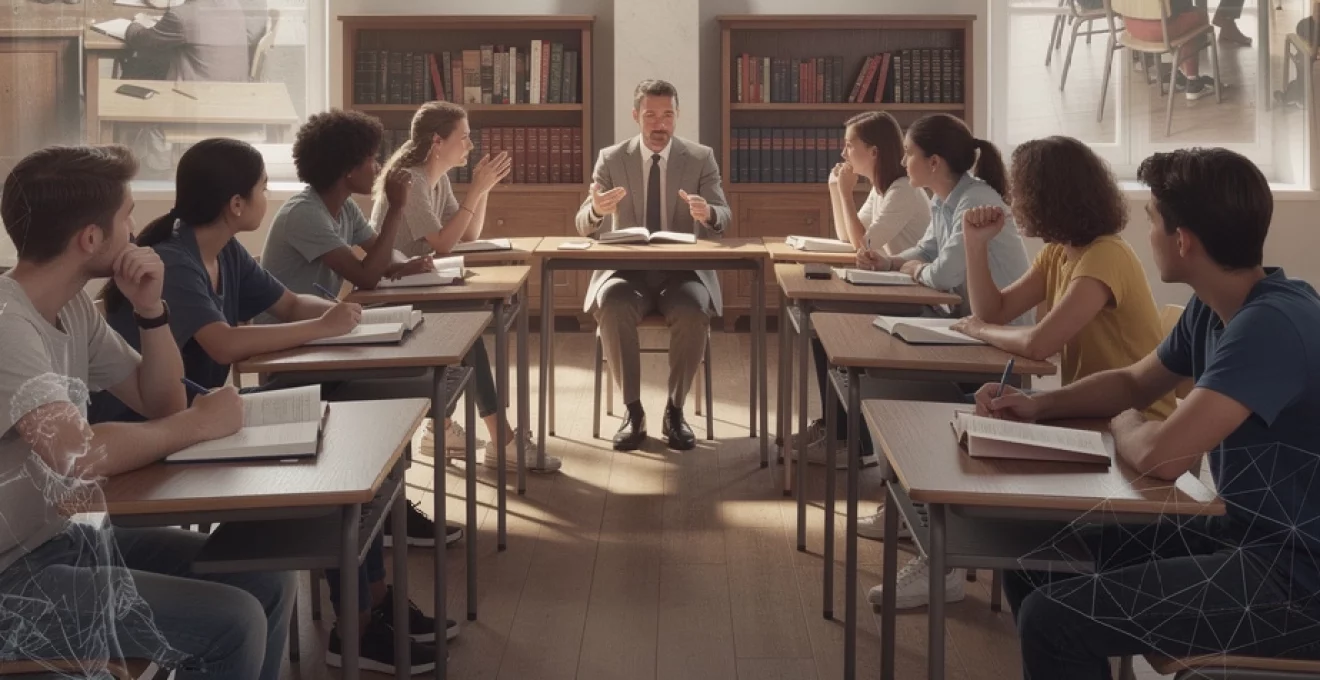
French education stands apart from most global systems through its distinctive emphasis on philosophical education, a tradition that transforms how students approach critical thinking and intellectual development. Unlike other nations that treat philosophy as an optional or university-level subject, France positions philosophical inquiry at the heart of secondary education, requiring all students to engage with fundamental questions about existence, knowledge, and human nature. This commitment reflects a deep-rooted belief that philosophical thinking is essential for developing responsible citizens and cultivating intellectual autonomy.
The integration of philosophy into the French educational framework represents more than academic tradition—it embodies a philosophical commitment to human development and democratic values. Through rigorous examination of concepts such as consciousness, truth, and justice, French students develop analytical skills that extend far beyond the classroom. This systematic approach to philosophical education has produced generations of graduates capable of nuanced thinking and sophisticated argumentation, contributing to France’s reputation for intellectual discourse and cultural refinement.
Historical evolution of philosophy within the french educational framework
The roots of philosophical education in France trace back to the early 19th century when Napoleon established the Baccalauréat in 1809, making philosophy one of the core subjects in the first national examination. This initial framework recognised that developing citizens capable of independent thought required systematic exposure to philosophical inquiry. The original examination was conducted orally in Latin, reflecting the classical educational traditions of the time, yet it established the precedent for philosophy as a cornerstone of French intellectual development.
Implementation of philosophy under jules ferry’s educational reforms (1881-1882)
Jules Ferry’s revolutionary educational reforms fundamentally transformed French education by establishing free, compulsory, and secular schooling throughout the nation. These reforms, known as the lois Jules Ferry, positioned philosophy as an essential component of republican education, designed to cultivate critical thinking skills necessary for democratic participation. Ferry’s vision extended beyond mere literacy, emphasising the development of rational faculties through systematic philosophical inquiry.
The implementation process faced considerable resistance from religious institutions and conservative factions who viewed secular philosophical education as a threat to traditional authority structures. However, Ferry’s reforms ultimately prevailed, establishing philosophy teachers as crucial figures in the intellectual development of French youth. These educators became responsible for introducing students to major philosophical traditions while encouraging independent critical analysis.
Influence of rené descartes and cartesian methodology on curriculum design
Cartesian methodology profoundly shaped the structure and approach of French philosophical education, emphasising systematic doubt and methodical reasoning as foundational intellectual tools. Descartes’ influence appears throughout the curriculum, from the emphasis on clear and distinct ideas to the systematic examination of fundamental beliefs. This methodological approach teaches students to question assumptions and construct logical arguments based on careful analysis rather than received wisdom.
The Cartesian legacy manifests in the distinctive French approach to philosophical dissertation, which requires students to identify problems, develop systematic arguments, and reach reasoned conclusions. This structured methodology differs significantly from more exploratory or creative writing approaches found in other educational systems, reflecting the French commitment to rigorous intellectual discipline.
Post-war philosophical education restructuring and democratic ideals
Following World War II, French philosophical education underwent significant restructuring to address the challenges of rebuilding democratic institutions and confronting the intellectual failures that contributed to authoritarian regimes. The post-war period saw increased emphasis on existentialist philosophy and phenomenological approaches, reflecting broader cultural shifts toward individual responsibility and authentic existence. Thinkers like Jean-Paul Sartre and Maurice Merleau-Ponty influenced curriculum development, introducing students to concepts of freedom, responsibility, and situated knowledge.
This restructuring also involved expanding access to philosophical education beyond elite institutions, democratising intellectual inquiry through comprehensive secondary schools. The reforms aimed to prepare citizens capable of resisting totalitarian ideologies through developed critical thinking skills and philosophical sophistication.
Contemporary integration with european educational standards
Modern French philosophical education navigates the tension between maintaining distinctive national traditions and adapting to European educational harmonisation efforts. While preserving the centrality of philosophy in the Baccalauréat, contemporary reforms have introduced greater flexibility in curriculum content and assessment methods. These adaptations acknowledge changing student populations and evolving pedagogical understanding while maintaining commitment to philosophical rigor.
Recent initiatives have focused on connecting philosophical inquiry to contemporary issues such as digital technology
and artificial intelligence, ecological transition, and social justice, ensuring that philosophical reflection speaks directly to the lived experience of today’s adolescents. At the same time, participation in European programmes such as Erasmus+ and alignment with the European Qualifications Framework have encouraged more explicit learning outcomes, without diluting the uniquely French insistence on rigorous argumentation and abstract reasoning.
These contemporary reforms highlight how the importance of philosophy in French education now extends beyond national borders. French philosophy teachers increasingly collaborate with colleagues across Europe, exchanging best practices on how to foster critical thinking and civic engagement. While some critics worry that standardisation might erode the depth of philosophical training, many educators argue that it instead offers an opportunity to showcase the strengths of the French model and to adapt traditional methods to a more globalised, digital world.
Pedagogical methodologies in french philosophy teaching
Pedagogical practices in French philosophy classes are as distinctive as the place of the subject in the curriculum itself. Rather than relying on rote learning or simple comprehension exercises, teachers focus on developing a disciplined habit of questioning, reasoning, and writing. Philosophy lessons often resemble a workshop in thinking, where students learn to transform vague intuitions into structured arguments. This is where the famed dissertation, the practice of Socratic dialogue, and the demanding text commentary all play central roles.
From the first weeks of Terminale, students are introduced to a common toolkit: how to define a concept, how to identify a problem, how to construct a thesis and explore its limits. These methods are not simply exam techniques; they are instruments for intellectual autonomy. When used well, they train students to move from personal opinion to justified judgment, a shift that underpins the broader importance of philosophy in French education for democratic life.
Dissertation technique and analytical writing frameworks
The philosophical dissertation is the flagship exercise of French secondary philosophy teaching. Far from being a simple essay, it follows a precise analytical writing framework that reflects the Cartesian ideal of clarity and order. Faced with a deceptively simple question like “Is truth preferable to peace?”, students must first identify the underlying conceptual tensions, then build a structured argument that examines the issue from several angles before arriving at a nuanced conclusion.
This technique usually follows a classic tripartite structure: introduction with problematisation, a three-part development, and a conclusion. In the introduction, students learn to move from the common-sense understanding of a question to a deeper philosophical problem, an operation sometimes compared to lifting the hood of a car to reveal the engine beneath. Each part of the development explores a logically articulated stage of the argument, often alternating between supporting and challenging a given thesis. By the time they complete their schooling, students who have mastered the dissertation framework are capable of crafting long-form, evidence-based arguments on complex issues—an invaluable skill in university studies and professional life alike.
For many international observers, this emphasis on structured argumentative writing is one of the reasons the importance of philosophy in French education is so often cited. The discipline required to write a coherent dissertation in four hours forces students to synthesise course content, mobilise references from Plato to Sartre, and articulate their own position under time pressure. You could think of it as intellectual weight training: demanding in the moment, but building long-term strength in reasoning and written expression.
Socratic dialogue implementation in terminale classes
Alongside formal writing, oral dialogue remains a cornerstone of pedagogy. Many philosophy teachers in Terminale adopt a quasi-Socratic approach, encouraging students to interrogate their own assumptions through guided questioning. Rather than lecturing for the entire hour, teachers often start from a provocative statement or a contemporary news item, then use targeted questions to push students to clarify their positions. Why do you think justice requires equality? What happens if we consider freedom from another angle?
This classroom dialogue is not improvisation; it follows a carefully constructed progression. Teachers move from concrete examples to more abstract principles, helping students notice contradictions and refine their arguments. When a student asserts, for instance, that “freedom is doing what we want”, the teacher may gently challenge them with scenarios involving addiction, manipulation, or legal constraints, prompting the class to consider whether freedom might instead involve autonomy or rational self-legislation. Over time, students become more comfortable with intellectual vulnerability—admitting doubt, revising their views, and learning from peers.
In this way, the importance of philosophy in French education is also expressed through a specific classroom culture: one that values debate, precision, and listening as much as personal conviction. For adolescents, these Socratic exchanges often provide a rare space where their opinions are taken seriously, but also rigorously examined. This experience of being both challenged and respected helps prepare them for civic participation, from university seminars to public debates.
Text commentary analysis using phenomenological approaches
The second major exercise in the Baccalauréat philosophy exam is the explication de texte, or text commentary. Here, students must analyse a short extract from a major philosopher—Spinoza, Kant, Hannah Arendt, or others—and reconstruct its argument step by step. Increasingly, many teachers draw on phenomenological approaches to guide students through this dense material, focusing on lived experience and the structures of consciousness described in the text.
Instead of treating the passage as an abstract puzzle, teachers invite students to inhabit the perspective of the author: What experience of the world is being described here? How does this argument change the way we see everyday phenomena like time, freedom, or other people? This method can be compared to learning a new language by immersion rather than vocabulary lists; by dwelling in the text and its implied world, students begin to sense the meaning before they can fully define it.
Phenomenological commentary trains students to move carefully from description to interpretation. They learn to identify key terms, logical connectors, and implicit presuppositions, and to distinguish what the text actually says from what they might like it to say. For many, this exercise is their first sustained encounter with the idea that reading is itself a philosophical act. It reinforces the importance of philosophy in French education by showing how attentive reading can transform our understanding of reality, not just of books.
Critical thinking assessment through baccalauréat philosophy examinations
The Baccalauréat philosophy exam is both a rite of passage and a national benchmark for critical thinking. With a coefficient that can be as high as seven in the literature track, it plays a decisive role in a student’s final grade. The exam is typically four hours long, during which candidates must choose between two dissertation topics and one text commentary. This format directly evaluates their capacity to reason under constraints, mobilise knowledge, and articulate a coherent position.
Unlike many standardised tests that focus on multiple-choice questions, the French philosophy exam privileges depth over speed. Examiners are less interested in whether a student agrees with a particular viewpoint than in how they justify it and whether they consider objections. This approach reflects a core belief behind the importance of philosophy in French education: that democratic societies need citizens who can weigh arguments, not just repeat slogans. In recent years, educational authorities have also encouraged markers to recognise diverse cultural references and contemporary examples, as long as they are integrated into a rigorous argumentative structure.
For students, preparing for this exam is often an intense intellectual apprenticeship. They learn to outline quickly, manage time, and avoid common pitfalls such as merely listing authors or drifting into personal anecdotes. While the pressure can be high, many graduates later report that mastering this challenge gave them confidence in tackling complex tasks at university and in their careers. The exam thus functions as both an assessment tool and a powerful symbol of the central place of philosophical thinking in French schooling.
Core philosophical curricula and mandatory programme structures
The national curriculum for philosophy in French secondary education is defined by the Ministry of National Education and is identical across the country. Every Terminale student, whether in the general, technological, or vocational track, must follow a year-long philosophy course, with weekly hours ranging from two to eight depending on the specialisation. This uniformity underlines the idea that the importance of philosophy in French education lies not in producing specialists, but in offering a shared intellectual foundation for all future citizens.
The programme is organised around a set of major notions—conceptual fields that structure the year’s work. These commonly include consciousness and the unconscious, freedom, justice and law, the state, religion, art, work and technique, and scientific knowledge. Rather than prescribing a fixed list of authors to be covered in each notion, the curriculum offers a canon of recommended thinkers—Plato, Descartes, Kant, Hegel, Nietzsche, Arendt—leaving teachers some autonomy to adapt content to their classes. This balance between national coherence and pedagogical freedom is a distinctive feature of the French approach.
In practice, teachers build their courses by weaving together these notions, primary texts, and contemporary issues. A sequence on “freedom”, for example, might start with everyday experiences of choice, move through readings from Sartre on existential freedom and Spinoza on necessity, and culminate in debates about digital surveillance or addiction. Such connections help students see that the importance of philosophy in French education is not merely historical or theoretical, but deeply relevant to the dilemmas they face in a rapidly changing world.
Cognitive development through philosophical discourse in adolescent learning
Adolescence is a period marked by questioning, identity formation, and growing independence. French educators deliberately situate formal philosophical study at the end of secondary schooling to harness this developmental moment. Around the age of 17, students are typically ready to engage with abstraction, to tolerate ambiguity, and to reflect on their own thinking—capacities that philosophy both requires and strengthens. In this sense, the importance of philosophy in French education is closely tied to cognitive and emotional maturation.
Studies in educational psychology suggest that engaging in sustained argumentation, perspective-taking, and meta-cognition can enhance executive functions such as planning, inhibition, and working memory. Philosophy classes operate as a kind of gym for these mental muscles. When students learn to distinguish between an example and an argument, or between a cause and a justification, they are refining core cognitive processes that transfer to other disciplines. Have you ever noticed how a student who can dissect a philosophical problem often becomes better at analysing a historical document or a scientific hypothesis?
Moreover, structured philosophical discourse helps adolescents navigate the often chaotic flow of information in the digital age. Faced with social media, news feeds, and algorithmic recommendations, young people need tools to discern argument from assertion and evidence from opinion. By emphasising justification, coherence, and the careful use of concepts, philosophy courses give them a framework to critically assess what they read and share online. This is one of the reasons policymakers continue to defend the importance of philosophy in French education, even as curricula elsewhere shift towards purely technical skills.
Teacher training programmes and agrégation philosophy certification requirements
The quality of philosophy teaching in France is closely linked to the rigorous training required to enter the profession. Aspiring secondary-school philosophy teachers typically complete a full university cursus in the discipline, culminating in a master 2 (five years of higher education). They then prepare for highly competitive national examinations, primarily the CAPES (Certificat d’Aptitude au Professorat de l’Enseignement du Second degré) and the even more selective agrégation in philosophy. Only a small percentage of candidates succeed each year, a selectivity that helps maintain high academic standards.
The agrégation in particular is legendary for its difficulty. Candidates must demonstrate mastery over a vast corpus of texts and historical periods, from ancient philosophy to contemporary thought, and pass written and oral exams that test both erudition and pedagogical skill. This process can take several years of intense preparation, often within specialised university centres. The result is that many philosophy teachers in lycées have a level of expertise comparable to that of early-career university academics, which reinforces the importance of philosophy in French education as a discipline taught with depth and seriousness.
Once recruited, teachers continue to receive professional development through training days, academic conferences, and collaborative networks. Recent reforms have also encouraged more attention to didactics: how to make difficult texts accessible, how to differentiate instruction for diverse student populations, and how to integrate digital tools without sacrificing rigour. For parents and students, this investment in teacher training offers reassurance that philosophy classes are not improvisations, but the product of a long tradition of scholarly and pedagogical excellence.
Comparative analysis: french philosophy education versus Anglo-Saxon critical thinking models
When we compare the French model to Anglo-Saxon approaches to critical thinking, striking differences emerge in both content and method. In many English-speaking systems, philosophy is often an elective subject, introduced in limited modules or after secondary school, while “critical thinking” appears as a transversal competence across disciplines. Activities might involve analysing media bias, evaluating arguments, or practising informal logic. By contrast, the importance of philosophy in French education takes the form of a dedicated, mandatory discipline with a strong historical and theoretical backbone.
This divergence also reflects different pedagogical philosophies. Anglo-Saxon models tend to prioritise skills—argument mapping, fallacy detection, reasoning under uncertainty—sometimes independent of any specific philosophical canon. The French system, on the other hand, integrates skill development with sustained engagement with major authors and texts. To use an analogy, Anglo-Saxon critical thinking can resemble learning how to use tools in a workshop, while French philosophical education is more like apprenticing with master craftsmen, learning the tools alongside the tradition that shaped them.
Neither model is inherently superior; each has strengths and weaknesses. The French approach can be criticised for its demanding abstraction and heavy reliance on written exams, which may disadvantage students less comfortable with academic language. Yet it offers an unparalleled depth of conceptual training for an entire age cohort. Anglo-Saxon models may reach younger students earlier and in more varied contexts, but often lack the sustained, year-long immersion in philosophical discourse that characterises Terminale. For educators seeking to reform curricula, the most promising path may lie in dialogue between these traditions, combining the French insistence on rigorous argumentation and historical awareness with the more flexible, applied orientation of Anglo-Saxon critical thinking programmes.
In the end, what unites these different approaches is a shared conviction: that helping young people think clearly, argue fairly, and question responsibly is essential for democratic life. The particular importance of philosophy in French education lies in how explicitly and systematically it pursues this goal, making philosophy not a luxury for a few, but a common experience for all students at the threshold of adulthood.