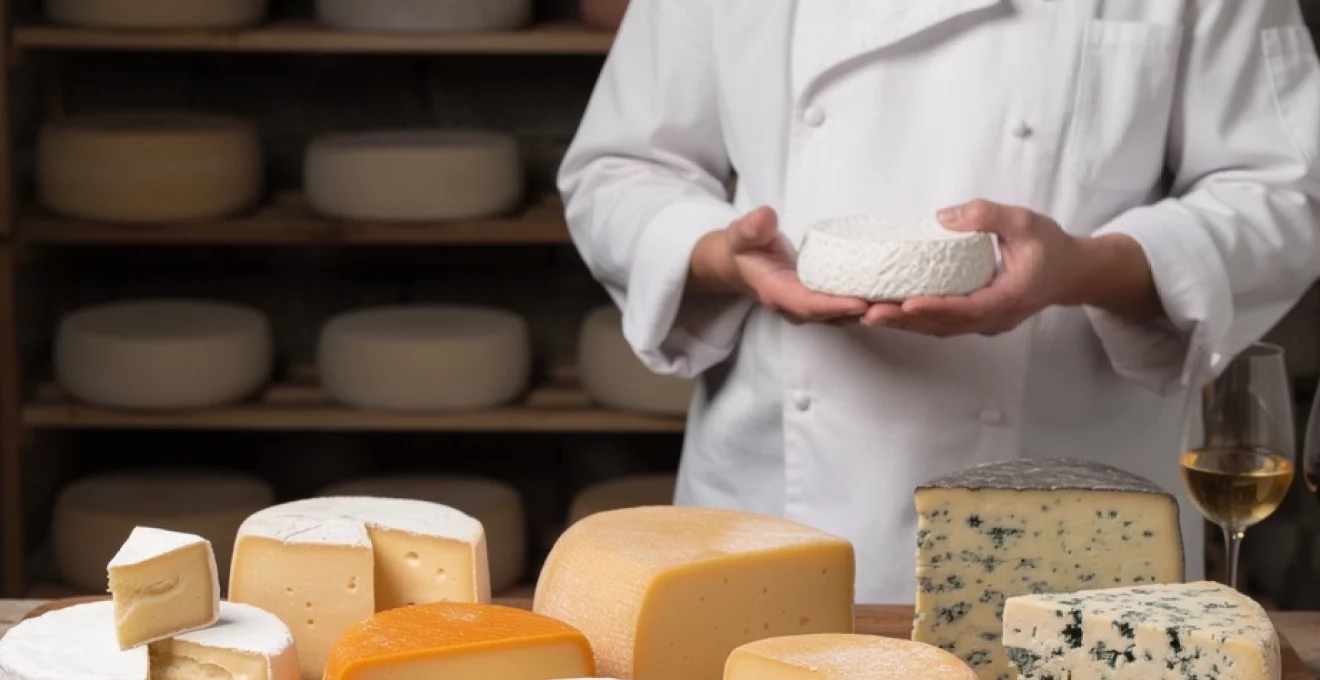
France’s relationship with cheese extends far beyond mere gastronomy—it represents centuries of agricultural tradition, regional terroir, and artisanal craftsmanship. With an estimated 1,200 to 1,600 distinct varieties produced across the country, French cheese culture encompasses an extraordinary diversity of flavours, textures, and production methods. Understanding how to select, serve, and appreciate these magnificent fromages transforms an ordinary meal into an authentic French culinary experience. Whether you’re hosting an intimate dinner party or simply seeking to elevate your cheese knowledge, mastering the art of le plateau de fromages opens the door to one of France’s most celebrated gastronomic traditions.
The complexity of French cheese selection need not intimidate you. Armed with foundational knowledge about classifications, proper serving techniques, and traditional pairings, you’ll confidently navigate any fromagerie and create memorable cheese experiences. From the creamy indulgence of Camembert de Normandie to the assertive character of Roquefort, each cheese tells a story of its geographical origin and the skilled hands that crafted it.
Understanding french cheese classifications: AOC, AOP, and IGP designations
France’s rigorous cheese classification system protects both producers and consumers, ensuring authenticity and maintaining traditional production methods. The Appellation d’Origine Contrôlée (AOC) system, established in 1935, set the foundation for protecting French agricultural products. This designation guarantees that a cheese bearing a specific name adheres to strict production criteria within a defined geographical area. Every aspect—from the breed of animal to the aging process—must meet exacting standards.
In 1992, the European Union introduced the Appellation d’Origine Protégée (AOP), which serves as the European equivalent of AOC. French cheeses holding AOC status automatically qualify for AOP designation, extending their protection across all EU member states. Currently, 50 French cheeses carry AOP certification, representing the pinnacle of traditional cheesemaking excellence. These designations aren’t merely ceremonial; they preserve centuries-old techniques and prevent industrial producers from appropriating regional names.
The Indication Géographique Protégée (IGP) represents a slightly less stringent classification, requiring that at least one stage of production occur within the specified region. While IGP cheeses maintain quality standards, they allow for greater flexibility in sourcing ingredients or production methods. Understanding these classifications empowers you to make informed purchasing decisions and appreciate the authenticity behind each wedge of cheese you select.
The eight categories of french table cheese: from pâte molle to pâte persillée
French cheesemakers classify their products based on texture, production method, and aging characteristics rather than milk type alone. This systematic approach helps you navigate the vast landscape of French cheeses and understand what to expect from each variety. The primary categories include soft cheeses with natural rinds, washed-rind varieties, pressed uncooked cheeses, pressed cooked cheeses, and blue-veined selections—each offering distinct sensory experiences.
Pâte molle à croûte fleurie: brie de meaux and camembert de normandie
Soft cheeses with bloomy rinds represent some of France’s most internationally recognized varieties. The white, velvety exterior results from Penicillium candidum or Penicillium camemberti moulds applied during production. As these cheeses mature, enzymes break down proteins and fats, creating increasingly creamy textures and complex flavours. Brie de Meaux, often called the “King of Cheeses,” develops earthy mushroom notes with a subtle tang, whilst Camembert de Normandie offers a more robust, barnyard character when properly aged.
These cheeses continue ripening after purchase, gradually becoming more fluid and assertive. You’ll recognize peak ripeness when the centre yields gently to pressure without collapsing entirely. Overripe specimens develop ammonia aromas—a clear signal that the cheese has passed its prime. When serving, always cut these round cheeses
like a cake, ensuring that each slice includes a fair share of the buttery pâte and delicate rind. Serve Brie de Meaux and Camembert de Normandie slightly cool but not cold, ideally at 18–20°C (64–68°F). Their rich, creamy character makes them perfect centrepieces on a French cheese board, particularly when accompanied by simple crusty bread and perhaps a few slices of crisp apple or pear.
Pâte molle à croûte lavée: époisses de bourgogne and munster
Washed-rind cheeses are the extroverts of the French cheese world: pungent, powerful, and unapologetically aromatic. During affinage, their rinds are regularly washed with brine, marc, beer, or other liquids, encouraging the growth of orange-hued bacteria such as Brevibacterium linens. This process creates a moist, sticky exterior and a robust, often meaty flavour profile. Époisses de Bourgogne, traditionally washed in Marc de Bourgogne, offers intense aromas but a surprisingly smooth, almost custardy interior, while Munster from Alsace and Lorraine combines a supple texture with a characteristic barnyard note.
Because these cheeses are so expressive, they are best served towards the end of your tasting sequence. At peak ripeness, the rind should appear slightly glossy and tacky, whilst the interior is soft but not completely liquid. If the paste has pulled away from the rind or smells acrid rather than pleasantly strong, the cheese may be past its best. When serving French washed-rind cheeses, keep accompaniments minimal—country bread and perhaps a few boiled potatoes or caraway seeds for Munster are more than enough.
Pâte pressée non cuite: cantal, reblochon, and tomme de savoie
Pâtes pressées non cuites, or pressed uncooked cheeses, are among the most versatile French table cheeses. After curdling, the curds are cut and gently warmed, then pressed to expel whey without reaching the high temperatures used for cooked cheeses. This technique yields firm but pliant textures and flavours that range from milky and mild to complex and nutty, depending on the affinage. Cantal, one of France’s oldest cheeses, evolves from a gentle, buttery character in its jeune stage to a sharper, more assertive profile as it ages. Reblochon from Savoie offers a supple, slightly elastic paste with nutty, creamy notes, while Tomme de Savoie tends to be rustic, earthy, and pleasantly lactic.
Pressed uncooked cheeses shine both on a cheese platter and in traditional dishes such as tartiflette or gratins. On a French cheese board, slice them into even strips or wedges so that each guest receives a piece with rind and core. Texturally, they act as a bridge between soft cheeses and harder, cooked varieties, making them ideal for the middle of your tasting progression. If you enjoy exploring terroir, compare a mountain Tomme with a lowland version; you’ll quickly understand how altitude, pasture, and milk season transform flavour.
Pâte pressée cuite: comté, beaufort, and gruyère de savoie
Cooked pressed cheeses are the architectural wonders of French cheesemaking, engineered to age for many months—or even years—without losing their integrity. The curds are heated to higher temperatures (often 50–55°C) before pressing, removing more moisture and creating a dense, elastic texture. Comté, France’s most popular AOP cheese by volume, develops an astonishing range of aromas, from hazelnut and brown butter to fresh hay and caramel, depending on its age and the season of production. Beaufort, sometimes called the “Prince of Gruyères,” is richer and more floral, while Gruyère de Savoie sits somewhere in between with its savoury, toasty notes.
For the cheese board, choose cooked pressed cheeses aged between 12 and 24 months for the best balance of complexity and sweetness. Very old wheels (30 months or more) can be spectacular but may overshadow subtler cheeses. Cut these wedges into batons or thin slices across the width so that each piece showcases the crystalline, slightly brittle texture that develops with time. Because of their concentrated flavours and excellent meltability, they transition beautifully from an elegant plateau de fromages to fondue or gratin the next day—if any remains.
Pâte persillée: roquefort, bleu d’auvergne, and fourme d’ambert
Blue-veined cheeses, or pâtes persillées, are characterised by the presence of blue or green mould cultures such as Penicillium roqueforti, introduced either into the milk or directly into the curd. Small holes pierced during affinage allow oxygen to circulate, helping the blue veins develop throughout the cheese. Roquefort, made exclusively from raw sheep’s milk and aged in the natural caves of Combalou, is undoubtedly the monarch of French blues, with a powerful saline punch and a creamy yet crumbly texture. Bleu d’Auvergne offers a more rustic, earthy profile with a supple paste, while Fourme d’Ambert is often milder, with a subtle sweetness and gentle blue notes.
On a French cheese board, blue cheeses are always served last, as their intensity can easily dominate your palate. At peak ripeness, the paste should be moist but not excessively runny, with well-distributed veins and a balanced aroma—strong but not acrid or metallic. To serve, cut into long, thin wedges so each guest can appreciate both the central veining and the outer rind. If you or your guests are hesitant about blue cheese, start with Fourme d’Ambert or a young Bleu d’Auvergne before moving toward the assertive character of Roquefort.
Affinage techniques and optimal ripening stages for serving
If cheesemaking is an art, then affinage—the maturation process—is the art of patience and precision. Many French table cheeses would be almost inedible straight from the mould; it is the weeks or months spent in carefully controlled cellars that transform them into gastronomic treasures. Understanding the basics of how cheeses are aged helps you select pieces at their best and know when to serve them. Think of affinage like ageing wine: the same raw product can express radically different personalities depending on how it is nurtured.
Cave temperature and humidity requirements for proper maturation
Professional aging cellars, or caves d’affinage, maintain strict conditions to guide each cheese toward its ideal texture and flavour. Most French table cheeses mature at temperatures between 8 and 14°C (46–57°F), with relative humidity levels of 85–98%, depending on the style. High humidity prevents the rind from cracking and the paste from drying out, while relatively cool temperatures slow bacterial and enzymatic activity enough to develop complexity without spoilage. Washed-rind cheeses typically require slightly higher humidity and more frequent turning and washing, while blue cheeses depend on controlled airflow to distribute mould evenly.
At home, you are unlikely to recreate a professional cheese cave, but you can approximate suitable conditions. Store cheese in the vegetable drawer of your refrigerator, which often has higher humidity, wrapped loosely in cheese paper or waxed paper rather than plastic. For longer storage, some enthusiasts use small, ventilated boxes to create a micro-environment that protects the rind. Have you ever noticed how cheese dries out or becomes slimy when left uncovered? That’s simply humidity and temperature working against you—understanding these parameters helps you avoid such mishaps.
Recognising peak ripeness: visual and tactile indicators
Serving French table cheeses at the right stage of ripeness is one of the most important aspects of cheese service. For soft bloomy-rind cheeses like Camembert, gently press the sides with your fingers; a ripe cheese will feel supple, with a slight give toward the centre, but not so runny that it collapses. The rind should be white to cream-coloured, perhaps with a few beige spots, rather than heavily mottled with brown. For washed-rind cheeses, look for a shiny, slightly moist surface and a paste that is creamy beneath the rind yet still holds its shape.
Pressed cheeses, both cooked and uncooked, are judged more by fracture and aroma than by softness. A well-ripened Comté, for example, will break in smooth, slightly curved shards and may reveal tiny protein crystals that crunch pleasantly between the teeth. Tommes and Cantal should be firm but not rock-hard, with a fresh, milky smell that develops into nuttiness or gentle cellar notes over time. Blue cheeses are at their best when the paste is neither chalky nor overly liquid, and when the blue veins are clearly visible without dominating the entire interior. If in doubt, ask your fromager to advise you on the current ripeness and the ideal window for serving.
Seasonal variations in cheese quality: summer vs winter production
Just as wine reflects the character of each vintage, many French cheeses express clear seasonal variations. In general, cheeses made from summer milk—when animals graze on fresh pasture—tend to be more aromatic, with deeper yellow colouring due to natural carotenoids in the grass. Comté and Beaufort produced in summer (Comté d’été, Beaufort d’alpage) are often prized for their floral, complex flavours. Winter cheeses, made when cows or goats are fed hay or silage, can be slightly milder and paler but still delicious, sometimes with a more pronounced buttery character.
Soft cheeses also show seasonal differences. A spring or early summer Camembert may taste fresher and more lactic, while autumn wheels can seem richer and more mushroomy. As a general rule, goat cheeses are at their best from late spring to early autumn, when milk quality peaks; many traditional farms do not produce chèvre during the goats’ winter rest. When planning a French cheese board, it’s worth asking your cheesemonger which cheeses are currently “in season,” much as you would when buying fruit or vegetables—you’ll often be rewarded with more vibrant flavours.
The role of maître affineur in developing flavour profiles
The maître affineur, or master affineur, plays a pivotal role in shaping the final character of French table cheese. While the cheesemaker produces the initial wheels, the affineur is responsible for the conditions and techniques that guide them to maturity. This may involve washing rinds in brine or alcohol, brushing off mould, piercing blue cheeses, or deciding how frequently to turn the wheels. Some affineurs specialise in particular regions or styles, building close relationships with small farms and cooperatives to select the best curds for aging.
For the consumer, recognising the name of a respected affineur on a label can be as useful as spotting a trusted winemaker. Houses such as Hervé Mons, Marcel Petite, or Bernard Antony, for example, are known for their meticulous work with Comté and other AOP cheeses. In recent years, the role of the maître affineur has gained wider recognition, with many professionals exporting carefully matured cheeses worldwide. When you buy a piece of well-aged French cheese, you are not only tasting the milk and the terroir, but also the patient, almost invisible craftsmanship of the affineur who brought it to perfection.
Composing the perfect plateau de fromages: selection and arrangement principles
A thoughtfully composed plateau de fromages can transform a simple meal into a memorable occasion. Rather than overwhelming your guests with too many options, focus on harmony, contrast, and narrative: where do the cheeses come from, how do their textures differ, and how will the flavours unfold from first bite to last? You can build a board around a single region, such as Savoie or Normandy, or showcase a journey across France with cow, goat, and sheep’s milk examples. The goal is not excess, but balance.
The rule of five: balancing milk types, textures, and intensities
Many French hosts follow an informal “rule of five” when selecting cheeses for a dinner party. Five cheeses offer enough variety to satisfy diverse tastes without creating confusion or waste. A classic mix might include one soft bloomy-rind cheese (Brie or Camembert), one washed-rind, one pressed uncooked, one pressed cooked, and one blue. Within that structure, aim to vary milk types—such as adding a goat cheese and a sheep’s milk cheese alongside the cow’s milk options—to broaden the aromatic palette.
Think of your cheese board like a well-orchestrated menu. You might begin with a fresh or young goat cheese (bright, tangy), move to a mild pressed cheese (gentle, nutty), continue with a bloomy rind (creamy, mushroomy), then offer a washed-rind (strong, savoury), and finish with a blue (salty, intense). This progression allows each cheese to shine without clashing with the next. For smaller gatherings, three cheeses can work beautifully if you maintain contrast—perhaps a young chèvre, an aged Comté, and a Fourme d’Ambert.
Sequencing cheeses from mild to strong: chèvre to roquefort progression
The order in which you serve French table cheeses has a profound impact on how your guests perceive them. Start with the lightest, most delicate flavours so that your palate is not fatigued too early. Fresh or lightly aged goat cheeses, mild Tommes, and young Cantal jeune are ideal opening acts. Next, introduce richer but still moderate cheeses, such as Brie de Meaux, Reblochon, or a medium-aged Comté. These build complexity without overwhelming the senses.
The final stages of your tasting should feature the heavyweights: washed-rind cheeses like Époisses or Munster, followed by blue cheeses such as Roquefort or Bleu d’Auvergne. Serving Roquefort last ensures that its salty, powerful character doesn’t mask the nuances of subtler cheeses. If you arrange your board clockwise, place the mildest cheese at 12 o’clock and proceed around to the strongest; for a rectangular board, start on the left and progress to the right. Providing a small indication of the order—either verbally or with discreet labels—helps guests navigate without hesitation.
Calculating proper portions: 80-100 grammes per guest guidelines
How much cheese should you serve per person? As a general guideline, plan for 80–100 grammes (about 3–3.5 ounces) of cheese per guest if the plateau de fromages is a separate course after the main dish. For a generous cheese board that serves as the primary element of a light meal, you might increase this to 150–180 grammes per person. When cheese acts as an aperitif alongside other hors d’œuvres, you can reduce the amount slightly, especially if other dishes are substantial.
To translate this into practice, imagine a dinner for six with five cheeses. At 90 grammes per guest, you’ll need roughly 540 grammes in total, or about 100–120 grammes of each cheese. Of course, you should also consider your guests’ appetites and preferences; a table of dedicated cheese lovers may require a little extra. When in doubt, it’s better to err on the side of moderation and complement the cheese with good bread and simple accompaniments rather than risk large leftovers that may not keep well.
Temperature control and timing: bringing cheese to room temperature
Serving French table cheeses at the correct temperature is as crucial as choosing them well. Cold cheese straight from the refrigerator can seem bland and rubbery because fats are firm and aromas muted. As cheese warms, its texture softens and flavours bloom, much like a red wine that has been allowed to breathe. For most cheeses, aim to remove them from the fridge 45–60 minutes before serving; larger or firmer pieces, such as a thick wedge of Comté, may need up to 90 minutes.
Place the cheeses, already arranged on your board, in a cool room away from direct sunlight and strong odours. Cover them loosely with a clean cloth or a cloche to prevent drying. Soft cheeses should feel supple to the touch but not oily, while hard cheeses should slice easily without crumbling excessively. Have you ever noticed how the same Camembert tastes completely different when eaten cold versus gently warmed? That transformation is simply the result of temperature releasing its aromatic potential. With a bit of planning, you can ensure every cheese reaches the table in its best possible condition.
Pairing french table cheeses with accompaniments and beverages
In traditional French households, cheese is rarely buried under elaborate garnishes; a good loaf of bread often suffices. Yet thoughtful accompaniments can highlight particular characteristics and create memorable combinations. The key is to enhance, not overpower, the cheese. Similarly, beverage pairings—whether wine, cider, beer, or spirits—can either echo the cheese’s flavours or provide refreshing contrast. By following a few simple principles, you can move beyond guesswork and pair French cheeses with confidence.
Traditional pairings: pain de campagne, noix, and confiture de figues
Classic French accompaniments follow a simple rule: what grows together goes together. A rustic pain de campagne, with its mild acidity and sturdy crumb, pairs beautifully with most table cheeses, from creamy Brie to firm Tomme. Walnuts (noix) echo the nutty notes found in many mountain cheeses like Comté or Cantal, while their slight bitterness offsets the richness of washed-rind varieties. A spoonful of fig jam (confiture de figues) works wonders with salty blue cheeses, especially Roquefort, creating a balance of sweet, salty, and tangy.
To keep your cheese board coherent, limit yourself to a few well-chosen additions rather than an entire delicatessen’s worth of options. Fresh or dried fruits (grapes, apples, pears, apricots), a handful of nuts, and one or two jams or honeys are usually sufficient. Avoid extremely strongly flavoured crackers or breads that might mask the cheese. Remember that the cheese remains the star of the platter; accompaniments should play supporting roles, much like a good soundtrack enhances a film without distracting from the story.
Wine matching principles: regional harmony and contrast techniques
Wine and cheese pairing can seem daunting, but a few guiding principles simplify the process. First, regional pairings are often a safe and satisfying choice: Comté with a Jura white wine, Sancerre with Loire goat cheeses, or a red Burgundy with Époisses. These combinations have evolved over centuries because they make sense both culturally and gastronomically. Second, pay attention to intensity; delicate cheeses call for lighter wines, while powerful cheeses can stand up to richer, more structured bottles.
Contrast can be as effective as harmony. The classic duo of Roquefort and sweet Sauternes works because the wine’s luscious sweetness balances the cheese’s saltiness and pungency. Similarly, a crisp, mineral white wine can cut through the richness of triple-cream cheeses, refreshing the palate between bites. As a general rule, dry whites and sparkling wines are more versatile partners for a mixed cheese board than tannic reds, which can clash with salt and accentuate bitterness. If you wish to serve red wine, choose softer, low-tannin styles such as Beaujolais, Pinot Noir, or mature Bordeaux.
Alternative beverage pairings: cidre, bière artisanale, and armagnac
While wine dominates French cheese culture, alternative beverages offer exciting pairing possibilities. Traditional Norman cidre, with its gentle effervescence and balance of sweetness and acidity, pairs splendidly with Camembert, Pont-l’Évêque, and other cheeses from northern France. The apple notes echo the region’s orchards and provide a refreshing counterpoint to creamy textures. Dry or semi-dry ciders also flatter many goat cheeses, highlighting their tangy freshness.
Artisanal beers have gained considerable ground in France over the past decade, and their diverse profiles open new doors for cheese pairing. Malty amber ales complement washed-rind cheeses and nutty mountain cheeses, while hoppy pale ales contrast pleasantly with rich, buttery styles. For a bold finale, consider serving a small glass of Armagnac or another aged brandy alongside blue cheese or a very old Comté; the spirit’s dried-fruit and spice notes resonate with the cheese’s complexity. Whichever beverages you choose, remember that balance is key—your goal is to create a dialogue between the drink and the cheese, not a shouting match.