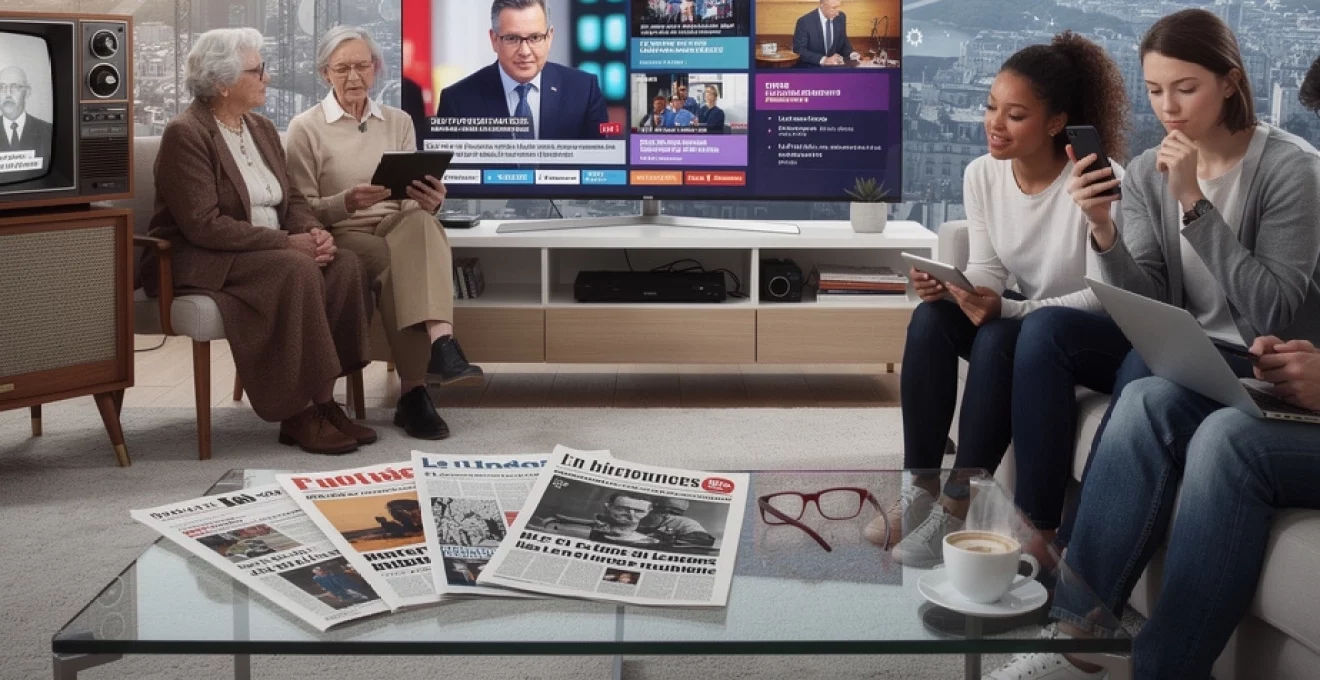
French media has undergone a remarkable transformation over the past five decades, evolving from a state-controlled monolith into a diverse, pluralistic landscape that significantly shapes public discourse and democratic participation. This evolution reflects broader societal changes, technological innovations, and shifting political ideologies that have redefined how French citizens consume information and form opinions. The relationship between French media and public opinion remains intrinsically linked to the nation’s democratic values, with press freedom serving as both a cornerstone and a battleground for contemporary political debates. Understanding this evolution provides crucial insights into how modern democracies navigate the complex interplay between media ownership, editorial independence, and citizen engagement in an increasingly digital world.
Historical foundations of french media landscape: from state broadcasting to digital pluralism
The French media ecosystem’s transformation from authoritarian control to democratic pluralism represents one of Europe’s most significant broadcasting revolutions. This journey began with the dismantling of state monopolies and culminated in today’s competitive, multi-platform environment that continues to influence public opinion formation across diverse demographic segments.
ORTF monopoly era and governmental editorial control mechanisms
The Office de Radiodiffusion Télévision Française (ORTF) era, spanning from 1964 to 1974, epitomised state control over broadcast media. During this period, television and radio served as direct instruments of governmental communication, with editorial decisions flowing directly from ministerial offices. News programmes followed strict governmental guidelines, and journalists operated under explicit censorship protocols that limited independent reporting on sensitive political topics.
This monopolistic structure profoundly shaped how French citizens accessed information, creating what media historians describe as a “controlled information environment.” The ORTF’s influence extended beyond news programming, encompassing cultural content that reinforced official narratives about French identity and values. Public opinion during this era reflected the limited media diet available to citizens, with government-sanctioned viewpoints dominating political discourse.
Liberation of airwaves under mitterrand’s broadcasting deregulation policies
François Mitterrand’s election in 1981 marked a watershed moment for French media liberalisation. His administration’s commitment to broadcasting deregulation dismantled decades of state monopoly, introducing competitive dynamics that fundamentally altered the media landscape. The abolition of ORTF’s successor organisations and the authorisation of private radio stations represented the first steps toward media pluralism.
These deregulation policies catalysed an explosion of independent voices across the French media spectrum. Local radio stations flourished, offering alternative perspectives on regional and national issues. The policy framework established during this period created legal foundations for editorial independence that continue to influence contemporary media regulation and journalistic practices.
Canal plus premium television model and subscription broadcasting innovation
Canal Plus, launched in 1984, revolutionised French television by introducing the subscription-based premium content model. This innovation demonstrated the viability of commercial broadcasting alternatives to state-funded channels, establishing new revenue streams that reduced dependence on governmental funding. The channel’s success with exclusive sports coverage, international films, and uncensored programming proved French audiences’ appetite for diverse content offerings.
The Canal Plus model influenced subsequent developments in French television, encouraging investment in original programming and technological innovations. Its encrypted signal technology and subscriber management systems became templates for other European broadcasters, while its editorial approach demonstrated how commercial imperatives could coexist with journalistic integrity and creative freedom.
TF1 privatisation impact on commercial broadcasting standards
The privatisation of TF1 in 1987 represented the most significant transformation in French television history. This decision transferred the nation’s most-watched channel from state ownership to private control, fundamentally altering competitive dynamics and programming strategies. The privatisation process established new benchmarks for audience measurement, advertising practices, and content regulation that continue to influence French broadcasting today.
TF1’s transition to commercial broadcasting introduced market-driven programming decisions that prioritised audience ratings and advertiser preferences. This shift created new pressures on news departments to balance journalistic standards with commercial viability, establishing tensions between public service obligations and profit maximisation that persist across contemporary French media.
Digital transformation and Multi-Platform media consumption
France télévisions public service adaptation to streaming competition
As streaming platforms such as Netflix, Amazon Prime Video, and Disney+ gained ground in France, France Télévisions faced unprecedented pressure to reinvent its role as a public service broadcaster. Rather than competing solely on volume of content, the group repositioned itself around universality, educational value, and strong news coverage while embracing on-demand and catch-up viewing. This strategic shift reflects a broader effort to maintain public trust in news in an era where algorithms increasingly determine what people see.
The launch and progressive enhancement of the france.tv platform marked a decisive move toward a digital-first strategy. By offering live channels, replay services, web-native series, and thematic sections (culture, education, children’s content), France Télévisions sought to reach younger audiences who were abandoning linear television. The group also experimented with shorter formats and social-first video designed for platforms like YouTube and Instagram, recognising that media consumption habits now revolve around mobile and on-demand access rather than fixed schedules.
France Télévisions further strengthened its public service mission through initiatives such as dedicated educational content during the COVID-19 lockdowns. Programmes like “La Maison Lumni” provided structured lessons and cultural content for students stuck at home, demonstrating how digital public media can support social cohesion in times of crisis. This combination of streaming innovation and civic-minded programming helped the group preserve its relevance in shaping French public opinion, even as linear TV audiences declined.
Mediametrie audience measurement methodologies in Cross-Platform analytics
In a fragmented media environment, understanding who watches what, when, and on which device has become central to both editorial strategies and advertising markets. Médiamétrie, France’s leading audience measurement institute, has evolved from simply tracking linear TV ratings to developing sophisticated cross-platform analytics. Its methodologies now encompass television, radio, websites, mobile apps, and increasingly, video on social networks, providing a unified picture of French media consumption.
To capture this complexity, Médiamétrie combines panel-based measurement (households equipped with audience meters) with census-based data, such as server logs and app analytics. This hybrid approach allows broadcasters and advertisers to measure not only traditional prime-time viewing but also time-shifted and on-demand usage across multiple screens. For example, a news bulletin watched live on TV, replayed on a tablet, and clipped on social media can now be aggregated into a single, cross-device audience figure.
These advanced analytics directly influence how French media shape public opinion and allocate editorial resources. If Médiamétrie data show that younger viewers mainly access political news through short vertical videos on smartphones, broadcasters adjust their formats and distribution accordingly. In this sense, audience measurement functions like a compass for the media ecosystem: it doesn’t dictate editorial choices, but it provides the navigational data that steer investment toward the platforms and topics that resonate most with the public.
Social media integration strategies across traditional broadcasting networks
Traditional French broadcasters quickly realised that social media were not just marketing tools but parallel arenas for public debate. Channels such as TF1, France 2, and BFM TV developed integrated strategies that synchronise live programming with real-time interaction on Twitter, Facebook, Instagram, and TikTok. Political debates, investigative reports, and even entertainment shows now generate simultaneous conversations online, amplifying their influence on French public opinion.
One common strategy involves using hashtags and second-screen experiences to encourage viewers to comment, vote, or submit questions during live broadcasts. For instance, election night specials often integrate live social media feeds, showcasing trending topics and citizen reactions alongside expert analysis. This dynamic interaction blurs the line between audience and participant, giving viewers a sense of co-creating the news narrative, even if editorial decisions remain firmly in the hands of journalists and producers.
At the same time, broadcasters must manage the risks of polarisation and misinformation that can spread rapidly on social platforms. Editorial teams monitor online discussions to correct false claims in real time and to identify emerging concerns that might demand deeper reporting. In this hybrid environment, social networks function like an enormous public square, while television retains its role as a central stage where narratives are verified, contextualised, and broadcast to mass audiences.
Mobile-first content distribution via france.tv and MyTF1 platforms
The rise of smartphones has pushed French broadcasters to adopt a mobile-first mindset, designing content and interfaces for small screens before adapting them to television. The france.tv and MyTF1 apps illustrate this shift, offering intuitive navigation, personalised recommendations, and short-form clips optimised for on-the-go viewing. For many younger users, these apps are not extensions of the TV channel but the primary gateway to French news and entertainment.
Mobile-first distribution also changes how stories are told. News segments are often edited into bite-sized videos with subtitles, so users can watch without sound on public transport. Longer investigative pieces might be accompanied by interactive timelines or infographics better suited to touchscreens. This transformation means that editorial teams have to think in terms of story ecosystems rather than single broadcasts: one investigation might generate a television piece, a podcast episode, a series of social media posts, and a vertical video tailored to mobile feeds.
From a public opinion perspective, the ubiquity of mobile access means that breaking news notifications and push alerts can instantly frame how citizens interpret major events. A alert from a trusted news app about a protest, an election result, or a health crisis often provides the first version of the story that many people encounter. In this sense, app design and notification strategy have become subtle yet powerful tools in shaping the initial emotional and cognitive response of French audiences to unfolding events.
Press freedom dynamics and journalistic independence frameworks
Press freedom occupies a unique place in the French media landscape, both enshrined in law and contested in practice. The 1881 Law on the Freedom of the Press remains a foundational text, guaranteeing the right to publish and prohibiting prior censorship, yet contemporary challenges such as media concentration, economic pressures, and strategic lawsuits against public participation (SLAPPs) continue to test the robustness of journalistic independence. How do French journalists navigate these tensions while maintaining credibility and public trust?
Over the past two decades, ownership concentration has increased, with major industrial and financial groups controlling key newspapers and television channels. This trend has fuelled public concern that economic interests might influence editorial lines, particularly on issues like labour reform, defence contracts, or large infrastructure projects. To counterbalance these pressures, many newsrooms have adopted internal charters of ethics and editorial independence, which formalise the separation between shareholders and editorial decision-makers. These charters are not panaceas, but they provide journalists with reference points when negotiating sensitive coverage.
Civil society organisations such as Reporters Without Borders (RSF) and unions like the Syndicat National des Journalistes (SNJ) play an important watchdog role, documenting violations of press freedom and supporting reporters facing legal or physical threats. France typically ranks mid-table in global press freedom indices, reflecting both its democratic safeguards and recurring concerns about police violence during protests, anti-terror legislation, and surveillance measures. The ongoing debates around source protection and the use of intelligence tools underline the delicate balance between state security objectives and the confidentiality that investigative journalism requires.
Finally, new funding models have emerged to shore up editorial independence in the digital age. Reader-supported outlets such as Médiapart or pure players financed by donations and subscriptions reduce reliance on advertising, which can be volatile and influence editorial agendas. Public subsidies for the press, although sometimes criticised, also help sustain pluralism by supporting regional titles and smaller publications. Together, these formal and informal frameworks aim to preserve a media ecosystem in which divergent voices can coexist and critically scrutinise those in power.
Public opinion formation through french media gatekeeping processes
The relationship between French media and public opinion is not simply a matter of transmission; it is fundamentally shaped by gatekeeping processes. Editors, producers, and journalists decide daily which events become news, how they are framed, and which voices are amplified or marginalised. These decisions create what communication scholars call an “agenda-setting” effect, where certain topics dominate public conversation while others remain in the shadows. In France, this dynamic is particularly visible across flagship newspapers and 24-hour news channels.
Le figaro conservative editorial influence on Centre-Right political discourse
Le Figaro, one of France’s oldest newspapers, has long been associated with conservative and centre-right politics. Its editorial line tends to emphasise themes such as economic liberalism, law and order, and the defence of traditional cultural values, offering readers a coherent ideological lens through which to interpret national and international events. For centre-right politicians and opinion leaders, Le Figaro functions as both a sounding board and a barometer of core electorate sentiment, helping to define the boundaries of acceptable discourse within this political family.
The newspaper’s opinion pages, columns, and weekend supplements play a central role in shaping centre-right public opinion. Regular contributors—academics, business leaders, and former officials—offer analyses that can crystallise emerging narratives about issues like immigration, European integration, or fiscal policy. When Le Figaro devotes sustained coverage to a topic, such as security or tax reform, it often signals to right-leaning voters that this issue should be prioritised, thereby influencing the broader political agenda.
In electoral periods, the newspaper’s interviews, endorsements, and investigative reporting can subtly steer readers toward particular candidates or policy positions. While Le Figaro maintains professional journalistic standards, its editorial choices inevitably reflect a worldview that resonates with conservative audiences. As a result, it contributes to structuring centre-right debates, providing a platform where internal disagreements can be aired and negotiated while maintaining a shared ideological core.
Libération progressive journalism impact on Left-Wing opinion mobilisation
On the opposite side of the political spectrum, Libération has historically served as a reference point for progressive and left-wing readers. Founded in the aftermath of the 1968 movements, the paper cultivated a reputation for bold headlines, social activism, and cultural openness. Its coverage foregrounds issues such as social inequality, minority rights, environmental justice, and labour struggles, offering a counter-narrative to more market-oriented or security-focused outlets. For many activists and younger readers, Libération embodies a distinctly critical and sometimes irreverent approach to French political life.
Libération’s impact on opinion mobilisation lies not only in what it covers but in how it frames issues. Protests, strikes, and grassroots movements often receive detailed, empathetic coverage, humanising participants and explaining structural causes rather than reducing events to mere disruption. This narrative choice can strengthen solidarity among left-leaning audiences and provide activists with a sense of visibility and legitimacy in the national conversation. When the paper exposes abuses—whether in police practices, corporate behaviour, or government policy—it can catalyse online petitions, demonstrations, and sustained civic pressure.
At the same time, Libération has had to adapt to the digital environment, where left-wing debates also unfold across social media, podcasts, and independent blogs. Its website and online opinion sections now interact with these alternative spaces, sometimes amplifying ideas that emerged first on Twitter or in activist networks. In this ecosystem, Libération functions as a bridge between institutional media and grassroots movements, helping to translate complex social demands into narratives that can influence parliamentary debates and mainstream political platforms.
Le monde intellectual authority in shaping policy debate narratives
Le Monde occupies a distinctive position in the French media landscape as a newspaper of record and intellectual authority. Frequently cited by policymakers, academics, and international observers, it plays a central role in structuring policy debates on topics ranging from European governance to climate change and digital regulation. Its in-depth investigations, long-form analyses, and data-driven graphics offer readers a contextualised understanding of complex issues, going beyond the immediate drama of breaking news.
The newspaper’s influence on French public opinion operates through both agenda-setting and framing. When Le Monde devotes a multi-part series to, say, the social consequences of deindustrialisation or the growing power of tech platforms, it signals that these are not marginal concerns but structural questions requiring sustained attention. Opinion pages featuring economists, sociologists, and legal scholars further refine these debates, providing conceptual tools that filter into parliamentary hearings, think tank reports, and expert commissions.
Le Monde’s digital evolution, including paywalled content and newsletters tailored to specific themes, has reinforced its role among highly educated and politically engaged audiences. This “elite” readership often includes the very actors who design and implement public policies. Thus, the newspaper acts as an intermediary between specialised knowledge and broader public discourse, translating complex technical debates into accessible narratives that can be understood—and contested—by citizens.
BFM TV continuous news cycle effects on political agenda setting
BFM TV, France’s leading 24-hour news channel, has dramatically changed the tempo and texture of political communication. Its continuous news cycle ensures that events, controversies, and soundbites are broadcast and dissected in near real time, creating a sense of permanent urgency. Politicians and commentators know that a statement made in the morning can become a national talking point by midday, amplified across social media and replayed throughout the day. This acceleration reshapes how political actors plan their communication strategies and how citizens form their opinions.
From a gatekeeping perspective, BFM TV wields considerable influence over which topics dominate the national conversation on any given day. Extended live coverage of protests, terrorist attacks, or health crises can crowd out other issues, even if they are structurally important but less visually dramatic. The channel’s rolling coverage of the “Gilets jaunes” movement, for example, helped to both reflect and magnify public anger, as images of roundabouts, clashes, and interviews with demonstrators looped continuously. In such moments, the boundary between mirroring reality and co-producing it becomes blurred.
This high-speed environment can also foster a preference for conflict-driven formats: heated debates, split-screen confrontations, and rapid-fire interviews tend to generate higher ratings than slow, nuanced explanations. As a result, political actors may adopt more polarising rhetoric to secure airtime, reinforcing a cycle where visibility rewards extremity. Yet BFM TV also invests in fact-checking segments and expert interviews, illustrating the ongoing struggle to balance spectacle with substance in 24-hour news. For viewers, the challenge is to navigate this torrent of information without losing sight of longer-term structural issues.
Regulatory evolution under CSA and ARCOM media oversight
Media regulation in France has evolved alongside technological change, shifting from managing scarce broadcast frequencies to overseeing a vast, convergent communication environment. The Conseil supérieur de l’audiovisuel (CSA), created in 1989, was initially tasked with allocating frequencies, ensuring pluralism, and monitoring compliance with rules on decency, advertising, and political balance. As the internet and streaming services gained prominence, however, this traditional broadcast-focused framework became insufficient to address the full spectrum of media influence on public opinion.
In 2022, the CSA merged with the authority overseeing digital piracy (HADOPI) to form ARCOM (Autorité de régulation de la communication audiovisuelle et numérique). This new body reflects the convergence of television, radio, and online platforms, recognising that public debates now unfold seamlessly across these spaces. ARCOM’s mandate includes monitoring hate speech, protecting minors from harmful content, and ensuring that platforms comply with obligations around electoral periods. The regulator can issue warnings, impose fines, or, in extreme cases, suspend broadcasting licences.
One of ARCOM’s major challenges lies in applying principles of pluralism and fairness to algorithmic environments dominated by global tech companies. How can a national regulator ensure balanced political coverage when a significant share of information is consumed through personalised feeds curated by opaque algorithms? ARCOM has begun to require greater transparency from platforms and encourages cooperation in fighting disinformation, particularly around elections and major crises. Its work is complemented by European-level initiatives, such as the Digital Services Act, which seeks to harmonise platform regulation across the EU.
At the same time, French regulators must navigate the fine line between combating harmful content and preserving freedom of expression. Civil liberties groups closely scrutinise regulations to ensure they do not lead to over-blocking or chilling effects on legitimate journalism and citizen speech. This ongoing negotiation between state oversight, corporate responsibility, and civil rights illustrates the complexity of governing a media ecosystem where national boundaries are porous but democratic values remain rooted in constitutional traditions.
Contemporary challenges: misinformation, echo chambers, and democratic discourse
The contemporary French media landscape faces a trio of interrelated challenges: misinformation, echo chambers, and the erosion of shared democratic discourse. Social networks and messaging apps allow rumours and conspiracy theories to circulate at unprecedented speed, often outpacing corrections by professional journalists. During the COVID-19 pandemic and the Ukraine war, for instance, fact-checkers documented waves of false claims about vaccines, geopolitical motives, and military operations, many of which reached millions of users before being debunked. How can citizens make informed choices when the information environment feels so unstable?
Echo chambers and filter bubbles compound this problem by isolating users within like-minded communities. Recommendation algorithms, social graphs, and self-selection mean that many French citizens now inhabit media diets tailored to their pre-existing beliefs. A far-right voter scrolling Telegram channels, a radical-left activist on specific Twitter lists, and a centrist professional subscribed to mainstream newsletters may all inhabit parallel information universes. This segmentation reduces exposure to opposing views and undermines the deliberative ideal in which public opinion emerges from a shared pool of facts and arguments.
Yet the picture is not entirely bleak. French media organisations, universities, and NGOs have launched numerous initiatives in media and information literacy, teaching students and adults how to verify sources, recognise manipulative content, and understand how algorithms work. Public broadcasters run fact-checking segments and dedicated programmes dissecting viral claims, while newspapers host “debunking” columns and open their data for scrutiny. These efforts encourage citizens to adopt a more active, critical relationship to information, rather than consuming news passively.
Ultimately, the evolution of French media and public opinion raises a fundamental question: can a democracy sustain meaningful collective debates when its citizens increasingly encounter personalised, polarised streams of content? The answer likely lies in a renewed commitment to pluralistic, independent journalism combined with transparent, accountable regulation and widespread media literacy. If we think of the media ecosystem as a kind of public infrastructure—no less vital than roads or schools—then investing in its resilience becomes a prerequisite for maintaining a vibrant, informed democratic life in France.