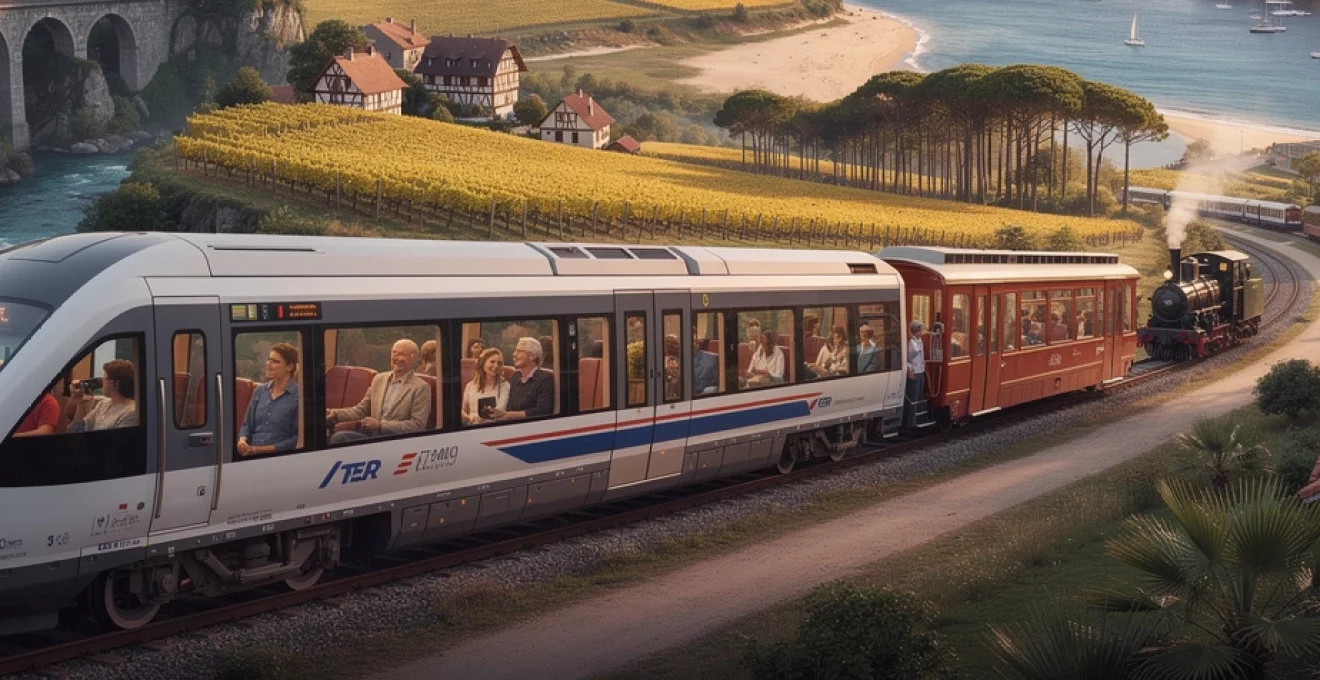
France’s railway network offers some of Europe’s most spectacular scenic journeys, weaving through diverse landscapes that range from snow-capped Alpine peaks to Mediterranean coastlines, from ancient volcanic plateaus to fairy-tale châteaux valleys. The country’s commitment to rail infrastructure, combined with its extraordinary geographical diversity, creates unparalleled opportunities for travellers seeking breathtaking vistas from the comfort of a train carriage. Whether you’re drawn to heritage steam locomotives chugging through medieval countryside or modern electric trains gliding past azure coastal waters, France’s scenic railways promise unforgettable experiences that showcase the nation’s natural beauty and cultural heritage.
The French rail system encompasses everything from high-speed TGV services that transform distant regions into accessible destinations, to narrow-gauge heritage lines that preserve century-old engineering marvels. Each route tells a story of the landscape it traverses, offering passengers intimate glimpses of rural French life, architectural treasures, and pristine natural environments that remain largely unchanged by modern development.
Classic belle époque railway routes through the french alps
The French Alps represent the pinnacle of scenic railway engineering, where Belle Époque ambition meets dramatic mountain geography. These routes showcase extraordinary feats of 19th and early 20th-century construction, with viaducts, tunnels, and rack-and-pinion systems carved into seemingly impossible terrain. The engineering prowess required to create these mountain railways demonstrates France’s commitment to connecting remote Alpine communities whilst providing passengers with unrivalled access to some of Europe’s most spectacular mountain scenery.
Chemin de fer de provence: nice to Digne-les-Bains alpine traverse
The Train des Pignes, officially known as the Chemin de Fer de Provence, represents one of France’s last remaining narrow-gauge railways, operating on a metre-gauge track that winds 151 kilometres through the Alpes-de-Haute-Provence. This remarkable journey begins at Nice’s Gare du Sud and climbs steadily through olive groves, lavender fields, and pine forests before reaching the spa town of Digne-les-Bains at an altitude of 608 metres. The railway passes through 50 tunnels and crosses 16 viaducts, including the spectacular Pont de la Mariée, where passengers can glimpse dramatic gorges carved by the Var River.
During the three-hour journey, the landscape transforms from Mediterranean vegetation to Alpine flora, with opportunities to observe traditional Provençal architecture in villages like Annot, famous for its distinctive sandstone formations. The railway operates vintage railcars from the 1950s during summer months, adding authentic period charm to this already atmospheric journey. Seasonal variations provide different perspectives, with spring offering wildflower displays and autumn revealing golden foliage across the mountainsides.
Mont-blanc express: chamonix valley glacial panoramas
The Mont-Blanc Express connects Saint-Gervais-les-Bains in France with Martigny in Switzerland, offering passengers extraordinary views of Western Europe’s highest mountain range. This international railway journey covers 40 kilometres through the Chamonix Valley, providing unobstructed vistas of glaciers, seracs, and towering granite peaks including the Aiguille du Midi and Mont Blanc itself. The train operates year-round, with winter journeys offering snow-draped Alpine panoramas and summer routes revealing verdant valleys dotted with traditional chalets.
Engineering highlights include the crossing of numerous avalanche galleries and the passage through Vallorcine, where passengers can observe active glacial activity. The railway’s rack-and-pinion sections enable steep gradient climbing, reaching maximum grades of 9% as it navigates between mountain faces and deep valleys. During clear weather conditions, visibility extends across the entire Mont Blanc massif, encompassing peaks exceeding 4,000 metres in elevation.
Train des pignes: Narrow-Gauge heritage through verdon regional natural park
Beyond the primary Nice-Digne route, the Train des Pignes network includes branch lines that penetrate deeper into the Verdon Regional Natural Park, offering access to some of Provence’s most pristine wilderness areas. These heritage routes utilise original steam locomotives during special excursions, recreating the authentic experience of early
railway travel in the region’s early 20th-century tourism boom. Steam-hauled services typically operate on weekends and during peak holiday periods, traversing sections of track that hug limestone cliffs and overlook the turquoise Verdon River. For railway enthusiasts, combining a standard Chemin de Fer de Provence service with a heritage steam excursion provides a comprehensive immersion into both the technical and aesthetic dimensions of this iconic Provençal line.
Practical considerations for planning this scenic train journey through the Verdon Regional Natural Park include checking seasonal timetables and reserving seats well in advance, particularly in July and August when domestic tourism peaks. You may wish to align your trip with local markets in villages like Entrevaux, where fortified ramparts and a hilltop citadel create a striking backdrop to the station. As with many mountain railways in France, weather can influence operations, so it is advisable to allow some flexibility in your itinerary in case of service disruptions due to rockfalls or heavy rain.
Bernina express extension: cross-border alpine engineering marvels
While the famed Bernina Express is primarily a Swiss-Italian route, French rail connections make it possible to experience this UNESCO-listed marvel as part of a broader Alpine rail itinerary. Travellers can route from Paris or Lyon via Geneva or Lausanne, continuing through the Rhône Valley to reach Chur or St. Moritz, where the Bernina line begins. This cross-border journey highlights the seamless integration of European rail networks, allowing you to move from French TGV lines to Swiss metre-gauge mountain railways without ever needing a car.
The Bernina Express itself is celebrated for its spiral tunnels, stone viaducts such as the Landwasser, and high-altitude crossings that crest above 2,200 metres without rack-and-pinion assistance. For travellers used to French Alpine lines like the Mont-Blanc Express, the Bernina feels like a grand continuation, pushing mountain railway engineering to its limits while still offering panoramic comfort through oversized windows. You will watch glaciers, high meadows and emerald lakes slide by like scenes in a moving painting, with informative commentary available in multiple languages.
From an experiential standpoint, coupling French scenic routes with the Bernina Express creates a multi-day rail adventure that rivals classic grand tours of the Belle Époque era. You might begin with the Chemin de Fer de Provence from Nice, connect northwards via Marseille and Lyon, then use TGV and regional services to bridge into Switzerland. This kind of rail itinerary is ideal if you value low-carbon travel, as international trains emit far less CO₂ per passenger-kilometre than short-haul flights. Booking early, especially for summer and Christmas periods, will secure the best fares and ensure you obtain window seats along the most dramatic sections.
Atlantic coastal railway circuits along the vendée and charente-maritime
Moving from high mountains to the Atlantic seaboard, France’s western regions offer a very different style of scenic train journey. Instead of jagged peaks and glaciers, you encounter dune-backed beaches, salt marshes, maritime pine forests and historic port cities. The Vendée and Charente-Maritime coastlines are threaded with regional TER services and heritage lines that allow you to hop between seaside resorts and traditional fishing villages without the stress of summer traffic jams.
These Atlantic coastal railway circuits are particularly appealing if you enjoy combining gentle outdoor activities with cultural exploration. Many stations lie within walking or cycling distance of beaches, bird reserves and oyster farms, making it easy to design a car-free holiday where the train serves as your main artery of movement. With climate-conscious travel gaining momentum across Europe, using regional trains along the Atlantic proves that slow travel can be both sustainable and deeply rewarding.
Train de la rhune: basque pyrenees rack railway experience
Straddling the border between France and Spain, the Train de la Rhune is a classic rack railway climbing to 905 metres in the Basque Pyrenees. Departing from the Col de Saint-Ignace near Sare, this historic line, opened in 1924, uses vintage wooden carriages pushed by electric locomotives that engage a central rack rail to handle gradients of up to 25%. The ascent takes around 35 minutes, during which you gain sweeping views over the Atlantic coast, the Bay of Biscay and the undulating foothills of the Pyrenees.
What makes the Train de la Rhune particularly memorable is the way it blends natural beauty with strong regional identity. As you climb, you may see pottok ponies, griffon vultures and traditional Basque farmsteads dotting the slopes. At the summit, on clear days, the panorama stretches from the Spanish coastline to the Landes forests in the north, offering one of the finest coastal-mountain vistas accessible by rail in France. This is a perfect example of a scenic train journey where the destination view is every bit as compelling as the ride itself.
Because the Train de la Rhune operates seasonally from roughly April to early November, planning ahead is essential. Timetables can be affected by high winds or storms, and same-day ticket availability in peak summer can be limited. To avoid disappointment, you should reserve online where possible, arrive early for your departure slot and bring layers—temperatures at the summit can be significantly cooler than at sea level, even in July and August. Combining this excursion with visits to nearby Saint-Jean-de-Luz or Biarritz makes for a well-rounded Basque coastal itinerary.
Petit train du cap ferret: arcachon basin maritime pine forests
On the Atlantic coast near Bordeaux, the Petit Train du Cap Ferret offers a charming narrow-gauge experience that links the ocean-facing beaches of Cap Ferret with the sheltered waters of the Bassin d’Arcachon. Running for approximately two kilometres between the jetty at Bélisaire and the Atlantic shore, this small tourist railway threads through maritime pine forests and past low-slung holiday villas, evoking a slower era of seaside travel. Although short compared with other scenic rail routes in France, it perfectly complements boat trips and cycling tours in the area.
The Arcachon Basin is renowned for its oyster farms, shifting sandbanks and the towering Dune du Pilat, Europe’s highest sand dune. Taking the Petit Train feels almost like riding a shuttle between two different worlds: the calm, lagoon-like basin on one side and the wild Atlantic surf on the other. Families and couples alike appreciate the relaxed pace, open-air carriages and the opportunity to avoid a hot, sandy walk between the shorelines. It is not a high-speed connection but a leisurely, almost nostalgic link designed for pleasure rather than efficiency.
Operating mainly during the warmer months, the Petit Train du Cap Ferret syncs its timetable with ferry services across the Bassin d’Arcachon, allowing you to combine rail, boat and bicycle in one car-free day. As with many coastal tourist services, operations may be reduced outside peak season, so it pays to check the latest schedules before you travel. If you are seeking a quintessential French beach holiday with a low environmental footprint, structuring your movements around this petite railway and the local TER network between Bordeaux and Arcachon is an excellent strategy.
Chemin de fer touristique du rhin: alsatian vineyard valley passages
Despite its name referencing the Rhine, the Chemin de Fer Touristique du Rhin runs through a picturesque corner of Alsace near the German border, offering a blend of riverine landscapes and vineyard-clad hills. This heritage line typically employs diesel or steam locomotives to haul vintage carriages along short sections of track that once formed part of local industrial or cross-border routes. Travelling here feels like stepping into a living museum, where you can experience the ambience of mid-20th-century regional rail travel against a backdrop of half-timbered villages.
As the train meanders through the valley, you pass orchards, cornfields and wine estates that produce celebrated Alsatian varietals such as Riesling and Gewürztraminer. Many passengers choose to combine a ride on the Chemin de Fer Touristique du Rhin with visits to nearby wine cellars and walking routes along the Route des Vins d’Alsace. In autumn, when vineyards blaze with shades of gold and red, the journey becomes a moving gallery of seasonal colour, making it one of the best scenic train experiences in France for wine and photography enthusiasts.
Because this is a tourist railway operated predominantly by volunteers, services are often limited to weekends, public holidays and the high summer period. Timetables, rolling stock and special events—such as themed steam days or Christmas trains—can change from year to year. It is therefore wise to consult up-to-date local information and, where possible, book in advance. If you are crafting a broader Alsace itinerary, consider pairing this heritage ride with regular TER services between Strasbourg, Colmar and Mulhouse, which also offer pleasant views of vineyards and Vosges foothills.
Train jaune: eastern pyrenees cerdagne plateau high-altitude journey
The Train Jaune, or Little Yellow Train, is one of France’s most iconic mountain railways, running 63 kilometres between Villefranche-de-Conflent and Latour-de-Carol in the Eastern Pyrenees. Opened in 1910, this metre-gauge line climbs to 1,592 metres at Bolquère-Eyne, the highest station in the SNCF network, before crossing the high Cerdagne plateau. The distinctive yellow and red livery of the carriages, reflecting the Catalan colours of the region, adds a whimsical, almost storybook character to the journey.
This high-altitude route is famed for its spectacular engineering works, including the Pont Gisclard suspension bridge and the Séjourné viaduct, both of which provide dizzying views over deep valleys and forested slopes. In summer, open-air carriages allow you to feel the wind and sun as you pass fortified towns, chapels and remote farmsteads, while in winter the same landscapes transform into a snow-covered wonderland. The slow speed of the Train Jaune—often averaging less than 30 km/h—means you have ample time to savour every curve and canyon.
Planning a journey on the Train Jaune requires a little forethought, as services can be reduced in the low season and weather-related disruptions are not uncommon at high altitudes. Booking your tickets ahead is advisable, especially if you want to ride in the open-air wagons during peak holiday periods. For walkers and skiers, the line provides access to numerous trailheads and resorts, making it an excellent backbone for a multi-day exploration of the Cerdagne region. If you have ever wondered what it feels like to traverse the spine of the Pyrenees by rail, this is the journey that answers that question.
Historic steam locomotive excursions through châteaux country
Moving into the heart of France, the river valleys of the Loire, Cher and Indre are home to some of the country’s most famous châteaux—Chenonceau, Chambord, Amboise and many others. While high-speed and regional trains efficiently connect major hubs like Tours, Blois and Orléans, a number of heritage railways in the broader “châteaux country” use historic steam locomotives to recreate the golden age of rail travel. These excursions often run along former branch lines that once carried agricultural produce and passengers between small market towns and the main network.
Travelling behind a steam locomotive through this landscape feels like gliding through a living tapestry of Renaissance architecture, vineyard rows and river meanders. You might pass stone farmhouses with slate roofs, poplar-lined canals and sunflower fields that seem to stretch to the horizon. On several lines, volunteers maintain original station buildings, semaphore signals and period rolling stock, adding layers of authenticity. For families, the sensory experience—the hiss of steam, the smell of coal, the rhythmic chug of pistons—turns what might have been a simple transfer into a memorable event.
Among the best-known routes is the Train à Vapeur du Val de Loire, which runs seasonal steam services over short sections of preserved track, sometimes coinciding with local festivals or markets. Elsewhere, smaller associations operate “trains touristiques” that may only run a handful of days per year, especially around Easter, summer and Christmas. Because schedules can be irregular and subject to the availability of volunteers and locomotives, careful advance research is essential. Checking local tourism office websites and regional event calendars can help you align your visit with a steam operating day.
From a practical standpoint, these historic excursions are rarely the fastest way to travel between châteaux, but they add a ceremonial dimension to your visit. You can think of them as the equivalent of taking a horse-drawn carriage rather than a taxi—slower, yes, but infinitely richer in atmosphere. Pairing a steam ride with a day of château visits by bike or TER train creates a low-impact, high-experience itinerary that showcases both France’s architectural heritage and its railway history. As interest in slow travel grows, these steam lines are increasingly recognised as cultural assets worth protecting.
Mediterranean corniche railway networks via côte d’azur stations
The Mediterranean coast between Marseille and the Italian border is laced with some of France’s most scenic “corniche” railways—lines that skirt cliffs and coves, offering uninterrupted views of the sea. The modern TER network along the Côte d’Azur follows routes first established in the 19th century, when aristocratic visitors flocked to winter resorts like Nice, Menton and Cannes. Today, these same tracks provide everyday commuter services that double as sightseeing journeys, giving you front-row seats to one of Europe’s most glamorous coastlines.
Travelling by train along the Côte d’Azur allows you to bypass congested coastal roads while still enjoying sweeping vistas of turquoise bays, rocky promontories and pastel-hued towns. Stations such as Villefranche-sur-Mer, Beaulieu-sur-Mer and Cap-Martin Roquebrune are perched almost at water level, meaning that within minutes of stepping off the train you can be on a beach or harbour quay. The regularity of services—often two to four trains per hour in peak times—makes it easy to hop on and off, treating the line as a flexible scenic shuttle rather than a once-in-a-lifetime excursion.
East of Nice, the route towards Ventimiglia in Italy passes dramatic headlands and sheltered inlets, with particularly stunning sections near Èze-sur-Mer and Monaco. To the west, the line towards Marseille includes the famed Côte Bleue section between L’Estaque and Miramas, where viaducts arc over narrow calanques and fishing villages nestle in rocky bays. If you time your journey for late afternoon, you can watch the sun dip towards the sea, bathing the cliffs and terracotta roofs in warm, honeyed light. For many travellers, this simple regional journey ranks among the best scenic train rides in France.
When planning travel along the Mediterranean corniche railways, it pays to sit on the seaward side of the carriage—typically the right-hand side when heading east from Marseille or the left-hand side when travelling west from Ventimiglia. Avoiding peak commuter hours can make your trip more comfortable, particularly in July and August when both locals and tourists crowd the trains. As with other coastal routes, occasional delays due to heat, storms or maintenance are possible, so building a little slack into your schedule ensures you can still make connections or restaurant reservations without stress.
Regional TER services through UNESCO world heritage landscapes
Beyond headline-grabbing tourist trains, some of the most rewarding scenic journeys in France take place on ordinary regional TER services that happen to pass through UNESCO World Heritage landscapes. Because these routes are part of the daily transport fabric, they offer an authentic window into local life as well as access to globally significant cultural and natural sites. You might share a carriage with schoolchildren, commuters and hikers while gliding past vineyards, fortified towns or river gorges recognised for their outstanding universal value.
One standout example is the TER line that threads through the Loire Valley between Orléans, Blois, Amboise and Tours, traversing a UNESCO-listed cultural landscape of châteaux, historic towns and carefully managed riverbanks. Another is the route along the Rhône between Lyon and Avignon, passing near the Roman Theatre of Orange and the Pont du Gard, both World Heritage sites. In eastern France, services between Strasbourg and Colmar integrate easily with visits to the Grande-Île in Strasbourg, itself a UNESCO-listed historic centre. These journeys demonstrate how you can use everyday trains as a framework for exploring some of France’s most important heritage zones.
From a planning perspective, leveraging regional TER services for UNESCO-focused travel offers several advantages. Ticket prices are generally lower than TGV fares, and advance booking is often unnecessary for off-peak journeys, giving you flexibility to adapt your itinerary. Many regions also offer discounted day passes or weekend deals, allowing unlimited travel within a defined zone—ideal if you wish to visit multiple World Heritage sites in a short period. Think of these passes as your backstage access to France’s cultural treasury, with the added benefit that you can stop at intermediate stations to explore lesser-known villages and landscapes.
Of course, regional trains can be slower and subject to more frequent stops than high-speed services, so patience is part of the bargain. However, if your goal is to enjoy the scenery rather than simply arrive as fast as possible, this trade-off works in your favour. Watching vineyards roll by at 100 km/h rather than 300 km/h gives you time to notice the details—the pattern of stone walls, the curve of a river, the outline of a hilltop church. In a sense, using TER services through UNESCO areas is like reading a richly illustrated book at a leisurely pace instead of skimming a summary.
Seasonal mountain railway operations and booking logistics
Many of France’s most dramatic scenic train routes run through mountain regions where weather, daylight hours and tourist demand fluctuate significantly throughout the year. As a result, operations on lines such as the Train Jaune, Train de la Rhune and certain steam-powered heritage services are often seasonal. Winter may bring snowshoe-clad passengers to Alpine and Pyrenean routes, but it can also mean avalanche risks, frozen points and reduced timetables. Conversely, summer offers long days and stable conditions, yet trains may be crowded and advance reservations essential.
When you plan a scenic train journey in France, it is helpful to think like a mountaineer checking a route: what season offers the experience you want, and what constraints come with it? For example, if you dream of gliding past snow-covered peaks on the Mont-Blanc Express or watching frost-laced vineyards from a TER window in Alsace, travelling between December and March is ideal, but you must be prepared for occasional delays. If colourful meadows, hiking access and open-air carriages are your priorities, late spring to early autumn will be more suitable. Each mountain railway publishes seasonal timetables, often months in advance, which serve as your primary planning tool.
On the booking side, France’s national operator SNCF, along with regional partners, has streamlined online and app-based reservations for most mainline and many scenic services. For high-demand routes—such as the Côte d’Azur coastal line in summer or the Mont-Blanc Express during school holidays—securing tickets 2–3 months ahead can mean better prices and guaranteed seats. Heritage and tourist railways, however, may use separate booking systems, sometimes managed by local associations rather than national platforms. In these cases, checking official websites or contacting local tourist offices is the surest way to obtain up-to-date booking information.
A few practical tips can make your experience smoother. First, always allow buffer time between scenic services and onward connections, especially if your journey involves mountain lines where delays are more likely. Second, consider seat selection: on routes with standout views on one side—such as the Mediterranean corniche railways—choosing the right-hand or left-hand seat can make a notable difference. Finally, remember that scenic train travel in France is as much about the journey as the destination; building in time for spontaneous stops, village explorations and café breaks will transform a simple rail itinerary into a rich, multilayered travel experience.