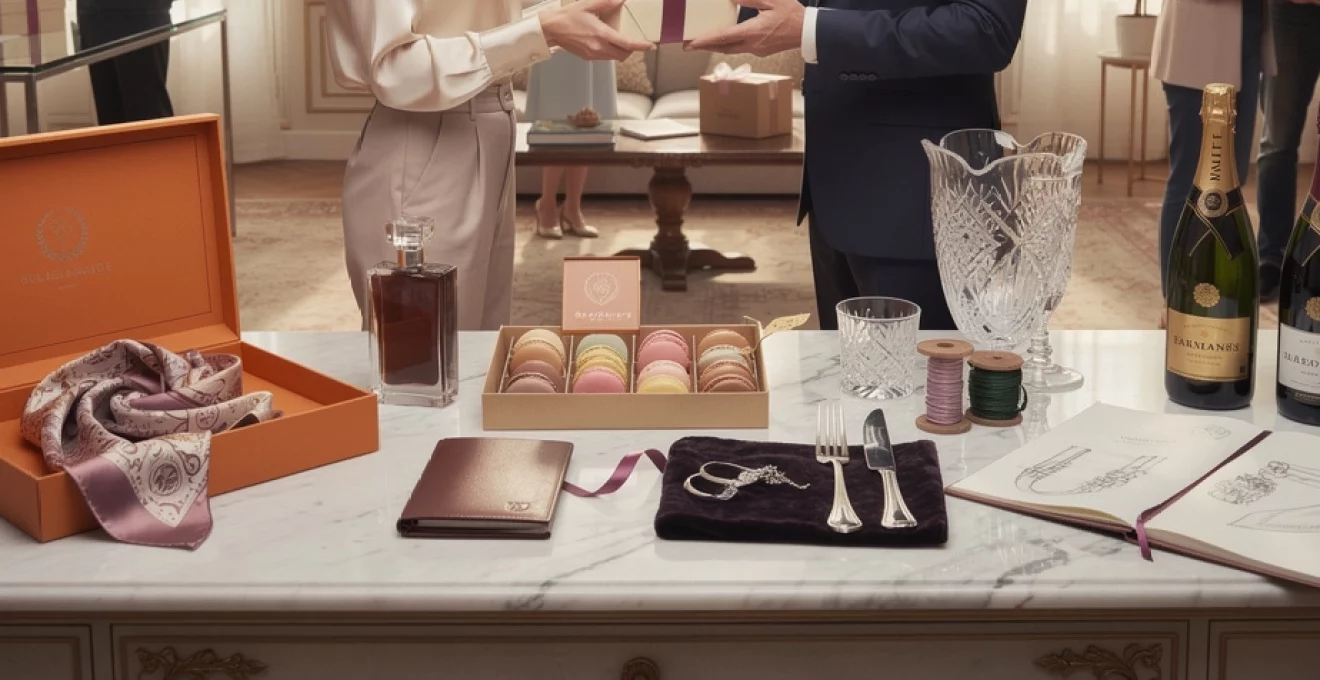
French gift-giving transcends mere exchange of objects; it represents a sophisticated cultural expression rooted in centuries of tradition and refined aesthetics. The concept of savoir-vivre permeates every aspect of French gifting culture, where the thoughtfulness behind the gesture carries infinitely more weight than the monetary value attached. From intimate family celebrations to prestigious corporate events, French gift-giving protocols demand careful consideration of timing, presentation, and cultural significance.
Understanding the nuances of French gifting culture becomes essential when navigating business relationships, personal connections, or simply expressing appreciation within French society. The artistry lies not only in selecting the perfect item but also in presenting it with elegance and grace that reflects deep respect for the recipient. This sophisticated approach to gift-giving has evolved into a refined system where every detail communicates meaning, from the quality of wrapping paper to the timing of delivery.
French cultural etiquette protocols for Gift-Giving occasions
The foundation of French gift-giving rests upon deeply ingrained cultural protocols that govern when, how, and what to present as gifts. These unwritten rules form part of the broader French concept of politesse, where social grace and consideration for others take precedence over personal convenience or casual attitudes towards gift exchange.
French elegance lies in the balance of romance and restraint, where the most meaningful gifts often carry emotional resonance rather than ostentatious display.
Traditional French etiquette dictates that arriving empty-handed to someone’s home remains unacceptable social behaviour. However, the selection process requires careful navigation of cultural sensitivities. Chrysanthemums, for instance, are strictly reserved for funeral occasions, whilst red roses carry romantic implications suitable only for intimate relationships. Understanding these symbolic meanings prevents inadvertent social blunders that could damage relationships or create uncomfortable situations.
Savoir-vivre guidelines for business gift exchange in corporate france
Corporate gifting in France follows stringent protocols that differ markedly from Anglo-Saxon business cultures. Initial business meetings should never include gift exchange, as this practice may be perceived as presumptuous or attempting to influence professional relationships inappropriately. The French business community values authentic relationship building over material gestures during early professional interactions.
Year-end corporate gifting represents the most appropriate occasion for business gift exchange, particularly during the New Year period rather than Christmas. Premium wine selections from renowned châteaux, artisanal chocolate collections from master chocolatiers, or luxury accessories reflecting French craftsmanship demonstrate respect for professional relationships whilst maintaining appropriate boundaries. Personalised elements should focus on quality and sophistication rather than branded merchandise bearing company logos.
Traditional celebration customs: étrennes and fête des mères presentation standards
The tradition of étrennes exemplifies French appreciation for service providers who contribute to daily life quality. These New Year gifts, typically monetary offerings presented in elegant envelopes accompanied by handwritten notes, acknowledge the efforts of school teachers, building staff, postal workers, and other service professionals. The amount varies according to the level of personal interaction and service importance, with building administrators and housekeeping staff receiving more substantial recognition.
Fête des Mères celebrations in France extend beyond immediate family to include grandmothers and mothers-in-law, reflecting the culture’s emphasis on extended family relationships. Traditional gifts include fresh flowers (always odd numbers, never thirteen), premium wines, and spa-related items that promote self-care and relaxation. The presentation must reflect seasonal appropriateness and personal taste knowledge accumulated through careful observation of the recipient’s preferences.
Regional variations: Alsace-Lorraine versus Provence-Alpes-Côte d’azur gift traditions
French regional diversity manifests distinctly in gift-giving traditions, with Alsace-Lorraine maintaining stronger Germanic influences that emphasise practical beauty and craftsmanship. Traditional Alsatian gifts often feature locally produced items such as artisanal pottery, handwoven textiles, or regional delicacies like kougelhopf and regional wines that reflect the area’s unique cultural heritage.
Conversely, Provence-Alpes-Côte d’Azur gift traditions
Conversely, Provence-Alpes-Côte d’Azur gift traditions celebrate sensory pleasure and Mediterranean ease. Thoughtful gifts from this region often include artisanal olive oils, lavender-scented linens, hand-milled soaps from Marseille, or calissons from Aix-en-Provence. The emphasis lies on items that evoke sun-drenched landscapes and leisurely outdoor living, from striped seaside towels to wicker picnic baskets. While Alsace-Lorraine gifts lean towards enduring utility, Provençal offerings favour atmosphere and emotion, often chosen to transport the recipient to a specific season, light, or scent.
When selecting regionally inspired French gifts, it is essential to consider the recipient’s own connection to those territories. A bottle of Riesling from Alsace or a rosé from Bandol becomes far more meaningful when it recalls a shared holiday, a hometown, or a cherished memory. In this way, regional gifts encapsulate one of the core principles of French gift-giving: the desire not simply to offer an object, but to share a fragment of lived experience.
Timing protocols for crémaillère and pendaison de crémaillère ceremonies
Housewarming gifts in France follow a specific etiquette, particularly around the traditional pendaison de crémaillère, which marks the official celebration of a new home. Unlike in some cultures where gifts may arrive before moving day, French custom favours presenting the gift when you are actually invited to visit the new residence. Arriving empty-handed to a crémaillère remains as inappropriate as visiting for dinner without at least a small token of appreciation.
Appropriate housewarming gifts emphasise practicality and symbolism. Timeless options include high-quality kitchen linens, artisanal salt or olive oil, a tasteful plant (avoiding highly scented flowers that could overwhelm small spaces), or a carefully chosen bottle of wine to be enjoyed on a future special occasion. You should avoid imposing your taste in large decorative objects unless you know the recipient’s style well. Subtlety is preferred: think of your gift as a discreet contribution to the new household rather than a statement piece that dominates the décor.
Timing also extends to follow-up gestures. A handwritten note or message after the pendaison de crémaillère thanking the hosts for their hospitality is always appreciated and aligns with broader French politeness codes. If the housewarming coincides with another life milestone—such as a promotion or a new baby—French etiquette encourages a single, well-chosen gift that acknowledges the ensemble of events, rather than multiple unrelated items. This reinforces the French preference for quality over quantity in every gifting scenario.
Premium french artisanal products and luxury brand selection strategies
When you wish to embody the art of gifting in France at its highest level, the choice of artisanal products and luxury brands becomes crucial. French luxury is less about ostentation and more about heritage, craftsmanship, and story. The most successful gifts often combine an iconic name with a highly personal relevance, allowing you to express esteem while demonstrating that you truly understand the recipient’s identity and tastes.
To select a refined French gift, start by considering the recipient’s lifestyle: are they a discreet connoisseur of fine objects, a devoted gourmand, or a design enthusiast with a passion for interiors? Matching their profile to the relevant French maisons or artisans helps you move from generic luxury to deeply resonant gifting. In corporate contexts, this strategic alignment can subtly communicate how carefully you have listened and observed, reinforcing trust and mutual respect without a single word.
Hermès silk scarves and chanel fragrance portfolio for sophisticated recipients
Few gifts communicate French refinement as clearly as an Hermès silk scarf or a Chanel fragrance, yet both require thoughtful selection. In France, offering an Hermès carré is less about the logo and more about the motif, the colour harmony, and how it will integrate with the recipient’s wardrobe and personality. Classic equestrian designs or architectural prints suit more traditional dressers, while bolder, contemporary patterns may appeal to creative professionals or collectors.
Similarly, the Chanel fragrance portfolio demands nuance. Gifting a perfume in France can be intensely intimate, as fragrance is considered an extension of the self. If you know the recipient’s signature scent—perhaps Chanel N°5 or Coco Mademoiselle—offering a related body cream, hair mist, or travel-size flacon can feel appropriately personal without presuming to change their olfactory identity. For corporate or newly formed relationships, lighter, universally appreciated options such as scented candles or bath products from established maisons provide a safer alternative.
When you offer such emblematic luxury pieces, presentation becomes even more important. Allow the boutique’s packaging to speak for itself while adding your own understated touch—a handwritten note, a reference to a shared memory, or a discreet explanation of why this particular pattern or fragrance made you think of them. In this way, a globally recognisable luxury gift becomes a singular, almost bespoke gesture.
Maison fauchon gourmet selections and pierre hermé macaron collections
Gastronomy lies at the heart of French culture, making gourmet selections an ideal choice for many occasions. Maison Fauchon gift boxes, filled with fine teas, confitures, foie gras, or chocolate, encapsulate the Parisian art of indulgence. For professional contexts, a carefully curated Fauchon hamper sent during the New Year period can convey appreciation while providing a luxurious shared experience for an entire team.
Pierre Hermé macarons, meanwhile, embody the contemporary side of French pâtisserie. Their innovative flavour pairings—such as rose-lychee-raspberry or passionfruit-hazelnut—turn a simple box of sweets into an exploration of taste. When gifting macarons in France, timing is crucial: ensure same-day or next-day consumption to preserve texture and flavour. This attention to freshness reflects the broader French idea that a perfect, ephemeral pleasure can be more meaningful than a durable but uninspired object.
Because gourmet gifts are often shared, they are particularly suitable when you wish to avoid favouritism or when you are not fully acquainted with individual preferences. A box of Pierre Hermé macarons or a Fauchon assortment placed in a meeting room or at a family gathering allows the gift to generate conversation, joy, and connection—precisely what French gift-giving aims to achieve.
Baccarat crystal craftsmanship and christofle silverware heritage pieces
For milestone occasions—weddings, anniversaries, lifetime promotions—heritage objects from houses like Baccarat and Christofle represent the pinnacle of French elegance. Baccarat crystal, renowned for its clarity and brilliance, transforms everyday rituals such as serving water or champagne into ceremonial moments. A pair of crystal flutes, a minimalist vase, or a small decorative piece can become a lifelong keepsake, passed from one generation to the next.
Christofle silverware and decorative pieces carry a similar aura of continuity and refinement. In France, offering a Christofle baby spoon or picture frame at a baptism or birth is a classic, deeply symbolic gesture, aligning the child with a lineage of taste and sophistication. For adults, a set of dessert forks, a sleek champagne bucket, or a minimalist tray both honours their achievements and integrates seamlessly into a refined table culture.
When choosing such investment pieces, it is wise to favour timeless lines over highly experimental designs, unless you know the recipient’s aesthetic very well. Think of these gifts like architectural foundations rather than seasonal accessories: they should support a lifetime of evolving styles without ever appearing dated or overly conspicuous.
Regional specialities: champagne krug versus burgundy domaine de la Romanée-Conti
For serious wine enthusiasts, French regional specialities can be the most eloquent of gifts. Champagne Krug, with its complex blends and extended ageing, signals celebration at the highest level. It is particularly suited to corporate milestones, retirements, or landmark birthdays, where the intention is to mark an exceptional moment with an equally exceptional bottle. In such cases, including a note suggesting the occasion on which to open it adds a thoughtful narrative layer.
Domaine de la Romanée-Conti, by contrast, occupies an almost mythical status in Burgundy. Due to its rarity and price, it is reserved for the most intimate and momentous gifts: a lifelong friendship, a major family event, or an outstanding professional collaboration. In France, offering such a bottle is akin to gifting a work of art; it implies profound respect and is often accompanied by shared tasting plans, reinforcing the idea that wine is meant to be experienced together.
If these iconic names exceed your budget, the principle still applies. A carefully chosen grower Champagne or a single-vineyard Burgundy, selected with the guidance of a trusted caviste, can convey the same sense of personal discernment. What matters most in French wine gifting is not the label alone, but your ability to articulate why this particular bottle aligns with the recipient’s story, palate, or future celebrations.
Personalisation techniques and bespoke french gift curation methods
Personalisation sits at the core of the French art of gift-giving. While luxury brands and celebrated artisans provide the framework, it is the tailor-made details that transform a beautiful object into a treasured keepsake. In France, thoughtful customisation is less about monogramming everything in sight and more about subtle gestures: choosing the exact shade of leather, commissioning an illustration of a meaningful place, or curating a selection of products that reflect a private joke or shared passion.
Think of bespoke French gifting as composing a short story about the recipient. Each element—the brand, the colour palette, the inscription, even the wrapping—acts as a sentence that reveals something you have noticed and appreciated. When done well, this approach turns even modest items into powerful emotional anchors, often cherished more than far more expensive but impersonal gifts.
Monogramming services at galeries lafayette and le bon marché customisation ateliers
Parisian department stores such as Galeries Lafayette and Le Bon Marché have elevated personalisation into an experience of its own. Their customisation ateliers offer monogramming on leather goods, embroidery on linens, hot-stamping on stationery, and even on-the-spot engraving for certain accessories. Using these services allows you to align with the French preference for discretion while still making the gift unmistakably unique.
When considering monogramming in France, subtlety is key. Initials are typically small, often tone-on-tone, and placed in discreet locations. This preserves the object’s elegance while giving it a quiet sense of ownership. Overly large logos or flamboyant fonts are generally avoided, especially for recipients who value classic French understatement. If you are unsure, consider personalising the packaging instead—a monogrammed ribbon, a customised gift box, or a dedicated gift card design.
These department-store services are particularly useful for last-minute yet refined gifts, as many customisations can be executed within the day. By combining a widely appreciated object—such as a leather cardholder, a cashmere scarf, or a notebook—with personalised details, you communicate that you have thought beyond the obvious, even when time is short.
Commissioned artwork from école des Beaux-Arts alumni and atelier partnerships
For truly singular occasions, commissioned artwork from French artists offers a profoundly personal approach to gifting. Collaborations with alumni of the École des Beaux-Arts or independent ateliers enable you to immortalise a shared memory, beloved landscape, or portrait in a way that no standard luxury item can rival. In France, such commissions are often associated with weddings, milestone birthdays, or the inauguration of a new family home.
The process requires careful preparation. You will need to discuss the recipient’s tastes, the preferred medium—watercolour, charcoal, photography, sculpture—and the context in which the piece will be displayed. Many French ateliers also offer collaborative projects, such as custom illustrations for stationery, bookplates, or even personalised wine labels for a private event. These hybrid creations sit at the intersection of fine art and everyday life, aligning perfectly with the French ideal of integrating beauty into daily rituals.
Because commissioned works cannot be returned or exchanged, it is essential to ensure that this type of gift aligns with the recipient’s character. When well-judged, however, a bespoke artwork becomes a lifelong companion and often a conversation piece passed down through generations—arguably the most powerful form of long-term gifting.
Vintage french collectibles: limoges porcelain and art nouveau antique sourcing
Vintage and antique French collectibles appeal to recipients who appreciate history, patina, and the charm of imperfect perfection. Limoges porcelain, known for its fine translucence and hand-painted motifs, often appears in the form of trinket boxes, coffee cups, or decorative plates. Offering a carefully sourced Limoges piece can signal not only taste but also a shared love of craftsmanship from another era.
Art Nouveau objects—mirrors, lamps, jewellery, or glassware—reflect a more expressive, organic aesthetic that once defined Parisian interiors at the turn of the twentieth century. Sourcing such pieces from reputable dealers, auction houses, or specialised markets like the Marché aux Puces de Saint-Ouen requires time and research, but the resulting gift carries an unmatched narrative richness. Each scratch or slight imperfection tells a story, which many French recipients value more than glossy newness.
When gifting antiques in France, transparency about provenance and condition is essential. Wherever possible, include documentation or a short note summarising the object’s origin, period, and any known history. This transforms the gift into a small chapter of cultural heritage that the recipient is invited to continue writing.
Subscription services: le petit ballon wine curation and atelier des sens experiences
Subscription services offer a modern way to extend the pleasure of a French gift over time. Wine clubs such as Le Petit Ballon curate monthly selections tailored to the recipient’s palate, guided by expert sommeliers. This approach suits both novices, who can learn about French regions and grape varieties gradually, and seasoned enthusiasts eager to discover small producers they might never encounter otherwise.
Experience-based subscriptions, like cooking or tasting classes at Atelier des Sens, align perfectly with the French preference for art de vivre over accumulation. Rather than adding another object to the home, you are offering moments of learning, creativity, and conviviality. These experiences can range from pastry workshops and bread-baking courses to regional cuisine immersions and wine-and-cheese pairings.
Such ongoing gifts are particularly effective for long-distance relationships or professional contexts where you wish to maintain a connection over several months. Every delivery or scheduled class becomes a discreet reminder of your initial gesture, reinforcing the relationship with each new discovery.
Presentation aesthetics and french wrapping methodologies
In France, the way you present a gift is almost as important as the gift itself. Wrapping is seen as an introduction, a first impression that sets the emotional tone before the object is even revealed. Simple, high-quality materials—matte papers, fabric ribbons, wax seals, or kraft paper paired with a single sprig of greenery—are favoured over excessive decorations or loud prints.
Professional boutiques often provide impeccable wrapping, but adding your own detail—a handwritten tag, a subtle colour reference to the recipient’s interior, or a carefully chosen postcard—demonstrates extra care. Many French hosts will place small cadeaux d’assiette directly on each guest’s plate during festive dinners: tiny wrapped boxes, personalised chocolates, or miniature candles, each tied with fine ribbon. This practice illustrates how presentation can transform even modest items into cherished mementos.
Avoid tearing into gifts hastily when receiving them, particularly in more formal settings. Taking time to appreciate the wrapping, commenting on its elegance, and untying the ribbon with care respects the effort invested. This ritualistic approach to opening gifts reflects a broader French enjoyment of anticipation—the idea that pleasure starts long before the object is fully revealed.
Digital gifting innovations and e-commerce platforms in france
While French gifting culture is steeped in tradition, it has also adapted to the digital age. E-commerce platforms and specialised online boutiques now make it possible to send carefully curated French gifts across the country—and around the world—without sacrificing refinement. Many luxury houses and artisanal brands offer online customisation tools, digital greeting cards, and premium delivery options that mirror the in-store experience.
Digital gift cards, once seen as impersonal, have gained acceptance in France when they are thoughtfully framed. A gift card to a favourite independent bookstore, a Michelin-starred restaurant, or a local spa can be highly appreciated if accompanied by a personalised message explaining why you chose that particular venue. The key, as always, lies in specificity and sincerity rather than in the generic nature of the format.
Hybrid approaches are also emerging: you might order a gourmet basket online to arrive the day before a video-call celebration, then share a virtual tasting together. In corporate contexts, companies increasingly use French e-commerce platforms to coordinate New Year gifts for distributed teams, selecting regionally sourced products while centralising logistics. Even in digital form, the French art of gifting continues to prioritise intention, narrative, and aesthetic coherence.
Cross-cultural adaptation strategies for international recipients in french context
When French gifting traditions intersect with international relationships, sensitivity and flexibility become essential. You may need to navigate different expectations around value, practicality, and symbolism while still remaining faithful to the French emphasis on thoughtfulness and elegance. The goal is not to impose French norms, but to use them as a refined framework that you adapt to the recipient’s cultural background.
For example, certain flowers or colours considered auspicious in one culture may be inappropriate in another, just as offering alcohol may be unwelcome for religious or personal reasons. In such cases, you can transpose French principles into alternative categories: instead of Champagne, choose fine non-alcoholic infusions or artisanal syrups; instead of perfume, opt for a high-quality candle or home fragrance. You maintain the French dedication to sensory pleasure and quality while avoiding potential missteps.
When gifting from France to international colleagues or loved ones, it is often helpful to include a brief explanation of the object’s cultural significance. A short note about les étrennes, the tradition behind a particular regional delicacy, or the story of a heritage brand can transform a potentially opaque gift into a meaningful cultural bridge. By doing so, you invite the recipient into the French world of savoir-vivre, not as an outsider, but as an honoured guest at the table of refined, intentional giving.