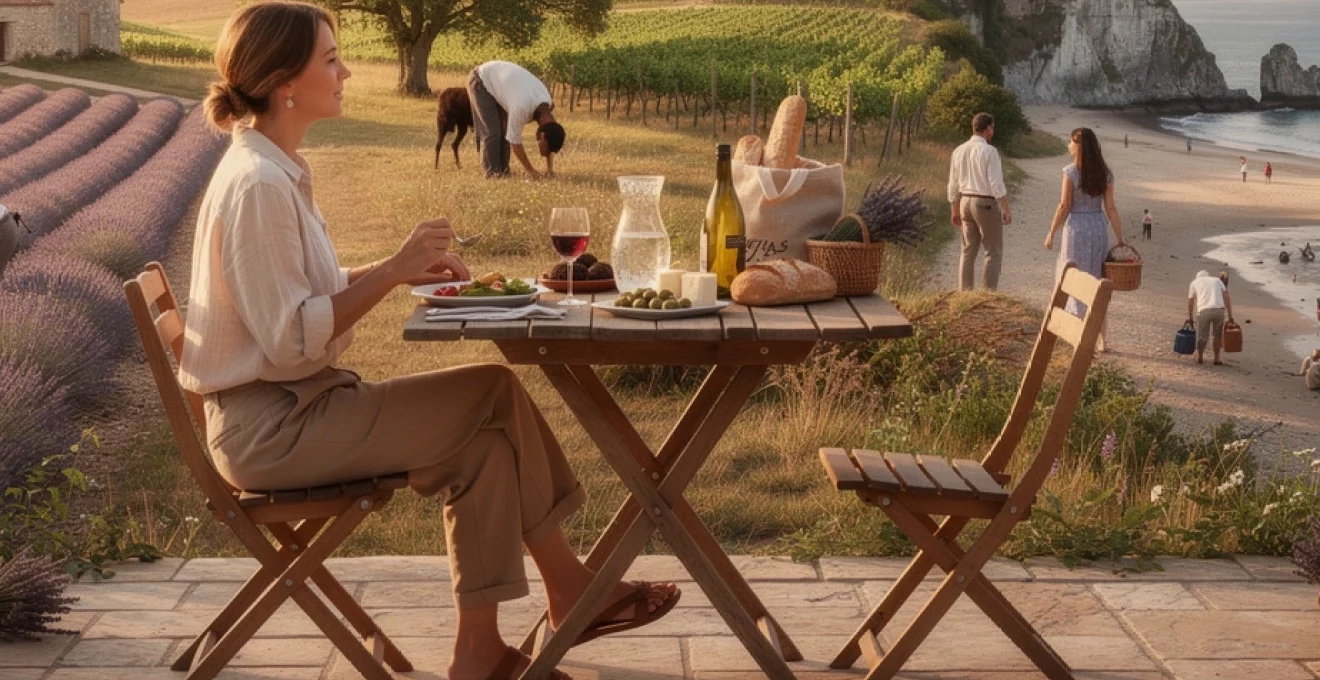
In an era where digital notifications punctuate every moment and productivity culture demands constant acceleration, France offers a compelling alternative through its deeply embedded philosophy of slow living. This ancient wisdom, rooted in centuries of cultural refinement, presents a sophisticated approach to contemporary life that prioritises quality over quantity, depth over speed, and genuine fulfilment over frantic achievement. The French understanding of l’art de vivre extends far beyond mere lifestyle choices, representing a fundamental reimagining of how humans can thrive in the modern world whilst maintaining connection to seasonal rhythms, community bonds, and personal authenticity.
Philosophical foundations of slow living: from cittaslow movement to french art de vivre
The intellectual foundations of contemporary slow living emerge from a convergence of Italian activism, French philosophy, and Mediterranean wisdom traditions. This movement represents more than a rejection of modernity; it constitutes a sophisticated philosophical framework for navigating contemporary complexity whilst preserving human dignity and environmental sustainability.
Carlo petrini’s slow food revolution and its cultural migration to french lifestyle
The transformation of Carlo Petrini’s Slow Food philosophy into French cultural practice demonstrates how activist movements can evolve into comprehensive lifestyle frameworks. Originally conceived as resistance to fast food standardisation, the movement found particularly fertile ground in France, where gastronomic traditions already emphasised regional specificity, seasonal awareness, and communal celebration. French adoption of slow food principles extends beyond dietary choices to encompass broader temporal consciousness, challenging the assumption that efficiency necessarily correlates with quality of life.
French interpretation of Petrini’s vision emphasises the connection between food systems and social structures. Local markets become spaces for community building, whilst seasonal eating patterns align daily rhythms with natural cycles. This approach recognises that food choices reflect deeper values about environmental stewardship, economic justice, and cultural preservation. The French understanding transforms slow food from consumer choice into cultural practice, embedding these principles within existing frameworks of regional pride and artisanal excellence.
Phenomenological approaches to temporal consciousness in french philosophy
French philosophers from Henri Bergson to Maurice Merleau-Ponty have contributed crucial insights into the nature of temporal experience that underpin contemporary slow living practices. Bergson’s distinction between mechanical time and lived duration provides theoretical foundation for understanding why slowing down enhances rather than diminishes productivity. His concept of durée suggests that consciousness naturally flows in rhythms that resist mechanical quantification, supporting practices that honour natural temporal patterns.
Merleau-Ponty’s phenomenology of perception offers additional depth to slow living philosophy by emphasising embodied experience over abstract cognition. His work suggests that slowing down allows fuller engagement with sensory reality, creating opportunities for deeper understanding and more authentic connection. These philosophical insights inform practical approaches to daily life, supporting the French emphasis on savoir-vivre as both art and wisdom.
Mediterranean diet principles and gastronomic mindfulness in provincial france
The integration of Mediterranean dietary principles within French provincial culture creates a unique synthesis of health consciousness and culinary pleasure. This approach challenges binary thinking that separates nutrition from enjoyment, demonstrating how mindful eating practices can simultaneously serve physical wellbeing and cultural continuity. French provincial communities have maintained traditional eating patterns that naturally align with Mediterranean diet recommendations whilst preserving distinct regional characteristics.
Gastronomic mindfulness in French context emphasises the social and cultural dimensions of food consumption. Meals become opportunities for conversation, relationship building, and community maintenance. The practice of taking time to prepare, present, and consume food creates natural rhythms that resist the acceleration pressures of contemporary life. This approach recognises that eating serves multiple functions beyond nutrition, supporting emotional wellbeing, cultural transmission, and social cohesion.
Hygge adaptation versus french Savoir-Vivre: comparative lifestyle methodologies
Whilst Danish hygge emphasises cosy domesticity and intimate comfort, French savoir-vivre encompasses a broader range of social and cultural competencies. The comparison reveals different cultural approaches to slow living, with hygge focusing on internal states and domestic environments whilst savoir-vivre emphasises public behaviour and social grace. Both philosophies share commitment to quality over quantity
but differ in their historical roots and modes of expression. Where hygge often centres on cushions, candles and domestic retreats, French slow living is equally at home in the café, the marketplace, the public garden, or the village square. It prioritises conversation, critical thinking and aesthetic discernment as much as it does comfort. In practice, this means that slow living in France is less about creating a cocoon and more about cultivating a refined, balanced presence in the world: knowing how to conduct a lingering lunch, how to disagree intelligently, and how to appreciate beauty without ostentation.
Regional implementation of slow living practices across french territories
Although the philosophy of slow living in France is national in scope, its concrete expression varies significantly from region to region. Each territory translates art de vivre through its particular climate, landscape and history, creating distinct yet related models of sustainable slowness. Understanding these regional practices helps us see that slow living is not a rigid formula, but a flexible framework that adapts to local rhythms, economic realities and cultural memory.
Provence-alpes-côte d’azur: lavender cultivation and seasonal rhythms
In Provence-Alpes-Côte d’Azur, slow living unfolds in harmony with agricultural and climatic cycles, most visibly through lavender cultivation. From June to early August, the plateau fields of Valensole and Sault bloom in precise synchrony with temperature and rainfall patterns, dictating the daily routines of farmers and the flow of visitors. Harvests take place early in the morning or late in the day to preserve essential oils, encouraging a lifestyle attuned to the cool edges of the Provençal sun rather than the relentless midday heat.
This seasonal rhythm extends beyond agriculture into everyday life. Markets in Aix-en-Provence or Saint-Rémy follow weekly cycles that have persisted for centuries, and village life is punctuated by fêtes votives, olive harvests and grape picking. For residents and mindful visitors alike, adopting slow living here means planning work and leisure around these recurring events: walking instead of driving when possible, shopping at open-air markets rather than supermarkets, and accepting that, in the afternoon, shutters close and streets grow quiet for a restorative pause. Rather than fighting the climate and the clock, Provençal slow living invites us to move with them.
Dordogne valley: truffle hunting traditions and agricultural temporality
In the Dordogne Valley, slow living is inseparable from the long temporal horizon of truffle cultivation and traditional agriculture. Black truffles require years to develop in symbiosis with oak or hazelnut trees, a biological fact that naturally resists short-term thinking. Trufflers, often working with trained dogs, must read subtle signs in soil, weather and forest ecology. Their knowledge is cumulative and intergenerational, built not from speed but from repetition and attentive observation over decades.
This agricultural temporality shapes social life as well. Winter truffle markets, such as those in Périgueux or Sarlat, operate according to strict, almost ritualised protocols that honour quality and transparency. Producers and buyers know one another, and the pace of negotiation is deliberate. For inhabitants, slow living in Dordogne may mean maintaining a vegetable garden, preserving produce through traditional methods, and budgeting according to harvest cycles rather than monthly salary alone. For visitors, participating in early-morning markets, seasonal foires au gras, or guided truffle hunts offers a concrete way to experience a rhythm of life where value accrues slowly, like flavour in a long-simmered dish.
Loire valley château region: viticultural cycles and wine tourism integration
The Loire Valley illustrates how slow living can coexist with, and even structure, a modern tourism economy. Viticultural cycles across appellations such as Sancerre, Vouvray or Chinon dictate not only the work of winemakers but also the peak periods of cultural activity. Pruning in winter, budding in spring, canopy management in summer and harvest in early autumn create a predictable yet always slightly variable annual script, to which local festivals, wine fairs and gastronomic events are carefully aligned.
For residents, this cyclical structure encourages a lifestyle where anticipation and preparation are as important as the harvest itself. Families plan holidays around less busy periods in the vineyards, and many small producers now design oenotourisme experiences that deliberately slow visitors down: guided walks through parcels, cellar tastings spread over several hours, or cycling routes linking vineyards and châteaux. Instead of quick photo stops, travellers are invited to understand the temporal depth behind each bottle. Practically, those seeking to adopt a Loire-inspired slow living approach can prioritise seasonal visits, stay in small guesthouses rather than chain hotels, and allow time for unhurried conversations with vignerons about climate, soil and history.
Brittany coastal communities: tidal patterns and maritime slow living
On the Breton coast, the most powerful clock is the tide. Twice a day, vast stretches of seabed appear and disappear, dictating when fishermen launch their boats, when families gather shellfish, and when coastal paths are accessible. This strong tidal amplitude—among the highest in Europe—makes it impossible to ignore natural rhythms. Slow living here begins with consulting the tide tables, not a packed calendar; coastal inhabitants learn early that some activities are non-negotiably “at low tide or not at all.”
This maritime temporality encourages forms of leisure and work that resist digital fragmentation. Oyster farmers in the Golfe du Morbihan, for example, adjust their schedule not to emails but to salinity, weather and lunar cycles. Locals practice pêche à pied (shore fishing) with an ethic of moderation and respect for regulatory limits, reinforcing a sense of ecological responsibility. For those seeking to live more slowly in Brittany or to import its lessons elsewhere, key practices include planning days around outdoor conditions, accepting that nature—not the smartphone—sets certain boundaries, and cultivating collective rituals such as long Sunday lunches after a windswept walk on the beach.
Urban slow living architecture and spatial design principles in french cities
While rural France offers obvious models of slow living, major cities such as Paris, Lyon and Bordeaux are also experimenting with urban forms that support a calmer, more human pace. Architecture and urban planning play a central role in this transformation. Rather than treating slow living as a purely private choice, French municipalities increasingly design streets, housing and public spaces that make slower, more sustainable routines both attractive and practical.
Pedestrianisation projects—such as the redevelopment of the Seine quays in Paris or the creation of car-free zones in Strasbourg—illustrate how spatial design can literally carve out room for walking, lingering and social interaction. These areas integrate benches, trees, playgrounds and café terraces, encouraging residents to spend time outdoors without needing to consume constantly. Similarly, the proliferation of zones 30 (30 km/h speed limits) and quartiers apaisés (calmed neighbourhoods) reduces noise and danger, making it possible for children to walk to school and for adults to cycle or stroll without chronic stress.
On the architectural scale, the rise of mixed-use buildings and tiers-lieux (third places) supports urban slow living by reducing commuting time and fostering local networks. Former factories in cities like Nantes or Lille have been converted into cultural centres, co-working spaces and community kitchens, allowing work, culture and social life to coexist in the same walkable district. Residents can attend a concert, visit an exhibition, share tools in a repair café and work remotely from the same renovated industrial hall. By shortening distances between daily activities, these designs invite a more integrated, less hurried urban lifestyle.
At the domestic level, French apartments and houses that support slow living often privilege natural light, cross-ventilation and flexible spaces over maximal square footage. Balconies, interior courtyards and shared gardens offer micro-oases for reading, gardening or simply observing the city. Rather than viewing the home as a mere sleeping base between work and entertainment, many French households are reimagining it as a primary site of culture and conviviality: hosting small dinners instead of going out, cooking from scratch, practising hobbies and even engaging in urban agriculture on rooftops or window sills.
French culinary temporality: market-to-table methodologies and seasonal procurement
One of the most tangible expressions of slow living in France is the rhythm of food procurement and preparation. The traditional marché, still present in most cities and villages, structures weekly routines around fresh, seasonal produce. Rather than a monthly supermarket stock-up, many households shop several times a week, buying what is ripe and local rather than what has been shipped across continents. This market-to-table methodology naturally limits impulsive, ultra-processed purchases and encourages more mindful menu planning.
Seasonal procurement in France goes beyond vague awareness of “summer fruits” and “winter vegetables.” It is codified in culinary culture: strawberries in May and June, tomatoes and courgettes in high summer, wild mushrooms and game in autumn, oysters and citrus fruits in winter. Restaurant menus reflect these cycles, and many chefs now list not only regional producers but also harvest dates. For individuals wishing to embrace French culinary temporality, one practical strategy is to build a basic calendar of local foods and commit to centring weekly meals around what is currently in season, even if that means repetition. Paradoxically, this constraint often sparks creativity rather than boredom.
This slower food rhythm also affects how time is spent at home. Cooking from market-sourced ingredients typically requires peeling, chopping and simmering—tasks sometimes framed as chores, but which can become small daily rituals of embodied presence. Families and roommates in France often involve children in setting the table, washing vegetables or stirring sauces, transforming meal preparation into a collective act rather than an individual burden. Long weekday lunches may be rare outside of holidays, but even a simple evening meal is usually eaten seated at a table, without television, and with space for conversation. The meal is not a mere refuelling stop; it is a temporal anchor that punctuates the day.
Digital detoxification strategies within french rural communities
In many French rural areas, slow living is reinforced—sometimes involuntarily—by limited digital coverage and infrastructural constraints. While 4G and fibre-optic networks are expanding, numerous villages still experience patchy connections, particularly in mountainous or forested regions. Rather than treating this solely as a deficit, some communities have started to reframe intermittent connectivity as an opportunity for digital detoxification and a more grounded relationship with time.
Practical strategies emerge both at the community and household levels. Some rural guesthouses and gîtes now advertise “low Wi-Fi” or “signal-free” stays as a feature, inviting visitors to unplug from constant notifications and engage instead with walks, reading, board games or local crafts. Municipal libraries, village halls and cafés may offer designated “connection windows,” concentrating digital tasks into specific hours while leaving other periods intentionally screen-light. This rhythm mirrors traditional agricultural days, where intense bursts of work alternate with clearly defined rest and socialisation.
For residents, especially younger generations who work remotely, balancing digital necessity and rural slow living requires conscious boundary setting. Many adopt simple rules: no phones at the table, device-free Sundays, or keeping laptops out of bedrooms. Parents may encourage outdoor play by limiting screen time to certain parts of the day, using the surrounding landscape—fields, rivers, forests—as a natural extension of the home. The absence of constant urban entertainment options nudges families toward creative, low-tech activities: village fêtes, choir rehearsals, local sports clubs and volunteer associations, all of which strengthen community bonds and reduce the sense that one must always be online to be connected.
Economic sustainability models for slow living practitioners in contemporary france
Embracing slow living in France inevitably raises questions about economic sustainability. Can one genuinely work less, consume less and still maintain financial security in a high-cost, globalised economy? While not everyone can or wishes to adopt the same model, several emerging practices demonstrate how French individuals and households are experimenting with new balances between income, time and consumption.
One widespread approach is the diversification of income through pluriactivité, particularly in rural and semi-rural regions. A single household might combine small-scale farming, seasonal tourism work, online freelance services and occasional teaching to create a mosaic livelihood. This model spreads risk, reduces dependence on a single employer and allows work to follow seasonal and personal rhythms. It does, however, require strong organisational skills and a willingness to reject the traditional nine-to-five pattern. For some, this trade-off is worthwhile: they gain control over their schedule, even if their total income is modest by urban standards.
Another key pillar of economic slow living is deliberate reduction of fixed costs. Many French slow living practitioners choose to live in smaller spaces, in less central locations, or in multi-generational or co-housing arrangements. Lower housing expenses make it possible to refuse overtime, negotiate part-time contracts (temps partiel choisi), or take extended unpaid leave (congé sabbatique). France’s social protection system—unemployment benefits, universal health coverage, family allowances—also provides a safety net that, while not eliminating risk, makes experimental life choices more feasible than in countries without such protections.
On the consumption side, slow living often translates into what economists call “downshifting” or “voluntary simplicity.” Instead of frequent fast fashion purchases or constant gadget upgrades, households prioritise fewer, higher-quality items, often repairing rather than replacing. Local ressourceries (re-use centres), second-hand shops and repair cafés make this practical as well as ideological. Over time, this shift can significantly reduce monthly outgoings, freeing up funds for experiences aligned with slow living values: cultural outings, travel by train instead of plane, or simply more time off work.
Of course, not everyone in France can easily access these models. Low-income workers, single parents and people in precarious housing may find the discourse of slow living abstract or even frustrating. A responsible discussion must acknowledge these constraints. Yet even within tighter budgets, micro-practices—such as cooking simple meals from raw ingredients, participating in free cultural events, or organising toy and clothing swaps—can introduce elements of slowness and community support. Ultimately, the economic dimension of French slow living is not about withdrawal from the market, but about reordering priorities so that time, relationships and environmental impact carry at least as much weight as financial optimisation.