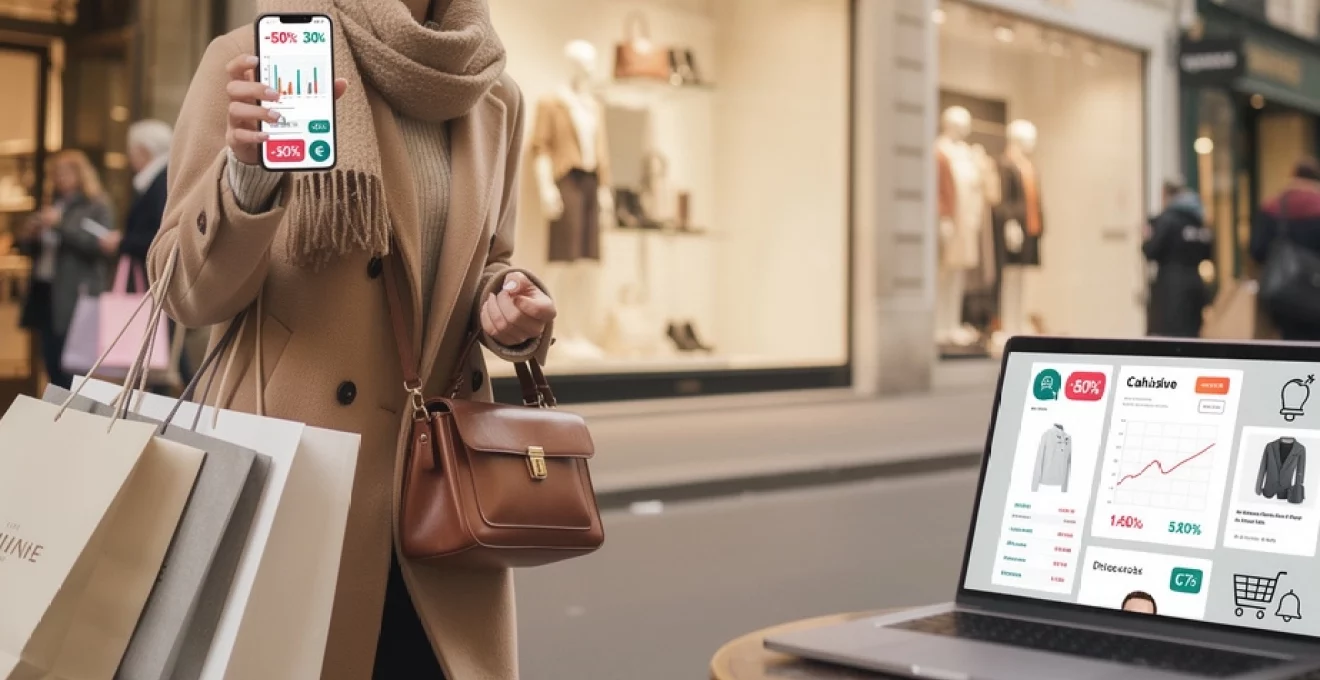
France’s approach to retail sales differs dramatically from other countries, with government-regulated periods that create exceptional opportunities for savvy shoppers. These structured sales events, known as les soldes, represent more than simple discount periods—they’re carefully orchestrated commercial phenomena that can deliver savings of up to 80% on premium French brands and luxury items. Understanding the intricacies of this system can transform your shopping experience from casual browsing to strategic acquisition of high-quality goods at unprecedented prices.
The French sales system operates on principles of fairness and consumer protection, ensuring that genuine bargains replace the artificial markdowns common elsewhere. This regulatory framework creates unique advantages for international visitors, particularly when combined with VAT refund opportunities and the concentration of world-class fashion houses in major shopping districts. Whether you’re targeting luxury leather goods, contemporary French fashion, or artisanal homeware, mastering the timing and tactics of les soldes can deliver exceptional value.
Understanding france’s regulated sales periods and legal framework
The French government exercises strict control over retail sales periods through comprehensive legislation that dates back decades. This regulatory approach ensures that sales represent genuine price reductions rather than manipulative marketing tactics. The system operates on fixed dates announced annually by regional prefectures, creating predictable shopping windows that benefit both retailers and consumers.
Haussmann act provisions and regional prefecture regulations
The legal foundation for French sales periods stems from commercial regulations that require items to be sold at full price for at least thirty days before qualifying for sale pricing. This prevents retailers from importing inferior goods specifically for sale events, ensuring that discounted items represent genuine overstock from regular collections. Prefecture authorities in each region set specific dates within government-established windows, typically varying by only a few days to accommodate local commercial considerations.
Regional variations can create opportunities for strategic shoppers willing to travel between departments. Paris typically leads the sales calendar, with most other regions following within the same week. The legislation also mandates clear price labelling, showing both the original price and the reduction percentage, eliminating confusion about actual savings. Retailers face significant penalties for violating these regulations, making the system highly reliable for consumers.
Winter soldes timeline: january to february peak shopping windows
Winter sales commence on the second Wednesday of January, unless this date falls after the 12th, in which case they begin the preceding Wednesday. This precise timing reflects decades of commercial optimization, balancing post-holiday shopping fatigue with New Year purchasing intentions. The sales period extends for four to six weeks, with specific end dates varying by region but typically concluding in mid-February.
The winter period focuses on autumn and winter collections, making it ideal for acquiring quality outerwear, boots, and seasonal accessories. French department stores often achieve their highest annual discount levels during the final week, with reductions reaching 70-80% on selected items. However, size availability diminishes significantly after the first week, particularly for popular items in standard sizes.
Summer clearance cycles: june through july markdown strategies
Summer sales begin on the last Wednesday of June, unless this date falls after the 28th, creating a consistent mid-year shopping opportunity. This timing allows retailers to clear spring and summer inventory before autumn collections arrive, generating substantial savings on lightweight clothing, swimwear, and seasonal footwear. The summer period traditionally attracts fewer crowds than winter sales, making it preferable for relaxed shopping experiences.
The geographical concentration of fashion retailers in central Paris creates intense competition during summer sales, with neighbouring boutiques often matching or exceeding competitors’ discounts. This competitive dynamic particularly benefits shoppers targeting contemporary French brands like Sandro, Maje, and Isabel Marant, which maintain strong presence in concentrated shopping districts.
Cross-border VAT implications for EU shoppers during sales events
European Union residents face complex VAT considerations when shopping French sales, as the standard 20% French VAT rate applies to most purchases. However, temporary residents from other EU countries can sometimes benefit from VAT refund schemes if they meet specific criteria regarding residency duration and purchase amounts. The minimum purchase threshold for VAT refunds currently stands at €100 per store per day for non-EU residents.
EU citizens with temporary French residence status may qualify for
EU citizens with temporary French residence status may qualify for specific tax arrangements, but in general they cannot access the same tax-free shopping schemes reserved for non-EU visitors. Instead, the main optimisation strategy for EU-based shoppers during les soldes lies in cross-border price comparison: evaluating how French sale prices (including 20% VAT) compare with prices in their home country. In high-value categories such as luxury leather goods, optics, and electronics, even EU residents can achieve effective savings of 20–40% by timing purchases to coincide with final markdown phases in France.
For non-EU residents, VAT refunds stack on top of already-aggressive sale discounts, often creating total savings of 30–50% on premium items. Because VAT is calculated on the pre-sale price, the effective tax refund can be particularly attractive when you purchase heavily discounted merchandise during the last weeks of les soldes. To maximise benefit, you should consolidate purchases in fewer stores to exceed the €100 threshold per retailer and familiarise yourself with electronic refund kiosks at airports and major train stations to avoid last-minute administrative hurdles.
Strategic shopping methodologies for maximum discount optimisation
Approaching les soldes without a plan is a little like entering a chess tournament having only learned how the pieces move. The most successful shoppers treat the sales as a strategic exercise, combining pre-sale research, real-time price tracking, and post-purchase optimisation. By blending digital tools with on-the-ground reconnaissance, you can identify genuine bargains, avoid inflated “before” prices, and decide when to buy now versus when to wait for the next markdown.
Modern discount optimisation during French sales now relies heavily on browser extensions, price-tracking platforms, and cashback networks. These tools do more than simply flag reductions: they allow you to benchmark whether a 40% winter discount on a designer coat in Paris truly beats historical prices in your home market. When used correctly, they turn les soldes into a data-driven opportunity rather than an impulse-driven splurge.
Pre-sales reconnaissance: price tracking with keepa and honey extensions
Effective pre-sales reconnaissance begins several weeks before les soldes officially start. Browser extensions such as Honey and Keepa can quietly monitor prices in the background while you browse French e-commerce sites and international marketplaces. Think of them as your personal price historians: they record how much an item has cost over time so you can recognise whether a “-50%” tag during winter sales actually represents the lowest price in twelve months or merely a return to a previous promotion.
For products available on Amazon France or other major platforms, Keepa provides detailed historical charts showing daily price fluctuations. Honey, meanwhile, can surface coupon codes and alert you when an item on your wishlist drops in price, which is particularly useful during the first and second markdown phases. By building a shortlist of target items and tracking them before the sales begin, you arrive at les soldes with realistic expectations and a clear sense of what constitutes a true bargain.
Multi-channel arbitrage between physical boutiques and e-commerce platforms
One of the most powerful yet underused strategies during les soldes is multi-channel arbitrage: comparing prices and promotions between brick-and-mortar boutiques and their online counterparts. Many French brands mirror in-store discounts on their websites, but not always at the same time or to the same extent. Some launch deeper online markdowns in the final week to clear stock more efficiently, while others reserve their most aggressive discounts for physical outlets to drive foot traffic.
If you are shopping in Paris, you can use your smartphone in-store to check the same item on the brand’s French website and on multi-brand platforms. Occasionally you may find that a piece is cheaper online, especially when combined with promo codes or loyalty points, in which case ordering for home delivery makes more sense than carrying extra luggage. Conversely, certain limited sizes or colours may only be discounted in-store, where managers have more flexibility to adjust pricing in response to local demand. Treat the physical and digital channels as two versions of the same marketplace and choose whichever yields the best total value after shipping, returns, and tax considerations.
Dynamic pricing analysis using CamelCamelCamel for historical benchmarking
For international shoppers used to buying from Amazon in their home country, CamelCamelCamel provides another layer of insight when deciding whether to buy during French sales. The platform tracks historical prices across various Amazon domains, enabling you to compare, for instance, the price of a French cookware set on Amazon.fr during les soldes with its lowest recorded price on Amazon.de or Amazon.co.uk over the past year. This cross-market benchmarking helps answer a key question: is it genuinely cheaper to buy this item in France now, or should you wait and purchase it later from your local marketplace?
Dynamic pricing means that algorithms adjust prices according to demand, inventory levels, and even time of day. Les soldes overlay an extra layer of scheduled discounting on top of this. By studying CamelCamelCamel charts, you learn typical price floors and can recognise when a “flash deal” is simply matching a previous low or breaking new ground. In high-ticket categories such as premium electronics, luggage, or small appliances, this additional research can translate into savings of hundreds of euros over the course of a single sales season.
Cashback maximisation through igraal and eBuyClub affiliate networks
Cashback platforms such as iGraal and eBuyClub add another dimension to discount optimisation during French seasonal sales. These services partner with hundreds of retailers—both pure e-commerce players and click-and-mortar chains—to return a percentage of your purchase amount as cashback. When layered on top of 30–70% markdowns, promo codes, and, for non-EU shoppers, VAT refunds, cashback can quietly push your effective discount into the 40–60% range on selected purchases.
To get the most from cashback networks during les soldes, you should activate the browser extension before finalising any online order from a French retailer. Check competing rates on iGraal and eBuyClub, as percentages can differ significantly between platforms and may be temporarily boosted during peak sale days. Payout thresholds, payment methods, and tracking reliability also vary, so it’s worth setting up accounts in advance and making a small test purchase before relying on cashback for high-value transactions.
Premium department store navigation: galeries lafayette and printemps tactics
Paris’s grands magasins—notably Galeries Lafayette and Printemps on Boulevard Haussmann—play a central role in les soldes, especially for shoppers seeking concentrated access to French and international brands. These multi-level department stores essentially compress an entire fashion district under one roof, from luxury maisons and contemporary labels to accessible basics and homeware. During sales periods, they implement sophisticated markdown calendars, brand-specific promotions, and loyalty-program incentives that can be challenging to decode without a plan.
A practical approach is to map your priorities by floor and by brand before you arrive, using the store directory and any published sales previews. High-demand areas such as designer shoes and leather goods become crowded in the first days, so aim to visit these sections early in the morning on weekdays. Many shoppers adopt a two-phase strategy: first, a rapid “scouting” visit in the opening week to secure core items at 30–40% off, then a targeted return trip in the final days to hunt for last-minute 60–70% reductions on remaining stock.
Loyalty cards offered by Galeries Lafayette and Printemps can be particularly valuable during les soldes. While the base discounts follow legal regulations, cardholders often receive additional private-sale invitations, early access windows, or stackable vouchers for cosmetics and home departments. International visitors should enquire at the customer service desk about temporary visitor cards, which sometimes include same-day percentage discounts or tax-refund facilitation. For maximum efficiency, concentrate most of your department-store spending in a single visit to reach higher loyalty thresholds and simplify future VAT refund processing.
Fashion district mapping: rue de rivoli and boulevard Saint-Germain outlet strategies
Beyond the department stores, Paris’s open-air shopping arteries offer distinct personalities and price structures during les soldes. Rue de Rivoli and the area around Les Halles skew towards international high-street chains and youth-oriented brands, making them ideal for stocking up on essentials, trendy pieces, and travel-friendly basics at accessible price points. Discounts here are often clearly signposted and relatively uniform, with chains like Zara, Mango, and Uniqlo rolling out synchronised markdowns across multiple locations.
Boulevard Saint-Germain and the surrounding Saint-Germain-des-Prés district present a different proposition: quieter pavements, more curated boutiques, and a blend of heritage French labels, perfume houses, and design-forward homeware stores. Here, les soldes are less about volume and more about selective investment in timeless pieces—cashmere knits, leather boots, trench coats, or linen bedding—that can be 30–50% cheaper than at other times of year. Because stock is narrower and more curated, you gain by visiting early in the sales timeline, especially if you have specific sizes or colours in mind.
A useful tactic is to treat these districts like complementary zones in a single itinerary. For example, you might begin your day on Rue de Rivoli, securing discounted basics and beauty products, then cross the river to Saint-Germain for more elevated wardrobe additions. Metro connections between the two areas are straightforward, and walking across the Seine can be a pleasant break from crowded fitting rooms. By aligning each neighbourhood with a clear spending category—fast fashion versus investment pieces—you maintain budget discipline while still taking advantage of the breadth of Parisian retail.
Digital commerce platforms: zalando, vinted, and la redoute sales algorithms
Not all of the best French seasonal sales occur in physical stores. European e-commerce platforms such as Zalando, Vinted, and La Redoute have developed sophisticated pricing algorithms that respond to les soldes while also running their own promotional cycles. Understanding how these platforms manage discounts, flash sales, and inventory clearance can help you secure excellent deals even if you are not physically in France—or extend your shopping after your trip has ended.
Zalando, for instance, aggregates thousands of brands and uses dynamic markdowns to push slower-moving stock, especially during the mid and final phases of official sales periods. La Redoute combines its heritage as a mail-order catalogue with a robust digital presence, frequently layering promotional codes and multi-buy offers on top of sale prices. Vinted, as a peer-to-peer resale marketplace, behaves differently: its “sale” dynamic relies less on fixed dates and more on user-driven price adjustments and platform-wide promotions that often intensify around traditional sales windows.
Push notification timing for flash sales on mobile applications
Mobile apps for these platforms are designed to keep you engaged and nudge you towards timely purchases through push notifications. During les soldes, notifications often announce limited-time flash sales, extra-percentage discounts on already reduced items, or free-shipping thresholds. If you enable alerts but manage them strategically—perhaps allowing notifications only from your top two platforms—you can respond quickly to genuine opportunities without feeling bombarded.
Timing matters: data from many retail apps suggest that the most aggressive flash sales go live in the early evening or at lunchtime, when users are more likely to browse. By checking notifications at these peak moments rather than sporadically, you can quickly decide whether a -20% “extra reduction” code on La Redoute or a time-limited Zalando Lounge event aligns with items already sitting on your wishlist. Think of push alerts as a radar screen rather than a siren; they highlight areas worth investigation, but you still need to cross-check sizes, return policies, and historical prices before committing.
Abandoned cart recovery systems and retargeting campaign exploitation
Have you ever added an item to your basket and then closed the tab, only to receive an email the next day offering you a discount if you complete the purchase? That is an abandoned cart recovery system at work, and during les soldes, it can become one of your most effective negotiation tools. Many French and European e-commerce sites deploy automated sequences that trigger vouchers, free-shipping offers, or loyalty-point boosts when they detect uncompleted baskets.
To leverage this without overcomplicating your shopping, you can deliberately build carts with your top choices on a few key platforms a day or two before you intend to buy. If a recovery email or retargeting ad appears with an extra incentive—say, “10% off your basket until midnight”—and the baseline sale price is already competitive, the combined effect can be substantial. Of course, algorithms can also entice you into overspending, so it is wise to set a maximum price you are prepared to pay for each item and treat any extra discount as a bonus rather than a reason to exceed your budget.
Social commerce integration through instagram shopping and TikTok shop features
Social media increasingly acts as the discovery layer for French and European brands, especially among younger shoppers. Instagram Shopping and TikTok Shop allow you to move from inspiration to purchase in just a few taps, often without leaving the app. During les soldes, many labels highlight sale edits, capsule collections, and influencer-curated picks via shoppable posts and livestreams, effectively turning your feed into a vertical boutique.
The challenge is to distinguish between authentic deals and impulse triggers. One practical approach is to treat social-commerce features as a gateway to deeper research rather than an endpoint. When you see a discounted item promoted on Instagram or TikTok, click through to the merchant’s main site or app to compare the social price against broader inventory, check if cashback or voucher codes apply, and verify return conditions. Used this way, social commerce becomes a convenient way to surface sale opportunities you might otherwise miss, while your final purchase decision still benefits from the more structured strategies you apply elsewhere.
Tax-free shopping protocols and tourist refund mechanisms
For non-EU visitors, tax-free shopping protocols are a crucial component of maximising value during les soldes. France’s standard VAT rate of 20% is embedded in shelf prices, but eligible tourists can recover a significant portion of this tax—typically around 12–15% after processing fees—provided they meet specific conditions. The key requirements are straightforward: you must reside outside the European Union, spend at least €100 in a single store on the same day, export the goods within three months, and obtain electronic validation of your tax-free form at your point of departure from the EU.
Most major department stores and chain boutiques in France are integrated into electronic détaxe systems such as PABLO, which streamline the process. At the time of purchase, you present your passport and request a tax-free form; the retailer prints a document containing a barcode or QR code that records your transaction details. When leaving the EU via an airport or international train station, you scan this code at a dedicated kiosk before checking your luggage. If the system validates your export automatically, you typically receive your refund via credit card, bank transfer, or cash at a service desk, depending on the operator and your chosen method.
There are, however, several practical considerations to keep in mind. Customs officials retain the right to inspect your purchases, so you should keep high-value items easily accessible and in their original packaging until after validation. Lines at tax-refund counters can be substantial during peak travel seasons, especially at Paris Charles de Gaulle and major Eurostar terminals, so it is sensible to arrive at the airport earlier than usual if you intend to process multiple forms. Finally, remember that sale items are usually non-returnable; once you have obtained a VAT refund and left the EU, after-sales service can become complex, so you should carefully inspect all discounted goods before purchase to minimise the risk of issues later.