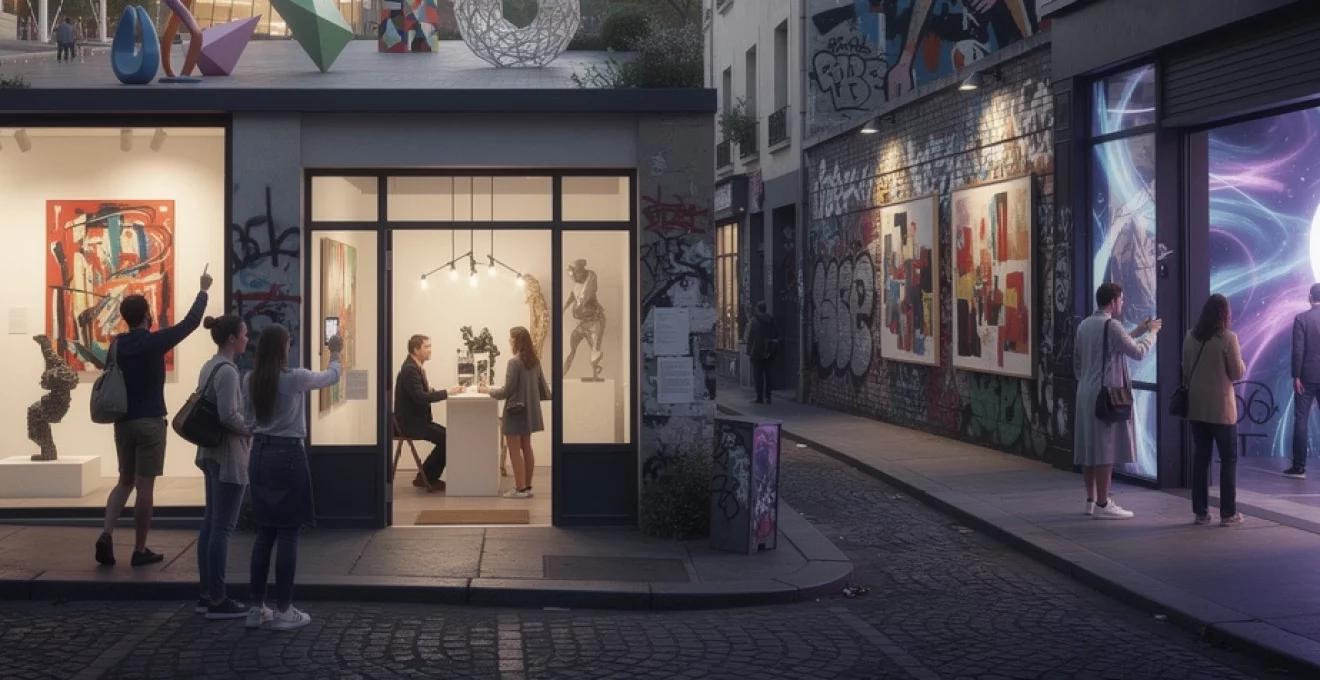
Paris has long been synonymous with artistic revolution, from the bohemian studios of Montmartre to the cutting-edge installations of contemporary galleries. Today, the French capital continues to pulse with creative energy, offering you an unparalleled journey through modern and contemporary art. Whether you’re captivated by post-war abstraction, intrigued by street art interventions, or eager to explore digital installations, Paris presents a multifaceted landscape where artistic experimentation thrives. The city’s diverse neighbourhoods each contribute their unique character to this vibrant ecosystem, from institutional powerhouses housing masterworks by twentieth-century pioneers to underground spaces where emerging artists challenge conventions. With over 400 galleries, numerous world-class museums, and an ever-evolving street art scene, Paris remains an essential destination for anyone seeking to understand the trajectory of modern artistic expression.
Contemporary art museums and institutions redefining parisian modernism
The institutional framework supporting modern art in Paris represents one of the most comprehensive collections of twentieth and twenty-first-century creativity anywhere in the world. These establishments don’t merely preserve artistic heritage; they actively shape contemporary discourse through ambitious exhibition programmes and acquisitions that reflect evolving aesthetic concerns.
Centre pompidou’s musée national d’art moderne: Avant-Garde collections from picasso to contemporary installations
The Centre Pompidou stands as an architectural statement in itself, with Renzo Piano and Richard Rogers’ inside-out design from 1977 turning structural elements into visual spectacle. Housing Europe’s largest collection of modern and contemporary art with over 120,000 works, the Musée National d’Art Moderne offers you an encyclopaedic journey through artistic innovation. The permanent collection spans from Fauvism and Cubism through Abstract Expressionism, Pop Art, and Minimalism to today’s most provocative installations. You’ll encounter seminal works by Pablo Picasso, Henri Matisse, Wassily Kandinsky, and Marcel Duchamp alongside contemporary pieces by artists pushing boundaries in video art, performance, and digital media. The museum’s rotation policy ensures that approximately 20% of the collection is on view at any time, with thematic presentations that create unexpected dialogues between historical and contemporary works. Recent acquisitions demonstrate the institution’s commitment to representing diverse voices, with increased focus on female artists, non-Western perspectives, and interdisciplinary practices that blur traditional medium boundaries.
Palais de tokyo: site de création contemporaine and its experimental exhibition programme
Since opening in 2002, the Palais de Tokyo has embraced its identity as an anti-museum, deliberately rejecting conventional exhibition formats in favour of immersive, process-oriented presentations. This dynamic space for contemporary creation spans 22,000 square metres, making it Europe’s largest centre dedicated to living artists. The deliberately raw, unfinished aesthetic of the building—exposed concrete, visible infrastructure, industrial lighting—creates an atmosphere where experimentation feels natural and risk-taking is encouraged. You’ll find exhibitions here that might feel too unconventional for traditional museums: site-specific installations that transform architectural spaces, participatory projects that evolve throughout their duration, and works that deliberately challenge viewer expectations. The Palais de Tokyo’s programming philosophy centres on supporting artists during their creative process rather than simply displaying finished works. This approach has resulted in career-defining exhibitions for numerous contemporary artists who have gone on to international recognition. The institution also maintains extensive educational programmes, late-night events, and collaborative projects that position art-making as a social practice rather than isolated studio activity.
Fondation louis vuitton: frank gehry’s architecture housing Post-War and contemporary masterworks
Frank Gehry’s spectacular glass vessel rising from the Bois de Boulogne represents contemporary architecture’s dialogue with landscape and light. Opened in 2014, the Fondation Louis Vuitton functions simultaneously as architectural destination and exhibition venue, with twelve galleries spread across 11,000 square metres. The building’s twelve glass sails create ever-changing interplays between interior spaces and the surrounding gardens, designed by landscape architect Kathryn Gustafson. You’ll discover rotating exhibitions drawn from Bernard Arnault’s extensive collection alongside major international loans and commissioned installations created specifically for Gehry’s unique spaces. The Foundation has presented comprehensive retrospectives of modern masters including
Gerhard Richter, Jean-Michel Basquiat, and Mark Rothko, as well as landmark shows dedicated to icons such as Joan Mitchell and Andy Warhol. The Fondation Louis Vuitton also commissions immersive installations and site-specific works that respond directly to Gehry’s soaring volumes and complex geometries. As you move between terraces, galleries, and panoramic viewpoints, you experience a fluid dialogue between modern art, contemporary architecture, and the surrounding landscape, making this one of the most memorable places to encounter bold and innovative creations in Paris.
To make the most of your visit, consider booking a timed entry ticket in advance, especially during blockbuster exhibitions that attract international audiences. If you’re interested in how architecture shapes your perception of art, allow extra time to explore the rooftop terraces and exterior pathways, where the building’s glass sails reveal new perspectives with every step. The Fondation often extends opening hours in the evenings, offering a different atmosphere in which changing light and reflections transform both the art and the building itself. Combined with its dedicated educational programmes and family-friendly visits, the institution positions itself at the crossroads of cultural destination and architectural landmark.
Musée d’art moderne de paris: permanent collections featuring fauvism, cubism, and école de paris
Overlooking the Seine near the Palais de Tokyo, the Musée d’Art Moderne de Paris (MAM) offers you an in-depth exploration of twentieth-century art anchored in the Parisian context. Its permanent collections, composed of around 15,000 works, trace the evolution from early modern movements like Fauvism and Cubism to post-war abstraction and contemporary practices. Here, modern art is not an isolated phenomenon but a living continuum, with masterpieces by Henri Matisse, Raoul Dufy, Sonia and Robert Delaunay, and Pablo Picasso presented alongside major figures of the École de Paris such as Chaïm Soutine and Amedeo Modigliani. The museum’s spacious galleries and natural light create a contemplative environment well suited to understanding these pivotal shifts in modernism.
One of the highlights you should not miss is Matisse’s monumental mural La Danse, commissioned for the Barnes Foundation, which occupies an entire room and immerses visitors in its rhythmic composition. The museum’s commitment to both historical depth and contemporary relevance is reflected in its temporary exhibitions, which often juxtapose canonical modern artists with lesser-known or emerging figures. This curatorial approach encourages you to reconsider familiar narratives of modern art in Paris, asking whose voices have been foregrounded and whose have been overlooked. Entry to the permanent collection is often free, making the Musée d’Art Moderne de Paris an accessible starting point if you’re beginning to explore modern art for the first time or revisiting foundational movements with fresh eyes.
Emerging artist studios and independent galleries in the belleville-ménilmontant corridor
While major institutions shape headlines, the pulse of modern art in Paris also beats strongly in its more modest spaces, particularly in the Belleville-Ménilmontant corridor. Historically a working-class district with a strong migrant presence, Belleville has evolved into one of the city’s most dynamic hubs for emerging artists and independent galleries. Here, graffiti-covered walls, informal studios, and modest storefront spaces create a fertile ground for experimentation far removed from the polished white cubes of central Paris. If you’re looking to encounter art in the making rather than only in its finished, museum-ready state, this area offers a refreshing counterpoint.
The neighbourhood’s layered social fabric and relatively affordable rents have attracted painters, photographers, sculptors, and multimedia artists from around the world. Many of them share large industrial lofts or co-working studios, fostering collaboration and cross-pollination between disciplines. As you stroll up the steep streets from Ménilmontant to Belleville, you’ll notice how contemporary murals coexist with improvised installations and pop-up exhibitions. This is a place where modern art, street culture, and daily life intersect, sometimes blending so seamlessly that it’s hard to tell where one ends and the other begins.
Atelier-résidences and open studio events in rue dénoyez
Rue Dénoyez, a narrow lane near the Belleville metro station, has become emblematic of this grassroots artistic energy. Once a quiet backstreet, it’s now an open-air canvas, its facades constantly repainted by local and international street artists. Behind these colourful walls, you’ll find small ateliers, artist-run spaces, and short-term residencies where creators test new ideas and materials. Many of these studios periodically open their doors to the public, allowing you to speak directly with artists about their processes, influences, and everyday realities.
If you’re curious about how artistic communities function beyond the institutional spotlight, plan your visit around Belleville’s annual Portes Ouvertes, usually held in late spring. During this event, hundreds of artists across the district participate in coordinated open studios, creating a walkable circuit that turns the neighbourhood into a living map of contemporary creation. Think of it as a real-life browsing session: instead of scrolling through images online, you step into intimate workspaces, see unfinished canvases, and glimpse prototypes of installations. Be prepared to climb narrow staircases and navigate courtyards—these logistical quirks are part of the charm of discovering modern art at its source.
Galerie thaddaeus ropac pantin: blue-chip contemporary art in a former industrial space
A short metro ride from Belleville takes you to Pantin, where Galerie Thaddaeus Ropac has transformed a former industrial site into one of the most impressive contemporary art venues on the outskirts of Paris. Spanning over 5,000 square metres, the space offers cathedral-like volumes that can accommodate large-scale sculptures, immersive installations, and monumental paintings rarely seen in more central galleries. Representing an international roster of blue-chip artists such as Anselm Kiefer, Georg Baselitz, and Antony Gormley, Ropac Pantin bridges the gap between museum-scale exhibitions and the more flexible programming of a private gallery.
Visiting this space gives you a sense of how industrial architecture can be repurposed to serve modern art without losing its character. Concrete floors, high ceilings, and traces of the site’s former life provide a raw backdrop against which carefully curated exhibitions unfold. Because Pantin lies just beyond the traditional tourist circuits, you’ll often find fewer crowds and more time to contemplate the works at your own pace. It’s worth checking the gallery’s schedule in advance, as they frequently host museum-quality retrospectives and curated group shows that rival those of major institutions in central Paris.
Le générateur: collaborative art spaces and street art interventions
Further south, in Gentilly just outside the Paris city limits, Le Générateur offers yet another model of how contemporary art can inhabit unconventional spaces. Housed in a former cinema, this independent venue prioritises performance, experimental installations, and collaborative projects that blur the boundaries between visual art, dance, and theatre. Rather than functioning as a traditional exhibition space, Le Générateur operates as a laboratory where artists can test ideas in front of an engaged community. You might encounter a multimedia performance one evening and an evolving installation the next, each responding directly to the site’s unique architecture.
Le Générateur also maintains strong ties to urban art practices, occasionally extending its activities into the surrounding streets through interventions and ephemeral projects. For visitors, this can feel like stepping into an ecosystem where art is not just something you look at but something you experience bodily and collectively. If you’re interested in the more experimental edge of modern art in Paris, keep an eye on their programme of residencies, workshops, and performance evenings. The venue’s emphasis on process and participation makes it an ideal place to witness the ongoing transformation of contemporary artistic languages.
Marais district’s contemporary art gallery scene: from rue de turenne to rue charlot
Back in the city centre, the Marais district has become synonymous with cutting-edge galleries and international collectors. Concentrated around Rue de Turenne, Rue Charlot, and adjacent streets, this dense network of spaces offers you a curated cross-section of the global contemporary art market. Unlike the more improvised atmosphere of Belleville, galleries here tend to present meticulously staged exhibitions featuring established and mid-career artists. Yet the energy remains dynamic: exhibitions change every six to eight weeks, meaning that each visit reveals a new chapter in the evolving story of modern art in Paris.
The walkable scale of the Marais makes it ideal for an afternoon of gallery hopping. Within a few blocks, you can encounter everything from conceptual installations and large-format photography to figurative painting and immersive video works. Many galleries are free to enter and welcome curious visitors, even if you’re not planning to purchase anything. Think of this district as an open-access art fair spread across historic townhouses and courtyards, where you can refine your tastes, track emerging trends, and perhaps even discover your next favourite artist.
Perrotin gallery: showcasing takashi murakami, KAWS, and international contemporary artists
Perrotin, housed in a seventeenth-century hôtel particulier on Rue de Turenne, exemplifies the fusion of historic architecture and contemporary creation characteristic of the Marais. Founded by Emmanuel Perrotin in 1990, the gallery has played a pivotal role in promoting artists who bridge high art and popular culture, including Takashi Murakami, KAWS, JR, and Sophie Calle. Inside its interconnected rooms and courtyards, you’ll find exhibitions that oscillate between visually exuberant installations and more introspective conceptual projects, reflecting the diversity of global contemporary art.
For visitors interested in how modern art engages with mass culture, branding, and digital aesthetics, Perrotin offers a particularly revealing case study. Shows dedicated to Murakami or KAWS often draw younger audiences, demonstrating how contemporary art can circulate across social media as readily as in museum catalogues. Yet the gallery also supports more research-driven and politically engaged practices, ensuring that spectacle does not come at the expense of depth. If you visit during an opening night, you’ll experience Perrotin as a social hub where artists, curators, and collectors converge—a reminder that the Paris art scene is as much about human networks as it is about objects on walls.
Galerie templon: pioneering figurative painting and neo-expressionist movements
A short walk away, Galerie Templon stands as one of Paris’s most respected and long-established contemporary galleries. Founded in 1966, it has been instrumental in introducing major international artists to the French public, from Andy Warhol and Keith Haring to more recent figures in Neo-Expressionism and figurative painting. Today, Templon operates multiple spaces in Paris, including its Rue Beaubourg and Grenier Saint-Lazare locations, each offering thoughtfully curated exhibitions that highlight both historical depth and current innovation.
If you’re particularly drawn to painting as a medium, Galerie Templon is an essential stop. Recent shows have ranged from Hervé Di Rosa’s vibrant, narrative-driven works rooted in Free Figuration to Prune Nourry’s sculptural explorations of femininity and fertility inspired by the myth of Venus. By juxtaposing generations and aesthetic approaches, the gallery invites you to consider how modern painting continues to evolve in response to social, political, and technological shifts. For many visitors, this provides a helpful counterpoint to more conceptually oriented spaces, demonstrating that the painted canvas remains a powerful vehicle for contemporary expression.
Galerie kamel mennour: conceptual art and installation-based practices
Dividing its activities between the Left Bank and the Marais, Galerie Kamel Mennour has established itself as a key player in Paris’s conceptual and installation-based scene. Its spaces on Rue du Pont de Lodi and Avenue Matignon, together with a presence in the Marais, offer a platform for artists such as Anish Kapoor, Mohamed Bourouissa, Camille Henrot, and Alicja Kwade. The gallery’s programme frequently foregrounds works that interrogate perception, power structures, and our relationship to the environment, often through large-scale installations or carefully constructed sculptural environments.
Visiting Kamel Mennour is akin to entering a series of thought experiments rendered in material form. You might step into a room dominated by a single reflective sculpture that distorts your sense of space, or encounter a multi-channel video installation that weaves personal narrative with geopolitical analysis. This emphasis on conceptual rigour does not mean the exhibitions are inaccessible; rather, they invite you to slow down, ask questions, and consider how each artistic gesture connects to broader issues. If you’re intrigued by art that functions like a philosophical proposition, this gallery should be high on your list.
Polka galerie: contemporary photography and documentary visual narratives
Polka Galerie, located near the Place des Vosges, specialises in contemporary photography and visual storytelling. In contrast to some Marais galleries that focus on painting or sculpture, Polka dedicates its programming to lens-based practices, from classic photojournalism to more experimental approaches that blur the line between document and fiction. Exhibited photographers frequently tackle pressing social and political themes, turning the gallery into a space where global realities are mediated through compelling visual narratives.
For anyone interested in how photography has shaped our understanding of the modern world, Polka offers an invaluable perspective. Exhibitions may feature historical series by renowned photojournalists alongside ambitious projects by emerging artists exploring digital manipulation or staged scenes. The gallery often supplements its shows with talks, book signings, and collaborations with magazines, reinforcing the idea that images circulate across multiple platforms and contexts. As you move through its intimate rooms, you might find yourself reflecting on how we consume visual information daily and how contemporary photographers respond to this constant flow of images.
Street art and urban interventions across the 13th arrondissement
Beyond galleries and museums, modern art in Paris also thrives in the open air, particularly in the 13th arrondissement on the Left Bank. Over the past decade, this district has become a recognised centre for large-scale murals and urban interventions, thanks in part to proactive municipal policies and partnerships with organisations like Galerie Itinerrance. Tower facades, underpasses, and residential blocks have been transformed into monumental canvases, turning everyday commutes into opportunities for artistic discovery. If you’ve ever wondered how contemporary art can reshape a city’s identity at street level, the 13th provides a compelling answer.
Unlike more spontaneous graffiti hotspots, the murals here are often the result of carefully coordinated projects involving international artists such as Shepard Fairey, C215, INTI, and many others. Walking through the district, you encounter a kind of outdoor museum of street art, where each piece responds to local architecture, social context, or historical references. Maps produced by the town hall and independent platforms help you create your own self-guided tour, but don’t be afraid to wander off route—the joy of urban art lies in the unexpected encounter, the sudden revelation of a hidden façade transformed into a visual manifesto.
Butte-aux-cailles murals: open-air gallery featuring shepard fairey and C215
Within the 13th arrondissement, the Butte-aux-Cailles neighbourhood stands out for its village-like atmosphere and dense concentration of street art. Narrow streets and modest houses form a human-scale backdrop for murals, stencils, and paste-ups by both local and international artists. Here you might recognise the bold graphic style of Shepard Fairey or the intricate, stencil-based portraits by French artist C215, each work integrated into the fabric of daily life rather than isolated on a gallery wall.
Exploring Butte-aux-Cailles is a bit like reading a palimpsest: new layers of imagery appear atop older ones, creating a constantly evolving conversation between artists and residents. Cafés and bars often participate by allowing their facades to serve as experimental surfaces, further blurring the line between commerce and creativity. To deepen your understanding, consider joining a guided walking tour that contextualises the works within the broader history of Parisian street art and urban policy. You’ll come away with a clearer sense of how modern art can function as both decoration and dissent, beautifying public space while also raising critical questions.
La tour paris 13 project: temporary street art tower by international urban artists
Although the La Tour Paris 13 project was temporary—the building was demolished in 2014—it remains a touchstone in discussions of urban art in Paris. Organised by Galerie Itinerrance and the local municipality, the project invited over 100 street artists from around the world to transform a condemned tower block in the 13th arrondissement into a multi-storey, immersive artwork. For one month only, visitors queued for hours to explore apartments, corridors, and stairwells covered in murals, installations, and interventions, turning the doomed building into a vertical labyrinth of contemporary creativity.
This ephemeral project continues to influence how curators, city planners, and artists imagine the role of street art in urban regeneration. Think of it as a large-scale prototype demonstrating that even spaces destined for destruction can host meaningful cultural experiences. While you can no longer visit the tower itself, documentation of the project through books, films, and online archives keeps its legacy alive. As you explore current murals in the 13th arrondissement, you can trace a direct line from this radical experiment to today’s more permanent urban artworks, which similarly seek to democratise access to modern art.
Itinerrance gallery: documenting and exhibiting post-graffiti and urban contemporary art
At the heart of this transformation stands Galerie Itinerrance, a pioneering space dedicated to post-graffiti and urban contemporary art. Located on Boulevard du Général Jean Simon, the gallery has been instrumental in commissioning many of the district’s most striking murals while also presenting indoor exhibitions that contextualise these practices. Exhibited artists range from early graffiti pioneers to contemporary practitioners who blend street techniques with studio-based work, reflecting the increasingly fluid boundary between public and private modes of creation.
Visiting Itinerrance allows you to see how works that originated in the streets are translated into gallery formats without losing their edge. Curated shows often include sketches, photographs, and maquettes that reveal the planning behind large-scale interventions, demystifying a process that can otherwise seem spontaneous or opaque. If you’re intrigued by how street art enters the mainstream art market, this gallery provides a front-row seat to that evolution. It also serves as a practical starting point for mural tours in the 13th, as staff can point you toward recent additions and lesser-known pieces hidden in neighbouring streets.
Biennial events and temporary exhibitions shaping paris’s modern art calendar
Beyond permanent collections and gallery programmes, Paris’s modern art scene is punctuated by recurring events that draw together artists, collectors, and curious visitors from around the world. These fairs, festivals, and coordinated weekends act like pulses in the city’s cultural rhythm, concentrating exhibitions, performances, and talks into a few intense days or nights. Planning your trip around one of these events can radically alter your experience, offering access to works and spaces not always available during the rest of the year.
From major international art fairs hosted near the Grand Palais to nocturnal citywide happenings, these events reveal how modern art in Paris extends beyond fixed locations. They turn the city itself into a temporary stage, where museums stay open late, galleries coordinate openings, and public spaces host ambitious installations. If you think of the regular museum circuit as the city’s steady heartbeat, these recurring events are the crescendos—moments when the volume of artistic activity rises and multiple conversations converge.
FIAC and art basel paris: international contemporary art fairs at grand palais éphémère
For decades, the Foire Internationale d’Art Contemporain (FIAC) served as Paris’s flagship contemporary art fair, bringing together top-tier galleries, artists, and collectors under the glass dome of the Grand Palais. In recent years, Art Basel has launched its own Paris edition—Art Basel Paris—further cementing the city’s status as a global hub for the art market. While the historical Grand Palais undergoes renovation, these fairs take place at the Grand Palais Éphémère on the Champ de Mars, a temporary structure offering flexible exhibition space with striking views of the Eiffel Tower.
Attending one of these fairs exposes you to a cross-section of modern and contemporary art from across the world in a single location. Established galleries present museum-quality works by canonical figures, while curated sectors highlight emerging artists and more experimental practices. It can feel overwhelming at first—like walking into a physical manifestation of the global art internet—but it’s also an efficient way to gauge current trends, price levels, and critical debates. To navigate effectively, we recommend focusing on a few themes or mediums that interest you most, rather than attempting to see everything in one go.
Nuit blanche: nocturnal citywide contemporary art installations and performances
Each autumn, Nuit Blanche (White Night) transforms Paris into an all-night playground for contemporary art. Museums, galleries, public buildings, and outdoor spaces host installations, performances, and projections that remain accessible well into the early hours. Initiated in 2002, the event has become a beloved fixture of the cultural calendar, drawing hundreds of thousands of participants who criss-cross the city following curated routes. If you’ve ever wanted to see how modern art can reshape urban experience on a mass scale, Nuit Blanche offers an unforgettable demonstration.
The projects commissioned for Nuit Blanche range from intimate sound pieces in hidden courtyards to monumental light installations on bridges and monuments. Moving through the city alongside other night-time wanderers, you become part of a temporary community bound together by curiosity and shared discovery. Practical tip: plan your itinerary in advance and wear comfortable shoes, as public transport can be crowded and distances between sites substantial. But also leave room for serendipity—some of the most memorable encounters arise when you deviate from the official map and stumble upon an unassuming installation that quietly reconfigures your sense of place.
Paris gallery weekend: curated tours through saint-germain-des-prés and le marais galleries
Paris Gallery Weekend, typically held in late spring, offers a more focused yet equally rewarding way to engage with the city’s contemporary art scene. During this event, dozens of galleries across Le Marais, Saint-Germain-des-Prés, and other districts coordinate opening hours, guided tours, and special events. The goal is to lower the barrier between the public and the gallery world, encouraging visitors who might otherwise feel intimidated to step inside and explore.
If you’re unsure where to start with modern art galleries in Paris, Paris Gallery Weekend provides a ready-made framework. Curated walking routes highlight thematic connections between exhibitions, while talks and artist meetings offer insight into creative processes and market dynamics. It’s a bit like having a personalised recommendation algorithm—but one mapped onto real streets and spaces rather than a digital feed. For collectors, the event is an opportunity to discover new artists; for casual visitors, it’s a chance to sample a wide range of practices without pressure to buy.
Digital art and new media spaces: atelier des lumières and interactive installations
The rise of digital technologies has profoundly reshaped how artists create and how audiences experience art, and Paris is no exception. In recent years, dedicated venues and experimental programmes have emerged to showcase immersive projections, interactive installations, and works that exist partly—or entirely—within virtual environments. These spaces challenge traditional notions of the museum visit, inviting you to move, touch, and sometimes even co-create the artwork rather than simply observe it from a distance.
Atelier des Lumières, housed in a former foundry in the 11th arrondissement, has become one of the most visible examples of this shift. Its large-scale, 360-degree projection shows immerse visitors in animated interpretations of works by artists ranging from Gustav Klimt to contemporary creators. While some critics debate whether these experiences qualify as “true” exhibitions, there’s no denying their impact on how new audiences approach modern art. For many visitors, these digital spectacles act as a gateway, sparking curiosity that later leads to more traditional museum visits.
Beyond Atelier des Lumières, institutions like the Centre Pompidou and the Fondation Cartier have increasingly incorporated new media and digital art into their programming. Temporary exhibitions explore topics such as artificial intelligence, virtual reality, and the environmental impacts of data infrastructures, often blurring the lines between art, design, and research. Interactive installations might respond to your movements, biometric data, or online behaviour, making you acutely aware of the feedback loops that structure contemporary life. In this context, the museum becomes less a repository of static objects and more an interface—a place where human and machine creativity intersect.
As you navigate these digital experiences, it’s helpful to consider them as complements rather than replacements for more traditional forms of modern art in Paris. Just as Cubism once challenged viewers to see space and time differently, today’s new media works invite you to rethink authorship, embodiment, and perception in an age of ubiquitous screens. Whether you’re stepping into a room of shifting projections or donning a VR headset to explore a simulated environment, you participate in an ongoing experiment about what art can be in the twenty-first century.