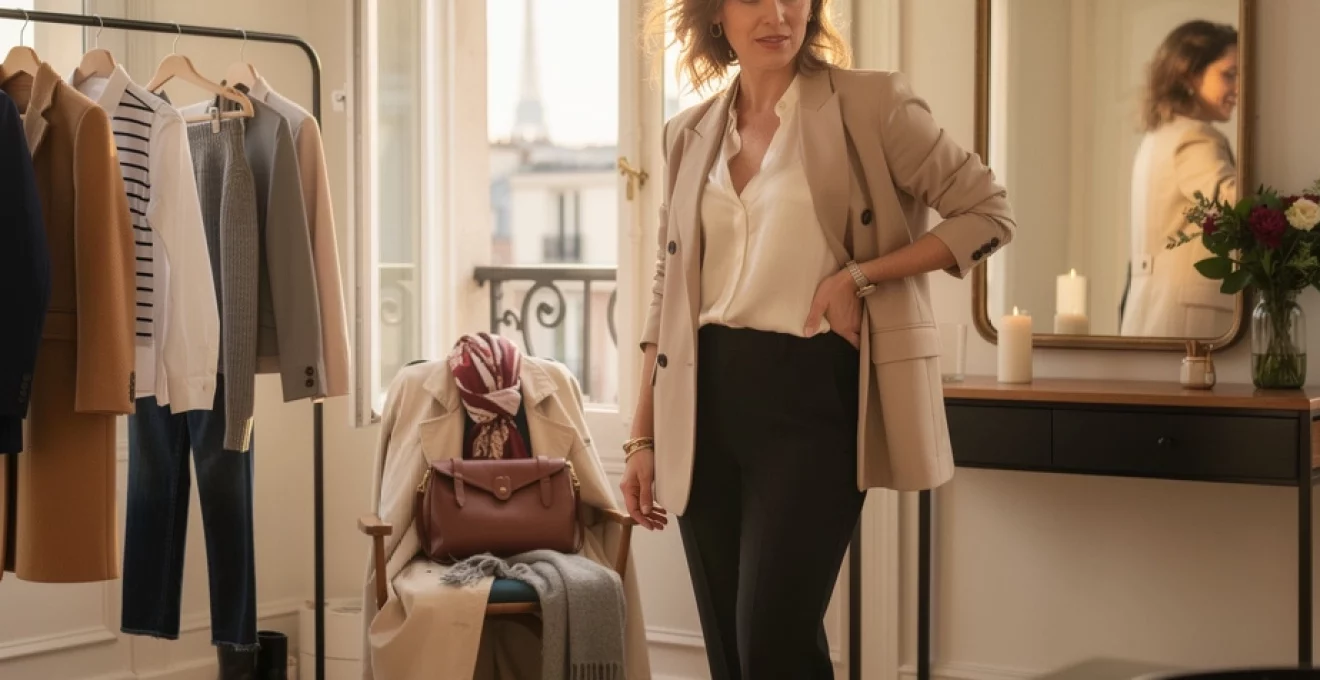
French women have mastered the art of looking effortlessly elegant, turning everyday dressing into a sophisticated ritual that appears natural yet polished. This approach to style transcends fleeting fashion trends, focusing instead on timeless pieces, strategic curation, and an innate understanding of how to make simplicity look luxurious. The secret lies not in expensive designer pieces or extensive morning routines, but in cultivating a refined aesthetic built on quality basics, thoughtful accessories, and an air of confident nonchalance that makes every outfit appear effortless.
Capsule wardrobe architecture: building your French-Inspired foundation
The foundation of French style rests upon a carefully curated capsule wardrobe that prioritises versatility over volume. This strategic approach ensures that every piece serves multiple purposes whilst maintaining a cohesive aesthetic throughout your wardrobe. French women typically own fewer clothes than their international counterparts, yet they consistently appear more put-together due to their focus on quality and versatility.
Essential neutral colour palette selection for Year-Round versatility
The cornerstone of French dressing involves building a wardrobe around a sophisticated neutral palette that transitions seamlessly between seasons. Classic colours such as navy, black, cream, beige, and soft grey form the backbone of this system. These shades offer unlimited mixing possibilities whilst ensuring that everything coordinates effortlessly.
Camel and taupe serve as excellent transitional colours, bridging the gap between summer and winter whilst adding warmth to any ensemble. These earth tones complement both warm and cool undertones, making them universally flattering choices for building your foundational pieces.
The most elegant French women understand that a restrained colour palette creates visual harmony and allows personal style to shine through subtle details rather than bold colour statements.
Investment piece hierarchy: blazers, trousers, and knitwear prioritisation
When building your French-inspired wardrobe, establishing a clear hierarchy of investment pieces ensures maximum impact from your clothing budget. The perfectly tailored blazer ranks highest in this hierarchy, serving as an instant outfit elevater that transforms casual looks into polished ensembles. A well-constructed blazer in navy or black can take you from weekend errands to evening dinners with minimal adjustment.
High-quality trousers follow closely in importance, with straight-leg and wide-leg silhouettes currently dominating French wardrobes. These pieces should fit impeccably through the waist and hips whilst maintaining a clean line to the hem. Premium knitwear completes this trinity, offering both comfort and sophistication through luxurious materials and timeless cuts.
Quality fabric assessment: wool, cashmere, and silk integration strategies
French women possess an intuitive understanding of fabric quality, recognising that superior materials elevate even the simplest designs. Pure wool offers durability and natural temperature regulation, making it ideal for tailored pieces that must perform across seasons. The investment in quality wool pays dividends through longevity and consistent appearance wash after wash.
Cashmere provides unparalleled luxury and comfort, though it requires more careful maintenance. French styling philosophy suggests owning fewer, higher-quality cashmere pieces rather than multiple lower-grade alternatives. Silk integration adds textural interest and subtle sheen to outfits, whether through scarves, blouses, or lined garments that feel luxurious against the skin.
Seasonal transition techniques through strategic layering systems
Mastering the art of layering allows you to maximise wardrobe versatility whilst adapting to changing weather conditions. French women excel at creating sophisticated layered looks that appear intentional rather than bulky or overdone. The key lies in varying textures and weights whilst maintaining a consistent colour story throughout the ensemble.
Spring transitions benefit from lightweight cardigans over silk camisoles, whilst autumn calls for structured blazers layered over fine knits. Winter layering incorporates luxurious scarves and quality outerwear that complement rather than overwhelm the silhouette beneath. Each layer should serve both functional and aesthetic purposes, contributing to the overall sophist
hetic of the look whilst allowing you to remove or add items as temperatures fluctuate throughout the day.
Think of layering as composing music: each piece has its own role, but together they create harmony. A silk camisole forms the base note, a fine merino knit adds depth, and a structured coat or trench is the final crescendo. By keeping your colour palette neutral and your silhouettes clean, you avoid bulk while still feeling warm and polished. Over time, you will instinctively know which pieces combine to create outfits that feel both practical and elegant, whatever the season.
Parisian styling philosophy: effortless sophistication principles
Beyond the capsule wardrobe, French style is rooted in a particular philosophy: elegance should look unstudied. Parisian women are less concerned with perfection and more focused on attitude, balance, and proportion. They rely on a few consistent styling principles—subtle contrast, intentional “imperfection,” and a strong sense of self—to make even the simplest outfits look considered. Rather than chasing every new trend, they interpret fashion through their own lens, editing ruthlessly and wearing only what feels authentically aligned with their lifestyle.
To adopt this French approach to daily style, we look to a few modern muses whose methods encapsulate “minimal effort, maximum elegance.” Each offers a slightly different take—undone chic, updated classics, insouciant glamour, and contemporary minimalism—but they share one common thread: they never appear to be trying too hard. You do not need to copy their wardrobes; instead, you can use their styling philosophies as frameworks to refine your own.
Caroline de maigret’s undone chic methodology
Caroline de Maigret embodies the Parisian ideal of “je ne sais quoi” with her undone chic approach. Her looks often combine masculine tailoring with soft, feminine elements: think an oversized blazer thrown over a silk camisole, or perfectly cut jeans with a slightly rumpled white shirt. The goal is not to appear sloppy, but to introduce a hint of ease—rolled-up sleeves, half-tucked shirts, or loosely styled hair—that prevents the outfit from feeling rigid.
To replicate this undone chic methodology in your own wardrobe, start by pairing one structured piece with one relaxed element. A sharp navy blazer looks less formal when worn with a slouchy stripe knit and straight-leg denim; tailored trousers feel more approachable with a simple cotton T-shirt and low block heels. Caroline’s approach is also about restraint: she often limits accessories to one or two pieces, such as a leather belt and a delicate necklace, allowing the clothes and her confident attitude to do the work.
Her beauty and grooming choices reinforce this philosophy. Hair is usually styled in loose, slightly messy waves—a look that suggests you woke up like this, even if a few minutes with a curling wand were involved. Makeup is minimal, often focusing on lived-in eyeliner and a natural lip. This contrast between polished structure and relaxed finish is what makes the French “undone” look appear so modern and wearable for daily life.
Inès de la fressange’s classic modernisation approach
Inès de la Fressange represents the elegant, timeless side of French style. Her classic modernisation approach is built on wardrobe icons—trench coats, navy blazers, white shirts, straight-leg jeans, and ballet flats—that she constantly refreshes through updated cuts or subtle styling shifts. Instead of reinventing her look every season, she fine-tunes the proportions, fabric quality, and finishing touches to keep it current.
If you want to bring this method into your everyday style, start by identifying your own “uniform”: perhaps a blazer, T-shirt, and jeans combination that you love, or a particular dress shape that always makes you feel confident. From there, modernise through small changes rather than dramatic overhauls. Swap classic blue denim for ecru in spring, choose a trench with a slightly oversized fit, or opt for loafers with a chunkier sole while keeping everything else understated.
Inès also champions the idea that true elegance should feel approachable. She often mixes high and low pieces—pairing a luxury blazer with more accessible jeans, for example—demonstrating that style is about the eye, not the label. Accessories stay simple yet considered: a slim leather belt, a structured tote, and a good watch. This ensures she always looks relevant but never overdressed, a key principle of French-inspired daily style.
Jeanne damas’ insouciant glamour technique
Jeanne Damas brings a romantic, slightly 1970s flavour to French dressing through her insouciant glamour technique. Her signature look blends soft, feminine silhouettes with a relaxed attitude: button-front dresses, high-waisted jeans, cardigans worn off the shoulder, and a red lip that looks like it has already lived a few hours. Nothing appears too perfect; instead, her outfits feel like a natural extension of her life—coffee dates, evening apéritifs, and late walks along the Seine.
To experiment with this aesthetic, introduce one or two “glamour” elements into an otherwise simple outfit. You might pair vintage-style high-waisted jeans with a delicate lace blouse, or a plain T-shirt with a bias-cut midi skirt and slingback heels. The key is to avoid overstyling. Hair can remain slightly tousled, jewellery should be light and personal, and makeup focused on one feature—often the lips—while the rest stays pared back.
Insouciant glamour is also about embracing a hint of sensuality without overt display. Necklines skim rather than plunge, hemlines graze mid-thigh or mid-calf, and fabrics like silk, viscose, and soft cotton move with the body. This allows you to look dressed up without seeming as if you spent hours planning, achieving the “minimal effort, maximum elegance” ideal that defines so much of modern French style.
Sabina socol’s contemporary minimalism framework
Sabina Socol offers a more contemporary take, blending French chic with digital-age minimalism. Her framework focuses on clean lines, neutral tones, and curated statement pieces. While her outfits often look simple on first glance—jeans, T-shirts, slip dresses, leather jackets—the power lies in proportion, fit, and fabric. Every piece feels intentional, from the exact length of a cropped cardigan to the drape of a wide-leg trouser.
To apply this contemporary minimalism in your own daily wardrobe, begin by editing rather than adding. Remove items that do not fit well or align with your lifestyle, and concentrate on a tight rotation of silhouettes that you genuinely enjoy wearing. Sabina frequently repeats outfits on social media, demonstrating that style today is less about constant novelty and more about consistency and strong personal identity.
Her colour palette remains firmly in the French neutral camp—ecru, black, navy, chocolate brown—punctuated occasionally by muted red, soft blue, or subtle prints. Accessories are streamlined: slim gold hoops, leather crossbody bags, and classic boots or loafers. This approach is ideal for busy professionals or city dwellers who want a wardrobe that works hard without demanding attention every morning.
French beauty rituals: minimal maintenance maximum impact
French beauty, like French fashion, prioritises impact over effort. The goal is to look healthy, luminous, and slightly undone rather than heavily made up. According to a 2023 report from the French beauty federation, skincare still accounts for over 40% of cosmetic sales in France, reflecting the national belief that a good canvas matters more than complex makeup. Instead of layering multiple full-coverage products, many French women rely on targeted skincare and a few carefully chosen cosmetics.
Your routine does not need to be elaborate to achieve this “minimal maintenance, maximum impact” effect. Focus on three pillars: well-cared-for skin, softly defined features, and one signature detail. For skin, gentle cleansing, hydration, and daily SPF create a natural glow that reduces the need for foundation. A light tinted serum or BB cream even out the complexion, while strategic concealer addresses redness or shadows. As we have seen with products like Typology’s tinted serum gaining popularity, light textures are increasingly favoured over heavy bases.
For the eyes, a swipe of brown or black mascara and, if desired, a soft kohl pencil at the outer corners provides definition without drama. Lips and cheeks often share the same product: a tinted balm or sheer lipstick dabbed on with fingertips, in the spirit of the classic bouche mordue technique. This creates a naturally flushed effect, as if you have just come in from a brisk walk by the Seine. You might ask, do you really need more than that for everyday life? In most French women’s view, the answer is no.
Hair is approached with similar restraint. Instead of weekly, high-maintenance blow-dries, French women often opt for cuts that air-dry well and age gracefully—shaggy bobs, long layers, or curtain fringes that can be pushed aside as they grow. Texture sprays, light oils, and dry shampoo create that slightly “lived-in” effect associated with French chic. As with clothes, the aim is to look like the best version of yourself, not a perfectly styled mannequin.
Accessory curation strategies: timeless statement pieces
Accessories are where French style quietly comes alive. A simple jeans-and-shirt combination can look ordinary in theory, but add a silk scarf, structured leather bag, and classic loafers, and suddenly the outfit reads as distinctly Parisian. Rather than owning dozens of trendy accessories, French women typically curate a small rotation of timeless statement pieces they wear on repeat. This not only simplifies daily dressing but also reinforces a consistent personal aesthetic.
Think of accessories as the punctuation marks of your outfit: a watch that signals reliability, a pair of gold hoops that adds warmth near the face, or a suede tote that softens a tailored look. When you invest in these items, prioritise quality over logos. A well-made leather belt or understated pair of sunglasses will work across multiple seasons and trends, unlike heavily branded pieces that can quickly feel dated. This approach aligns with the broader French emphasis on subtlety and longevity.
To build your own accessory capsule, start with a neutral base: one everyday bag in black, tan, or chocolate; a pair of simple studs or hoops; a classic watch; and one scarf that complements your dominant wardrobe colours. From there, you can gradually introduce personality pieces—a vintage brooch, a basket bag for summer, or a pair of bold earrings for evening. The trick is to avoid wearing everything at once. As many stylists say, and as French women quietly demonstrate, it is often that final piece you remove before leaving the house that creates true elegance.
This selective mindset extends to shoes as well. Daily style revolves around pairs that balance comfort and refinement: loafers, ballet flats, ankle boots, and low block heels. While sneakers certainly appear on Parisian streets, they are usually minimalist in design and paired with more structured pieces, such as a trench coat or tailored trousers, to maintain an elevated overall effect. Once again, the message is clear: a few strategic choices can transform your entire wardrobe experience.
Sustainable fashion practices: french atelier heritage methods
At the heart of traditional French style lies an often-overlooked value: respect for craftsmanship. Long before “sustainable fashion” became a global concern, French ateliers were practising slow production, meticulous tailoring, and repair culture. Today, as we collectively rethink our consumption habits, revisiting these heritage methods offers a practical blueprint for building a more responsible, yet still elegant, wardrobe.
One key principle is buying less but better. Instead of acquiring multiple trend-led pieces each season, French women frequently invest in a limited number of high-quality items designed to last for years. A 2022 study by the French Environment and Energy Management Agency (ADEME) found that extending the life of a garment by just nine months can reduce its carbon footprint by 20–30%. When you choose a well-made wool coat or leather bag that you will wear for several winters instead of one, you are not only expressing your style but also reducing environmental impact.
Repair and alteration also play an important role. Many Parisians still rely on local tailors and cobblers to adjust hems, replace zips, resole shoes, or refresh leather goods, rather than discarding items at the first sign of wear. This mindset treats clothing as something to be maintained—much like a beautiful apartment or cherished piece of furniture—rather than disposable. Could you adopt the same approach by finding a trusted tailor or shoe repair in your area? The long-term cost per wear often drops dramatically when you do.
Pre-loved and vintage shopping are another pillar of this French-inspired sustainable wardrobe. Paris is filled with dépôts-vente and curated second-hand boutiques where you can find quality pieces from previous seasons at a fraction of the original price. Online platforms now make this approach accessible worldwide, allowing you to hunt for gently used blazers, denim, or silk dresses from brands you love. The thrill of discovering a unique piece with history can rival, if not surpass, the excitement of buying something new.
Finally, paying attention to fabrication and origin aligns your style choices with more ethical practices. Natural fibres such as wool, cotton, linen, and silk not only feel better against the skin but also age more gracefully than many synthetics. Whenever possible, look for brands that communicate clearly about their supply chains, certifications, and environmental commitments. In doing so, you bring together the best of the French approach—minimal effort, maximum elegance—with a modern awareness of our responsibility as consumers, creating a wardrobe that feels as good in principle as it looks in the mirror.