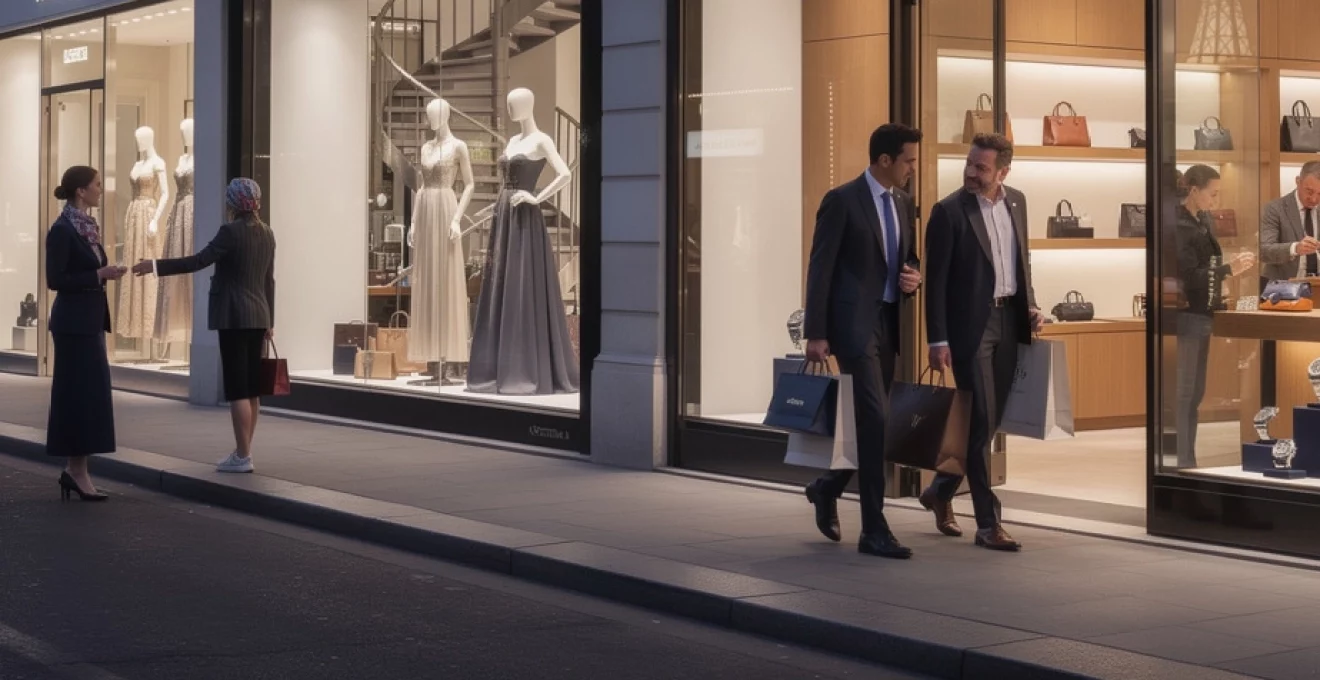
Paris stands unrivalled as the global epicentre of luxury retail, where centuries of artisanal excellence converge with cutting-edge commercial innovation. The French capital’s luxury shopping ecosystem extends far beyond mere transactional experiences, offering discerning consumers an intricate tapestry of heritage craftsmanship, exclusive access protocols, and meticulously curated retail environments. From the legendary ateliers of Chanel to the architectural marvels of contemporary flagship stores, Paris continues to redefine what constitutes premium retail excellence in the modern era.
The city’s luxury retail infrastructure operates on multiple sophisticated levels, integrating traditional French savoir-faire with contemporary consumer psychology principles. This unique positioning attracts over 15 million luxury shoppers annually, generating approximately €12.5 billion in high-end retail revenue. What distinguishes Parisian luxury shopping is not merely the concentration of prestigious brands, but the holistic cultural immersion that accompanies every purchase, transforming routine transactions into memorable lifestyle experiences.
Haute couture maisons and their flagship boutiques on avenue montaigne
Avenue Montaigne represents the quintessential embodiment of Parisian luxury retail sophistication, housing the most prestigious flagship stores in the fashion industry. This tree-lined thoroughfare functions as both a commercial district and a living museum of fashion heritage, where each boutique operates as a carefully orchestrated brand experience. The avenue’s strategic positioning within the Triangle d’Or ensures maximum visibility whilst maintaining an atmosphere of exclusivity that attracts high-net-worth individuals from across the globe.
The commercial success of Avenue Montaigne stems from its unique blend of architectural heritage and contemporary retail innovation. Property values along this prestigious street command premiums of 40-60% above comparable luxury retail locations, reflecting the intrinsic value of this coveted address. The avenue’s footfall patterns demonstrate a sophisticated demographic profile, with average customer spending exceeding €2,500 per visit across participating boutiques.
Chanel’s 31 rue cambon atelier and customer experience strategy
Chanel’s historic 31 Rue Cambon location operates as both flagship store and pilgrimage site for fashion enthusiasts worldwide. The boutique’s interior design deliberately preserves Gabrielle Chanel’s original aesthetic vision, featuring the iconic mirrored staircase and beige-and-black colour scheme that became synonymous with the brand’s identity. This commitment to historical authenticity creates an immersive brand experience that transcends traditional retail boundaries.
The customer experience strategy at Rue Cambon employs what industry experts term “experiential archaeology,” where clients encounter carefully preserved elements of Chanel’s founding story. The boutique’s layout guides visitors through a narrative journey, from the ground-floor boutique to the second-floor haute couture salon, where appointment-only fittings occur in rooms that once served as Gabrielle Chanel’s private apartments.
Dior’s avenue montaigne flagship store architecture and visual merchandising
Dior’s Avenue Montaigne flagship represents a masterclass in luxury retail architecture, where Peter Marino’s interior design creates a gallery-like environment that elevates fashion merchandise to art-object status. The store’s 1,800 square metres spread across multiple floors, each dedicated to specific product categories whilst maintaining visual coherence through carefully coordinated materials and lighting schemes.
The visual merchandising strategy employs museum-quality display techniques, incorporating commissioned artworks and limited-edition furniture pieces that reinforce Dior’s positioning at the intersection of fashion and fine arts. This approach generates what retail analysts call the “gallery effect,” where customers perceive merchandise as collectible art pieces rather than conventional fashion items, justifying premium pricing structures.
Louis vuitton’s Champs-Élysées maison and artisanal craftsmanship demonstrations
The Louis Vuitton Champs-Élysées Maison functions as both flagship store and cultural institution, featuring dedicated spaces for artisanal demonstrations that showcase the brand’s commitment to traditional French craftsmanship. These live demonstrations occur in purpose-built ateliers within the store, where master craftspeople create bespoke pieces whilst customers observe
artisans at work.
This live element transforms the Louis Vuitton Maison into an open workshop, where the making-of process becomes part of the value proposition. From hand-stitching leather trunks to painting custom monograms, these demonstrations reinforce the brand’s narrative of durability, exclusivity, and French savoir-faire. For luxury shoppers comparing cities, seeing a trunk assembled on the Champs-Élysées creates an emotional connection that an online purchase could never replicate. It also subtly educates clients on why price points in Paris luxury boutiques can justifiably be higher than in mainstream retail.
Hermès faubourg Saint-Honoré store layout and exclusive product access
The Hermès flagship at 24 Rue du Faubourg Saint-Honoré operates as a benchmark in luxury store layout and crowd management. The boutique is segmented into distinct universes—silks, leather, equestrian, homeware—each designed to manage flow while preserving a sense of calm intimacy. Wide circulation paths, controlled entry systems, and discreet queuing areas ensure that even at peak times, the atmosphere remains serene and highly curated.
Access to ultra-desirable categories, particularly handbags, follows strict internal protocols. Appointment systems, client profiling, and purchase history tracking all feed into what experts describe as tiered exclusivity. Rather than presenting all inventory on the shop floor, Hermès leverages back-of-house stock and private salons to create moments of personalised revelation. For regular clients, this can translate into first access to limited-colour Birkins and Kellys that may never appear in public display.
Saint laurent’s rive droite concept store and limited edition collections
Saint Laurent Rive Droite, located on Rue Saint-Honoré, exemplifies the evolution of luxury from pure product to lifestyle ecosystem. Curated by Anthony Vaccarello, this concept space blends ready-to-wear with art books, vinyl records, design objects, and rotating collaborations. The layout resembles a cultural gallery more than a conventional boutique, encouraging browsing and discovery rather than fast, transactional shopping.
Limited edition capsules—such as artist collaborations, exclusive colourways, or Paris-only drops—are deployed as scarcity-driven marketing tools. These short-run collections, often promoted through social media teasers, generate spikes in foot traffic and create a sense of urgency. For you as a shopper, Rive Droite offers a chance to acquire pieces that function as both fashion statements and collectible design objects, available only in this specific Parisian context.
Triangle d’or district premium retail infrastructure and consumer psychology
The Triangle d’Or—bounded by Avenue Montaigne, Avenue George V, and the Champs-Élysées—represents the densest concentration of luxury retail in Paris. This compact geography allows consumers to visit multiple flagship boutiques and high-end department stores within a single, walkable circuit. Urban planners and retail strategists point to the district’s wide pavements, controlled traffic, and architectural harmony as key factors in its appeal to high-spending international visitors.
From a psychological perspective, the Golden Triangle operates as a powerful social proof engine. When you see queues outside Hermès, chauffeurs waiting outside Dior, and multiple shopping bags carried by neighbouring passers-by, it reinforces the perception that this is where “serious” luxury shopping happens. This clustering effect elevates perceived value, encouraging higher basket sizes and increasing the likelihood of multi-brand purchases within a single outing.
Place vendôme jewellery houses and High-Value transaction protocols
Place Vendôme is the epicentre of high jewellery in Paris, where average transaction values can easily exceed six figures. Houses such as Cartier, Van Cleef & Arpels, Chaumet, and Boucheron operate boutiques that function as both sales environments and private salons. Security is omnipresent yet discreet, with layered protocols including reinforced display cases, controlled entry, and real-time surveillance connected to off-site monitoring centres.
High-value transactions often follow a multi-step protocol: initial consultation in a semi-public salon, transition to a private room for viewing exceptional pieces, and finalisation of purchase with dedicated client services staff. Identification checks, secure payment processing, and detailed export documentation (including VAT refund paperwork) are handled with utmost discretion. For ultra-high-net-worth clients, appointments may be arranged outside normal hours, and pieces can be brought in from other European flagships to meet specific requests.
Rue Saint-Honoré luxury brand clustering effects and foot traffic analytics
Rue Saint-Honoré has evolved into a strategic corridor where heritage maisons and cutting-edge designer labels sit side by side. Brands such as Goyard, Balenciaga, and Off-White benefit from what retail economists call positive externalities: the more high-profile neighbours a boutique has, the more destination-worthy the entire street becomes. This clustering significantly increases incidental discovery, as a client drawn to one flagship may spontaneously visit several others.
Behind the scenes, foot traffic analytics—through anonymised Wi-Fi data, heat-mapping, and in-store sensors—inform staffing levels, window-change timing, and event scheduling. If you notice that window displays tend to refresh around key dates (Fashion Week, Chinese Golden Week, end-of-year holidays), it’s because data has shown these moments to correlate with surges in international luxury shoppers. In practice, this allows brands on Rue Saint-Honoré to synchronise their visual impact, amplifying the street’s overall pull.
Avenue george V flagship store design psychology and customer journey mapping
Avenue George V, home to maisons like Givenchy and the Four Seasons George V, showcases how flagship design is increasingly guided by customer journey mapping. Store planners chart every micro-moment of your visit, from first sightline through the glass façade to the final packaging ritual at the cash desk. Lighting, scent, sound levels, and even flooring materials are selected to subconsciously guide you deeper into the space.
Flagships here frequently deploy what psychologists call the uplift path: you enter via a high-impact, visually dense zone (often accessories or leather goods), then move towards calmer, higher-priced categories such as couture or fine jewellery. Seating areas, mirrors, and discreet fitting rooms are strategically positioned at points where decision fatigue might set in. By offering comfort and personalised attention at these junctures, brands increase both dwell time and conversion rates.
Rue de la paix watch boutiques and horological heritage marketing
Rue de la Paix connects Place Vendôme to Opéra and hosts several prestigious watchmakers and multi-brand horology retailers. Here, heritage storytelling is a core marketing lever. Boutique interiors often feature archival photos, vintage timepieces, and technical displays that explain complications such as tourbillons, perpetual calendars, or minute repeaters. This transforms the act of browsing into an educational journey.
For watch enthusiasts, the opportunity to handle boutique-exclusive references or limited-edition pieces is a key draw of luxury shopping in Paris. Sales advisors are trained not only in clienteling but also in horological literacy, able to explain calibre numbers, power reserves, and finishing techniques. By framing each timepiece as a miniature work of engineering art, these boutiques validate high price points and encourage long-term collecting rather than one-off purchases.
French artisanal heritage and Savoir-Faire authentication methods
One of the most distinctive aspects of luxury shopping in Paris is the direct access to authentic French savoir-faire. Many maisons still collaborate with historic ateliers—embroiderers, feather makers, milliners, leatherworkers—some of which have supplied the same brands for over a century. When you purchase a couture garment or a high jewellery piece in Paris, you are effectively buying into this invisible ecosystem of specialists.
To protect this heritage, several maisons and independent labels are investing in new authentication methods. Techniques range from traditional embossed hallmarks and serial numbers to more advanced solutions like NFC chips embedded in handbags or blockchain-based digital passports. These tools not only combat counterfeiting but also give you a verifiable record of provenance, materials, and repair history. In an era of “superfakes,” this extra layer of transparency is becoming a significant factor in purchasing decisions.
France’s official labels—such as Entreprise du Patrimoine Vivant (EPV)—also help identify workshops and manufacturers that meet stringent artisanal standards. When a product highlights these distinctions, it signals a level of quality and authenticity that mass-market luxury cannot easily replicate. For savvy shoppers comparing where to buy luxury in Europe, Paris offers a rare combination: competitive pricing, VAT refund opportunities, and some of the most robust authenticity guarantees in the global market.
Personal shopping services and Concierge-Level customer relations management
Personal shopping services in Paris have evolved into sophisticated, data-driven operations designed to anticipate your needs before you even enter the boutique. Major maisons and department stores maintain detailed client profiles, including style preferences, sizes, past purchases, and travel patterns. With your consent, these insights enable them to pre-select pieces, arrange private fittings, and alert you to new arrivals aligned with your tastes and budget.
For international travellers, concierge-level customer relations management often begins before arrival in Paris. Hotel concierges, luxury travel advisors, and brand clienteling teams coordinate preferred appointment times, language requirements, and wish lists. This integrated approach reduces friction—no waiting in long queues on Avenue Montaigne, no uncertainty about stock availability—and transforms your shopping day into a curated itinerary. In many cases, refreshments, alterations, and same-day delivery to your hotel are included as standard services for significant purchases.
From a psychological standpoint, these personal shopping services tap into the desire for recognition and belonging. When a sales advisor remembers your previous visit or references items you bought seasons ago, it creates continuity and loyalty. Over time, top clients may be invited to exclusive events, preview appointments, or even atelier visits, deepening the emotional connection between customer and brand.
Exclusive access protocols and private showroom experiences at galeries lafayette and printemps
Department stores such as Galeries Lafayette Haussmann and Printemps Haussmann have redefined what multi-brand luxury retail can offer. Beyond the grand domes and panoramic terraces, both institutions now run private lounges and VIP salons reserved for high-value clients. Access is typically by appointment, arranged either directly or through a hotel concierge, and often includes a dedicated personal shopper fluent in several languages.
These private showroom experiences allow you to explore curated selections from multiple brands in a single, discreet environment. Instead of moving between dozens of in-store boutiques, pieces are brought to you based on your brief—whether that’s a capsule wardrobe, eveningwear for a specific event, or a complete accessory refresh. For time-pressed travellers, this centralised model can be far more efficient than visiting individual flagships scattered across the city.
Exclusive access protocols at these department stores also extend to after-hours shopping, tax-refund facilitation, and secure payment processing. For example, clients who plan significant luxury shopping in Paris may have export documentation pre-prepared and VAT refund partners like Global Blue coordinated on their behalf. In practice, this means you can move from selection to purchase to documentation with minimal friction, maximising the time you spend engaging with products rather than administration.
Cultural integration of fashion weeks and seasonal collection launches impact on retail performance
Paris Fashion Week—held multiple times a year for womenswear, menswear, and haute couture—functions as both a cultural event and a powerful commercial engine. During these periods, luxury shopping districts see measurable spikes in footfall, hotel occupancy, and average transaction values. Flagship boutiques time capsule drops, window changes, and in-store events to coincide with the global media attention generated by runway shows.
For you as a visitor, aligning your trip with Fashion Week can mean access to the freshest collections and a heightened sense of energy across the city. However, it also brings practical considerations: increased demand for boutique appointments, longer waiting times, and occasionally tighter security around high-profile venues. Booking personal shopping sessions and restaurant reservations well in advance is advisable if you plan to shop luxury in Paris during these peak weeks.
Seasonal collection launches in January and July further structure the retail calendar. New-season drops are accompanied by storytelling campaigns, in-store installations, and often exclusive colourways reserved for the Paris market. Between these launch windows, official French sale periods—les soldes d’hiver and les soldes d’été—offer rare opportunities to acquire past-season pieces at reduced prices, especially in department stores. When combined with VAT refunds for non-EU residents, these moments can make luxury shopping in Paris not only culturally enriching but also strategically cost-effective.