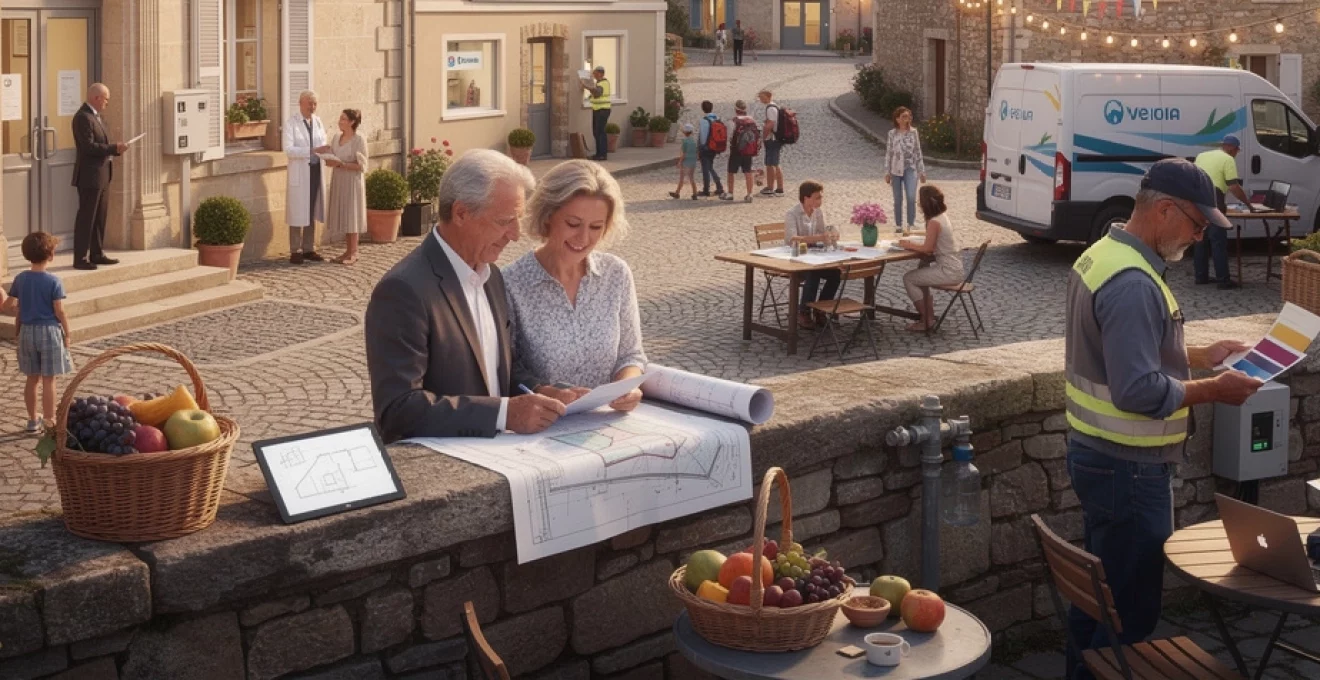
The dream of settling into a quintessential French village captures the imagination of countless individuals seeking a slower pace of life, surrounded by centuries-old architecture and deeply rooted traditions. From the administrative complexities of establishing residency to the subtle nuances of integrating into tight-knit rural communities, village life in France presents both extraordinary rewards and unique challenges that require careful consideration and preparation.
Understanding the intricate systems that govern daily life in French villages becomes essential for anyone contemplating this significant lifestyle change. The administrative framework, housing regulations, economic opportunities, and cultural expectations differ markedly from urban environments or international experiences. Rural France operates on principles of community cohesion, bureaucratic precision, and seasonal rhythms that have remained largely unchanged for generations.
The transition to French village life demands more than romantic notions inspired by literature or cinema. It requires practical knowledge of municipal services, property acquisition procedures, employment landscapes, and the delicate art of cultural integration. These elements combine to create a complex but ultimately rewarding experience for those who approach village living with realistic expectations and thorough preparation.
French village administrative framework and municipal services
The administrative backbone of French village life centres around a sophisticated network of municipal institutions that govern everything from resident registration to local development projects. Each village, regardless of size, operates within a clearly defined administrative structure that connects local governance to regional and national systems through established protocols and procedures.
Mairie functions and resident registration requirements
The village mairie serves as the primary administrative hub, handling essential services including birth certificates, marriage licenses, and voter registration. New residents must complete their registration within three months of establishing residency, presenting documentation that includes proof of address, identification, and employment status. The mayor and municipal council oversee local ordinances, planning permissions, and community initiatives that directly impact daily village life.
Municipal services extend beyond basic administration to include waste collection schedules, public works maintenance, and coordination with regional transport authorities. The secrétaire de mairie often becomes your primary contact for navigating bureaucratic requirements, particularly when language barriers complicate official procedures. Understanding these administrative relationships proves crucial for accessing services and participating in local decision-making processes.
Prefecture documentation for Long-Term residency
Prefecture procedures govern long-term residency applications for non-EU citizens, requiring comprehensive documentation including financial statements, health insurance coverage, and criminal background checks. The carte de séjour application process typically takes several months and demands meticulous attention to detail regarding supporting documents and renewal timelines.
Regional prefectures coordinate with village administrations to verify residency claims and ensure compliance with immigration regulations. Understanding prefecture requirements before relocating prevents costly delays and potential legal complications that could disrupt your integration into village life. Regular communication with prefecture offices helps maintain current documentation and prepares you for renewal procedures.
Healthcare access through médecin généraliste networks
Rural healthcare networks often operate differently from urban medical services, with general practitioners serving multiple villages and specialist referrals requiring travel to regional centres. The médecin généraliste typically maintains limited office hours and may not offer same-day appointments, making advance planning essential for routine medical care.
Village pharmacies stock basic medications and provide essential health services, though complex prescriptions may require ordering from larger towns. Emergency medical services coordinate through regional networks, with ambulance response times varying significantly based on geographical isolation and weather conditions. Establishing relationships with local healthcare providers early in your residency ensures continuity of care and familiarity with your medical history.
Educational systems: école primaire to collège transitions
Educational opportunities in French villages vary dramatically based on population size and regional demographics, with many small communities sharing resources through inter-village arrangements. Primary schools often serve multiple villages, requiring coordination of transport schedules and administrative procedures across municipal boundaries.
The transition from école primaire to collège frequently involves longer commutes to regional education centres, impacting family logistics and social development. Parents must navigate school choice procedures, transport arrangements, and integration support services that help children adapt to village educational environments. Language immersion programs and cultural adaptation resources prove particularly valuable for international families adjusting to French educational expectations.
Housing infrastructure and property acquisition processes
Housing in a French village blends historic building traditions with a tightly regulated legal framework. Stone farmhouses, village maisons de bourg, and converted barns may appear charmingly rustic, but each is embedded in a precise system of land records, building rules, and notarial oversight. Understanding how the housing infrastructure functions before you commit to buying or renting can prevent costly surprises and help you choose a property that suits your long-term plans.
From the way property boundaries are defined to the process of signing a compromis de vente, village real estate transactions follow national rules interpreted at a very local level. You will engage with the cadastre, the notaire, the mairie, and sometimes the Architecte des Bâtiments de France if your house is near a protected monument. For many newcomers, the system feels complex at first, but once you see how the pieces fit together, it becomes a predictable and reassuring framework.
Cadastral system navigation for property boundaries
The French cadastre is the official land registry that maps and records every parcel of land, including your future village home. Each plot is identified by a section letter and parcel number, and the cadastral plan shows boundaries, outbuildings, and access paths. Before you buy in a French village, you or your surveyor should consult the online cadastral map (cadastre.gouv.fr) and cross-check it with the seller’s title documents to confirm exactly what you are purchasing.
Why is this important? In many rural villages, informal arrangements have existed for decades regarding shared driveways, wells, or garden strips, and these may not align perfectly with what is drawn on the map. Clarifying where your land begins and ends helps you avoid future disputes with neighbours about hedges, walls, or rights of way. If boundaries are unclear or contested, you can request a bornage (official boundary marking) by a licensed surveyor, which, like adjusting the frame around a painting, defines the exact limits of your property in legal terms.
Notaire procedures for real estate transactions
Every property transaction in France must pass through a notaire, a public legal officer who represents the state rather than either party. In a French village, the local notaire often knows the property’s history, the sellers, and the broader context of the sale. The buying process usually follows a two-step structure: first the preliminary contract (compromis de vente or promesse de vente), then the final deed (acte de vente). Between the two, you can expect a delay of around three months, while searches and financing are completed.
The notaire verifies title, checks for existing mortgages or easements, and consults the mairie about planning rules and pre-emption rights. You will pay notaire fees and taxes, which generally amount to about 7–8% of the purchase price for older properties. For many foreign buyers, the legal French and technical vocabulary can feel daunting, so it is wise to budget for an independent translator or bilingual advisor. Think of the notaire as the conductor of an orchestra: they may not play every instrument themselves, but they ensure every part of the transaction stays in harmony.
Renovation permits through architecte des bâtiments de france
Renovation in a French village is rarely just a matter of calling a builder and getting started. Exterior works, major structural changes, or alterations visible from the street usually require prior authorisation from the mairie. In many villages, especially those near churches, châteaux, or listed sites, your application will also be reviewed by the Architecte des Bâtiments de France (ABF), whose role is to protect the architectural character of the area. This can influence everything from the colour of your shutters to the style of your roof tiles.
For smaller projects such as changing windows or building a modest terrace, you may only need a déclaration préalable de travaux. Larger works like extensions, barn conversions, or new constructions generally require a full permis de construire. Processing times range from one to three months, sometimes longer if the ABF is involved. While the rules can feel restrictive, they also preserve the harmony that makes French village life so visually appealing. Approaching the mairie early, with clear plans and photos, will help you understand what is likely to be accepted and avoid investing in designs that must later be modified.
Utility connections: EDF, veolia water, and fibre optic networks
Access to modern utilities in a French village can vary considerably from one commune to another. Electricity is typically provided by national or regional operators (historically EDF, now alongside other suppliers), while water services are often managed by companies such as Veolia or by inter-communal bodies. Before signing a purchase or rental contract, you should confirm the status of all utility connections: electricity, mains water, gas (if applicable), and whether the property is linked to the public sewerage network or relies on a private fosse septique.
Internet connectivity has improved dramatically in rural France, with fibre optic deployment accelerating since 2018, yet some villages still depend on ADSL or 4G routers. If you intend to work remotely, check coverage maps and ask neighbours about actual speeds rather than relying on provider promises. Setting up accounts usually involves supplying proof of identity, proof of address, and bank details for direct debit payments. As with many aspects of French village life, utility provision can feel slower and more paper-based than in big cities, so factor in a few weeks of lead time for new connections or service changes.
Economic landscape and employment opportunities in rural france
The economic fabric of French villages reflects a mix of traditional sectors and emerging opportunities. Agriculture, viticulture, and small-scale artisanal production remain central in many rural areas, supported by tourism, local services, and public-sector employment. At the same time, demographic shifts and digital technology are creating new patterns: more retirees, more telecommuters, and a growing number of micro-entrepreneurs combining village life with global clients.
If you plan to earn a living while living in a French village, you will need to think carefully about how your skills translate to the local economy. Salaried jobs in tiny communes can be scarce, with most employment concentrated in nearby towns, schools, hospitals, and industrial zones. Many newcomers therefore choose self-employment under the micro-entreprise regime, offering services such as holiday rentals, language teaching, online consulting, or trades related to building renovation and tourism. Before committing, it is wise to analyse commuting distances, childcare logistics, and the seasonality of income in a rural setting.
Cultural integration and community participation mechanisms
Cultural integration in a French village goes far beyond exchanging pleasantries at the bakery. Long-term residents often have deep family roots in the area, and village life runs on unwritten codes of politeness, reciprocity, and discretion. Joining in community structures—local associations, volunteer groups, and seasonal festivities—provides a powerful way to move from being simply “the new arrival” to becoming part of the social fabric. This process takes time, but it is one of the most rewarding aspects of living in a French village.
For many newcomers, the key challenge is balancing respect for existing traditions with the desire to contribute fresh ideas. You may notice that village decisions are often made slowly, over many conversations at the mairie, the café, or the weekly market. Showing up consistently, offering help when volunteers are needed, and learning at least basic French all signal that you are committed to more than a picturesque backdrop for your new life.
Association loi 1901 membership and volunteer networks
Most organised community life in French villages is structured through associations loi 1901, non-profit organisations that cover everything from the football club and choir to heritage preservation and parents’ groups. Membership fees are usually modest, and annual general meetings are open to all members. By joining one or two associations that match your interests, you gain an instant network, regular activities, and insight into local priorities. You may even be invited onto the committee once people see you as reliable and engaged.
Volunteering can be as simple as helping to set up chairs for a concert, serving drinks at the fête du village, or baking a cake for a charity sale. These small gestures are noticed and appreciated. Over time, you will likely be asked for your opinion on projects such as restoring the village washhouse, improving playgrounds, or welcoming new residents. Think of associations and volunteer work as the village’s “social infrastructure”: they keep community life functioning just as surely as roads and pipes keep the physical infrastructure running.
Seasonal festival calendars: fête de la Saint-Jean to vendanges
The social rhythm of French village life often follows the calendar of local festivals and seasonal events. Early summer may bring the fête de la Saint-Jean, with bonfires, music, and communal meals, while autumn in wine-growing regions revolves around the vendanges, or grape harvest. In other areas, you might find chestnut festivals, mushroom fairs, or winter marchés de Noël. Participating in these events offers one of the easiest ways to experience the village’s collective spirit.
Many of these festivals are organised by village associations or the comité des fêtes, often with support from the mairie. You may be asked to help decorate the square, sell raffle tickets, or join a team preparing long tables for a communal dinner. Saying yes to these invitations not only deepens your understanding of regional traditions but also signals that you are willing to share both work and pleasure. Over time, you will discover that these recurring gatherings form a kind of living calendar, marking your own progression from newcomer to familiar face.
Local dialect preservation and regional language learning
Beyond standard French, many villages retain echoes of regional languages such as Occitan, Breton, Alsatian, or Basque. You may hear older residents switching into dialect during market conversations or using local expressions that do not appear in textbooks. Far from being mere curiosities, these languages carry centuries of cultural memory, from folk songs and recipes to place names and proverbs. Showing interest in them demonstrates respect for local identity and often delights long-term villagers.
While you are unlikely to become fluent in a regional language unless you dedicate serious time, learning a handful of expressions can act as a cultural bridge. Community centres or associations occasionally offer introductory classes or storytelling evenings in dialect. Treat these as an optional but enriching layer of integration, much like learning regional recipes or dances. By engaging with local speech patterns, you pick up nuances of humour and affection that would otherwise remain invisible, making your participation in French village life deeper and more authentic.
Transportation networks and connectivity solutions
Transport is one of the most practical and decisive factors in shaping your daily experience of living in a French village. Unlike in major cities, where public transport is dense and frequent, rural France often relies on a patchwork of regional buses, school transport, and limited train services. Many villagers consider a car almost as essential as a front door key. Before relocating, you should assess how you will access shops, medical appointments, schools, and cultural activities, especially if you do not yet hold a French or EU driving licence.
Regional councils subsidise bus lines that connect villages to nearby towns, often timed around school schedules and market days rather than late-night outings. Some departments operate on-demand transport services (transport à la demande) that must be booked in advance, particularly helpful for older residents. Rail hubs are usually found in larger towns, from which you can reach bigger cities via TER or TGV trains. Increasingly, people are also turning to electric bikes for medium-distance journeys, treating them as a halfway point between walking and driving, particularly in relatively flat regions.
Digital connectivity can sometimes compensate for physical distance. Remote work, online shopping, and telemedicine reduce the need for daily travel, but they do not eliminate it entirely. If you choose a very isolated hamlet, ask yourself: how will you manage in winter if roads are blocked by snow, or during fuel shortages? Some newcomers find that living within 15–20 minutes of a mid-sized town offers the best balance between rural tranquillity and practical access. Thinking through these scenarios in advance ensures that your dream of French village life remains sustainable over the long term.
Seasonal lifestyle adaptations and regional climate considerations
Seasonal changes shape village life in France just as much as administrative rules or cultural customs. Summers may bring outdoor concerts, open-air markets, and late dinners on the terrace, while winters can feel quiet, with shuttered second homes and reduced opening hours for shops and restaurants. The climate varies significantly between regions—Atlantic, Mediterranean, continental, or mountain—so it is vital to understand not only the average temperatures but also how local people adapt their routines across the year.
In many villages, winter closures can surprise newcomers used to 24/7 urban convenience. Bakeries and small supermarkets may reduce hours, and some restaurants or cafés shut entirely for several weeks. Heating old stone houses requires planning and budget, particularly if you rely on fuel oil or wood. On the other hand, spring and autumn often provide the most pleasant living conditions, with mild temperatures and a steady rhythm of agricultural and cultural events. Adjusting your expectations—accepting that Sunday shopping may be impossible and that lunch breaks still matter—helps you align with the local tempo.
Climate change is also gradually altering village life. Heatwaves are more frequent, especially in the south, prompting villages to adapt public spaces with shade and access to water. Agricultural calendars shift, affecting harvest dates and local employment patterns. For you as a resident, this may mean investing in better insulation, shutters, or ventilation, and reconsidering which months are most comfortable for visitors. By observing how your neighbours manage seasonal transitions—stocking wood, preserving produce, or organising communal events—you can learn practical strategies to thrive in your chosen corner of rural France all year round.