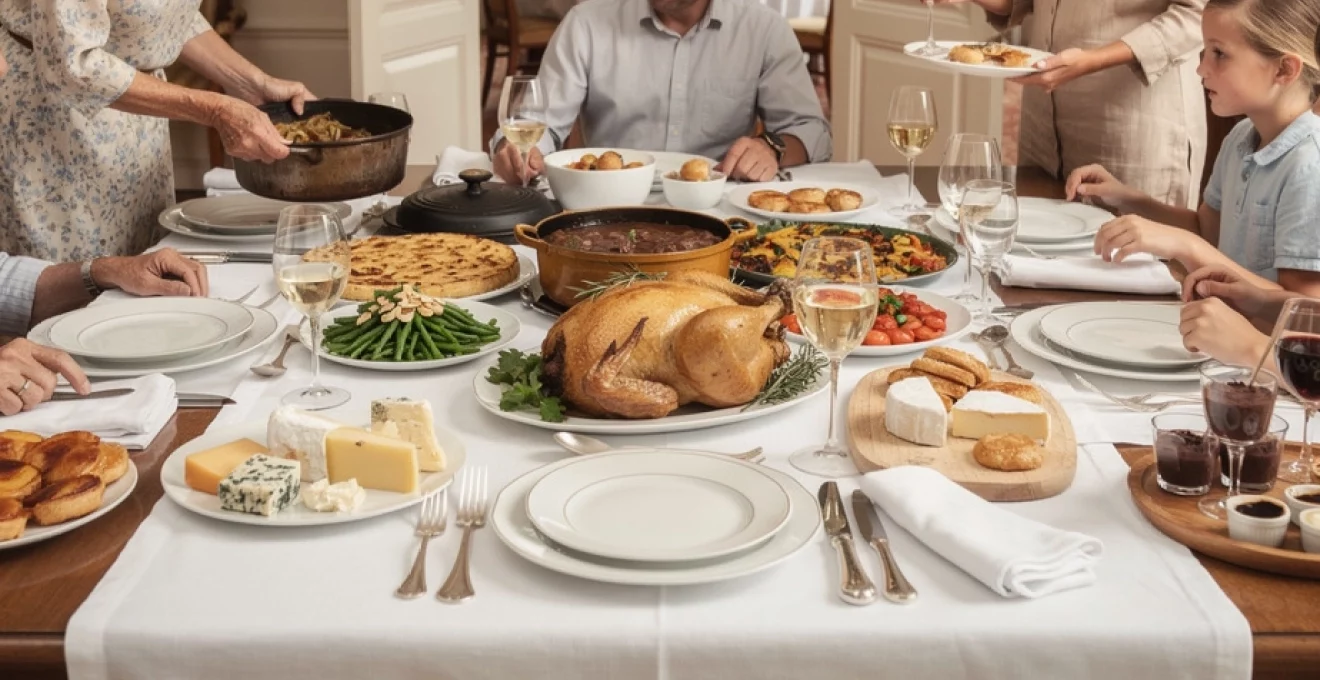
The French Sunday lunch—le déjeuner du dimanche—represents more than just a meal; it’s a cultural institution that brings families together around the table for hours of conversation, laughter, and exceptional food. While many assume French dining requires Michelin-star techniques and days of preparation, the reality is refreshingly different. Traditional French home cooking celebrates quality ingredients, time-tested techniques, and the joy of shared moments. Whether you’re hosting your first French-inspired gathering or seeking to deepen your understanding of France’s culinary traditions, recreating this cherished ritual in your own home is entirely achievable. The key lies in understanding the structure, mastering a few fundamental techniques, and embracing the unhurried pace that makes French Sunday meals so special.
Understanding the sacred ritual of le déjeuner du dimanche in french culture
French Sunday lunch occupies a privileged position in the national consciousness, serving as the week’s anchor point when extended families gather regardless of busy schedules. This tradition typically begins around 12:30 or 1:00 PM and can extend well into the late afternoon, sometimes lasting four to five hours. The meal functions as a social ritual where multiple generations share stories, debate current events, and strengthen family bonds over carefully prepared dishes.
The structure follows a predictable yet comforting pattern: aperitifs with light nibbles, a starter course, the main dish with accompaniments, cheese and salad, dessert, and finally coffee or digestifs. This progression isn’t arbitrary—it reflects centuries of culinary evolution designed to maximise enjoyment while allowing proper digestion between courses. Each course receives its due attention, with conversation flowing naturally between bites. The French approach to Sunday dining rejects rushing; you’re meant to savour not just the food but the company and the moment itself.
What distinguishes this tradition from everyday meals is the investment of time and care. While weeknight dinners might be simple affairs, Sunday lunch represents an opportunity to prepare dishes that require longer cooking times—braises that develop deep flavours over hours, roasts that emerge golden and tender, or delicate pastries that showcase technical skill. Yet despite this investment, French home cooks approach the meal pragmatically, often purchasing certain elements from trusted local producers whilst focusing their efforts on a few showstopper dishes.
Planning your french sunday menu: classical regional recipes and seasonal ingredients
Successful menu planning for a French Sunday meal begins with seasonal thinking. French cuisine has always respected the agricultural calendar, building menus around what’s fresh and abundant rather than forcing ingredients out of season. Spring might bring tender lamb and asparagus, summer offers tomatoes and courgettes for ratatouille, autumn delivers game and wild mushrooms, whilst winter calls for hearty braises and root vegetables.
Regional considerations also shape menu choices significantly. A Provençal menu differs markedly from one inspired by Burgundy or Normandy, reflecting local products, climates, and culinary traditions. Coastal regions naturally emphasise seafood, whilst inland areas showcase poultry, beef, and pork. Wine-producing regions incorporate their vintages into cooking, creating dishes like coq au vin or boeuf bourguignon that marry local ingredients with local wines.
Selecting the aperitif course: kir, pastis, and traditional Amuse-Bouches
The aperitif course sets the tone for the entire meal, welcoming guests and stimulating appetites without overwhelming them. Traditional choices include kir (white wine with blackcurrant liqueur), pastis (an anise-flavoured spirit diluted with water), or simple glasses of chilled white wine or champagne. The drinks should be light and refreshing, preparing the palate for courses to come rather than dominating it.
Accompanying nibbles—amuse-bouches—should be equally restrained. Think olives, salted almonds, small cheese pastries called gougères, or vegetables with tapenade. These aren’t meant to satisfy hunger but rather to occupy hands and mouths during initial conversations. Many French hosts purchase ready-made options from charcuteries or bakeries, saving their energy for cooking the main courses. A bowl of high-quality olives and some toasted nuts can be perfectly appropriate
to keep everyone satisfied until the entrée. If you want to recreate a truly traditional French Sunday family meal at home, focus on a couple of high-quality bites rather than a sprawling buffet. A simple plate of sliced saucisson, a small bowl of radishes with butter and salt, or mini toasts spread with rillettes instantly evoke a French living room on a Sunday noon.
Crafting the entrée: terrine de campagne, soupe à l’oignon, and escargots de bourgogne
The entrée—or starter—marks the official beginning of the seated meal, and in a traditional French Sunday lunch it is often simple, rustic, and prepared in advance. A classic terrine de campagne (country pâté) is ideal when you want a make-ahead French entrée that feeds a crowd. Prepared with pork, liver, herbs, and sometimes a splash of brandy, it can be made a day or two earlier, allowing the flavours to mature in the fridge before being served with cornichons, mustard, and slices of baguette.
If you’re aiming to recreate a brasserie-style Sunday meal, soupe à l’oignon (French onion soup) is a beloved choice. The key lies in patience: onions must be slowly caramelised until they are deeply golden and sweet, which can take up to 45 minutes. Once simmered with beef stock and wine, the soup is finished with baguette croutons and gratinéed cheese under the grill. For something more celebratory, especially in Burgundy-inspired menus, escargots de Bourgogne baked in garlicky parsley butter bring instant French charm, though many home cooks rely on high-quality frozen versions rather than preparing the snails from scratch.
Whichever starter you choose, think about balance with the rest of your traditional French Sunday family meal. A rich, cheesy onion soup pairs best with a lighter main course like roast chicken, while a cold terrine works beautifully before a slow-cooked beef stew. Remember that the entrée should awaken the appetite, not overwhelm it; portions stay modest, allowing your guests to savour each subsequent course comfortably over several hours.
Mastering the plat principal: boeuf bourguignon, poulet rôti aux herbes, and gigot d’agneau
The plat principal is the heart of any French Sunday family meal and is usually where you will invest most of your cooking time. Boeuf bourguignon, the iconic red wine beef stew from Burgundy, is particularly well suited to Sunday lunch because it improves when made in advance. Tougher cuts like beef chuck or shin are slowly braised in red wine with bacon, onions, carrots, and mushrooms until the meat turns meltingly tender. This is comfort food at its finest, and leftovers often taste even better on Monday.
For many French families, especially those with young children, nothing feels more traditional than poulet rôti aux herbes—a simple roast chicken with thyme, garlic, and butter. Roast chicken is both economical and festive, filling the house with irresistible aromas as it cooks. By seasoning generously, basting regularly, and resting the bird before carving, you can achieve that classic combination of crisp skin and juicy meat that defines a perfect French roast. Serve it carved at the table for a moment of theatre that brings everyone together.
On more formal occasions like Easter, a gigot d’agneau (leg of lamb) often takes centre stage. Traditionally studded with garlic and rubbed with rosemary or herbes de Provence, it is slow-roasted until pink in the centre and caramelised on the outside. This dish lends itself well to feeding a large table, and any leftovers can reappear in sandwiches or salads during the week. When planning your French Sunday menu, choose one main course that suits your schedule and skill level; it’s better to execute one dish perfectly than to juggle several complex recipes at once.
Preparing accompaniments: gratin dauphinois, haricots verts, and ratatouille provençale
No traditional French Sunday family meal is complete without a thoughtful selection of accompaniments. Gratin dauphinois, a creamy potato bake from the Dauphiné region, is a perennial favourite that pairs beautifully with roast chicken or lamb. Thinly sliced potatoes are baked slowly in cream, garlic, and sometimes a hint of nutmeg until they are tender inside and beautifully browned on top. Because this dish reheats well, you can prepare it earlier in the morning and simply warm it through before serving, easing your last-minute workload.
To balance the richness of the gratin and main course, many French home cooks serve simple haricots verts (fine green beans). Blanched quickly in salted water and then tossed in butter, olive oil, or a light vinaigrette, they add welcome freshness and colour to the plate. Aim to keep them slightly crisp rather than soft; that gentle bite offers a pleasing contrast to slow-cooked meats and creamy side dishes. A sprinkle of toasted almonds or a squeeze of lemon can elevate them without adding complexity.
For a Provençal note, especially in summer, ratatouille provençale brings together aubergine, courgette, peppers, onions, and tomatoes in a fragrant vegetable stew. Traditionally, each vegetable is sautéed separately before being combined and simmered, which preserves their individual textures and flavours. While this may sound laborious, ratatouille is forgiving and can be made ahead of time; many cooks find it tastes better the next day. When you assemble your plate, think of it like composing a painting: a slice of meat, a creamy or starchy side, and one or two bright vegetable dishes create the classic French Sunday balance.
Assembling the cheese platter: comté, camembert, roquefort, and chèvre selection
The cheese course is a defining element of the French Sunday lunch and often the one that foreign guests remember most vividly. Rather than serving a single cheese, French families typically offer a small assortment arranged on a wooden board or slate. A well-balanced platter includes at least three styles: a firm or semi-hard cheese like Comté, a soft bloomy rind cheese such as Camembert, and a blue cheese like Roquefort. This variety allows each guest to create their own mini tasting as you linger at the table.
Adding a chèvre (goat’s cheese) introduces a different texture and tang, especially appreciated in regions such as the Loire Valley where goat cheeses are traditional. You might choose a fresh, creamy chèvre for a milder flavour or a more aged, wrinkled version for intensity. Serve the cheeses at room temperature to allow their aromas and textures to fully develop; taking them out of the fridge at least an hour before the cheese course is a simple but crucial step.
In many households, the cheese course is accompanied by a simple green salad dressed with a sharp mustard vinaigrette. This might seem unusual if you are used to salad at the beginning of a meal, but the acidity of the dressing helps cut through the richness of the cheese. When assembling your cheese platter, resist the temptation to overcrowd it; four to six cheeses are usually enough for a traditional French Sunday family meal. A few slices of baguette or country bread and perhaps some walnuts or fresh figs are all you need to complete the picture.
Mastering french culinary techniques for sunday feasts
Recreating an authentic French Sunday lunch at home is less about mastering restaurant-level complexity and more about understanding a handful of foundational techniques. Once you know how to build a proper sauce, manage slow-cooking methods, and handle basic pastry, you can adapt countless classic recipes to suit your own tastes and seasonal ingredients. Think of these techniques as the grammar of French cooking: learn the rules, and you can then play with the vocabulary as creatively as you like.
Achieving perfect sauce preparation: béchamel, velouté, and jus de viande reduction
French cuisine is renowned for its sauces, and even a modest Sunday family meal will often include at least one carefully prepared sauce maison. At the most basic level, you will encounter béchamel and velouté, two “mother sauces” that underpin many gratins and baked dishes. Béchamel is made by whisking milk into a butter-and-flour roux, then simmering until thick and silky; it forms the base not only for gratin dishes but also for creamy fillings and some versions of croque monsieur. Velouté is similar but uses stock instead of milk, giving a lighter, savoury character that works beautifully with poultry and fish.
For roasted meats like poulet rôti or gigot d’agneau, a simple jus de viande (meat jus) can transform your dish from everyday to restaurant-quality. After roasting, the pan will hold caramelised juices and browned bits called sucs; by deglazing with wine, stock, or even water and reducing the liquid over heat, you create a concentrated sauce packed with flavour. A small knob of butter whisked in at the end adds gloss and richness. This process may sound technical, but in practice it is no more complex than making a quick gravy—and the results elevate your traditional French Sunday family meal considerably.
If you are unsure where to begin, start by perfecting one basic sauce and using it regularly. Over time, you can add variations: flavouring béchamel with cheese to create sauce Mornay, or enriching a velouté with cream and mushrooms for a luxurious poultry sauce. As with language learning, repetition builds confidence; soon you will be able to read a French recipe that calls for a classic sauce and know exactly how to execute it without stress.
Implementing Slow-Cooking methods: braising, confit, and Low-Temperature roasting
One reason French Sunday meals feel so luxurious is the way they harness time. Slow-cooking methods like braising and confit allow inexpensive cuts and simple ingredients to develop extraordinary depth of flavour. Braising, as in boeuf bourguignon or coq au vin, involves searing meat at high heat and then simmering it gently in liquid for several hours. The low, steady heat breaks down connective tissue, turning tough cuts into fork-tender delicacies while infusing them with wine, herbs, and aromatics.
Confit is another hallmark of traditional French cooking, particularly associated with duck. In this method, meat is salted, slowly cooked in its own fat, and then stored submerged in that fat, which acts as a natural preservative. While traditional duck confit can be time-consuming, modern home cooks often adapt the method using the oven and store-bought duck fat, achieving impressive results with less effort. Confit potatoes or garlic, cooked gently in fat until silky, bring similar richness to the table.
Low-temperature roasting offers a more contemporary approach that still fits perfectly into a Sunday rhythm. Instead of blasting a roast at high heat, you cook it at a moderate temperature for longer, ensuring even doneness and juiciness. A leg of lamb roasted slowly at a lower temperature, for instance, will cook more gently and remain tender, giving you flexibility for timing your meal. When planning your traditional French Sunday family meal, ask yourself: which elements can benefit from long, hands-off cooking while you enjoy time with your guests?
Executing classic pastry techniques: pâte brisée, pâte feuilletée, and choux pastry
Desserts and tarts are often the most intimidating part of recreating a French Sunday lunch, but mastering a few key doughs gives you enormous creative freedom. Pâte brisée is a basic unsweetened shortcrust pastry used for savoury quiches and some fruit tarts. It is made by cutting cold butter into flour and then binding everything with a little cold water; the goal is a tender, crumbly texture rather than flakiness. Once you are comfortable with pâte brisée, quiches, savoury tarts, and simple apple tartes become much easier to produce regularly.
Pâte feuilletée—puff pastry—is more complex to make from scratch, involving repeated folding of dough and butter to create hundreds of delicate layers. Many French home cooks now happily buy high-quality all-butter puff pastry, reserving their energy for fillings and toppings. Using ready-made puff pastry is entirely compatible with creating an authentic French Sunday family meal, especially when you use it as a base for tarte tatin or quick savoury tartlets. The key is choosing a good brand and handling the dough gently to preserve its layers.
Choux pastry, or pâte à choux, underpins classic desserts like profiteroles and éclairs, as well as savoury gougères for the aperitif. It is made by cooking flour with water and butter, then beating in eggs until the dough becomes glossy and pipeable. While this might sound advanced, the process becomes straightforward once you have tried it once or twice, and the same base recipe can produce multiple showstopping desserts. For a Sunday meal, choux-based desserts are ideal because shells can be baked ahead and filled just before serving, keeping your workload manageable during the meal itself.
Temperature control and timing coordination for Multi-Course service
One of the biggest challenges when hosting a traditional French Sunday family meal at home is coordinating timing across multiple courses. Professional kitchens rely on precise temperature control and carefully written prep lists, and home cooks can borrow these habits on a smaller scale. Begin by mapping out your menu and identifying which elements can be prepared in advance, which need last-minute attention, and which can simply be reheated. Braised dishes, gratins, and desserts often fall into the first category, leaving you free to focus on roasting meat and dressing salads on the day.
Oven management is crucial, especially if you have only one. Consider the different baking and reheating temperatures required and plan your order accordingly. A gratin can be cooked fully in the morning and reheated while your roast rests; a tarte tatin may bake while you eat the main course. Use a digital thermometer for meats like chicken and lamb to avoid overcooking, and allow generous resting time so that juices redistribute and the oven is free for other dishes. Think of your oven as prime real estate and schedule its use as carefully as you would schedule guests.
To keep stress levels low, create a simple timeline that counts backwards from the moment you want to serve the main course. When does the roast need to go into the oven? At what point will you set out the aperitif? When should you reheat the gratin or bring cheeses to room temperature? Writing this down, even roughly, transforms an intimidating multi-course meal into a series of manageable steps. With practice, your sense of timing will improve, and you will be able to enjoy your own Sunday feast rather than rushing constantly between kitchen and table.
Setting the french table: etiquette, service styles, and dining protocols
The atmosphere of a traditional French Sunday family meal is shaped not only by the food but also by the way the table is set and the meal is served. While everyday dinners may be casual, Sunday lunch often calls for a slightly more polished setting: a tablecloth, cloth napkins, and proper place settings. This doesn’t mean formality for its own sake; rather, the table arrangement signals that this shared meal is special, something to savour slowly in good company.
Arranging the traditional french place setting with proper cutlery sequence
A classic French place setting follows a logical sequence that guides diners smoothly through the meal. Plates are centred in front of each chair, with forks placed to the left and knives to the right, cutting edge facing inwards. If you are serving more than one course that requires separate cutlery, arrange the pieces from the outside in, corresponding to the order of service: starter cutlery on the outside, main-course cutlery closer to the plate. Dessert spoons or forks are often placed horizontally above the plate or brought later with the dessert.
Bread plays such a central role in French dining that it has its own spot on the table. In more formal settings, each guest receives a small bread plate placed above the forks, slightly to the left; in family settings, the bread may simply be placed directly on the tablecloth near the plate. Glassware is aligned above the knives, usually starting with a water glass and then one or two wine glasses. While you do not need to replicate every detail of high-end restaurant table settings, observing these simple conventions instantly gives your Sunday meal a distinctly French character.
Napkins are traditionally folded and placed either on the plate or to the left of the forks. There is no need for elaborate origami folds; a simple rectangle or triangle is perfectly in keeping with the understated elegance of French home entertaining. By paying attention to these small details, you subtly encourage guests to slow down and treat the meal as a shared ritual rather than a quick refuelling stop.
Selecting appropriate glassware for wine service throughout the meal
Wine is woven into the fabric of French Sunday dining, but the approach is often more relaxed than many people imagine. You do not need a vast collection of specialised glasses to offer thoughtful wine pairings. A good rule of thumb is to provide one generous glass for red wine and one slightly smaller glass for white or rosé, plus a sturdy glass for water. If your cupboard is limited, a single all-purpose wine glass can serve throughout the meal; the most important element is that each guest has both water and wine at hand.
In more traditional households, different wines accompany different stages of the meal: perhaps a light white or rosé for the aperitif, a regional red with the main course, and a sweet or fortified wine with dessert or cheese. When you set the table, place only the glasses you know you will use; additional glasses can be brought out with later courses if needed. This prevents clutter and keeps the table looking harmonious. Remember that in France, wine is seen as a complement to food and conversation, not the star of the show.
If you are unsure which wines to serve, choose bottles from the same region as your main dish—Burgundy wines with boeuf bourguignon, for example, or wines from the Loire with goat’s cheese. This regional coherence not only simplifies your choices but also reinforces the sense of authenticity in your traditional French Sunday family meal. Ultimately, the best wine is the one you enjoy and feel comfortable pouring generously for your guests.
Understanding french dining pace and course progression timing
One of the defining pleasures of a French Sunday lunch is its unhurried rhythm. Courses follow one another at a measured pace, allowing time for conversation, digestion, and appreciation of each dish. The aperitif period can last 30 to 45 minutes before everyone moves to the table, while the entrée and main course might each occupy another half-hour or more. Cheese, dessert, and coffee extend the experience, so it is not unusual for a traditional family meal to stretch well past three hours.
As host, your role is to gently guide this progression without making guests feel rushed. Pay attention to the table: are plates empty, but conversation still lively? Give everyone a few extra minutes before clearing. In France, it is common for guests to linger over the cheese course, cutting small slices, refilling wine glasses, and telling stories. Dessert often signals the beginning of the transition towards the end of the meal, followed by coffee or herbal tea served in a different space, such as the living room or garden.
When you plan your own French Sunday menu at home, build in intentional pauses between courses. These breaks are not just practical for you as a cook; they are part of the pleasure, allowing guests to relax and connect. Think of the meal like a piece of music, with movements and moments of silence; the pacing helps create a memorable experience that feels distinctly French, even if you are thousands of kilometres from Paris or Provence.
Wine pairing strategy for french regional sunday menus
Designing a wine pairing strategy for a traditional French Sunday family meal can feel daunting, but it becomes much more manageable when you think in terms of regions and intensity. French cuisine evolved alongside local wines, so regional pairings often work almost effortlessly. When you serve boeuf bourguignon, for example, reaching for a medium-bodied red Burgundy or another Pinot Noir mirrors what many families would do in Burgundy itself. Similarly, a Provençal ratatouille sings alongside a chilled rosé from the same region.
Start by identifying the dominant flavours and richness level of each course. Lighter, more delicate dishes like terrine de campagne or salade de chèvre chaud pair well with crisp whites (such as Sancerre or Muscadet) or light reds like Beaujolais. Richer, slow-cooked mains invite more structured reds: Côtes du Rhône, Bordeaux blends, or robust Languedoc wines. Cheese complicates things slightly, but a flexible approach works best; many French households simply continue with the red wine served at the main course, perhaps adding a sweet wine like Sauternes or a fortified wine for blue cheeses and desserts.
If you want to echo the structure of a textbook French meal, you might serve three wines across the afternoon: a light wine (white or rosé) with the aperitif and entrée, a more substantial red with the main dish and perhaps the cheese, and finally a dessert wine or sparkling wine to close. There is no need to pour large amounts; small servings allow guests to taste the progression without overindulging. In recent years, non-alcoholic alternatives such as de-alcoholised wines and sparkling grape juices have also become more available, making it easier to include every guest in the ritual.
Above all, remember that wine pairings are there to enhance, not overshadow, your cooking. Choose wines you enjoy and can describe simply to your guests: fruity, light, full-bodied, spicy. When you present a bottle, mention its region and perhaps why you chose it; this small touch adds a layer of storytelling that fits perfectly with the convivial, conversational spirit of a French Sunday meal.
Creating authentic french desserts: tarte tatin, crème brûlée, and mousse au chocolat
Dessert provides the final flourish to your traditional French Sunday family meal, and it does not need to be elaborate to feel special. In many French households, dessert is actually purchased from a local bakery: a beautiful fruit tart, a box of individual pastries, or a simple flan. When you are recreating the experience at home, focusing on one classic dessert that can be prepared ahead of time is often the most realistic approach. That way, you can enjoy the meal alongside your guests rather than whisking and baking at the last minute.
Tarte Tatin, the famous upside-down caramelised apple tart, is a wonderful choice when you want a rustic yet elegant dessert. Apples are cooked slowly in butter and sugar until deeply golden, then covered with a round of puff pastry and baked. After a brief rest, the tart is inverted onto a serving plate, revealing glossy, tender apples on top. While the flipping moment can feel nerve-racking, the dessert itself is forgiving; a slightly uneven edge or irregular caramel only adds to its homemade charm. Serve it warm with a spoonful of crème fraîche or vanilla ice cream.
For a more refined, restaurant-style finish, crème brûlée offers a luxurious contrast between silky custard and crunchy caramelised sugar. The custards are baked gently in a water bath and then chilled thoroughly, making them ideal to prepare the day before your Sunday meal. Just before serving, you sprinkle sugar on top and caramelise it with a blowtorch or under a very hot grill. The moment when guests crack the thin caramel with their spoons is part of the pleasure, turning dessert into a small interactive ritual at the table.
If you prefer something lighter to close a rich menu, a classic mousse au chocolat is both simple and deeply satisfying. Made with good-quality dark chocolate, eggs, and sometimes a hint of cream or liqueur, it can be portioned into individual glasses and chilled several hours in advance. The airy texture and intense flavour make it feel indulgent without heaviness. Children in particular tend to adore mousse au chocolat, making it a reliable option for multi-generational gatherings.
Whichever dessert you choose, remember that in the rhythm of a French Sunday lunch, dessert is followed by coffee or tea and often a final moment of lingering conversation. You do not need multiple sweets, elaborate decorations, or intricate plating. A single, well-executed French dessert, served in generous but not overwhelming portions, is enough to bring your meal to a graceful close and leave your guests with a warm, lasting impression of French hospitality at your table.