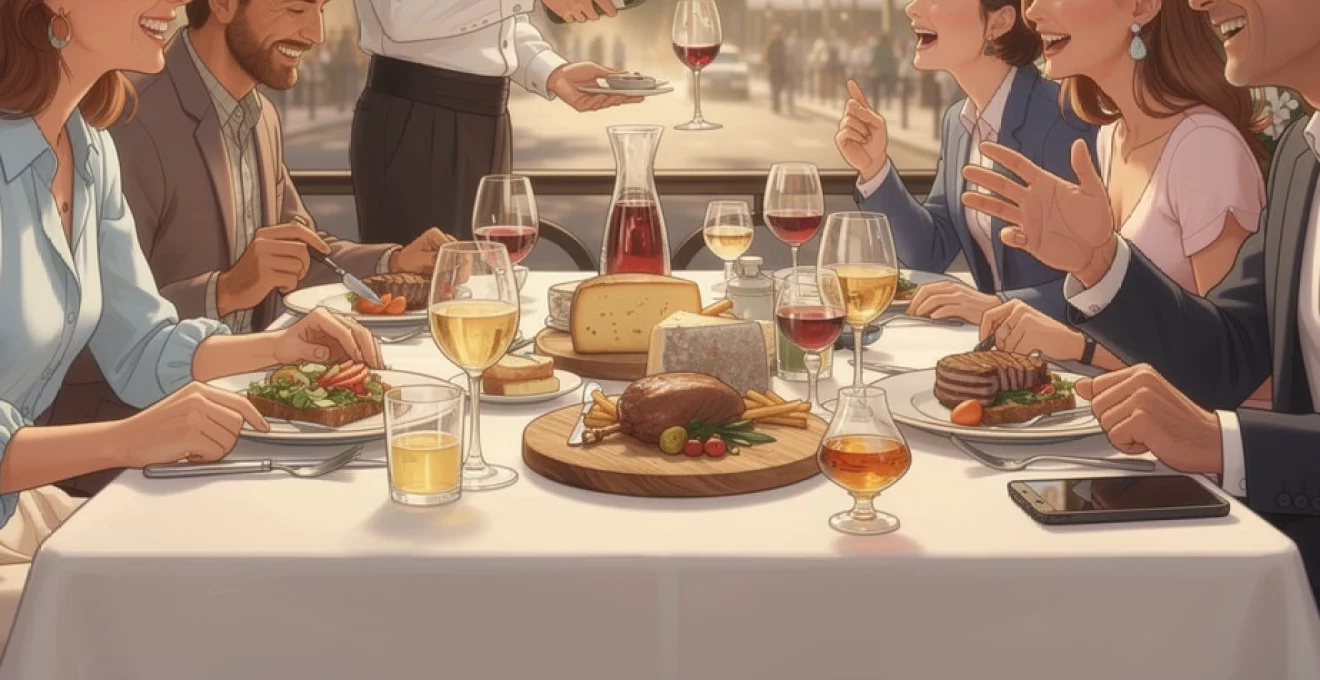
The long French lunch represents far more than a simple meal—it embodies a sophisticated cultural ritual that transforms midday dining into an art form. This cherished tradition combines culinary excellence with social connection, creating an experience that can extend gracefully from noon until late afternoon. In France, the extended lunch serves as a deliberate counterpoint to the hurried pace of modern life, offering participants the opportunity to savour exceptional cuisine whilst engaging in meaningful conversation.
Understanding the nuances of French lunch culture requires appreciation for its complex layers of timing, sequence, and social etiquette. From the precise scheduling of courses to the intricate dance of conversation topics, every element contributes to an experience that prioritises pleasure, connection, and the celebration of gastronomy. This cultural phenomenon has evolved over centuries, reflecting France’s deep commitment to culinary excellence and the belief that meals should nourish both body and soul.
Understanding french dining chronobiology and traditional meal timing protocols
French lunch timing operates according to deeply ingrained cultural rhythms that synchronise with both biological needs and social expectations. The traditional French approach to meal scheduling reflects an understanding of natural energy cycles, positioning the substantial midday meal at the peak of digestive efficiency whilst allowing ample time for proper food appreciation and social interaction.
Déjeuner scheduling: the sacred 12:00-14:30 window in french culture
The French lunch window represents one of the most rigidly observed cultural practices in contemporary France. Traditional scheduling begins promptly at noon, with the sacred déjeuner extending until approximately 2:30 PM. This timeframe isn’t merely convenient—it’s considered essential for proper digestion and social cohesion. Restaurants throughout France structure their service around this window, with many establishments refusing to serve lunch outside these parameters.
Business meetings scheduled during lunch hours automatically incorporate this extended timeframe, with participants understanding that rushing through the meal would be considered both rude and counterproductive. The lunch appointment typically begins with aperitifs at noon, progressing through multiple courses until the natural conclusion around mid-afternoon. This scheduling respects the French philosophy that important business discussions benefit from the relaxed atmosphere that only a proper meal can provide.
Circadian rhythm integration with extended midday meal patterns
French lunch timing aligns remarkably well with human circadian rhythms, positioning the day’s largest meal when metabolism peaks and energy levels naturally surge. This biological synchronisation explains why French diners can consume substantial quantities during lunch without experiencing the afternoon lethargy common in cultures with lighter midday meals. The extended duration allows for proper chewing and digestion, supporting optimal nutrient absorption whilst preventing the rapid blood sugar fluctuations associated with hurried eating.
Research indicates that the French approach to meal timing contributes significantly to their renowned paradoxe français—the observation that despite consuming rich foods, French populations maintain relatively low rates of cardiovascular disease. The lengthy lunch duration facilitates mindful eating practices, allowing diners to recognise satiety signals and appreciate flavour complexity without overeating.
Regional variations: provence vs normandy lunch duration standards
Regional differences in lunch duration reflect local cultural priorities and climatic influences across France. Provence lunch traditions often extend beyond the standard window, incorporating the Mediterranean concept of afternoon rest periods. The warm climate encourages longer, more leisurely meals followed by brief siestas, with lunch potentially lasting until 3:30 PM during summer months.
Northern regions like Normandy maintain more structured timing, typically concluding lunch by 2:15 PM to accommodate afternoon work schedules. However, the northern approach compensates for shorter duration with increased course complexity and richer preparations. Normandy lunch traditions emphasise substantial cream-based dishes and local specialities that require focused attention and appreciation.
Business district adaptations in paris 8th arrondissement
The financial district of Paris has developed unique adaptations to accommodate international business whilst preserving French lunch traditions. Restaurants in the 8th arrondissement offer streamlined versions of traditional service, condensing the full lunch experience into 90-minute windows without sacrificing essential elements. These adaptations include pre-selected wine pairings, accelerated service between courses, and menu options designed for efficient yet satisfying consumption.
Corporate clients may opt for a concise formule déjeuner that still includes an apéritif, starter, main course, and coffee, but with tighter pacing and slightly lighter portions. Even in this accelerated format, the philosophy of the long French lunch remains intact: phones are put away, emails are ignored, and conversation is given as much importance as the food itself.
Mastering multi-course sequencing and gastronomic progression techniques
The hallmark of a long French lunch is its carefully orchestrated succession of courses. Rather than a chaotic arrival of plates, you experience a measured gastronomic progression designed to guide your appetite, your palate, and even the tempo of your conversation. Mastering this sequence allows you to design a lunch that feels effortless yet structured, whether you are hosting at home or orchestrating a client lunch in Paris.
L’apéritif ritual: pastis, kir royal, and conversation priming methods
The extended French lunch almost always begins with l’apéritif, a pre-meal ritual that serves both physiological and social purposes. Classic choices such as pastis, kir, or kir royal are deliberately low in alcohol volume per serving and sipped slowly, often accompanied by olives, nuts, or thin crackers. The aim is not to sate hunger, but to gently awaken the appetite and signal the brain that we are transitioning from work mode to shared leisure.
From a conversation standpoint, the apéritif is the warm-up phase. Light, inclusive topics work best here: travel, recent exhibitions, seasonal produce at the market. Think of this as the “on-ramp” to deeper dialogue; you are setting a friendly, relaxed tone rather than launching into negotiations or emotionally charged subjects. A useful guideline is to keep the apéritif phase to 20–30 minutes for a business lunch and up to 45 minutes for a weekend gathering, allowing just enough time for everyone to arrive, settle, and mentally decelerate.
Entrée-plat principal transition timing and palate cleansing protocols
The entrée (starter) introduces more complex flavours while keeping portions modest. Typical dishes include a simple salade de chèvre chaud, a seasonal soup, or a plate of marinated vegetables or seafood. The key is balance: the entrée should stimulate curiosity rather than overwhelm. Think of it as the prelude to a symphony; it sets the key and tempo for what follows.
The transition from entrée to plat principal is a crucial moment in the long French lunch. A short pause of five to ten minutes allows servers or hosts to clear plates, top up water, and offer bread, while your digestive system catches up. In more formal settings, this pause doubles as a palate reset. You might be offered a small green salad, a sorbet, or simply fresh water and a discreet change of cutlery. These palate-cleansing gestures ensure that the flavours of the main course are perceived clearly, much like tuning instruments before the next movement.
Fromage selection strategy: AOC designation and regional pairing systems
The cheese course is where French lunch culture reveals its cartographic soul. Rather than treating cheese as a random indulgence, experienced hosts curate a mini tour of France using AOC (Appellation d’Origine Contrôlée) cheeses. A balanced platter typically includes a soft bloomy rind cheese (such as Brie de Meaux), a washed-rind cheese (Munster or Époisses), a pressed cooked cheese (Comté, Beaufort), and a blue (Roquefort or Bleu d’Auvergne). Three to five cheeses are sufficient for most lunches; any more and guests may feel obliged to overindulge.
Placement on the board follows a logic of intensity, moving clockwise from mild to strong. You invite guests to taste in that order, paired with plain baguette rather than flavoured crackers so as not to mask aromas. When possible, align cheese choices with the wine region already in play: serving a Loire goat’s cheese with Sancerre, or a Saint-Nectaire with a light red from Auvergne, reinforces a sense of terroir. This regional pairing system turns the cheese course into an informal masterclass, giving you an elegant opportunity to share stories about producers, landscapes, and traditions.
Digestif integration: armagnac, calvados, and marc de bourgogne applications
While no longer an everyday habit for health reasons, the digestif still plays a role in properly orchestrated long French lunches, especially on weekends or for celebratory occasions. Classic choices include Armagnac from Gascony, Calvados from Normandy, and Marc de Bourgogne from Burgundy. Served in small tulip or balloon glasses, these spirits are sipped in minute quantities—10 to 20 millilitres is plenty—after coffee.
From a functional perspective, digestifs are believed to aid digestion by stimulating gastric juices, though the scientific evidence is mixed. Practically, their main function today is symbolic: they mark the gentle descent from the peak of the meal back to everyday life. If you are hosting, offer digestifs rather than pressing them; many French diners now decline or opt for herbal tea instead. A tactful phrasing such as “Pour ceux qui souhaitent un digestif…” (“For those who would like a digestif…”) preserves choice while still honouring the ritual.
Advanced conversation architecture for extended french table discourse
A long French lunch is as much about discourse as it is about dining. Masters of the form structure conversation with the same care they give to wine service, ensuring that topics evolve in complexity as the courses progress. Thinking in phases—apéritif, entrée, main course, cheese, coffee—allows you to map a kind of conversational arc that keeps everyone engaged without veering into conflict or awkward silence.
Political discussion navigation: avoiding controversial territory management
Contrary to popular stereotypes, French people do not debate politics loudly at every meal—at least not at successful long lunches. Politics may appear, but timing and tone are critical. During the early phases of the meal, host-level etiquette recommends neutral, low-stakes topics. If political subjects naturally arise later, they are best handled with curiosity rather than confrontation, framed as questions (“How did you experience that reform?”) rather than judgments.
For business lunches or mixed-company gatherings, a useful tactic is pre-emptive topic setting. As host, you can gently steer conversation by asking broad, inclusive questions about culture, travel, or gastronomy before more polarising themes surface. Should a heated exchange begin, a classic French manoeuvre is to shift to a related but safer angle—moving from national elections to municipal food markets, for instance. Much like adjusting wine pairings mid-meal, you are subtly recalibrating the mood without calling attention to the intervention.
Cultural reference integration: literature, cinema, and arts commentary
Cultural references are the connective tissue of sophisticated French table talk. Alluding to a recent film, an exhibition at the Musée d’Orsay, or a novel everyone seems to be reading provides shared anchor points that transcend professional roles and generational gaps. You need not be an expert; familiarity with one or two current cultural touchstones per season is sufficient to enrich your lunch conversations.
Think of these references as seasoning rather than the main dish. A brief remark about how a new film captures contemporary Paris, or how a classic Balzac character would react to today’s start-up culture, can open surprising avenues of discussion. If you are not based in France, subscribing to a French cultural newsletter or following a few French institutions on social media will give you easy reference material. Over time, you will find that weaving in literature and cinema turns your long lunch into something closer to a salon than a simple meal.
Seasonal topic curation: vendange discussions and holiday traditions
Seasonality shapes not only what appears on the table, but also what is discussed around it. In early autumn, talk of the vendanges—the grape harvest—naturally arises, offering a rich mix of agricultural, economic, and cultural angles. In late November and December, conversation gravitates toward holiday menus, regional Christmas specialties, and family rituals. Aligning topics with the time of year makes your table talk feel organically rooted in French life.
When planning a long lunch, you can prepare a mental list of seasonal prompts: spring markets and asparagus in April, seaside escapes and rosé in July, game dishes and mushrooms in October. This is not about scripting dialogue, but about having a repertoire of timely themes to draw upon if conversation slows. Just as a chef consults the calendar when designing a menu, a good host uses the season as a guide for both plates and topics.
Professional networking through gastronomic storytelling techniques
For professionals, the long French lunch is a powerful, if subtle, networking tool. Rather than reciting résumés, French executives often build rapport through gastronomic storytelling: recounting a childhood memory of Sunday lunches, describing a regional specialty from their hometown, or sharing a travel anecdote centred on a remarkable restaurant. These stories reveal values—patience, curiosity, attention to detail—more convincingly than any business pitch.
You can apply the same technique by preparing one or two short, vivid narratives linked to food or wine that also reflect aspects of your professional identity. Perhaps you learned negotiation from haggling at a local market, or project management from coordinating a complex dinner party. Delivered at the right moment—often during the cheese or coffee phase—these stories humanise you and create a memorable association in your counterpart’s mind, long after the dessert plates are cleared.
Restaurant selection and reservation management for authentic long lunch experiences
Choosing the right restaurant is foundational to mastering the art of the long French lunch. Not every establishment is designed for extended, unhurried service; many modern bistros now rely on rapid table turnover. To avoid being subtly rushed, prioritise venues with a strong local lunchtime reputation, traditional décor, and printed menu midi options that indicate a structured, multi-course offering.
Reservation strategy is equally important. Aim for a booking at the beginning of service—typically 12:00 or 12:30—so that you are never the last table being encouraged to vacate. When reserving, a simple phrase such as “Nous aimerions prendre notre temps pour le déjeuner” signals your preference for a long lunch. For groups of six or more, confirm the number of courses and approximate duration in advance; many Parisian restaurants are happy to propose a set menu optimised for a two- to three-hour experience.
Wine pairing expertise and sommelier-level selection strategies
Thoughtful wine pairing is one of the most visible markers of an accomplished French lunch host. Rather than relying on a single bottle from start to finish, experienced diners often structure pairings to mirror the meal’s progression: perhaps a light white or Champagne with the entrée, a more structured white or red with the main course, and a fortified or sweet wine with cheese or dessert. The goal is harmony rather than dominance; you are looking for wines that lift the dish rather than overshadow it.
If you are not yet confident choosing like a sommelier, you can still achieve excellent results by following a few guiding principles. First, prioritise regional coherence: pair Provence dishes with Côtes de Provence, Normandy seafood with Muscadet or crisp Loire whites, and rich Burgundy dishes with Burgundian Pinot Noir. Second, pay attention to intensity—lighter wines with lighter courses, more powerful wines with robust preparations. Finally, do not hesitate to ask the sommelier or server for advice, framing your request around the style of lunch you are aiming for: “Nous allons faire un long déjeuner, que nous conseillez-vous pour accompagner tout le repas ?”
Post-lunch transition protocols and energy management systems
The long French lunch does not end when the bill is paid or the coffee cups are cleared; how you transition back to your afternoon determines whether the experience feels restorative or derailing. In France, it is common to build in a short decompression phase—five to fifteen minutes of gentle walking, perhaps a loop around the block or a stroll back to the office. This light movement aids digestion, re-oxygenates the brain, and provides a natural psychological bridge between gastronomic reverie and professional responsibilities.
From an energy management perspective, consider the long lunch as a strategic investment rather than a productivity loss. When planned sparingly—once a week or for key meetings—it can enhance creativity, strengthen relationships, and reduce stress levels for the rest of the day. To maintain momentum, avoid scheduling cognitively heavy tasks immediately afterward; instead, reserve the early afternoon for relational work, planning, or creative thinking that benefits from the relaxed, expansive mindset a long French lunch uniquely provides.